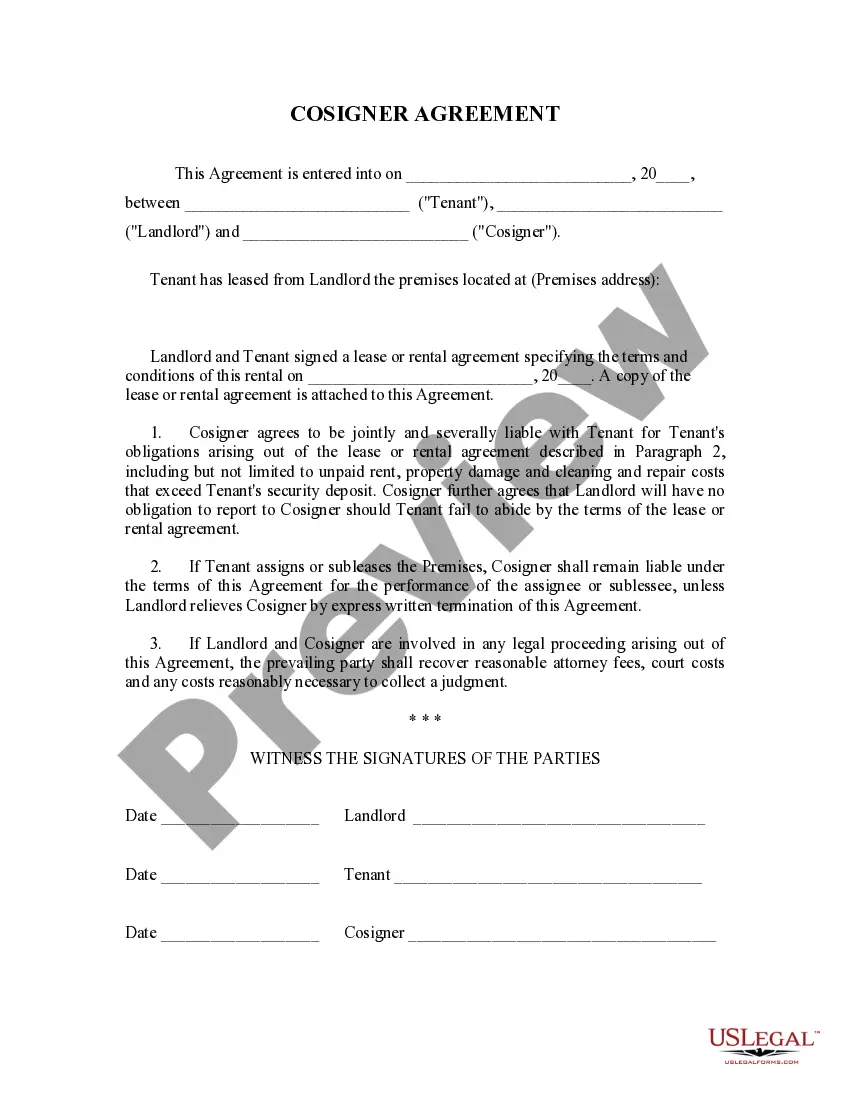
Kentucky 30 Day Notice to Terminate Tenancy at Will - Residential from Landlord to Tenant
Overview of this form
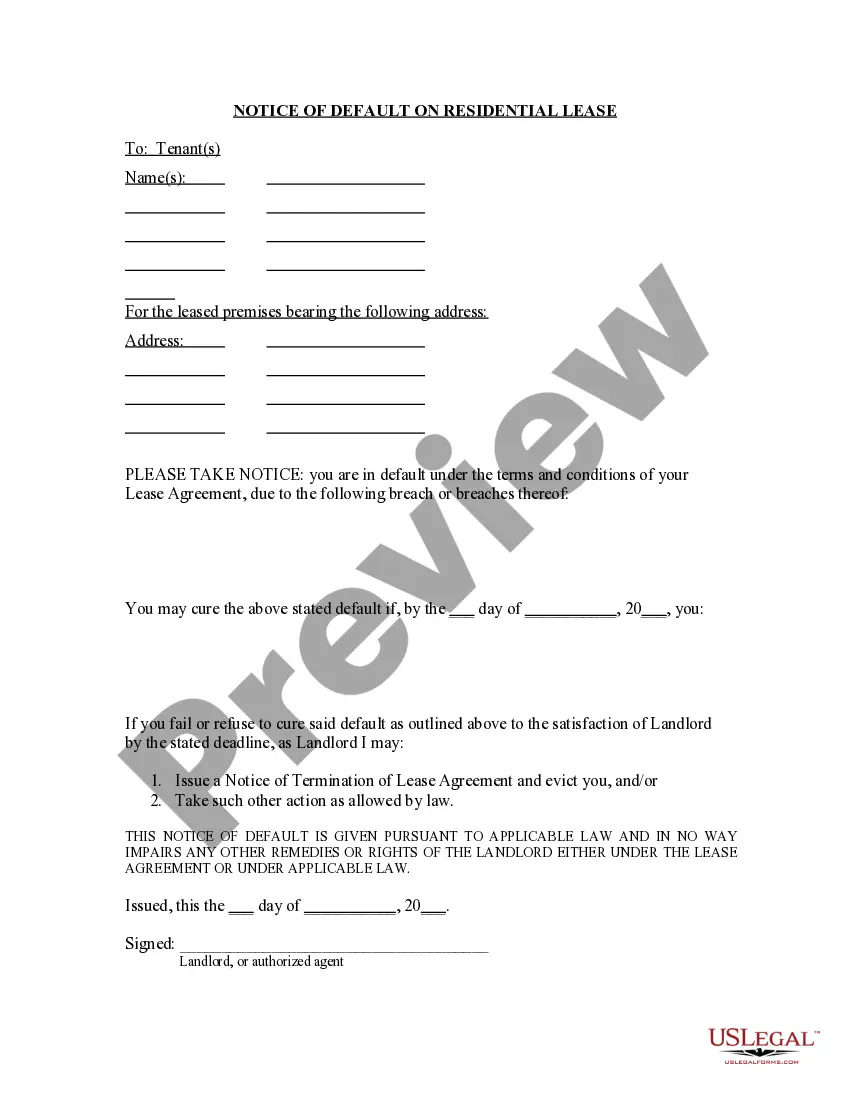
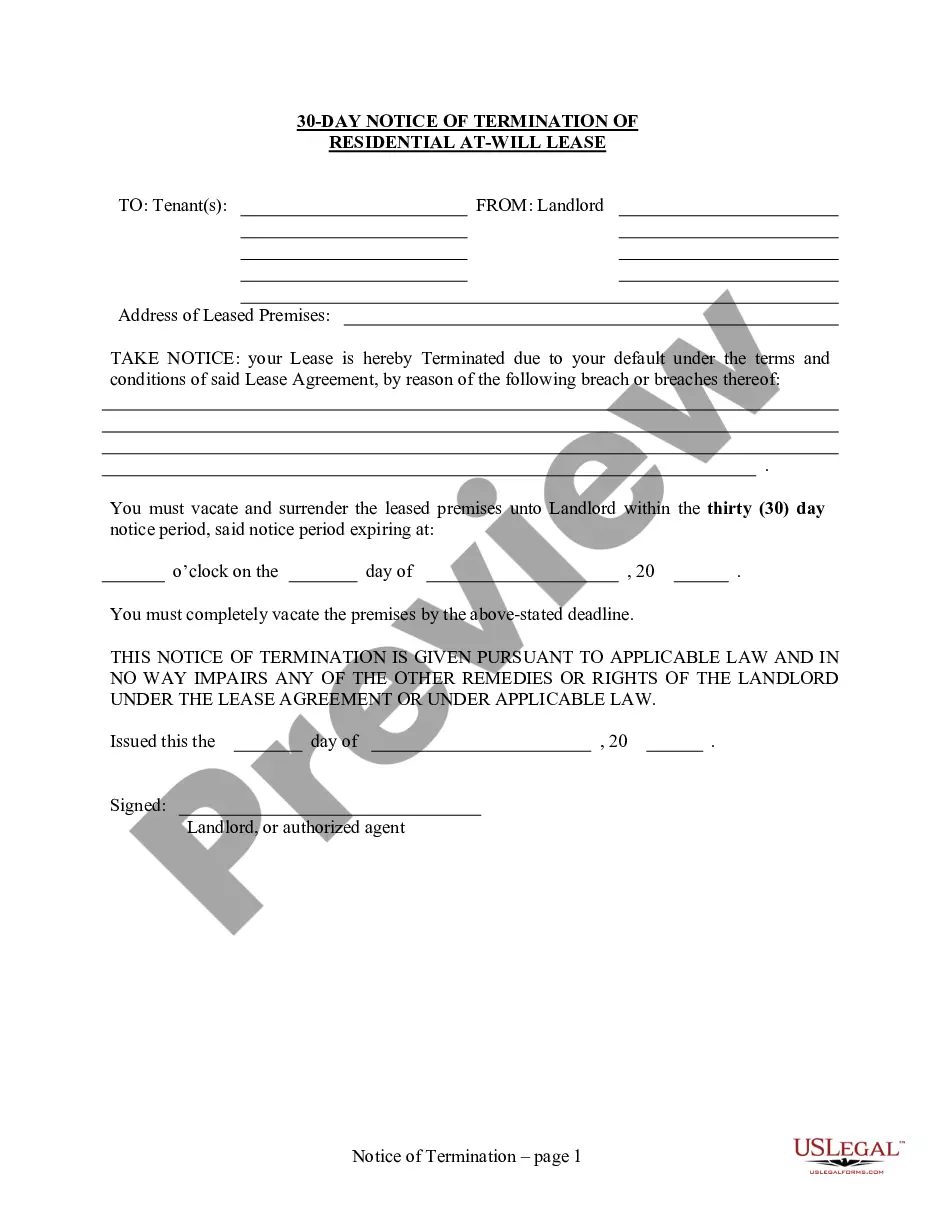
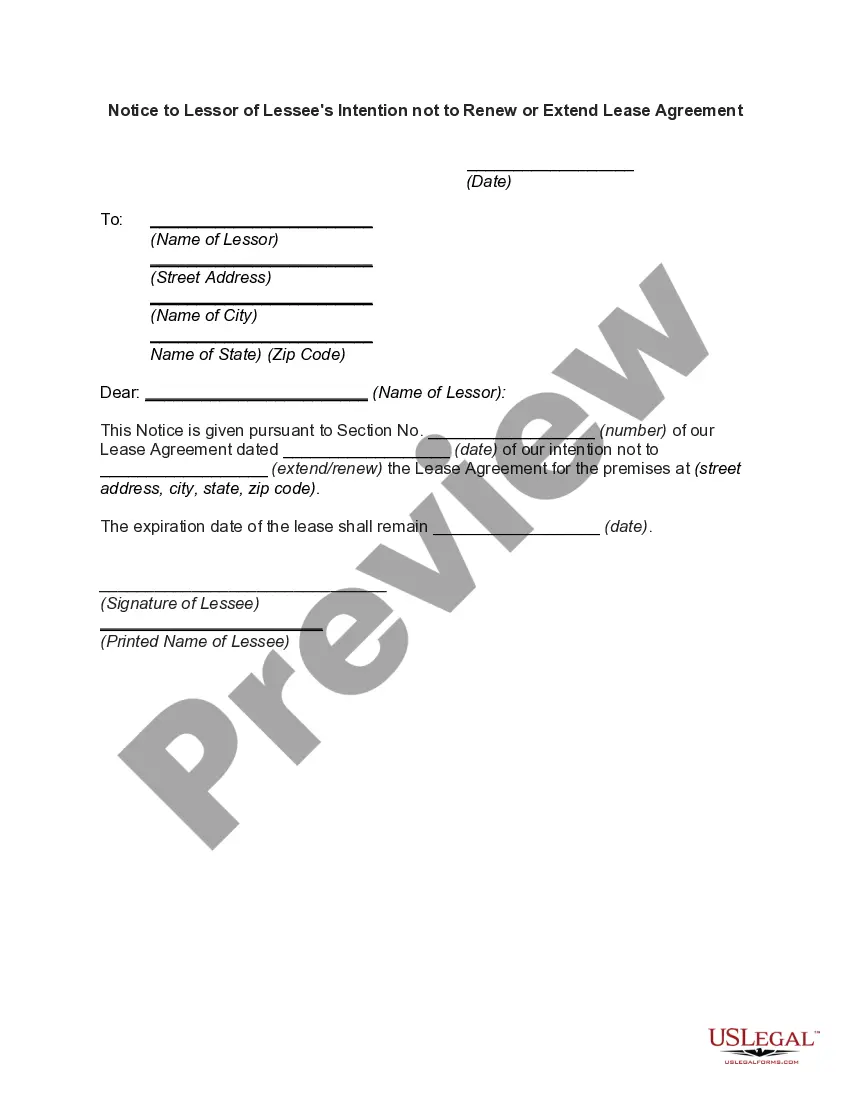
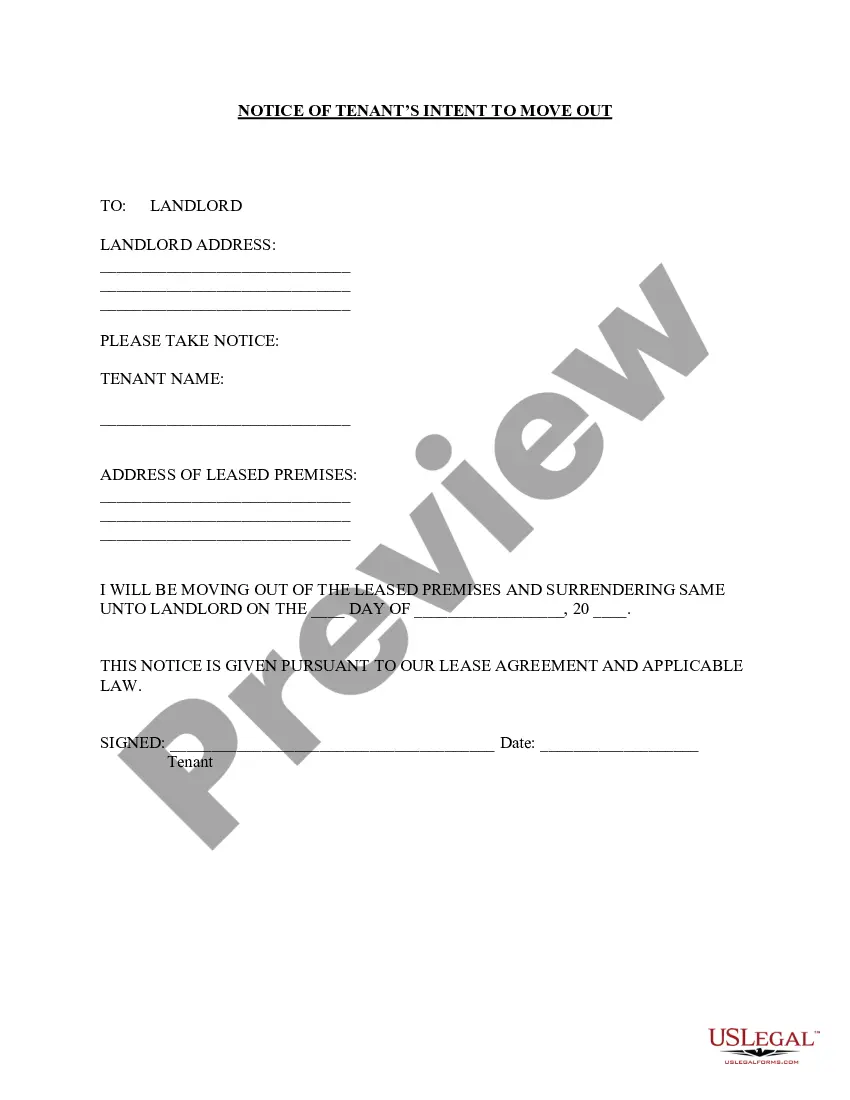
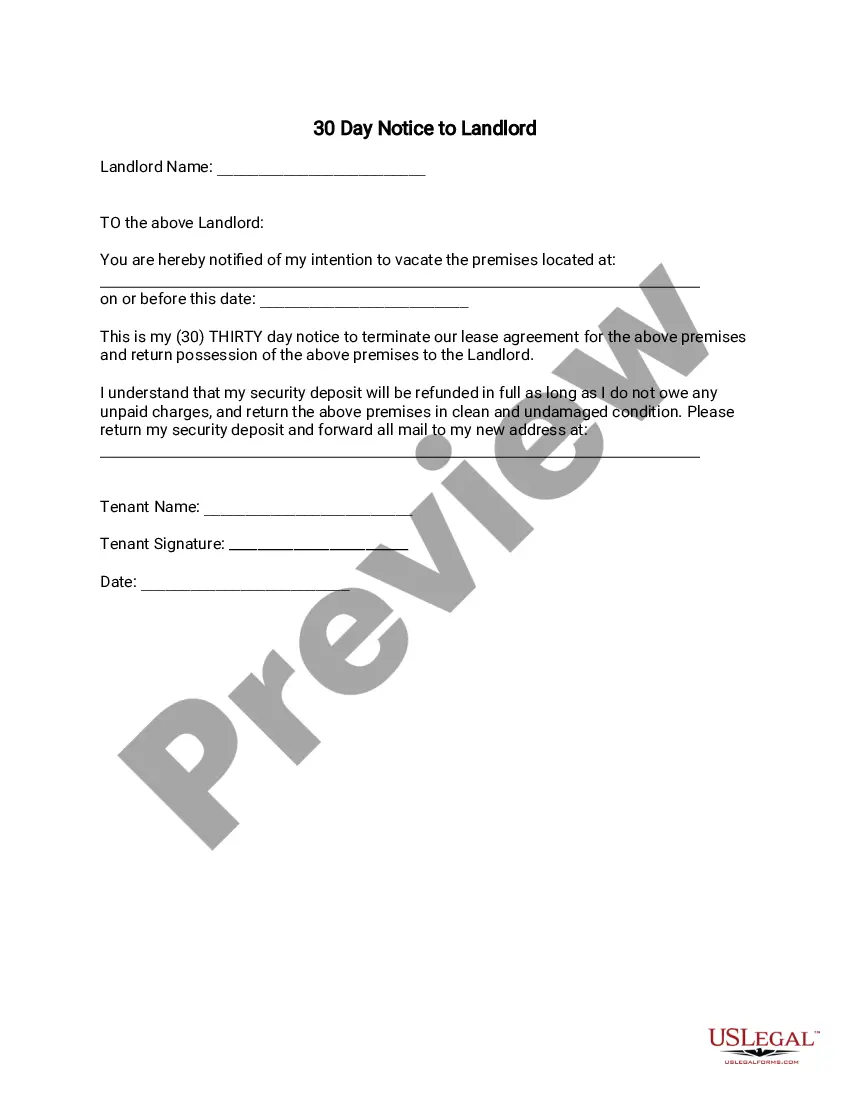
The 30 Day Notice to Terminate Tenancy at Will is a legal document used by landlords to formally notify tenants that their at-will residential lease is being terminated. This type of lease allows either party to end the rental agreement with notice, typically without needing to provide a reason. This form specifies a thirty-day notice period and is crucial for landlords who want to ensure compliance with legal requirements when ending a month-to-month tenancy.
Key parts of this document
- Tenant Information: Includes the names and address of the tenant(s) involved.
- Lease Termination Notice: States the termination of the lease and the grounds for termination.
- Notice Period: Clearly mentions the 30-day timeframe in which the tenant must vacate the premises.
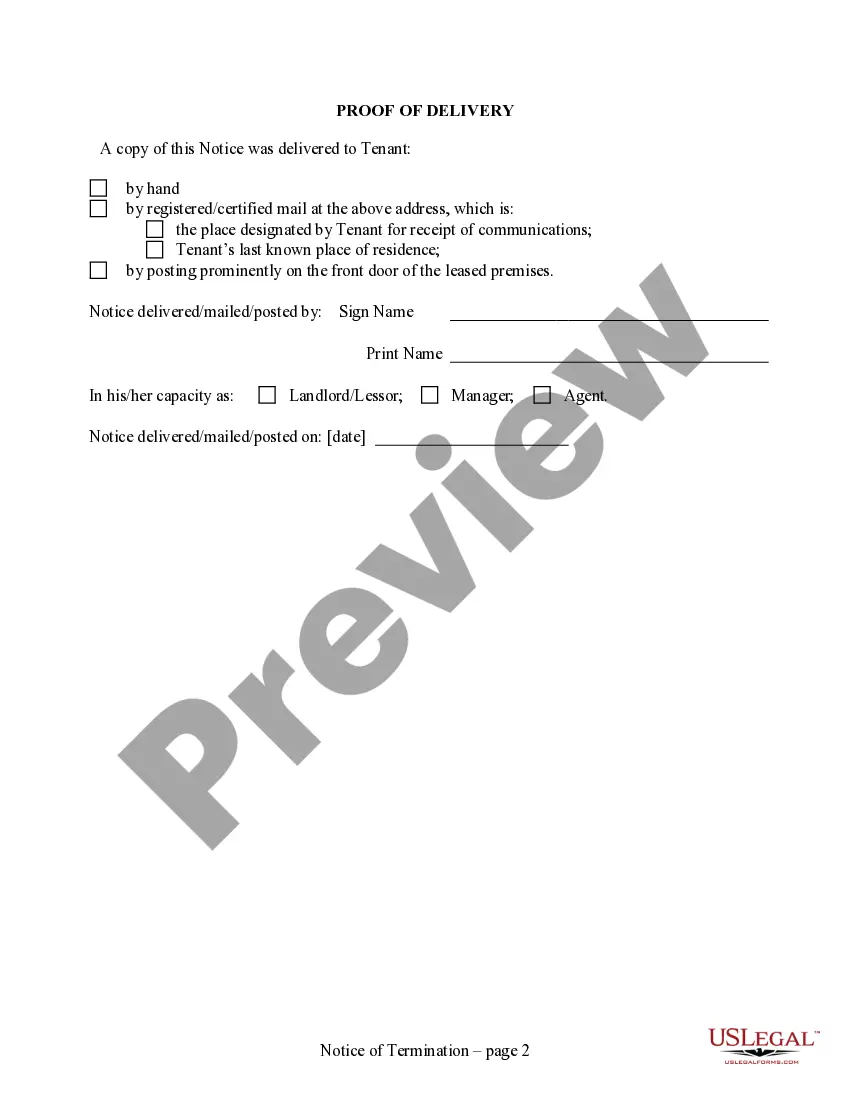
- Delivery Method: Specifies how the notice was delivered to the tenant (by hand, mail, or posting).
- Landlord's Signature: Requires the signature of the landlord or an authorized agent, confirming the notice's issuance.

Situations where this form applies
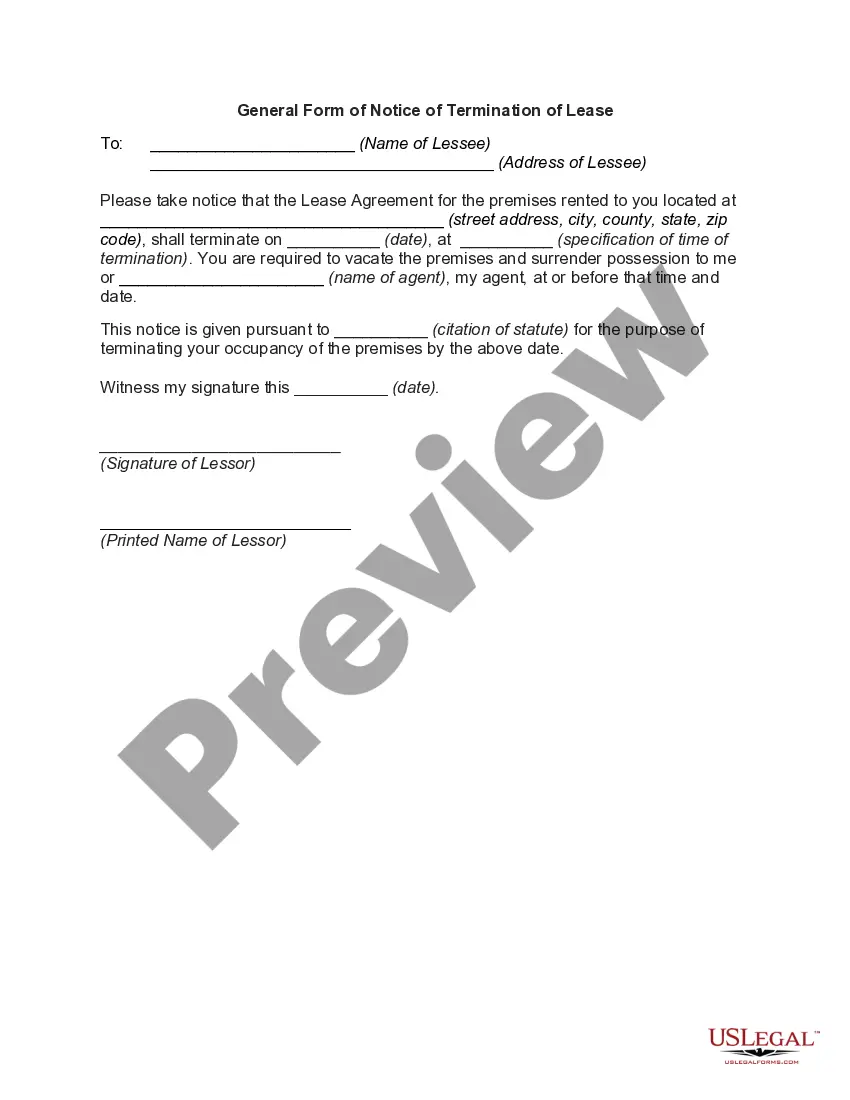
Use this form when you, as a landlord, wish to terminate a residential at-will lease with a tenant. This may be applicable if you plan to sell the property, need to perform major repairs, or simply no longer wish to rent to the current tenant. It is important to provide proper notice as required by law to avoid potential disputes.
Who this form is for
This form is intended for use by:
- Landlords who have a tenant on an at-will lease.
- Property managers acting on behalf of a landlord.
- Anyone responsible for managing residential rental properties.
Steps to complete this form
- Identify the parties: Fill in the names of the landlord and tenant(s).
- Specify the property: Enter the address of the leased premises.
- Set the deadline: Include the exact date and time by which the tenant must vacate.
- Sign the document: The landlord or authorized agent must sign the notice.
- Deliver the notice: Choose a method of delivery and ensure proper proof of delivery is documented.
Notarization requirements for this form
This form does not typically require notarization unless specified by local law. Ensure that you follow any additional state-specific requirements regarding notarization if applicable.
Get your form ready online
Our built-in tools help you complete, sign, share, and store your documents in one place.
Make edits, fill in missing information, and update formatting in US Legal Forms—just like you would in MS Word.
Download a copy, print it, send it by email, or mail it via USPS—whatever works best for your next step.
Sign and collect signatures with our SignNow integration. Send to multiple recipients, set reminders, and more. Go Premium to unlock E-Sign.
If this form requires notarization, complete it online through a secure video call—no need to meet a notary in person or wait for an appointment.
We protect your documents and personal data by following strict security and privacy standards.

Make edits, fill in missing information, and update formatting in US Legal Forms—just like you would in MS Word.

Download a copy, print it, send it by email, or mail it via USPS—whatever works best for your next step.

Sign and collect signatures with our SignNow integration. Send to multiple recipients, set reminders, and more. Go Premium to unlock E-Sign.

If this form requires notarization, complete it online through a secure video call—no need to meet a notary in person or wait for an appointment.

We protect your documents and personal data by following strict security and privacy standards.
Typical mistakes to avoid
- Failure to provide the full 30-day notice period.
- Not properly signing or dating the notice.
- Inaccurate tenant information leading to disputes.
- Using improper delivery methods that do not comply with state laws.
Advantages of online completion
- Convenience of downloading and editing the form according to specific needs.
- Access to forms drafted by licensed attorneys to ensure legal compliance.
- Ability to complete the form at any time, from anywhere, without needing to visit an office.
Legal use & context
- This notice serves as a formal record that the landlord has provided the required termination notice to the tenant.
- Not adhering to the notice period can affect the landlordâs ability to pursue legal actions for eviction.
- The form must comply with local tenant-landlord laws to ensure enforceability.
Quick recap
- The 30 Day Notice to Terminate Tenancy at Will is vital for landlords wishing to legally end a rental agreement.
- Proper completion ensures compliance and protects the rights of both the landlord and tenant.
- Familiarity with state-specific laws is crucial for the proper execution of this form.
Looking for another form?
Form popularity
FAQ
Substantial Violation If the landlord is evicting the tenant for any of these reasons, the landlord must give the tenant a three-day notice to quit. (Colo. Rev.If the tenant does not move out of the rental unit by the end of three days, then the landlord can file an eviction lawsuit against the tenant.
By not having signed a lease, you have no proof of rights. No signature means no peace of mind. Being in a roommate situation, without the lease, could always end at any second.Without a lease, the landlord would be free to increase rent at the end of every 30 days.
To evict a tenant in Kentucky, the landlord must first have legal cause (a good reason recognized by law). The most common reasons for eviction are the tenant's failure to pay rent or the tenant's violation of the lease or rental agreement.
Eviction Process When a tenant does not pay rent or fix the lease violation during the appropriate time period, the landlord can file an eviction lawsuit with the district court of the county in which the rental property is located. The eviction lawsuit is also called a forcible entry and detainer suit.
They must give the landlord at least 21 days notice of termination. Landlord Breaches the Agreement - the tenant can terminate the tenancy if the landlord breaches the agreement. If the landlord challenges the termination in the Tribunal, the breach must be serious enough to justify termination.
Evicting a tenant in Colorado can take around 2 weeks to 4 months, depending on whether the eviction is for illegal activity or another type of eviction. If the tenant files an answer with the court, the process could take longer (read more).
In Colorado, evictions are sometimes referred to as forcible entry & detainer (FED). Before you can file for eviction, you must generally provide 10 days' notice (increased from 3 days prior) for tenants to correct a deficiency or leave the property, except in certain circumstances.
In Illinois, if there is no lease or if the lease does not specify a move out date, the Landlord must give at least 30 days of notice to a tenant that the landlord wants to move out. This notice must be in writing and must arrive to the tenant at least 30 days prior to their move out date.
Keep in mind thatregardless of the roommate's status on the lease or rental agreementit is never legal to physically remove or lock out a tenant (or a roommate who might have legal rights similar to a tenant's) from a rental.