Kentucky Mutual Wills containing Last Will and Testaments for Man and Woman living together not Married with No Children
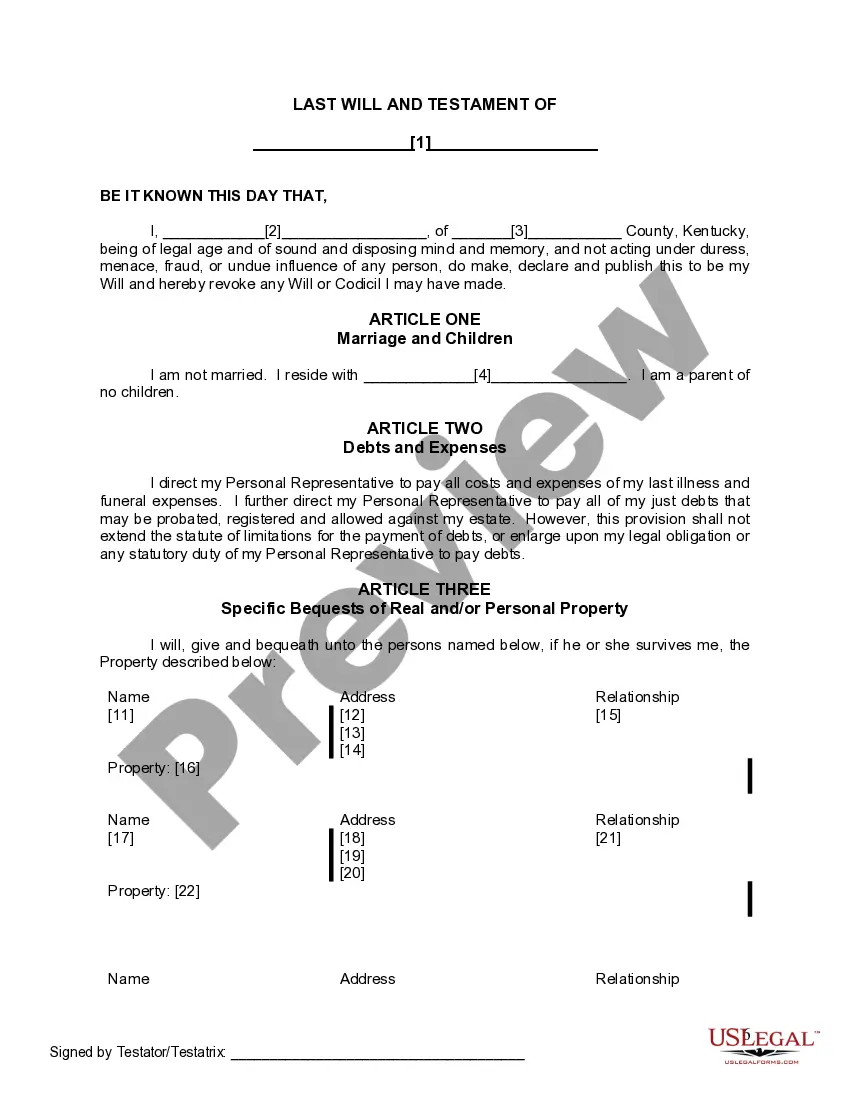
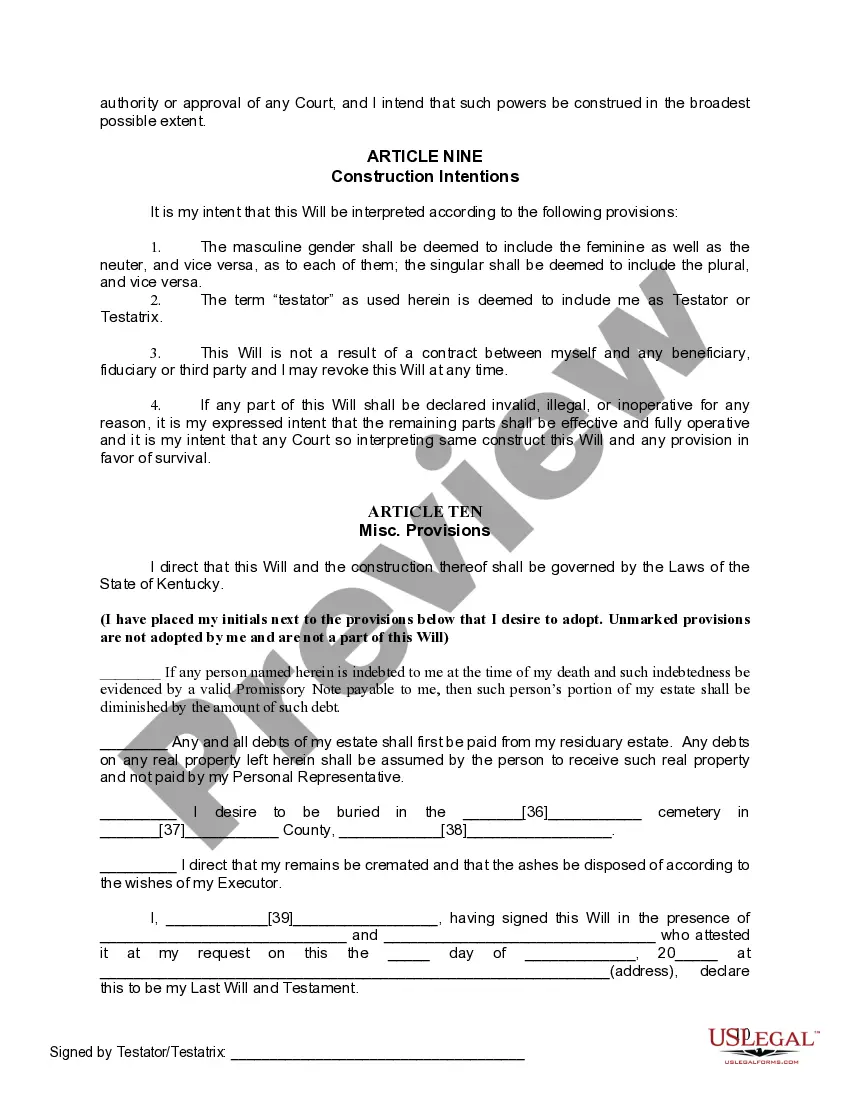
This form consists of mutual wills designed for a man and a woman living together but not married, and without children. Each party creates a Last Will and Testament expressing their wishes about how their assets should be distributed upon death. Unlike standard wills, these mutual wills include provisions that reflect the couple's intention to benefit one another, providing legal assurance of mutual promises regarding asset distribution.
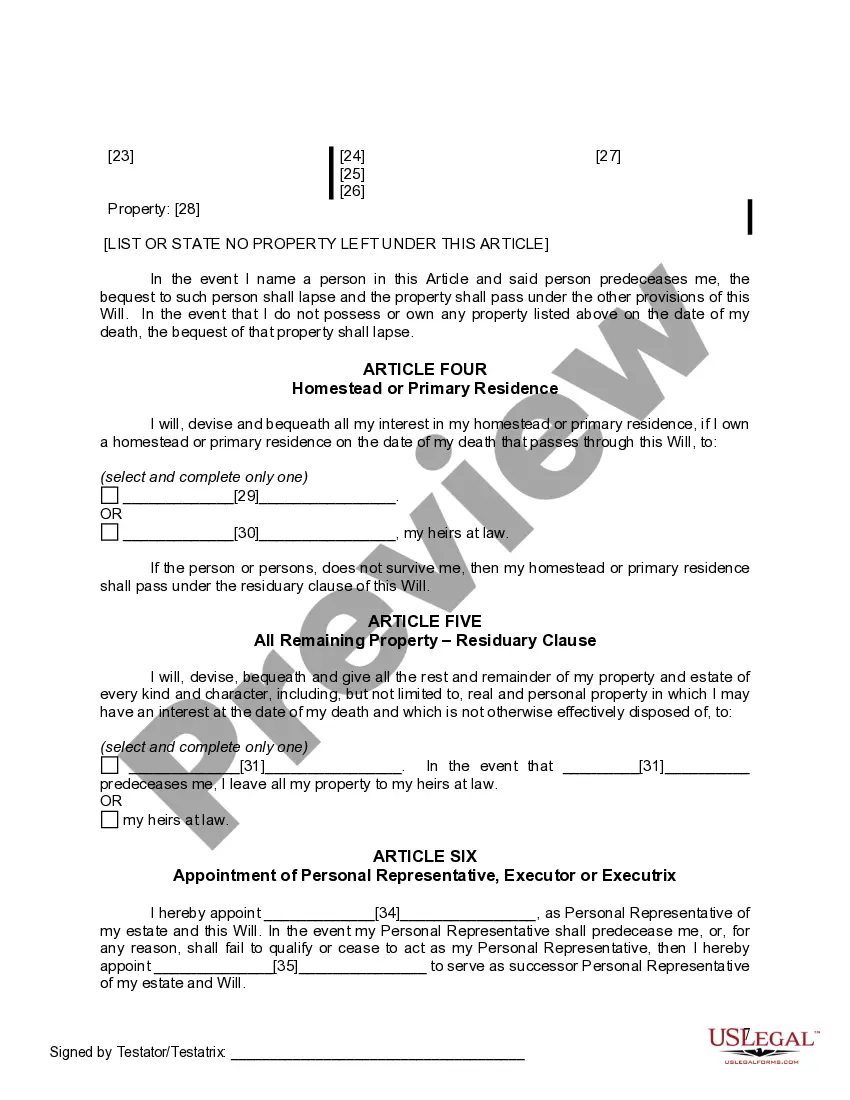
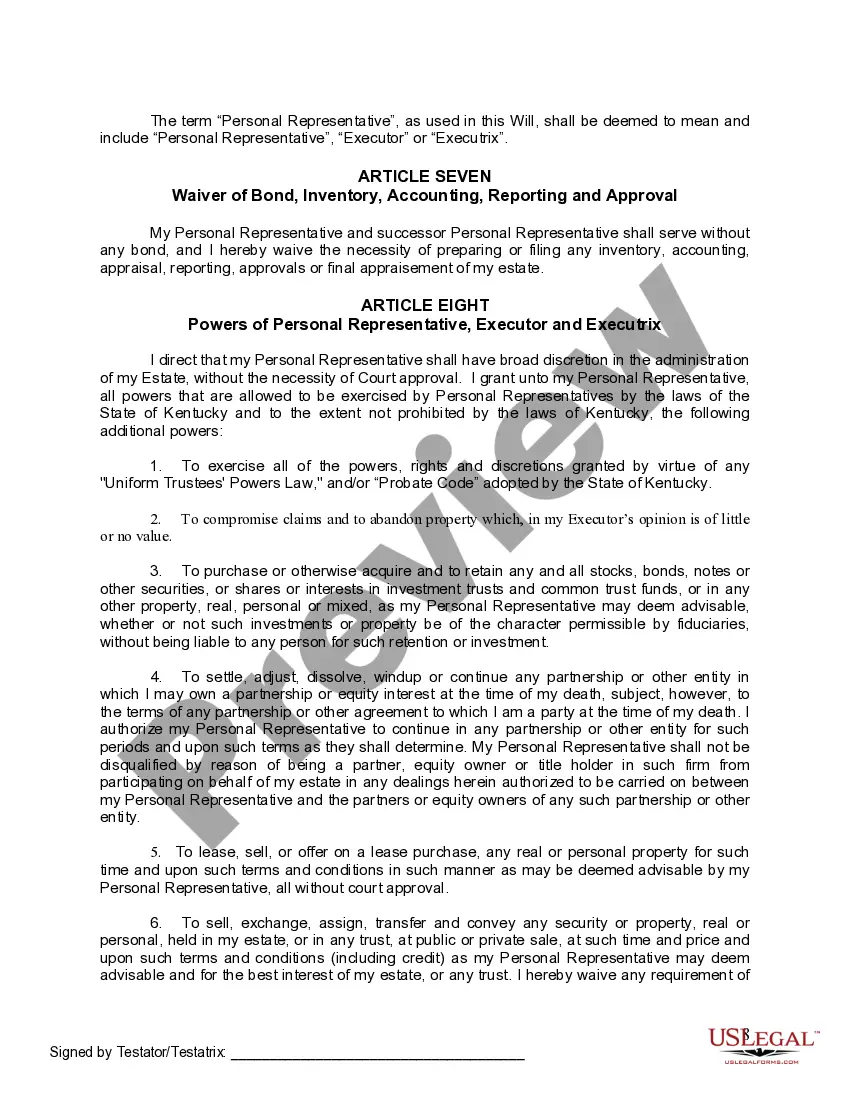
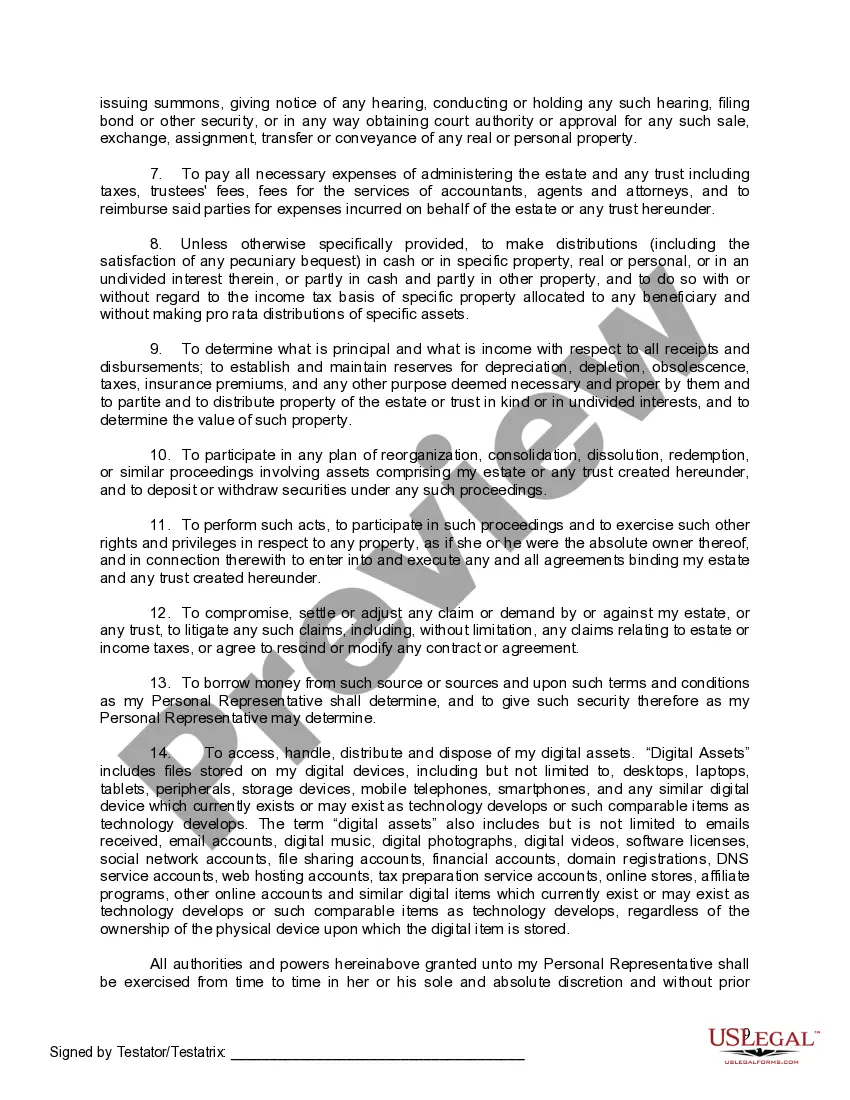
- Personal Representative: Designates an executor responsible for administering the estate.
- Specific Bequests: Allows for naming individuals to inherit specific property.
- Homestead Bequest: Permits the selection of a beneficiary for the primary residence.
- Residuary Clause: Specifies who receives any remaining assets not already bequeathed.
- Self-Proving Affidavit: Provides a declaration validating the will without needing to summon witnesses after death.
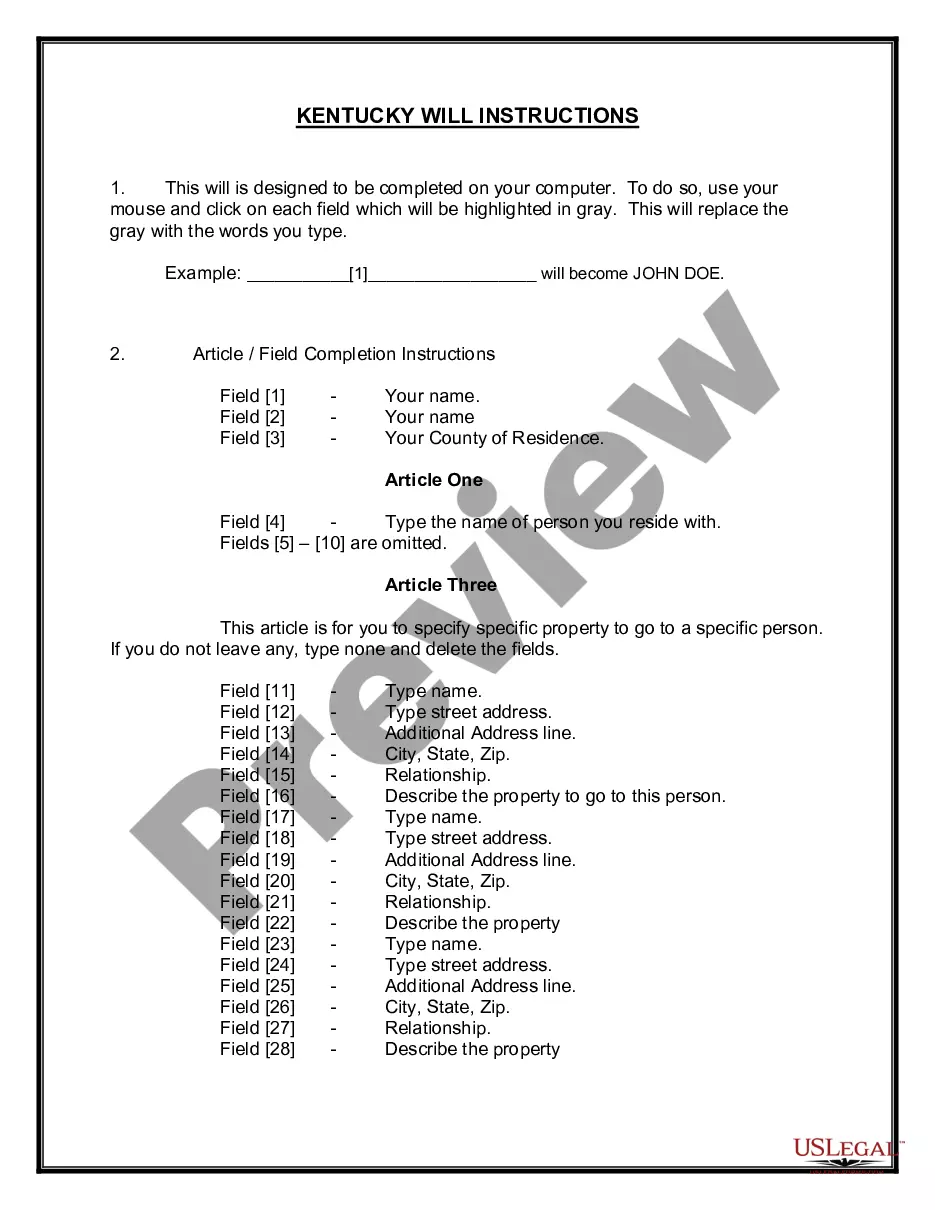
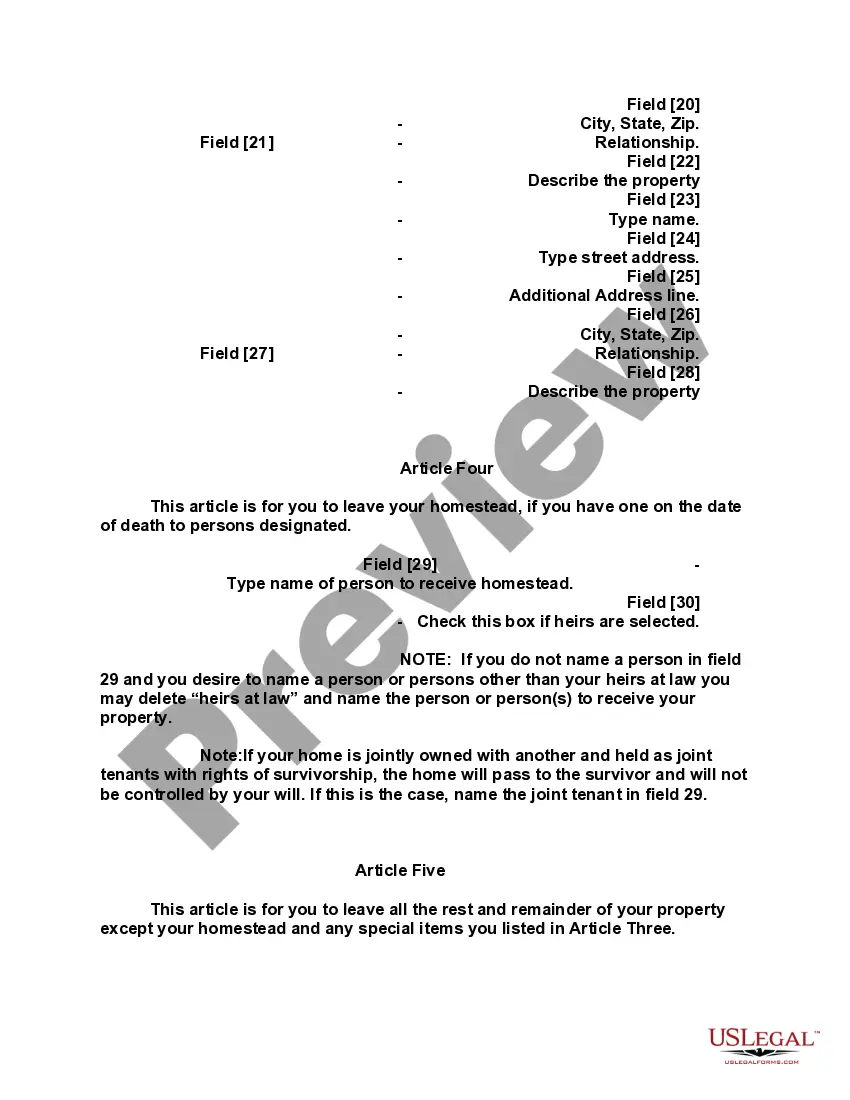
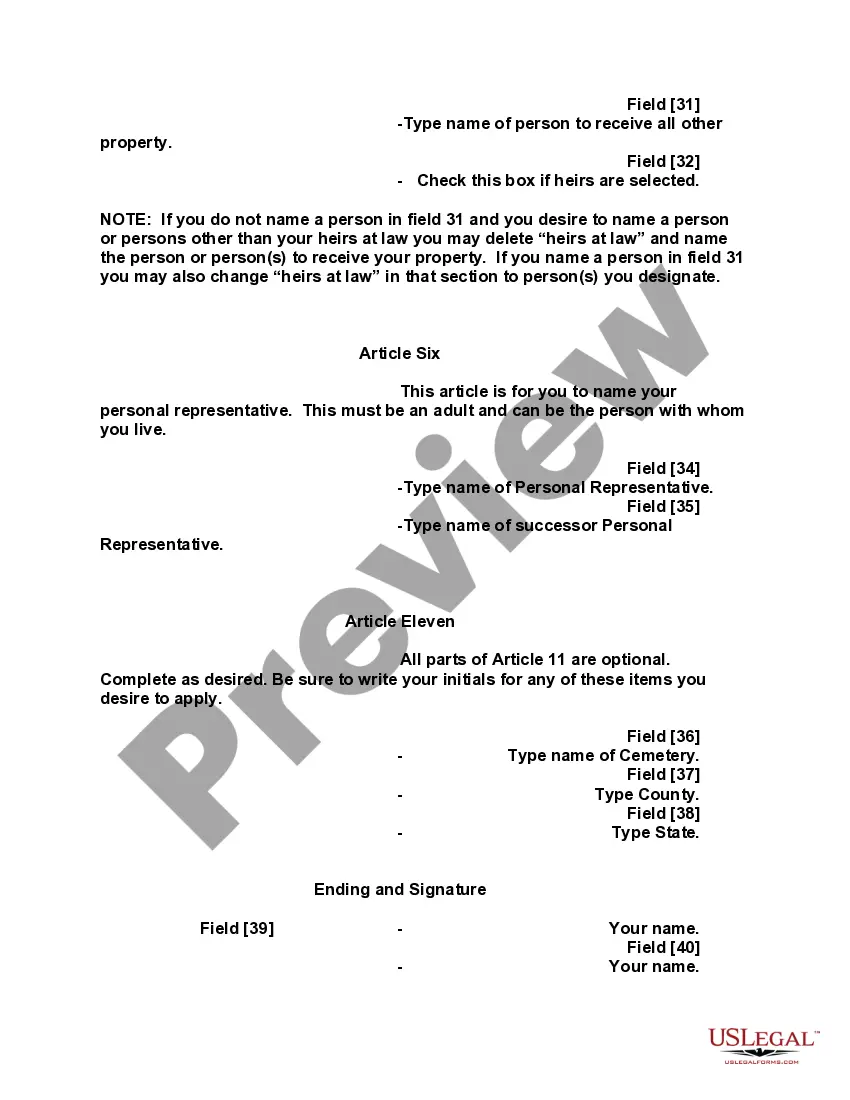
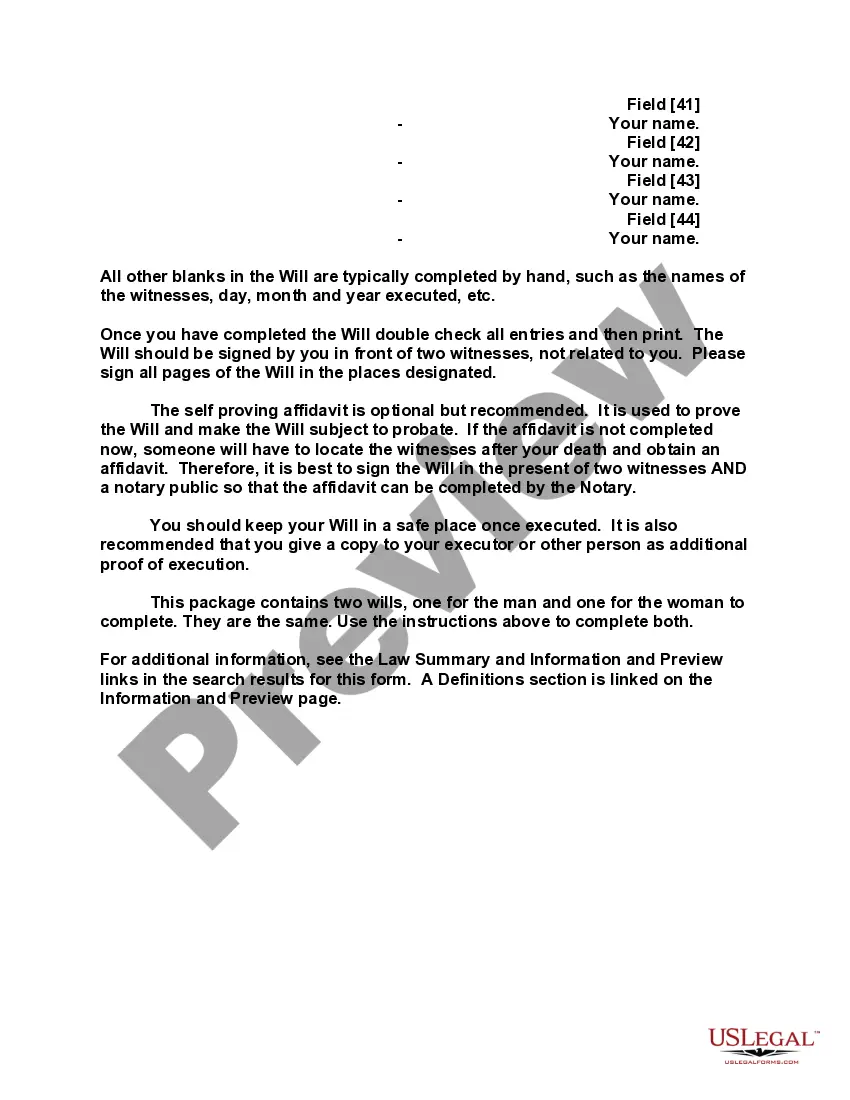

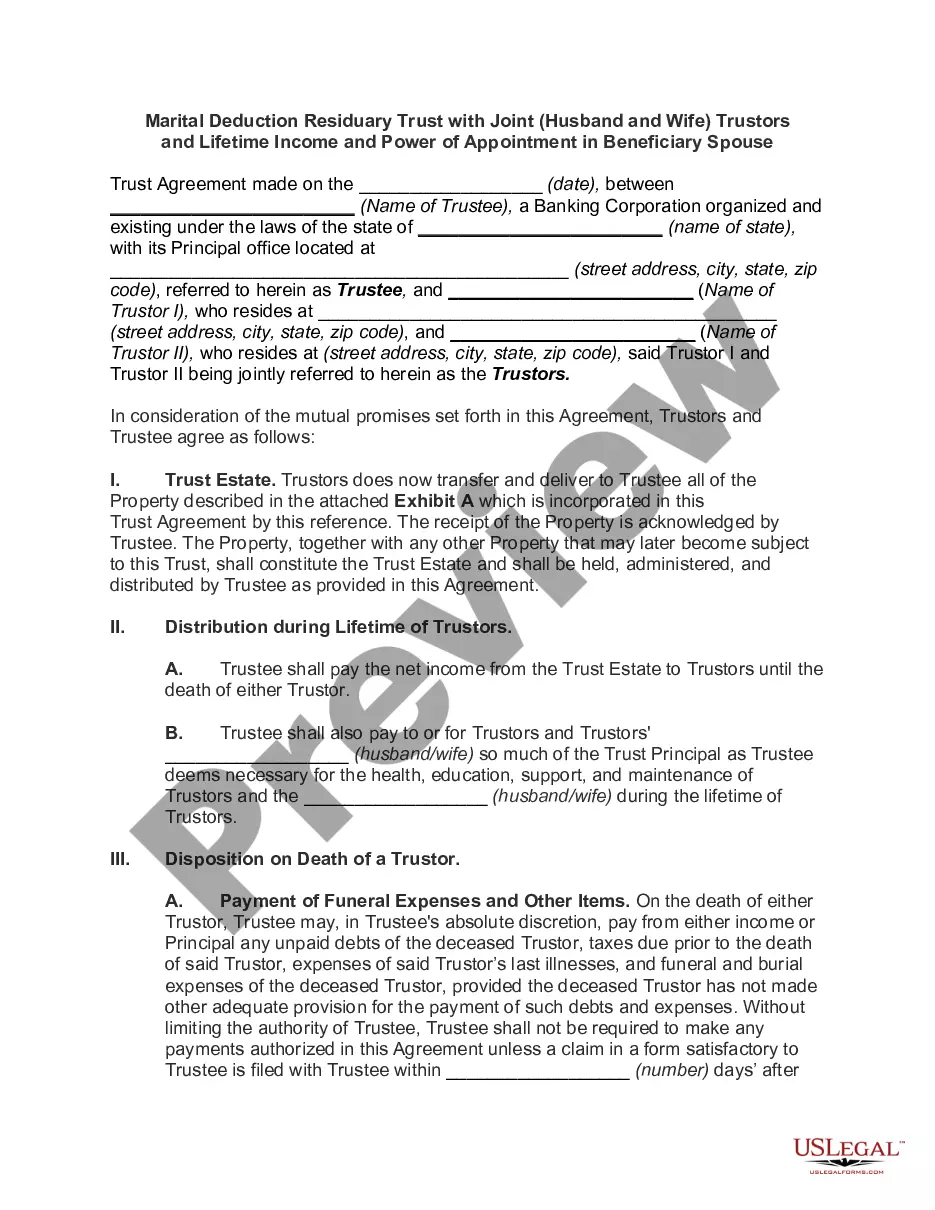


Use this form when you and your partner wish to ensure that each other's assets are protected and passed on according to your mutual wishes after one of you passes away. It is particularly useful for couples who want to clearly define their intentions regarding asset distribution while remaining unmarried and childless.
This form is suitable for:
- Unmarried couples living together.
- Partners without children wanting mutual property rights.
- Individuals seeking legal clarity in their asset distribution wishes.
- Couples looking to ensure their partner is provided for after death.
Follow these steps to complete your mutual wills:
- Identify both parties and enter your names and county of residence.
- Specify each other's name in the sections for naming bequest recipients.
- List any specific properties or items you wish to bequeath to designated individuals.
- Choose a personal representative to manage the estate after death.
- Ensure all required signatures are completed in front of witnesses as outlined.
Is notarization required?
This form needs to be notarized to ensure legal validity. US Legal Forms provides secure online notarization powered by Notarize, allowing you to complete the process through a verified video call, available anytime.
Get your form ready online
Our built-in tools help you complete, sign, share, and store your documents in one place.
Make edits, fill in missing information, and update formatting in US Legal Forms—just like you would in MS Word.
Download a copy, print it, send it by email, or mail it via USPS—whatever works best for your next step.
Sign and collect signatures with our SignNow integration. Send to multiple recipients, set reminders, and more. Go Premium to unlock E-Sign.
If this form requires notarization, complete it online through a secure video call—no need to meet a notary in person or wait for an appointment.
We protect your documents and personal data by following strict security and privacy standards.
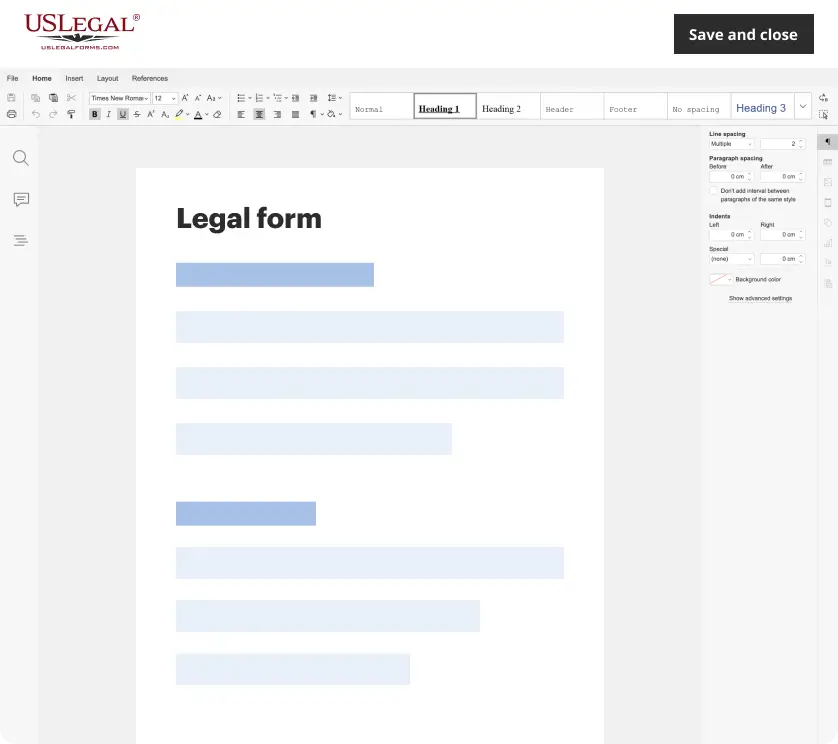
Make edits, fill in missing information, and update formatting in US Legal Forms—just like you would in MS Word.

Download a copy, print it, send it by email, or mail it via USPS—whatever works best for your next step.
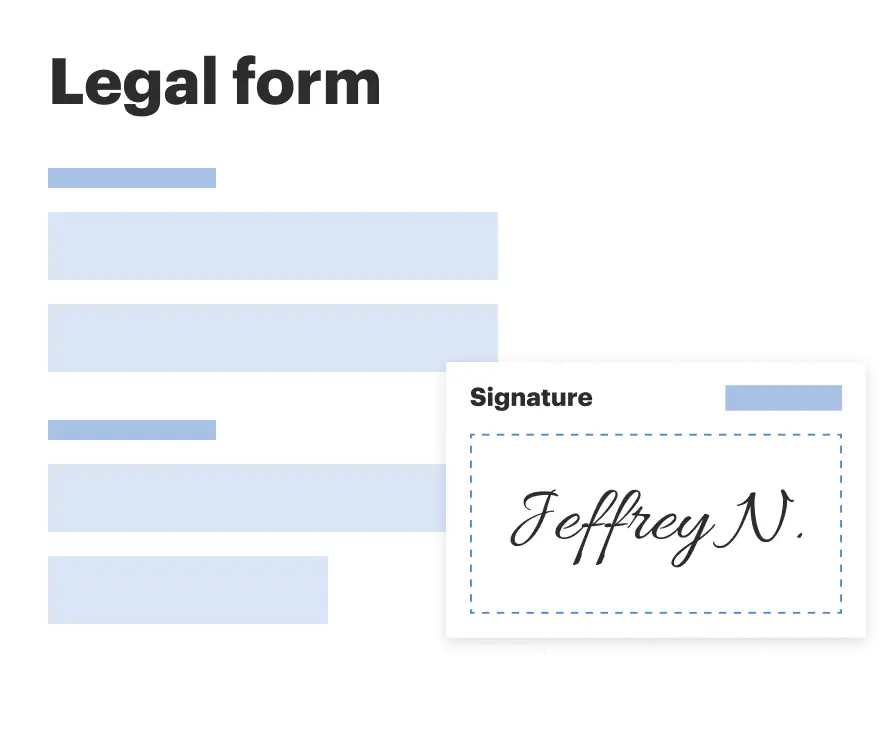
Sign and collect signatures with our SignNow integration. Send to multiple recipients, set reminders, and more. Go Premium to unlock E-Sign.

If this form requires notarization, complete it online through a secure video call—no need to meet a notary in person or wait for an appointment.

We protect your documents and personal data by following strict security and privacy standards.
- Failing to sign the will in the presence of two witnesses.
- Leaving sections blank instead of specifying "none" for items not bequeathed.
- Not updating the will after major life changes, such as relocations.
- Overlooking the self-proving affidavit when necessary for ease in probate.
- Convenience of completing the form from home using easily editable templates.
- Assurance that the wills comply with Kentucky law, reducing legal disputes.
- User-friendly layout, allowing even those without legal experience to understand.
What to keep in mind
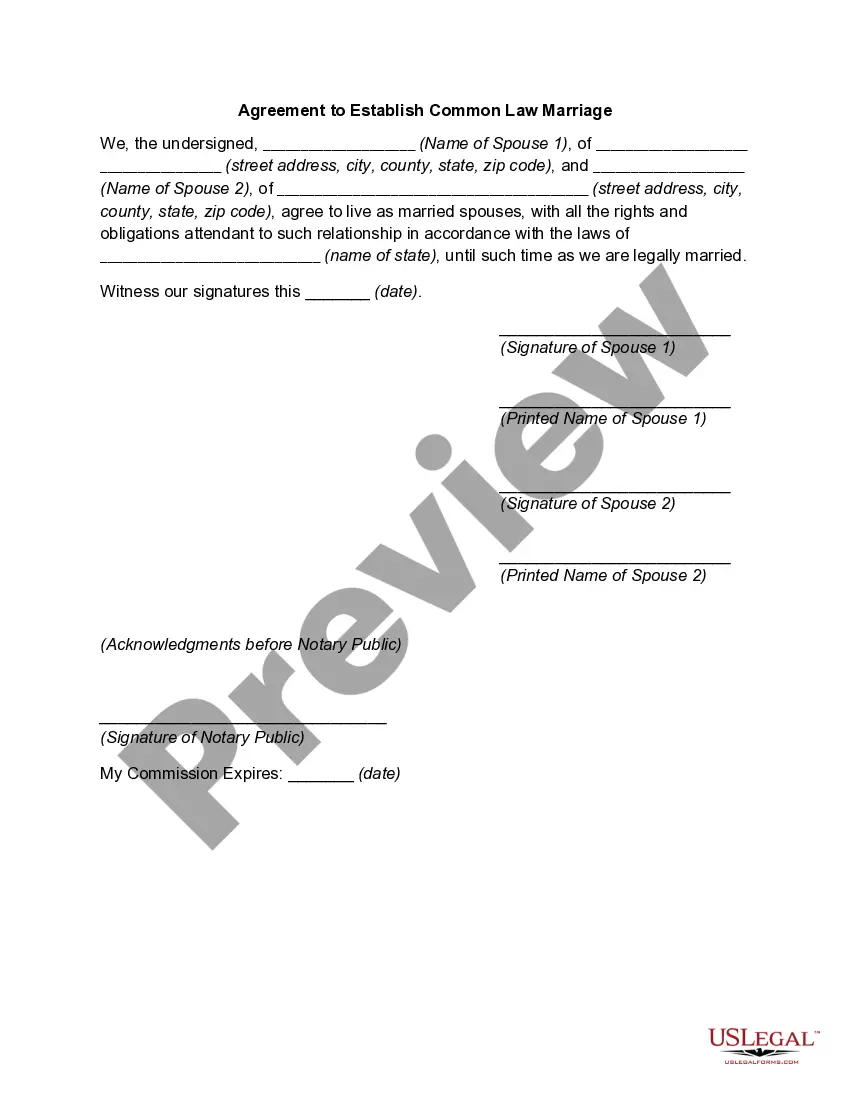
- This form is specifically for couples living together who are not married and wish to have mutual wills.
- Proper execution is crucial; this includes signing in the presence of witnesses and, in some cases, notarization.
- State-specific compliance is necessary to ensure the wills are valid and enforceable in Kentucky.
Looking for another form?
Form popularity
FAQ
A mutual Will is where two (or more) testators make Wills which mirror the contents of the other(s). However, mutual Wills cannot be altered upon the death of one of the testators.
Most joint wills also contains a provision stating that neither spouse can change or revoke the will alonewhich means that the will can't be changed after the first spouse dies.But a joint will is really a binding legal contract, which cannot be revoked or changed after one spouse has died.
However, creating a joint will is still an option in California, and while it might help a couple save some time and money on their estate plan, it can also lead to some complex problems. A couple who creates a joint will can usually only revoke or change the will together. One spouse cannot do it alone.
Kentucky recognizes holographic, or handwritten, wills; such a will must be entirely in the testator's handwriting and signed and dated by the testator in order to be valid.
When one spouse dies, the surviving spouse automatically receives complete ownership of the property. This distribution cannot be changed by Will.Because the surviving spouse becomes the outright owner of the property, he or she will need a Will to direct its disposition at his or her subsequent death.
Married couples often execute wills which are identical in their provisions, frequently giving the estate to the surviving spouse or if the spouse does not survive to the children.However, not every mirror will is a "mutual will", indeed very few mirror wills are mutual wills.
Like most wills, a joint will lets the will-makers name who will get their property and assets after they die.After one spouse has died, all the couple's property will be left to the surviving spouse; and. After the surviving spouse dies, the remaining property will be left to the couple's children.
The only way that a spouse can obtain ownership and override the Will is if the law in the state in which they live allows a "right of election" against the Will.
Choose an online legal services provider or locate a will template. Carefully consider your distribution wishes. Identify a personal representative/executor. Understand the requirements to make your will legal. Make sure someone else knows about your will. Consult a lawyer if you have a more complicated estate.