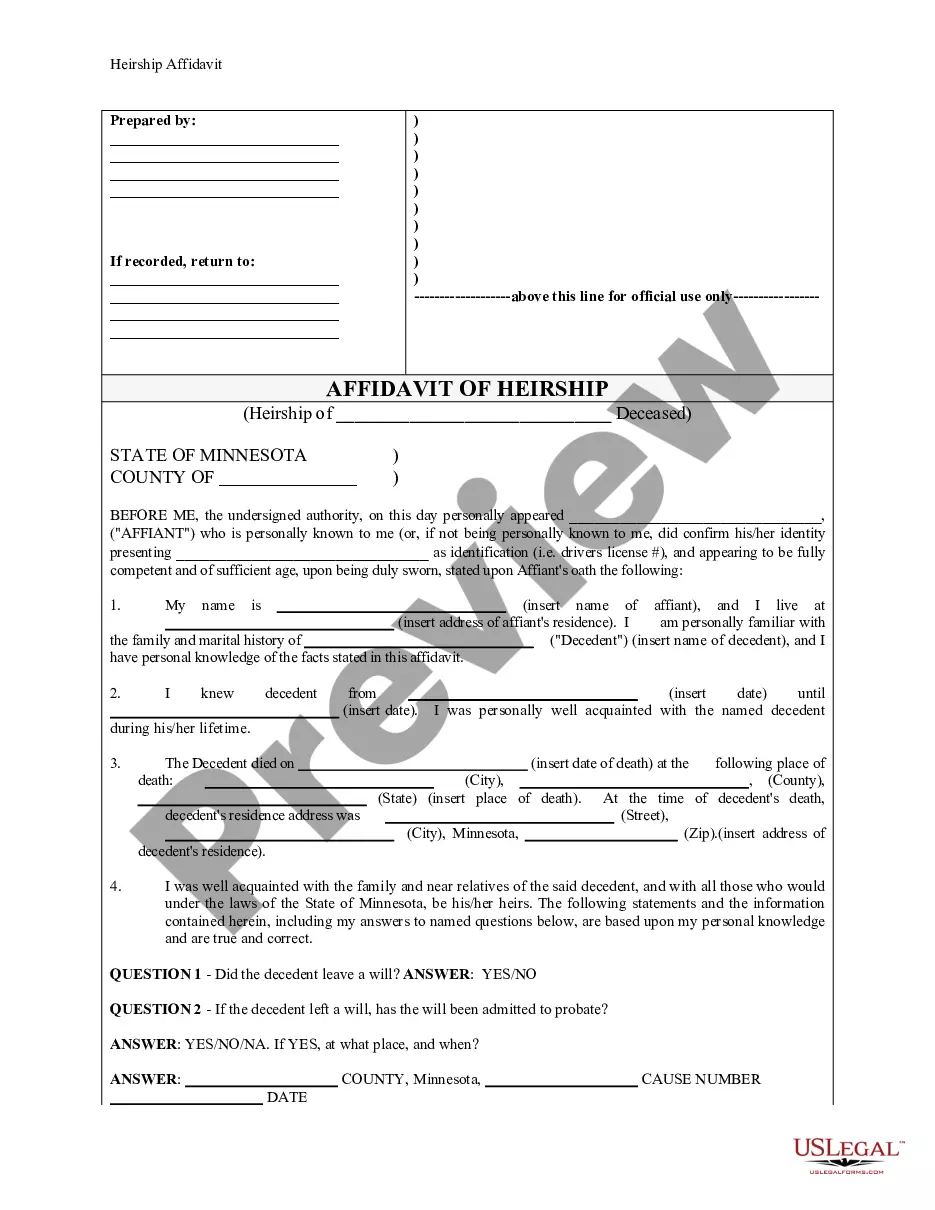
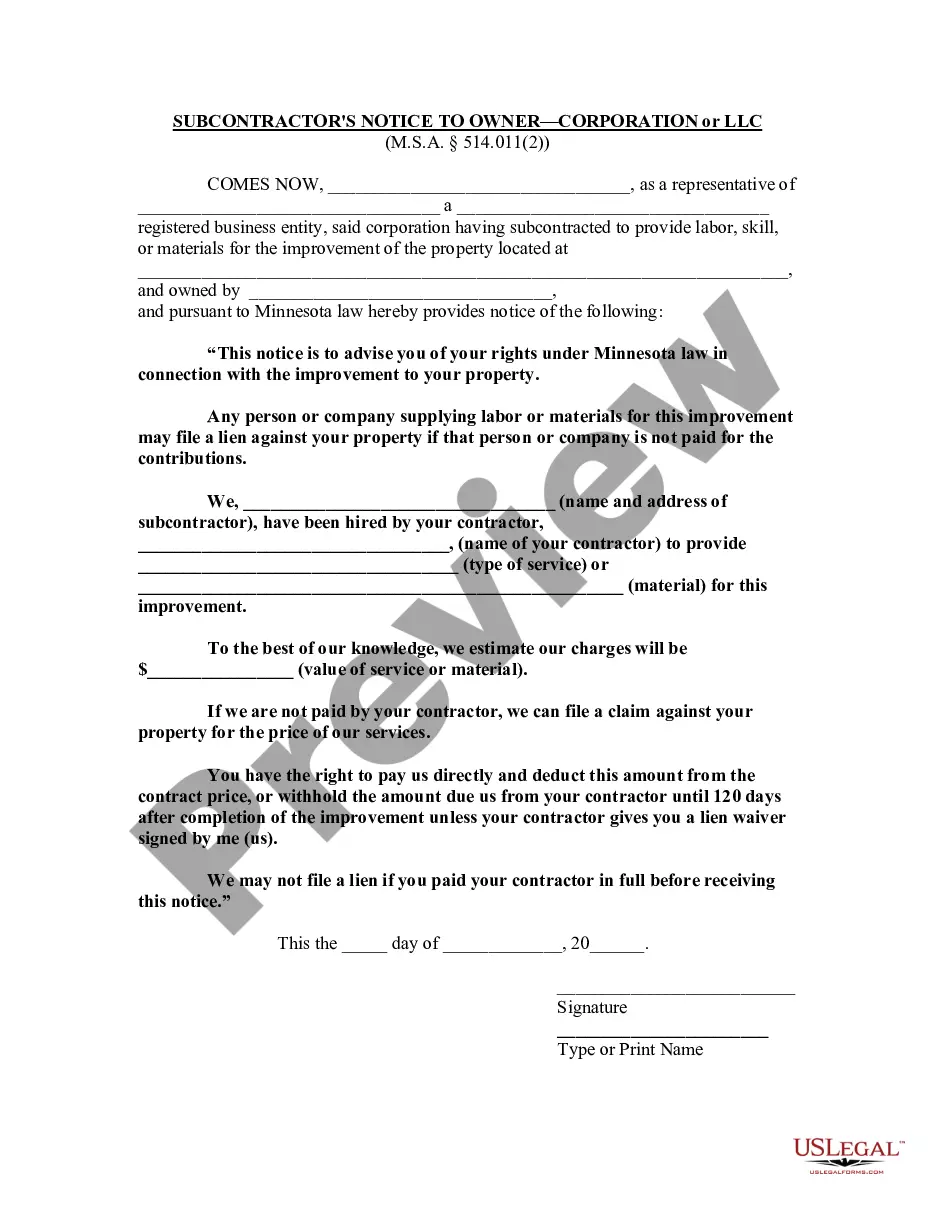
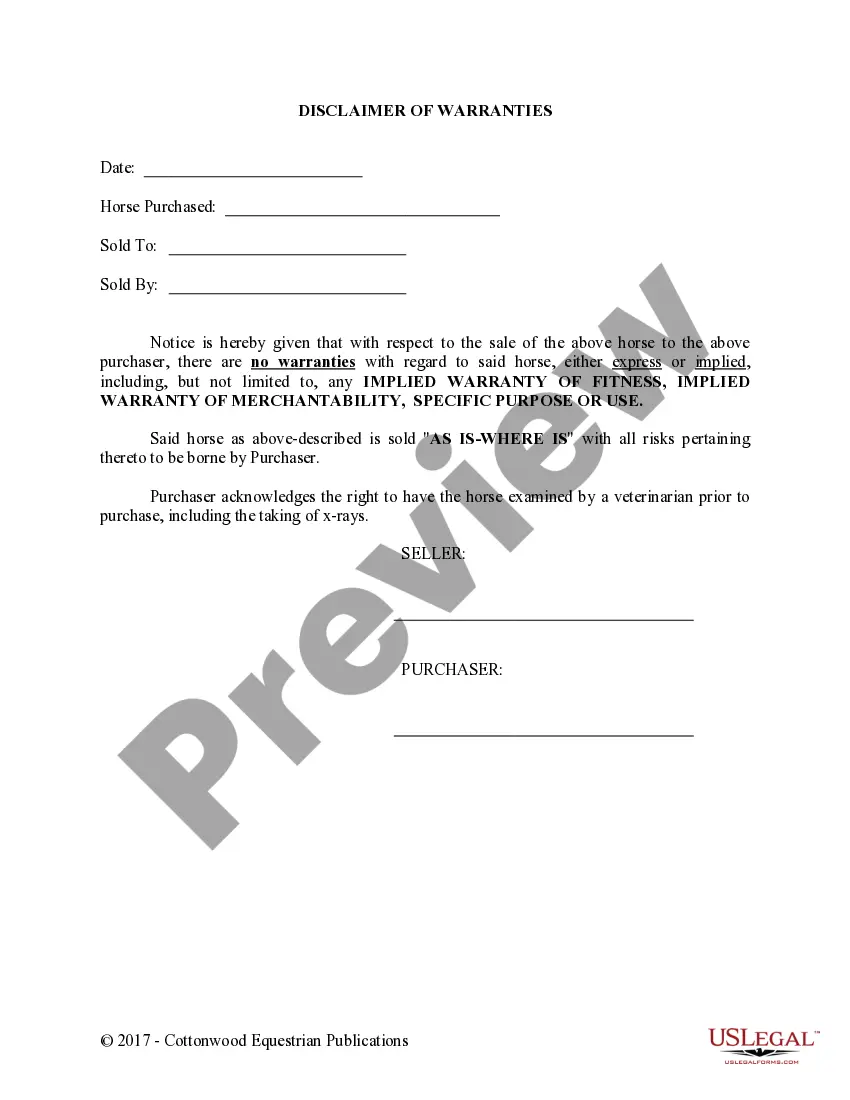
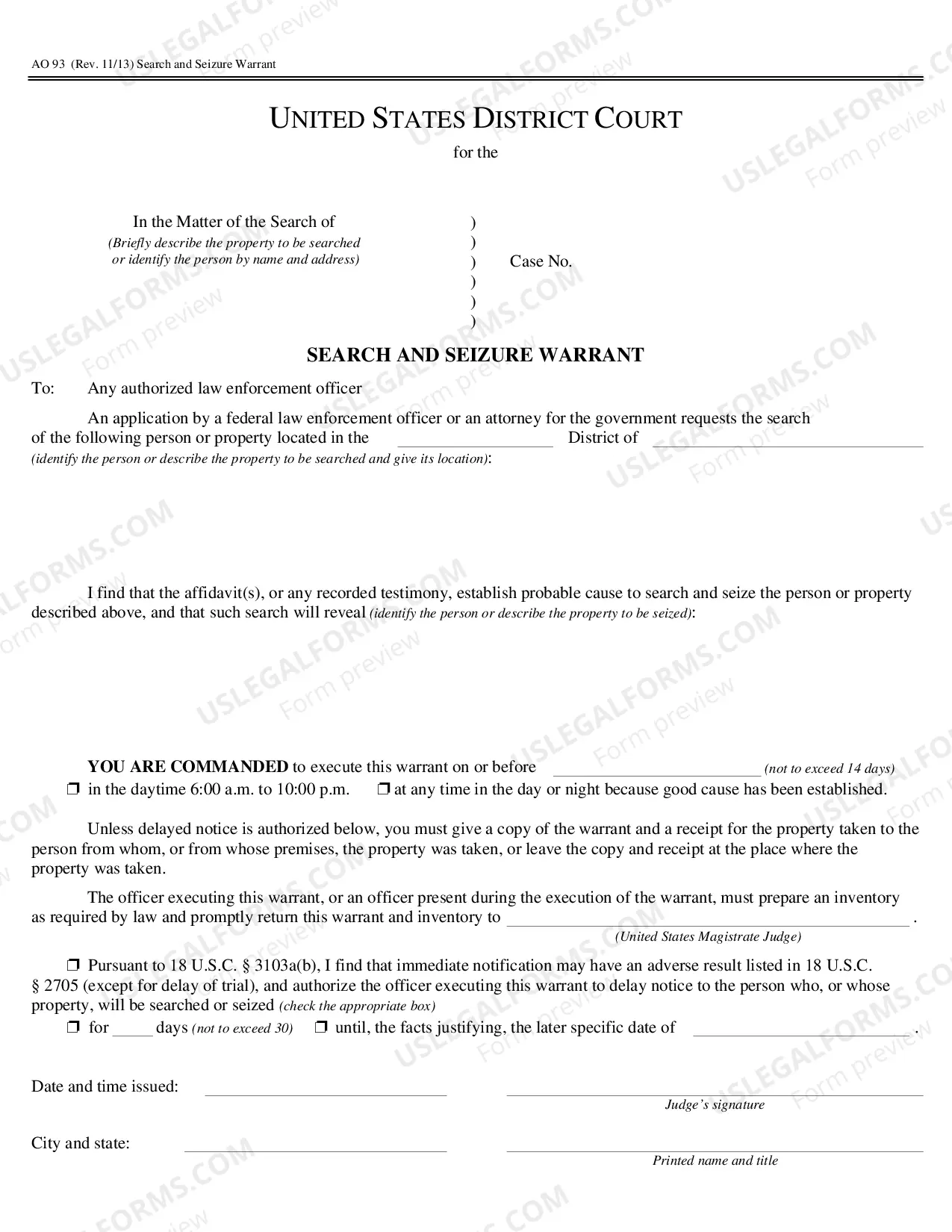
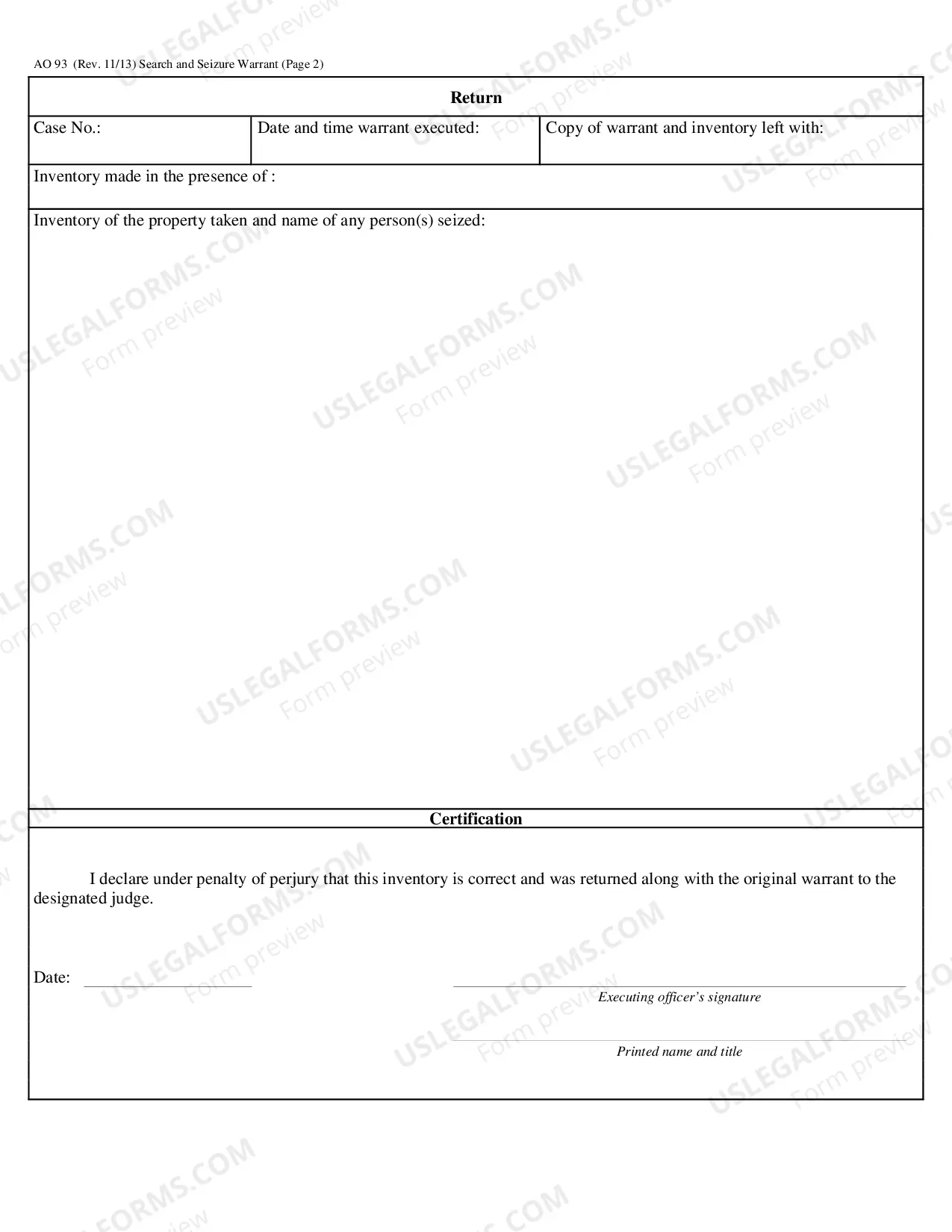
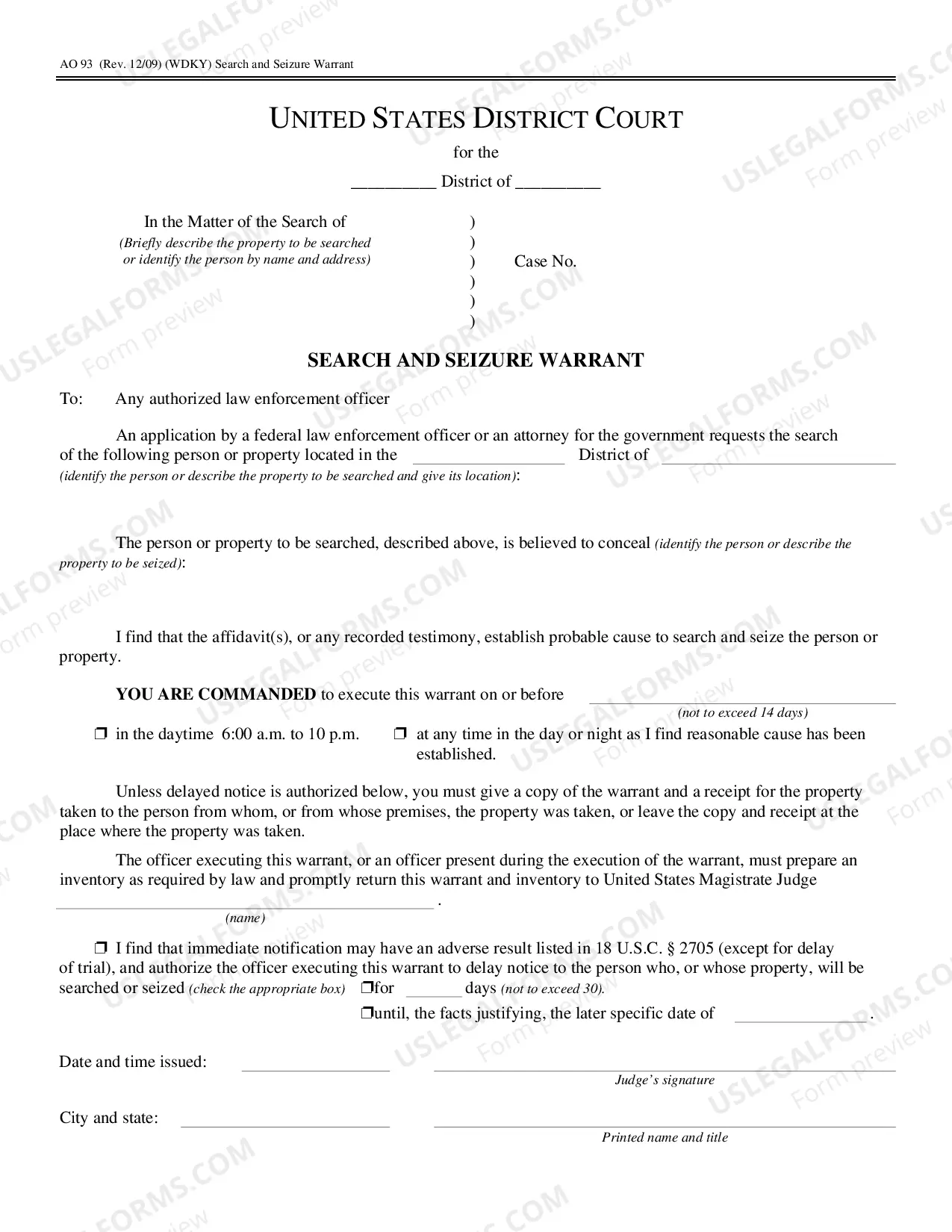
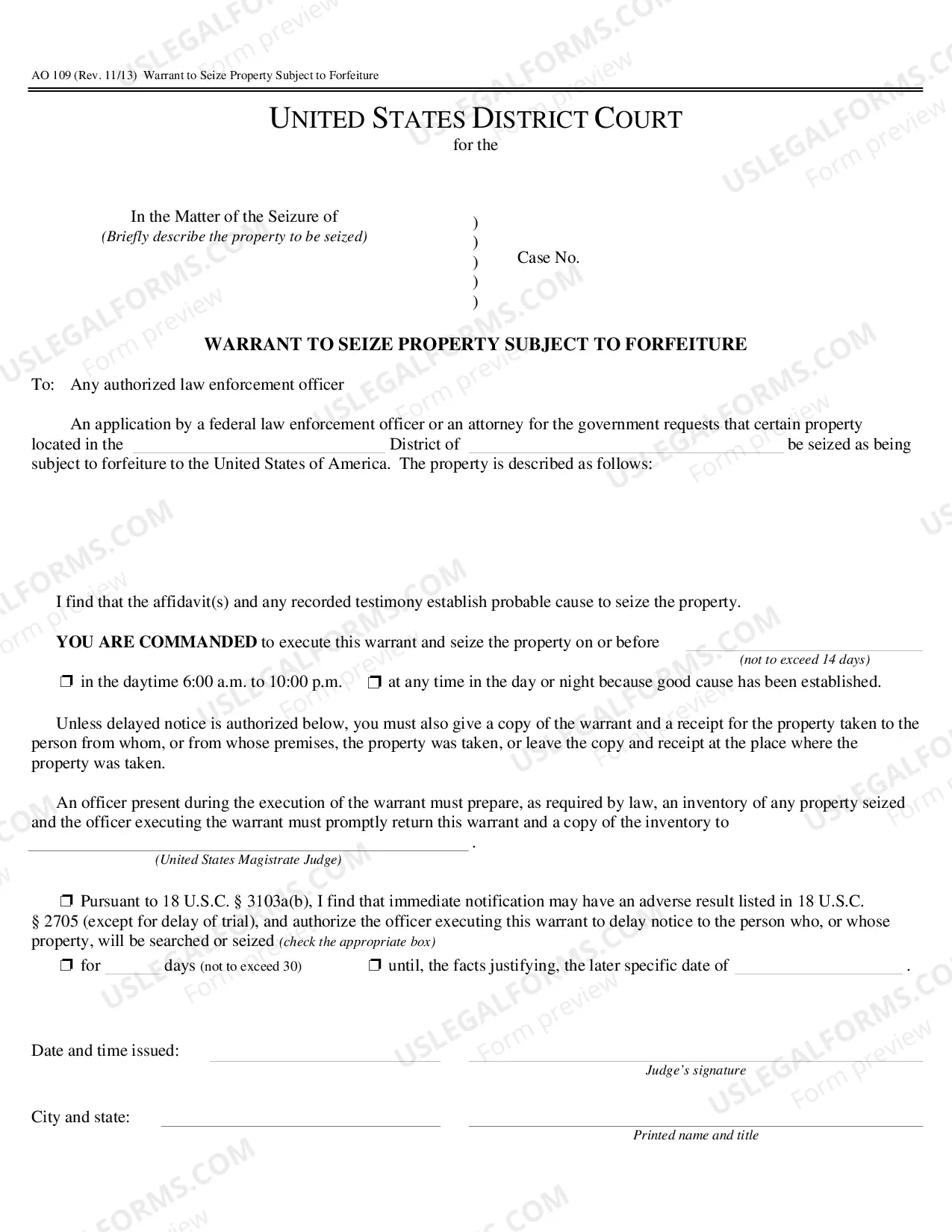
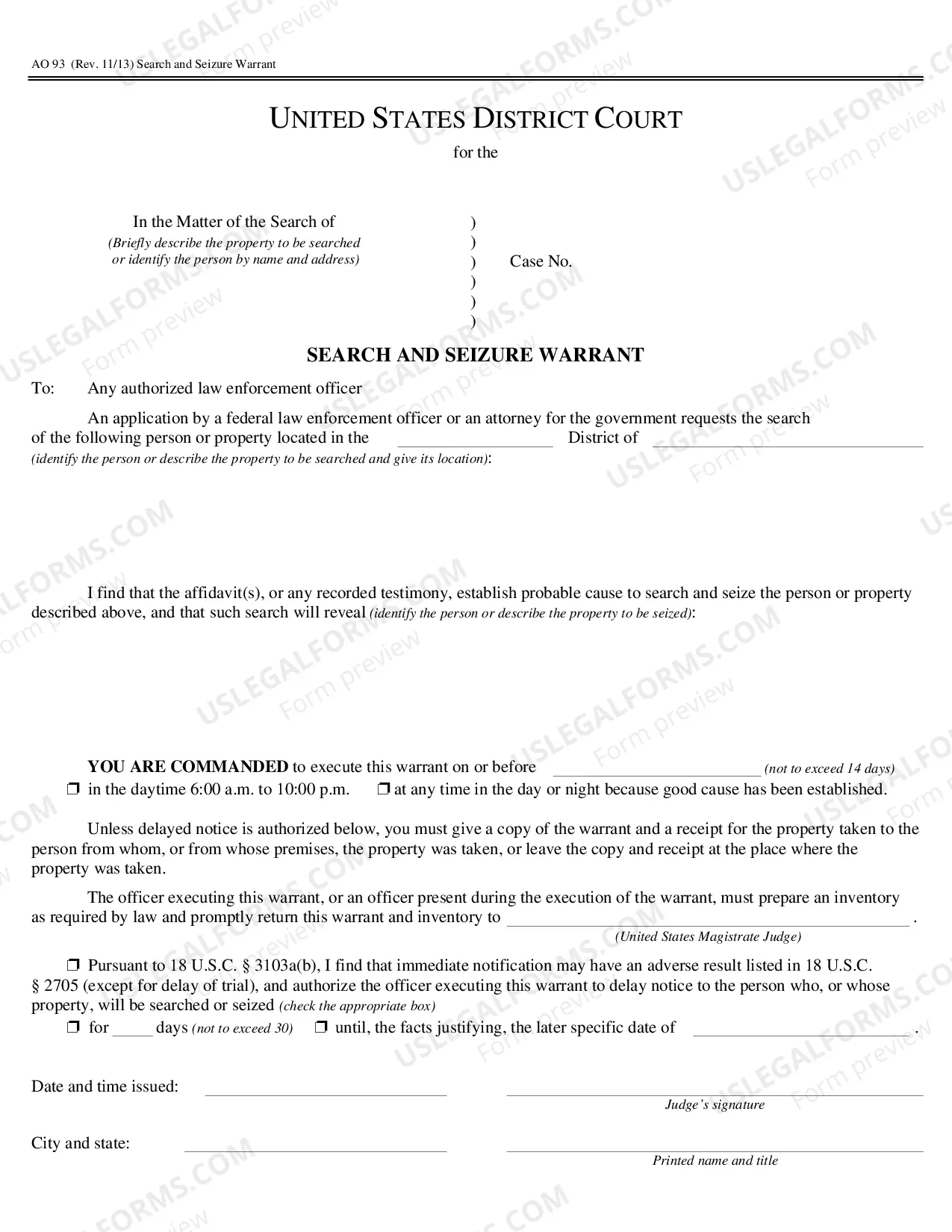
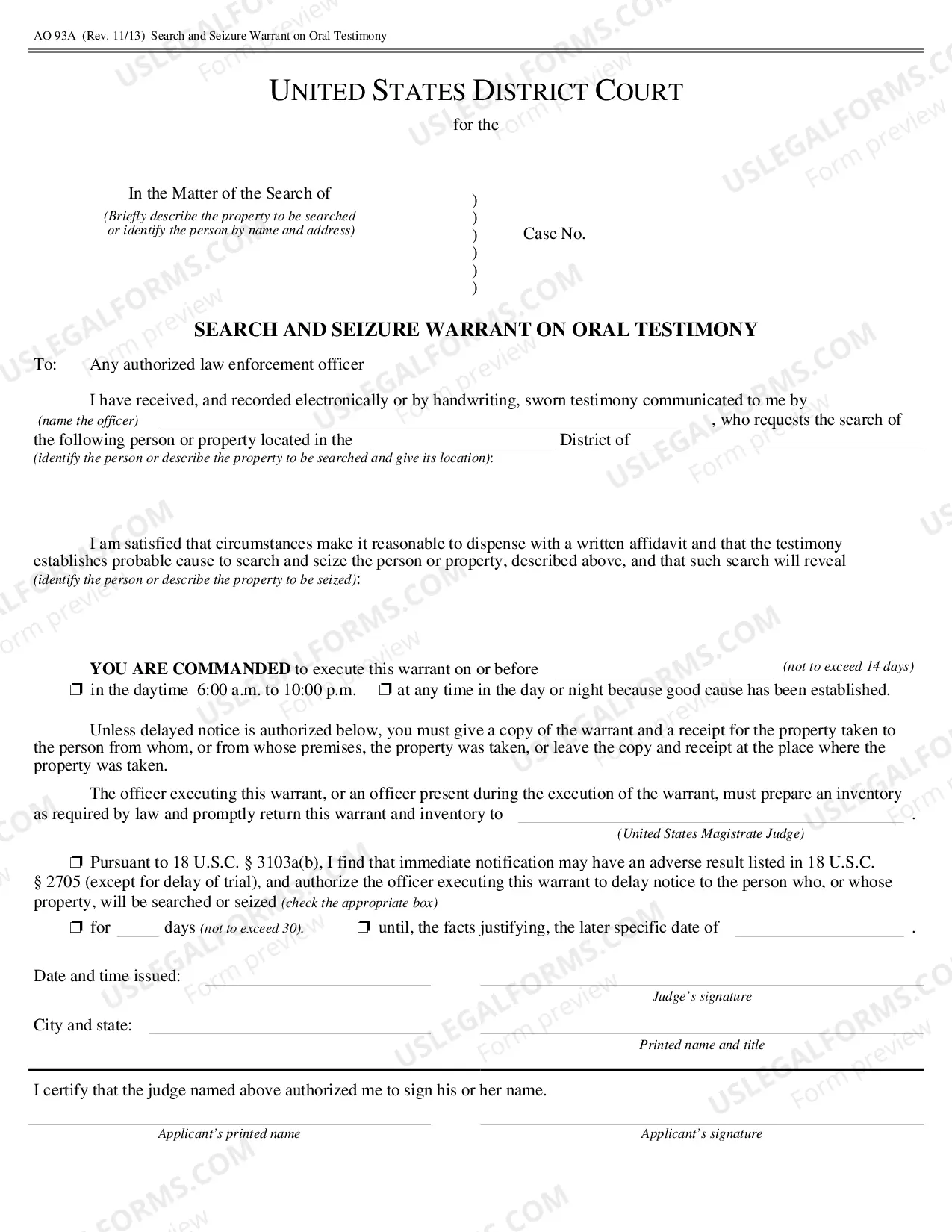
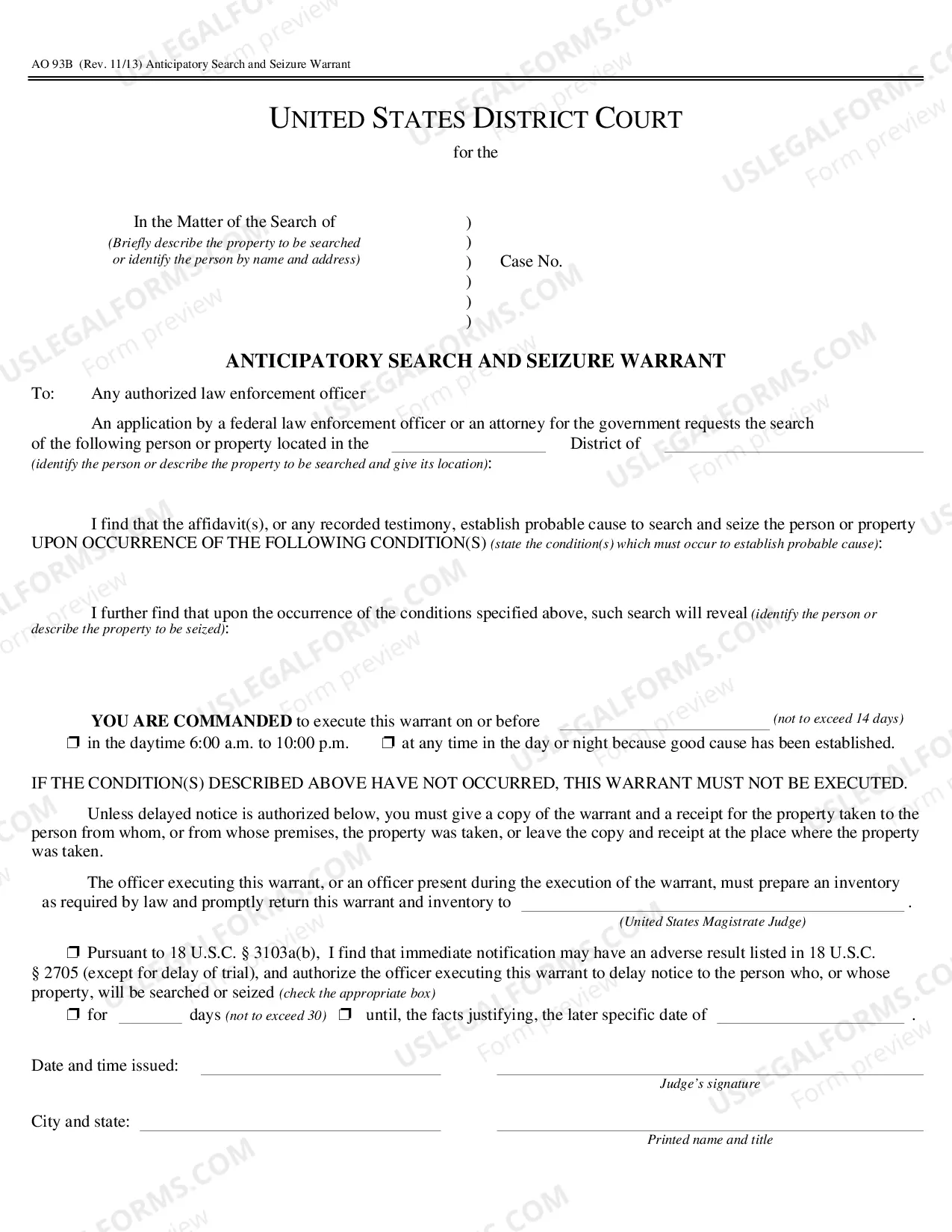
A Kentucky Search and Seizure Warrant is a document issued by a judge that authorizes law enforcement personnel to search a specific location and/or seize specific items. The warrant must be based on probable cause that a crime has been committed, or is in the process of being committed, and must specify the location to be searched and the items to be seized. There are two primary types of Kentucky Search and Seizure Warrant: a search warrant and an arrest warrant. A search warrant authorizes law enforcement to search a specific location for items related to the alleged crime. An arrest warrant authorizes law enforcement to take a person into custody based on probable cause that they have committed a crime.
Kentucky Search and Seizure Warrant
State:
Kentucky
Control #:
KY-SKU-0443
Format:
PDF
Instant download
This website is not affiliated with any governmental entity
Public form
Description
Search and Seizure Warrant
Free preview
Get your form ready online
Our built-in tools help you complete, sign, share, and store your documents in one place.
Built-in online Word editor
Make edits, fill in missing information, and update formatting in US Legal Forms—just like you would in MS Word.
Export easily
Download a copy, print it, send it by email, or mail it via USPS—whatever works best for your next step.
E-sign your document
Sign and collect signatures with our SignNow integration. Send to multiple recipients, set reminders, and more. Go Premium to unlock E-Sign.
Notarize online 24/7
If this form requires notarization, complete it online through a secure video call—no need to meet a notary in person or wait for an appointment.
Store your document securely
We protect your documents and personal data by following strict security and privacy standards.
Make edits, fill in missing information, and update formatting in US Legal Forms—just like you would in MS Word.
Download a copy, print it, send it by email, or mail it via USPS—whatever works best for your next step.
Sign and collect signatures with our SignNow integration. Send to multiple recipients, set reminders, and more. Go Premium to unlock E-Sign.

If this form requires notarization, complete it online through a secure video call—no need to meet a notary in person or wait for an appointment.

We protect your documents and personal data by following strict security and privacy standards.
Looking for another form?
How to fill out Kentucky Search And Seizure Warrant?
Managing legal documentation necessitates focus, precision, and utilizing correctly-prepared forms. US Legal Forms has been assisting individuals across the country in doing just that for 25 years, so when you select your Kentucky Search and Seizure Warrant template from our platform, you can be assured that it complies with federal and state regulations.
Engaging with our service is straightforward and efficient. To acquire the necessary documentation, all you require is an account with an active subscription. Here’s a concise guide for you to obtain your Kentucky Search and Seizure Warrant in minutes.
All documents are designed for multiple uses, such as the Kentucky Search and Seizure Warrant you see on this page. If you require them in the future, you can fill them out without repaying - simply access the My documents tab in your profile and complete your document whenever you need it. Try US Legal Forms and accomplish your business and personal documentation rapidly and in full legal compliance!
- Ensure to thoroughly review the form content and its alignment with general and legal standards by previewing it or reading its description.
- Look for an alternative official form if the one you initially opened does not correspond to your needs or state laws (the tab for that is located at the top page corner).
- Log in to your account and save the Kentucky Search and Seizure Warrant in your preferred format. If it’s your first time using our website, click Buy now to proceed.
- Register for an account, select your subscription plan, and complete payment with your credit card or PayPal account.
- Choose the format in which you want to receive your document and click Download. Print the blank or add it to a professional PDF editor for electronic preparation.
Form popularity
FAQ
A judge issues a search warrant to authorize law enforcement officers to search a particular location and seize specific items. To obtain a search warrant, police must show probable cause that a crime was committed and that items connected to the crime are likely to be found in the place specified by the warrant.
An order of seizure is used to seize specified items of personal property whose ownership and possession is disputed.
You are not considered to have a reasonable privacy interest in property left out in plain view. This means, for example, that if you leave a gun or bag of marijuana out on the seat of the vehicle and you are stopped, the police may be able to seize it without a search warrant if it is in plain view.
Search and seizure is the legal term used to describe a law enforcement agent's examination of a person's home, vehicle, or business to find evidence that a crime has been committed. If evidence is found, the agent may then ?seize? it. Search and seizure also includes placing an individual under arrest.
You can be charged so long as you made no attempt to appear within 14 days of your court appearance date. The penalty for violating this section is a maximum fine of $1000 and no more than 6-months in the county jail.
A search or seizure is generally considered to be unreasonable without a warrant, subject to only a few exceptions. To obtain a search warrant or arrest warrant, the law enforcement officer must demonstrate probable cause that a search or seizure is justified.
A seizure happens if the officers take possession of items during the search. The Fourth and the Fourteenth Amendments of the U.S. Constitution require that any search of a person or their premises (including a vehicle), and any seizure of tangible evidence, must be reasonable.
Section 10 of the Constitution of Kentucky which forbids unreasonable searches and seizures had its fatherhood in the 4th Amendment to the Constitution of the United States, pro- posed in 1789 and adopted in 1791, along with nine other im- portant additions to our national fundamental law.