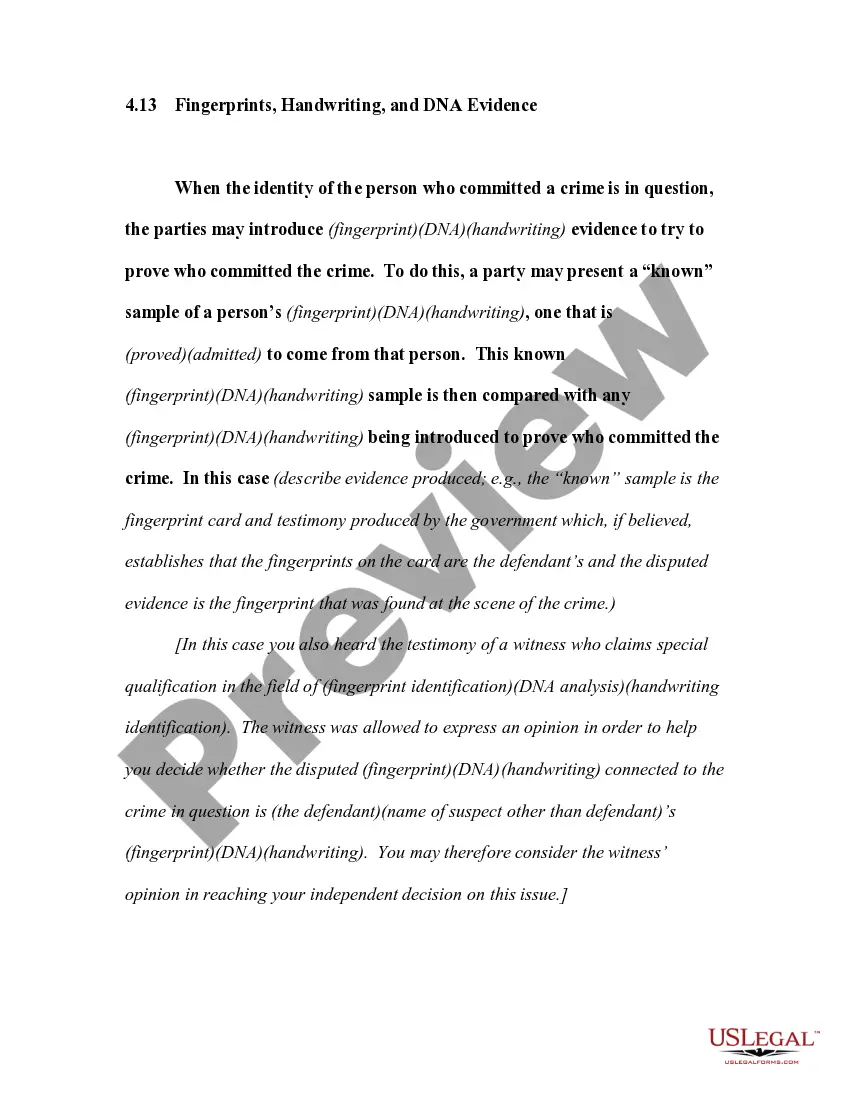
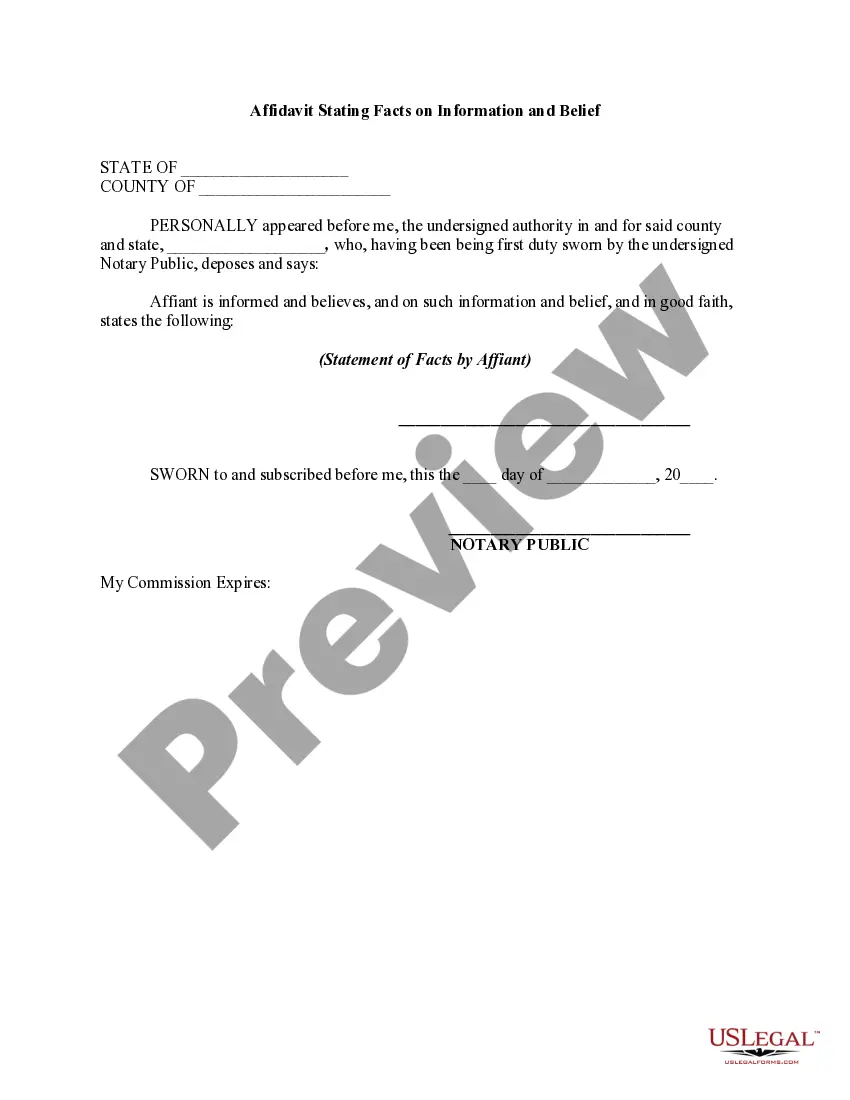
Kentucky Affidavit Stating Facts on Information and Belief
Description
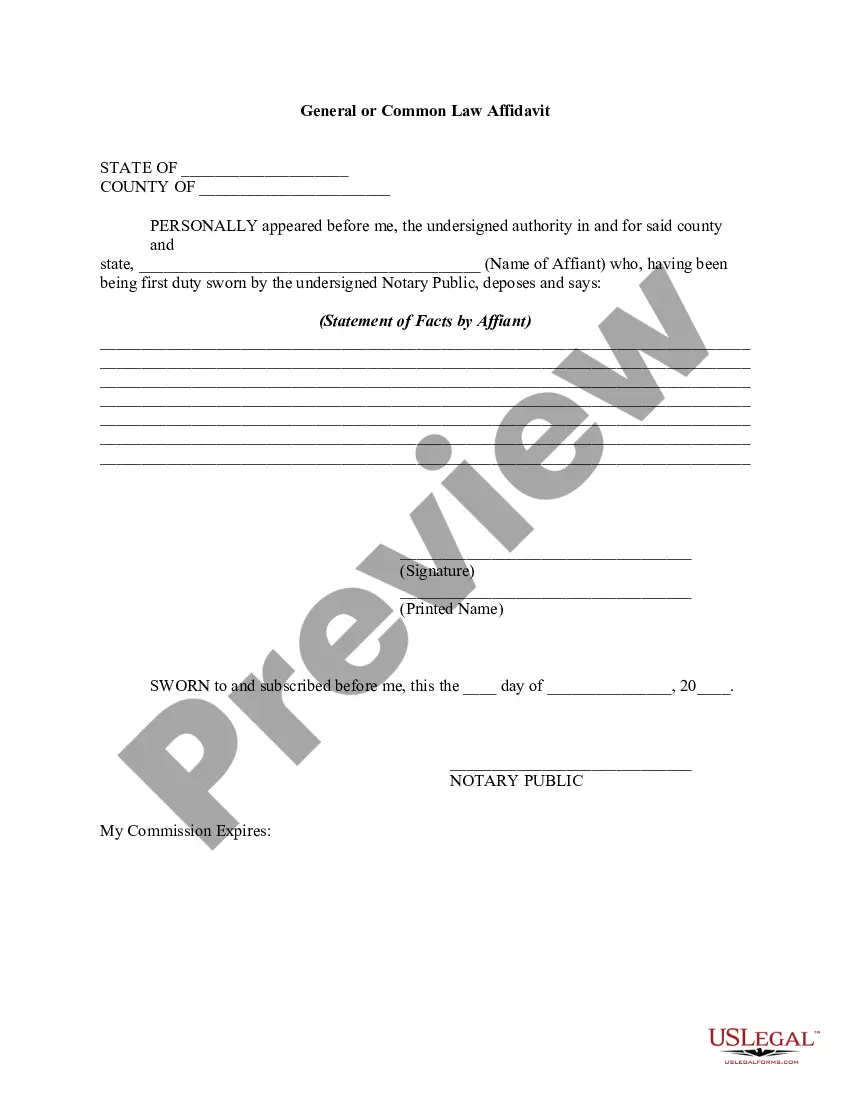
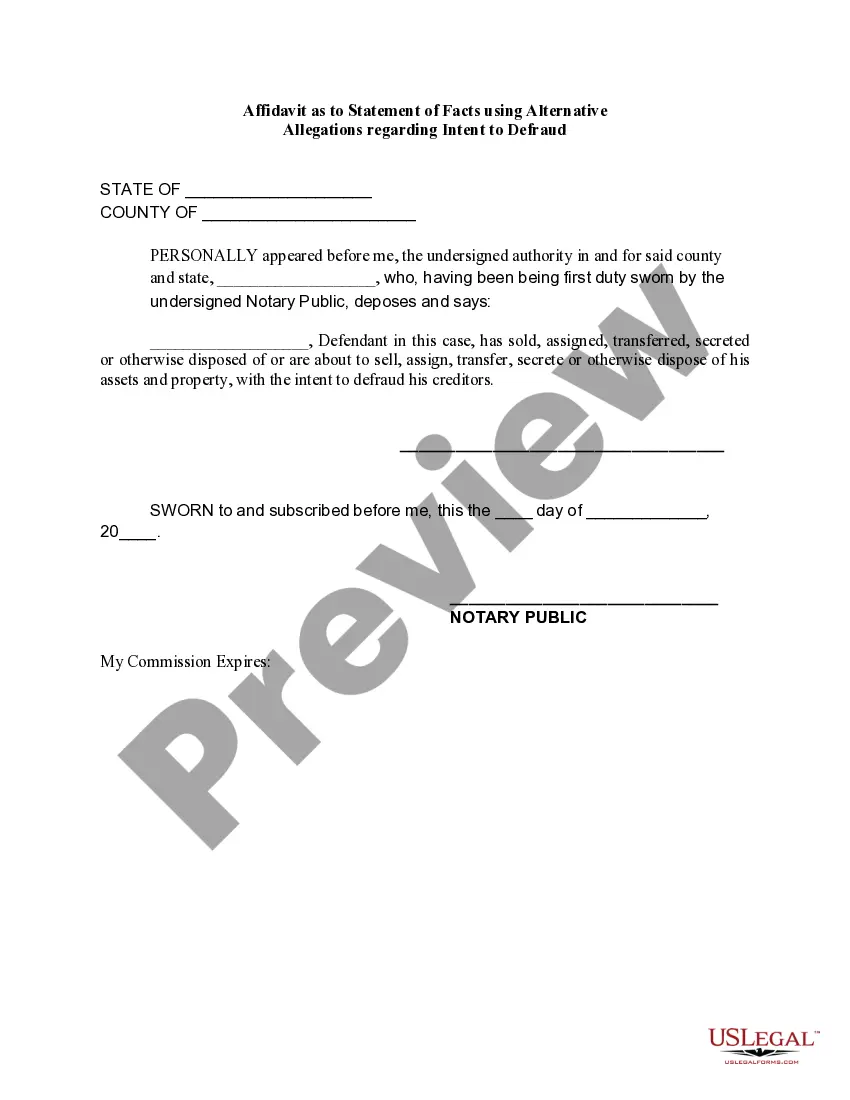
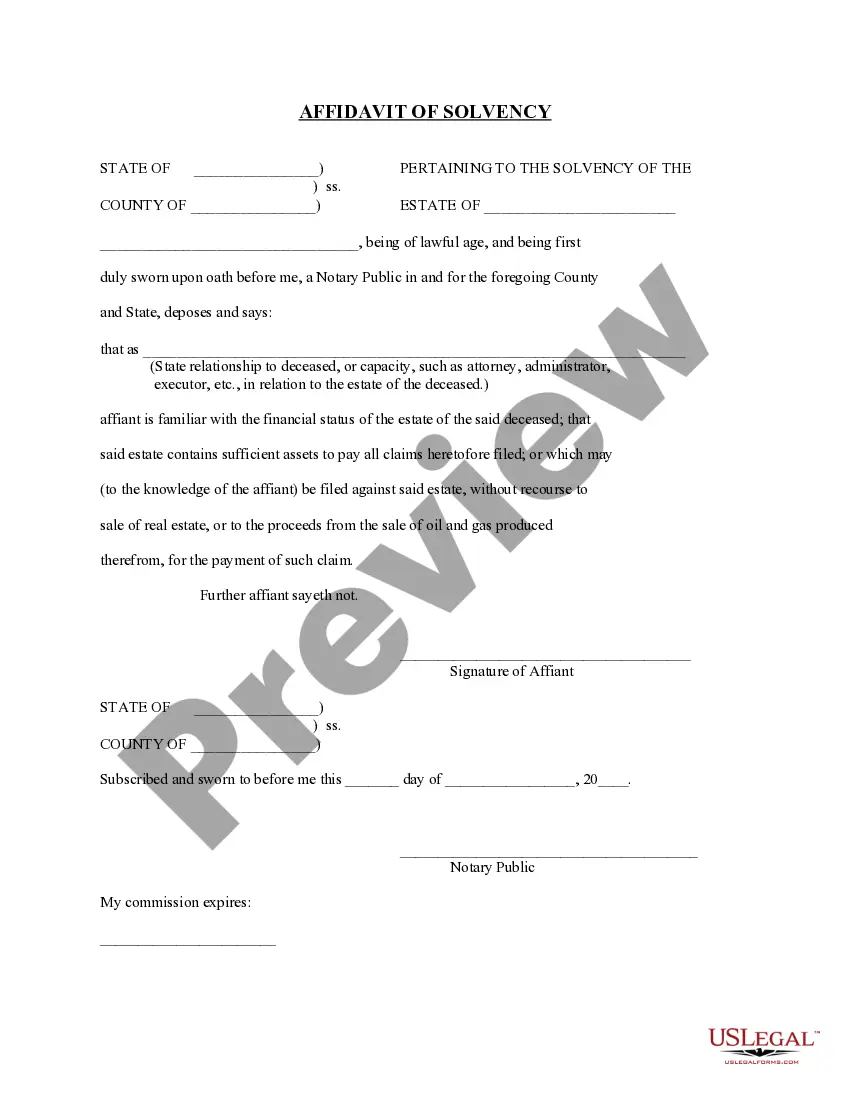
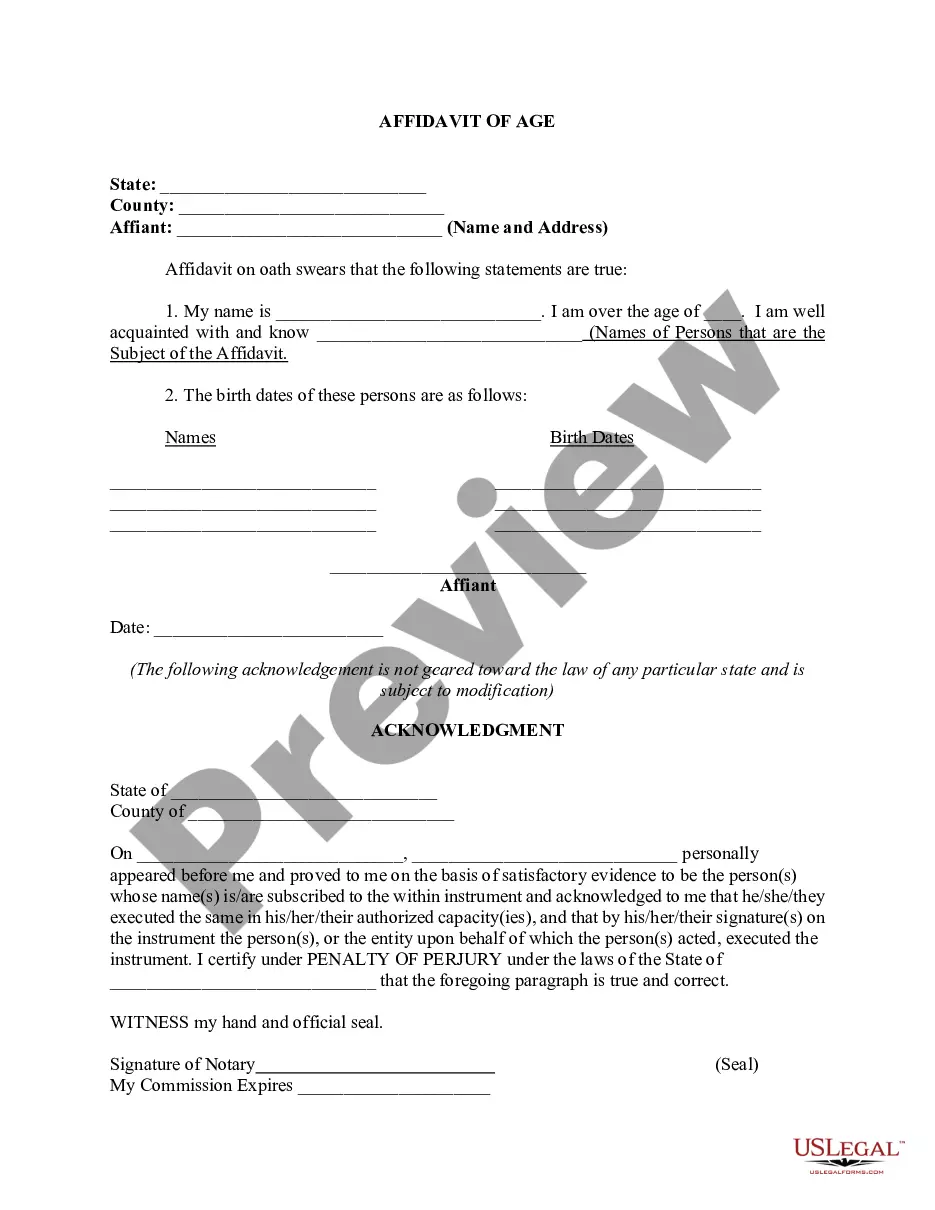

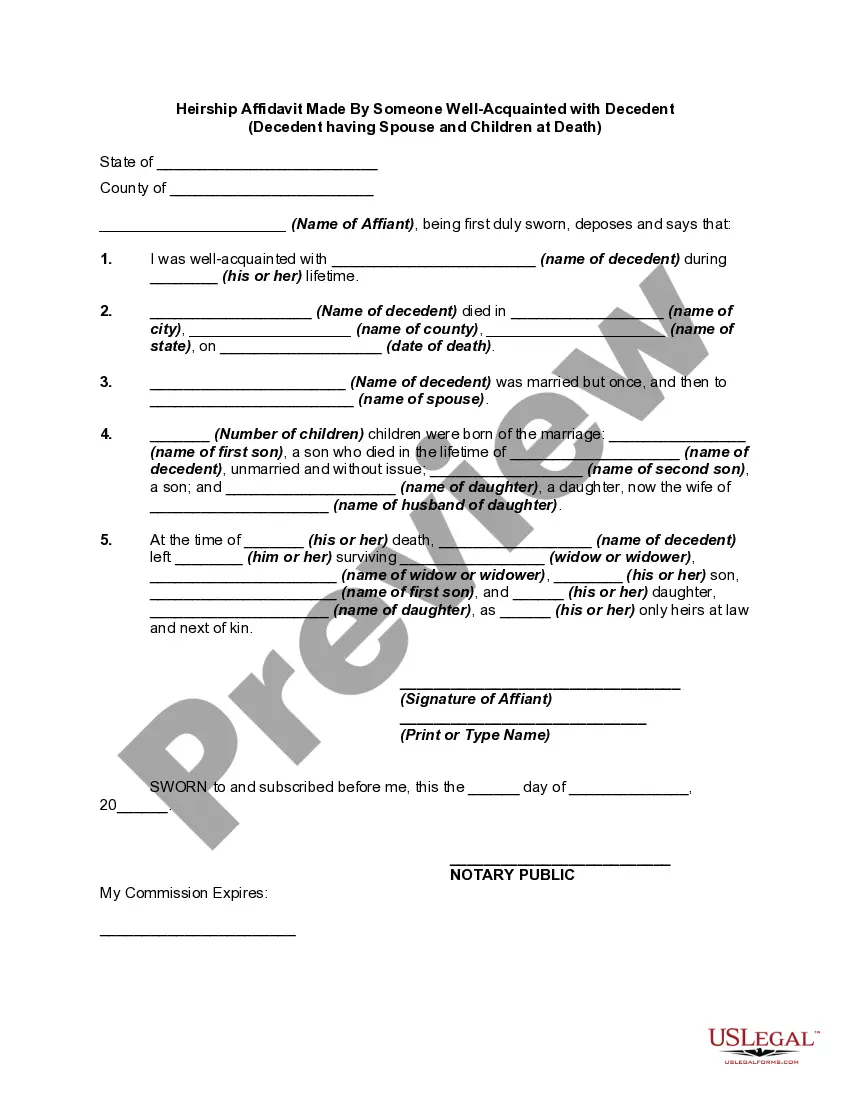


How to fill out Affidavit Stating Facts On Information And Belief?
Selecting the appropriate legal document template can be challenging. Of course, there are numerous designs accessible online, but how can you locate the legal form you need? Utilize the US Legal Forms website. The service offers a plethora of templates, including the Kentucky Affidavit Stating Facts on Information and Belief, which you can utilize for both business and personal purposes. All of the forms are reviewed by experts and comply with federal and state regulations.
If you are already registered, Log In to your account and click the Download button to retrieve the Kentucky Affidavit Stating Facts on Information and Belief. Use your account to browse the legal forms you have previously purchased. Navigate to the My documents section of your account to obtain another copy of the document you need.
If you are a new user of US Legal Forms, here are simple steps for you to follow: First, ensure you have selected the correct form for your city/region. You can preview the form using the Review button and examine the form outline to confirm it is suitable for you. If the form does not meet your needs, use the Search field to find the appropriate form. Once you are confident that the form is correct, click the Buy now button to purchase the form. Choose the pricing plan you wish and enter the required information. Create your account and pay for the order using your PayPal account or credit card. Select the document format and download the legal document template to your device. Complete, edit, print, and sign the acquired Kentucky Affidavit Stating Facts on Information and Belief.
Remember to keep your personal information secure while using the online platform.
- US Legal Forms is the largest repository of legal forms where you can find a variety of document templates.
- Utilize the service to obtain well-crafted documents that comply with state requirements.
- Ensure to thoroughly review each form before making a purchase.
- Consider the specific needs of your situation when selecting a template.
- Take advantage of your account to access previously purchased forms easily.
- Follow the straightforward process for new users to set up an account efficiently.
Form popularity
FAQ
Rule 11 of the Federal Rules of Civil Procedure imposes a threshold prefiling investigation that, while appearing straightforward, might leave doubt about what satisfies the requisite inquiry. Under Rule 11, there is an affirmative duty to investigate both as to law and as to fact before a complaint is filed.
SUPERIOR COURT CIVIL RULES (CR) CR 11 - SIGNING AND DRAFTING OF PLEADINGS, MOTIONS, AND LEGAL. MEMORANDA; SANCTIONS.
Every pleading, motion and other paper of a party represented by an attorney shall be signed by at least one attorney of record in his individual name, whose address shall be stated. A party who is not represented by an attorney shall sign his pleading, motion, or other paper and state his address.
All Affidavits must be notarized in all circumstances, as the notary is witnessing the signature of the individual who is swearing under penalty of perjury.
Rule 11(b) requires attorneys to make reasonable inquires to determine that their pleadings motions, and other papers presented to the court are ?not being presented for any improper purpose, such as to harass, cause unnecessary , or needlessly increase the cost of litigation;? that their ?claims, defenses, and other ...
The term ?to the best of my knowledge and belief? is used in affidavits and court documents to indicate that statements being made are not knowingly false. Assuming your client signs a document under ?knowledge and belief?, does he have a duty to verify the truth or accuracy of his statements?
A defendant may plead guilty, not guilty, or, with the consent of the court, nolo contendere. If the defendant refuses to plead, or if a defendant corporation fails to appear, the court must enter a plea of not guilty.