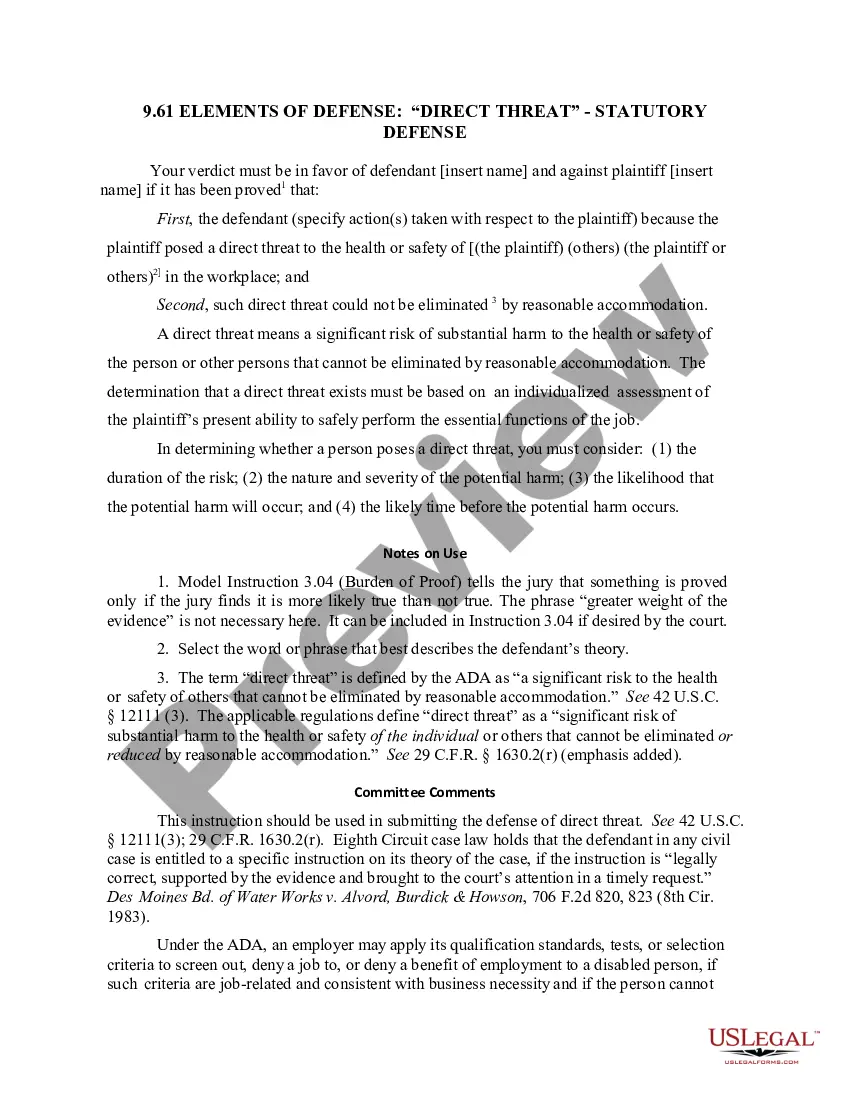
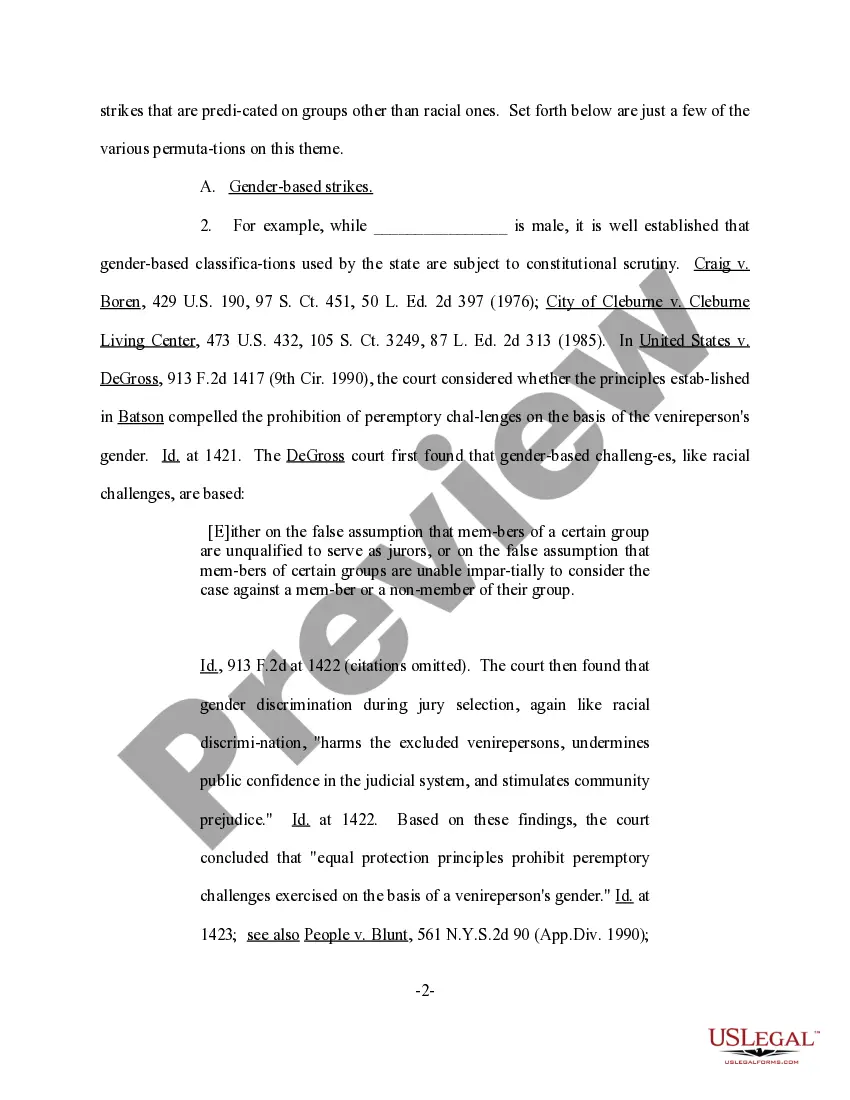
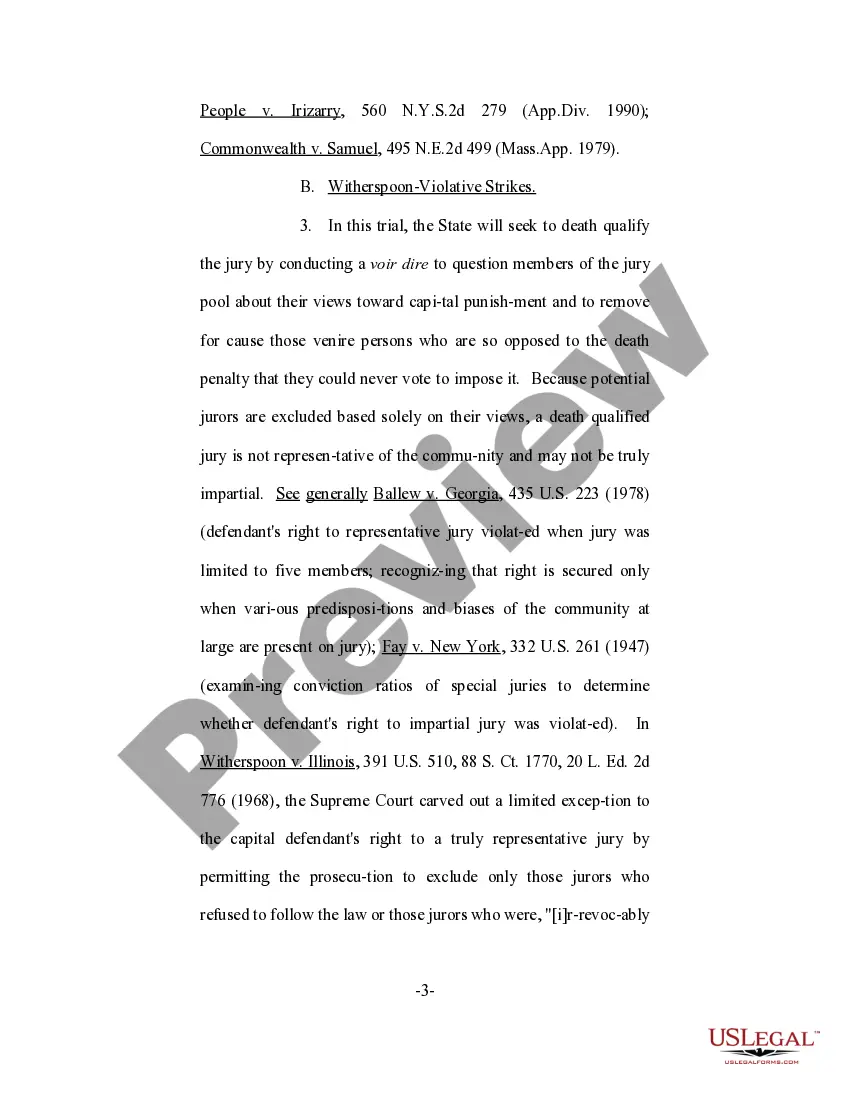
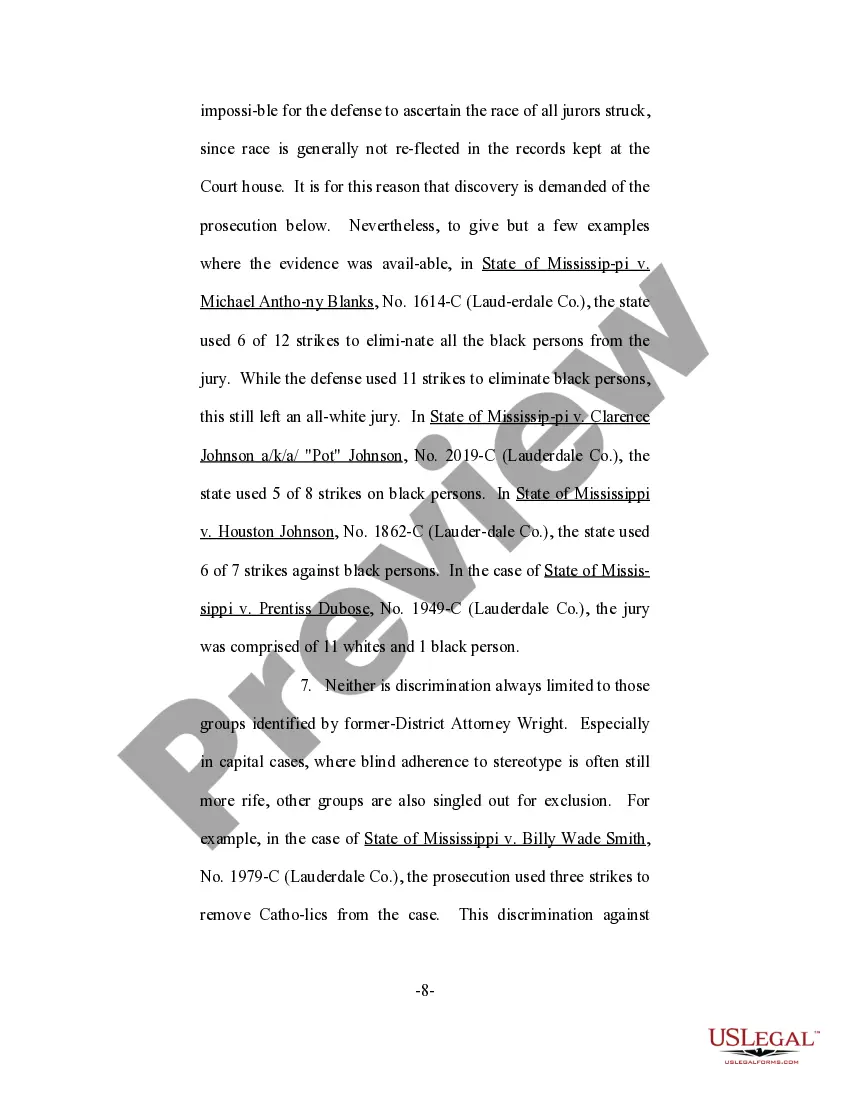
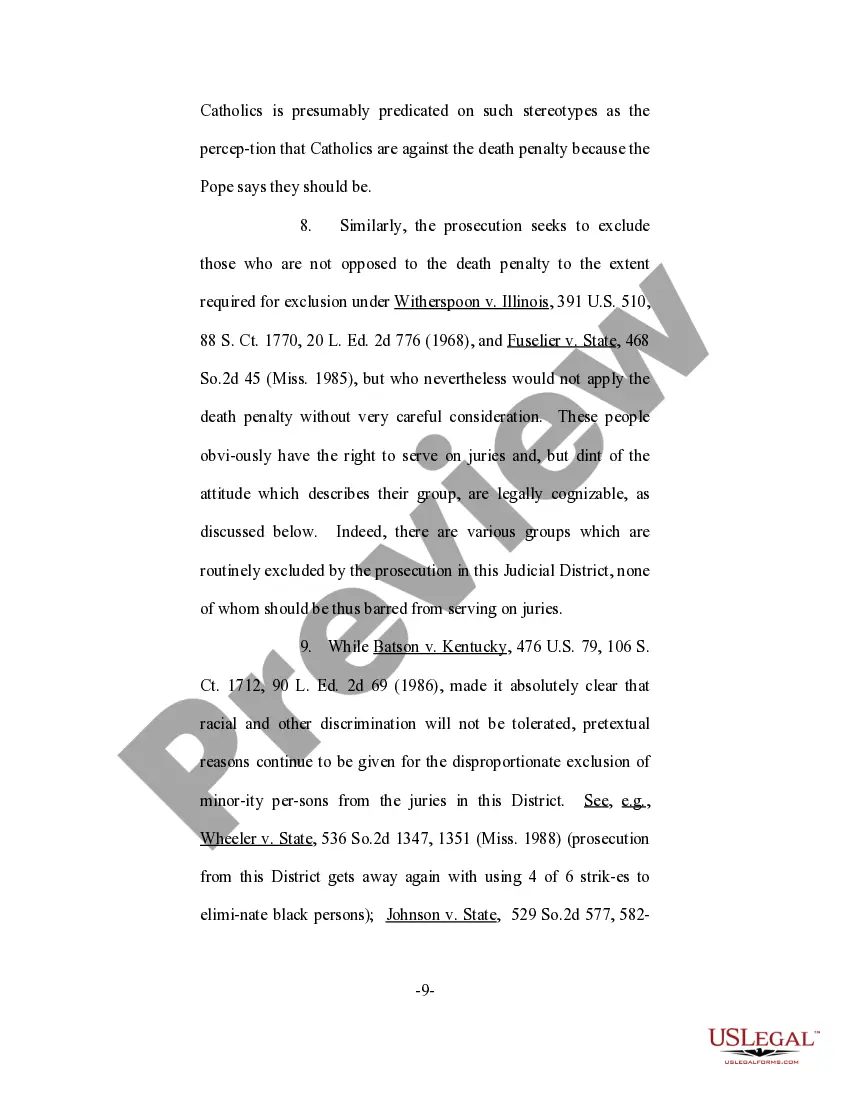
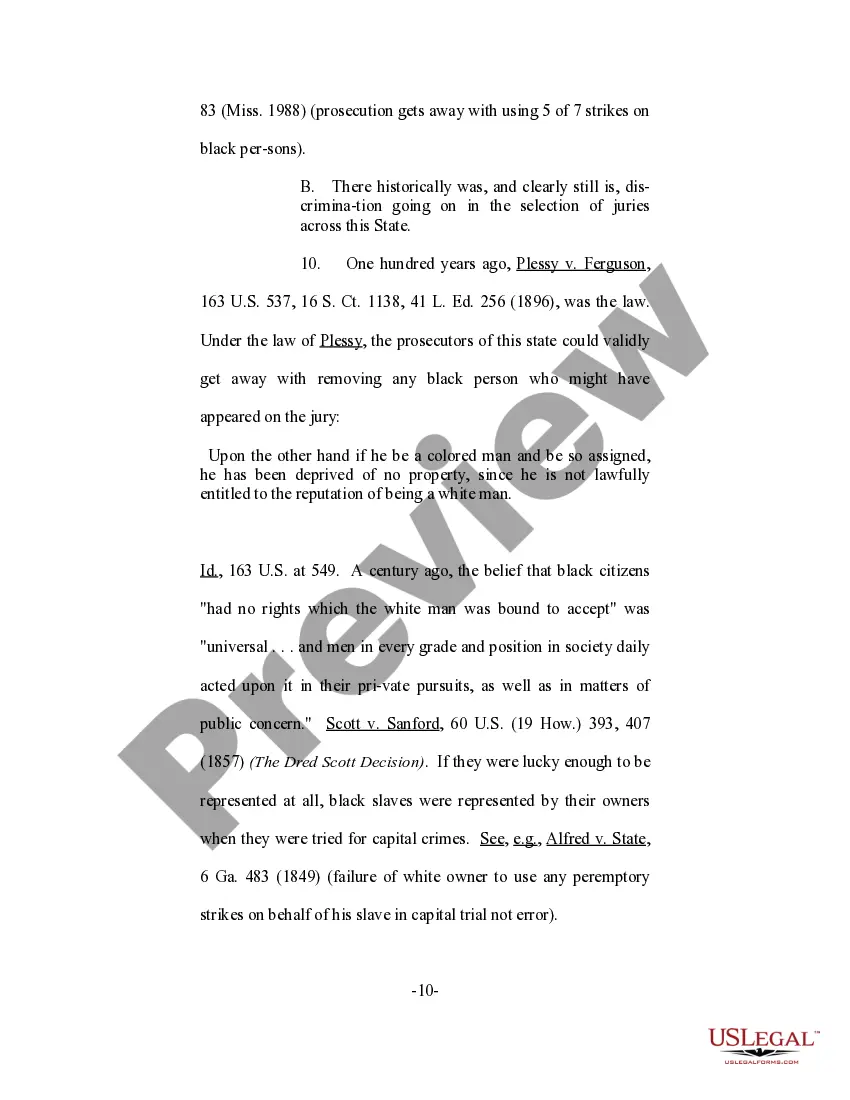
Kentucky Motion to Preclude the Prosecution from Using Peremptory Challenges to Exclude Black Persons and Members of Other Groups
Description

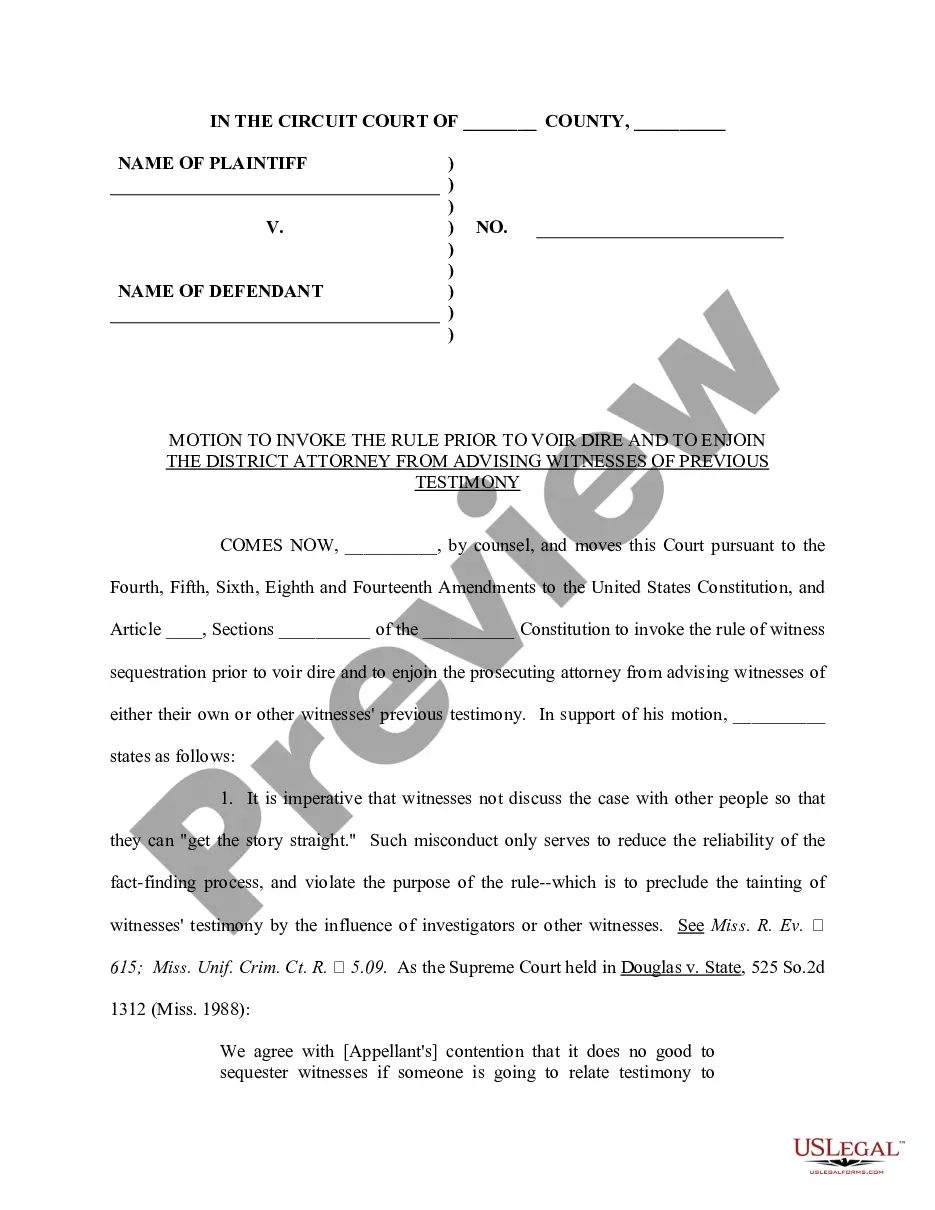
How to fill out Motion To Preclude The Prosecution From Using Peremptory Challenges To Exclude Black Persons And Members Of Other Groups?
US Legal Forms - one of the largest collections of legal documents in the United States - offers a range of legal form templates that you can download or print. By using the website, you can access thousands of forms for business and personal use, organized by categories, states, or keywords. You can find the latest versions of forms such as the Kentucky Motion to Prevent the Prosecution from Utilizing Peremptory Challenges to Exclude Black Individuals and Members of Other Groups within moments.
If you are already a member, Log In and download the Kentucky Motion to Prevent the Prosecution from Utilizing Peremptory Challenges to Exclude Black Individuals and Members of Other Groups from your US Legal Forms library. The Download button will be displayed on every form you view. You can access all previously downloaded forms from the My documents section of your account.
If you are using US Legal Forms for the first time, here are some simple instructions to get started: Make sure to have selected the correct form for your area/county. Click the Review button to examine the content of the form. Read the form details to ensure you have chosen the right form. If the form does not meet your requirements, use the Search field at the top of the screen to find one that does. When you are satisfied with the form, confirm your choice by clicking the Buy now button. Then, select the pricing plan you prefer and provide your details to register for an account. Process the payment. Use your credit card or PayPal account to complete the transaction. Choose the format and download the form to your device. Edit. Fill out, modify, print, and sign the downloaded Kentucky Motion to Prevent the Prosecution from Utilizing Peremptory Challenges to Exclude Black Individuals and Members of Other Groups. Each format you added to your account does not have an expiration date and is yours indefinitely. So, if you want to download or print another copy, simply go to the My documents section and click on the form you desire.
- Access the Kentucky Motion to Prevent the Prosecution from Utilizing Peremptory Challenges to Exclude Black Individuals and Members of Other Groups with US Legal Forms, the most comprehensive library of legal document templates.
- Utilize thousands of professional and state-specific templates that meet your business or personal requirements and needs.
Form popularity
FAQ
A Batson challenge is a challenge made by one party in a case to the other party's use of peremptory challenges to eliminate potential jurors from the jury on the basis of sex, race, ethnicity, or religion. A trial usually begins with jury selection.
Reasoning: (Powell, J.): In a 7?2 decision, the Court held that, while a defendant is not entitled to have a jury completely or partially composed of people of his own race, the state is not permitted to use its peremptory challenges to automatically exclude potential members of the jury because of their race.
In Batson v. Kentucky the court ruled that eliminating potential jurors based on race violated both the 6th Amendment's guarantee of a fair trial and the 14th Amendment's equal protection under the law. This landmark case was and still is a crucial victory toward achieving a more fair and representative legal system.
Substantively, parties exercising peremptory challenges are limited by a line of Supreme Court precedent, starting with Batson v. Kentucky, which precludes the use of certain types of discriminatory peremptory challenges. Amendment and the Due Process Clause of the Fourteenth Amendment.
Under Batson v. Kentucky (1986), and later decisions building upon Batson, parties are constitutionally prohibited from exercising peremptory challenges to exclude jurors on the basis of race, ethnicity, or sex.
In Batson, the Supreme Court ruled that a defendant can make a prima facie case for purposeful racial discrimination in jury selection. The term ?Batson challenge? refers to an objection to an opposing party's use of a peremptory strike to exclude a juror from the jury pool on the basis of race.
In 1986, in Batson v. Kentucky,' the United States Supreme Court attempted to curb racial dis- crimination in the use of peremptory challenges to strike potential members of a jury.
Batson v. Kentucky, 476 U.S. 79 (1986), was a landmark decision of the United States Supreme Court ruling that a prosecutor's use of a peremptory challenge in a criminal case?the dismissal of jurors without stating a valid cause for doing so?may not be used to exclude jurors based solely on their race.