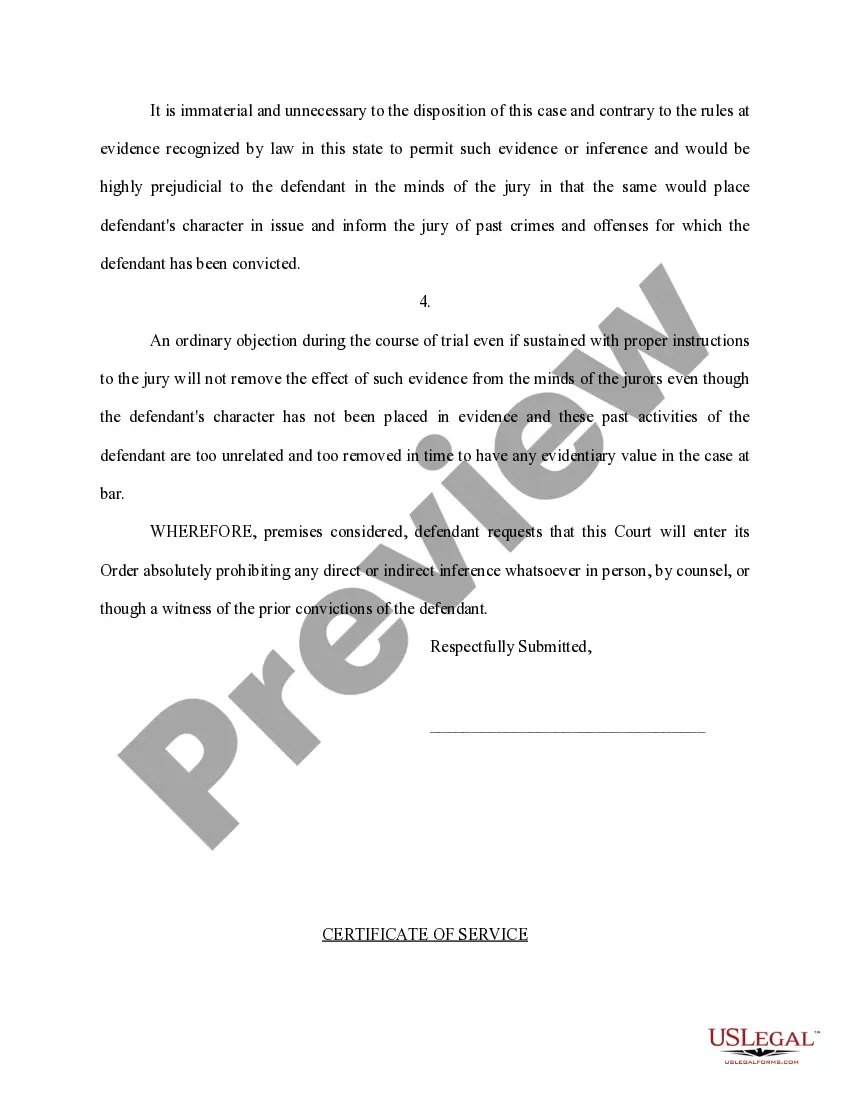
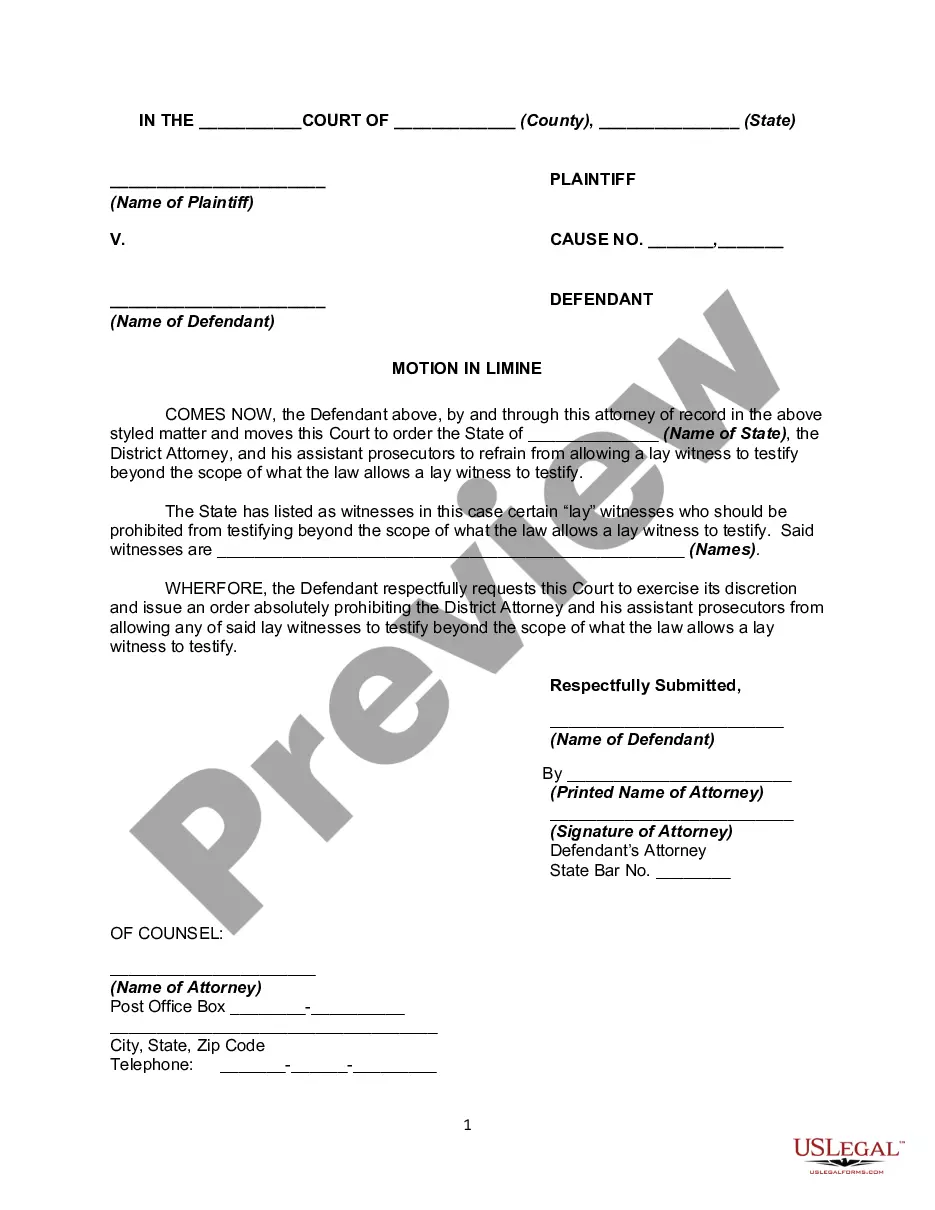
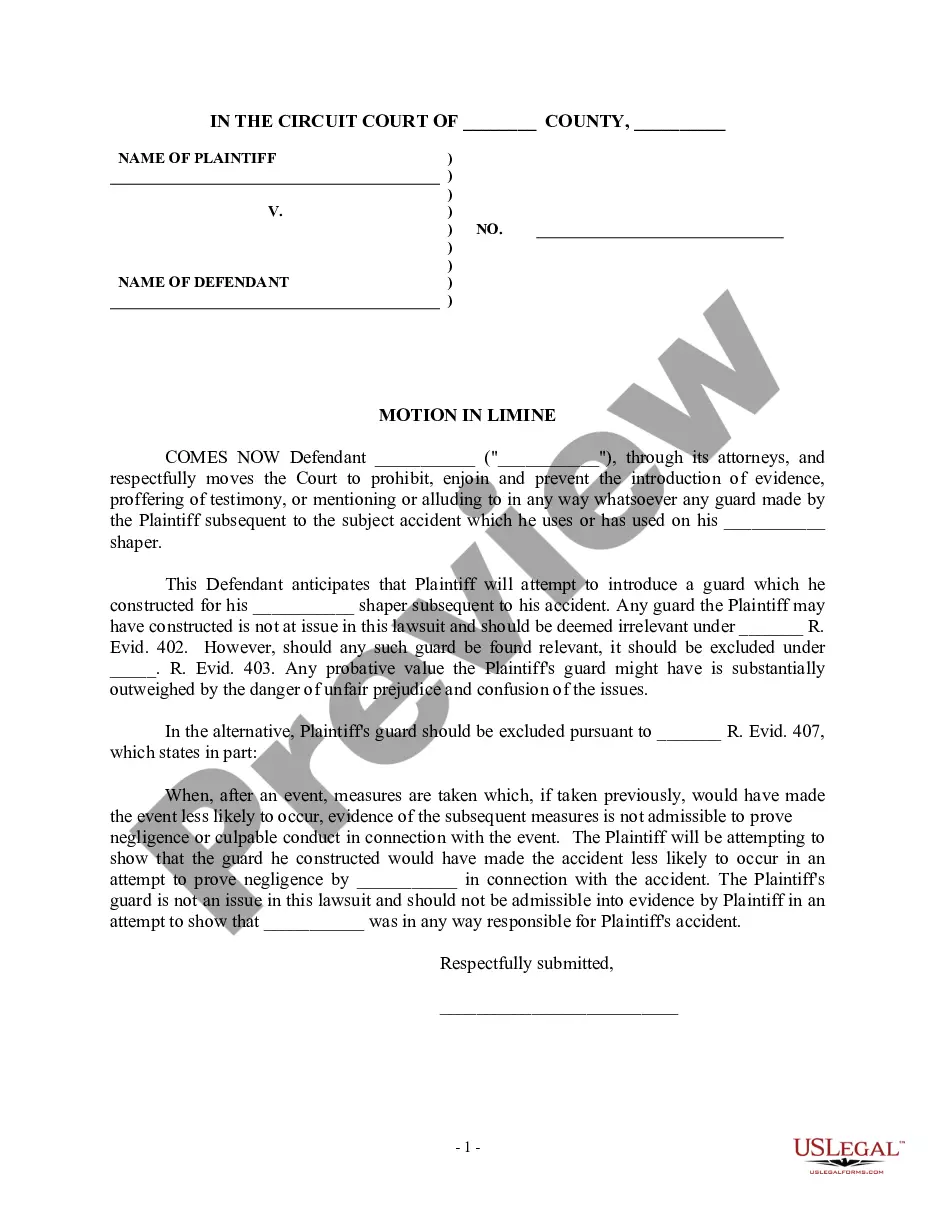
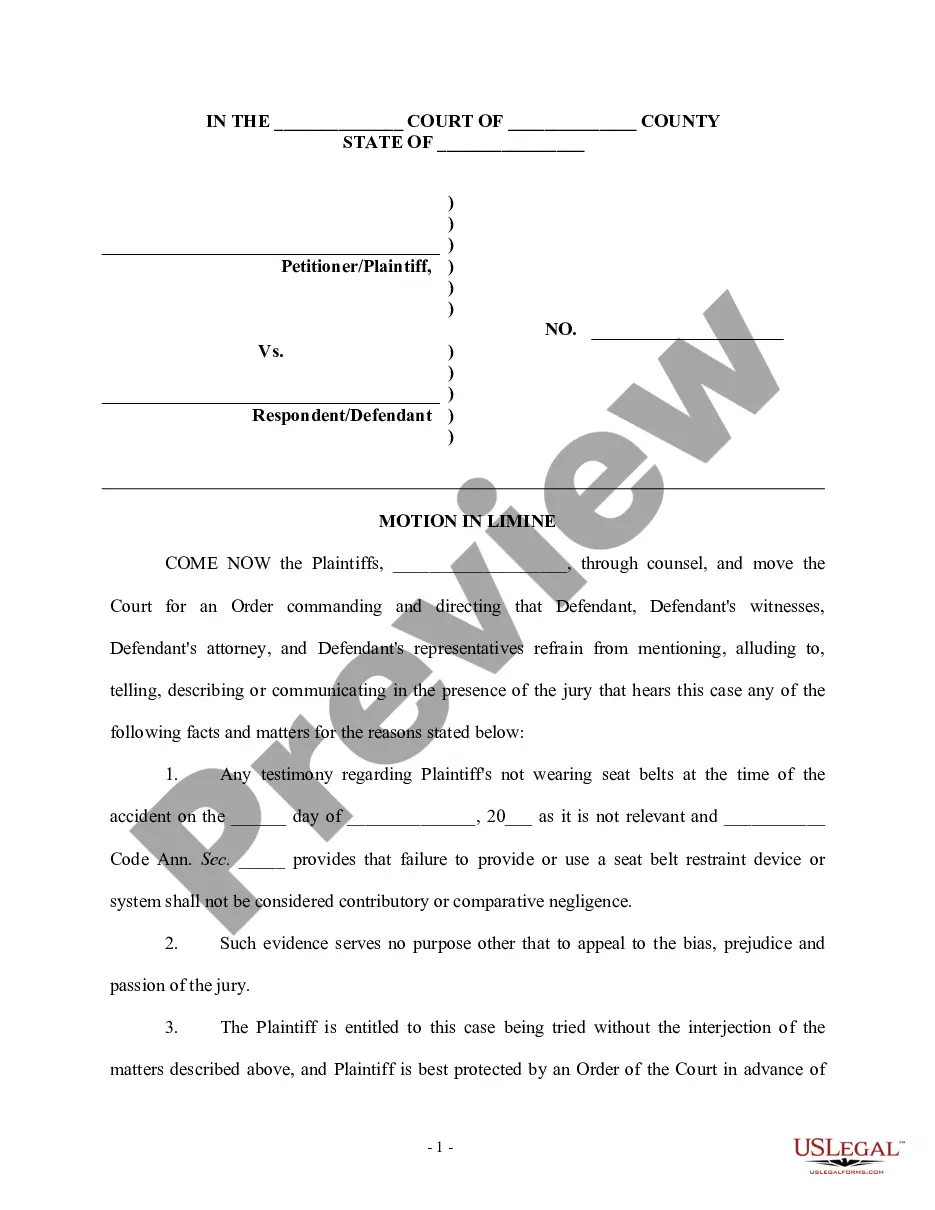
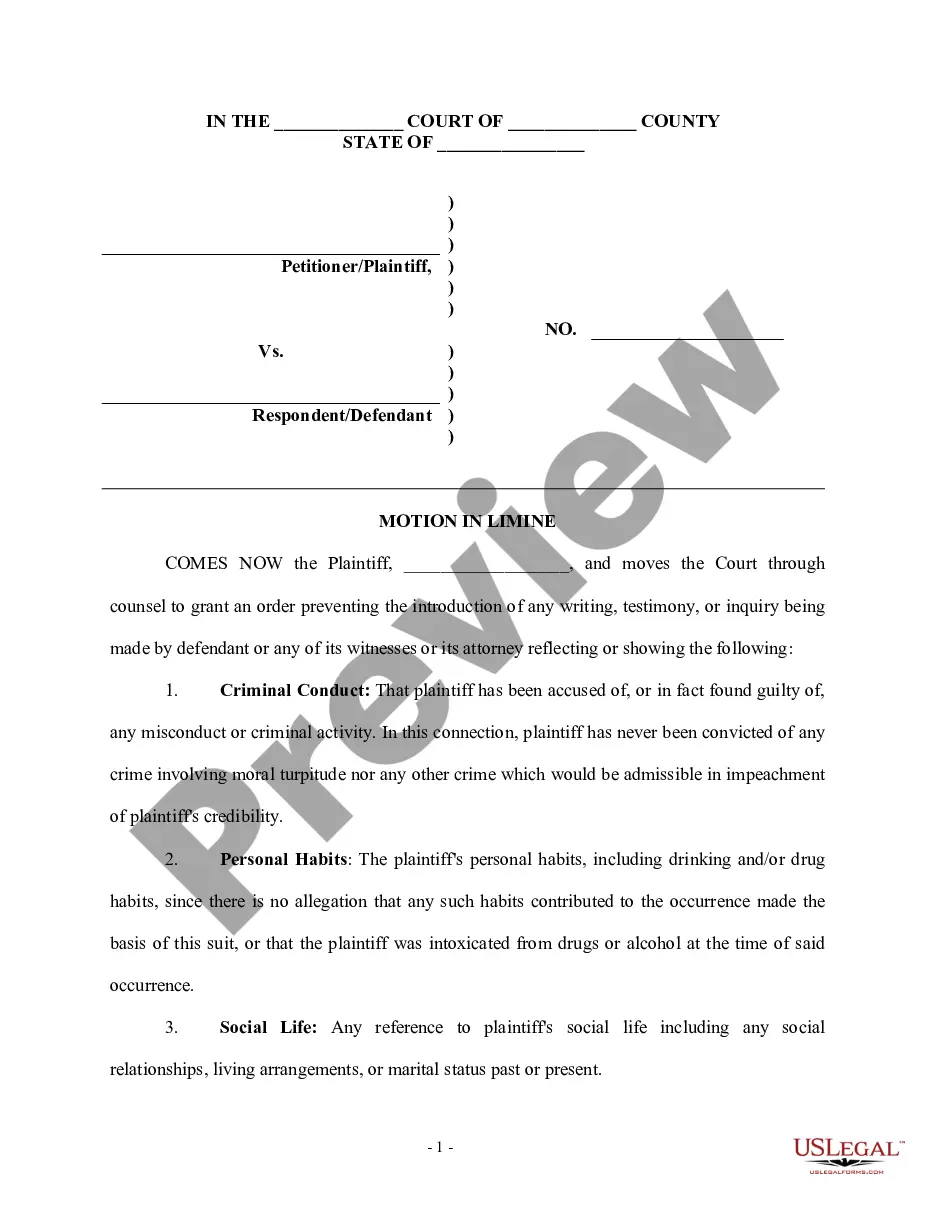
Kentucky Motion in Limine
Description

Get your form ready online
Our built-in tools help you complete, sign, share, and store your documents in one place.
Make edits, fill in missing information, and update formatting in US Legal Forms—just like you would in MS Word.
Download a copy, print it, send it by email, or mail it via USPS—whatever works best for your next step.
Sign and collect signatures with our SignNow integration. Send to multiple recipients, set reminders, and more. Go Premium to unlock E-Sign.
If this form requires notarization, complete it online through a secure video call—no need to meet a notary in person or wait for an appointment.
We protect your documents and personal data by following strict security and privacy standards.

Make edits, fill in missing information, and update formatting in US Legal Forms—just like you would in MS Word.

Download a copy, print it, send it by email, or mail it via USPS—whatever works best for your next step.

Sign and collect signatures with our SignNow integration. Send to multiple recipients, set reminders, and more. Go Premium to unlock E-Sign.

If this form requires notarization, complete it online through a secure video call—no need to meet a notary in person or wait for an appointment.

We protect your documents and personal data by following strict security and privacy standards.
Looking for another form?
How to fill out Motion In Limine?
Are you presently in the location where you will require documents for potential organizational or personal reasons almost every day.
There are numerous legal document templates available online, but finding ones you can trust is not straightforward.
US Legal Forms offers a vast selection of form templates, including the Kentucky Motion in Limine, designed to adhere to state and federal requirements.
Once you find the appropriate form, click on Buy now.
Choose the payment plan you prefer, fill in the required information to create your account, and pay for the transaction using your PayPal or credit card. Select a convenient file format and download your copy. Access all the document templates you have purchased in the My documents list. You can download another version of the Kentucky Motion in Limine at any time, if needed. Just choose the desired form to download or print the document template. Utilize US Legal Forms, the most extensive collection of legal forms, to save time and avoid errors. The service provides professionally crafted legal document templates that can be used for various purposes. Create an account on US Legal Forms and start making your life a bit easier.
- If you are already acquainted with the US Legal Forms website and possess an account, simply Log In.
- After that, you can download the Kentucky Motion in Limine template.
- If you do not have an account and wish to start using US Legal Forms, follow these instructions.
- Obtain the form you need and ensure it is for the correct area/county.
- Utilize the Review button to examine the document.
- Check the description to confirm that you have chosen the correct form.
- If the form is not what you need, use the Research field to locate the form that fits your requirements.
Form popularity
FAQ
Examples of motions in limine would be that the attorney for the defendant may ask the judge to refuse to admit into evidence any personal information, or medical, criminal or financial records, using the legal grounds that these records are irrelevant, immaterial, unreliable, or unduly prejudicial, and/or that their ...
A motion in limine is decided by the judge outside of the presence of the jury. The purpose of a motion in limine is to address potentially prejudicial, irrelevant, or inadmissible information that could unduly influence a jury or hinder the fair administration of justice.
A motion in limine is a procedural mechanism that allows litigators to seek to exclude certain evidence from being presented to a jury ? typically evidence that is irrelevant, unreliable, or more prejudicial than probative.
Motions in limine should be carefully drafted to make clear precisely what evidence should be excluded and to explain with as much clarity as possible why the inadmissible evidence is so damaging that its mere mention would be unfairly prejudicial.
Importantly, motions in limine are generally made before a trial begins, and always argued outside the presence of the jury. Thus, a motion in limine allows key evidentiary questions to be decided without the jury present and, if the motion is granted, will preclude the jury from ever learning of the disputed evidence.
The purpose of a motion in limine is to prevent the introduction of matters at trial which are irrelevant, inadmissible or prejudicial. Some key statutes to rely on in excluding those types of evidence from being introduced at trial are Evidence Code sections 350 and 352.
Another way to narrow your motion in limine is to highlight statements, arguments, or lines of questioning by opposing counsel that are in essence "Golden Rule" arguments due to the suggestion that a witness put themselves in the plaintiff's position or the implication that the defendant's conduct endangered the ...