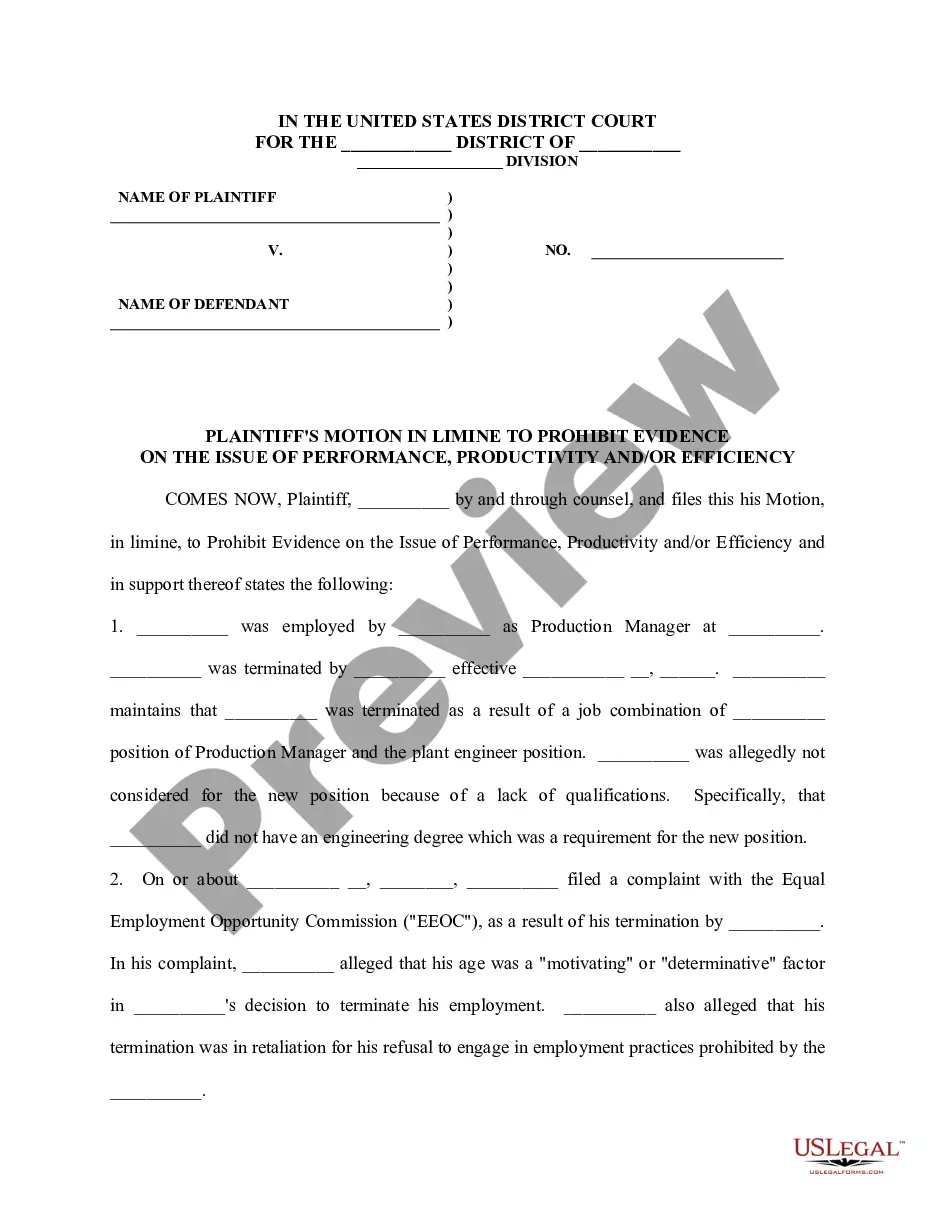
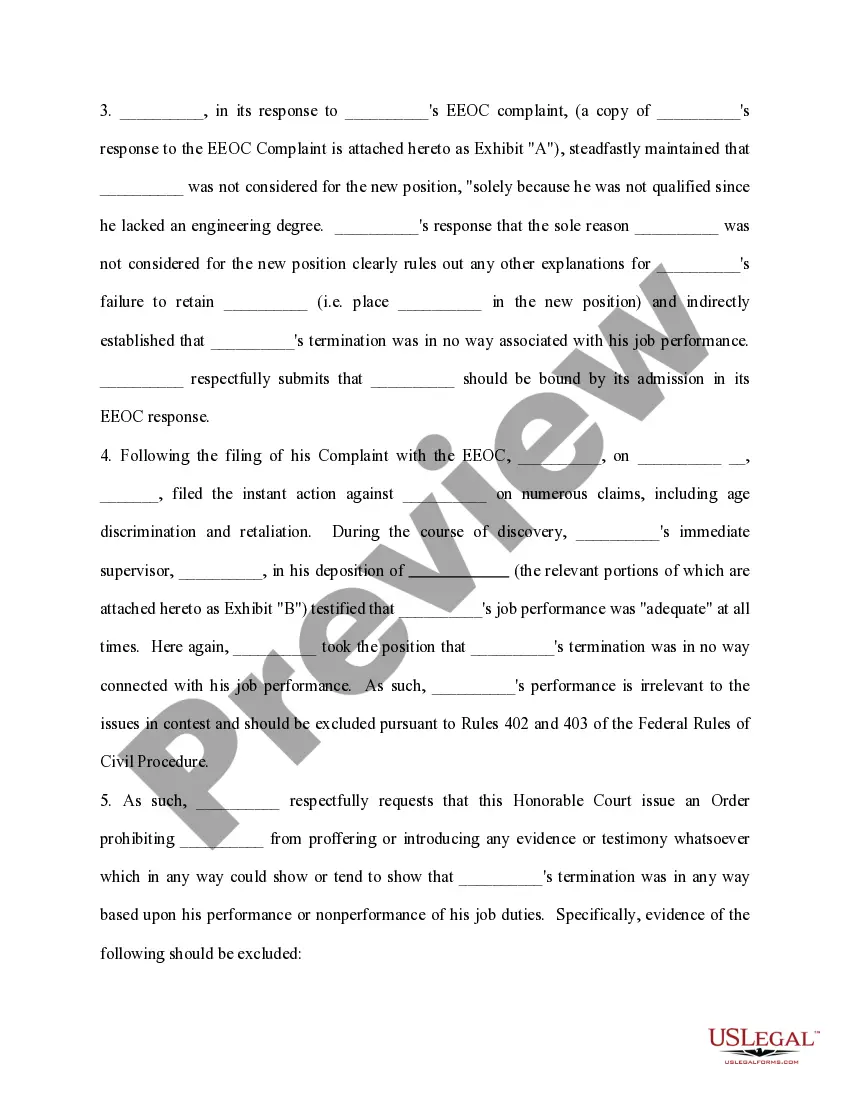
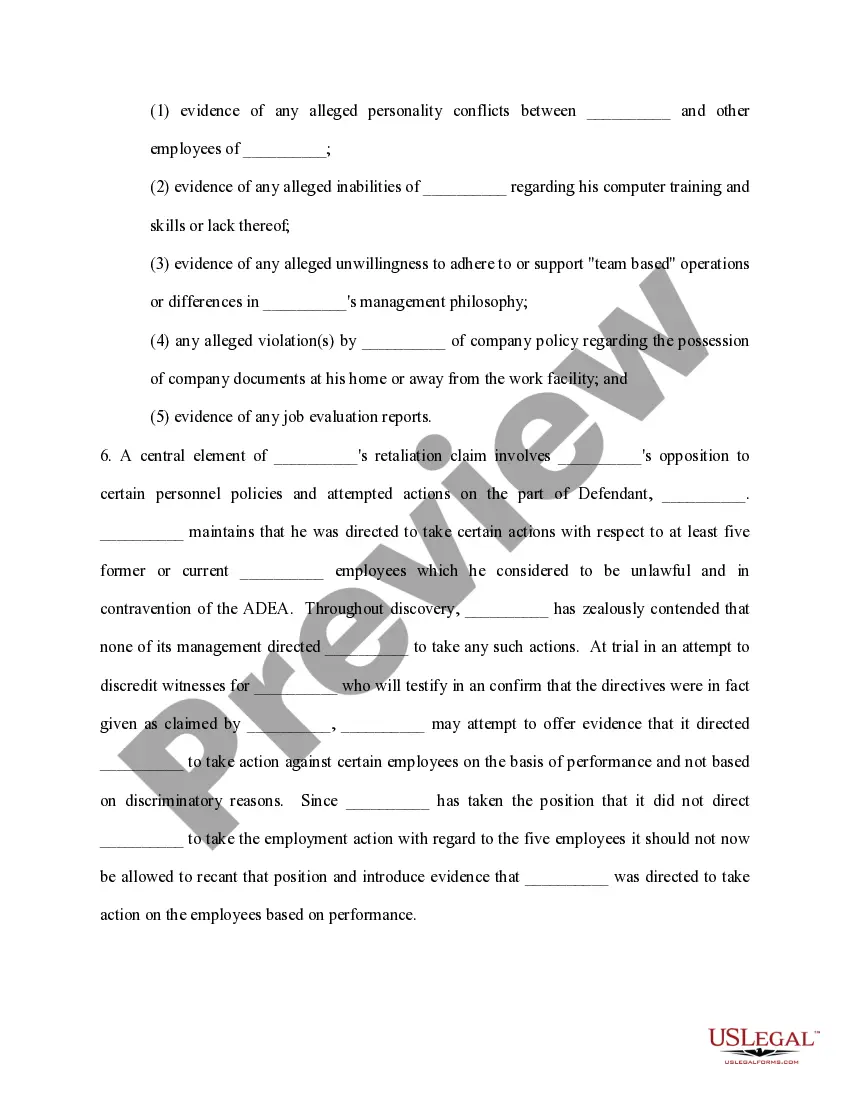
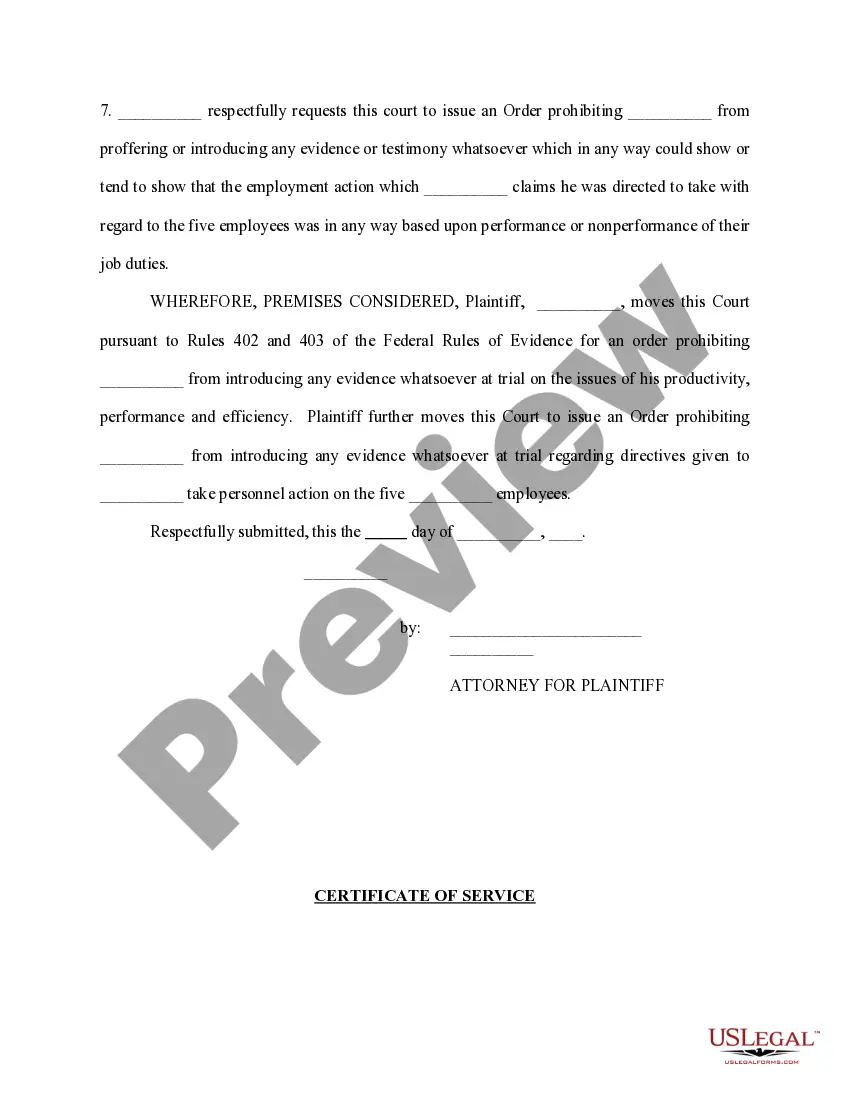
Kentucky Plaintiff's Motion in Limine to Prohibit Evidence on the Issue of Performance, Productivity, and / or Efficiency
Description
Get your form ready online
Our built-in tools help you complete, sign, share, and store your documents in one place.
Make edits, fill in missing information, and update formatting in US Legal Forms—just like you would in MS Word.
Download a copy, print it, send it by email, or mail it via USPS—whatever works best for your next step.
Sign and collect signatures with our SignNow integration. Send to multiple recipients, set reminders, and more. Go Premium to unlock E-Sign.
If this form requires notarization, complete it online through a secure video call—no need to meet a notary in person or wait for an appointment.
We protect your documents and personal data by following strict security and privacy standards.

Make edits, fill in missing information, and update formatting in US Legal Forms—just like you would in MS Word.

Download a copy, print it, send it by email, or mail it via USPS—whatever works best for your next step.

Sign and collect signatures with our SignNow integration. Send to multiple recipients, set reminders, and more. Go Premium to unlock E-Sign.

If this form requires notarization, complete it online through a secure video call—no need to meet a notary in person or wait for an appointment.

We protect your documents and personal data by following strict security and privacy standards.
Looking for another form?
How to fill out Plaintiff's Motion In Limine To Prohibit Evidence On The Issue Of Performance, Productivity, And / Or Efficiency?
Are you presently in a location where you need documents for either professional or personal purposes nearly every day.
There are numerous legal document templates available online, but finding ones you can trust is not simple.
US Legal Forms offers a vast array of form templates, such as the Kentucky Plaintiff's Motion in Limine to Prohibit Evidence on the Issue of Performance, Productivity, and/or Efficiency, which can be tailored to meet federal and state requirements.
Choose the pricing plan you want, provide the necessary information to create your account, and pay for your order using your PayPal or Visa or Mastercard.
Select a suitable document format and download your version. Access all the document templates you have purchased in the My documents section. You can obtain another version of the Kentucky Plaintiff's Motion in Limine to Prohibit Evidence on the Issue of Performance, Productivity, and/or Efficiency at any time, if available. Just select the required form to download or print the document template. Use US Legal Forms, the most extensive collection of legal forms, to save time and avoid mistakes. The service provides professionally crafted legal document templates that you can use for various purposes. Create an account on US Legal Forms and start making your life a bit easier.
- If you are already familiar with the US Legal Forms website and have an account, simply Log In.
- Then, you can download the Kentucky Plaintiff's Motion in Limine to Prohibit Evidence on the Issue of Performance, Productivity, and/or Efficiency template.
- If you do not have an account and wish to start using US Legal Forms, follow these steps.
- Find the form you need and ensure it is for your appropriate city/county.
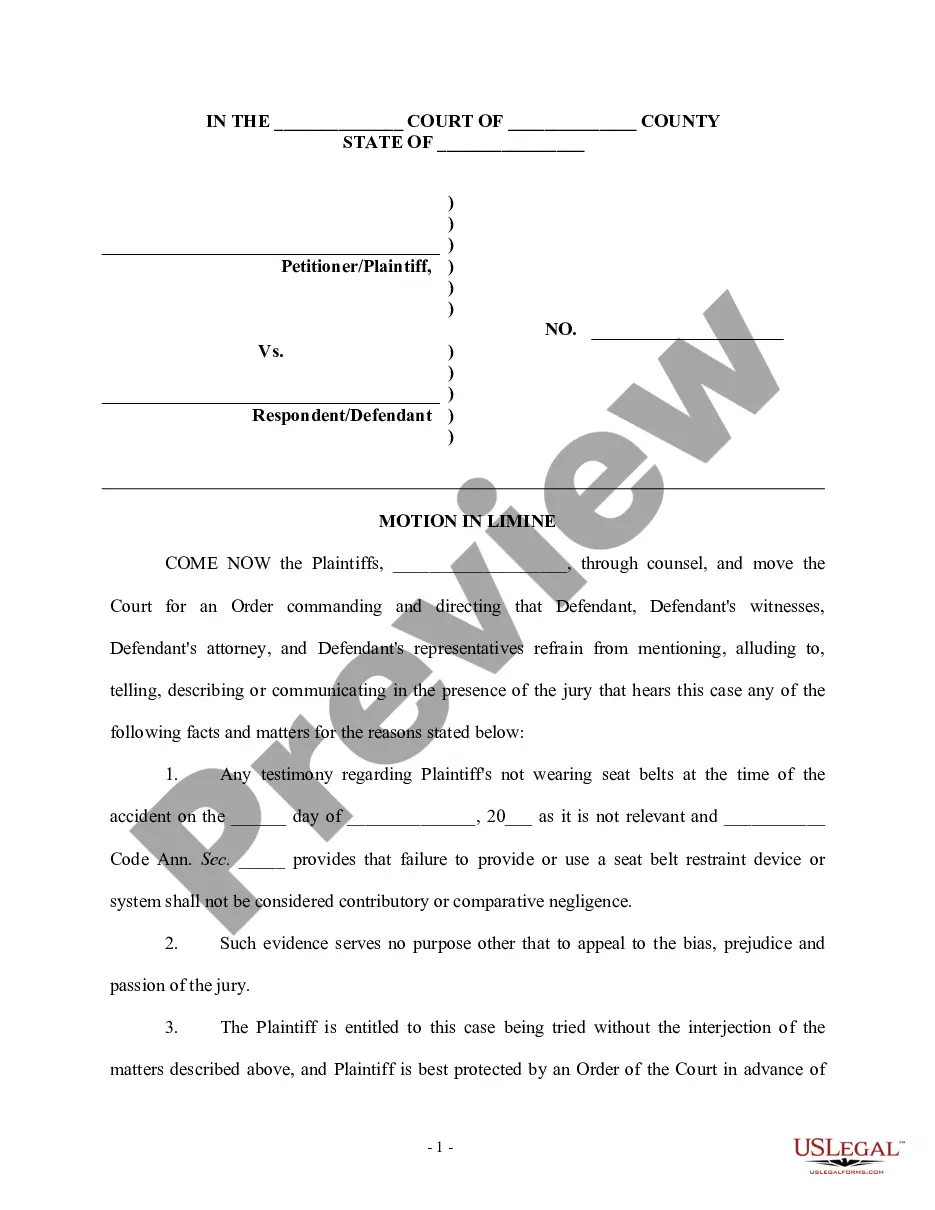
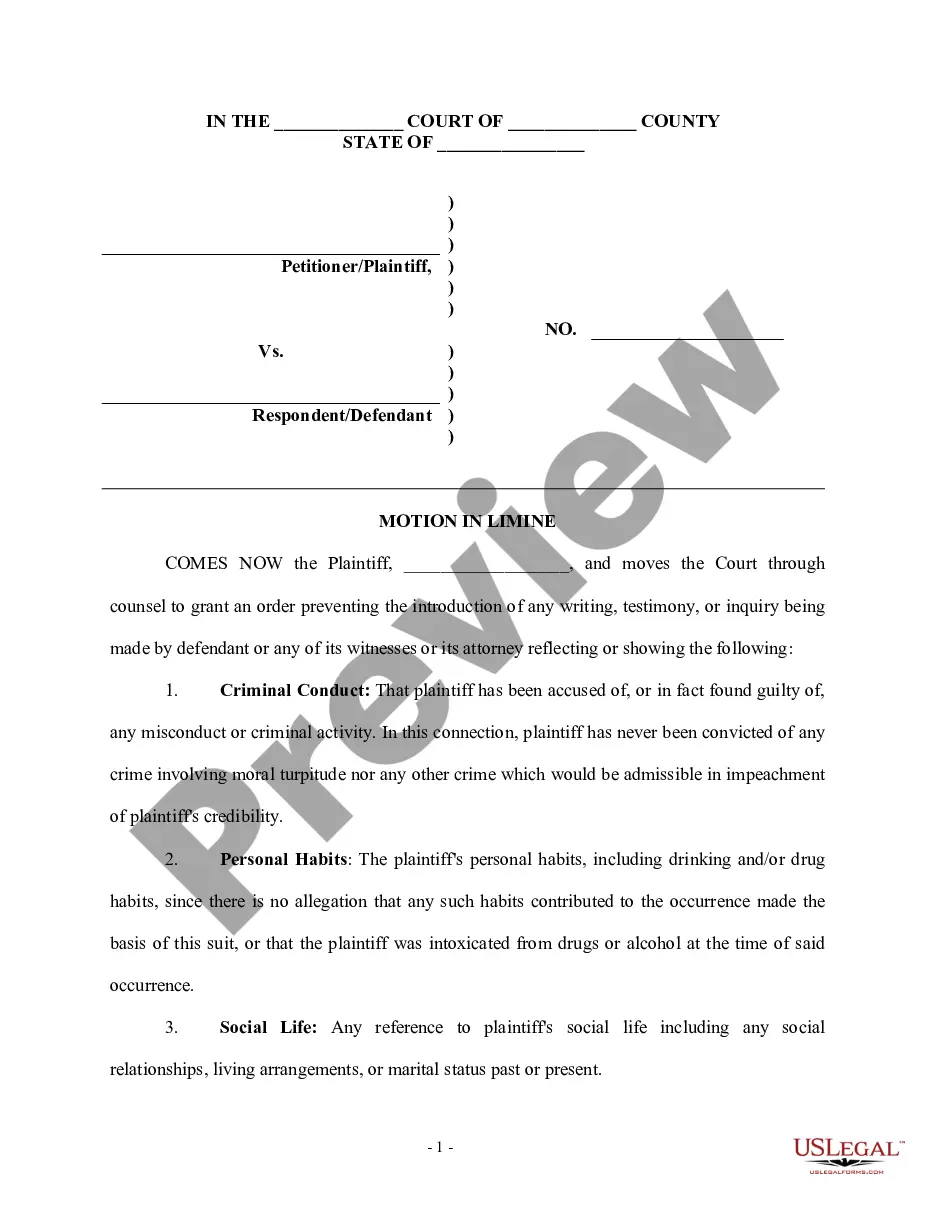
- Use the Preview button to review the form.
- Read the description to ensure you have selected the correct form.
- If the form is not what you are looking for, use the Search bar to find the form that meets your needs and criteria.
- Once you locate the correct form, click Purchase now.
Form popularity
FAQ
What is a "Motion to Preclude?" NY Negligence Attorney Explains YouTube Start of suggested clip End of suggested clip So they tell the court they ask the court judge. We want you to prevent them the plaintiff theMoreSo they tell the court they ask the court judge. We want you to prevent them the plaintiff the injured victim. From using that information that piece of evidence at the time of trial. Why.
The most common use of the in limine motion is to exclude irrelevant and/or prejudicial evidence.
(d) Motions in limine. A party may move the court for a ruling in advance of trial on the admission or exclusion of evidence.
A motion in limine is a procedural mechanism that allows litigators to seek to exclude certain evidence from being presented to a jury ? typically evidence that is irrelevant, unreliable, or more prejudicial than probative.
A common motion in limine is the motion to exclude evidence not disclosed or produced during discovery. This motion is usually broadly stated to exclude all documents and evidence not produced in discovery.
In limine is a Latin term meaning "at the threshold". A motion in limine is a pretrial motion asking that certain evidence be found inadmissible, and that it not be referred to or offered at trial.
A motion to exclude evidence that is based on rules of evidence, in advance of the trial, is more commonly called a motion in limine. In federal courts, Rule 41(h) of the Federal Rules of Criminal Procedure governs motions to suppress.
A motion in limine is a motion filed by a party to a lawsuit which asks the court for an order or ruling limiting or preventing certain evidence from being presented by the other side at the trial of the case.