Louisiana Motion and Order for Discovery, with Notice of Defense based on Mental Condition
Understanding this form
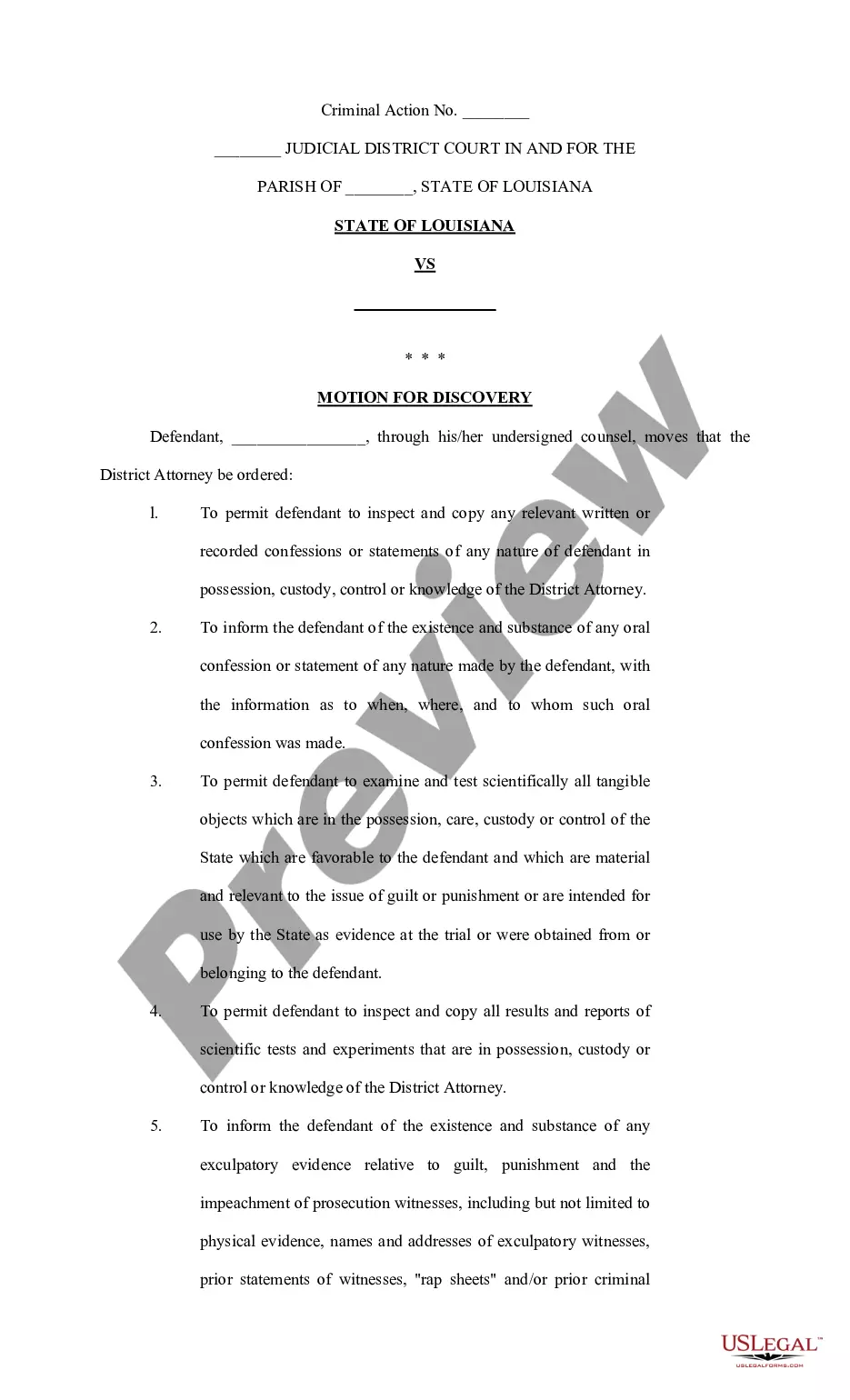
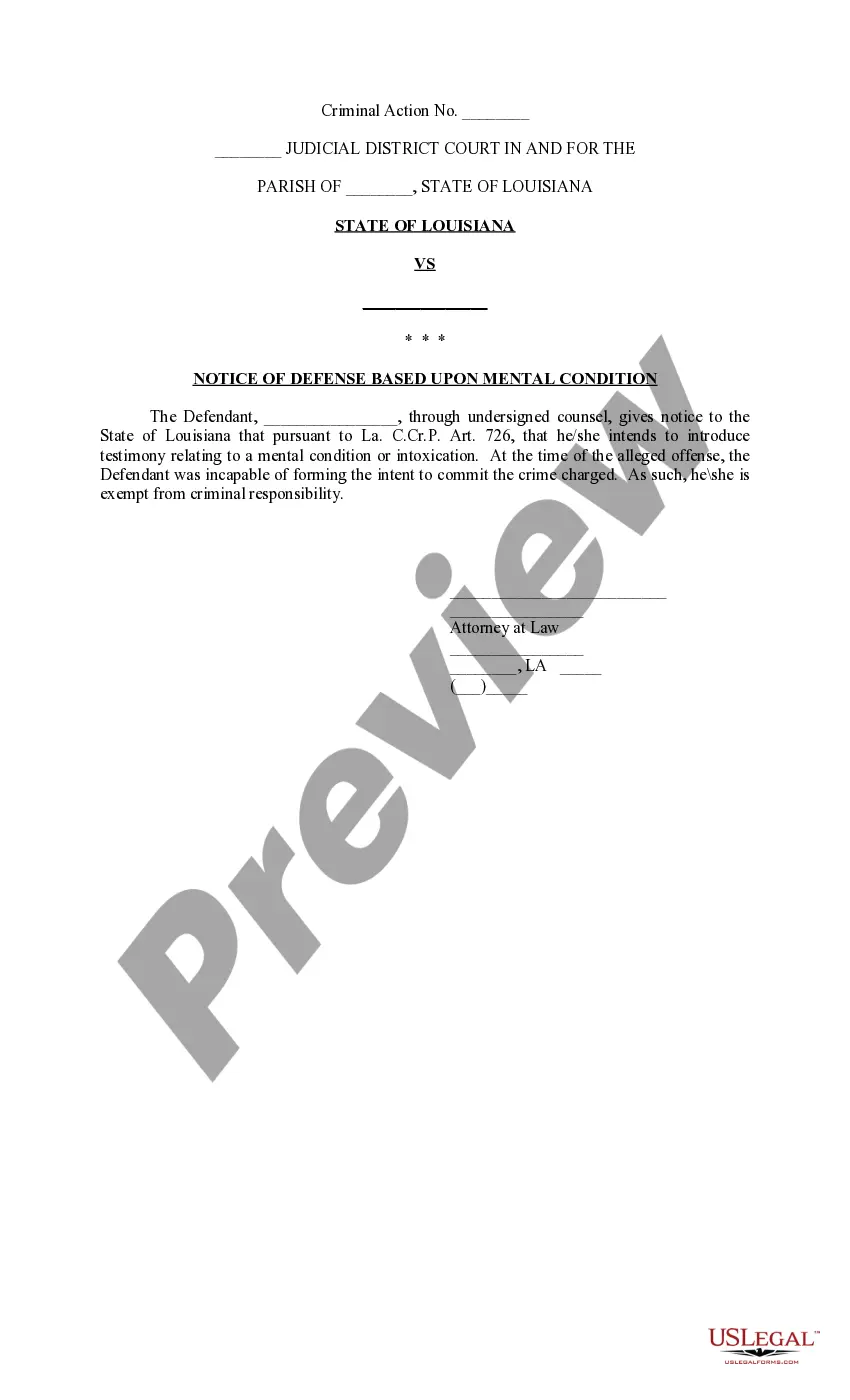
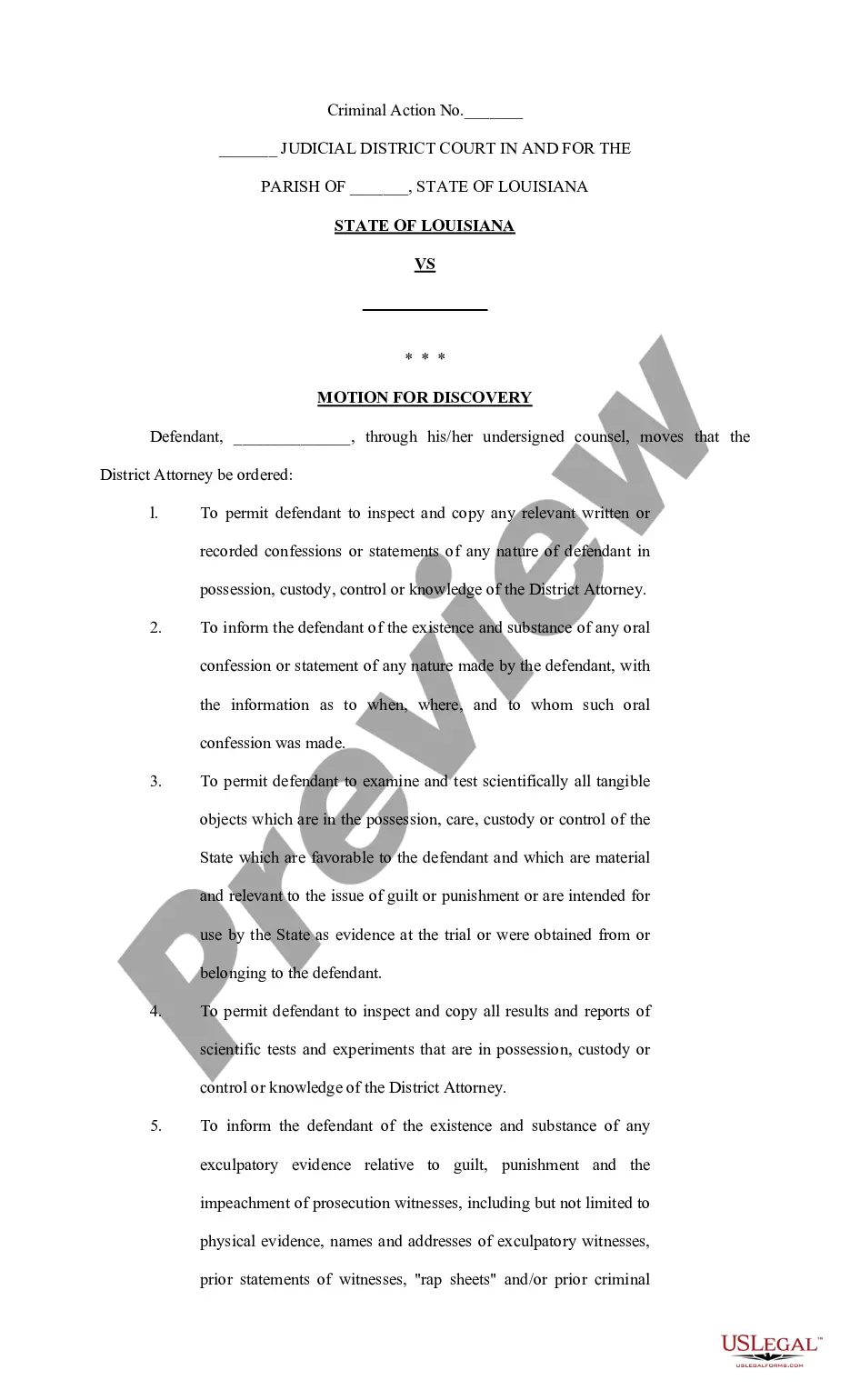
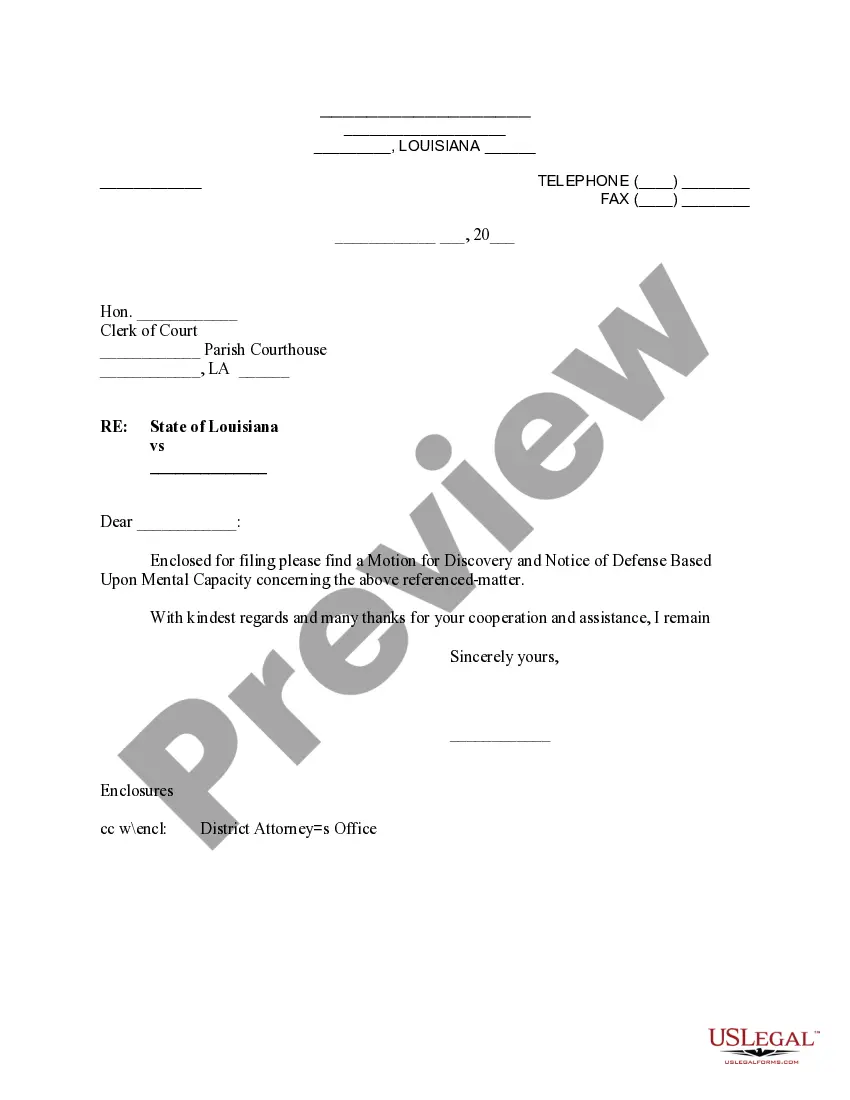
The Motion and Order for Discovery, with Notice of Defense based on Mental Condition, allows a defendant to request disclosure of evidence and information that may be beneficial to their case. This form is essential for ensuring that the prosecution provides relevant evidence, which is vital to mounting a solid defense. Unlike basic discovery requests, this form specifically incorporates a notice related to the defendant's mental condition, informing the court and the prosecution that mental state evidence will be presented to assert a lack of criminal responsibility.
Form components explained
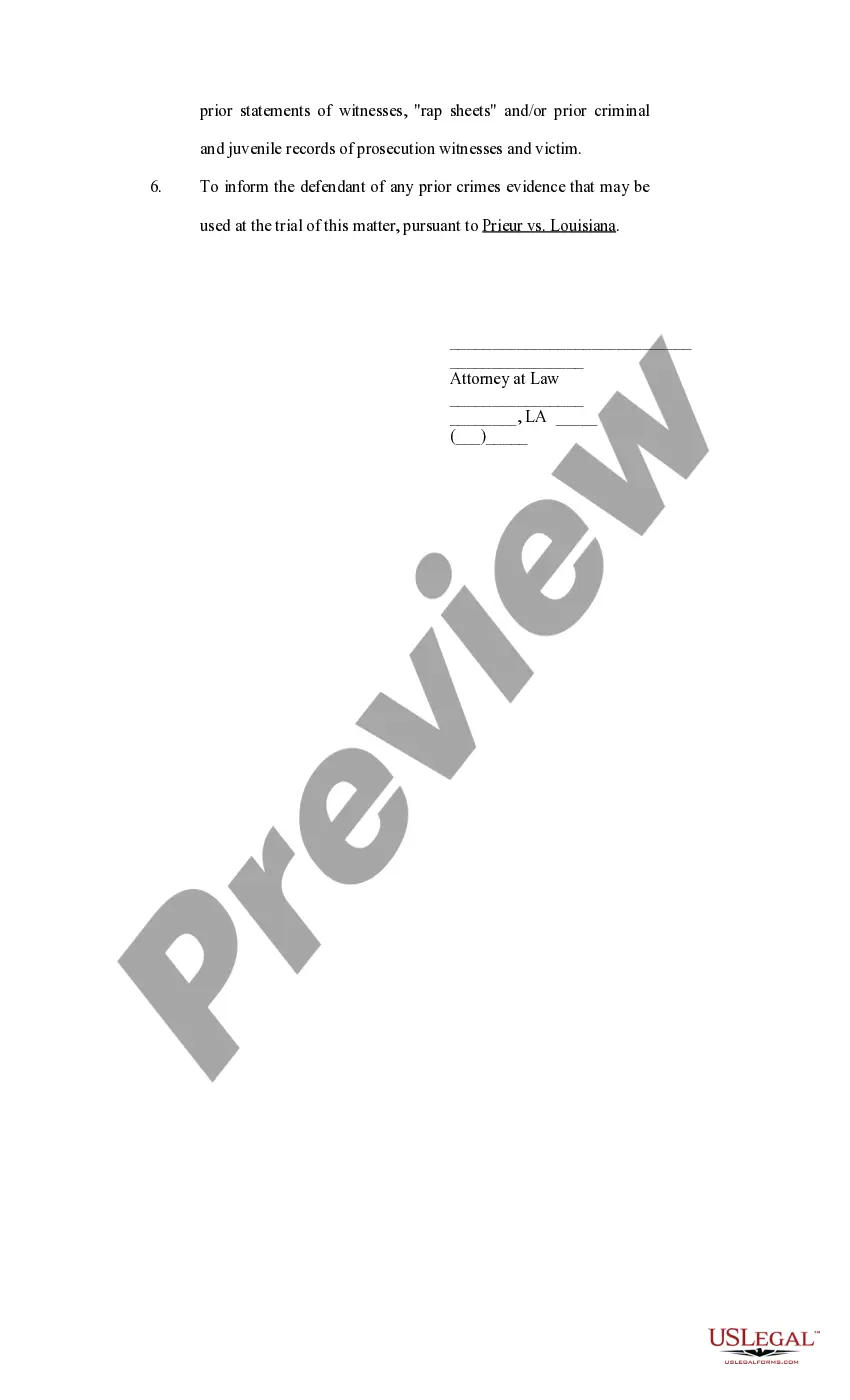
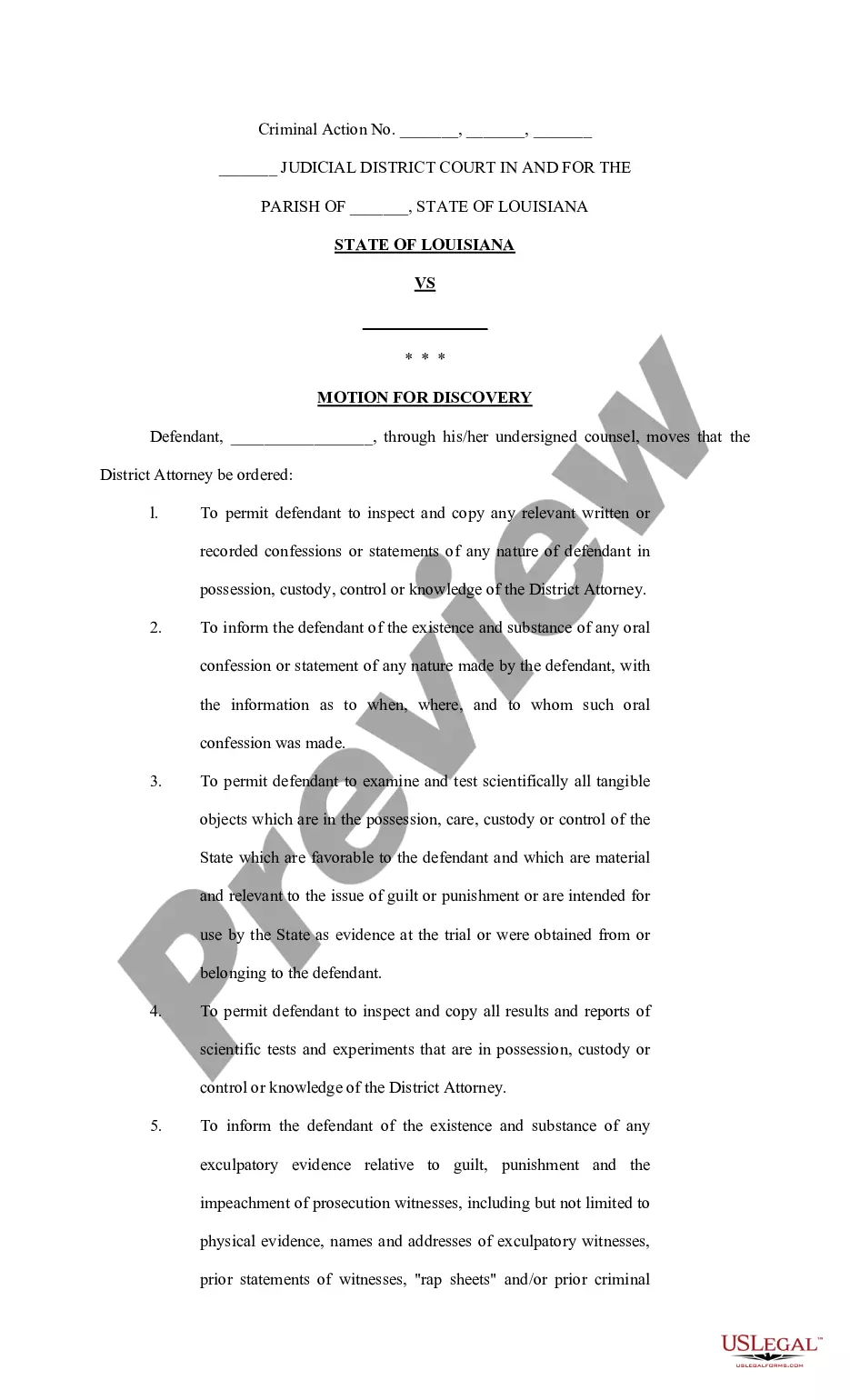
- Motions for the inspection and copying of written or recorded confessions.
- Requests for information about any oral confessions made by the defendant.
- Requests to examine and test tangible objects relevant to the case.
- Notification of the defendant's intent to present mental condition evidence as a defense.
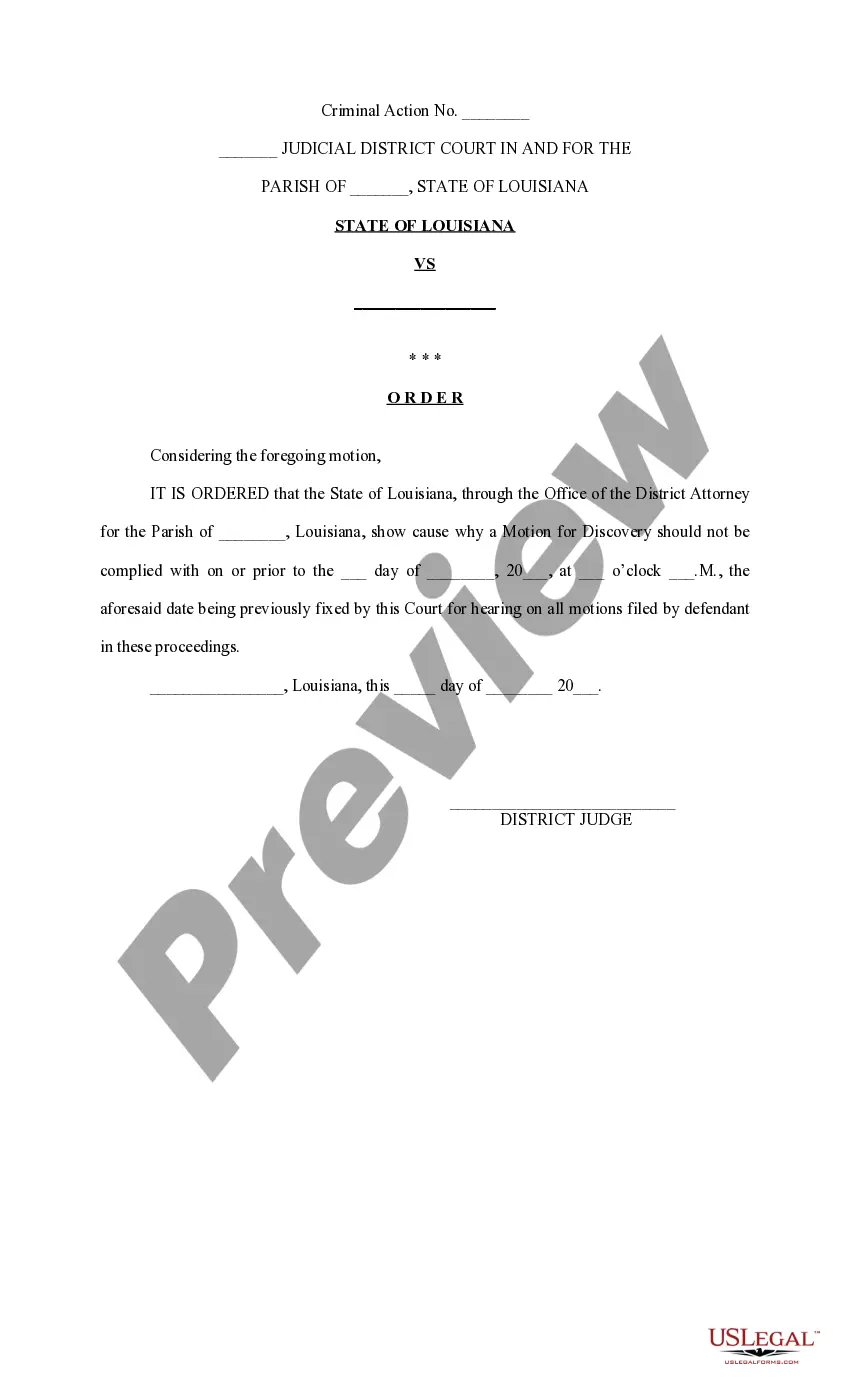
- Order section for the court to compel compliance from the prosecution.
Situations where this form applies
This form should be used when a defendant is involved in a criminal case and is seeking to obtain evidence from the prosecution to support their defense. It is particularly pertinent when the defense will argue that the defendant's mental condition absolves them of criminal responsibility for the alleged offense, necessitating the collection of relevant information and testimony.
Who this form is for
- Defendants in criminal cases where mental condition is a factor.
- Defense attorneys seeking evidence to support their clients' cases.
- Individuals involved in cases requiring evidence disclosure from the prosecution.
Instructions for completing this form
- Enter the judicial district and the parish in Louisiana where the motion is being filed.
- Fill in the names of the parties involved in the case, prominently identifying the defendant.
- List specific requests for evidence and information in a clear, numbered format.
- Complete the notice of defense section indicating the intention to present mental condition evidence.
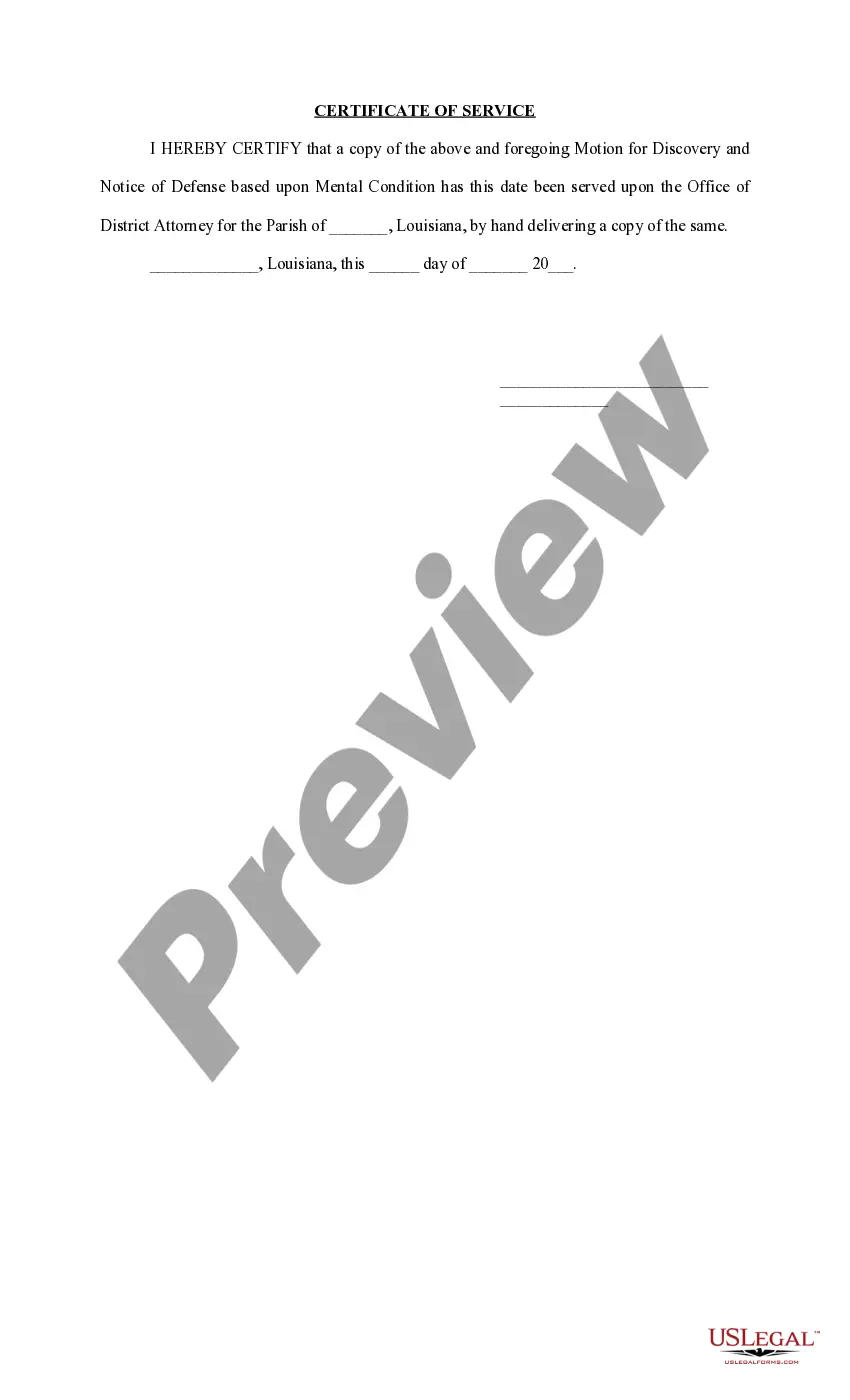
- Provide appropriate signatures and contact information for the defendant's attorney.
Notarization guidance
This form does not typically require notarization to be legally valid. However, some jurisdictions or document types may still require it. US Legal Forms provides secure online notarization powered by Notarize, available 24/7 for added convenience.
Get your form ready online
Our built-in tools help you complete, sign, share, and store your documents in one place.
Make edits, fill in missing information, and update formatting in US Legal Forms—just like you would in MS Word.
Download a copy, print it, send it by email, or mail it via USPS—whatever works best for your next step.
Sign and collect signatures with our SignNow integration. Send to multiple recipients, set reminders, and more. Go Premium to unlock E-Sign.
If this form requires notarization, complete it online through a secure video call—no need to meet a notary in person or wait for an appointment.
We protect your documents and personal data by following strict security and privacy standards.

Make edits, fill in missing information, and update formatting in US Legal Forms—just like you would in MS Word.

Download a copy, print it, send it by email, or mail it via USPS—whatever works best for your next step.

Sign and collect signatures with our SignNow integration. Send to multiple recipients, set reminders, and more. Go Premium to unlock E-Sign.

If this form requires notarization, complete it online through a secure video call—no need to meet a notary in person or wait for an appointment.

We protect your documents and personal data by following strict security and privacy standards.
Common mistakes to avoid
- Failing to specify all evidence requests, which may limit the defense's ability to prepare.
- Not properly notifying all parties of the defense's mental condition claims.
- Overlooking the necessary signatures or attorney information.
Why complete this form online
- Convenient access to legally compliant forms tailored for Louisiana law.
- Editable templates allow for customization to fit specific case needs.
- Instant downloads provide quick initiation of the legal process.
Looking for another form?

Form popularity
FAQ
Article 1469 of the Louisiana Civil Code of Procedure details the process for obtaining discovery regarding a party's mental condition. It allows a party to seek information relevant to the mental health of the opposing party when it is significant to the case. This is particularly important in cases where the mental condition might influence the outcome. Utilizing a Louisiana Motion and Order for Discovery, with Notice of Defense based on Mental Condition can help effectively present your request under this article.
To begin preparing for trial, both sides engage in discovery . This is the formal process of exchanging information between the parties about the witnesses and evidence they'll present at trial. Discovery enables the parties to know before the trial begins what evidence may be presented.
Discovery is the process through which defendants find out about the prosecution's case. For example, through standard discovery procedure, they can: get copies of the arresting officers' reports and statements made by prosecution witnesses, and. examine evidence that the prosecution proposes to introduce at trial.
A party who discovers additional evidence or material before or during trial must promptly disclose its existence to the other party or the court if: (1) the evidence or material is subject to discovery or inspection under this rule; and. (2) the other party previously requested, or the court ordered, its production.
(1) A motion by the defendant for a speedy trial, in order to be valid, must be accompanied by an affidavit by defendant's counsel certifying that the defendant and his counsel are prepared to proceed to trial within the delays set forth in this Article.
Discovery, in the law of common law jurisdictions, is a pre-trial procedure in a lawsuit in which each party, through the law of civil procedure, can obtain evidence from the other party or parties by means of discovery devices such as interrogatories, requests for production of documents, requests for admissions and
Request for Production of Documents: You can ask the plaintiff to produce documents that prove what they are claiming: like bills, their ledger and contract with you. Request for Interrogatories: You can ask the plaintiff to answer questions in writing about your case and the debt, like.
The state has to bring you to trial with 120 days if you are accused of a felony and 30 days if you are accused of a misdemeanor and are still being held in custody. If you have bonded out, the State has 180 days to bring you to trial on a felony charge and 60 days to bring you to trial on a misdemeanor charge.
Courts have held that the U.S. Constitution doesn't impose a general duty on the prosecution to disclose material evidence to the defense. Material is generally shorthand for relevant; it's often used to refer to evidence that, if disclosed, could affect the outcome of a case.
An arraignment in Louisiana is the first court appearance in criminal court in Louisiana. Prior to the arraignment, the prosecutor either filed a bill of information, which is the formal charge, or the grand jury returned a true bill indictinhg the defendant. The arraignment is then set.