Louisiana Demand Letter regarding Payment for NSF Check
What this document covers
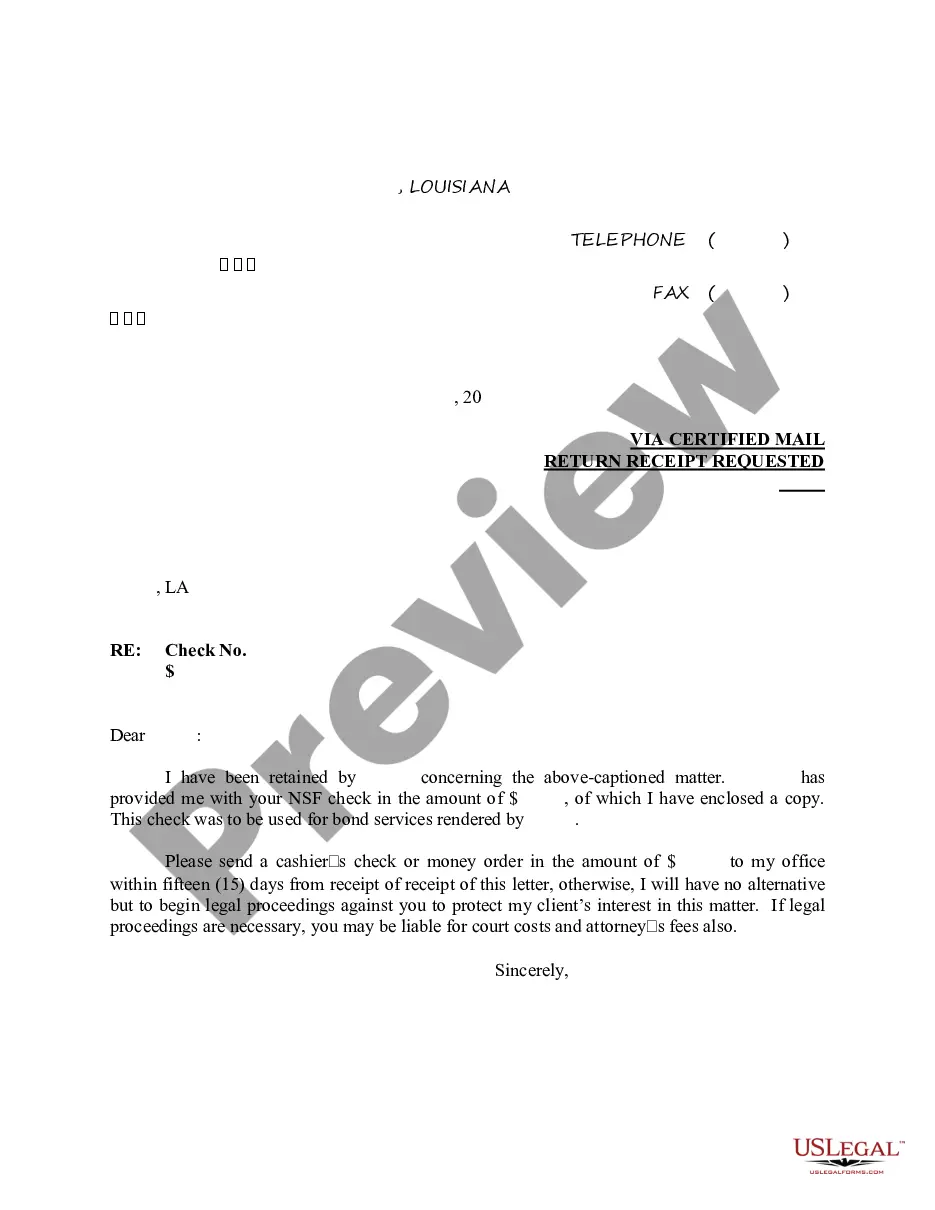
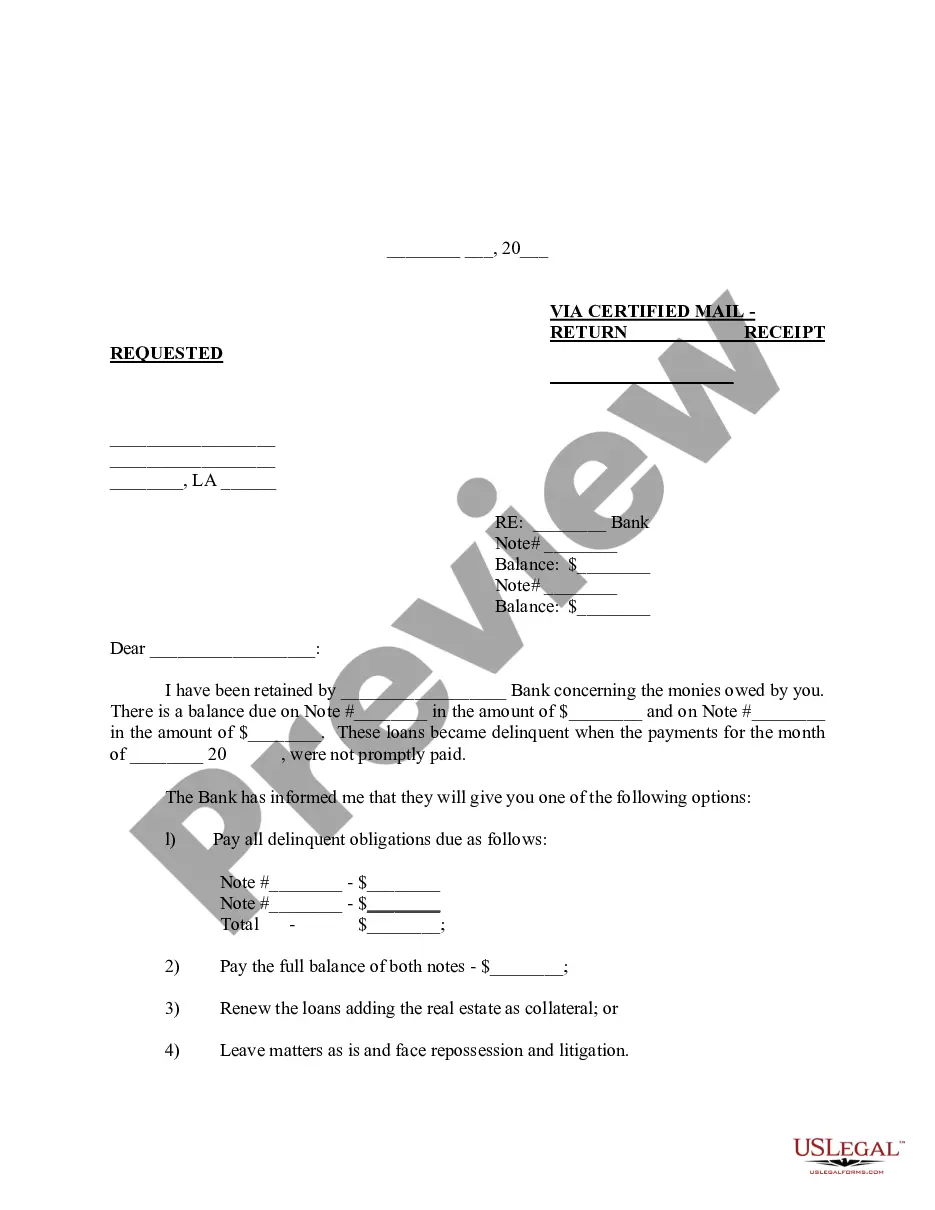
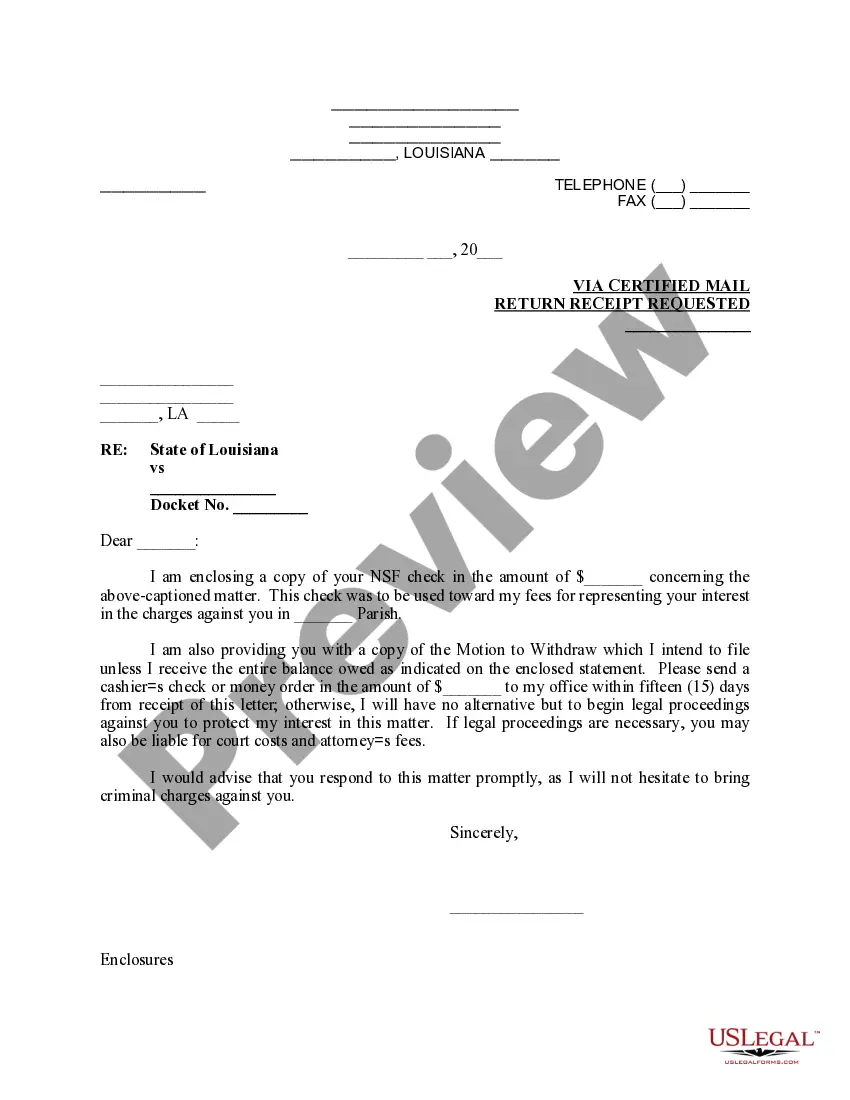
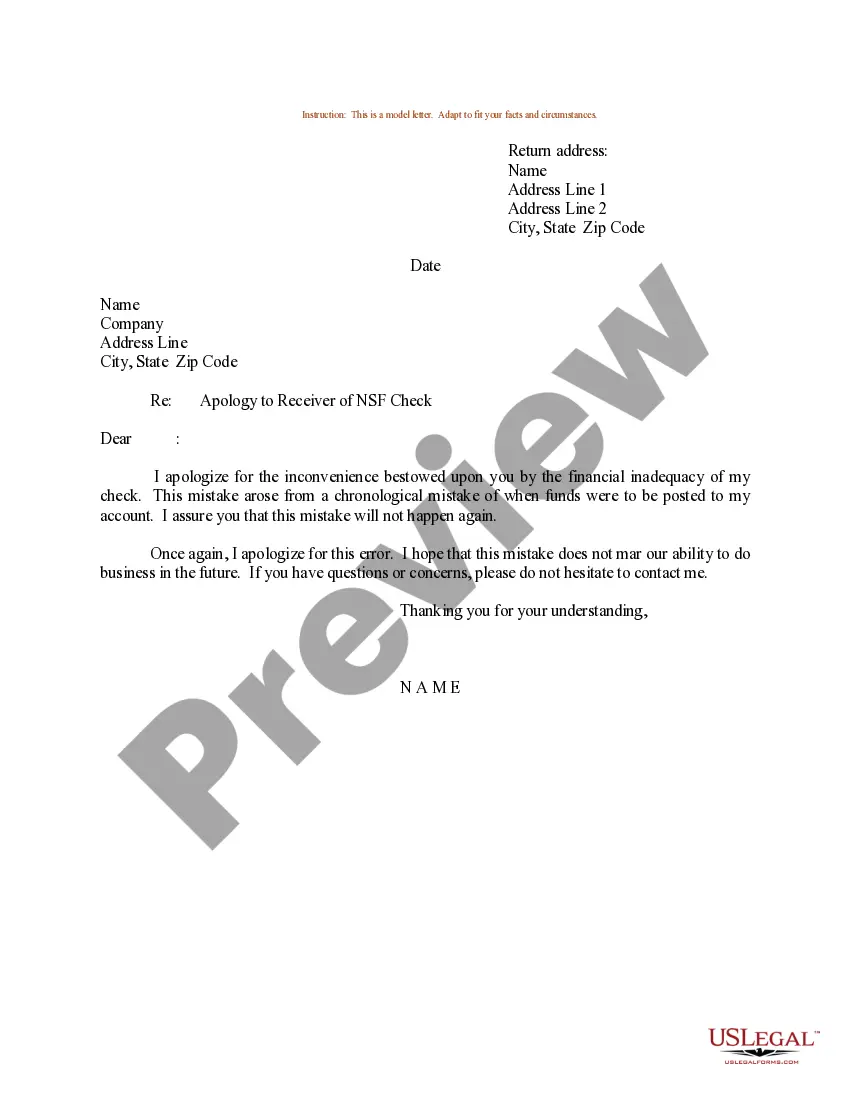
The Demand Letter regarding Payment for NSF Check is a formal request made by an attorney to the person who issued a check that has bounced due to insufficient funds (NSF). This letter serves as an official notification, urging the recipient to pay the outstanding amount within a specified timeframe to avoid further legal action. It is important to differentiate this demand letter from other types of collection notices, as it specifically deals with non-sufficient funds checks and may initiate legal proceedings if the matter is not resolved promptly.
Main sections of this form
- Identification of the payee and drawer of the NSF check
- Details of the NSF check, including amount and date
- Timeframe for payment and acceptable payment methods (cashier's check or money order)
- Warning of potential legal action if payment is not made
- Signature of the attorney representing the payee
Common use cases
This form should be used when an individual or business has received a check that has bounced due to insufficient funds, and they wish to formally demand payment from the issuer. It's particularly useful in situations where past attempts to collect the debt informally have failed, or where the sender wants to escalate the matter legally without initially filing a suit.
Who needs this form
- Individuals or businesses seeking payment for bounced checks
- Attorneys representing clients with unpaid debts from NSF checks
- Accountants or financial professionals managing client finances
- Anyone handling collection matters related to bounced checks
Steps to complete this form
- Identify the parties involved: include names and contact information of both the payee and drawer.
- Specify the details of the NSF check: include the check number, date issued, and amount.
- Determine and clearly state the deadline for payment: specify the timeframe to avoid legal action.
- Detail acceptable payment methods: include instructions for payments, such as cashier's checks or money orders.
- Have the attorney sign the demand letter to validate it as a formal legal document.
Does this document require notarization?
This form does not typically require notarization unless specified by local law. However, if a stronger legal standing is desired, notarization may be considered for added validity.
Get your form ready online
Our built-in tools help you complete, sign, share, and store your documents in one place.
Make edits, fill in missing information, and update formatting in US Legal Forms—just like you would in MS Word.
Download a copy, print it, send it by email, or mail it via USPS—whatever works best for your next step.
Sign and collect signatures with our SignNow integration. Send to multiple recipients, set reminders, and more. Go Premium to unlock E-Sign.
If this form requires notarization, complete it online through a secure video call—no need to meet a notary in person or wait for an appointment.
We protect your documents and personal data by following strict security and privacy standards.

Make edits, fill in missing information, and update formatting in US Legal Forms—just like you would in MS Word.

Download a copy, print it, send it by email, or mail it via USPS—whatever works best for your next step.

Sign and collect signatures with our SignNow integration. Send to multiple recipients, set reminders, and more. Go Premium to unlock E-Sign.

If this form requires notarization, complete it online through a secure video call—no need to meet a notary in person or wait for an appointment.

We protect your documents and personal data by following strict security and privacy standards.
Mistakes to watch out for
- Failing to include all the essential details of the NSF check.
- Not specifying an exact timeframe for the payment.
- Using informal language or tone rather than a formal legal tone.
- Not having the attorney's signature, which can undermine the form's validity.
Benefits of using this form online
- Immediate access to a professionally drafted demand letter template.
- Editable format allows users to customize details specific to their situation.
- Convenience of downloading the document directly for quick use.
- Reliability of using a legally compliant template designed by licensed attorneys.
Summary of main points
- The Demand Letter regarding Payment for NSF Check serves as a formal request for payment for bounced checks.
- Ensure the document includes all necessary details to avoid future disputes.
- Using the form correctly can help establish a legal basis for further action if needed.
Looking for another form?
Form popularity
FAQ
Request for payment of a debt that you believe you might. owe. While most of the amount that is demanded may. be owing, a portion may not be owing. It's important.
LETTER OF DEMAND BACKGROUND A demand generally amounts to a request for payment or a request to perform in terms of a legal obligation. A letter of demand is generally an initial step in the litigation process. In certain instances, a letter of demand is necessary to place the debtor in mora.
After you've sent your demand letter, which is a letter telling the insurance company how much you believe you're owed for a settlement, the insurer has control of the clock. However, you should receive a settlement check within two weeks to two months, roughly.
After you send a demand letter, one of several things can happen: The insurance company accepts your demand, and the settlement goes forward. You'll receive the compensation you asked for and sign a release of liability in exchange.
A demand generally amounts to a request for payment or a request to perform in terms of a legal obligation.The letter of demand must provide a clear indication of what is expected from the defaulting party, e.g payment of a liquidated amount, delivery of a certain thing, or to refrain from taking certain action.
Type your letter. Concisely review the main facts. Be polite. Write with your goal in mind. Ask for exactly what you want. Set a deadline. End the letter by stating you will promptly pursue legal remedies if the other party does not meet your demand. Make and keep copies.
An attorney is usually not necessary at this point and you can write a demand letter on your own. To write one, gather necessary documents, draft your letter, and send the letter to your opposing party.
Type your letter. Concisely review the main facts. Be polite. Write with your goal in mind. Ask for exactly what you want. Set a deadline. End the letter by stating you will promptly pursue legal remedies if the other party does not meet your demand. Make and keep copies.
Your company name and address. recipient's name and address. today's date. a clear reference and/or any account reference numbers. the amount outstanding. original payment due date. a brief explanation that no payment has been received.