Louisiana Title Opinion
Description

Key Concepts & Definitions
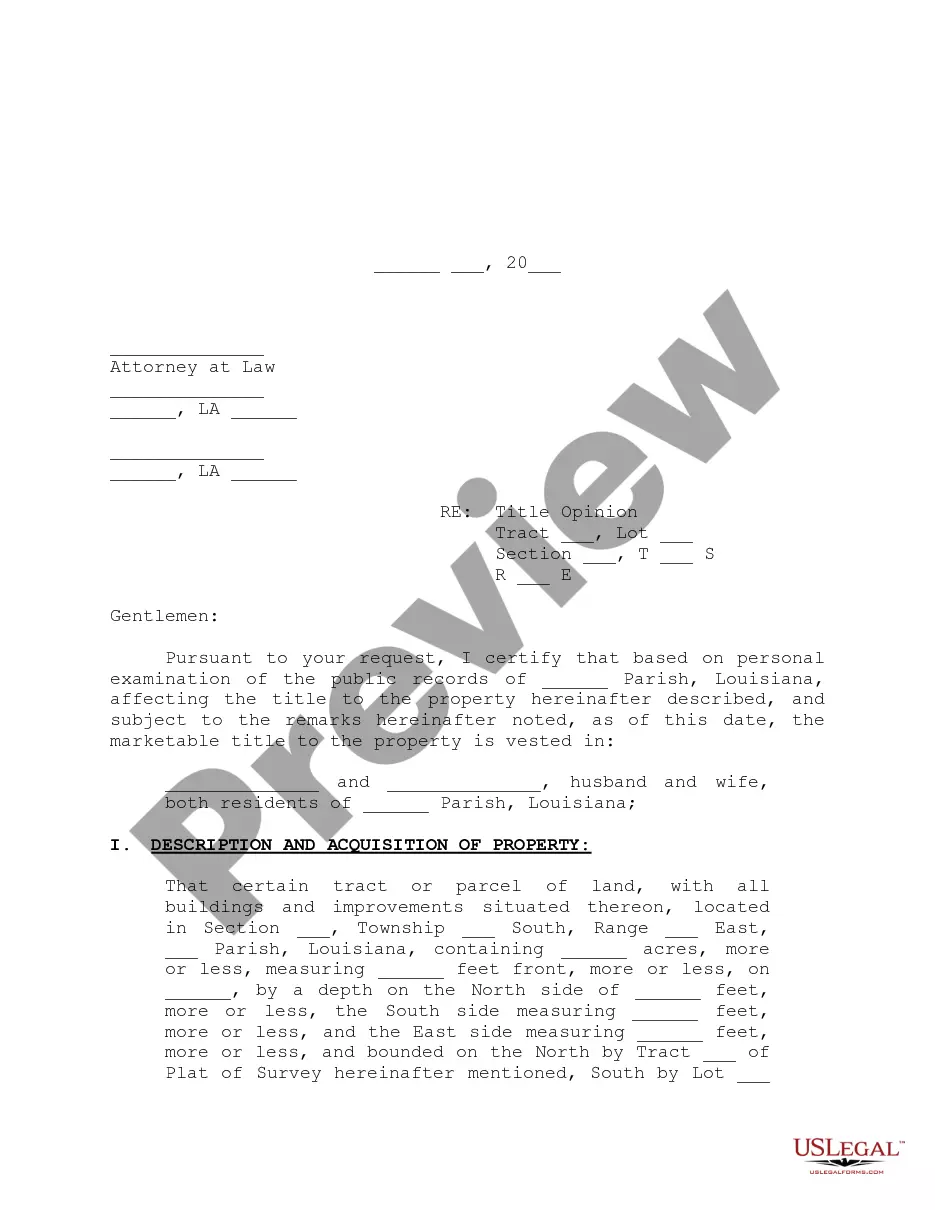
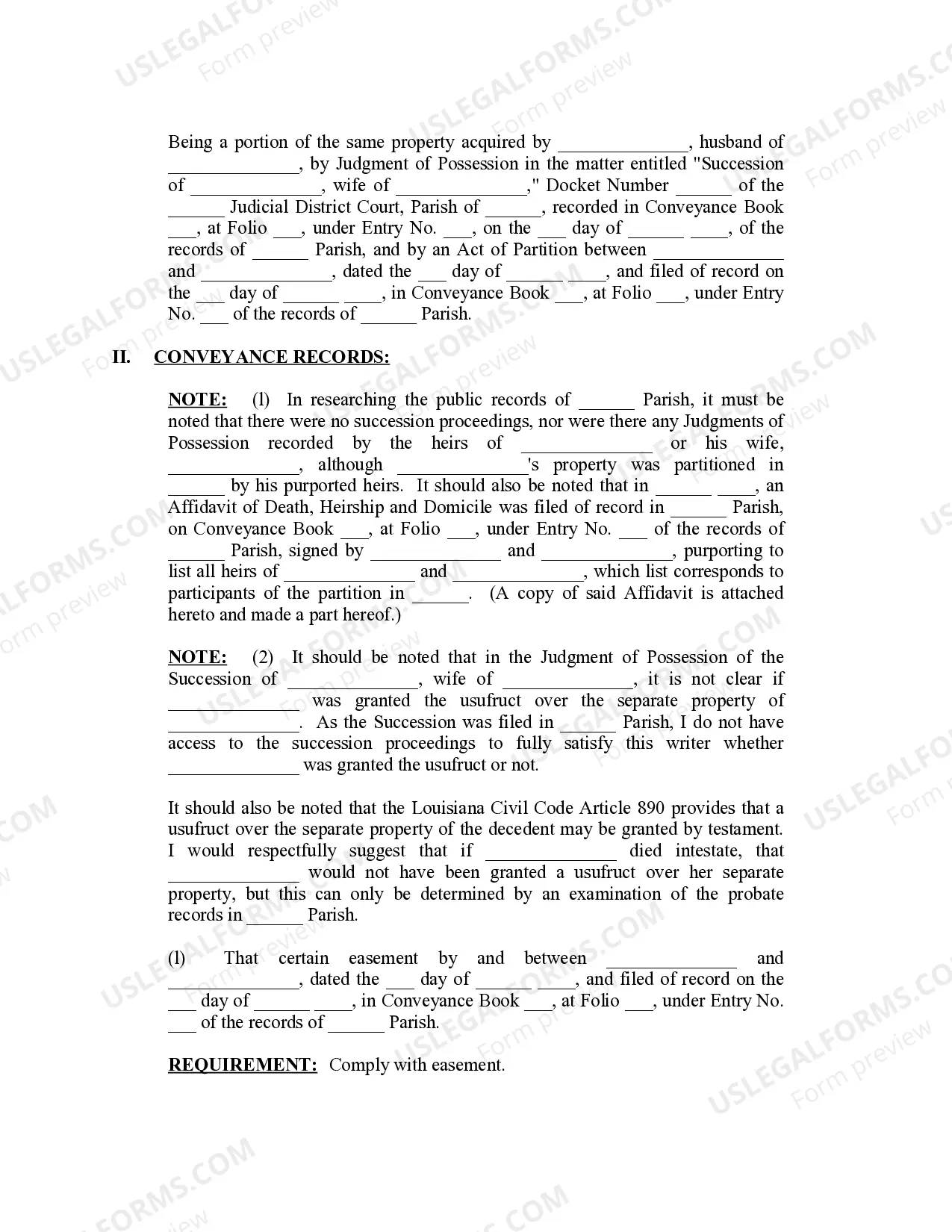
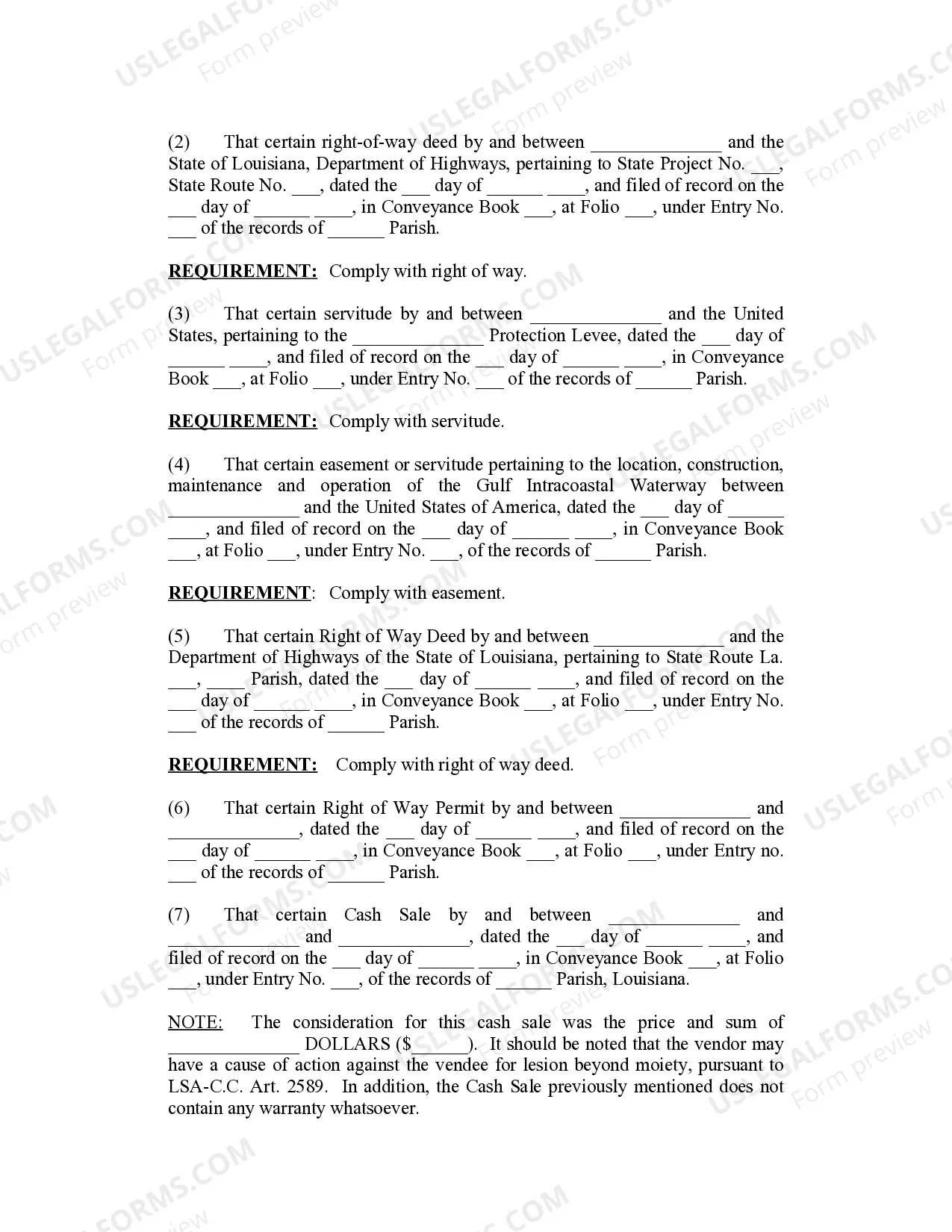
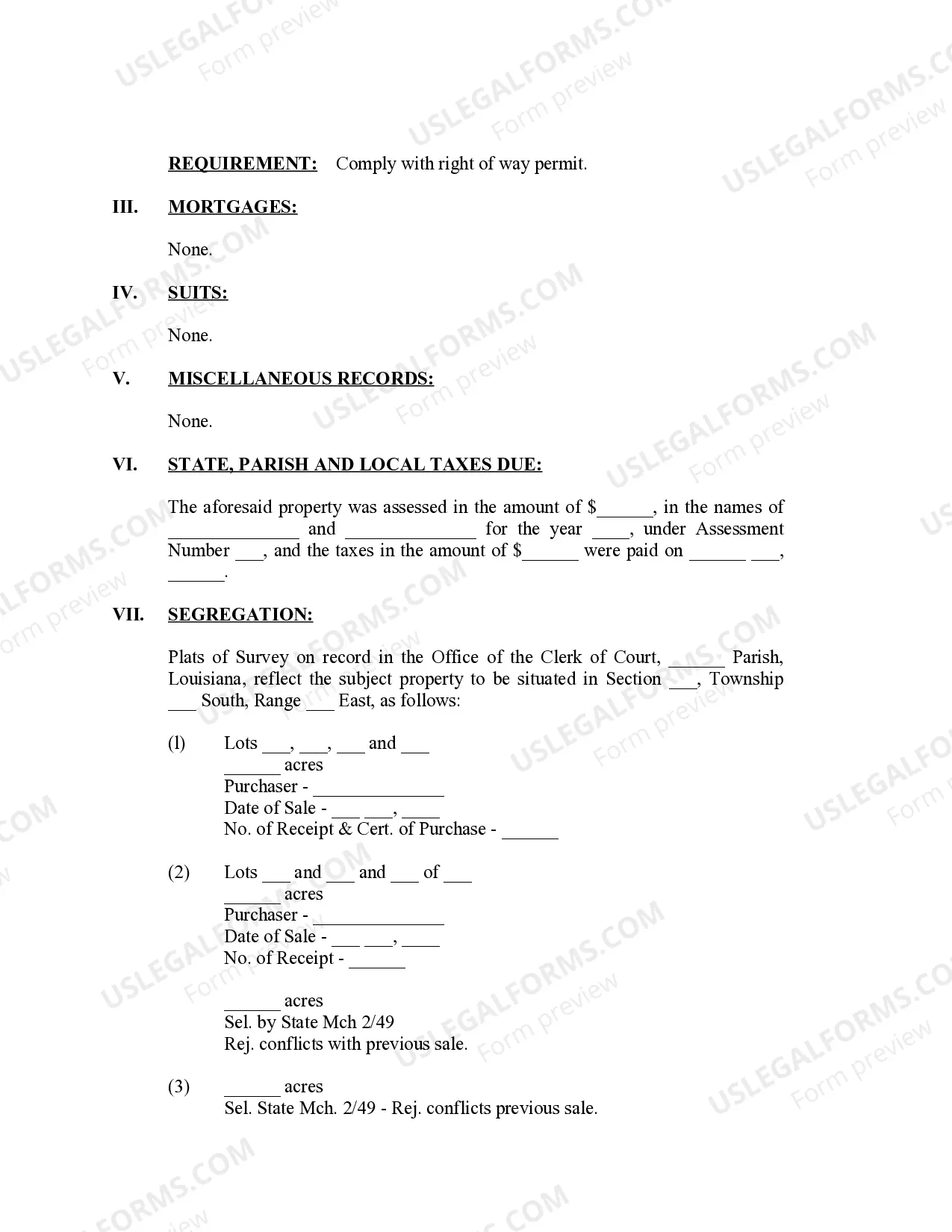
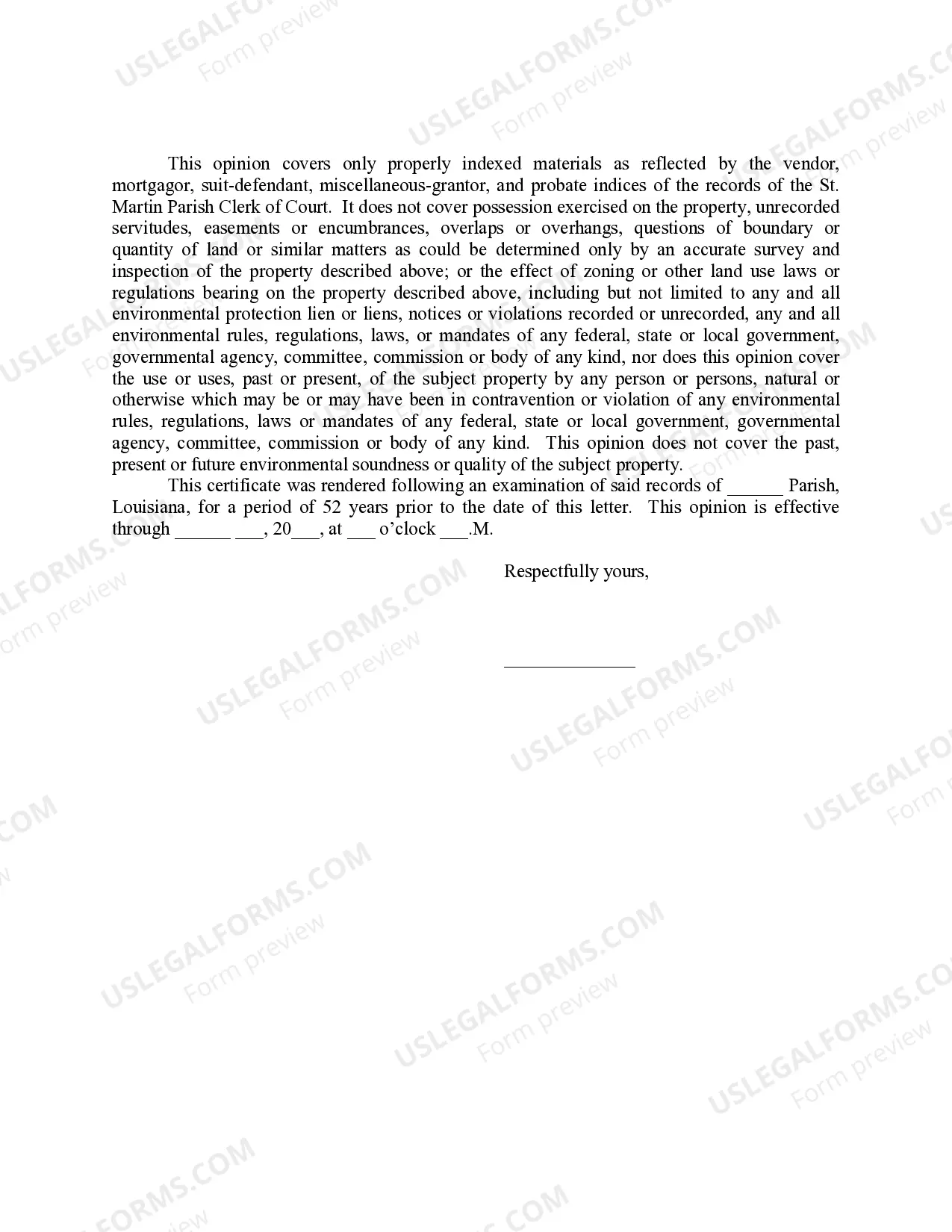
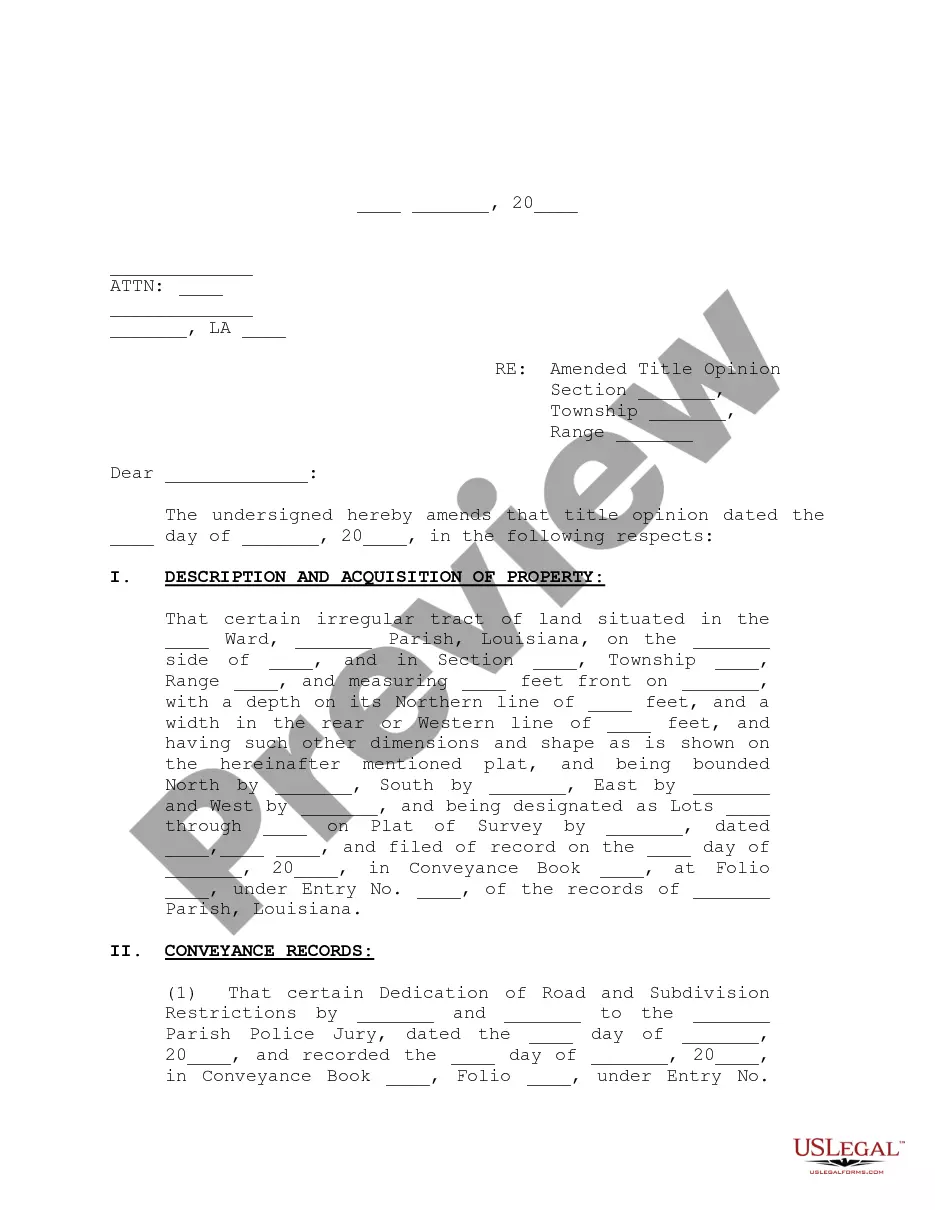
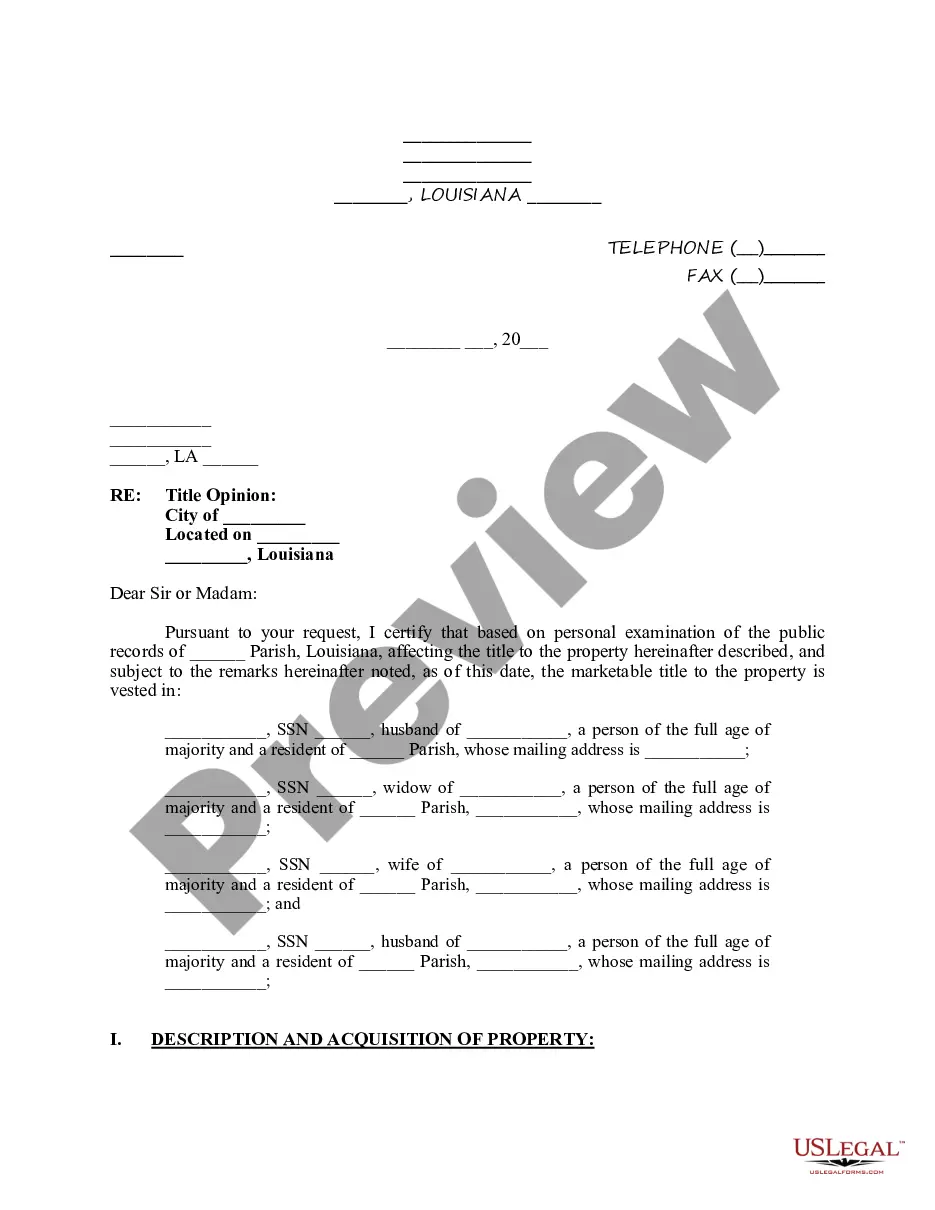
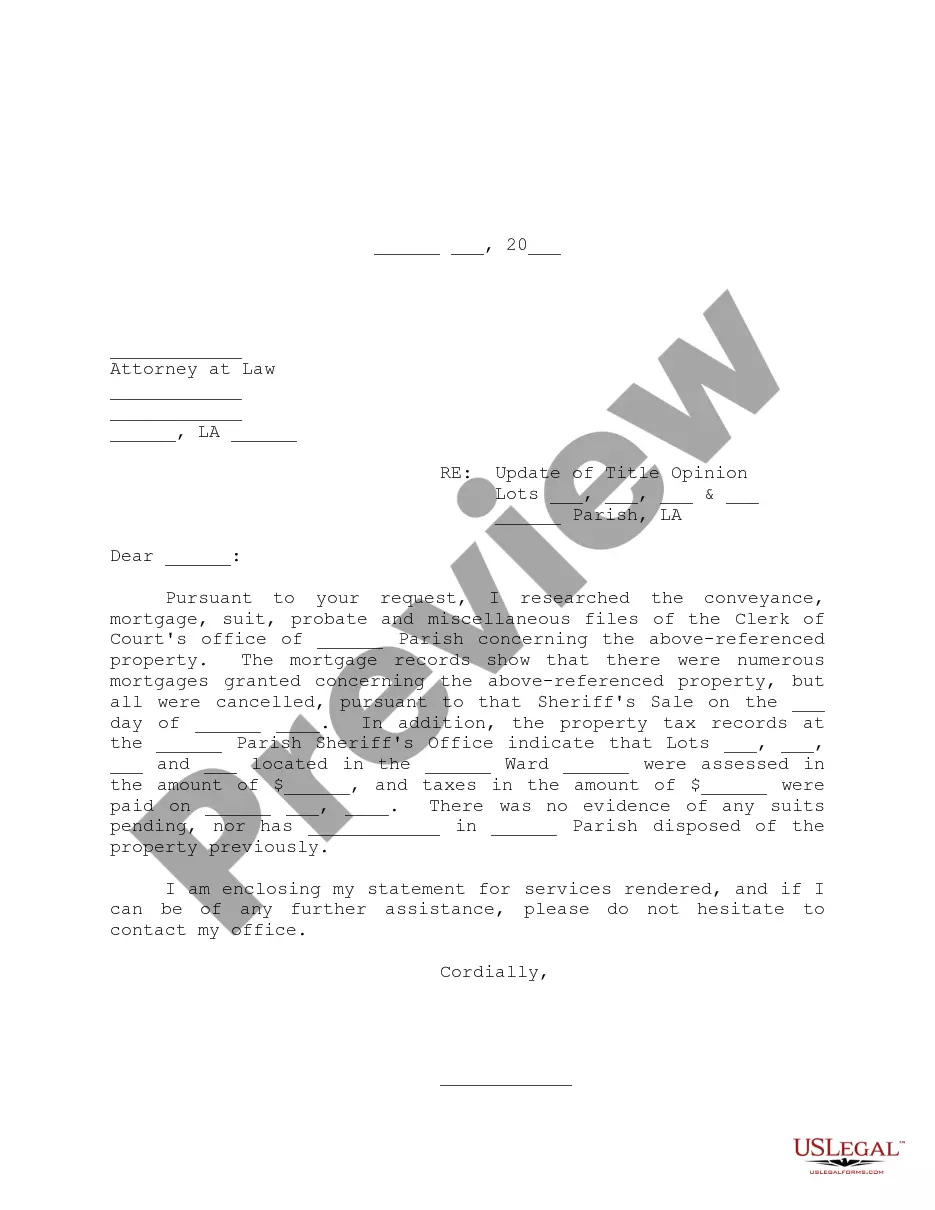
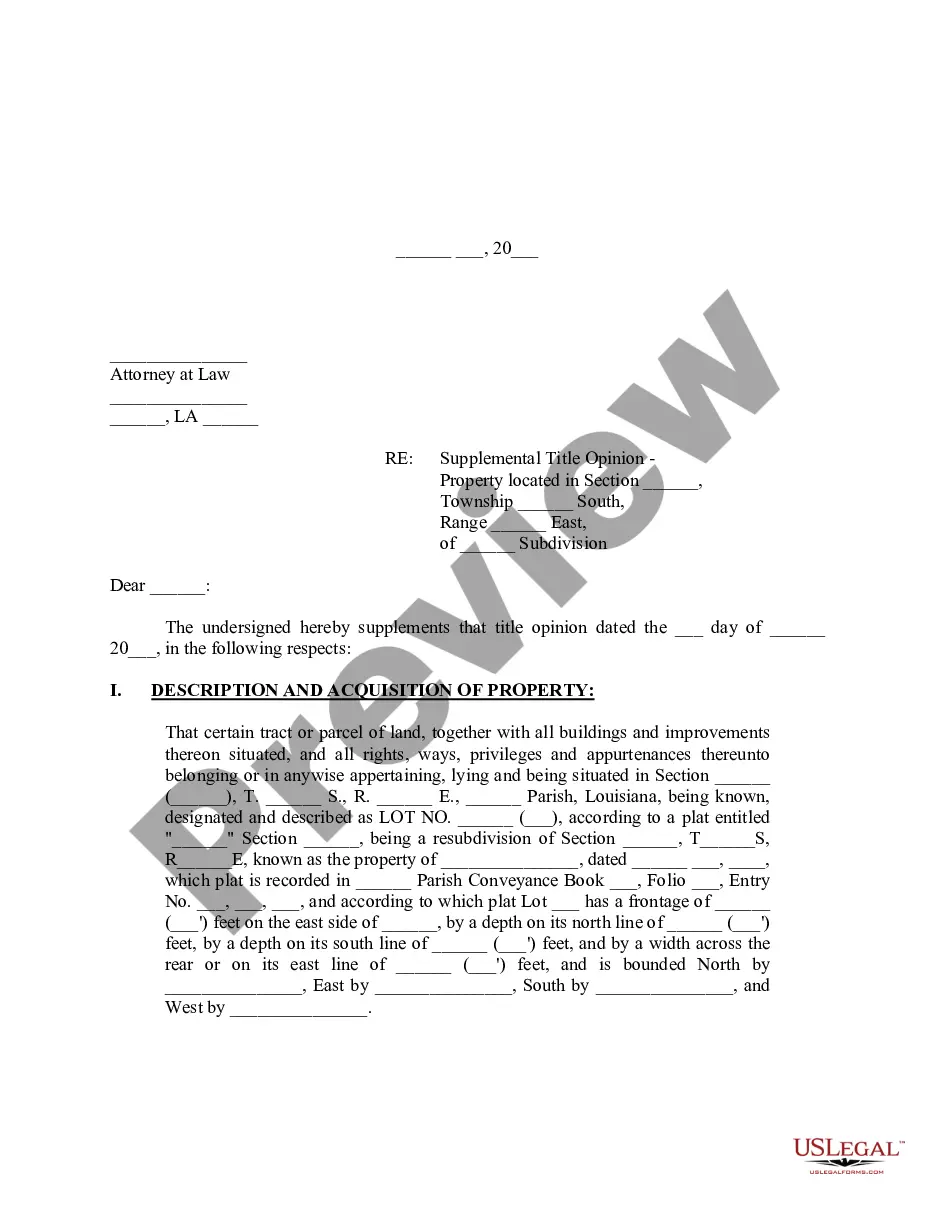
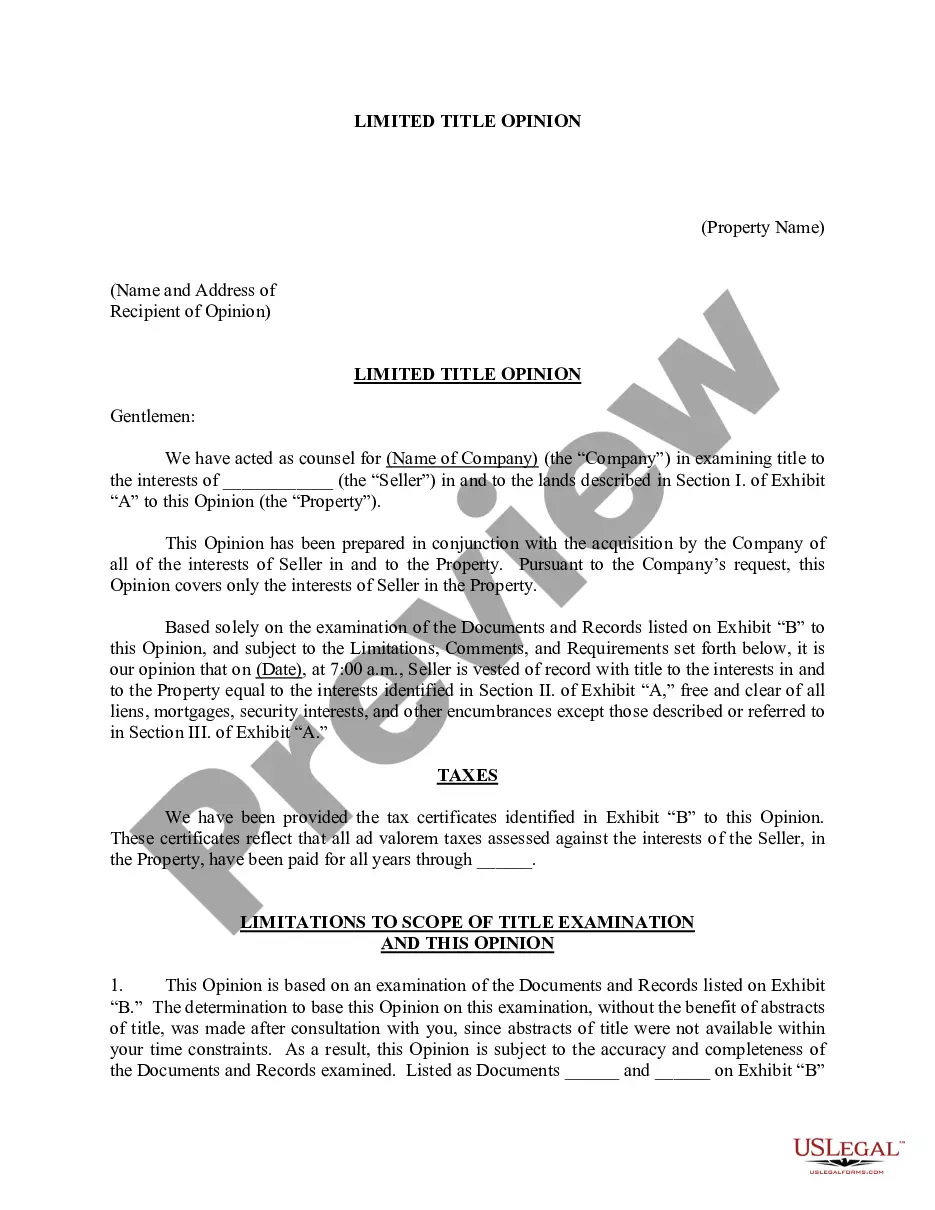
Title Opinion: A legal document prepared by a lawyer or qualified party that states the status of ownership in real estate records or mineral rights, often used in transactions involving property or oil gas.
Real Estate Records: Documents such as deeds, mortgages, and liens showing the history and current status of a property's ownership.
Oil Gas: Pertains to the exploration, extraction, and selling of oil and natural gas, frequently requiring specific legal assessments like title opinions to confirm rights over the resources.
Step-by-Step Guide
- Contact Lawyer: Engage with a reputable lawyer to secure a title opinion. This step is necessary to ensure the verification of real estate records or to facilitate oil and gas transactions.
- Review Documents: The lawyer reviews all pertinent documents such as existing title opinions, real estate records, and any other relevant legal papers.
- Analysis and Drafting: The lawyer then conducts a detailed analysis and drafts a title opinion to affirm ownership and highlight any potential mortgage issues or encumbrances.
- Final Review and Execution: Review the drafted title opinion, discuss key concerns with your lawyer, and finalize the document for official purposes.
Risk Analysis
- Financial Risks: Incorrect or outdated title opinions may lead to financial losses due to unresolved mortgage issues or disputes in property ownership.
- Legal Risks: Engaging in transactions without a proper title opinion can expose parties to potential lawsuits or legal complications, particularly in oil gas sectors where rights can be complex.
- Reputational Risks: Companies and individuals could face reputational damage if legal disputes from poor title opinions become public.
Best Practices
- Always opt for a free consultation when available to understand the scope and costs beforehand.
- Contact lawyer professionals who specialize in the specific field, be it real estate or oil and gas, for crafting a title opinion.
- Use online services for preliminary searches on real estate records but consult a lawyer for thorough investigation and opinion formation.
- Stay updated on changes that might affect mortgage issues or property law, including tax planning and potential bankruptcy help.
FAQ
- What is a title opinion? It's a document prepared by a lawyer that gives information about the property's legal status and ownership based on real estate records.
- Why is a title opinion important in oil gas? It confirms the legality of the ownership rights to natural resources, critical for lawful extraction and sale.
- How can I obtain a title opinion? You should contact lawyer experts in property or natural resource law and provide them with all necessary documents.
- Can I download documents for title opinion online? While some online services provide templates or samples, a complete and valid title opinion should be custom-prepared by a legal professional.
How to fill out Louisiana Title Opinion?
Searching for Louisiana Title Opinion documents and completing them can be rather demanding.
To conserve significant time, expenses, and effort, utilize US Legal Forms and discover the appropriate template specifically for your jurisdiction in just a few clicks.
Our legal professionals prepare all papers, so you merely have to complete them. It truly is that easy.
Choose your plan on the pricing page and set up an account. Indicate whether you prefer to pay with a credit card or via PayPal. Save the document in your desired file format. Now you can print the Louisiana Title Opinion form or complete it using any online editor. No need to fret about making errors because your sample can be used and submitted, and published as many times as you wish. Explore US Legal Forms and gain access to over 85,000 state-specific legal and tax documents.
- Log in to your account and navigate back to the form's page to download the document.
- Your downloaded samples are saved in My documents and are accessible at all times for future use.
- If you haven't registered yet, you need to enroll.
- Review our detailed instructions on how to obtain the Louisiana Title Opinion template in a few minutes.
- To procure a valid form, verify its legitimacy for your jurisdiction.
- Examine the example using the Preview feature (if it's available).
- If there's an explanation, go through it to grasp the essential details.
- Click the Buy Now button if you found what you're looking for.
Form popularity
FAQ
Title examination is a close examination of all public records that affect the title to the real estate you are purchasing. The search involves reviewing past deeds, wills, and trusts to make sure the title has passed correctly to each new owner.
Title Insurance: The new alternative However, it is important to note that, unlike a title opinion, which attempts to assure good title and/or security, title insurance is meant to insure against the risks specified in the subject policy. In other words, title insurance only insures covered risks.
To put it simply, title insurance is a way to protect yourself from financial loss and related legal expenses in the event there is a defect in title to your property that is covered by the policy.Title insurance also differs in that it comes with no monthly payment. It's just a one-time premium paid at closing.
Title Insurance and Title Policy are the same; it is the same contract, same protection, and coverage. However, the term insurance and policy are different by definition but are often time used and are commonly interchanged.
As with many other types of insurance, an owner's title insurance policy can feel like a waste of money if you never need to use it. But it's a small price to pay to protect your interests in case anyone challenges your title after you close on your home.
Two basic types of title insurance policies are available to owners of real property in California: (1) a standard coverage policy and (2) an extended coverage policy. A standard policy insures primarily against defects in title which are discoverable through an examination of the public record.
The opinion of title is the legal opinion which attests to the validity of the title deed to a parcel of property. The opinion is sometimes issued in conjunction with an insuring title agency.
Abstract of title is a record of the title history of a property or other significant asset, including transfers, liens, and legal actions that are connected to the property.
Abstracts of title and title insurance commitments are fundamentally different in the information they provide and in their uses. A title commitment provides the foundation for the issuance of an indemnity contract, while an abstract provides documents that affect title to property in chronological order.