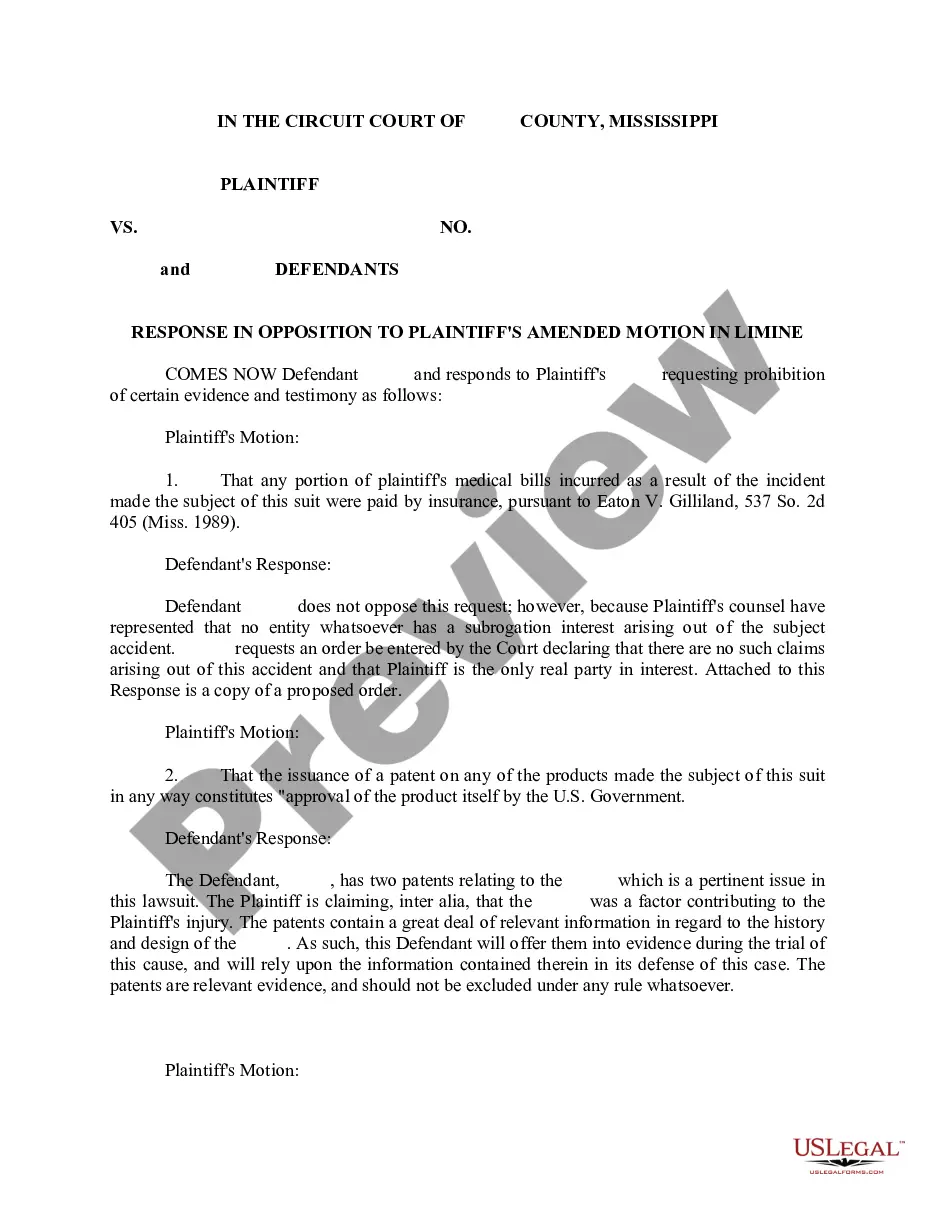
Louisiana Sale to be Held in Escrow
Understanding this form
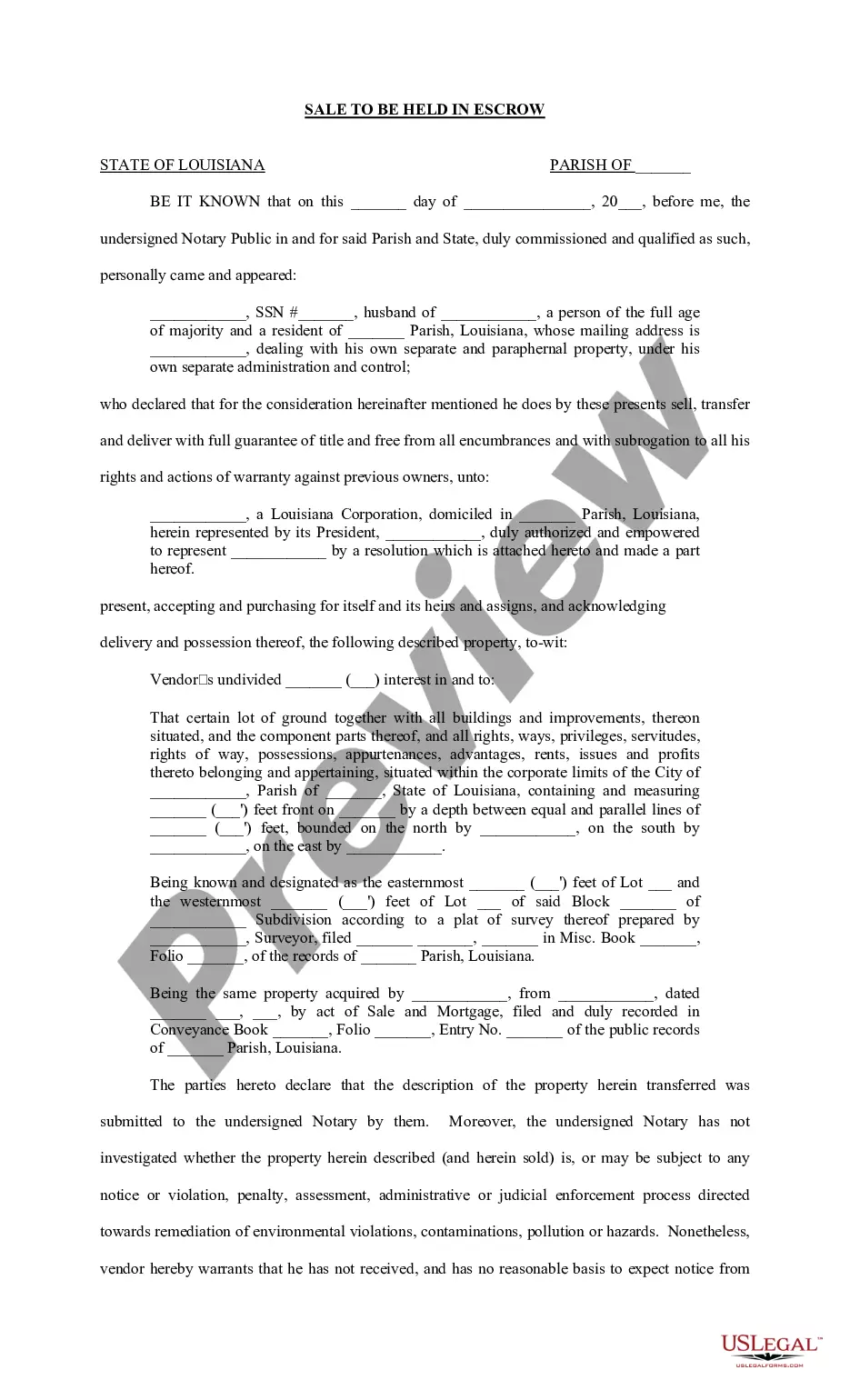
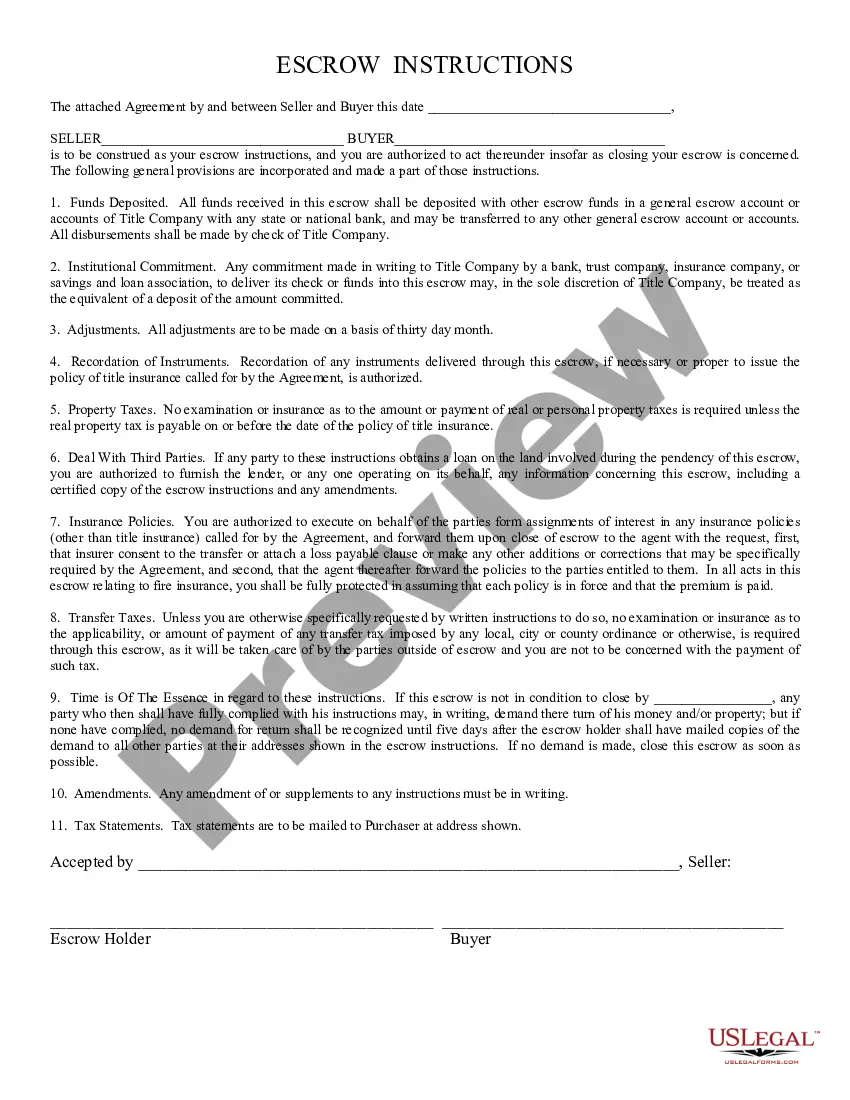
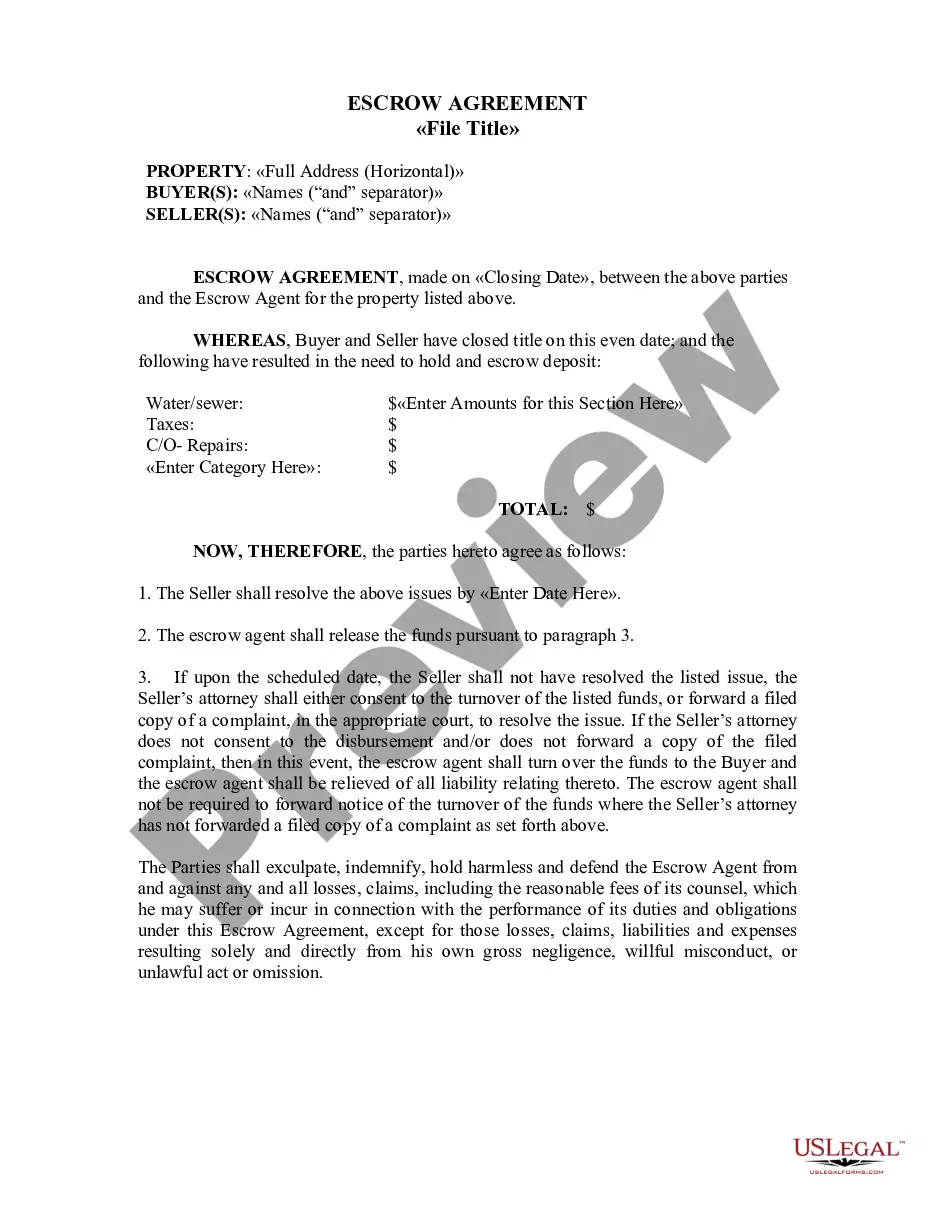
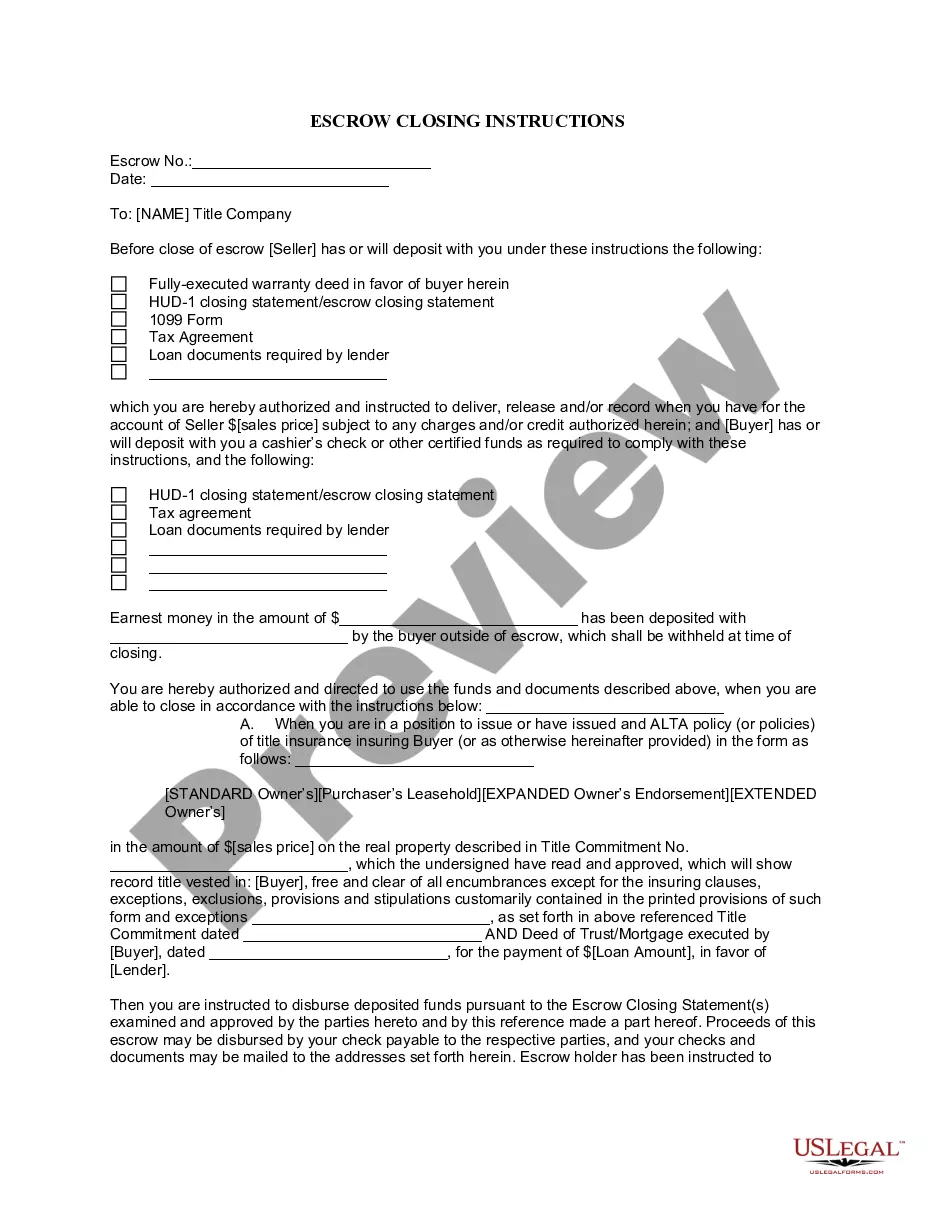
The Sale to be Held in Escrow form is a legal document that outlines the terms of the sale of a property, facilitated through an escrow arrangement. This form ensures that the purchase funds and property deeds are held by a neutral third party, known as an escrow agent, until all conditions of the sale have been met. This arrangement protects both the buyer and the seller by reducing risks associated with real estate transactions, making it distinct from other sales agreements that do not utilize escrow services.
Form components explained
- Identification of the parties involved, including sellers and buyers.
- Description of the property being sold, including boundaries and legal descriptions.
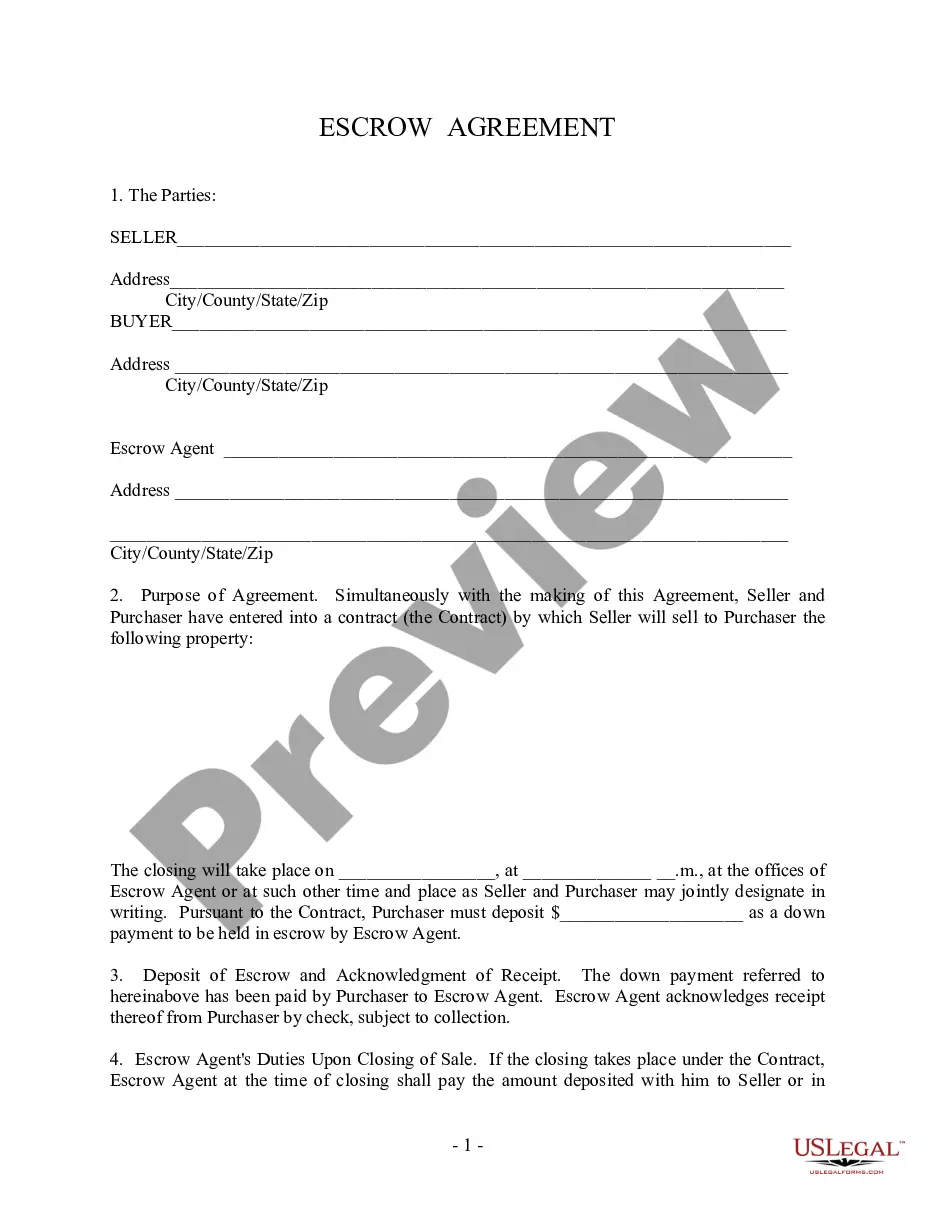
- Details on the escrow agent and their responsibilities.
- Terms regarding the transfer of title and assurance of clear ownership.
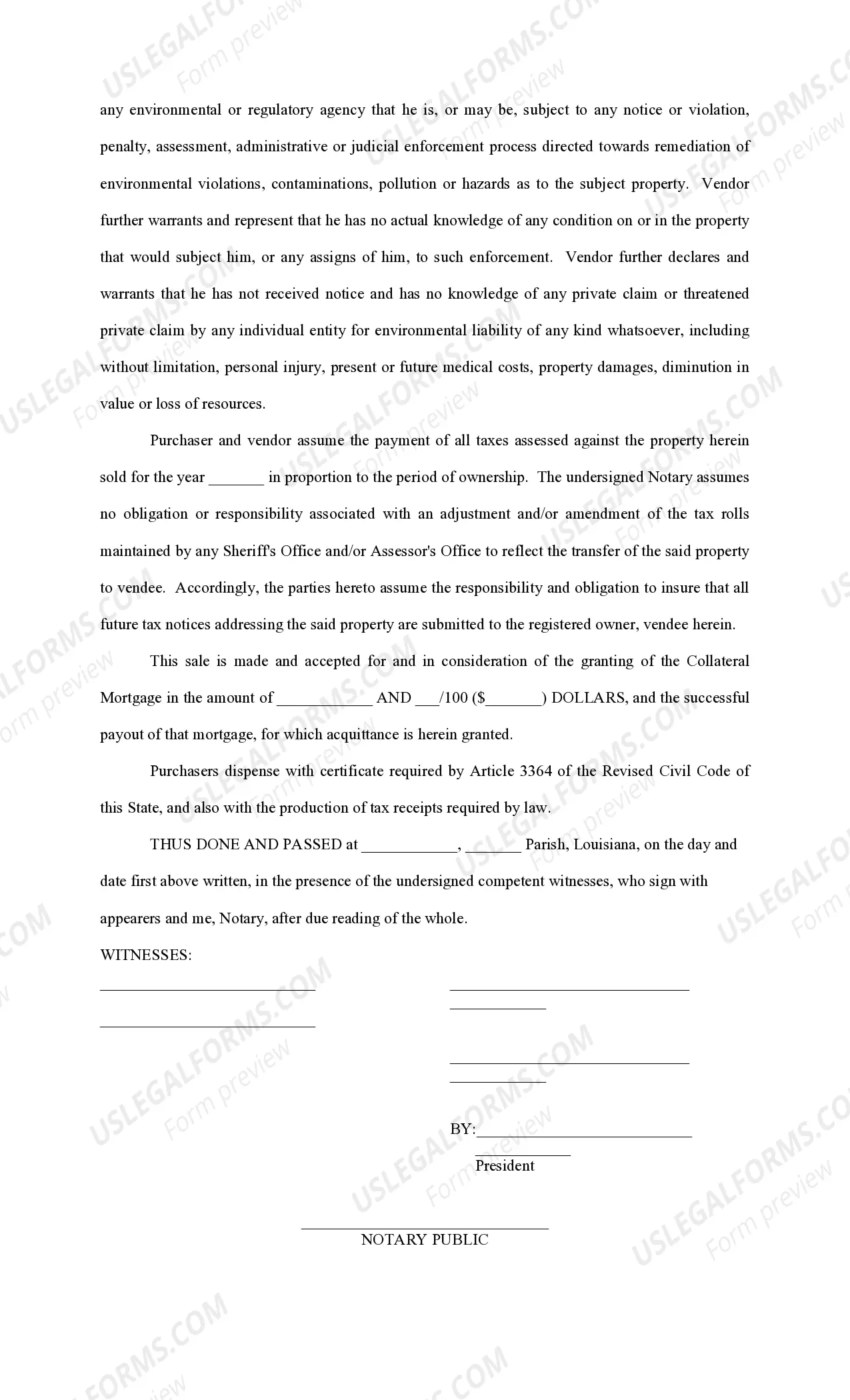
- Provisions for handling environmental claims and property taxes.
- Signatures of all parties and witnesses, along with notarization details.

When to use this form
This form should be used when selling property in situations where both parties desire added security and management of funds involved in the transaction. It is particularly useful in real estate transactions where the buyer and seller want to ensure that conditions such as inspections, financing, or other contingencies are satisfactorily resolved before finalizing the sale.
Intended users of this form
- Homeowners or property sellers looking to sell their real estate with protections in place.
- Buyers purchasing property who want assurance that funds are safeguarded.
- Real estate agents facilitating sales that involve escrow arrangements.
- Legal professionals advising clients on property sales.
Steps to complete this form
- Identify the parties involved by entering the names and addresses of the seller(s) and buyer(s).
- Provide a detailed description of the property, including legal descriptions and boundaries.
- Specify the terms of the sale, including the purchase price and any conditions related to the escrow agreement.
- Include signatures from all parties and witnesses, ensuring that all required fields are filled out accurately.
- Arrange for notarization of the document to ensure its legal validity.
Is notarization required?
Notarization is required for this form to take effect. Our online notarization service, powered by Notarize, lets you verify and sign documents remotely through an encrypted video session, available 24/7.
Get your form ready online
Our built-in tools help you complete, sign, share, and store your documents in one place.
Make edits, fill in missing information, and update formatting in US Legal Forms—just like you would in MS Word.
Download a copy, print it, send it by email, or mail it via USPS—whatever works best for your next step.
Sign and collect signatures with our SignNow integration. Send to multiple recipients, set reminders, and more. Go Premium to unlock E-Sign.
If this form requires notarization, complete it online through a secure video call—no need to meet a notary in person or wait for an appointment.
We protect your documents and personal data by following strict security and privacy standards.
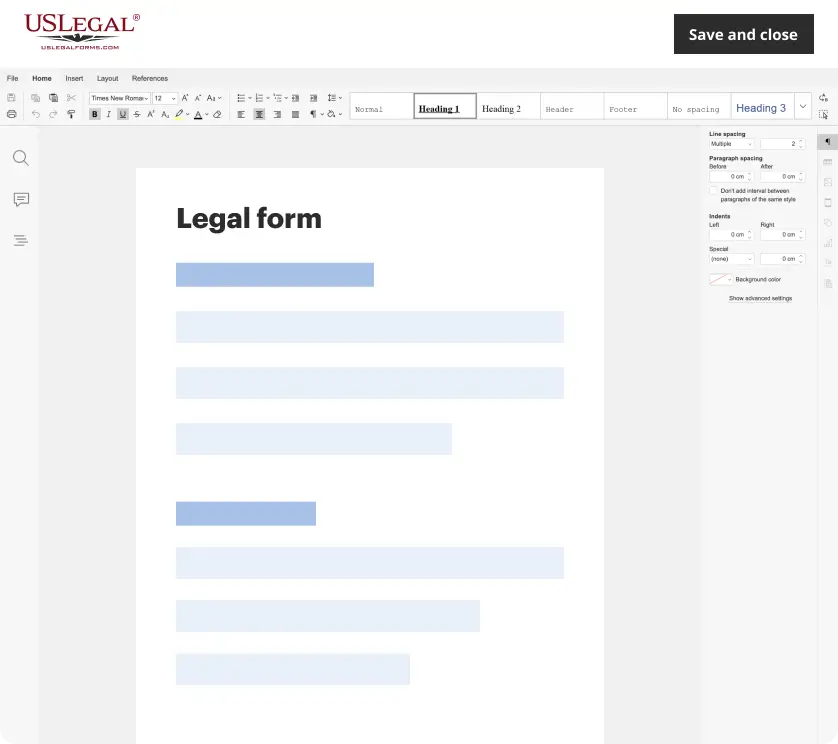
Make edits, fill in missing information, and update formatting in US Legal Forms—just like you would in MS Word.
Download a copy, print it, send it by email, or mail it via USPS—whatever works best for your next step.
Sign and collect signatures with our SignNow integration. Send to multiple recipients, set reminders, and more. Go Premium to unlock E-Sign.
If this form requires notarization, complete it online through a secure video call—no need to meet a notary in person or wait for an appointment.
We protect your documents and personal data by following strict security and privacy standards.
Common mistakes to avoid
- Failing to provide a complete legal description of the property.
- Leaving out necessary signatures or witnesses.
- Not specifying the conditions that need to be met for the escrow to be released.
- Neglecting to check local laws for any additional requirements.
Benefits of completing this form online
- Convenience of downloading when needed, at any time.
- Editability to tailor the document to specific transaction details.
- Access to reliable, attorney-drafted forms that meet legal standards.
Looking for another form?
Form popularity
FAQ
Filling out a bill of sale in Louisiana requires specific information to ensure the document is valid and legally binding. You will need to include details such as the seller's and buyer's names, a description of the item being sold, and the total sale amount. It's essential to mention any terms regarding the Louisiana Sale to be Held in Escrow if applicable. Using platforms like US Legal Forms can simplify this process, providing templates that meet Louisiana's legal requirements.
A bond for deed is an agreement that lets the buyer make payments towards purchasing a property while the seller retains ownership until payment completion. In this arrangement, the Louisiana Sale to be Held in Escrow ensures that both parties are protected through a neutral third party. As payments are made, the buyer can occupy the home, ultimately leading to a smooth transfer of title once the payment terms are fulfilled. This setup benefits buyers who may not qualify for traditional financing.
Opening escrow is actually quite simple. It involves going to the escrow or title company and handing over a deposit. This deposit, or earnest money, is the good faith check that is given by the buyer at the time the purchase agreement is signed.
However, realtors aren't the only ones who can set up escrow. With the right third-party service, you can set up an escrow account to hold funds when you're buying or selling property yourself, whether it's a home, car or other large purchase.
If there is a dispute about money being held in escrow, the broker must retain the money in escrow until the dispute is resolved.
In the event a dispute arises over whether the earnest money should be returned (for example, if the seller argues that the buyer did not notify the seller in a timely manner of the intent to back out of the contract), the escrow holder will continue to hold the earnest money until the dispute is resolved.
In financial transactions, the term "in escrow" indicates a temporary condition of an item, such as money or property, that has been transferred to a third party.Typically, items are held in escrow until the process involving a financial transaction has been completed.
During the home sales process, the buyer puts up a predetermined amount of cash (usually between 1% and 3% of the total home sales price) in an escrow account after an offer is accepted by the homeowner, and is held by a bank or other financial institution in an escrow account until the sale is finalized.
Generally, the buyer's or seller's real estate agent will open the escrow. As soon as you complete the purchase agreement, the agent will place the buyer's initial deposit, if any, into the escrow account at a title company or into the real estate broker's account.
Escrow times vary but most escrows close in 30 days, though the length should be agreeable to both the buyer and the seller. The timeline of your escrow starts the day after the seller has accepted the buyer's offer, or the buyer has accepted the seller's last counter offer.