Louisiana Motion to Suppress Evidence
Description
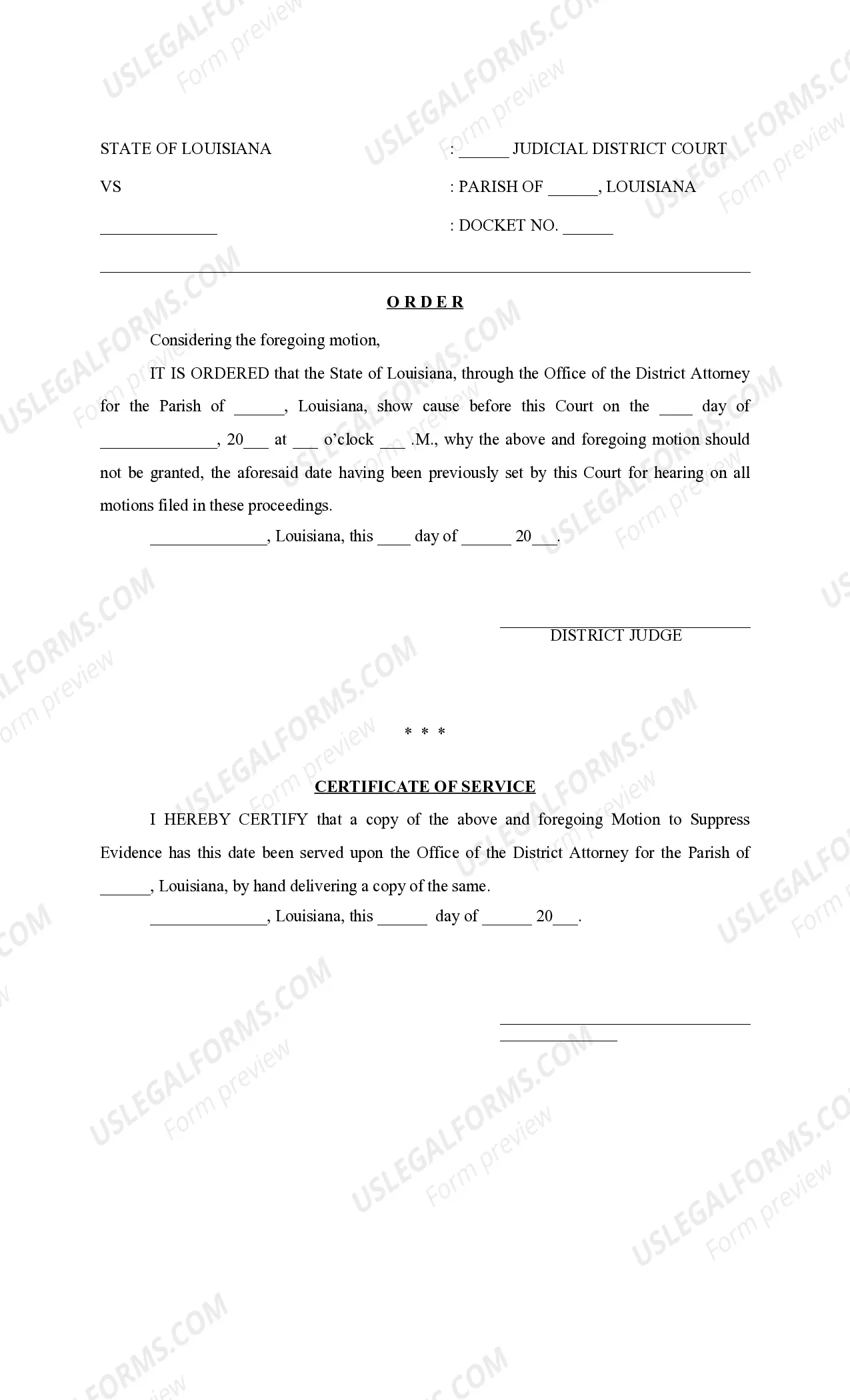
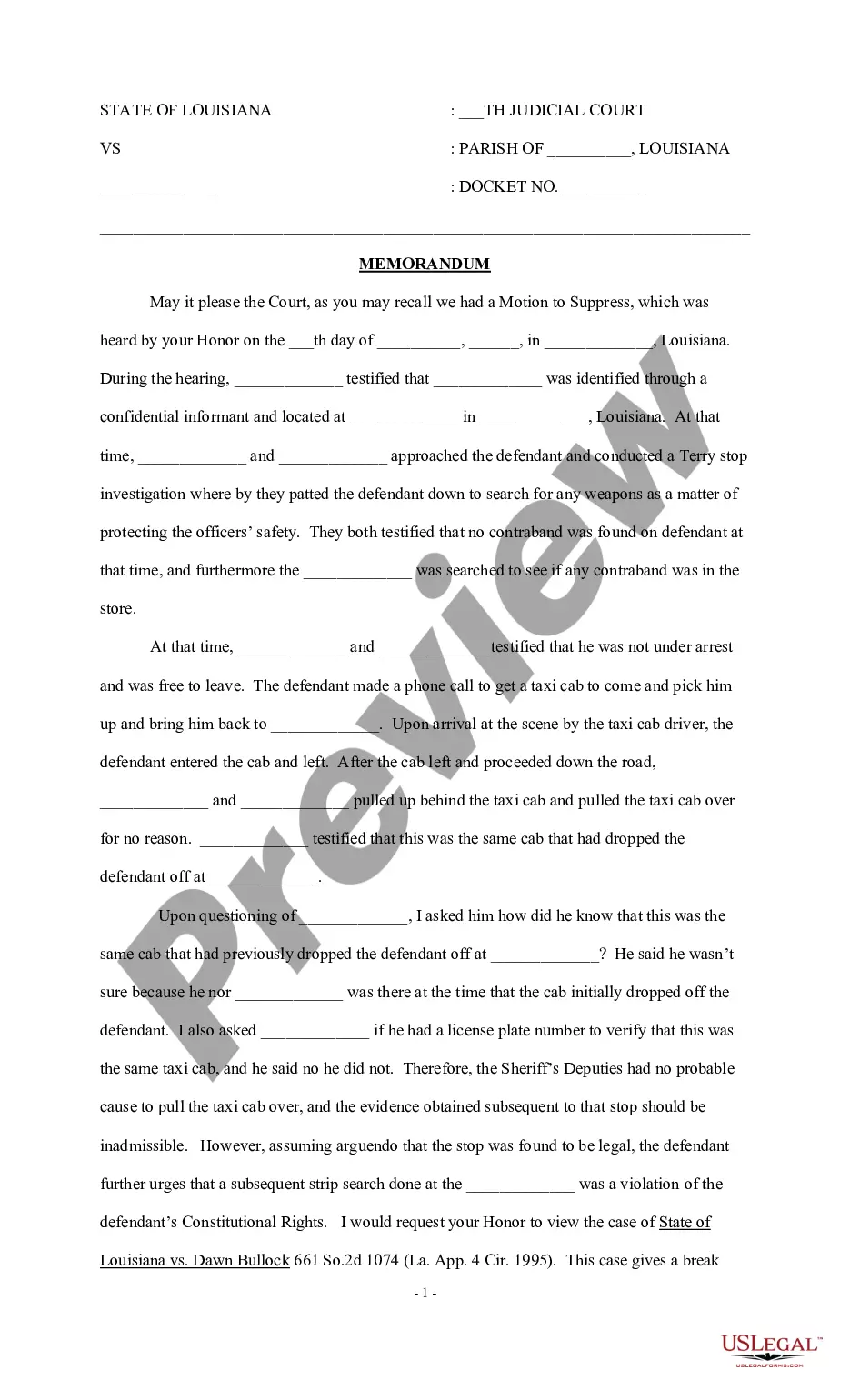
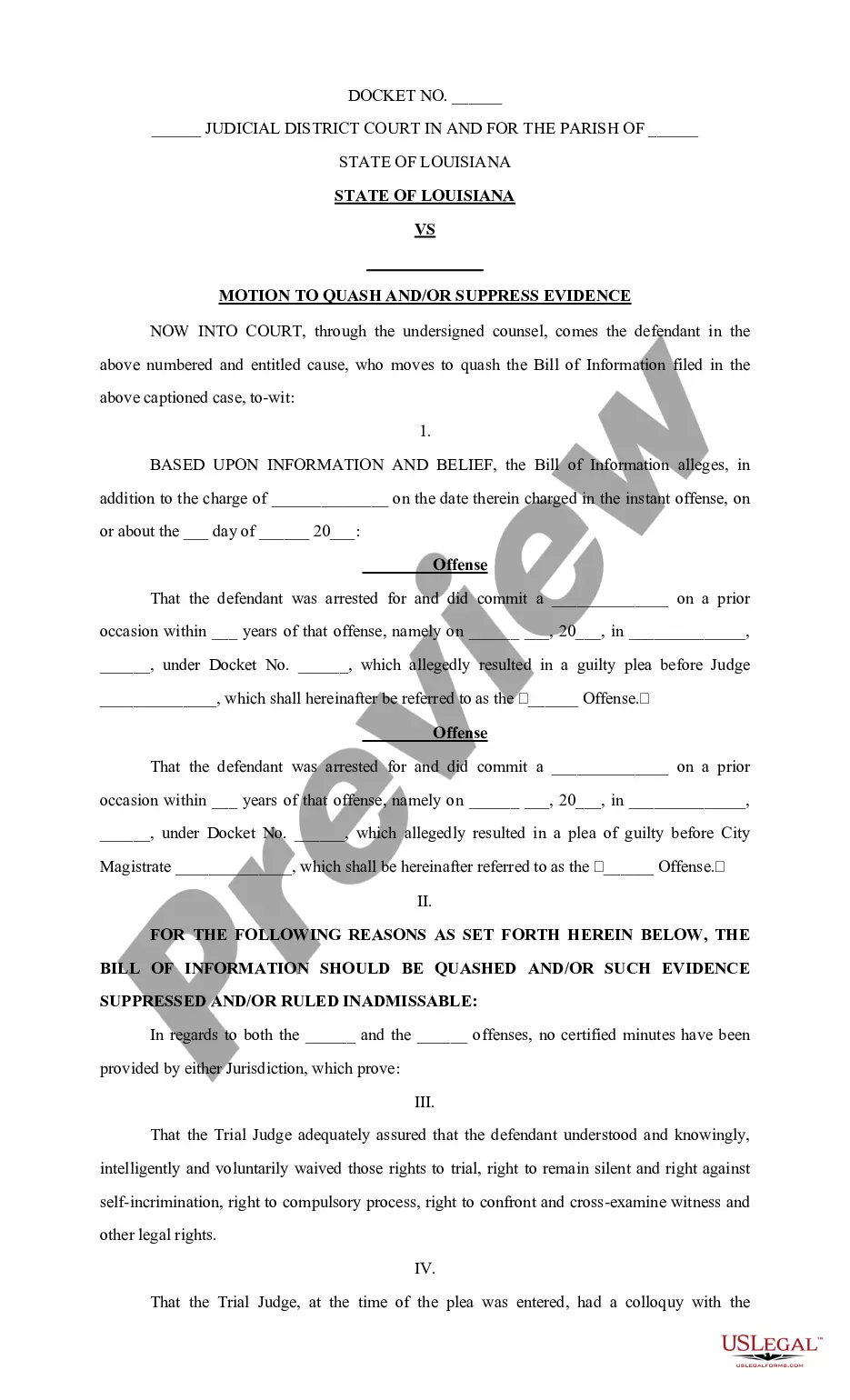
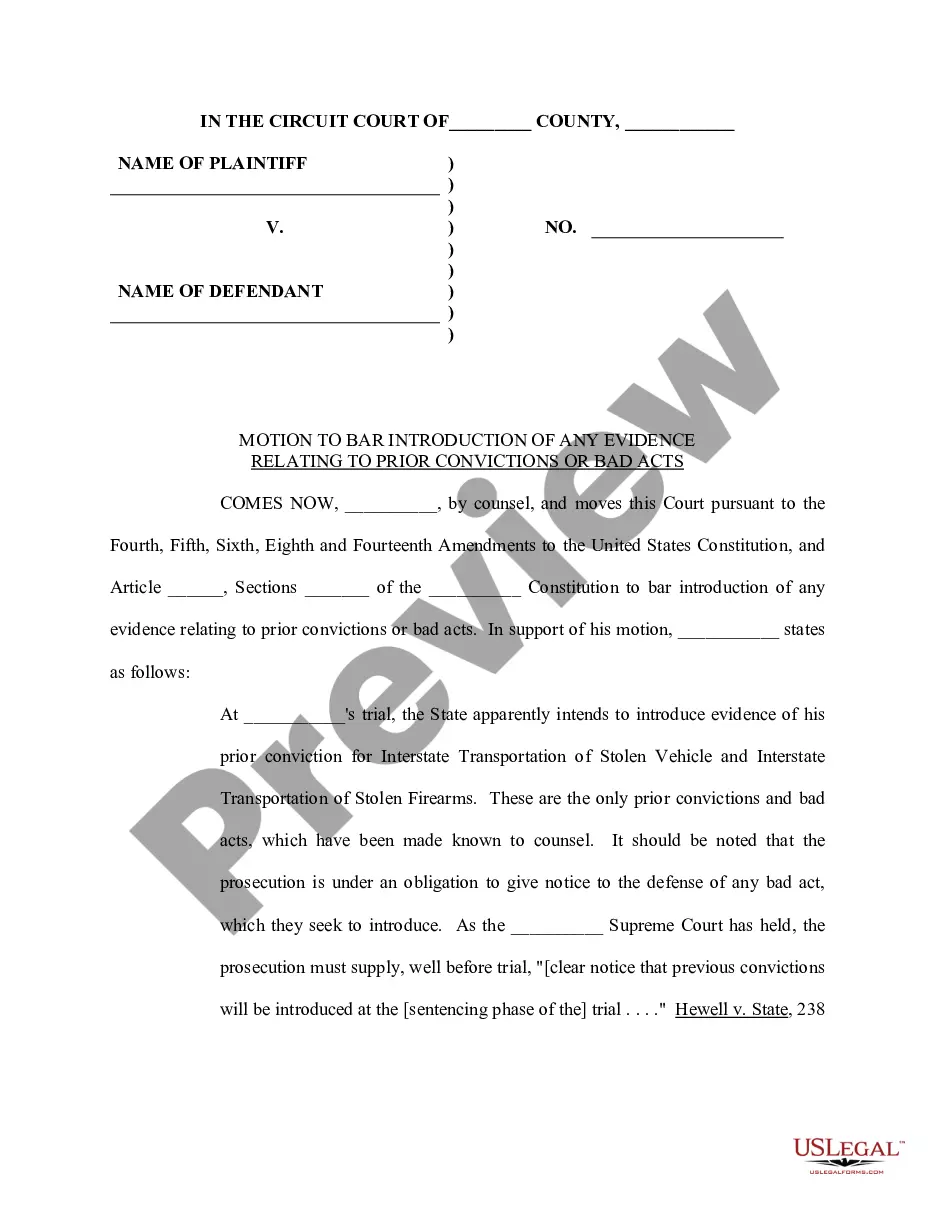
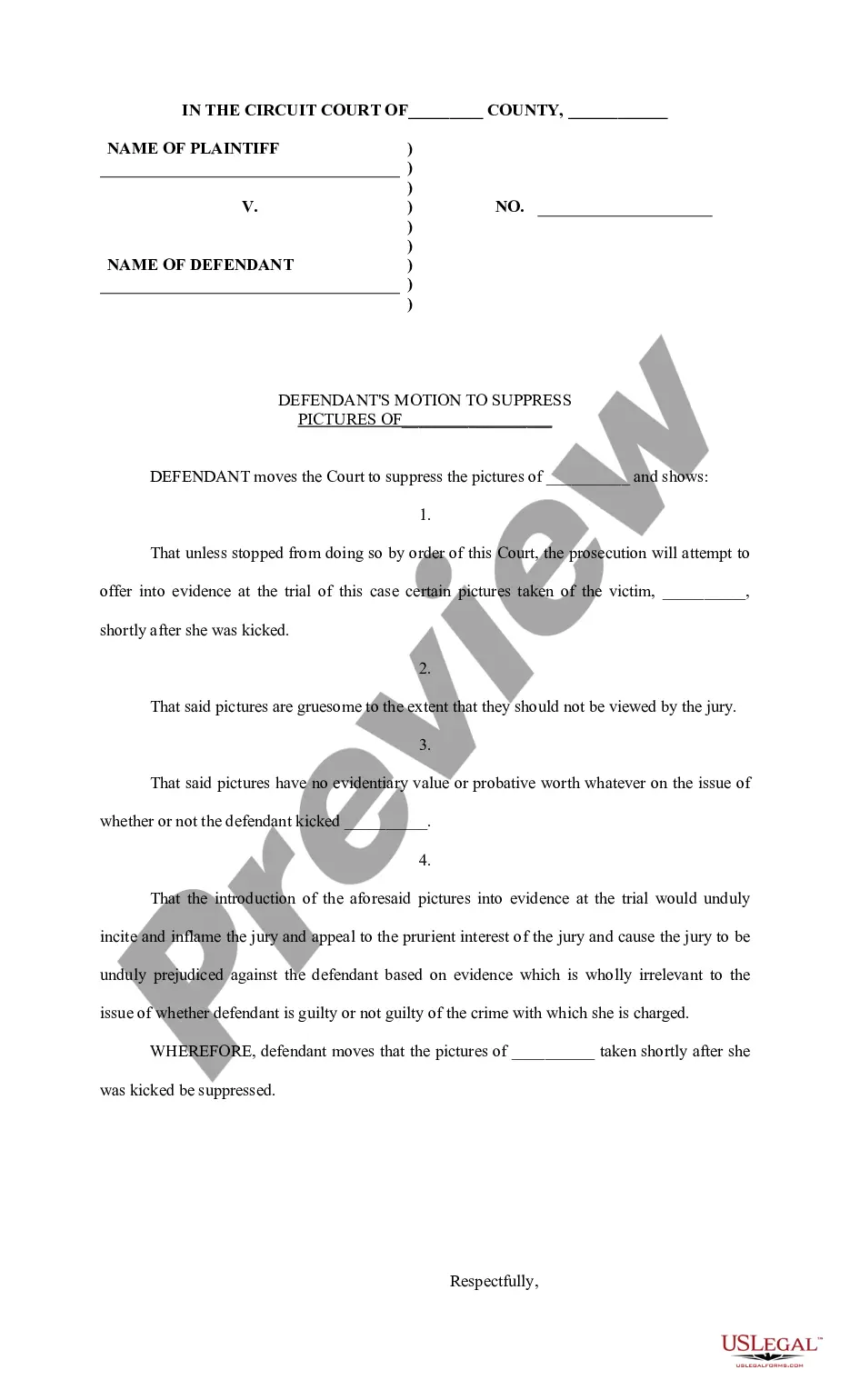
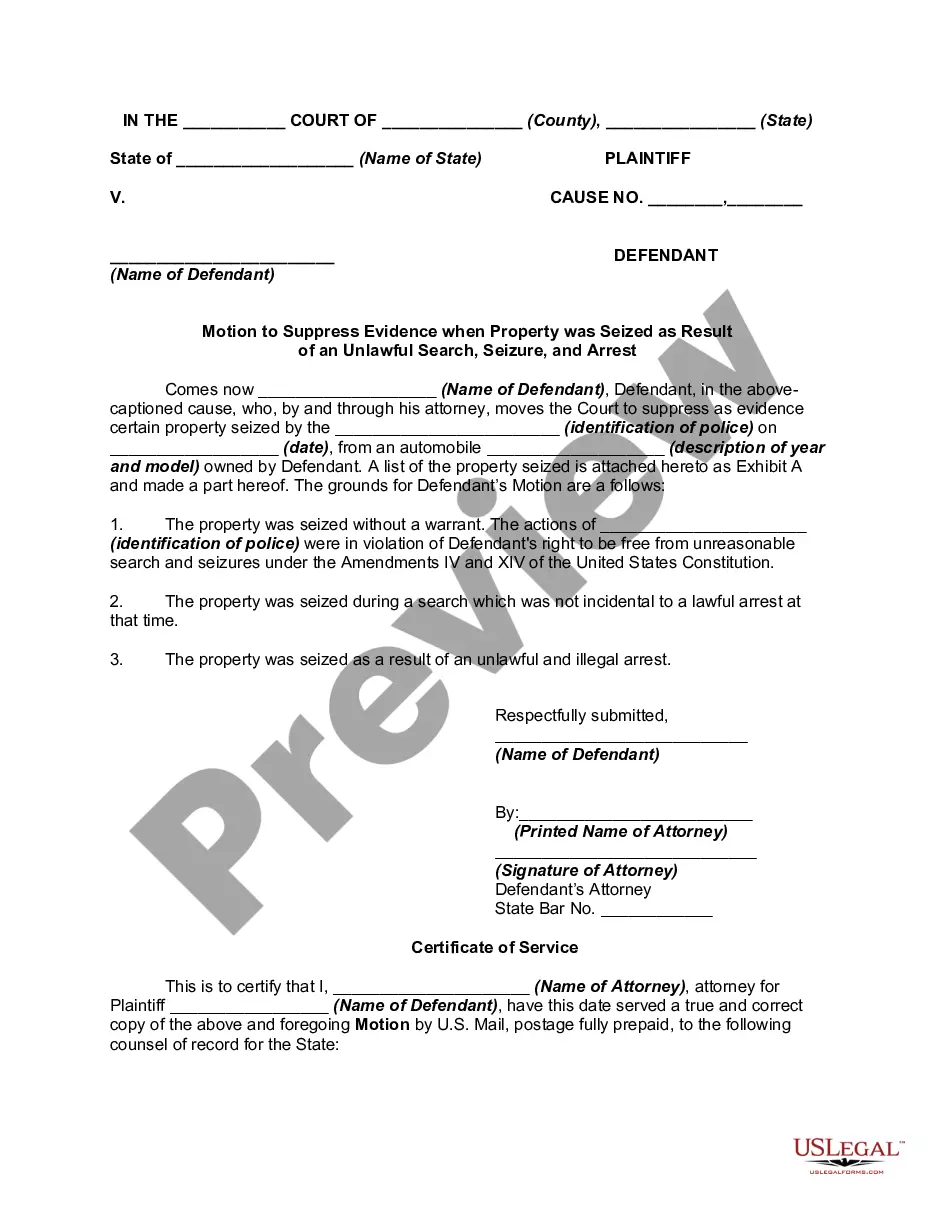

Key Concepts & Definitions
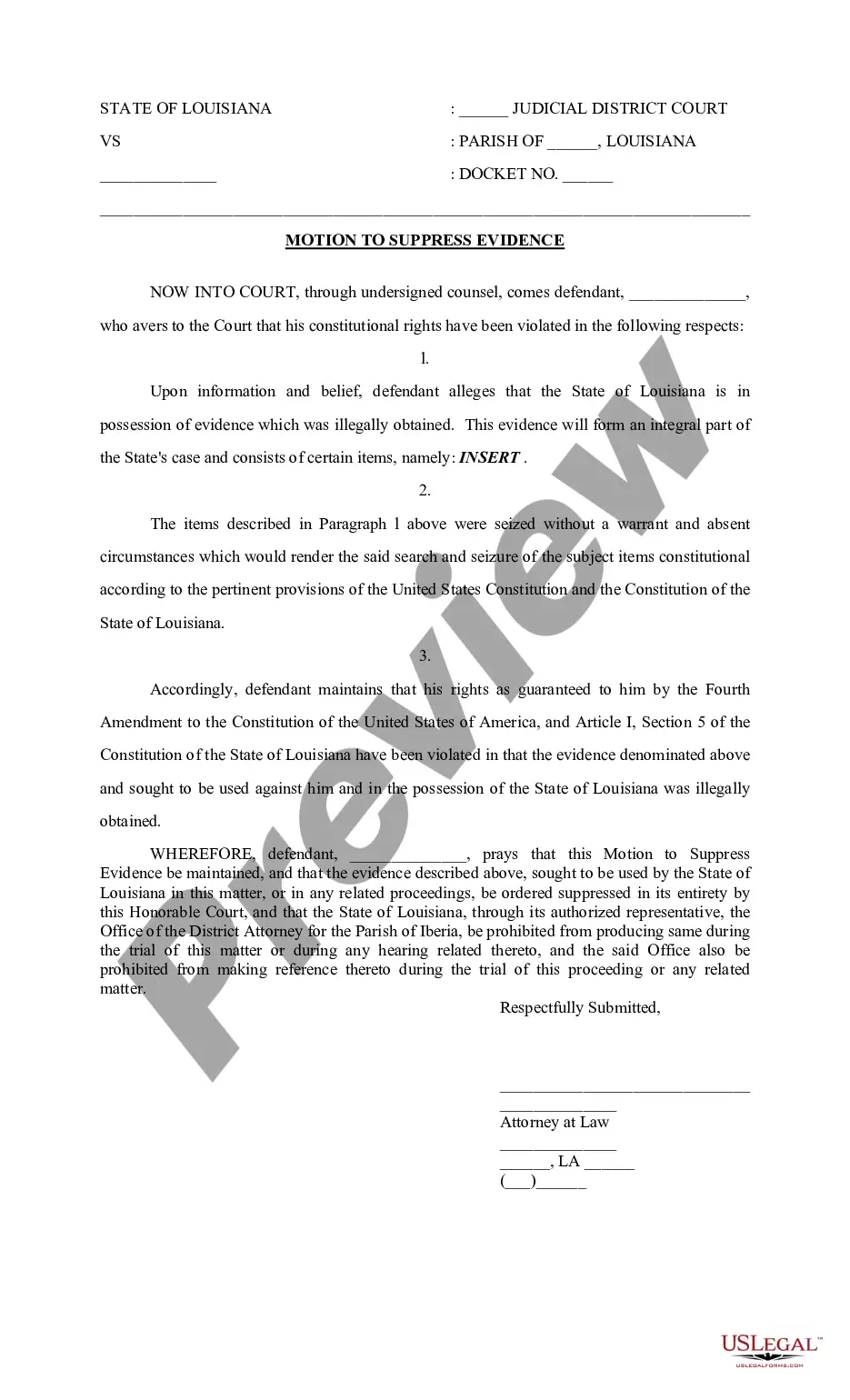
Motion to Suppress Evidence: A legal request made by a defendant in criminal law, asking the court to exclude evidence from a trial typically because it was obtained in violation of the defendant's constitutional rights.
Search and Seizure: Refers to the process by which police or other authorities investigate a crime and gather evidence. It must be conducted based on probable cause as per the Fourth Amendment.
Exclusionary Rule: A legal rule in United States federal rules of criminal procedure that prohibits evidence collected or analyzed in violation of the defendants constitutional rights from being used in a court of law.
Step-by-Step Guide: Filing a Motion to Suppress Evidence
- Determine Grounds for Suppression: Identify if the evidence was obtained through a violation of rights such as lack of probable cause or without a warrant.
- Gather Supporting Documents: Collect any relevant documents, such as police reports or witness statements, that support the claim of improper evidence collection.
- File the Motion: Draft and submit the motion to the court, clearly stating the reasons for suppression and including any supporting evidence or legal precedents.
- Attend the Hearing: Be prepared to argue your case in court, presenting arguments and counter responses to the prosecutions claims.
- Receive the Judge's Decision: The judge will make a ruling on the motion, which can significantly impact the course of the trial.
Risk Analysis of Filing a Motion to Suppress
Filing a motion to suppress evidence carries certain risks including the possibility of delaying the trial, which might not always work in the favor of the defendant. Moreover, if the motion is denied, it can solidify the prosecution's evidence against the defendant. Conversely, a successful motion can lead to a significantly weaker prosecution case, potentially resulting in dismissal of charges or a more favorable plea deal.
Best Practices
- Timeliness: File the motion as soon as possible after discovering the grounds for suppression to avoid waiving any rights.
- Legal Representation: Always use the expertise of a knowledgeable criminal defense attorney to navigate the nuances of pretrial preparation and courtroom procedures.
- Documentation: Maintain thorough documentation of all interactions and discoveries that might support the motion to suppress.
Common Mistakes & How to Avoid Them
- Lack of Specificity: Avoid generic claims in your motion. Be specific about what evidence is contested and on what grounds.
- Poor Timing: Do not delay in filing the motion, as this can be construed as an acceptance of the evidence's admissibility.
- Insufficient Grounds: Ensure you have a valid constitutional or legal basis for suppression to prevent an immediate dismissal of your motion.
How to fill out Louisiana Motion To Suppress Evidence?
Attempting to locate Louisiana Motion to Suppress Evidence documents and completing them could present a challenge.
To conserve significant time, expenses, and effort, utilize US Legal Forms to find the appropriate template specifically for your jurisdiction in just a few clicks.
Our legal experts prepare every document, so you only need to complete them. It is truly straightforward.
Select your payment option on the pricing page and create an account. Choose whether you wish to pay with a credit card or via PayPal. Download the document in your preferred file format. You can now print the Louisiana Motion to Suppress Evidence template or complete it using any online editor. No need to worry about errors since your form can be utilized and sent, and printed repeatedly as desired. Experience US Legal Forms and gain access to over 85,000 state-specific legal and tax documents.
- Log in to your account and navigate back to the form's page to save the document.
- Your downloaded files are stored in My documents and are available at all times for future use.
- If you haven't registered yet, you need to sign up.
- Review our thorough instructions on how to obtain the Louisiana Motion to Suppress Evidence template in minutes.
- To access a valid form, ensure it complies with your state.
- Examine the sample using the Preview feature (if available).
- If there is a description, read it to grasp the details.
- Click Buy Now if you have found what you need.
Form popularity
FAQ
The procedural process of filing a motion to suppress evidence begins when you notify the court and the prosecution that you believe there has been a violation of the law, of someone's rights, or of the procedural standards. The court would then schedule a hearing.
While in general, on a motion to suppress, the defendant has the burden of proving, by a preponderance of the evidence, that the material in question was seized in violation of his constitutional rights, there are several situations where the burden shifts to the government. United States v. De La Fuente, 548 F.
A motion to suppress is a motion that revolves around the exclusion of evidence from trial. In the United States, a motion to suppress is a request made by a criminal defendant in advance of a criminal trial asking the court to exclude certain evidence from the trial.
Often, the suppression of the right evidence can lead a jury to acquit you at trial, or even to the dismissal of charges before a trial ever happens.This is often the main piece of evidence in drug cases and without it, the prosecution usually knows it cannot prove the drug charges beyond a reasonable doubt.
Suppression of evidence is a fancy way of saying the evidence can't be used in court. In order to suppress evidence, the criminal defense lawyer must file a formal motion to exclude the evidence.The motion to suppress is heard by the judge who decides the case.
Any intentional, reckless, or negligent hiding of evidence by either party to the proceeding is illegal. This is known as spoliation of evidence (also tampering with evidence) and can result in serious legal consequences.
Penal Code 1538.5 PC Motion to suppress evidence. ((o) Within 30 days after a defendant's motion is granted at a special hearing in a felony case, the people may file a petition for writ of mandate or prohibition in the court of appeal, seeking appellate review of the ruling regarding the search or seizure motion.