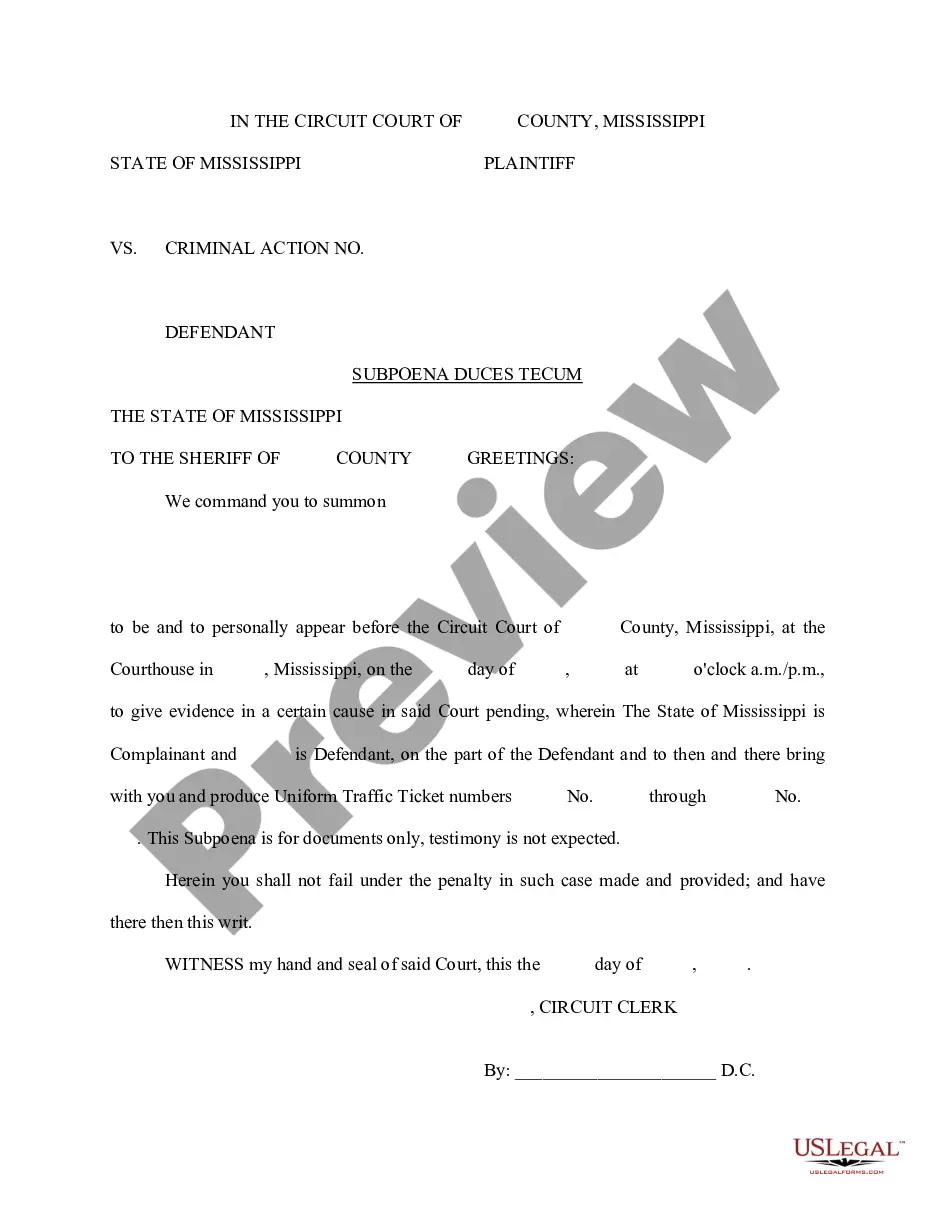
Louisiana Settlement of Community Property, Movable and Immovable
About this form
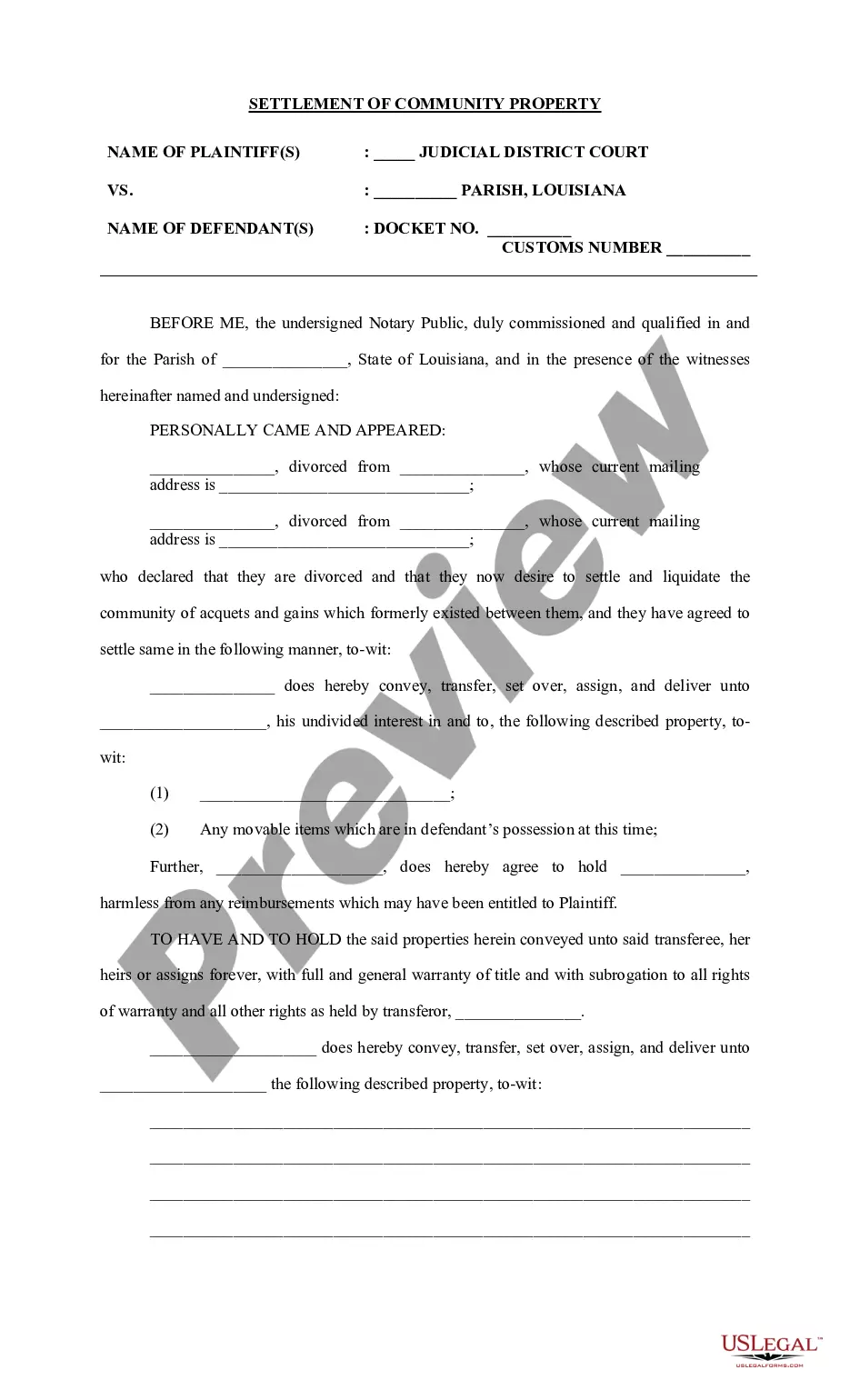
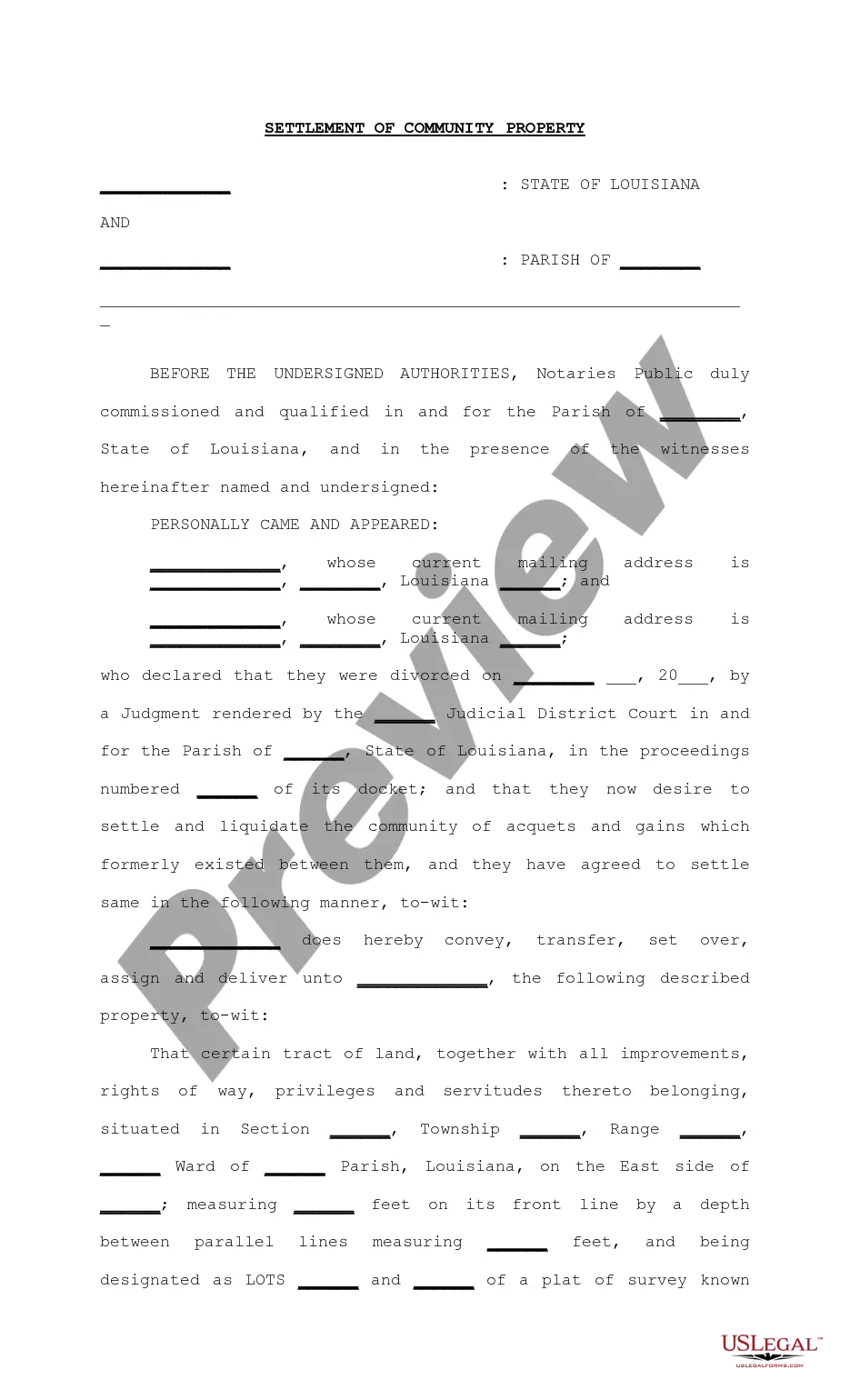
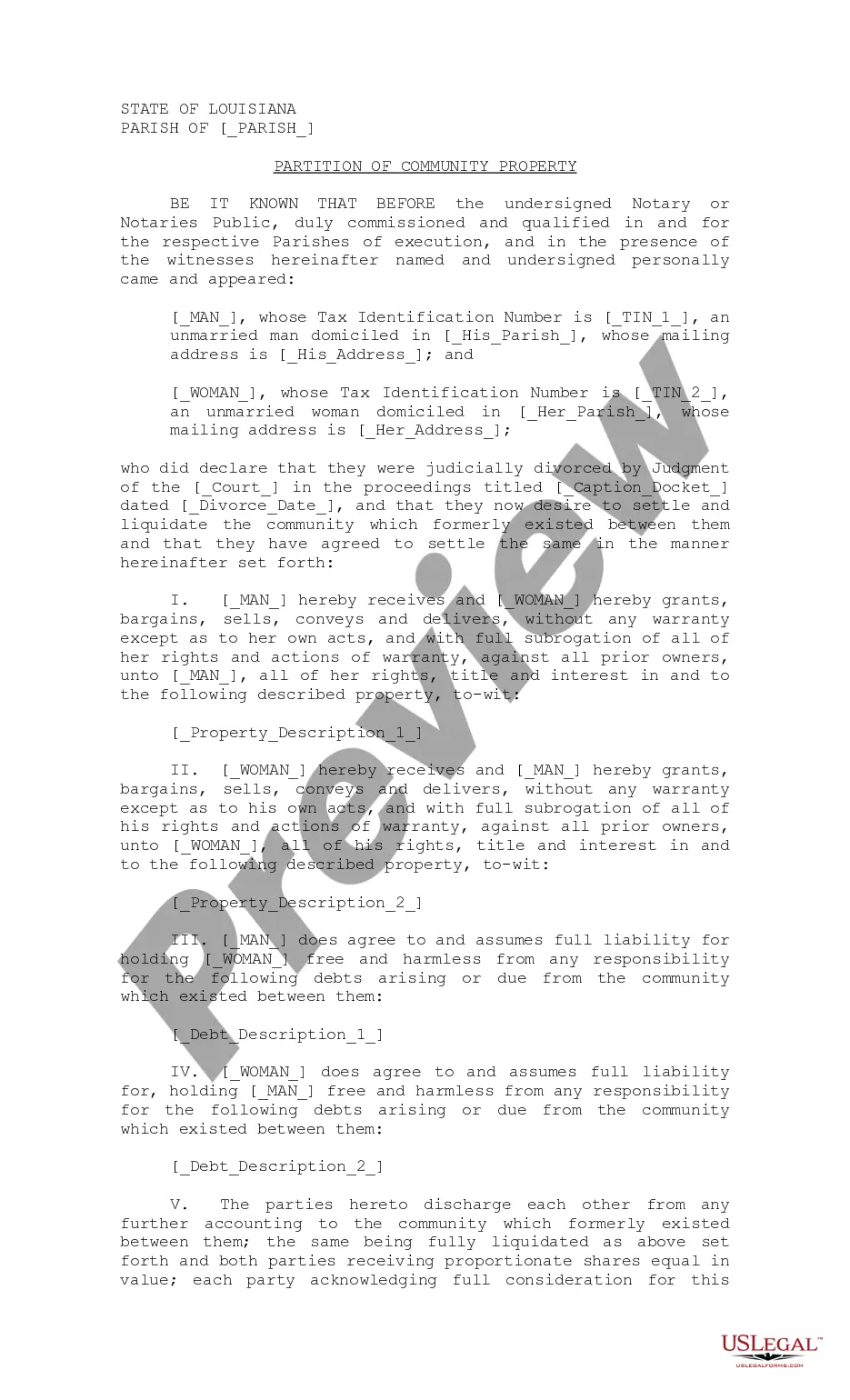
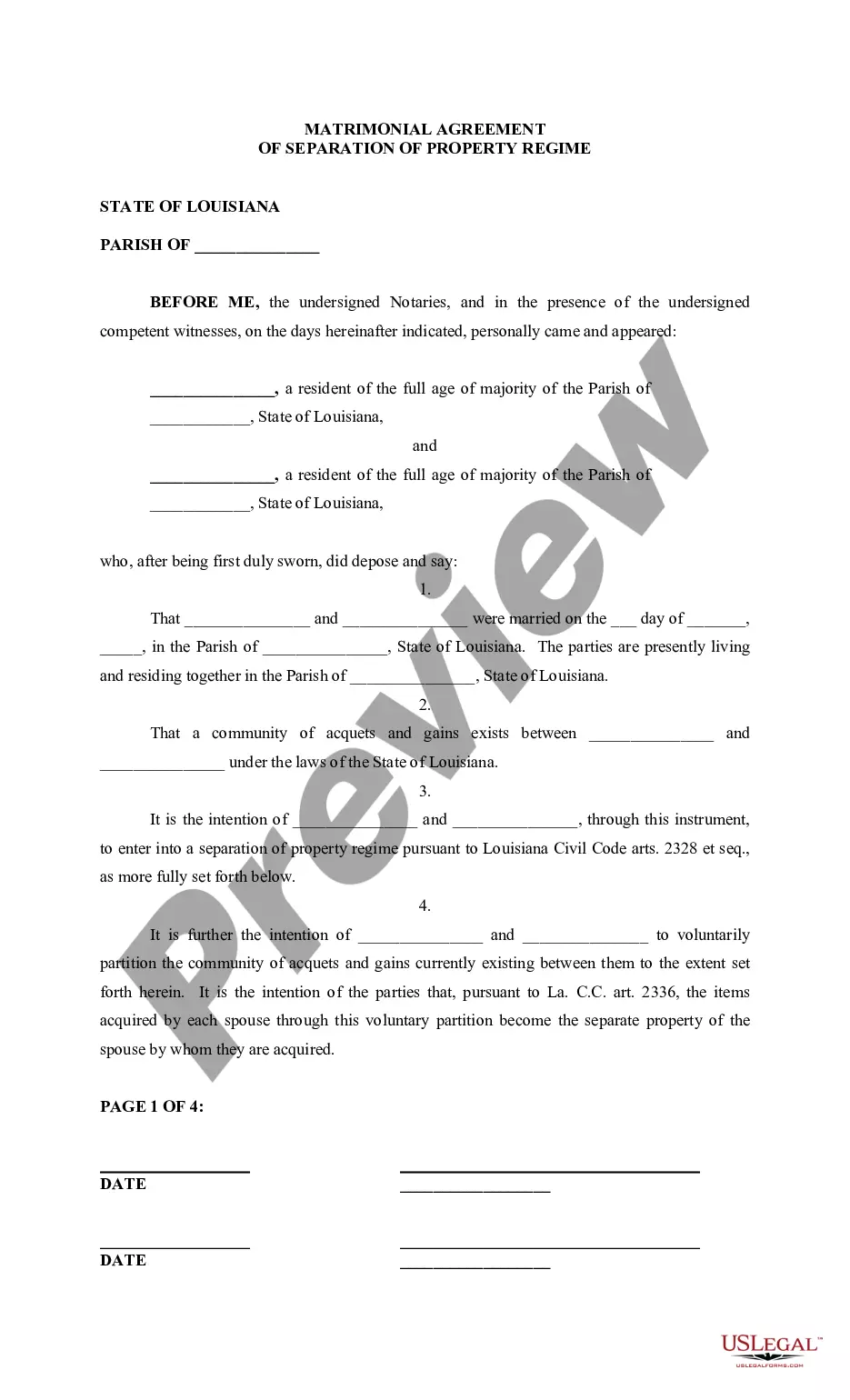
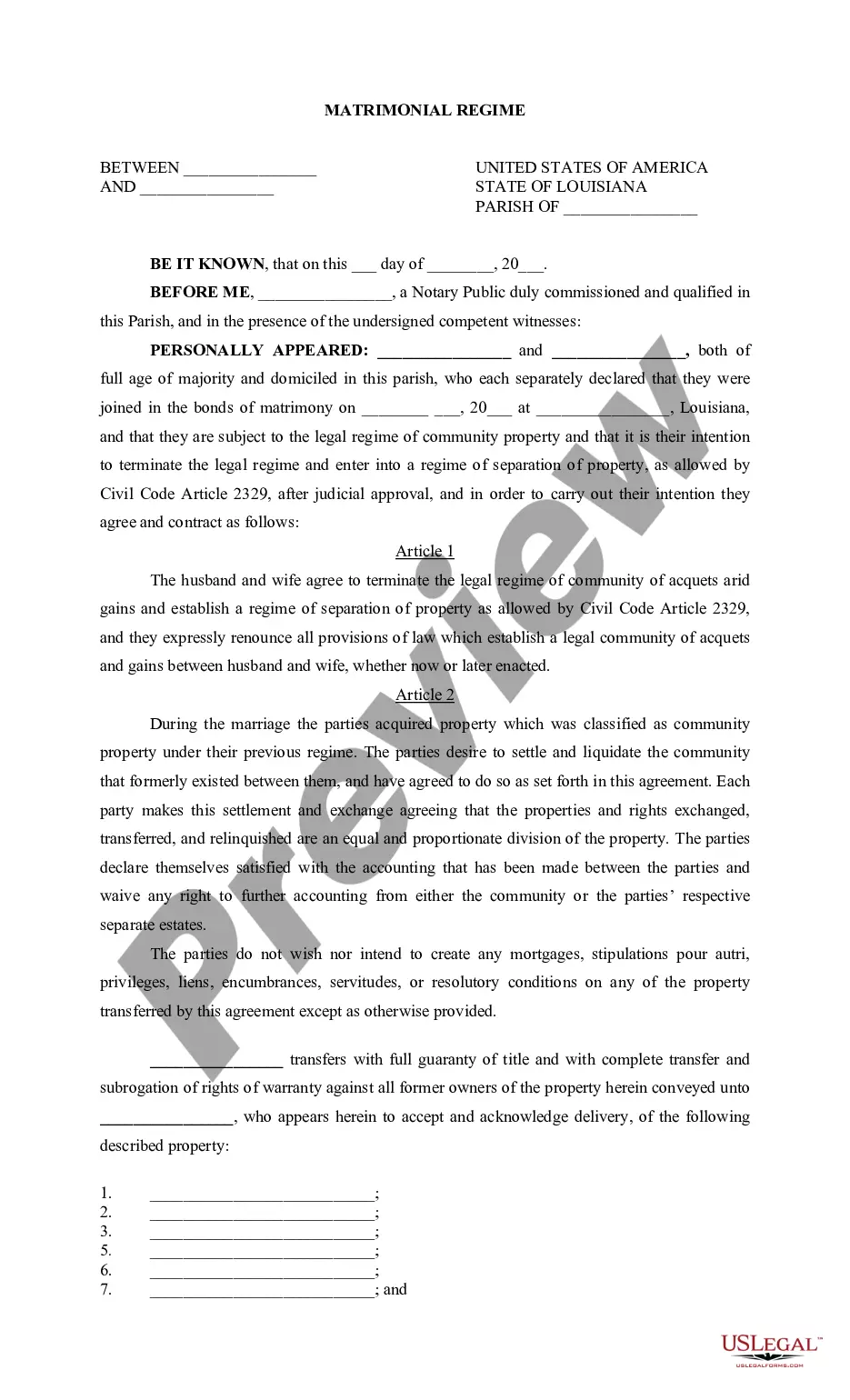
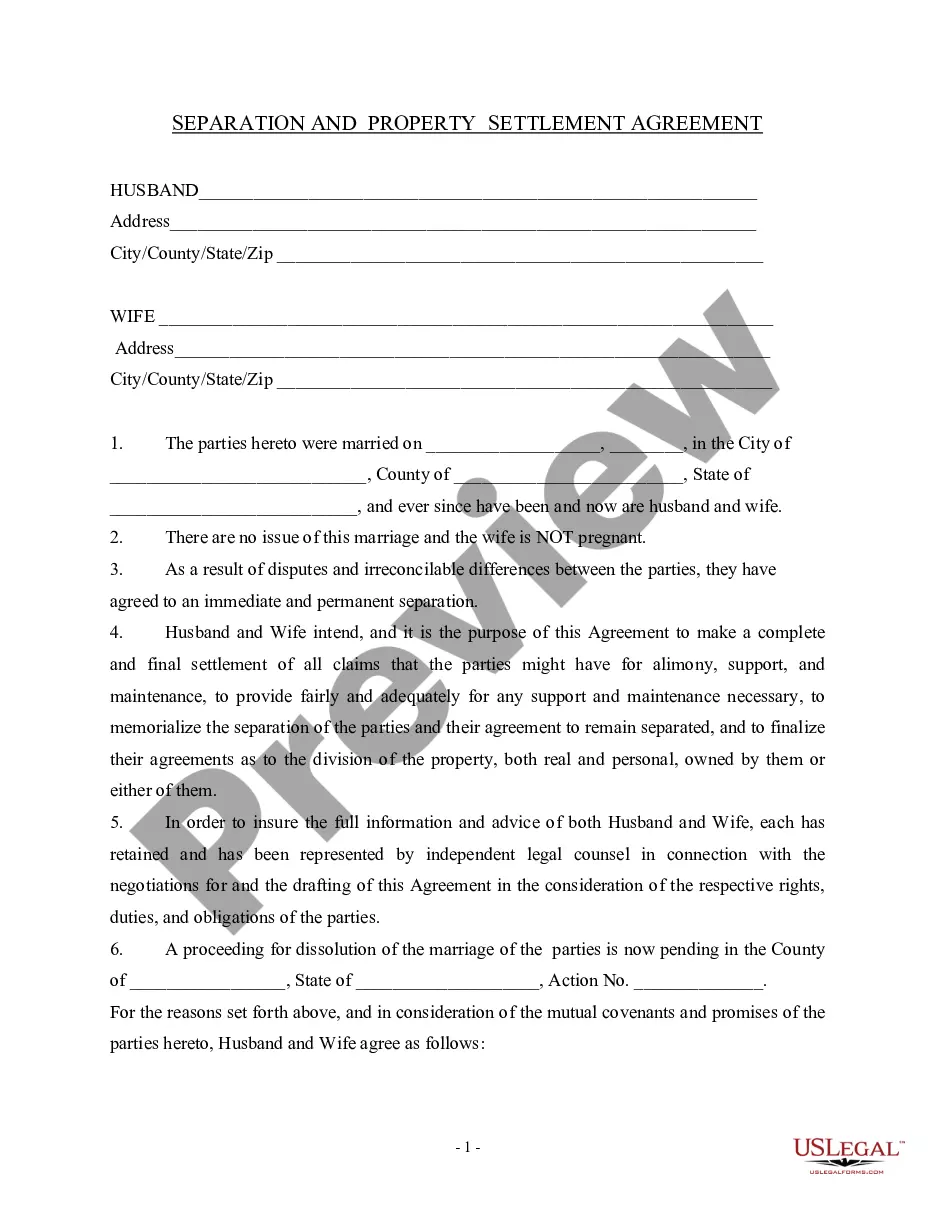
The Settlement of Community Property, Movable and Immovable form is a legal document used in Louisiana to settle and divide community property in divorce proceedings. This form helps parties agree on the distribution of both movable and immovable assets acquired during the marriage, ensuring clarity and legality in the separation process. It differs from other property settlement agreements by being specifically tailored to comply with Louisiana's community property laws.
Main sections of this form
- Name of plaintiffs and defendants, including court and case details.
- Declarations of divorce from each party, confirming their desires to settle community property.
- Details of the property being conveyed, including specific movable items.
- Agreement to hold each other harmless from debts incurred post-marriage.
- Provisions for individual liability on debts incurred after a specified date.
- Signatures of both parties and a notary public, confirming the validity of the agreement.


When this form is needed
This form is necessary when parties involved in a divorce in Louisiana wish to formally settle their community property. It is particularly relevant when the couple has shared assets that need to be divided equitably, ensuring both parties relinquish claims on transferred property after the divorce is finalized.
Intended users of this form
- Couples undergoing divorce in Louisiana.
- Individuals who share community property and wish to settle their assets amicably.
- Those seeking a legally binding agreement on the distribution of assets acquired during marriage.
Instructions for completing this form
- Identify the parties by entering the names of the plaintiff(s) and defendant(s) along with relevant court information.
- Declare the terms of the divorce by stating each party's desire to settle the community property.
- Specify the property being divided, including detailed descriptions of all movable and immovable assets.
- Include any agreements regarding debts, specifying which party will assume responsibility and the timeline for removing names from obligations.
- Ensure both parties sign the form in the presence of a notary public to validate the document.
Notarization requirements for this form
To make this form legally binding, it must be notarized. Our online notarization service, powered by Notarize, lets you verify and sign documents remotely through an encrypted video session.
Get your form ready online
Our built-in tools help you complete, sign, share, and store your documents in one place.
Make edits, fill in missing information, and update formatting in US Legal Forms—just like you would in MS Word.
Download a copy, print it, send it by email, or mail it via USPS—whatever works best for your next step.
Sign and collect signatures with our SignNow integration. Send to multiple recipients, set reminders, and more. Go Premium to unlock E-Sign.
If this form requires notarization, complete it online through a secure video call—no need to meet a notary in person or wait for an appointment.
We protect your documents and personal data by following strict security and privacy standards.

Make edits, fill in missing information, and update formatting in US Legal Forms—just like you would in MS Word.

Download a copy, print it, send it by email, or mail it via USPS—whatever works best for your next step.

Sign and collect signatures with our SignNow integration. Send to multiple recipients, set reminders, and more. Go Premium to unlock E-Sign.

If this form requires notarization, complete it online through a secure video call—no need to meet a notary in person or wait for an appointment.

We protect your documents and personal data by following strict security and privacy standards.
Common mistakes to avoid
- Failing to include all movable and immovable assets, leading to potential disputes later.
- Not having the form notarized, which can invalidate the agreement in Louisiana.
- Overlooking the division of debts incurred after the date of separation.
- Not clearly identifying the parties and the properties involved.
Why use this form online
- Quick access to professionally drafted legal templates tailored to Louisiana law.
- Ability to edit and customize the form easily to fit individual circumstances.
- Reliability, knowing that the form complies with state legal standards.
Legal use & context
- This form represents a binding agreement between divorced parties regarding the settlement of their community property.
- It may be enforceable in a Louisiana court if all terms are followed correctly and the document is properly notarized.
- The form should detail all properties and debts clearly to prevent future disputes.
Key takeaways
- The Settlement of Community Property, Movable and Immovable is critical for legally dividing assets during a divorce in Louisiana.
- Accurate completion and notarization are essential to enforceability.
- Use this form to prevent future disputes regarding property and debt division.
Looking for another form?

Form popularity
FAQ
Under Louisiana law, marital property, or property acquired during the marriage, is distributed equally (50-50) to each party unless the court finds such a division to be inequitable or parties agree to a different formula under which to divide property.
Louisiana is a community property state. This means that spouses generally share equally in the assets, income and debt acquired by either spouse during the marriage. However, some income and some property may be separate income or separate property.
At divorce, community property is generally divided equally between the spouses, while each spouse keeps his or her separate property. Equitable distribution. In all other states, assets and earnings accumulated during marriage are divided equitably (fairly), but not necessarily equally.
When you get divorced, community property is generally divided equally between the spouses, while each spouse gets to keep his or her separate property. Equitable distribution: In all other states, assets and earnings accumulated during marriages are divided equitably (fairly) but not necessarily equally.
California is a community property state, which means that following the death of a spouse, the surviving spouse will have entitlement to one-half of the community property (i.e., property that was acquired over the course of the marriage, regardless of which spouse acquired it).
Separate property is property belongs exclusively to one of two spouses. Under Louisiana law, assets acquired by a deceased person while unmarried, or acquired during the marriage by gift, is considered to be separate property.
Louisiana's community property laws assert that all debts and assets acquired during a couple's marriage belong equally to both spouses. A judge dividing community property must make sure that each spouse receives property of equal net value.
If a couple moves from a community property state to a common law state, each spouse retains a one-half interest in property accumulated during marriage while they lived in the community property state.