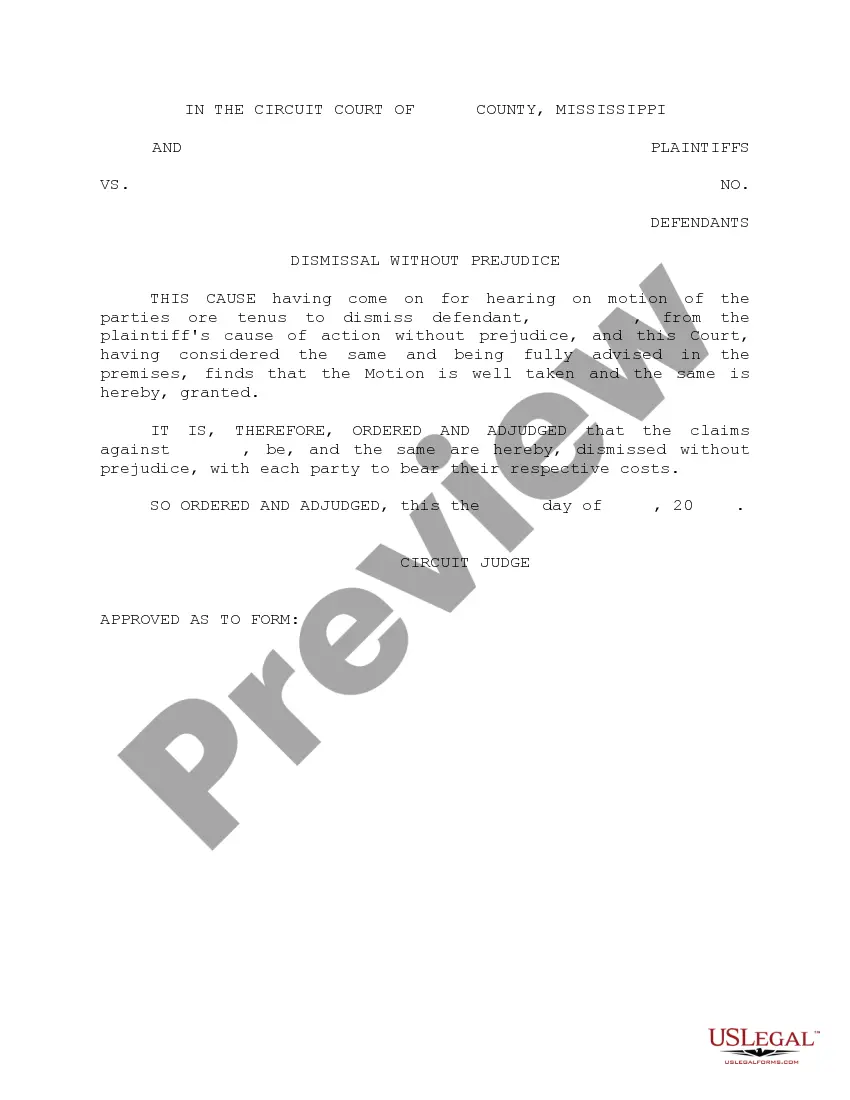
Louisiana Petition for Possession and Affidavit of Valuation and Detailed Descriptive List, Judgment of Possession
What is this form?
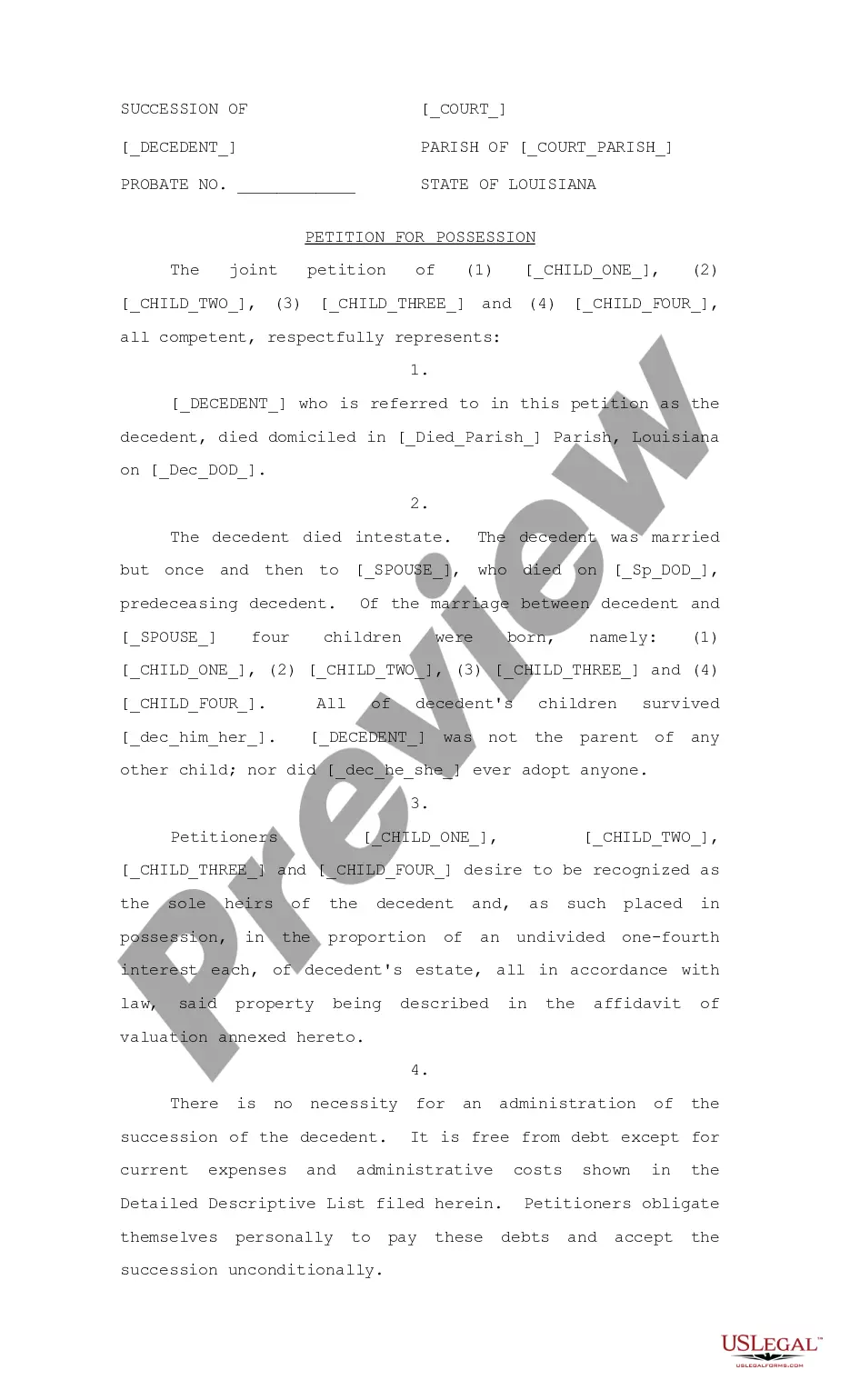
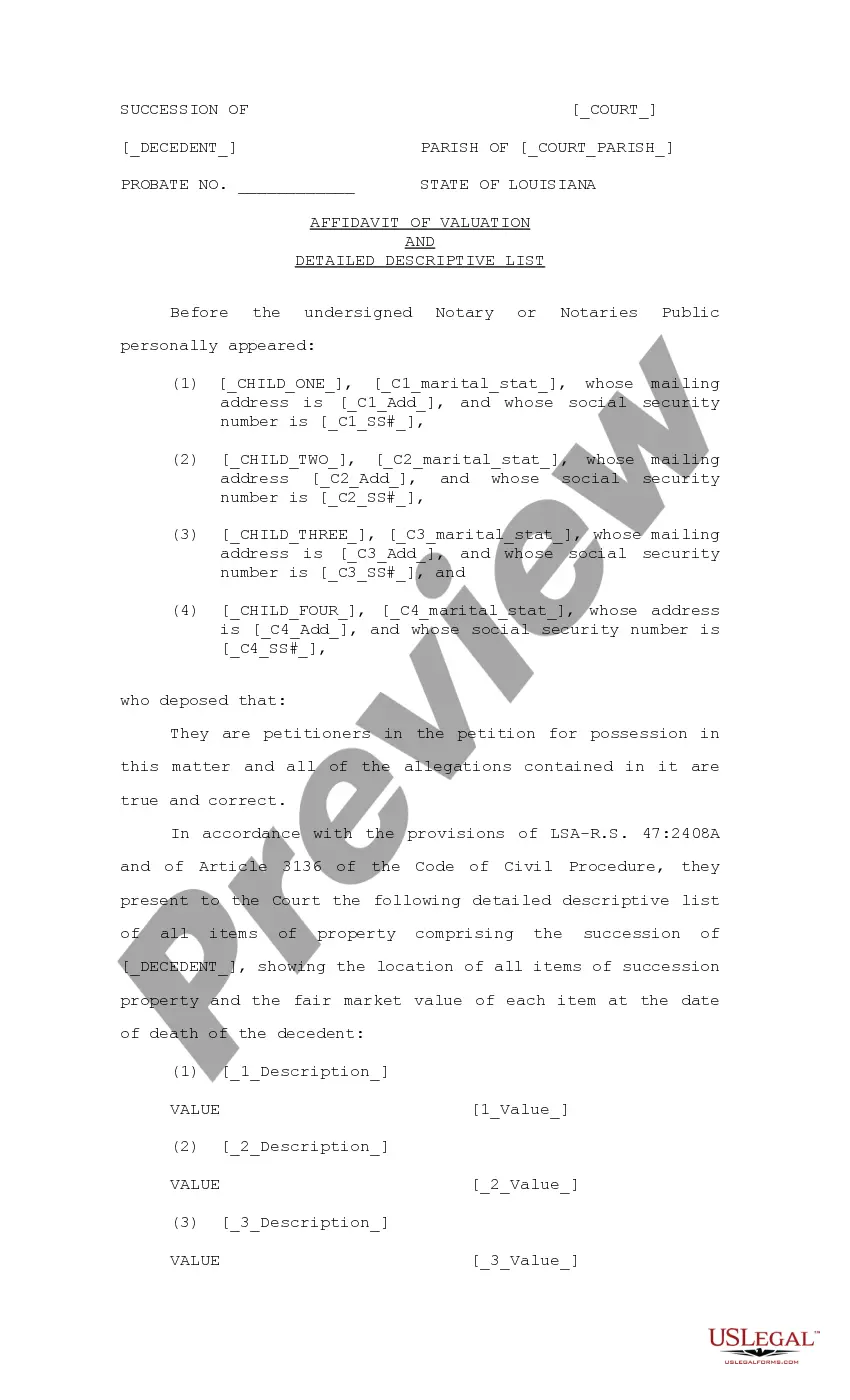
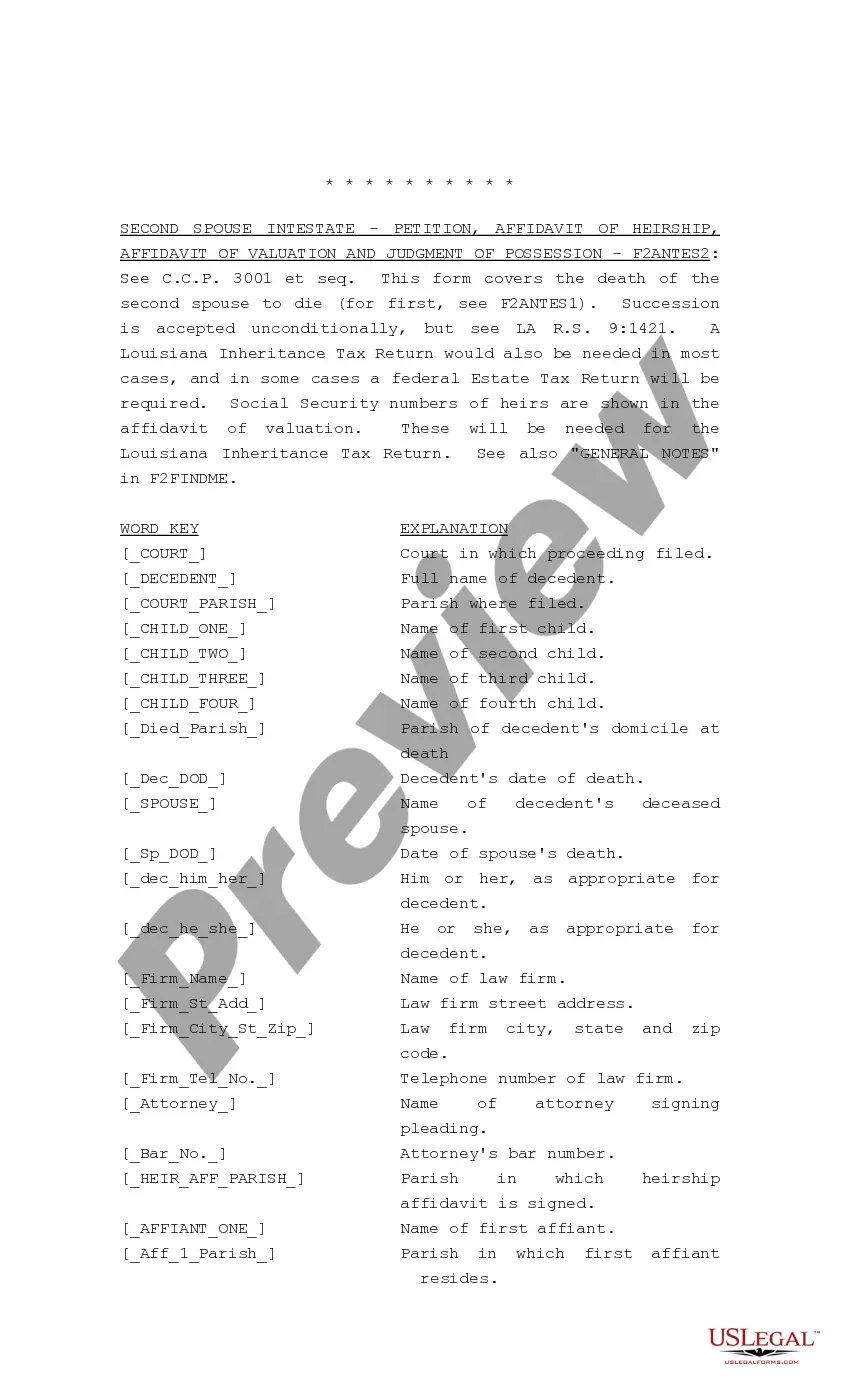
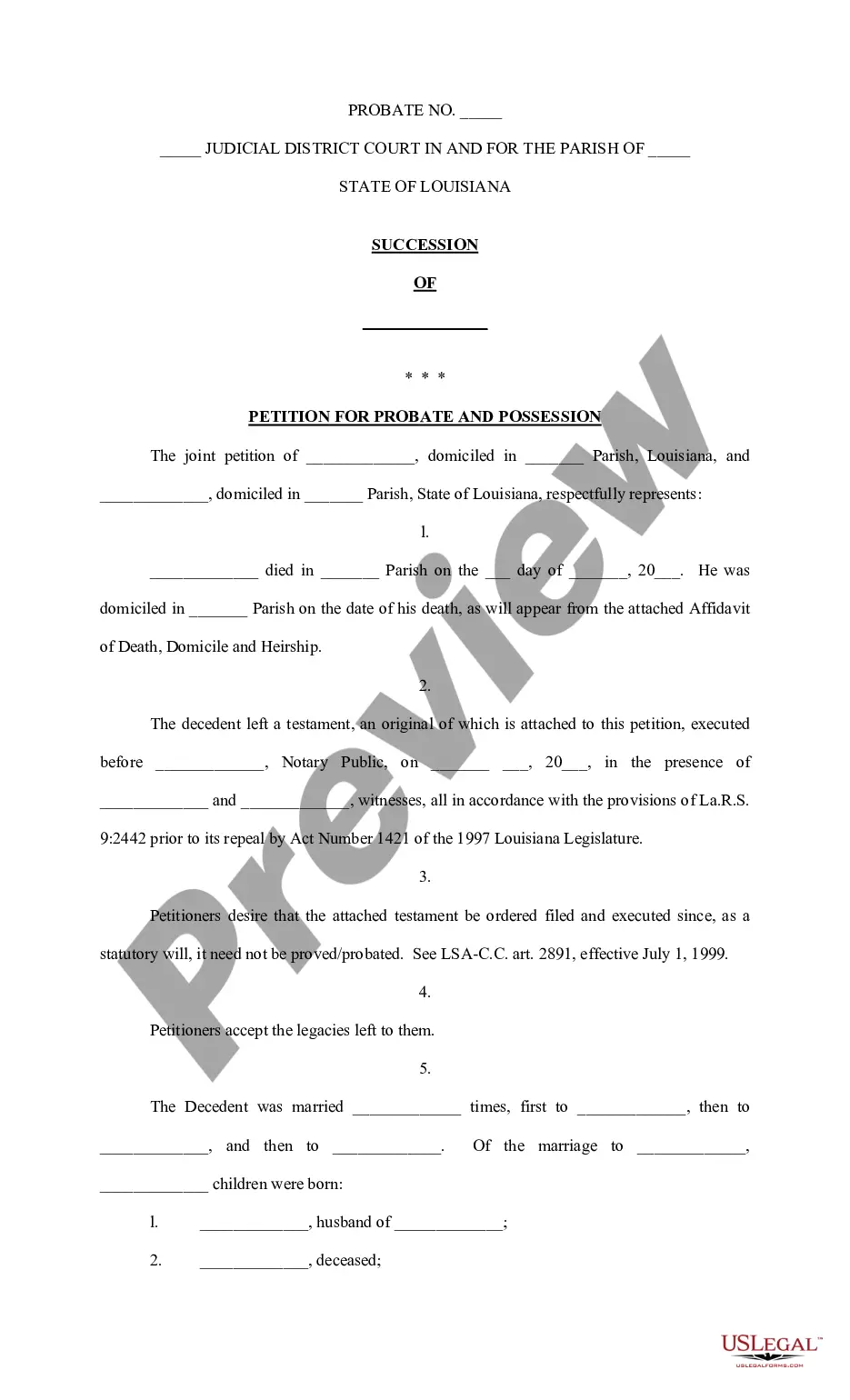
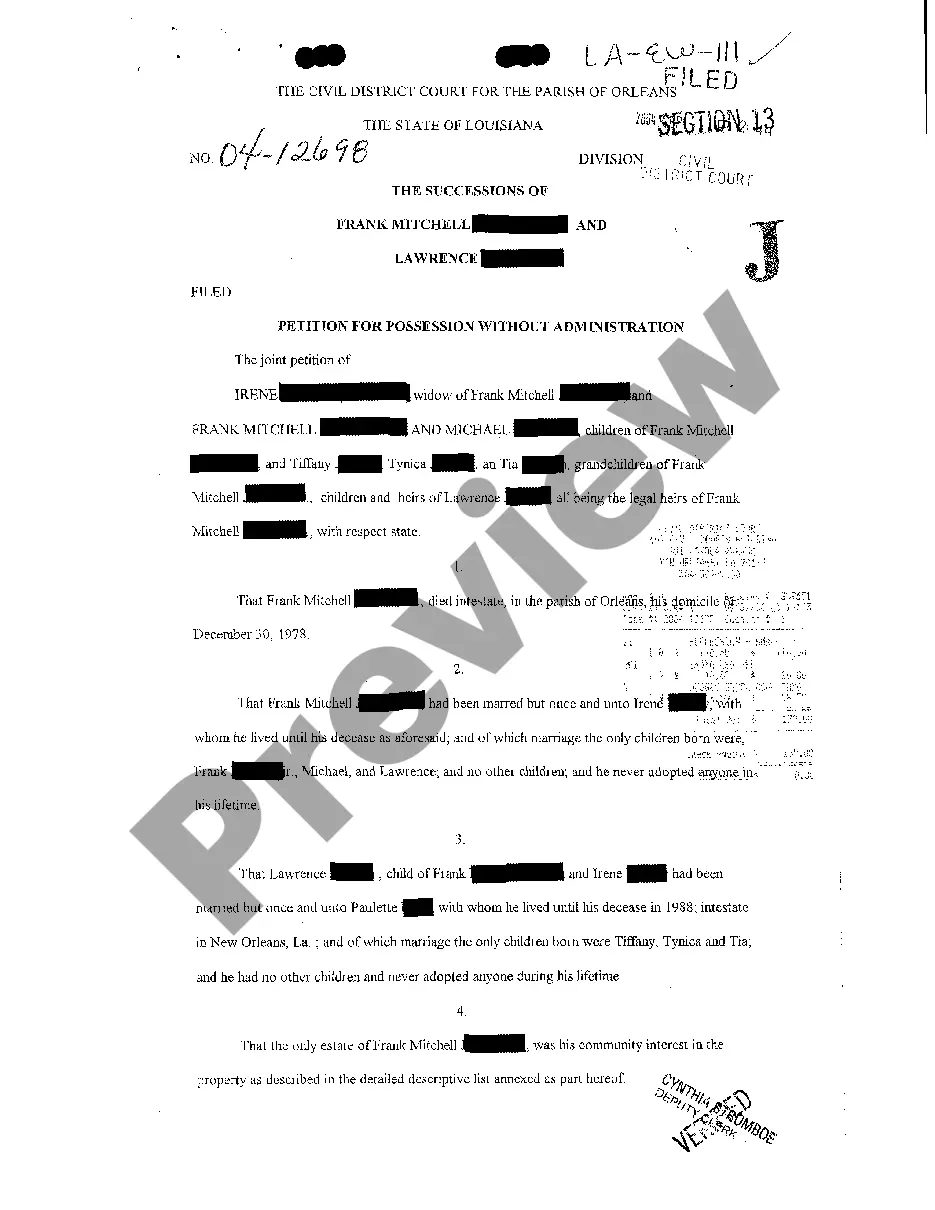
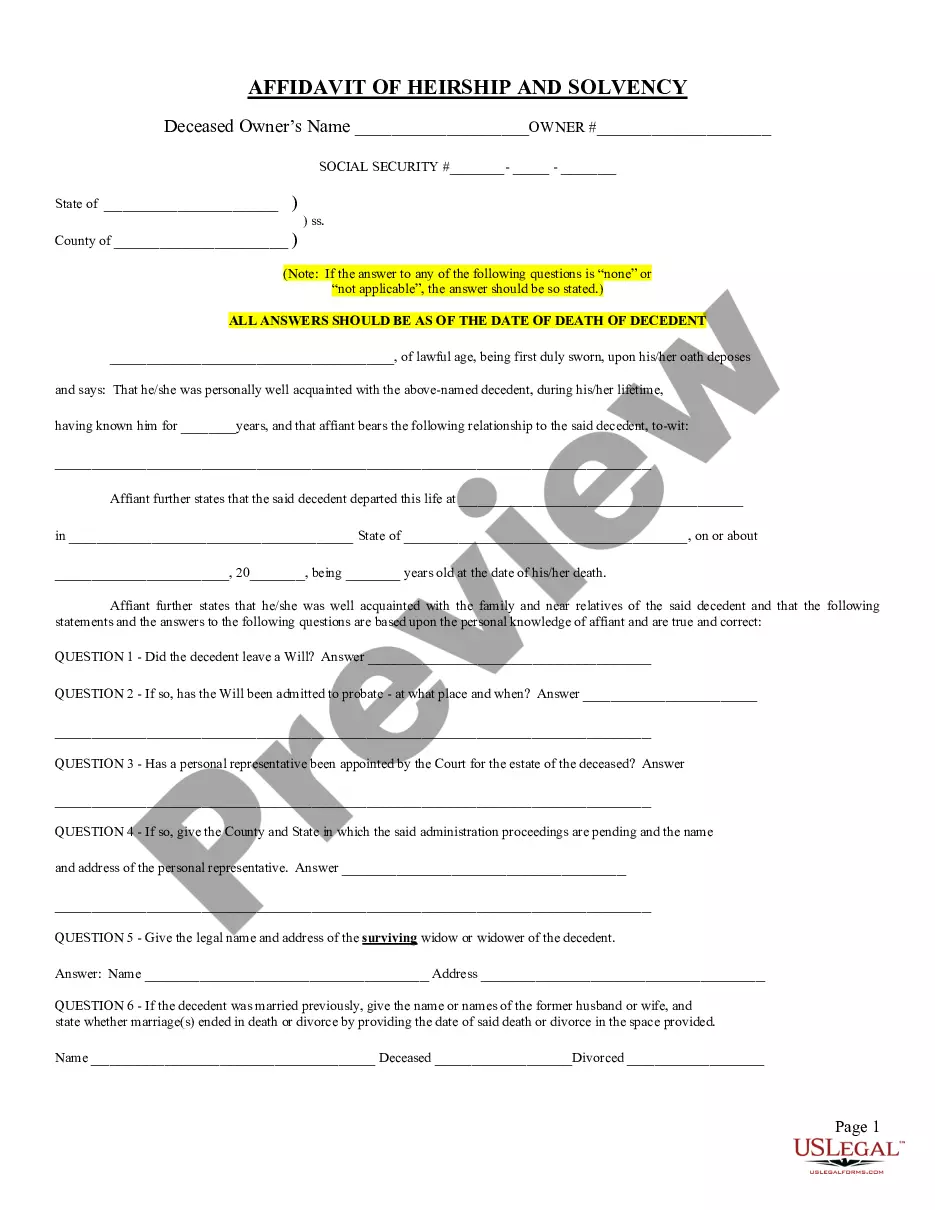
The Petition for Possession and Affidavit of Valuation and Detailed Descriptive List, Judgment of Possession is a legal document used in Louisiana to handle the succession of a deceased individual who has died intestate, meaning without a valid will. This form is specifically designed for when the second spouse has passed away. It aids the surviving heirs in establishing their legal right to inherit the decedent's estate, thereby allowing them to be recognized as the sole heirs and claim their respective shares of the estate. The form includes important details regarding the decedent's financial obligations and property valuation.
Main sections of this form
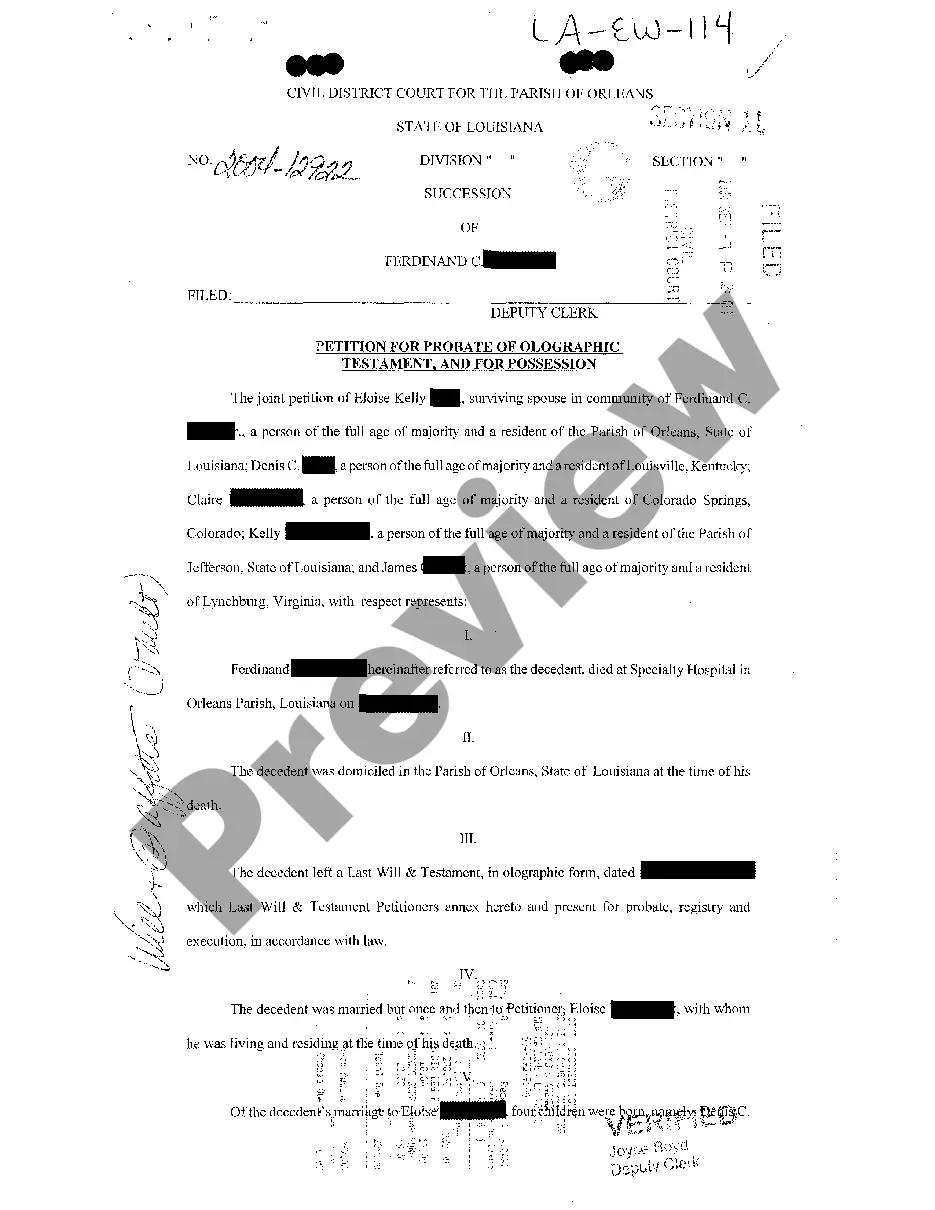
- Petition detailing the decedent's information and family structure.
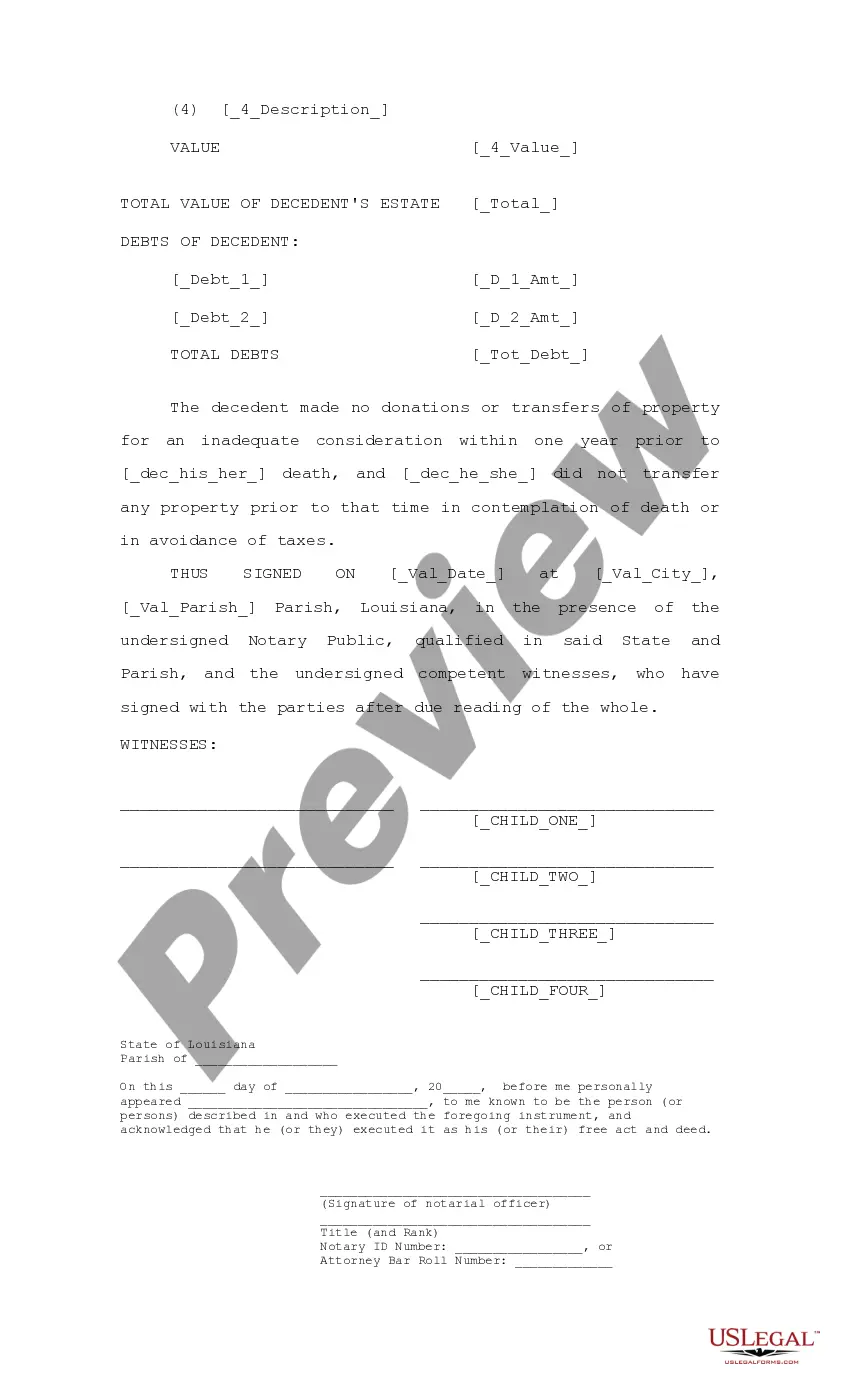
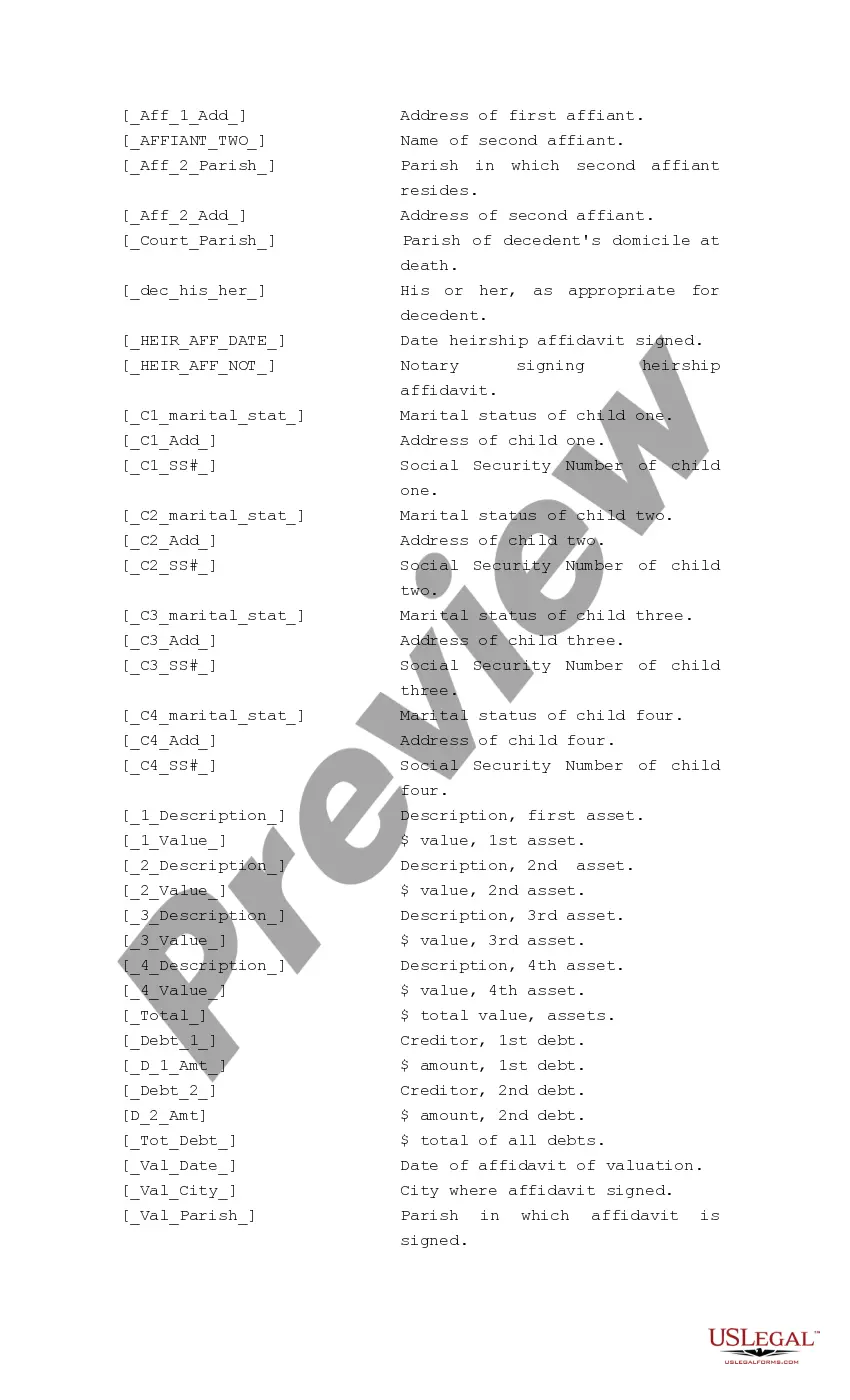
- Affidavit of valuation including a detailed list of the decedent's property and its market value.
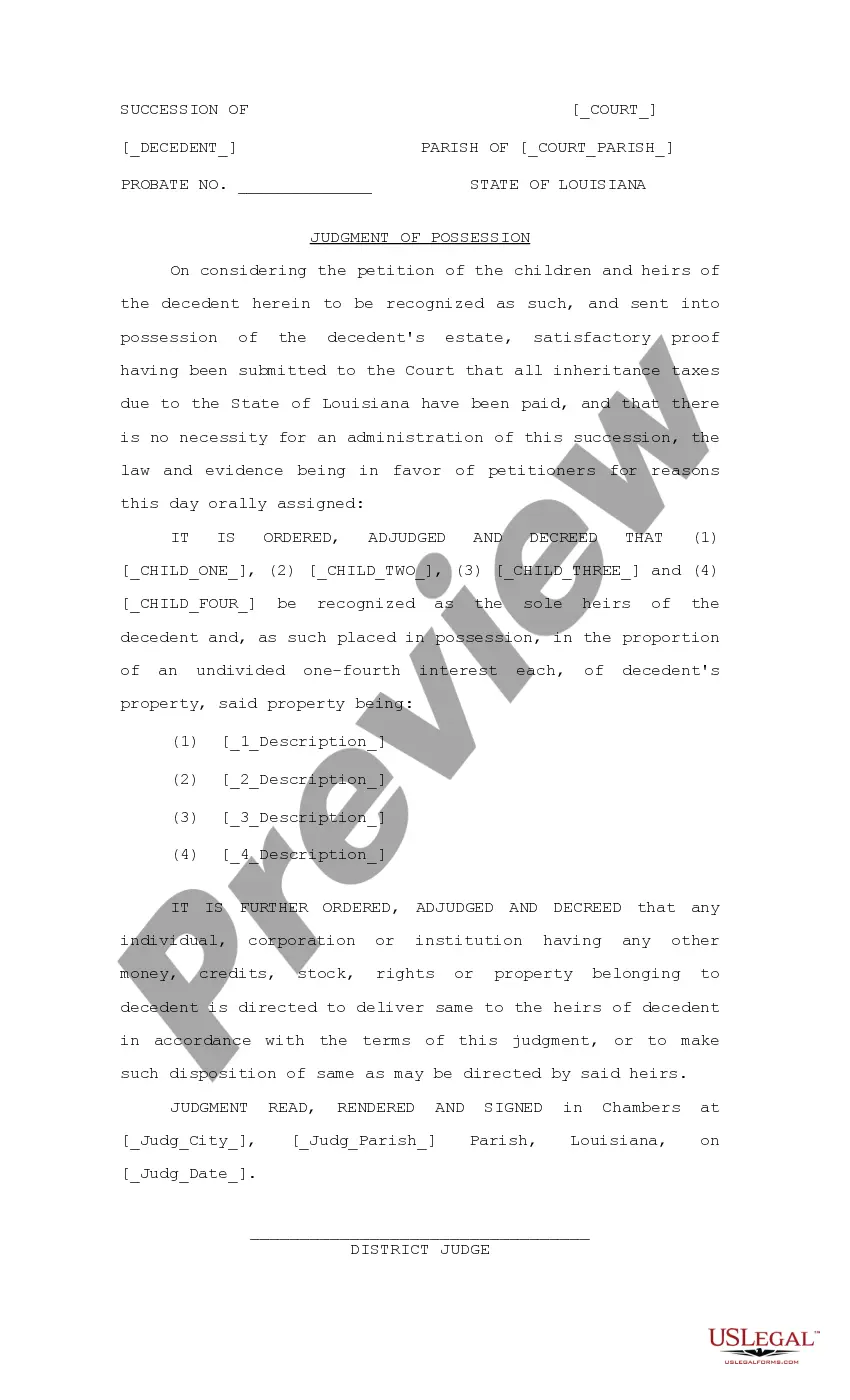
- Judgment confirming the heirsâ status and their respective shares of the estate.
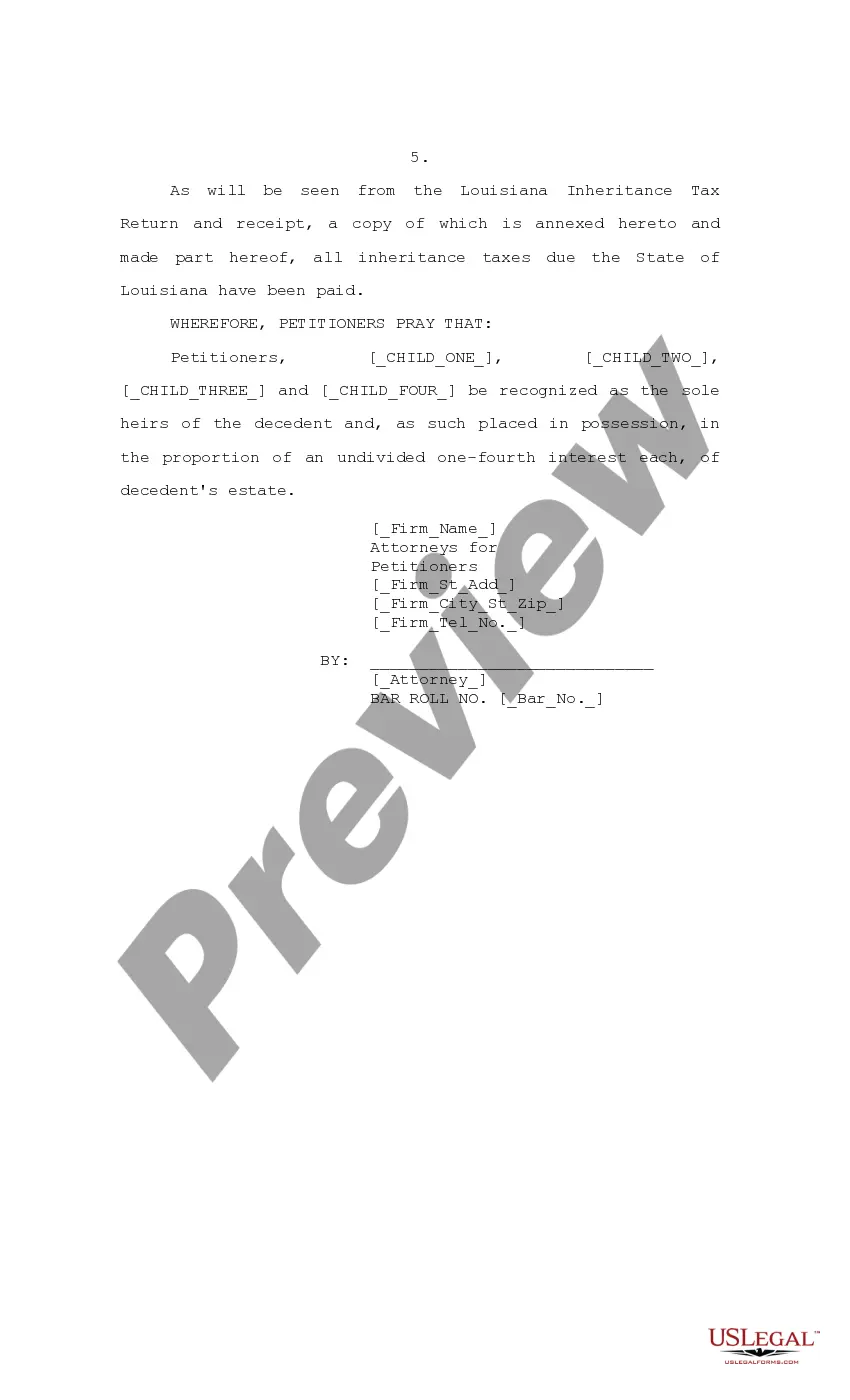
- Information concerning debts owed by the decedent and confirmation of tax payments.
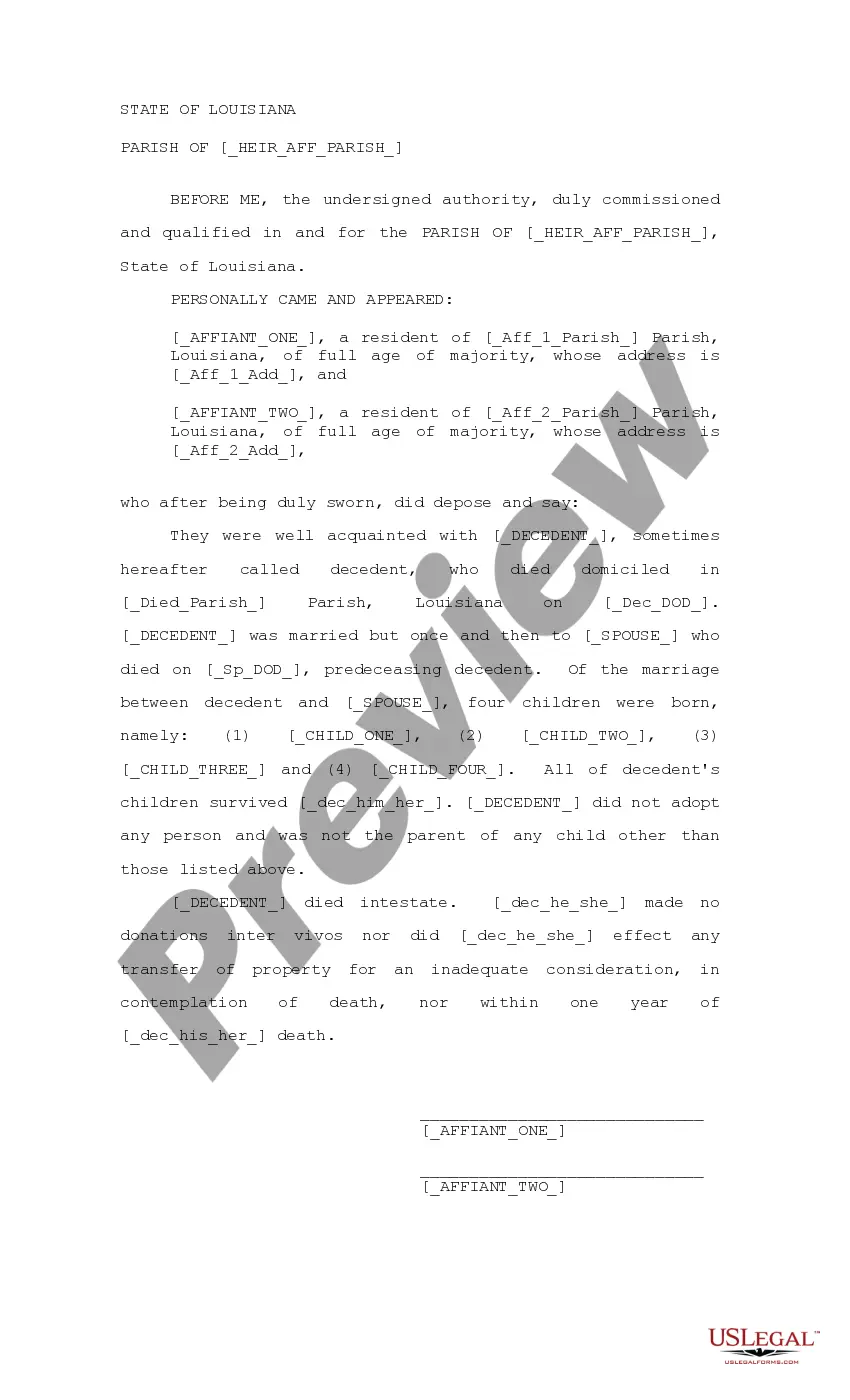
- Affirmation statements from the heirs regarding their relationship to the decedent.



When to use this form
This form should be used when an individual has passed away without a will, and their surviving spouse is also deceased. It is essential for heirs who need to establish their inheritance rights to the estate of the deceased. You will need this form if there is a need to distribute the decedent's assets among heirs, especially when no formal estate management process is required. Additionally, this form is necessary for filing the Louisiana Inheritance Tax Return.
Intended users of this form
- Surviving children of the deceased who are seeking to claim their inheritance.
- Heirs of the decedent who need to confirm their status and distribution of assets.
- Family members involved in the succession process after the death of the second spouse.
Instructions for completing this form
- Identify the decedent and state their full name, the date of death, and details regarding their deceased spouse.
- List all heirs, ensuring you accurately represent their relationship to the decedent.
- Provide a detailed description of the estate and assign values to each asset in the affidavit of valuation.
- Complete the section pertaining to outstanding debts and confirm any taxes have been paid.
- Include all required signatures, including those of the heirs and a notary if necessary.
Is notarization required?
Yes, this form must be notarized to be legally valid. It includes sections that require witnesses and a notary public for proper documentation. US Legal Forms offers integrated online notarization services, allowing you to complete this process securely via video call, available 24/7 without the need to travel.
Get your form ready online
Our built-in tools help you complete, sign, share, and store your documents in one place.
Make edits, fill in missing information, and update formatting in US Legal Forms—just like you would in MS Word.
Download a copy, print it, send it by email, or mail it via USPS—whatever works best for your next step.
Sign and collect signatures with our SignNow integration. Send to multiple recipients, set reminders, and more. Go Premium to unlock E-Sign.
If this form requires notarization, complete it online through a secure video call—no need to meet a notary in person or wait for an appointment.
We protect your documents and personal data by following strict security and privacy standards.

Make edits, fill in missing information, and update formatting in US Legal Forms—just like you would in MS Word.

Download a copy, print it, send it by email, or mail it via USPS—whatever works best for your next step.

Sign and collect signatures with our SignNow integration. Send to multiple recipients, set reminders, and more. Go Premium to unlock E-Sign.

If this form requires notarization, complete it online through a secure video call—no need to meet a notary in person or wait for an appointment.

We protect your documents and personal data by following strict security and privacy standards.
Common mistakes
- Failing to accurately list all heirs or including incorrect information about their relationship to the decedent.
- Not providing an accurate valuation of the estate assets.
- Omitting required signatures or not obtaining notarization where necessary.
- Neglecting to pay applicable inheritance taxes before filing the form.
Benefits of using this form online
- Convenience of downloading a ready-to-use form tailored for Louisiana probate needs.
- Editability allows users to fill in their specific information easily.
- Reliability of templates drafted by licensed attorneys ensures compliance with local legal standards.
Key takeaways
- The form is essential for heirs claiming their rights in an intestate succession situation.
- It includes critical details regarding the deceased's assets and obligations.
- Proper completion and notarization are crucial for legal validity.
- Using this form helps simplify the process of asset distribution and tax compliance.
Looking for another form?
Form popularity
FAQ
An heir is a person who is legally entitled to collect an inheritance, when a deceased person did not formalize a last will and testament. Generally speaking, heirs who inherit the property are children, descendants or other close relatives of the decedent.
This is the process which transfers ownership of the property from the deceased person to those who inherit. A succession is the process of settling a deceased person's estate and distributing the property to those who inherit after the debts are paid. This process is called probate in other states.
The parties enclose a list of the decedent's assets, an affidavit of death and heirship, and a copy of the death certificate. The court will issue a Judgment of Possession placing all heirs and legatees into possession of the decedent's assets retroactive to the date of the decedent's death.
Succession costs for smaller estates with cooperative heirs will typically range from $1,500.00 to $3,000.00. Succession costs for larger estates that require administration will typically range from $5,000.00 up to $15,000.00 depending on what needs to be done.
Legal Heir certificate is also provided for transfer of property- movable and immovable assets. 3) A Succession Certificate is required when someone inherits any immovable property or movable property under the various Property Laws in the country. Most of these issues come under the Hindu Succession Act.
While it is possible to probate a will by yourself, engaging an experienced lawyer can prevent future problems with real estate holdings, inheritance, disputes, and a myriad of other potential issues.
Many executors are able to wrap up an estate themselves, without hiring a probate lawyer.But if you're handling an estate that's straightforward and not too large, you may find that you can get by just fine without professional help.
Yes! For the vast majority of probate cases, an attorney is not required. In fact, anyone can interact with the court system and you do not need a lawyer to do so.
The executor is entitled to compensation for his or her services. In Louisiana, the minimum fee is set by statute. It is equal to 2 1/2 percent of the gross estate of the decedent. The fee may be subject to review depending on the complexity as well as the time and effort expended by the executor.