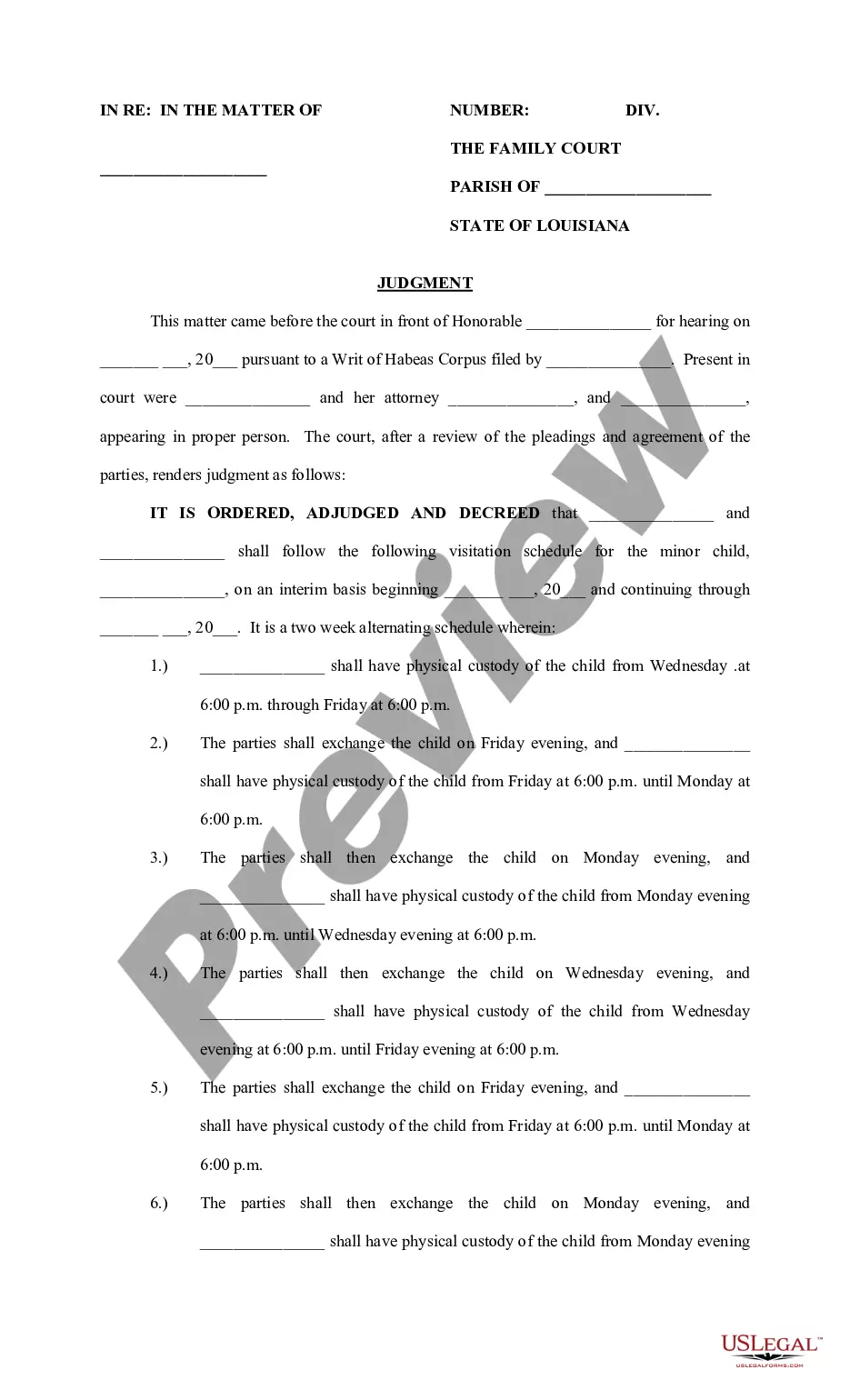
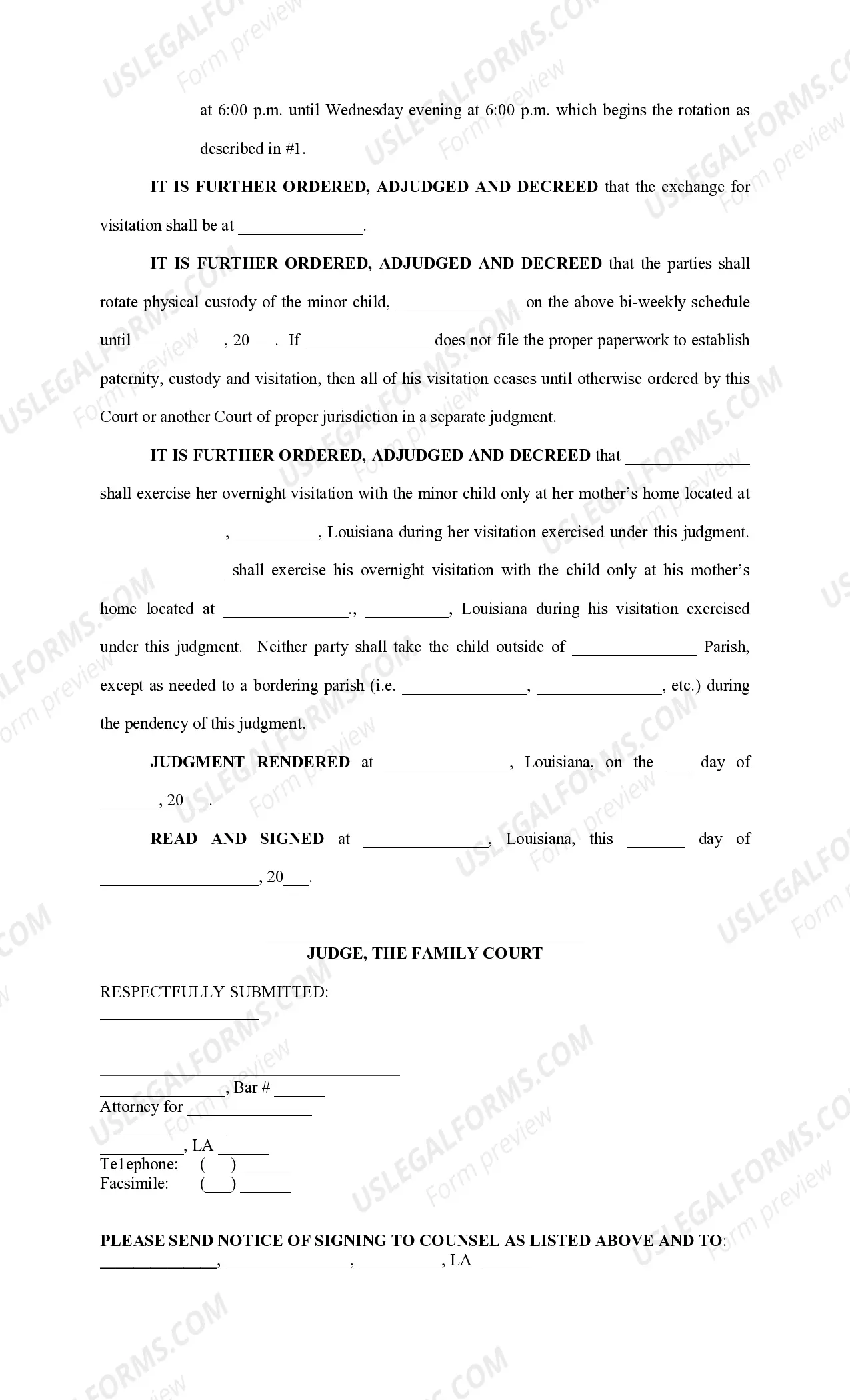
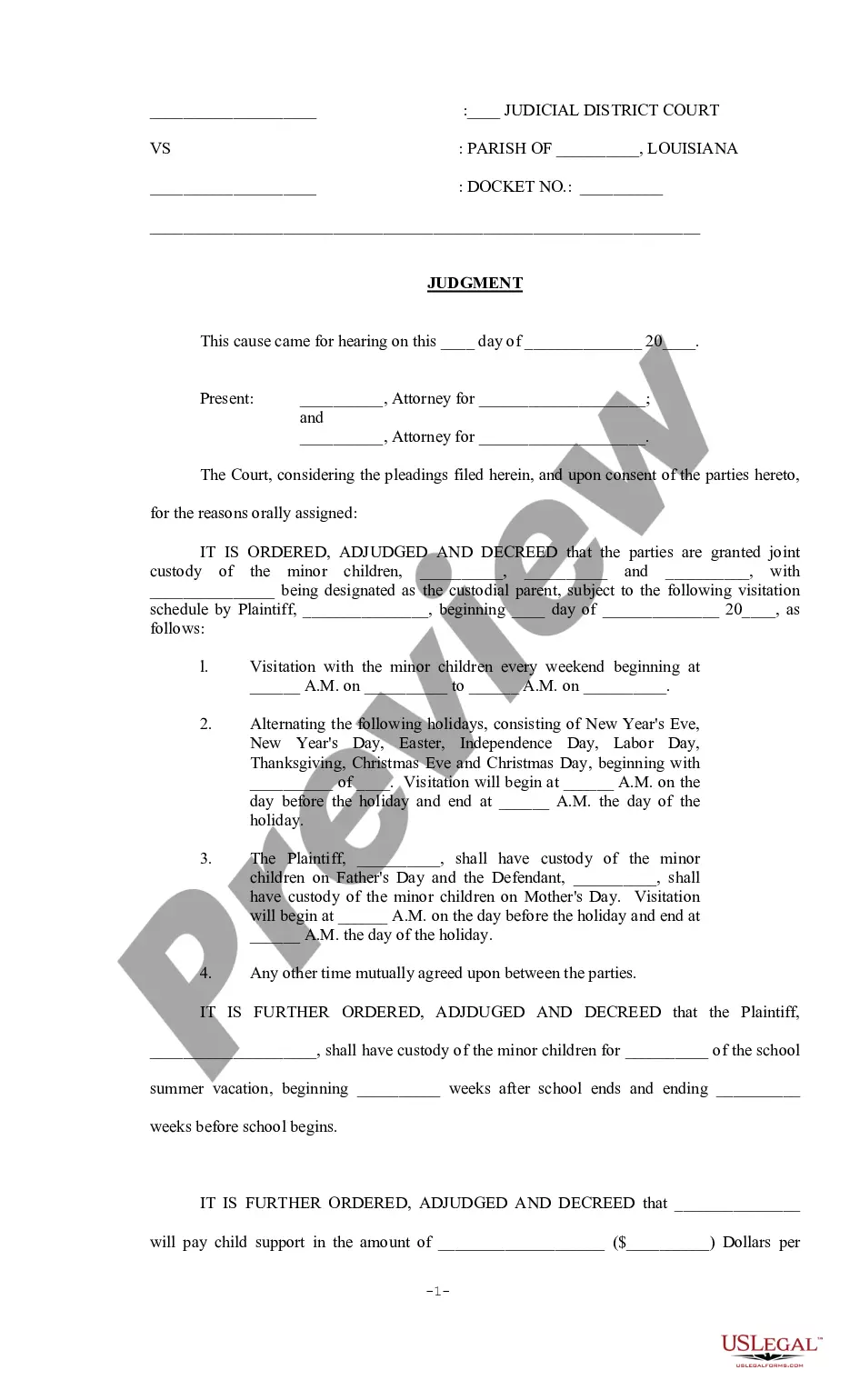
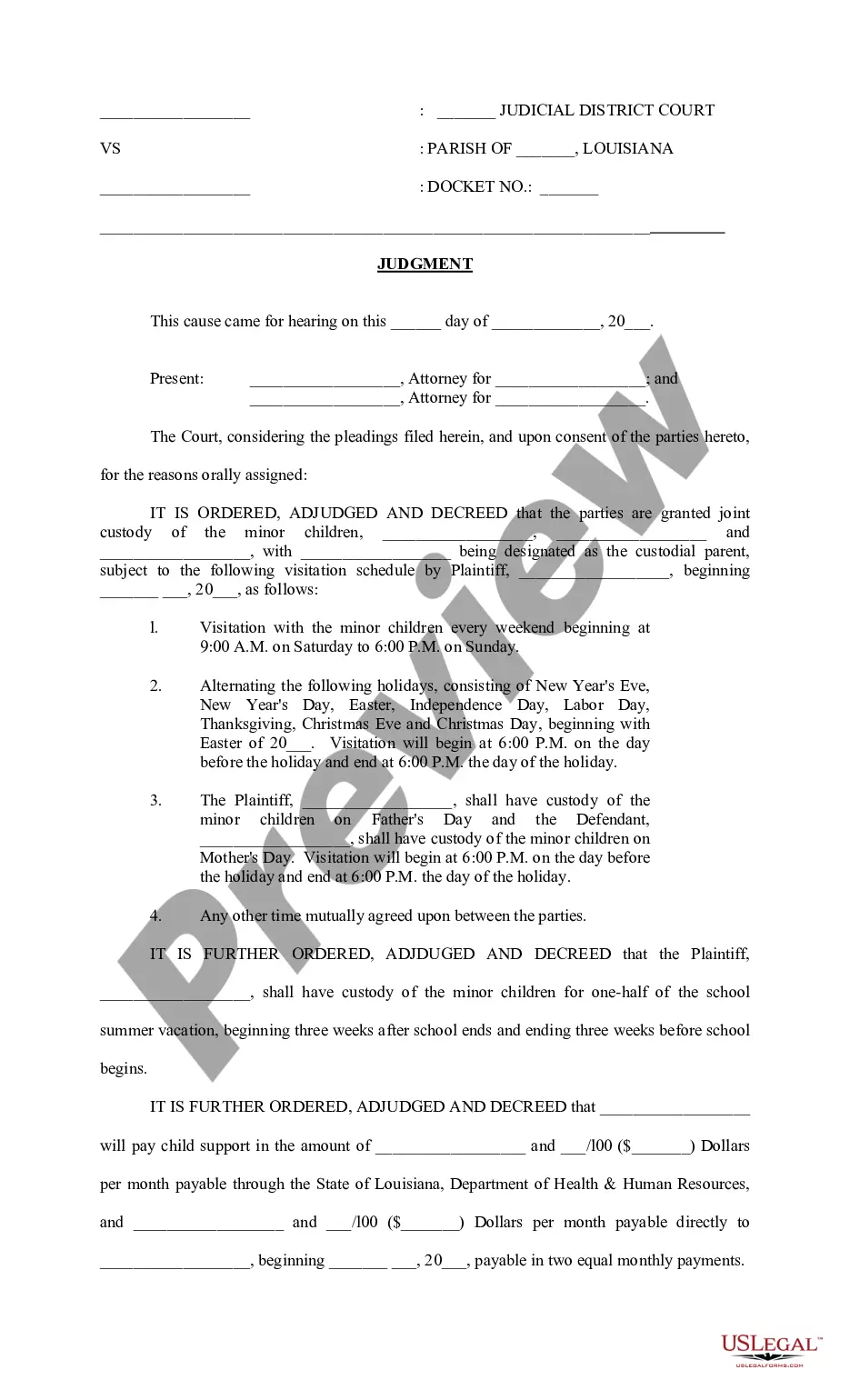
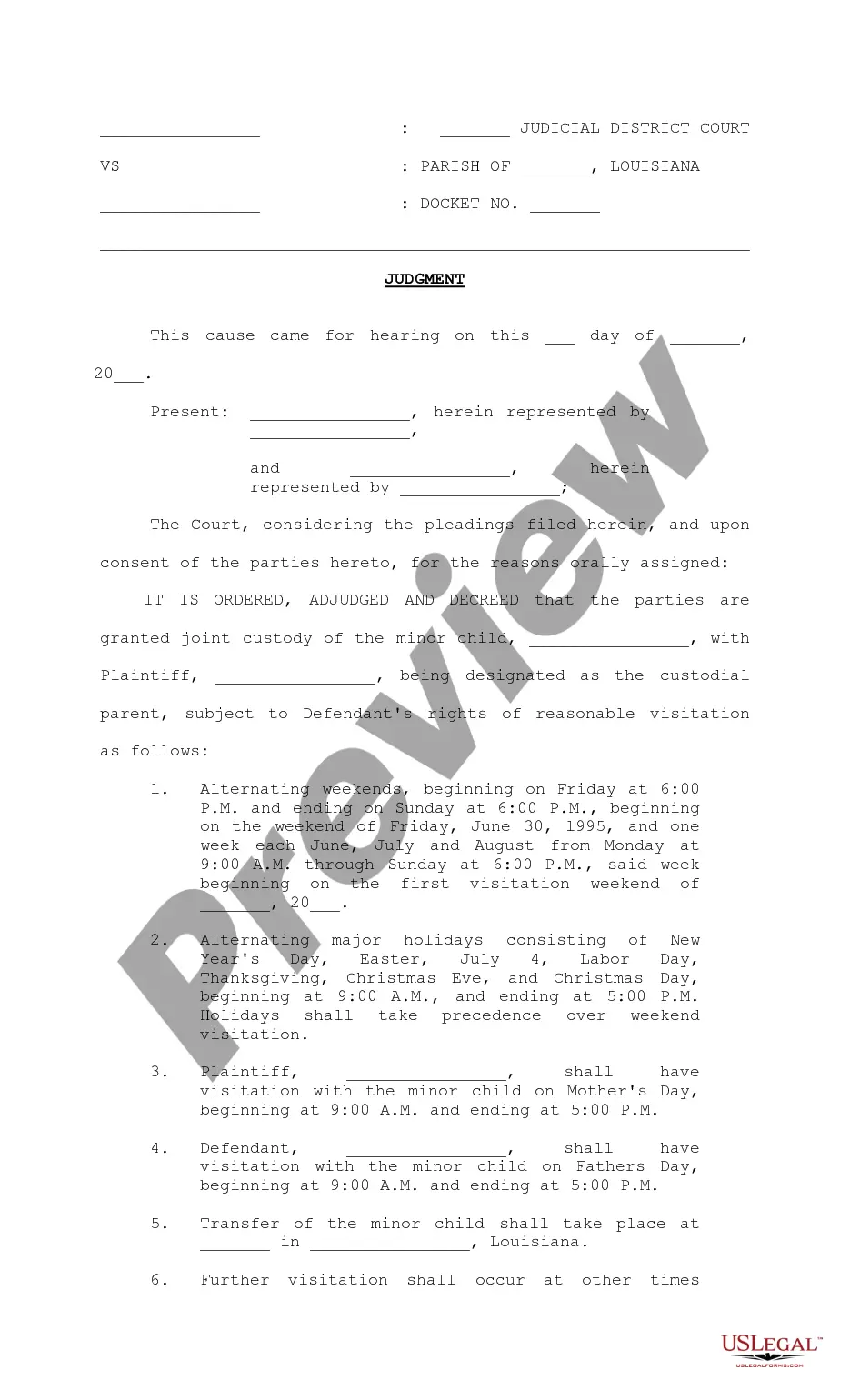
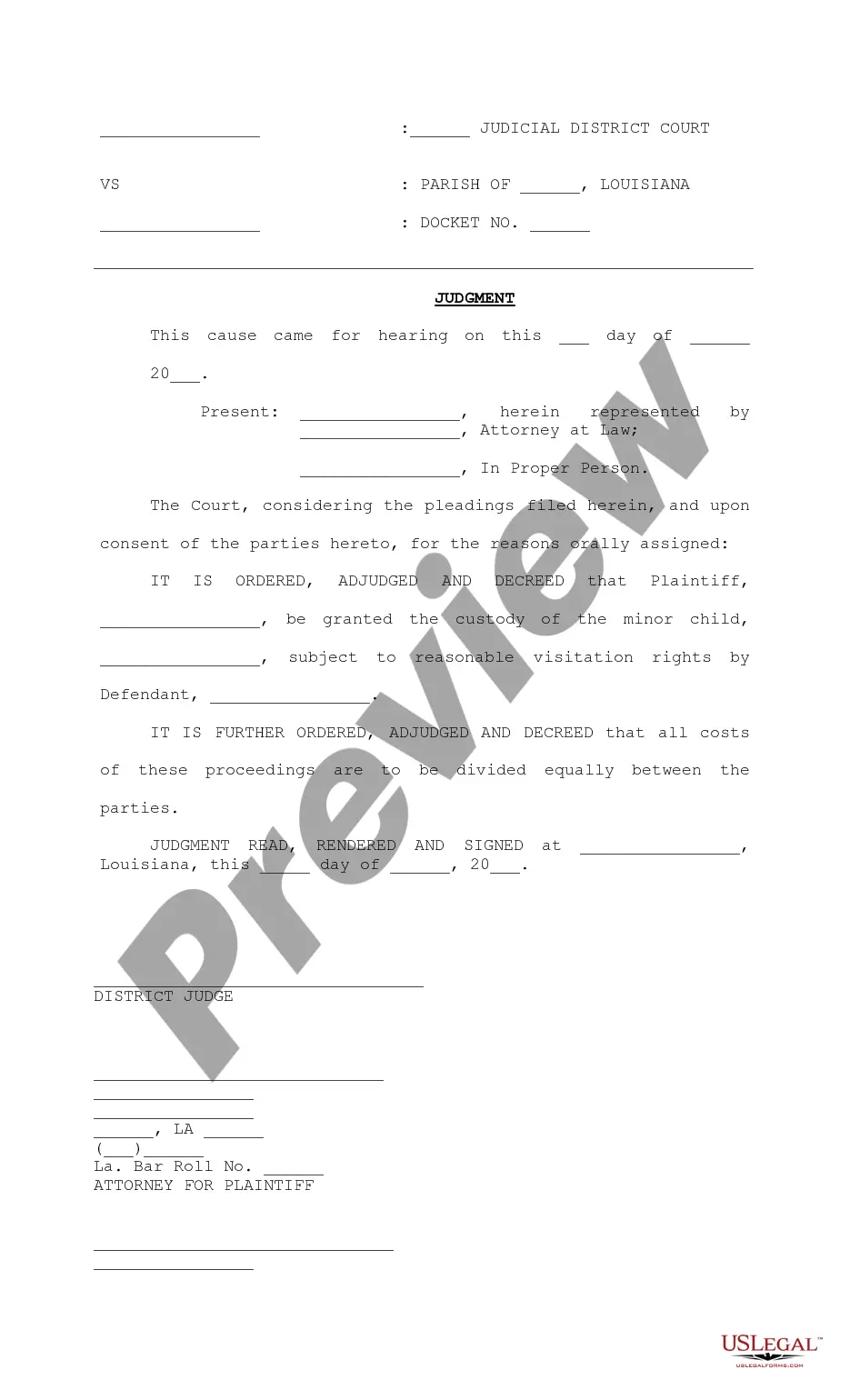
This is a judgment pursuant to a writ of habeas corpus, establishing parent visitation schedules for a non-custodial parent with a minor child
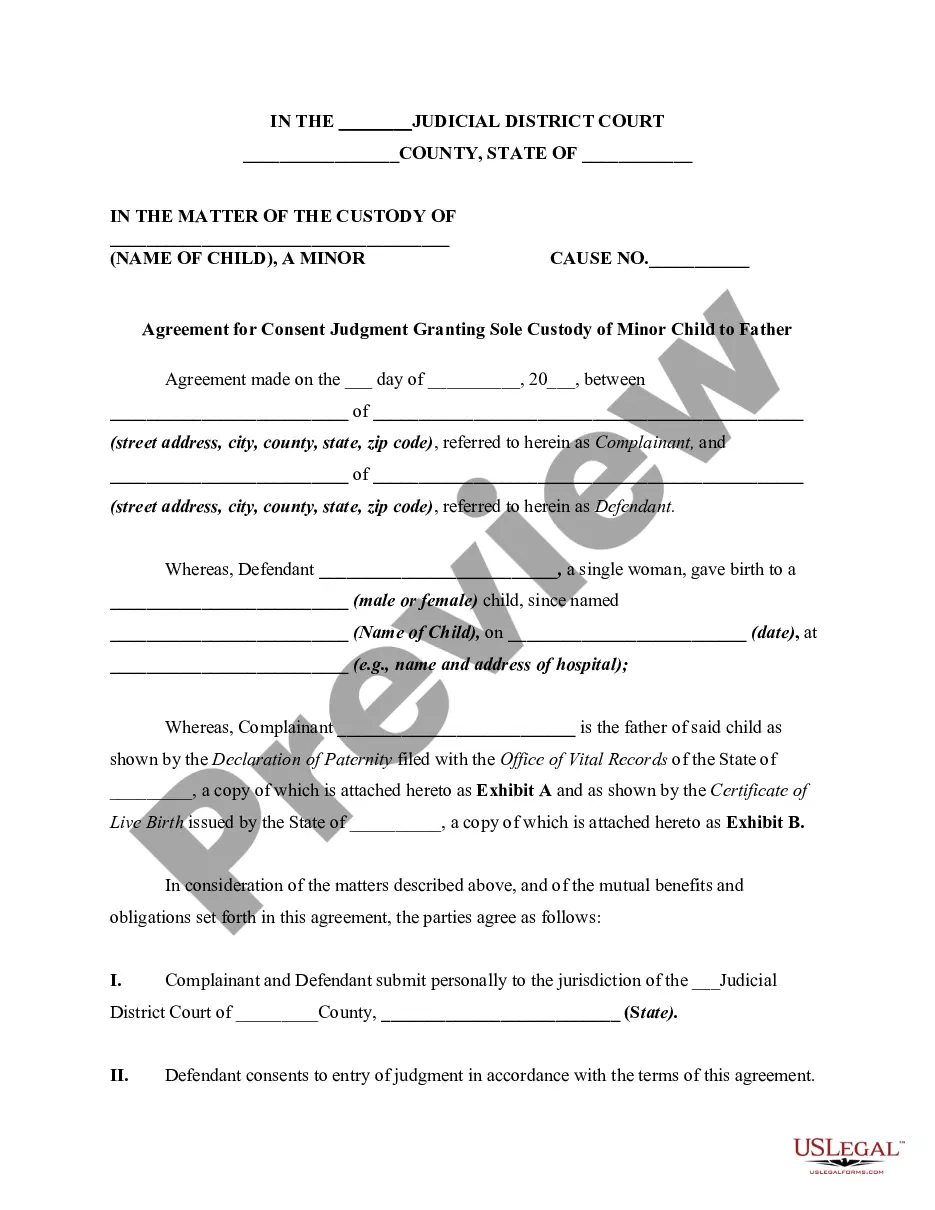
Louisiana Judgment Regarding Child Custody
State:
Louisiana
Control #:
LA-PB-041
Format:
Word;
Rich Text
Instant download
Description
Free preview

How to fill out Louisiana Judgment Regarding Child Custody?
Greetings to the most essential legal documents repository, US Legal Forms. Here you can locate any sample including Louisiana Judgment Regarding Child Custody forms and download them (as many as you desire/require). Prepare official documents in a few hours, rather than days or even weeks, without expending a fortune on a lawyer or attorney.
Acquire your state-specific template in a few clicks and feel assured with the certainty that it was crafted by our proficient lawyers.
If you’re already a subscribed member, simply Log In to your account and then click Download next to the Louisiana Judgment Regarding Child Custody you require. Since US Legal Forms is an online service, you’ll always have access to your saved templates, regardless of the device you’re utilizing. View them within the My documents section.
Print the document and complete it with your/your business’s information. Once you’ve finalized the Louisiana Judgment Regarding Child Custody, forward it to your lawyer for validation. It’s an additional step but a vital one to ensure that you’re fully protected. Join US Legal Forms today and gain access to a vast array of reusable templates.
- If you lack an account, what are you waiting for.
- Verify the form's validity in the state where you reside if it's state-specific.
- Review the description (if available) to ensure it’s the correct template.
- Access more details with the Preview feature.
- If the sample fulfills all of your requirements, simply click Buy Now.
- To create your account, choose a pricing plan.
- Register using a credit card or PayPal account.
- Save the document in your preferred format (Word or PDF).
Form popularity
FAQ
Has one parent been the primary caretaker, or have the parents shared the responsibility? What is the mental and physical health status of the parents? Will the child be in a stable home environment?
Begin your letter by introducing yourself and explaining your relationship to the parent and how long you've known her. Then, spend two or three paragraphs explaining why you think she should be awarded custody. Use your final paragraph to summarize the points you've made in the body of your letter.
If the child is at least 12 years old, courts will usually give the child's preference some weight. Courts don't have to follow a child's custodial preference.
Judges must decide custody based on the best interests of the child." The best interests of the child law requires courts to focus on the child's needs and not the parent's needs. The law requires courts to give custody to the parent who can meet the child's needs best .
Child's best interests. Child's desires, given the child has reached a certain age and maturity (typically 12 years old) Record of domestic violence. Record of drug use. Parents' emotional and mental stability.
You can write a letter to the Judge but the Judge will not read it. You have to provide testimony through witnesses including yourself. You do not have to agree with what the GAL proposes. You need an attorney to represent you.
Age of the children. Each parent's living situation. Each parent's willingness to support the other's relationship with the children. Each parent's relationship with the children before the divorce. Children's preferences. Continuity and stability.
A default judgment in a child custody case is a decision made by a judge in favor of one party due to the inaction of the opposing party. In a child custody battle, if a defendant fails to respond to the inquires of the court within enough time, a default judgment can be granted in favor of the plaintiff.
If you and the other parent cannot reach an agreement in regards to child custody, you may have to go to court. When this happens, the judge will weigh the most important factor in your child custody decision: the best interests of your children.