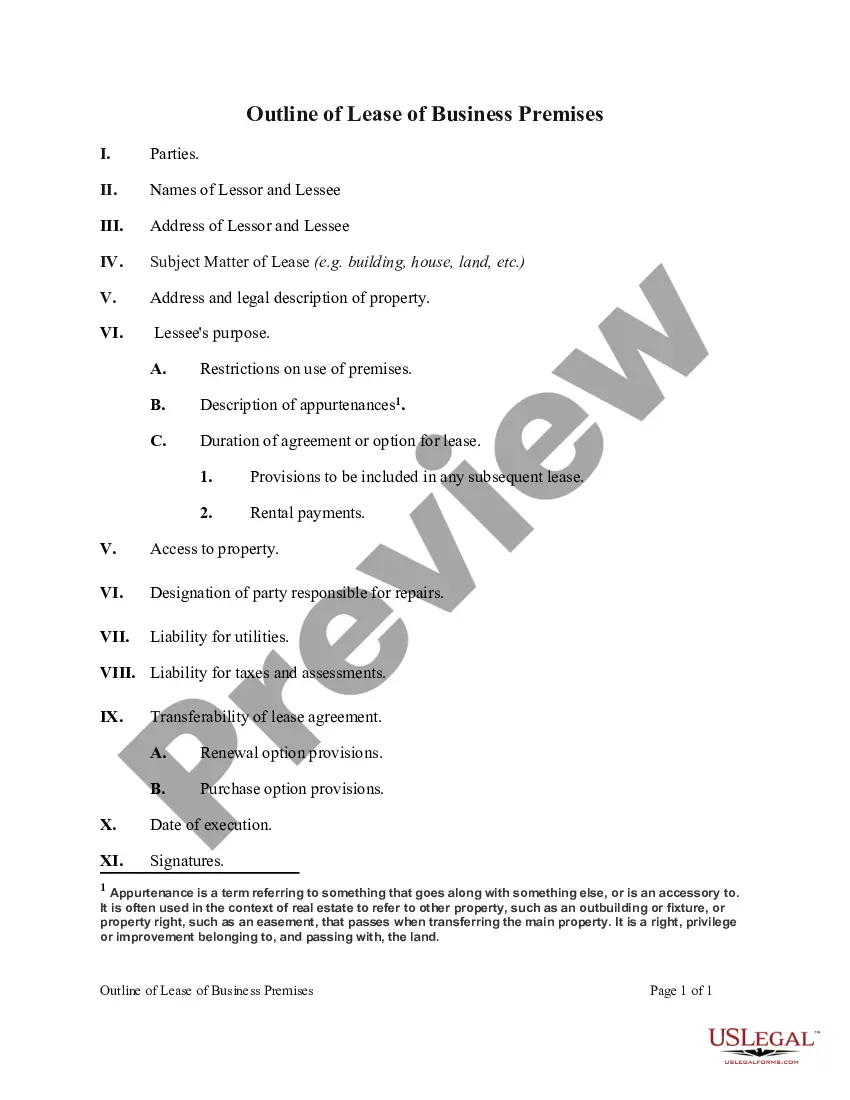
Louisiana Personal Injury Release By Individual From Responsibility for Participation in Inherently Dangerous Activity
Description
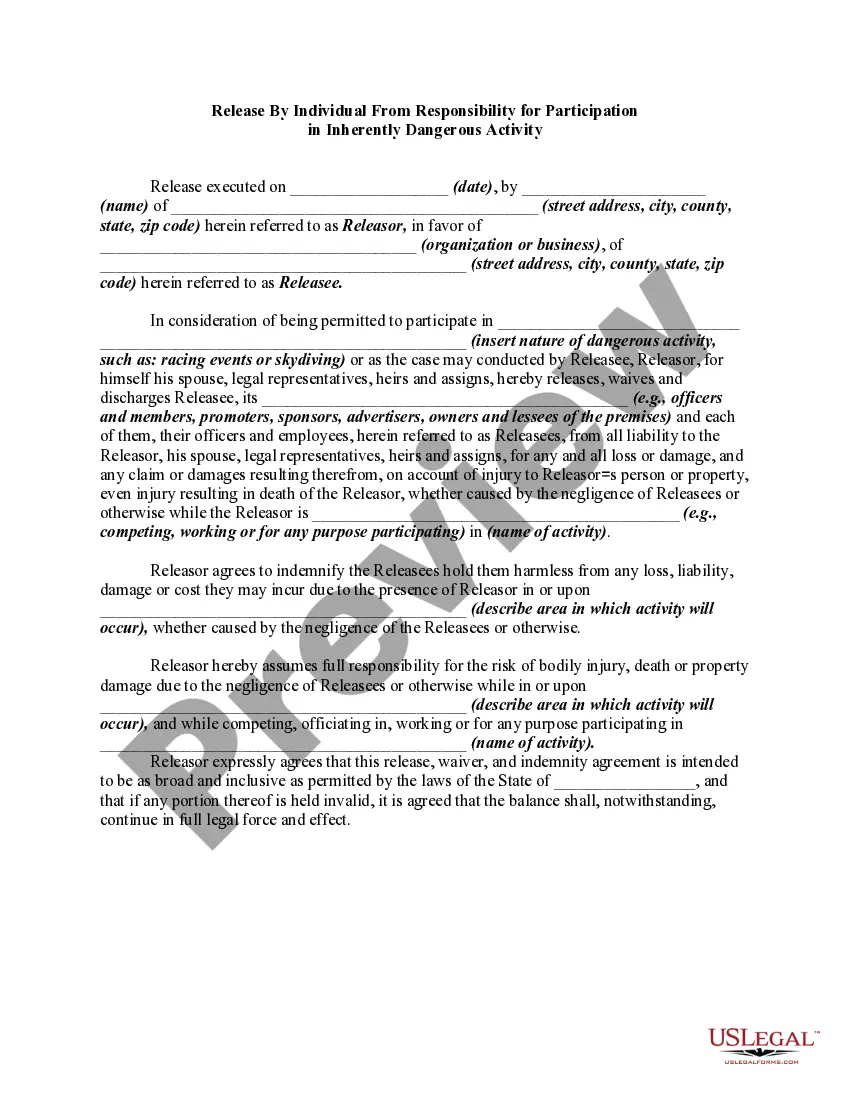
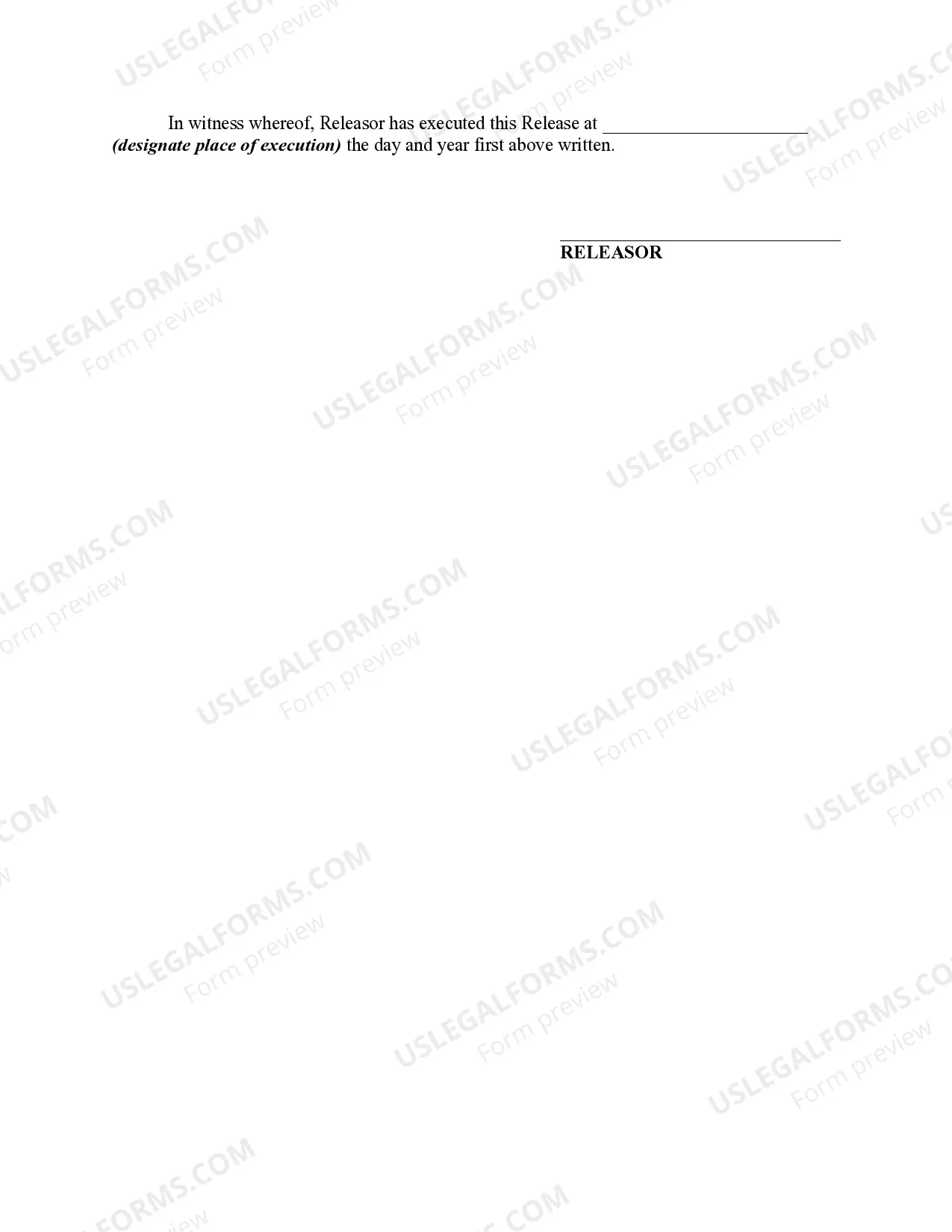
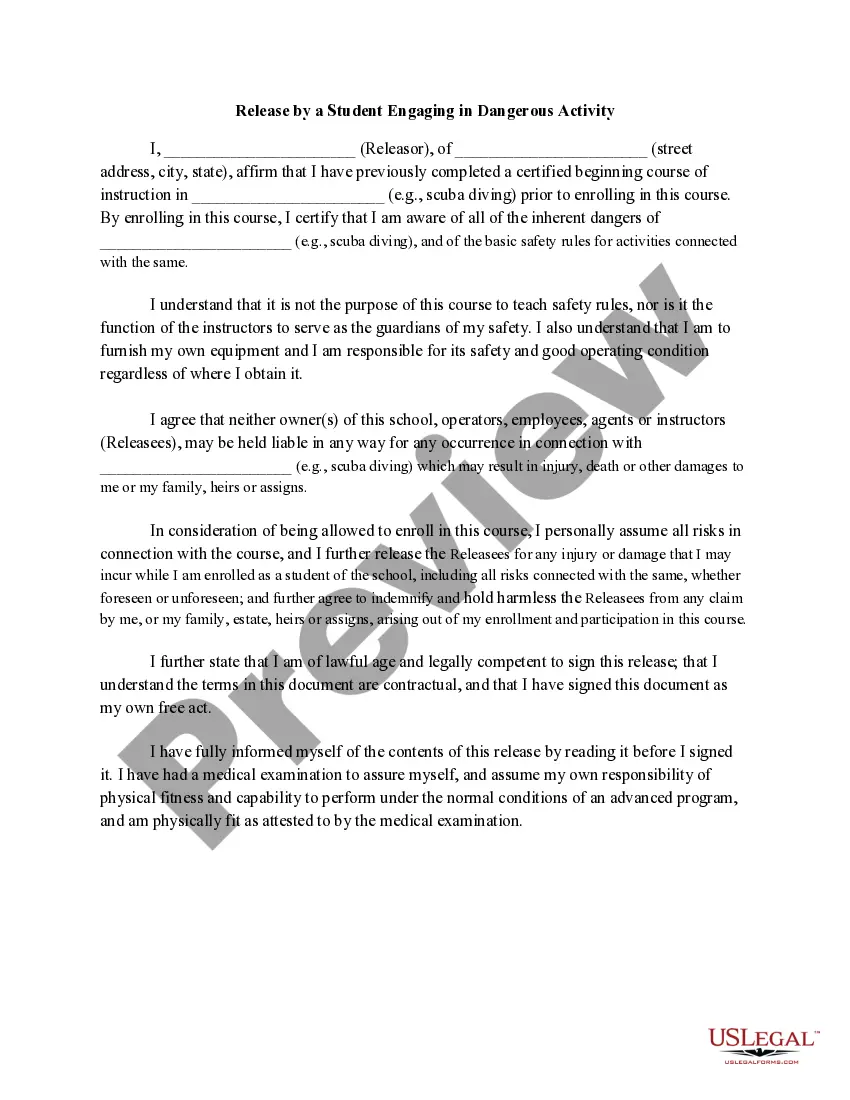
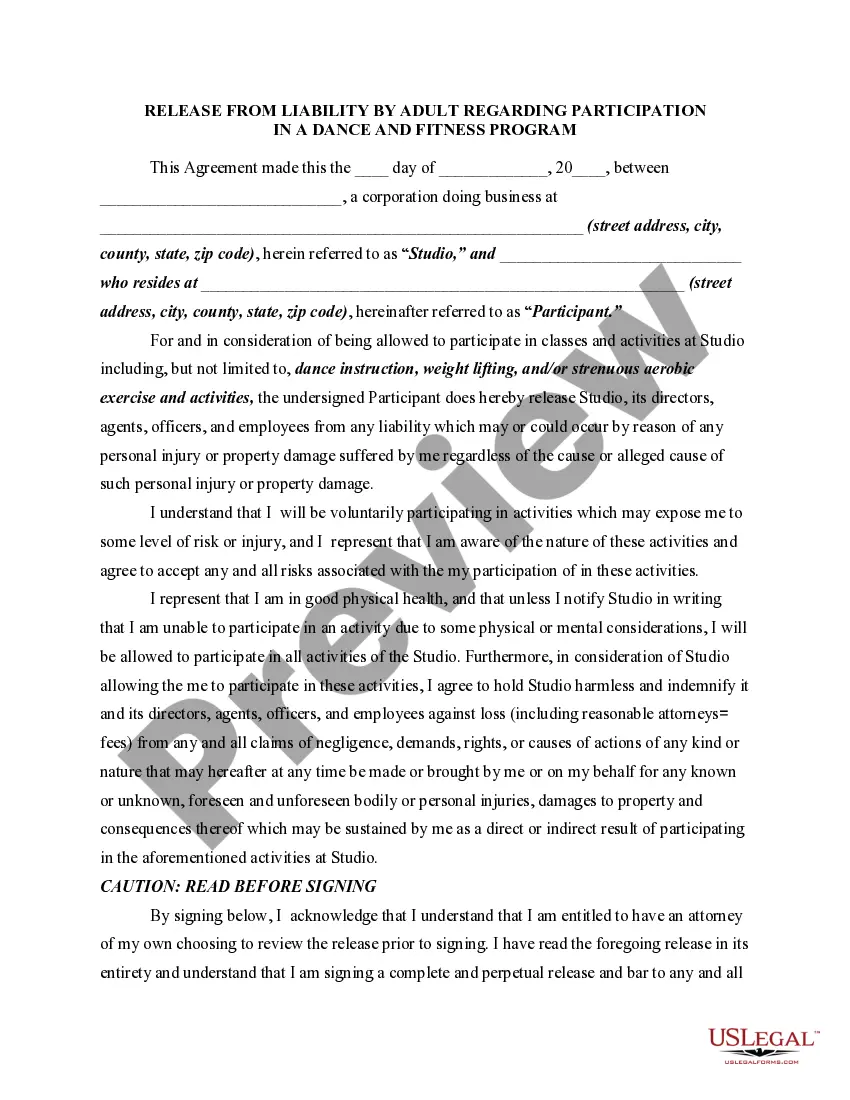
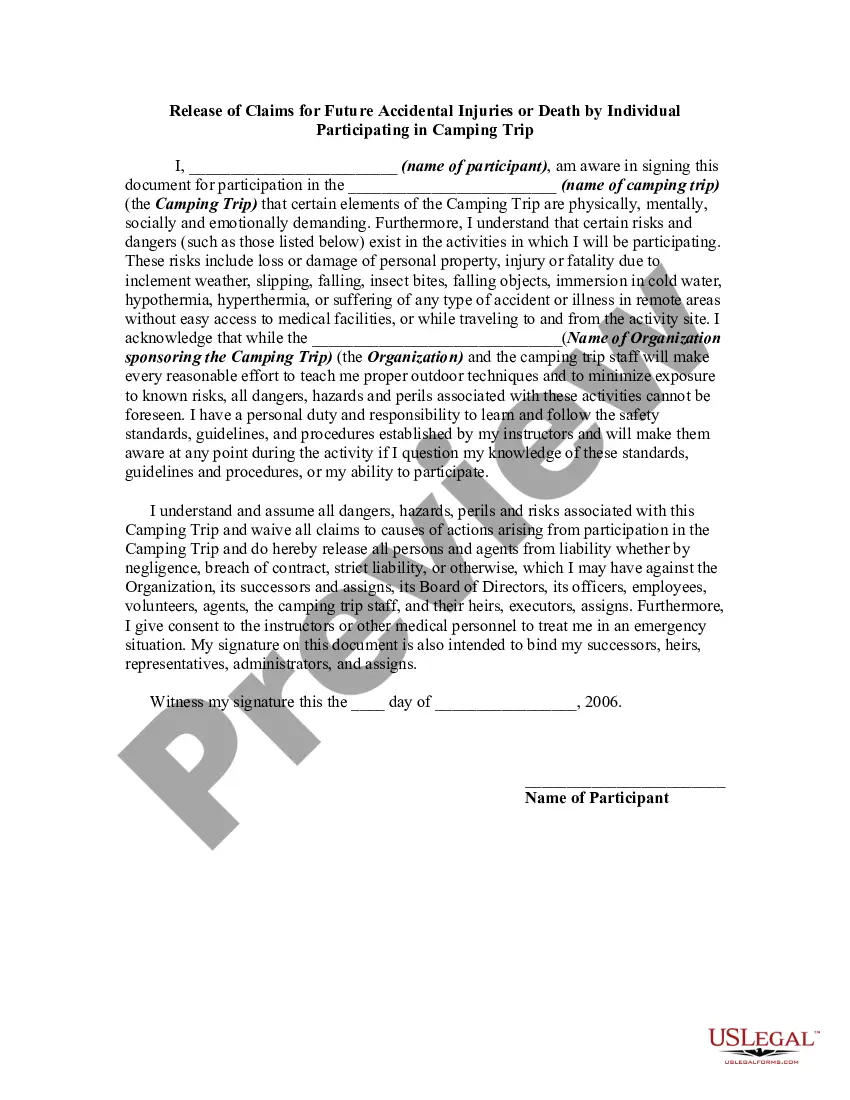
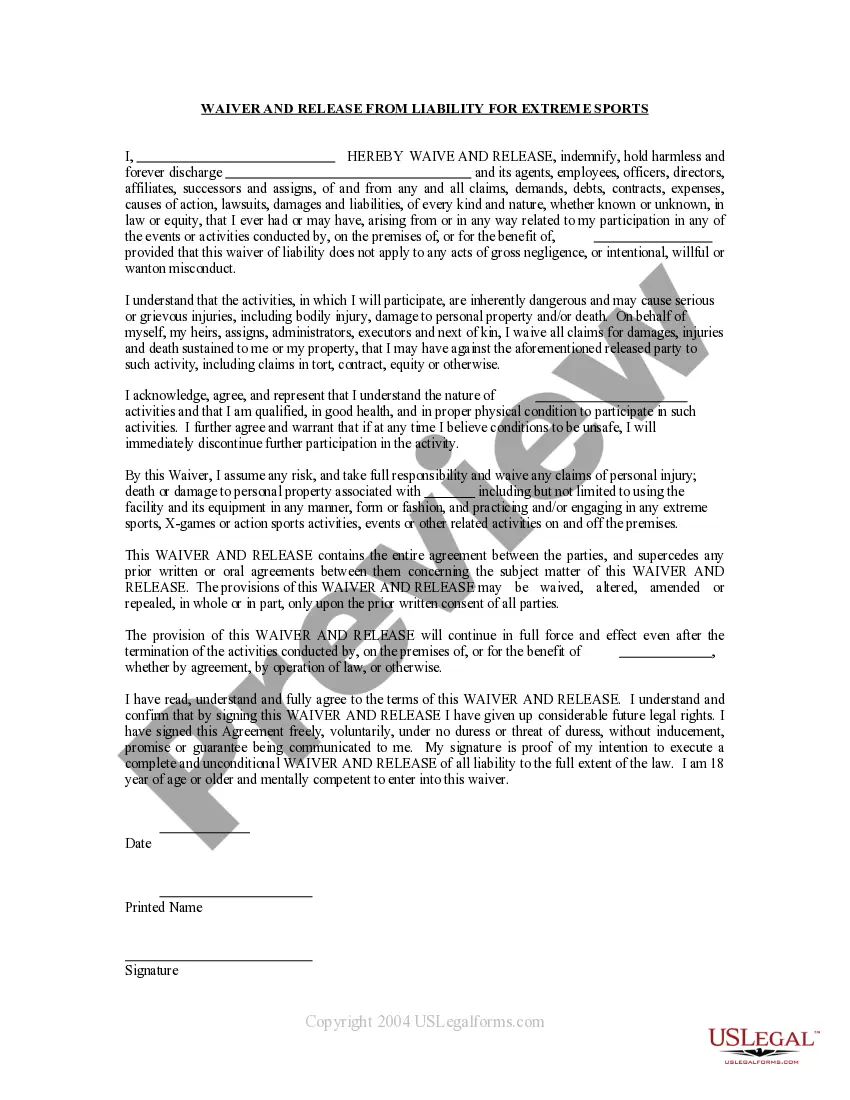
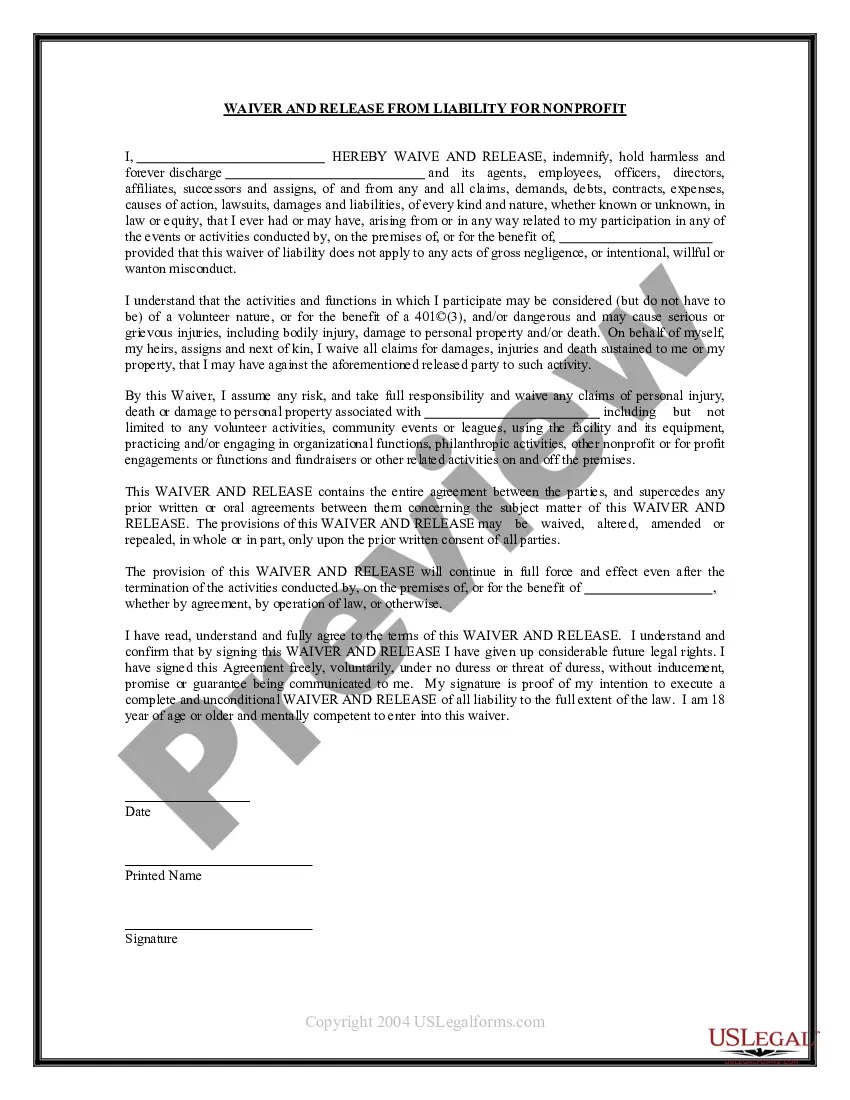
How to fill out Personal Injury Release By Individual From Responsibility For Participation In Inherently Dangerous Activity?
If you require to completely, download, or print legal document templates, utilize US Legal Forms, the largest selection of legal forms available online.
Take advantage of the site's simple and user-friendly search to locate the documents you need.
Various templates for business and individual purposes are organized by categories and claims, or keywords.
Step 4. Once you have located the form you need, click on the Get now button. Choose the payment plan you prefer and enter your details to register for an account.
Step 5. Complete the transaction. You can use your credit card or PayPal account to finalize the purchase.
- Utilize US Legal Forms to find the Louisiana Personal Injury Release By Individual From Liability for Inherently Dangerous Activities with just a few clicks.
- If you are currently a US Legal Forms user, sign in to your account and click the Acquire button to access the Louisiana Personal Injury Release By Individual From Liability for Inherently Dangerous Activities.
- You can also access forms you have previously saved in the My documents section of your account.
- If this is your first time using US Legal Forms, follow the steps below.
- Step 1. Ensure you have selected the form for your specific city/state.
- Step 2. Use the Review option to examine the form’s content. Do not forget to read the description.
- Step 3. If you are not satisfied with the form, use the Search field at the top of the screen to find other versions of the legal form template.
Form popularity
FAQ
To establish a personal injury claim under Louisiana Personal Injury Release By Individual From Responsibility for Participation in Inherently Dangerous Activity, you need to prove four essential elements. First, demonstrate that the defendant had a duty to act reasonably to avoid harm. Second, show that the defendant breached that duty through careless or negligent actions. Third, establish that you suffered an actual injury or damage resulting from the breach. Finally, you must connect the breach directly to the injury, proving that the defendant's actions were the cause of your harm.
Personal injury exclusion is a provision in insurance policies that denies coverage for certain types of injuries or claims. This can significantly affect the payout for claims under a Louisiana Personal Injury Release By Individual From Responsibility for Participation in Inherently Dangerous Activity. Knowing these exclusions helps individuals make informed choices about their involvement in potentially risky activities.
The exclusion clause for personal injury refers to specific language within a contract that outlines what types of injuries are not covered. This clause is important when discussing the Louisiana Personal Injury Release By Individual From Responsibility for Participation in Inherently Dangerous Activity. It is essential for individuals to fully understand these exclusions to avoid unexpected legal consequences.
Strict liability is often the type most associated with dangerous operations and hazardous activities. In Louisiana, this applies to situations where safety measures are not properly followed, which can lead to injuries. Understanding strict liability can help individuals protect themselves and navigate the intricacies of a Louisiana Personal Injury Release By Individual From Responsibility for Participation in Inherently Dangerous Activity.
The employee exclusion for personal injury generally limits an employer's liability towards employees for injuries sustained in the workplace. This is crucial in settings where the Louisiana Personal Injury Release By Individual From Responsibility for Participation in Inherently Dangerous Activity is relevant. Employees should know their rights and the potential limitations in recovery when injuries occur at work.
The intended injury exclusion is a clause that prevents recovery for injuries caused intentionally, even if they result from an activity that might otherwise be covered. In Louisiana, this is significant in personal injury cases, especially under a Louisiana Personal Injury Release By Individual From Responsibility for Participation in Inherently Dangerous Activity. Knowing this exclusion empowers individuals to think carefully about their actions and decisions.
Personal injury coverage typically includes compensation for medical expenses, lost wages, and pain and suffering resulting from an injury. In the context of a Louisiana Personal Injury Release By Individual From Responsibility for Participation in Inherently Dangerous Activity, this coverage can also address specific incidents resulting from hazardous activities. Understanding this can help individuals gauge their risks and responsibilities when engaging in such activities.
Yes, liability waivers can be enforceable in Louisiana, but they must meet specific legal requirements. The Louisiana Personal Injury Release By Individual From Responsibility for Participation in Inherently Dangerous Activity must be clear about the risks involved and the rights being waived. Consequently, the courts may not enforce them if they find them overly broad or vague.
The validity of an exculpatory agreement, particularly in the context of Louisiana Personal Injury Release By Individual From Responsibility for Participation in Inherently Dangerous Activity, depends on several key factors. These include clarity in language, the voluntary nature of consent, and whether the agreement addresses a public policy concern. Courts may also examine if there was an unequal bargaining power or if the agreement was signed under duress.
Implied assumption of risk occurs when a person voluntarily engages in an activity while being aware of its potential dangers. For instance, if you choose to participate in a rock climbing event, you implicitly agree to accept the risks of falling or injury. This concept relates closely to a Louisiana Personal Injury Release By Individual From Responsibility for Participation in Inherently Dangerous Activity, where participants acknowledge their understanding of the risks and their decision to proceed despite them.