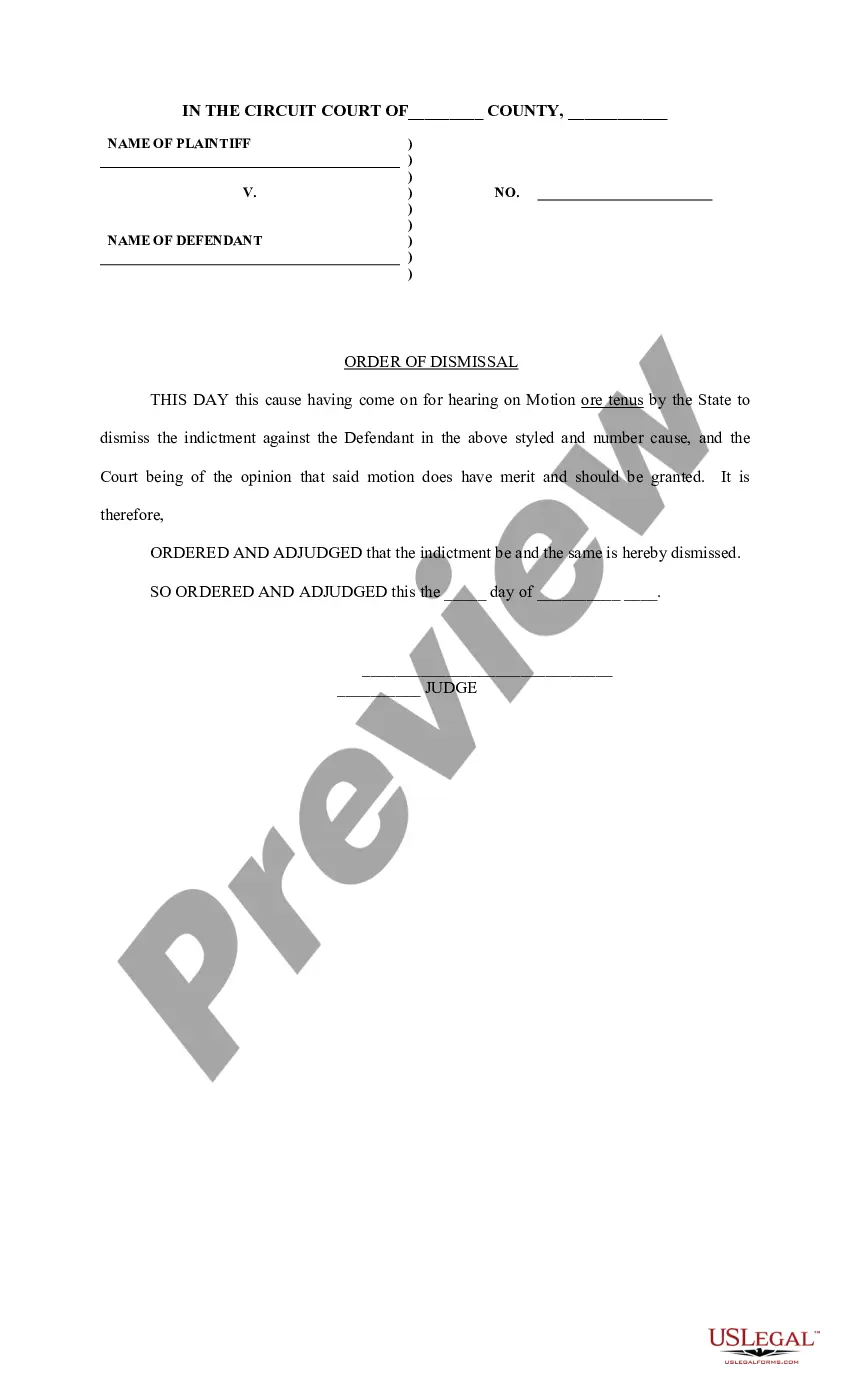
Louisiana Order of Dismissal
Description
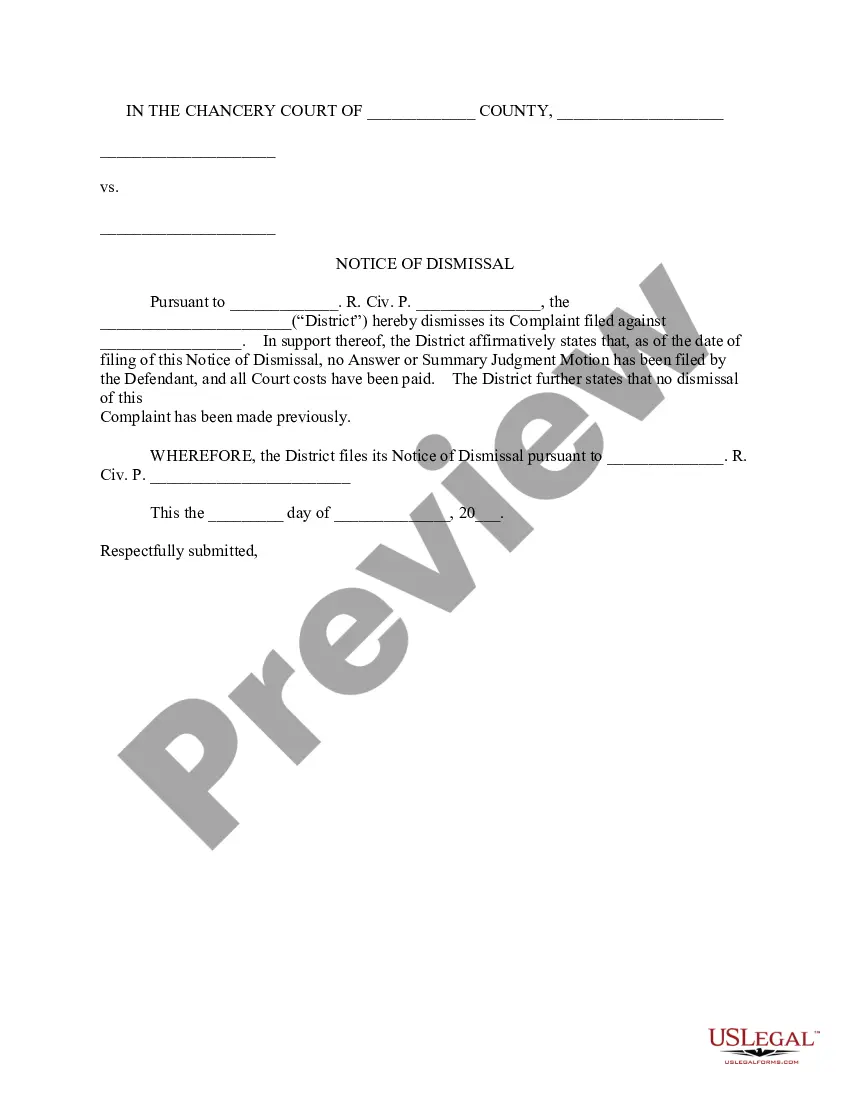
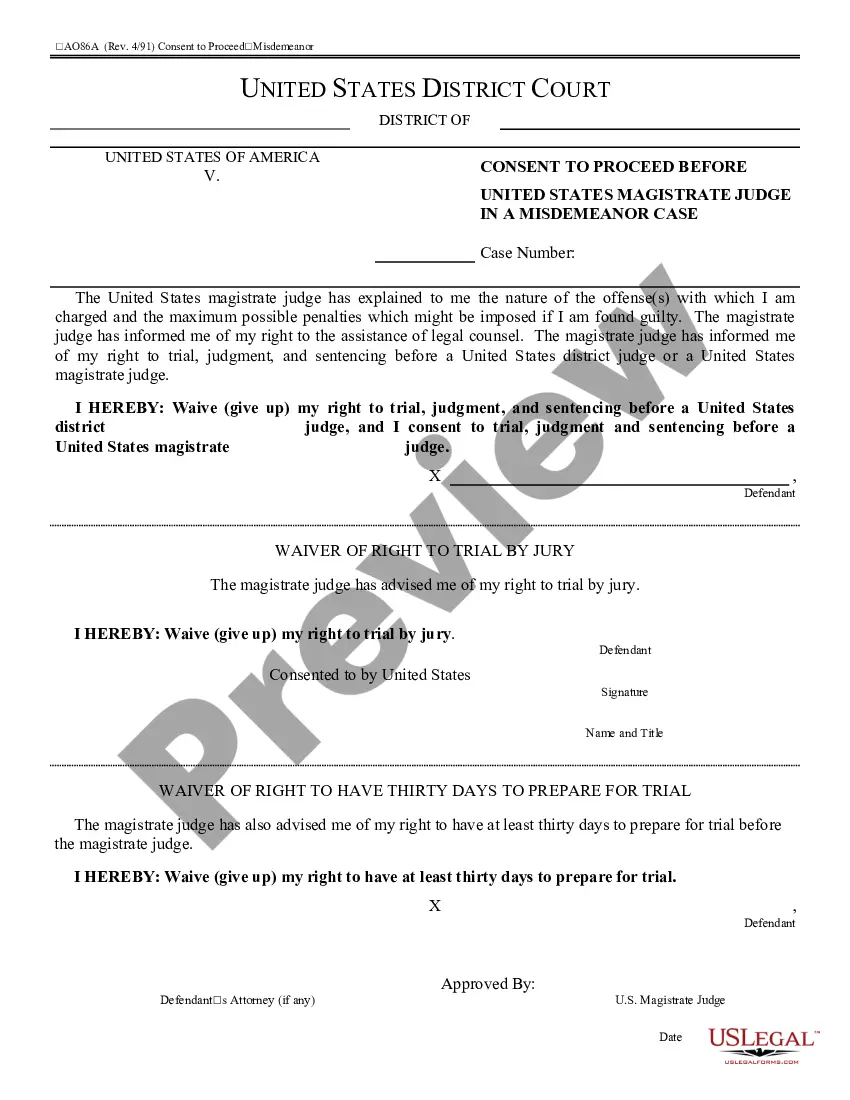
How to fill out Order Of Dismissal?
If you need to aggregate, download, or print legal document templates, utilize US Legal Forms, the largest collection of legal forms available online. Use the website's simple and convenient search to find the documents you require. Various templates for business and personal purposes are categorized by groups and states, or keywords. Use US Legal Forms to obtain the Louisiana Order of Dismissal in just a few clicks.
If you are already a US Legal Forms customer, Log In to your account and click the Download button to obtain the Louisiana Order of Dismissal. You can also access forms you previously downloaded in the My documents section of your account.
If you are using US Legal Forms for the first time, refer to the instructions below: Step 1. Ensure you have selected the form for the correct city/state. Step 2. Use the Review option to examine the form's details. Don't forget to read the overview. Step 3. If you are not satisfied with the form, use the Search field at the top of the screen to find alternative versions of the legal form template. Step 4. Once you have found the form you need, click the Buy now button. Choose the pricing plan you prefer and enter your credentials to register for an account. Step 5. Process the transaction. You can use your credit card or PayPal account to complete the transaction. Step 6. Select the format of your legal form and download it to your device. Step 7. Complete, edit, and print or sign the Louisiana Order of Dismissal.
- Every legal document template you purchase is yours permanently.
- You have access to every form you downloaded in your account.
- Click the My documents section and select a form to print or download again.
- Be proactive and download, and print the Louisiana Order of Dismissal with US Legal Forms.
- There are millions of professional and state-specific forms you can use for your business or personal needs.
Form popularity
FAQ
A dismissal refers to the court's decision to terminate a court case without imposing liability on the defendant. The court may dismiss a case in response to a defendant's motion to dismiss or do so sua sponte.
A Motion to Dismiss is a request for the court to throw out a charge or charges against a defendant. It is a pretrial motion, heard by a judge. There is no jury involved. When a defendant files a Motion to Dismiss, they argue there is a problem with the legal basis of the charge and it should not proceed to trial.
When the peremptory exception is pleaded in the trial court after the trial of the case, but prior to a submission for a decision, the plaintiff may introduce evidence in opposition thereto, but the defendant may introduce no evidence except to rebut that offered by plaintiff.
The function of the declinatory exception is to decline the jurisdiction of the court, while the dilatory exception merely retards the progress of the action, but neither exception tends to defeat the action.
The function of the peremptory exception of no cause of action tests the legal sufficiency of the petition by determining whether Louisiana law affords a remedy on the alleged facts.
The peremptory exception may be pleaded at any stage of the proceeding in the trial court prior to a submission of the case for a decision and may be filed with the declinatory exception or with the dilatory exception, or both. Acts 1983, No. 60, §1; Acts 1997, No.
A judgment dismissing an action without prejudice shall be rendered as to a person named as a defendant for whom service has not been requested within the time prescribed by Article 1201(C) or 3955 upon the sustaining of a declinatory exception filed by such defendant, or upon contradictory motion of any other party, ...
In trials of offenses punishable by death or necessarily by imprisonment at hard labor, each defendant shall have twelve peremptory challenges, and the state twelve for each defendant. In all other cases, each defendant shall have six peremptory challenges, and the state six for each defendant.