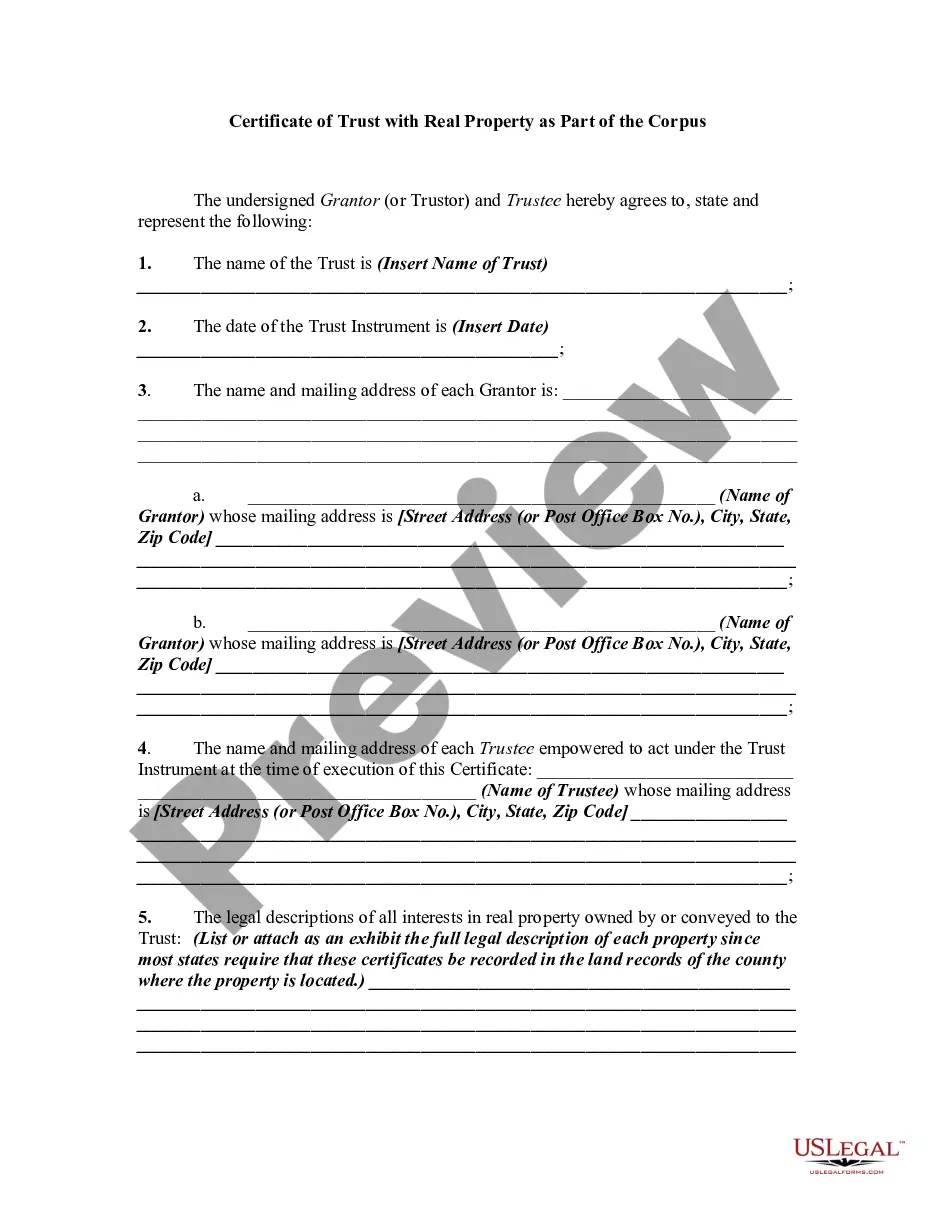
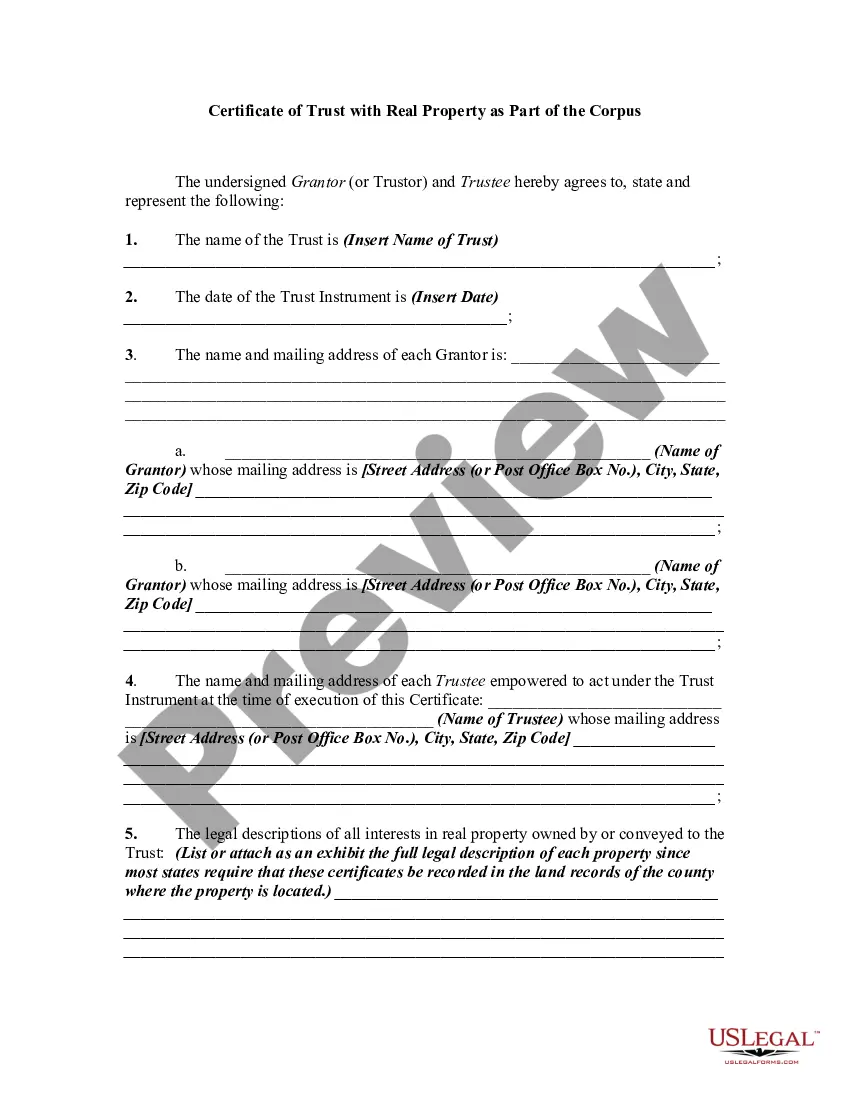
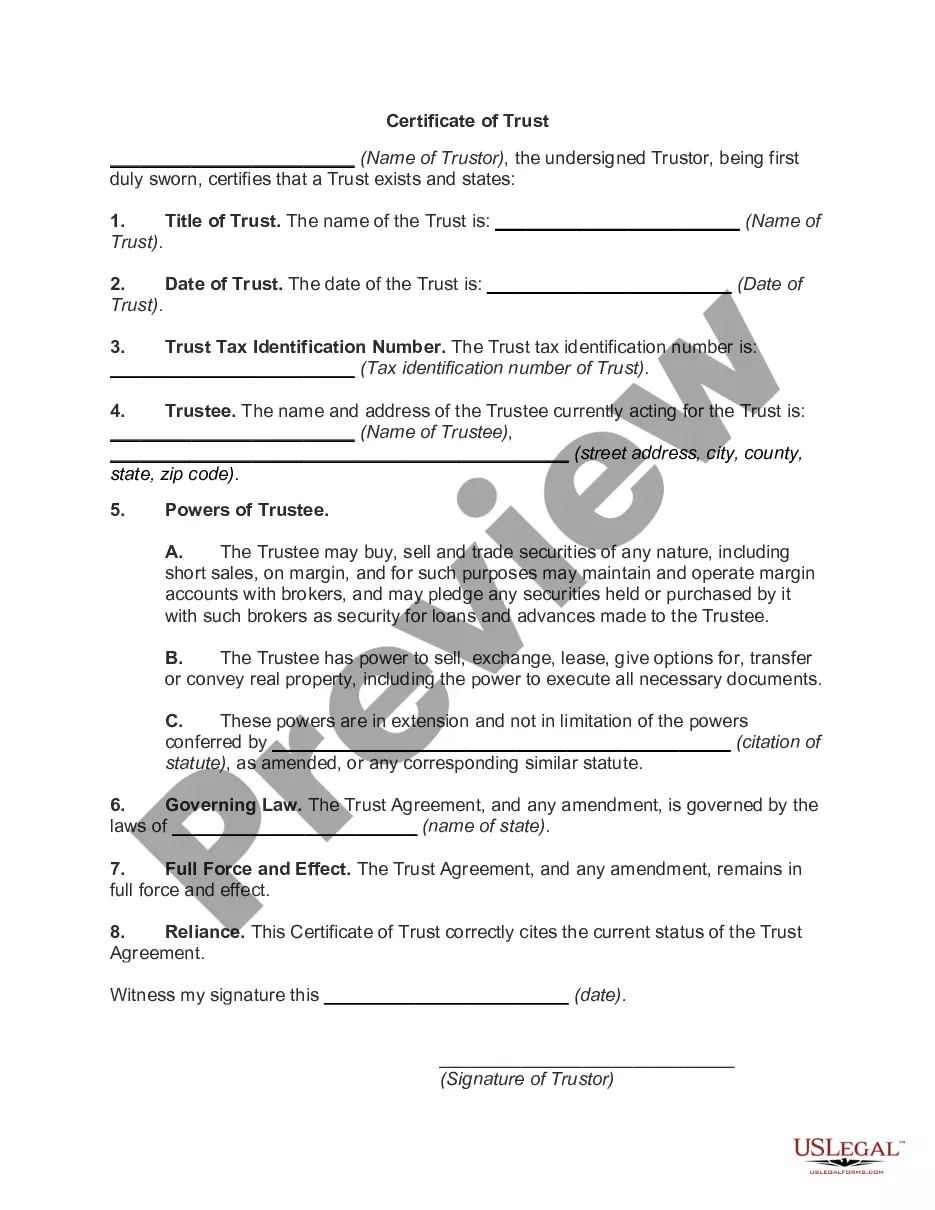
Louisiana Certificate of Trust for Testamentary Trust
Description

Get your form ready online
Our built-in tools help you complete, sign, share, and store your documents in one place.
Make edits, fill in missing information, and update formatting in US Legal Forms—just like you would in MS Word.
Download a copy, print it, send it by email, or mail it via USPS—whatever works best for your next step.
Sign and collect signatures with our SignNow integration. Send to multiple recipients, set reminders, and more. Go Premium to unlock E-Sign.
If this form requires notarization, complete it online through a secure video call—no need to meet a notary in person or wait for an appointment.
We protect your documents and personal data by following strict security and privacy standards.

Make edits, fill in missing information, and update formatting in US Legal Forms—just like you would in MS Word.

Download a copy, print it, send it by email, or mail it via USPS—whatever works best for your next step.

Sign and collect signatures with our SignNow integration. Send to multiple recipients, set reminders, and more. Go Premium to unlock E-Sign.

If this form requires notarization, complete it online through a secure video call—no need to meet a notary in person or wait for an appointment.

We protect your documents and personal data by following strict security and privacy standards.
Looking for another form?
How to fill out Certificate Of Trust For Testamentary Trust?
Are you in a situation where you require documents for either business or personal purposes almost every day? There are numerous legal document templates available online, but finding reliable versions can be challenging. US Legal Forms offers a wide range of form templates, including the Louisiana Certificate of Trust for Testamentary Trust, designed to comply with state and federal regulations.
If you are already familiar with the US Legal Forms website and have an account, simply Log In. After that, you can download the Louisiana Certificate of Trust for Testamentary Trust template.
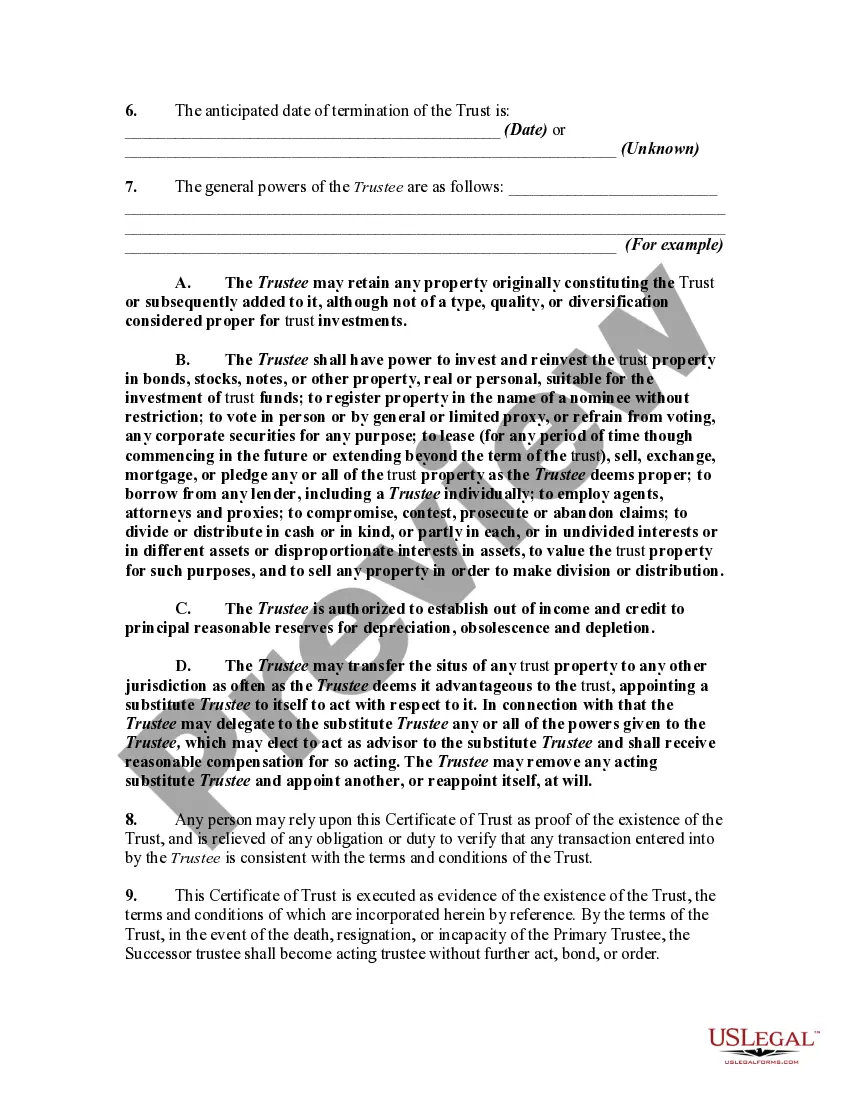
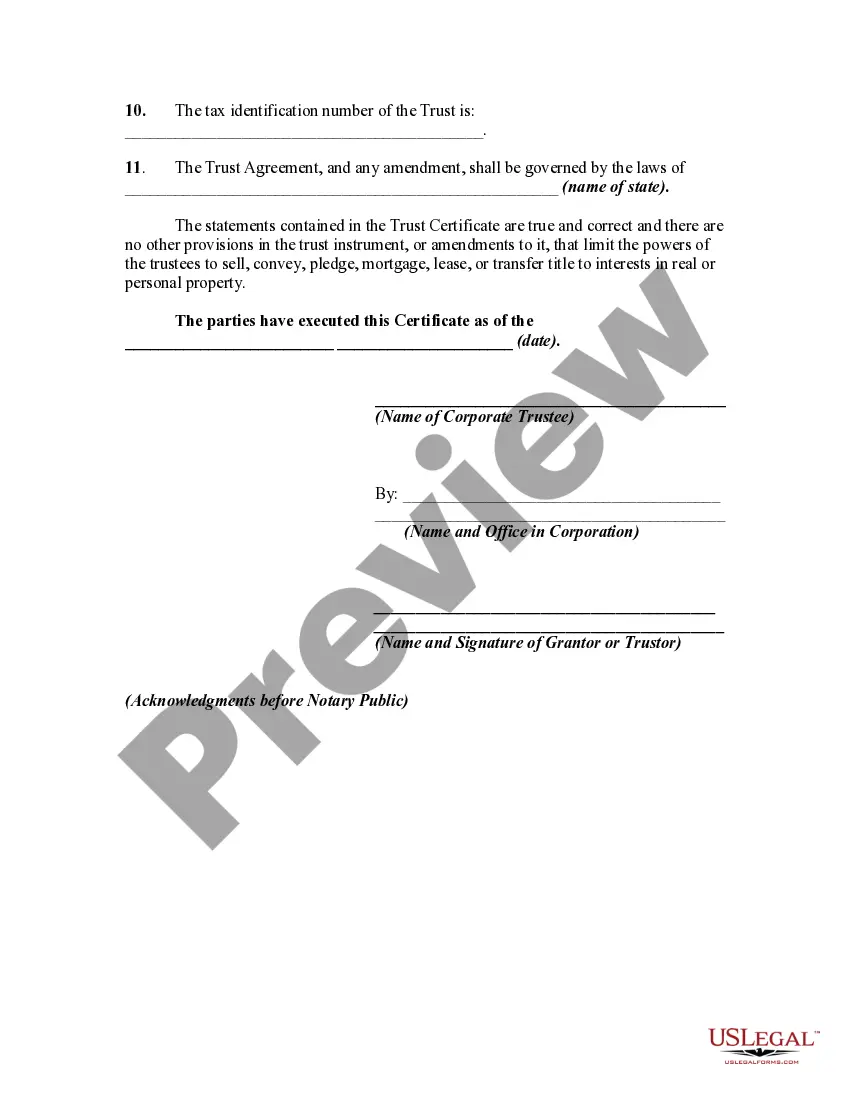
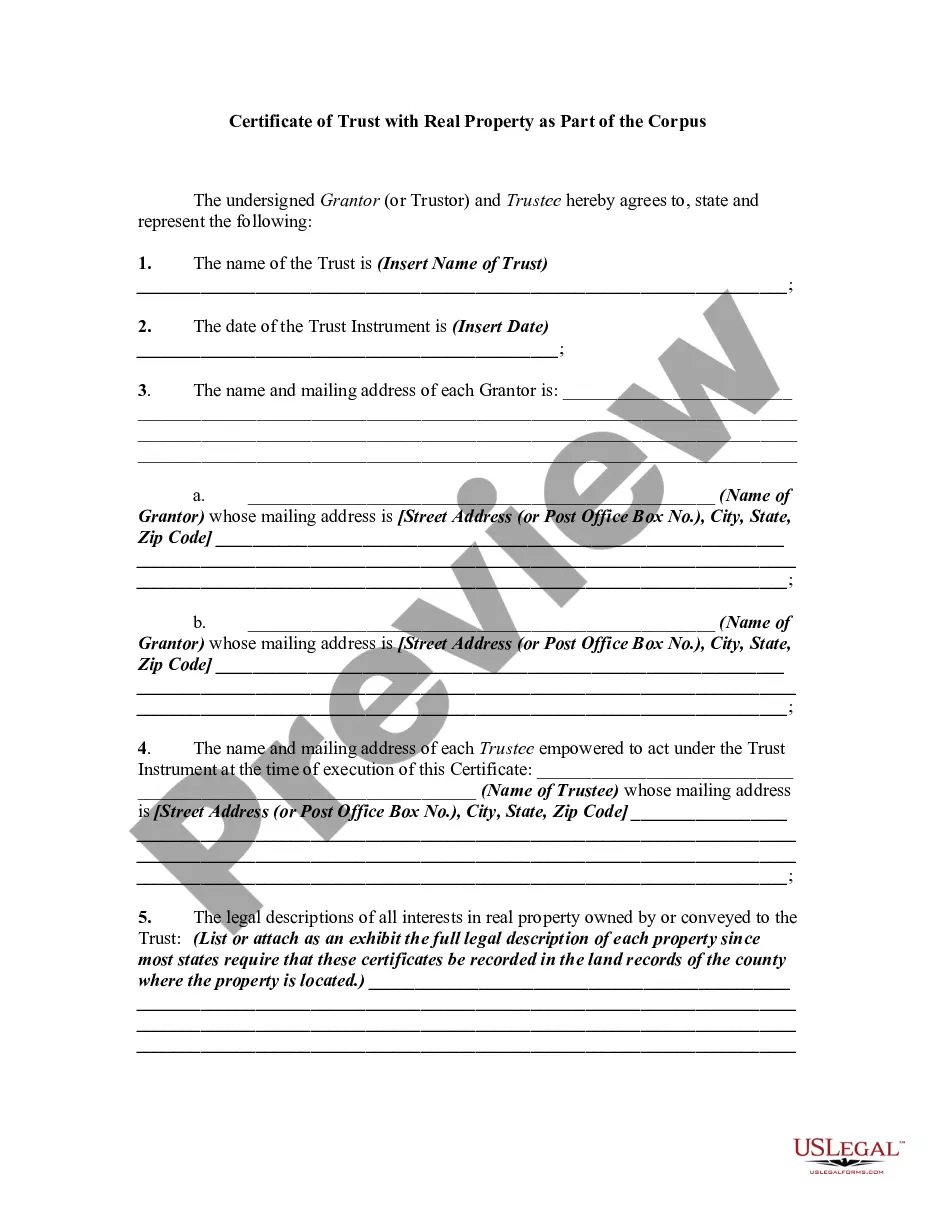
If you do not have an account and want to start using US Legal Forms, follow these steps: Find the form you need and ensure it corresponds to the correct city/state. Utilize the Preview option to examine the document. Read the description to confirm that you have selected the appropriate form. If the form does not match your needs, use the Lookup field to find the form that suits your requirements. Once you find the correct form, click Buy now. Select the pricing plan you prefer, fill in the required information to create your account, and complete the purchase using your PayPal or Visa or Mastercard. Choose a convenient document format and download your copy.
- Access all the document templates you have purchased in the My documents section. You can obtain another version of the Louisiana Certificate of Trust for Testamentary Trust at any time if needed. Simply click the desired form to download or print the document template.
- Utilize US Legal Forms, the most extensive collection of legal documents, to save time and minimize mistakes. The service offers professionally crafted legal document templates that can be used for various purposes.
- Create your account on US Legal Forms and begin simplifying your life.
Form popularity
FAQ
A living trust (sometimes called an inter vivos trust) is one created by the grantor during his or her lifetime, while a testamentary trust is a trust created by the grantor's will. Only a funded living trust avoids probate court.
To create the actual testamentary trust, the settlor must select the trustee and the beneficiary. Then, the settlor selects which assets are to be placed in the trust. This also includes the specification of how and when these assets are disbursed to the beneficiary.
A testamentary trust is a trust that is to contain a portion or all of a decedent's assets outlined within a person's last will and testament. A testamentary trust is not established until after the person passes away in which the executor or executrix settles the estate as outlined in the will.
It is a trust structure that is often used to protect family assets by having greater control over management and distributions of the deceased estate to beneficiaries. It is crucial that the planning and appointing process of the trustee is well governed.
The terms of the trust are established in the deceased person's Will, by court order, in relation to the deceased's estate, or by a separate trust document, in the case of a testamentary insurance trust funded by a death benefit on the individual's death.
(1) For purposes of recording an extract of a trust instrument, such an extract shall be executed by either the settlor or the trustee and shall include all of the following: (a) The name of the trust, if any. (b) A statement as to whether the trust is revocable or irrevocable. (c) The name of each settlor.
Disadvantages of a Testamentary Trust Lack of Privacy: Testamentary trusts are part of a person's will, which becomes public record upon their death. This means that the details of the trust and its beneficiaries are accessible to the public.
Testamentary Trust - is created within a Will and thus comes into being at the moment of the settlor's death without reference to the acceptance of the trustee. These trusts are irrevocable as they are established upon the settlor's death.