Massachusetts Mutual Nondisclosure Agreement
Overview of this form
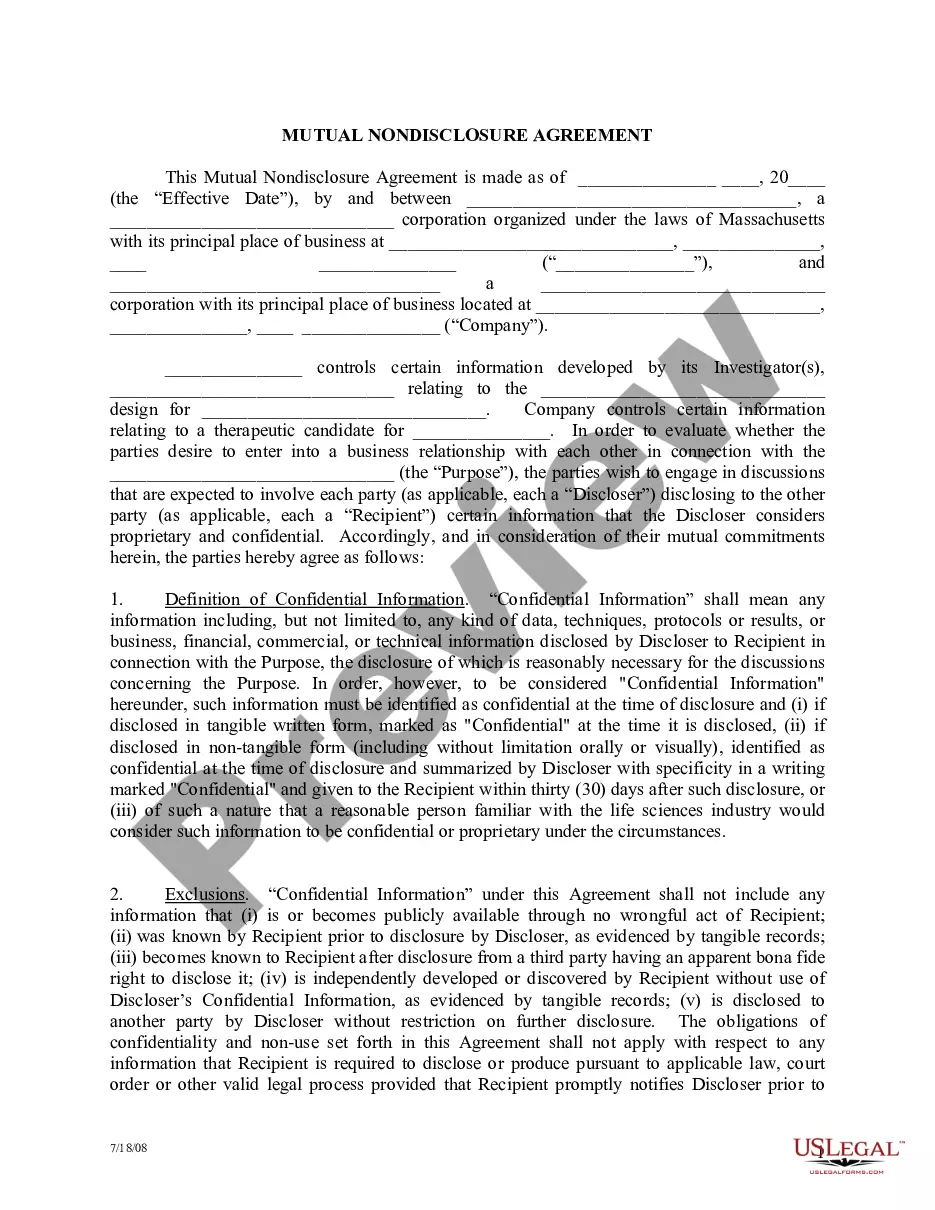
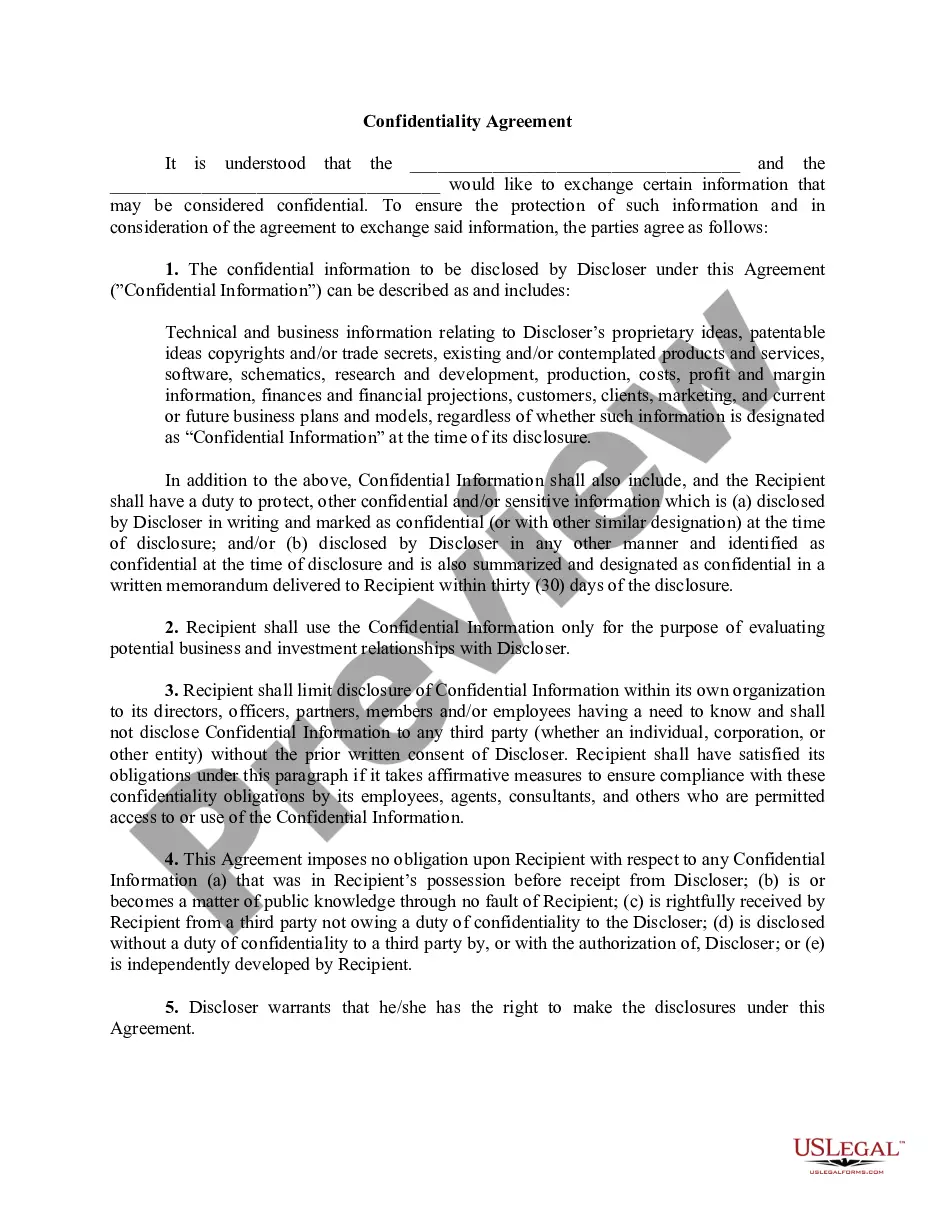
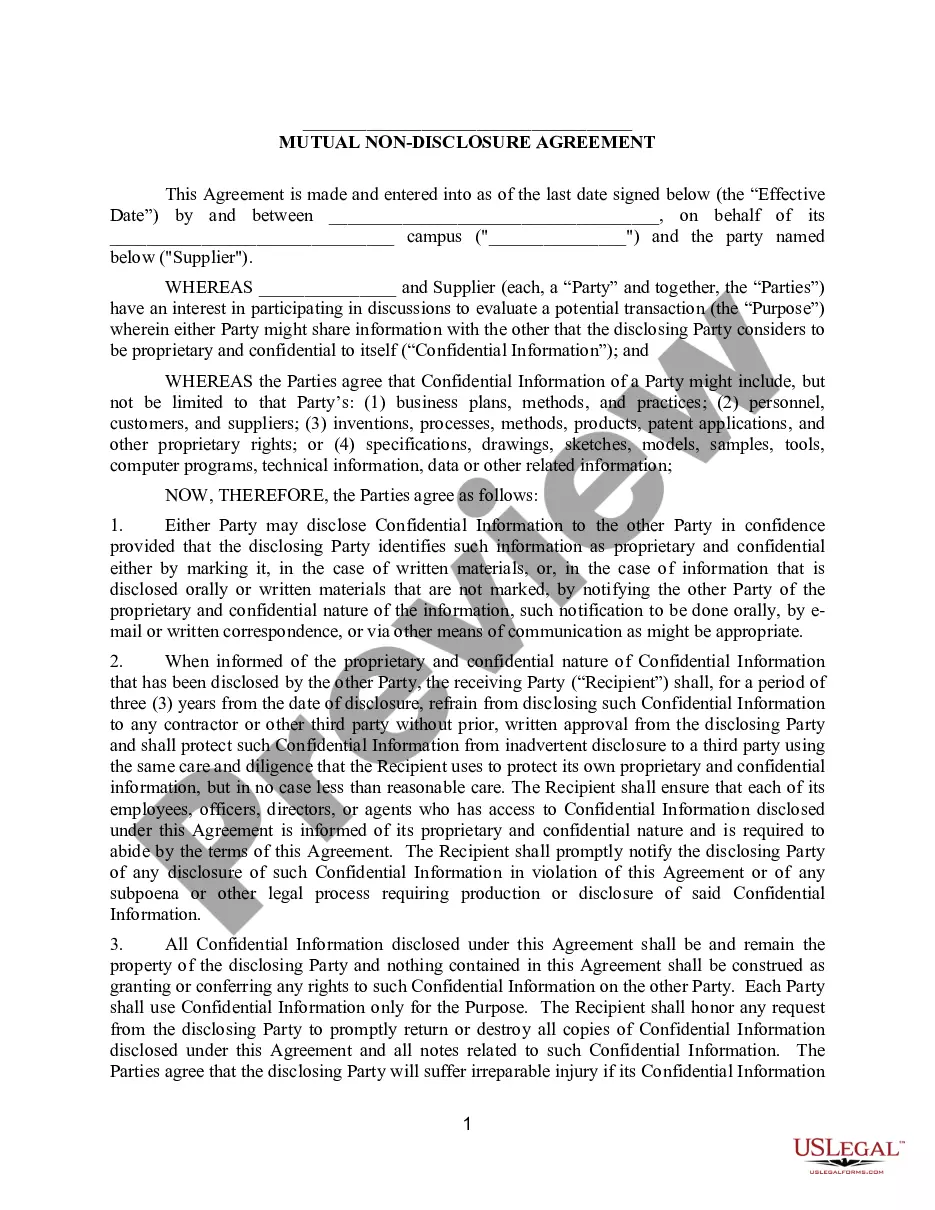
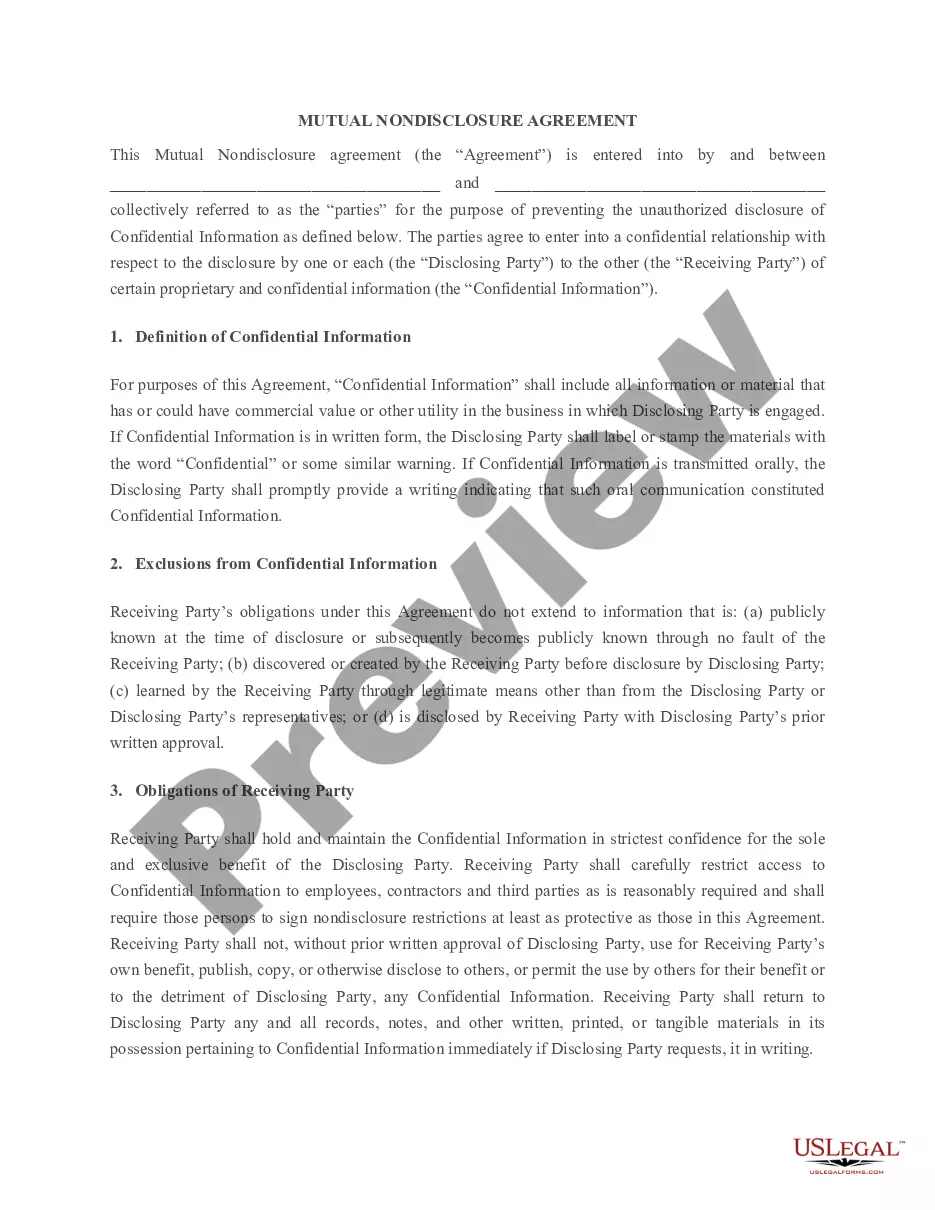
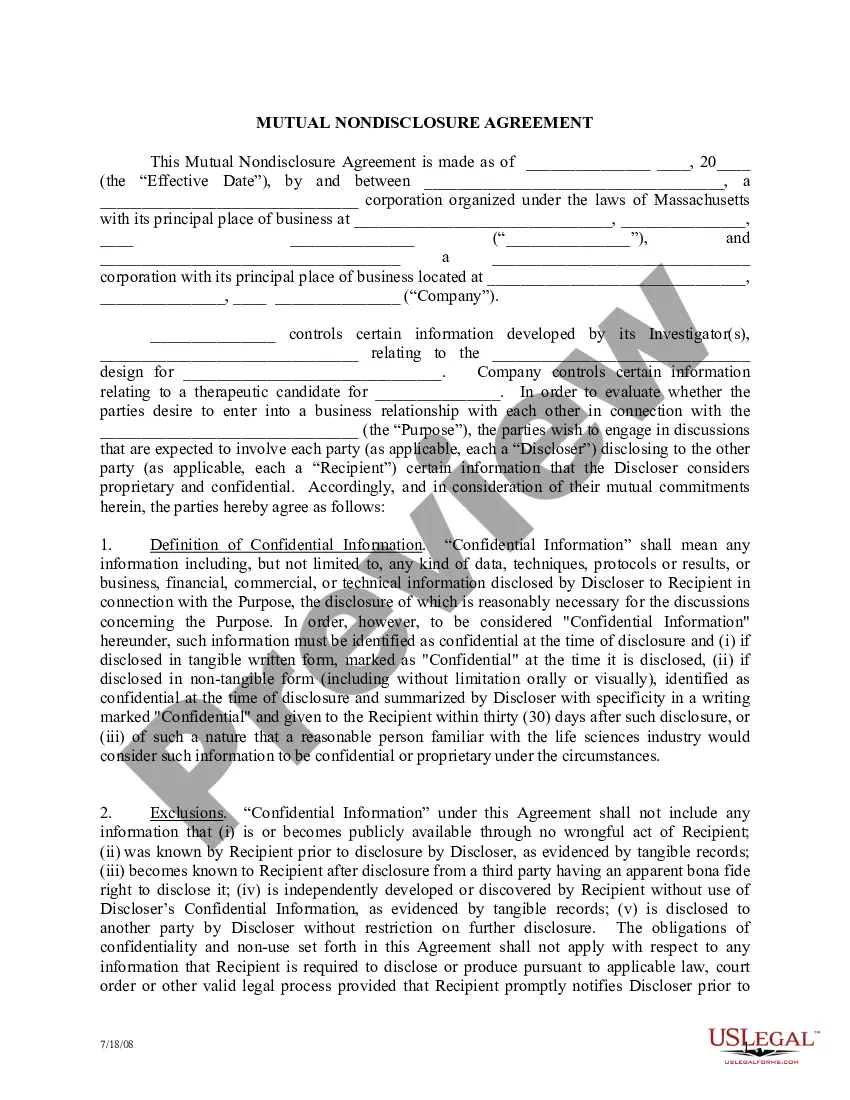
The Mutual Nondisclosure Agreement is a legal document that establishes a confidential relationship between two parties, typically a hospital and a company, when discussing proprietary information. This agreement is essential for protecting sensitive information shared during discussions about potential collaborations, ensuring that both parties keep each otherâs confidential data secure. Unlike unilateral agreements, a mutual nondisclosure agreement allows both parties to share information freely while safeguarding their proprietary interests.
Key parts of this document
- Definition of Confidential Information: Specifies what constitutes confidential data under the agreement.
- Exclusions: Outlines what information is not considered confidential, like publicly available data.
- Permitted Purpose: Details the specific uses for the confidential information shared between the parties.
- Restrictions: Defines the obligations of each party regarding the confidentiality of the disclosed information.
- Ownership: Clarifies that all confidential information remains the property of the disclosing party.
- Termination: Provides the terms for ending the agreement, including notice periods.


Common use cases
This form is ideal when two parties, such as a hospital and a company, plan to discuss or collaborate on projects that involve the sharing of confidential information. It's applicable in situations like evaluating pharmaceuticals, conducting joint research, or developing new medical technologies where sensitive data must be exchanged securely without the risk of intellectual property theft or business espionage.
Who can use this document
- Businesses looking to engage in discussions about potential partnerships.
- Hospitals collaborating with pharmaceutical or medical device companies.
- Research institutions considering joint projects with commercial entities.
- Any organization wishing to protect its confidential information during negotiations.
Instructions for completing this form
- Identify the parties involved by entering the names and addresses of the hospital and the company.
- Specify the nature of the confidential information and the purpose for sharing it.
- Clearly mark any shared documents or information as "Confidential" at the time of disclosure.
- Enter the effective date of the agreement.
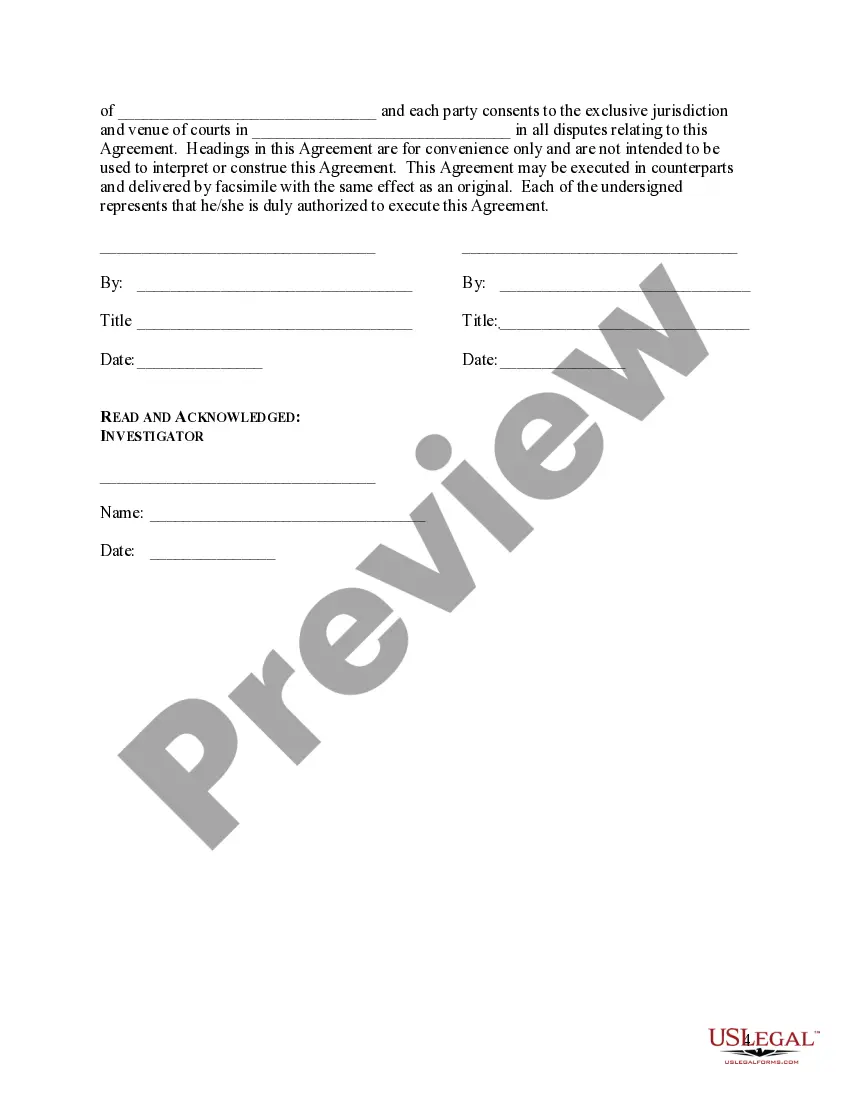
- Ensure both parties sign and date the agreement, including any necessary representatives.
Notarization requirements for this form
This form does not typically require notarization unless specified by local law. However, having the document notarized may enhance its legal standing in certain circumstances.
Get your form ready online
Our built-in tools help you complete, sign, share, and store your documents in one place.
Make edits, fill in missing information, and update formatting in US Legal Forms—just like you would in MS Word.
Download a copy, print it, send it by email, or mail it via USPS—whatever works best for your next step.
Sign and collect signatures with our SignNow integration. Send to multiple recipients, set reminders, and more. Go Premium to unlock E-Sign.
If this form requires notarization, complete it online through a secure video call—no need to meet a notary in person or wait for an appointment.
We protect your documents and personal data by following strict security and privacy standards.

Make edits, fill in missing information, and update formatting in US Legal Forms—just like you would in MS Word.

Download a copy, print it, send it by email, or mail it via USPS—whatever works best for your next step.

Sign and collect signatures with our SignNow integration. Send to multiple recipients, set reminders, and more. Go Premium to unlock E-Sign.

If this form requires notarization, complete it online through a secure video call—no need to meet a notary in person or wait for an appointment.

We protect your documents and personal data by following strict security and privacy standards.
Avoid these common issues
- Failing to clearly define what constitutes confidential information.
- Not marking confidential information appropriately at the time of disclosure.
- Neglecting to include a clear purpose for the information sharing.
- Not having both parties sign and date the document.
- Overlooking the inclusion of necessary exclusions from confidentiality.
Benefits of completing this form online
- Convenience of downloading and completing the form at your own pace.
- Editability allows for easy customization based on specific negotiations.
- Reliable legal compliance, with templates drafted by licensed attorneys.
- Access to additional resources and support if needed.
Legal use & context
- The Mutual Nondisclosure Agreement is legally enforceable in Massachusetts.
- Both parties are obligated to adhere to the terms regarding confidentiality.
- Failure to comply with this agreement can result in legal liabilities.
Main things to remember
- A Mutual Nondisclosure Agreement protects sensitive information during business discussions.
- It is crucial to clearly define what information is confidential and the purpose of sharing it.
- Both parties must sign to make the agreement legally binding and enforceable.
- This agreement is essential for protecting intellectual property in collaborative environments.
Looking for another form?
Form popularity
FAQ
Non-disclosure agreements are common for businesses entering into negotiations with other businesses. They allow the parties to share sensitive information without fear that it will end up in the hands of competitors. In this case, it may be called a mutual non-disclosure agreement.
An NDA lends security to the information you share. An MSA ensures that you and your vendor are on the same page about terms of collaboration. These two documents regulate your partnership on a large scale, without ties to the project's detailed scope of work.
An NDA is a legally binding agreement. It is not subject to the same scrutiny as a non compete. This is because it only restricts you from using information and not from competing in general. The agreement will usually state that the employer is entitled to injunctive relief if you breach it.
compete agreement is only used between an employee and a business to specify who may hire them should they leave the company. An NDA is much broader and is used to protect any personal or businessrelated information that one or both parties want to remain confidential.
Confidentiality. Also known as a non-disclosure agreement or clause, this section of an MSA protects intellectual property and other proprietary information from being disclosed.
Types of Agreement Many large companies require contractors to sign an NDA before starting work on any project. An MSA document is similar to an NDA, except it has been written for members of a group or organization rather than between two individuals or companies.
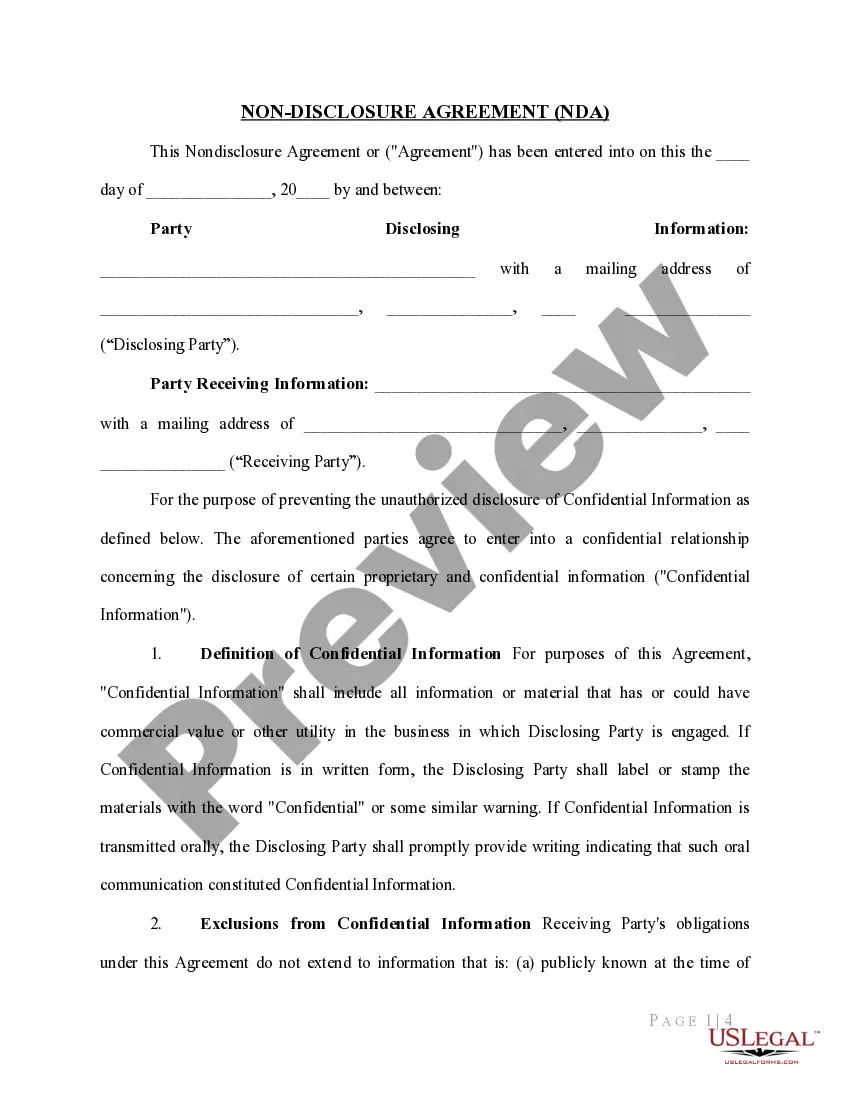
There are three types of NDAs: unilateral, bilateral, and multilateral. Read on to learn when you should use each type.
If only one party will be disclosing such information, a unilateral nondisclosure agreement is used. If both parties will be disclosing private information to each other, they use a mutual nondisclosure agreement.