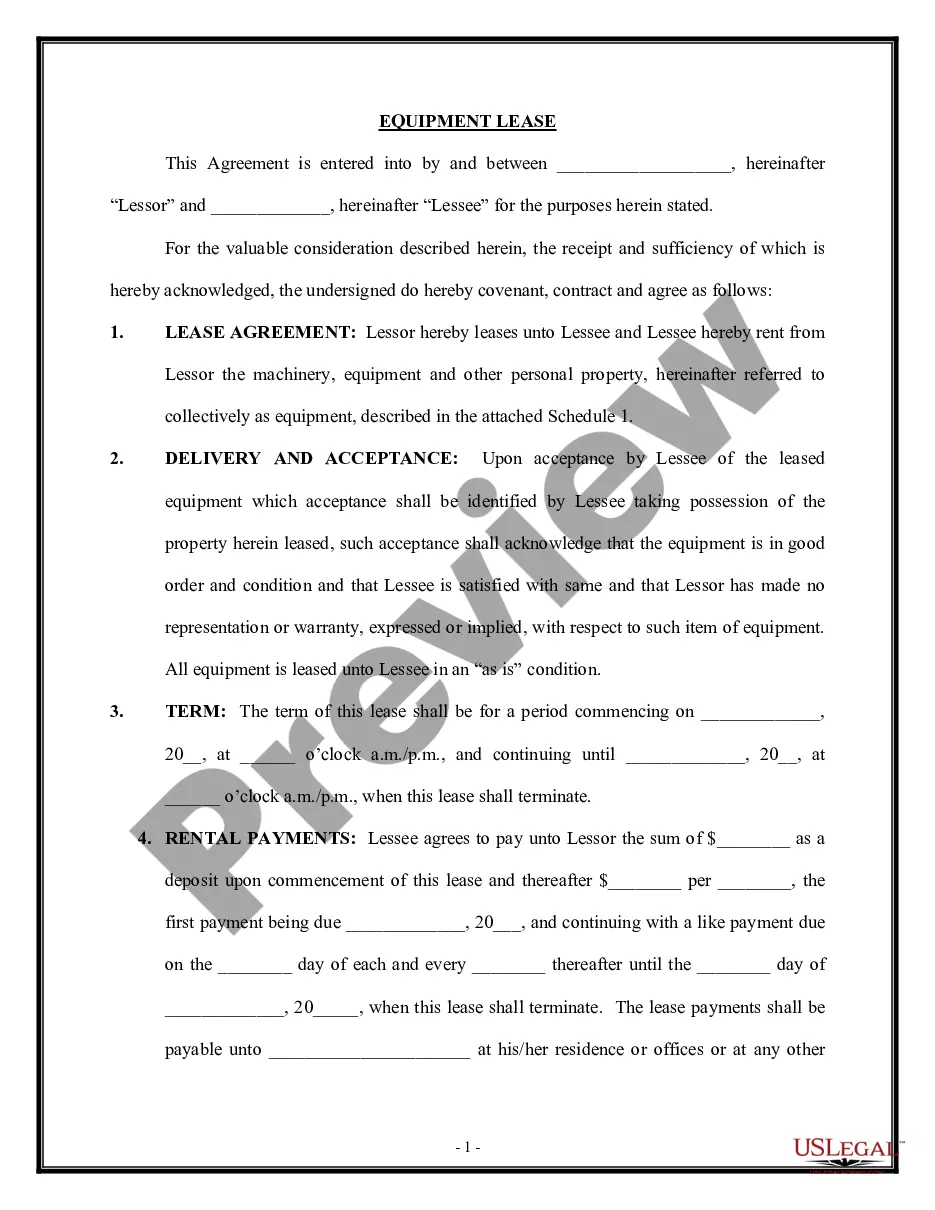
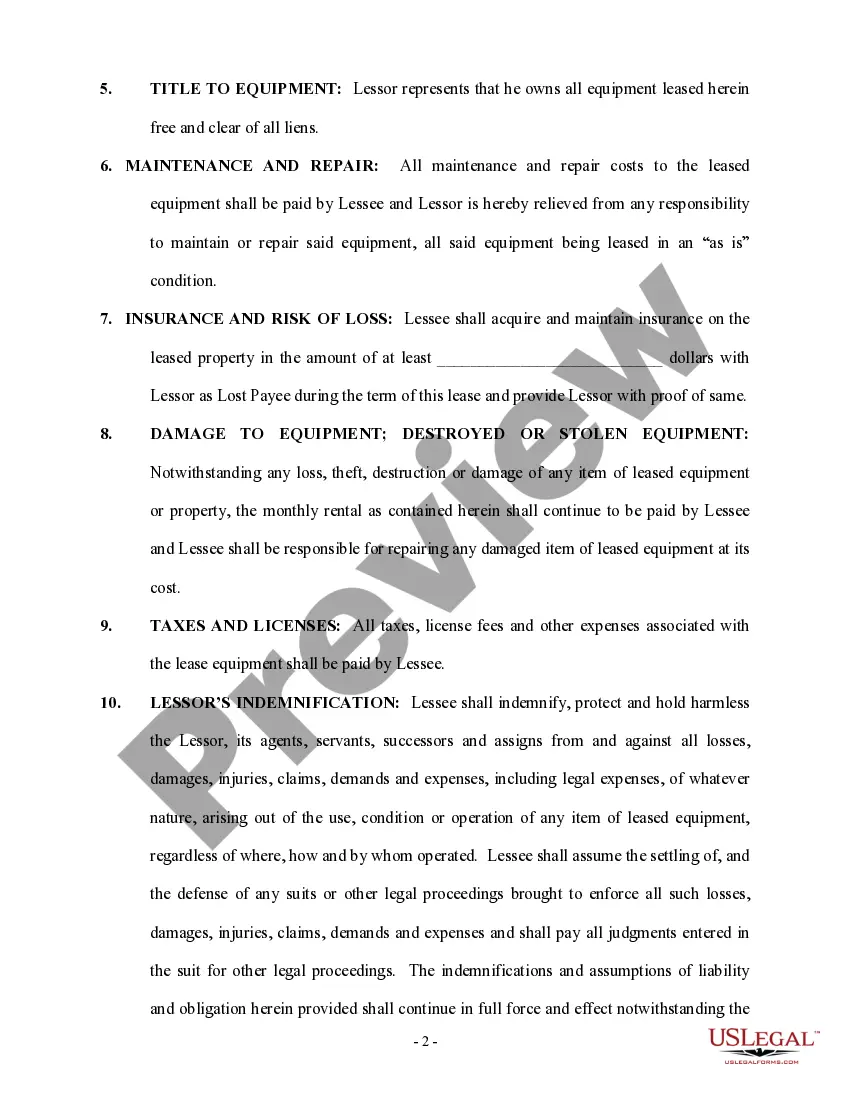
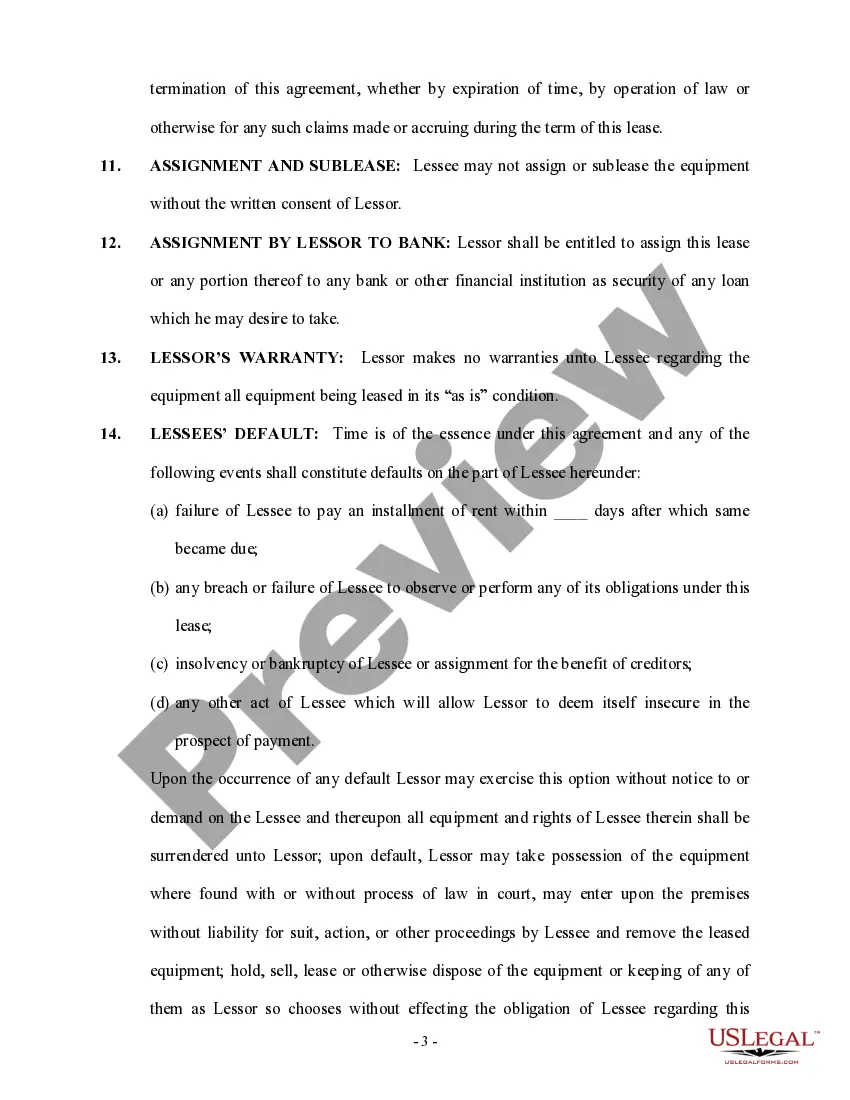
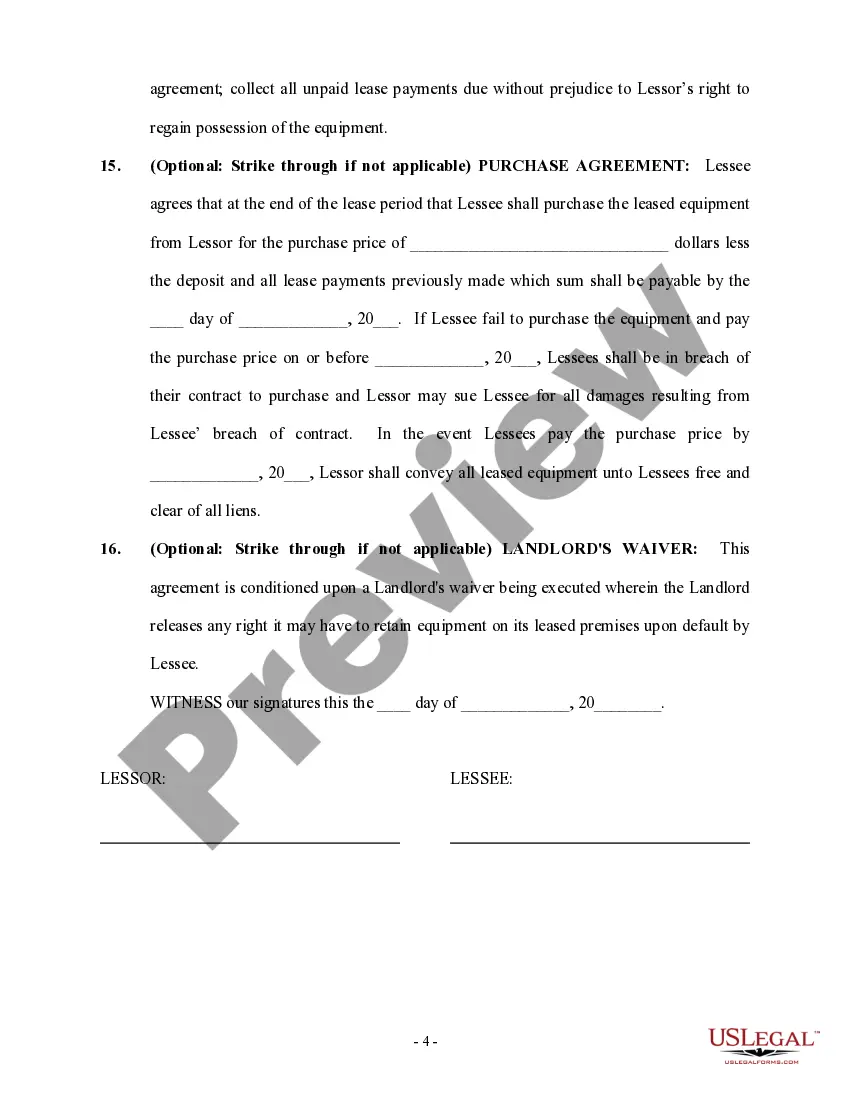
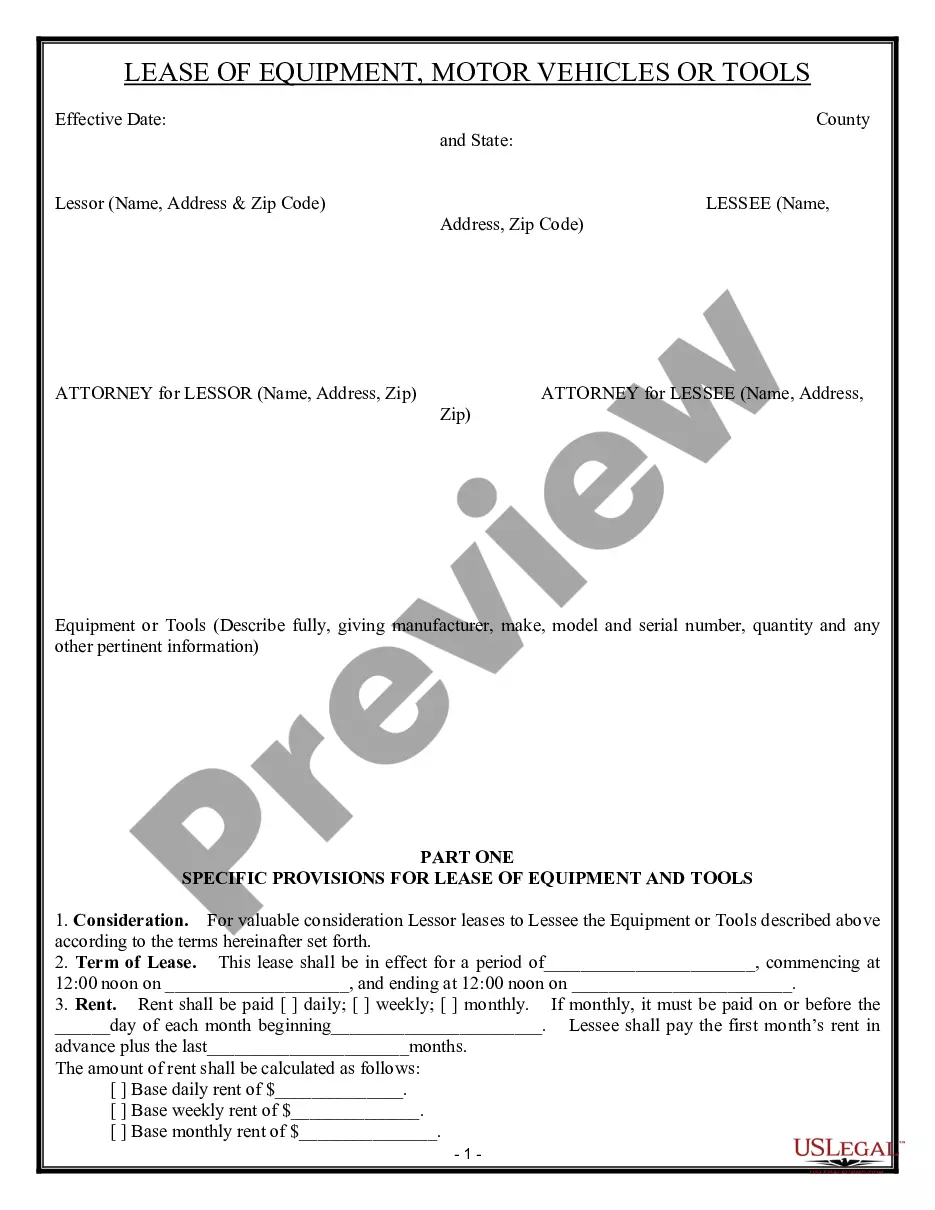
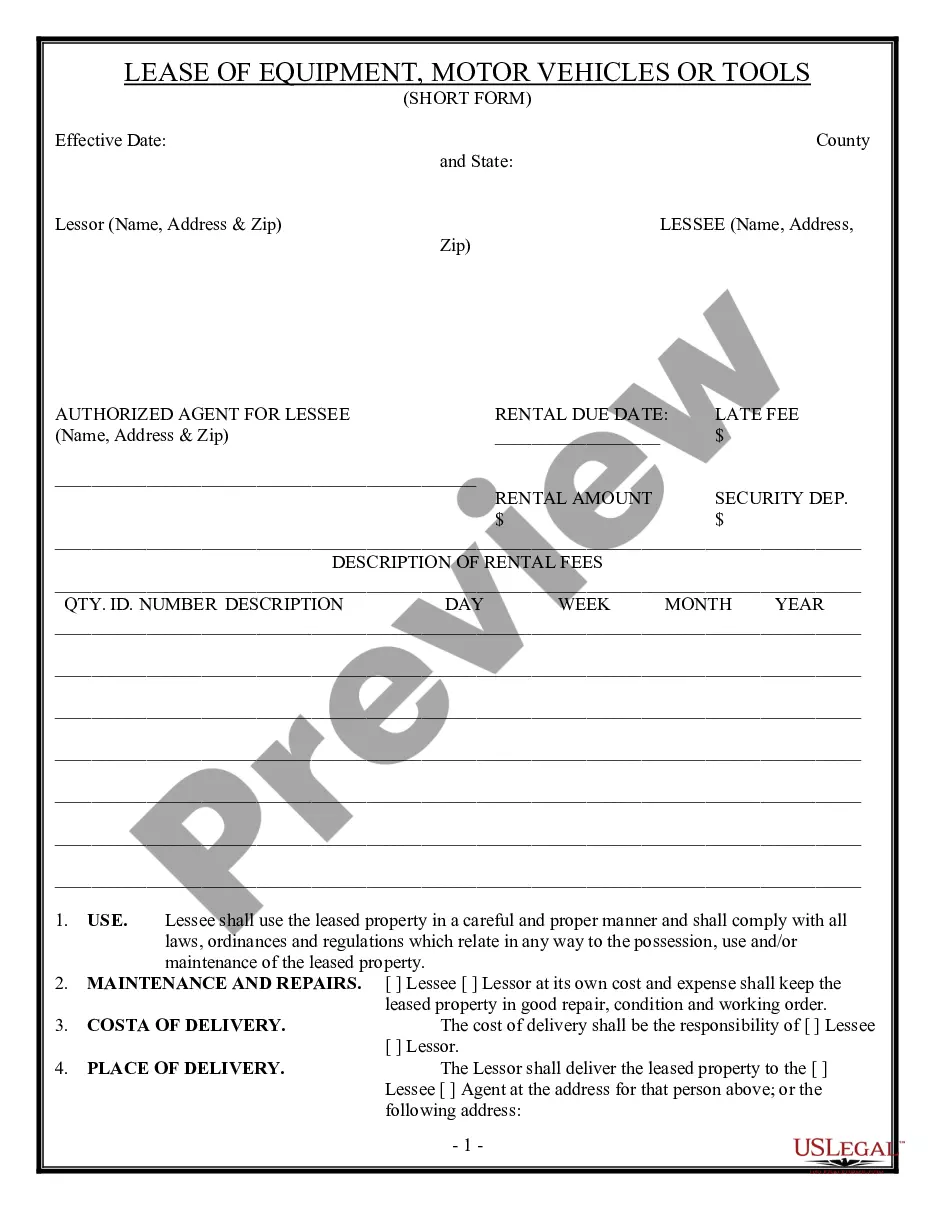
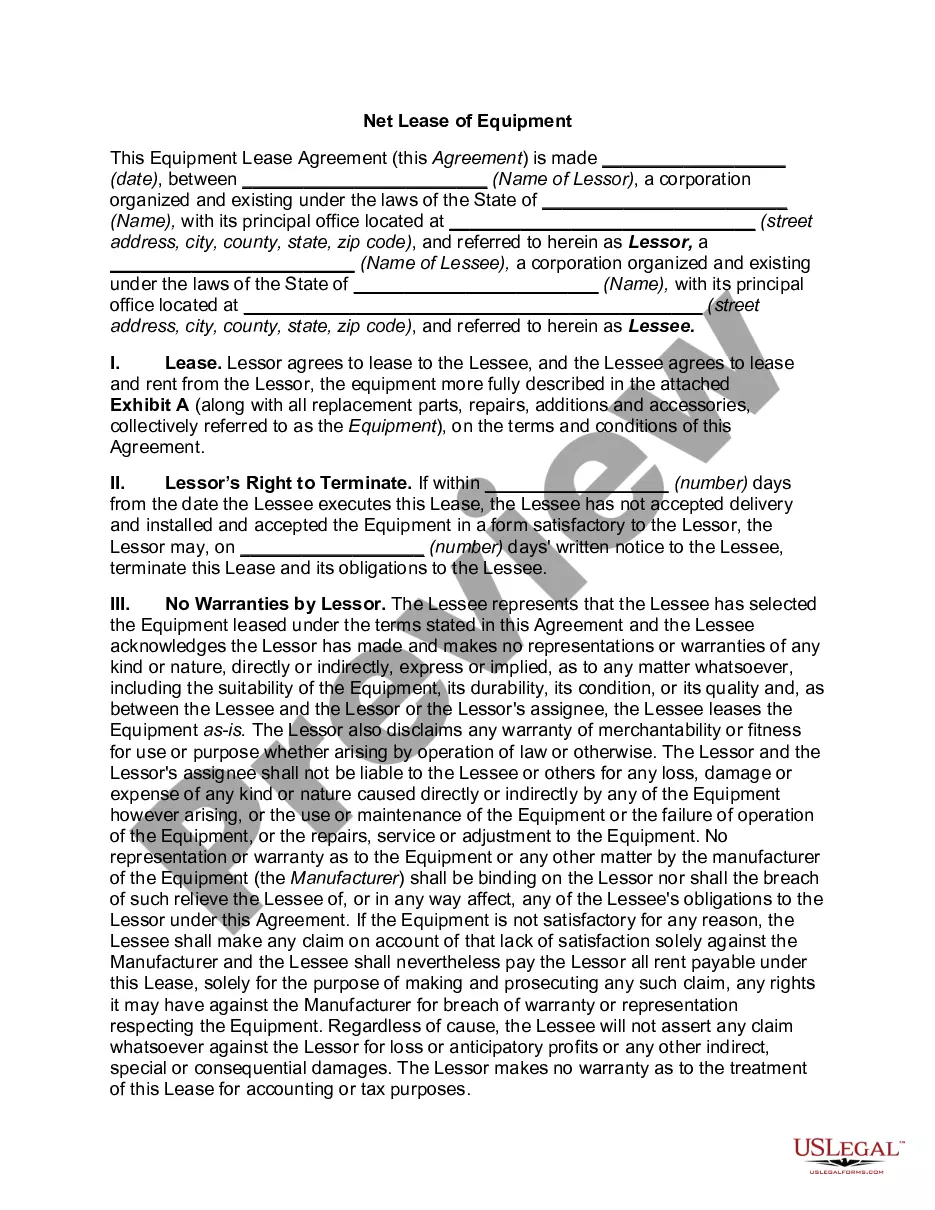
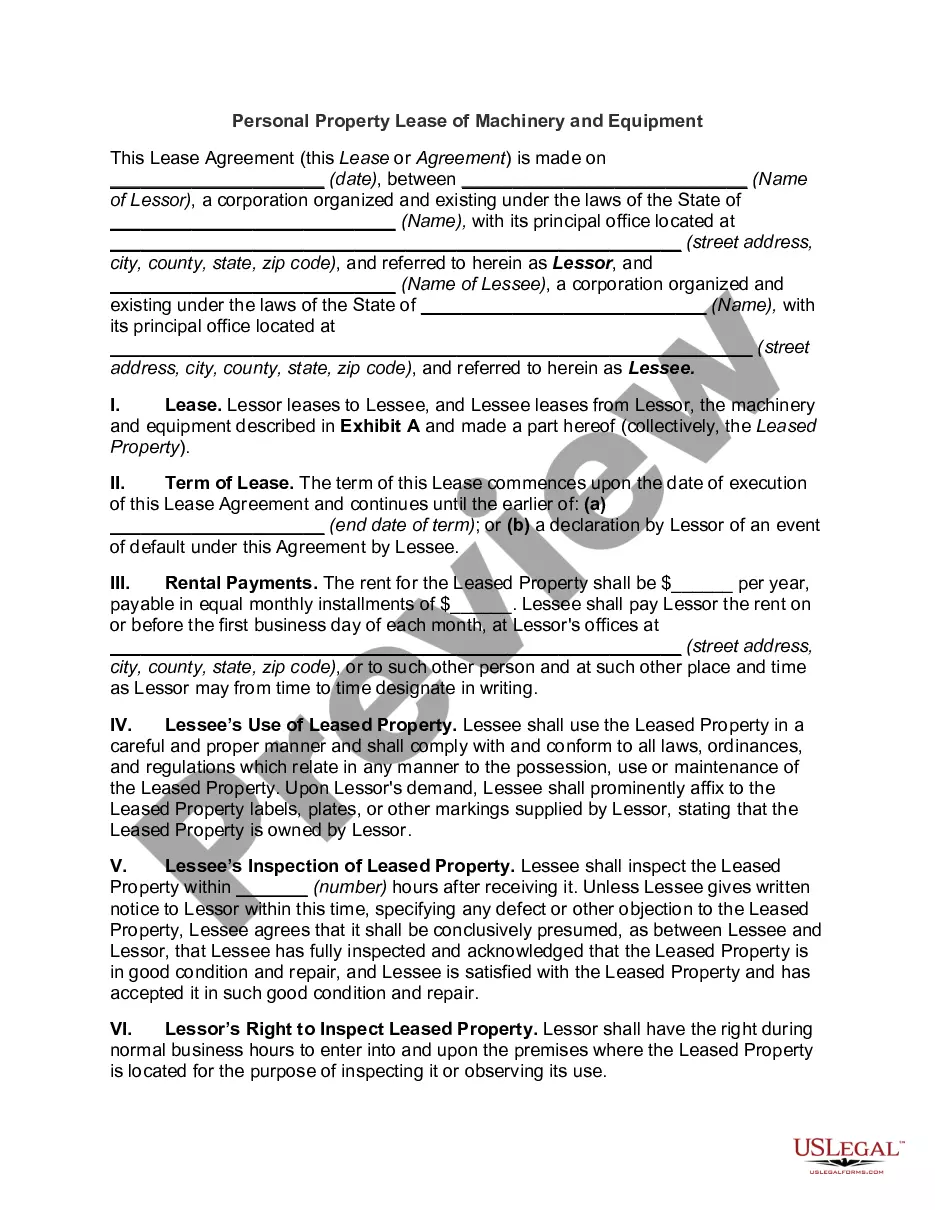
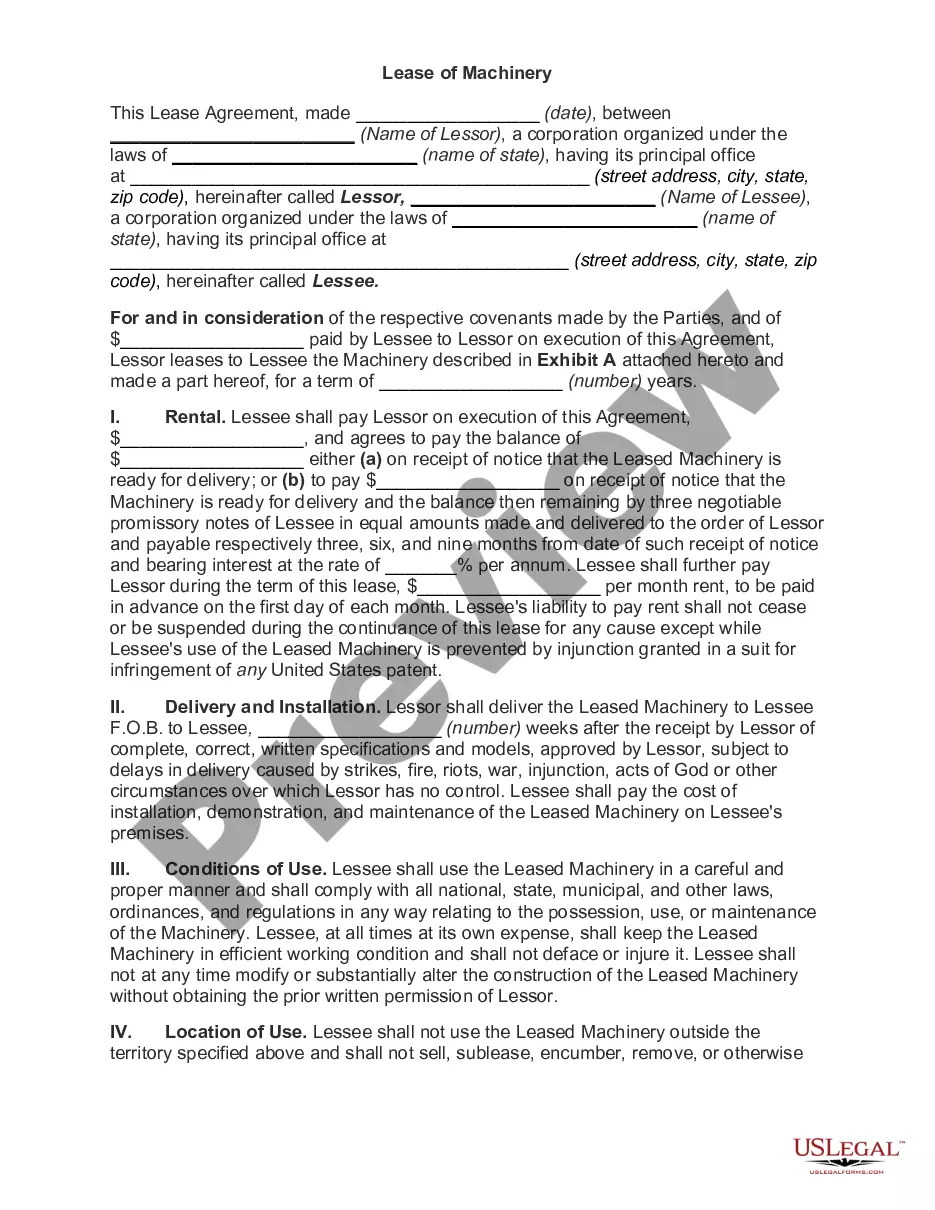
This form is an Equipment Lease. The lessor and lessee have entered into a contract for the renting of machinery and equipment. The contract also provides that the lessee may use the leased property at the location specified in the agreement. The contract is conditioned upon a landlord's waiver being executed.
Massachusetts Equipment Lease - General
Instant download
Description
Free preview
Get your form ready online
Our built-in tools help you complete, sign, share, and store your documents in one place.
Built-in online Word editor
Make edits, fill in missing information, and update formatting in US Legal Forms—just like you would in MS Word.
Export easily
Download a copy, print it, send it by email, or mail it via USPS—whatever works best for your next step.
E-sign your document
Sign and collect signatures with our SignNow integration. Send to multiple recipients, set reminders, and more. Go Premium to unlock E-Sign.
Notarize online 24/7
If this form requires notarization, complete it online through a secure video call—no need to meet a notary in person or wait for an appointment.
Store your document securely
We protect your documents and personal data by following strict security and privacy standards.

Make edits, fill in missing information, and update formatting in US Legal Forms—just like you would in MS Word.

Download a copy, print it, send it by email, or mail it via USPS—whatever works best for your next step.

Sign and collect signatures with our SignNow integration. Send to multiple recipients, set reminders, and more. Go Premium to unlock E-Sign.

If this form requires notarization, complete it online through a secure video call—no need to meet a notary in person or wait for an appointment.

We protect your documents and personal data by following strict security and privacy standards.
Looking for another form?
How to fill out Equipment Lease - General?
It is feasible to spend hours online searching for the correct legal document template that complies with both federal and state regulations that you require.
US Legal Forms offers numerous legal templates that can be reviewed by professionals.
You can obtain or create the Massachusetts Equipment Lease - General from our platform.
If available, utilize the Preview button to view the document template simultaneously.
- If you already possess a US Legal Forms account, you can Log In and click on the Acquire button.
- After that, you can complete, edit, print, or sign the Massachusetts Equipment Lease - General.
- Every legal document template you purchase becomes your property indefinitely.
- To obtain another copy of the purchased document, navigate to the My documents tab and click the corresponding button.
- If you're using the US Legal Forms site for the first time, follow the simple instructions below.
- First, ensure that you have selected the appropriate document template for the state/city of your choice.
- Review the document details to confirm you have chosen the correct template.
Form popularity
FAQ
The meaning of standard lease articulates the basic principles and conditions under which property or equipment is leased. In the context of a Massachusetts Equipment Lease - General, this includes stipulations on payment schedules, duration, and the rights and duties of both lessor and lessee. Knowing these fundamentals empowers you to make informed decisions regarding equipment leases. For those looking to establish clear and comprehensive lease agreements, USLegalForms offers reliable templates designed to meet your specific requirements.
Standard leasing refers to a common arrangement where a tenant rents equipment or property under defined terms for a specific period. In a Massachusetts Equipment Lease - General, this arrangement typically includes aspects like monthly payments, maintenance responsibilities, and potential renewal options. Understanding these terms can help you leverage the benefits of equipment leasing effectively. Platforms like USLegalForms can assist you in creating a customized agreement tailored to your needs.
The two basic types of leases relevant to Massachusetts Equipment Lease - General are operating leases and capital leases. Operating leases are generally less costly upfront and provide flexibility, while capital leases are structured to guide you towards ownership over time. Identifying which type suits your business needs can streamline your equipment utilization strategy. When in doubt, consider consulting uslegalforms, as they offer resources to clarify lease agreements and help you select the best option.
All leases, including those under Massachusetts Equipment Lease - General, typically fall into two categories: operating leases and capital leases. Operating leases provide rental agreements for the lessee without the obligations of ownership, often suitable for short-term needs. Capital leases, conversely, involve more long-term agreements that often lead to ownership, making them ideal for businesses looking to invest in equipment.
In the realm of Massachusetts Equipment Lease - General, you will encounter various types of equipment leases. The most common categories are operating leases and finance leases. An operating lease typically allows businesses to rent equipment without ownership, while a finance lease usually leads to ownership at the end. Each type serves different financial and operational needs, so understanding these variations can help you make informed leasing decisions.
Form 2, which is often required for tax-related purposes, must be filed with your local tax authority in Massachusetts. The exact filing location will depend on your municipality, so check with your local tax office for guidance. Completing this process correctly can ensure you maintain proper status under the Massachusetts Equipment Lease - General regulations. If you have any doubts, using platforms like uslegalforms can provide step-by-step assistance to simplify the filing process.
An exemption certificate is typically needed by individuals or businesses that wish to claim a sales tax exemption on specific purchases or leases, like those related to the Massachusetts Equipment Lease - General. This certificate prevents the seller from charging sales tax on qualifying items. If you're leasing equipment, it's crucial to know whether you need an exemption certificate to save on taxes and stay compliant with state regulations.
In Massachusetts, property tax exemptions are available to specific groups such as veterans, seniors, and individuals with disabilities. Additionally, certain non-profit organizations may qualify for exemptions under the Massachusetts Equipment Lease - General standards. Understanding the criteria that govern these exemptions can significantly lower your tax burden. If you're unsure, seeking assistance from professionals familiar with Massachusetts law can help clarify your eligibility.
The ST-2 form in Massachusetts is a crucial document for businesses engaging in equipment leases. This form allows you to apply for a sales tax exemption on qualifying leases, ensuring you reduce costs effectively. When working with a Massachusetts Equipment Lease - General, it's essential to understand how this form can benefit your financial planning. You can file the ST-2 to show that your lease qualifies for exemption.
Filling out a commercial lease agreement involves entering specific details such as tenant and landlord information, lease duration, and payment terms. Be diligent in reviewing the terms to ensure they match your expectations and comply with Massachusetts regulations. Utilizing tools like USLegalForms can help facilitate accurate completion of your Massachusetts Equipment Lease - General.