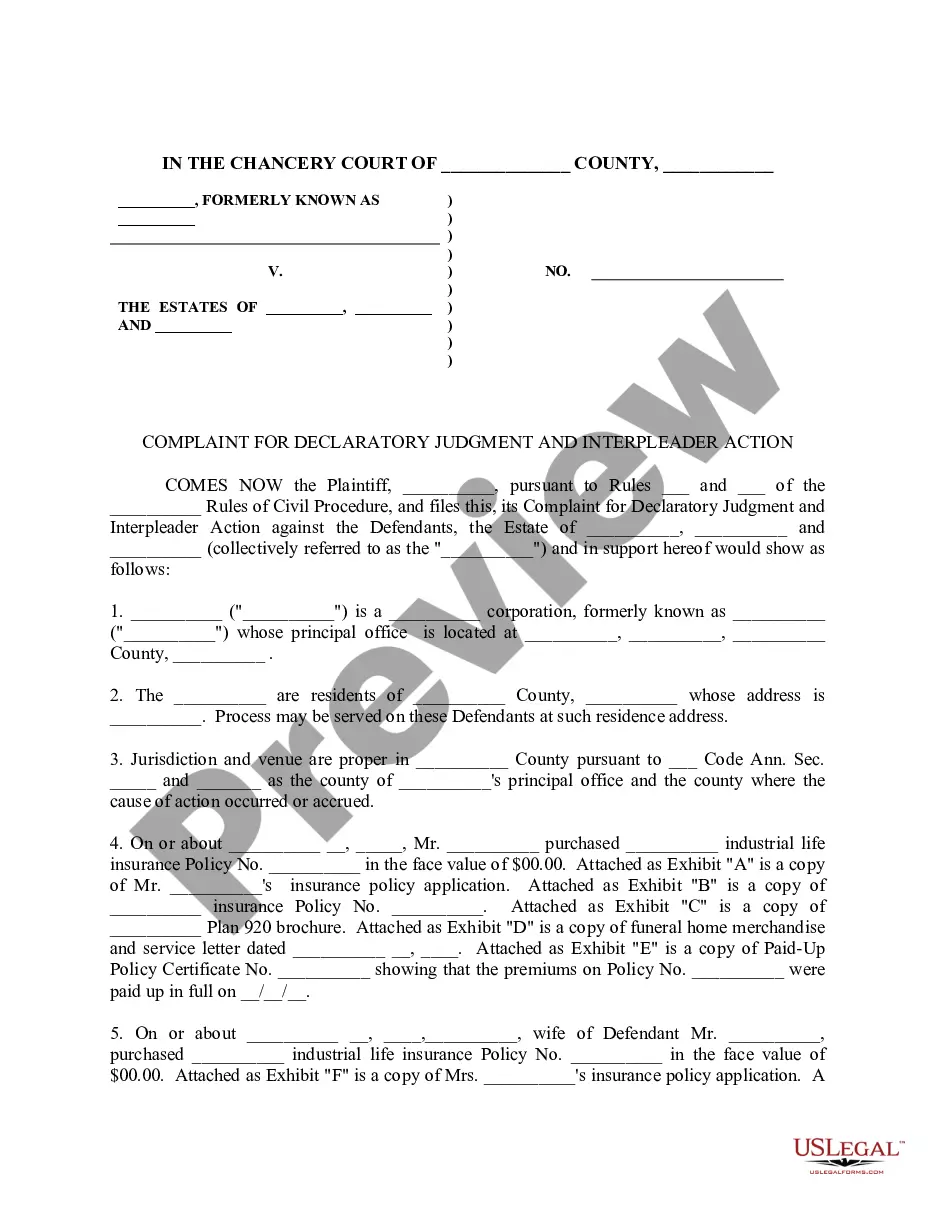
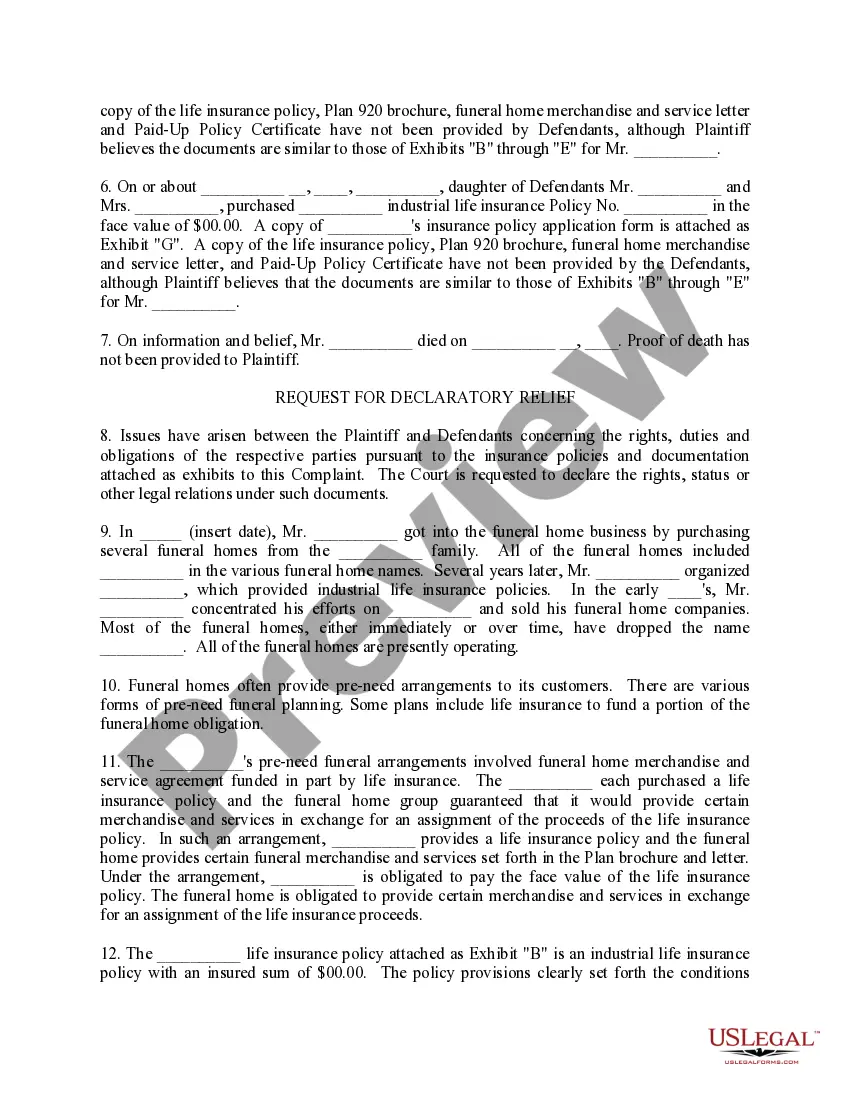
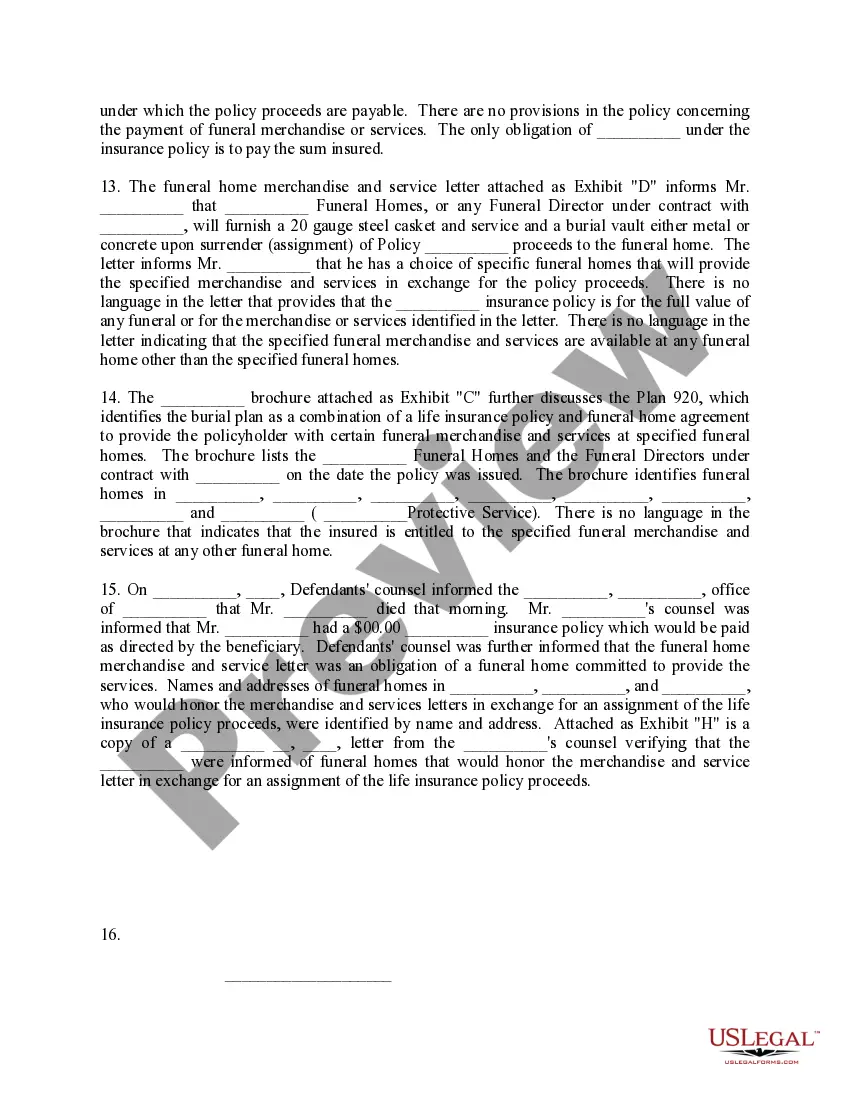
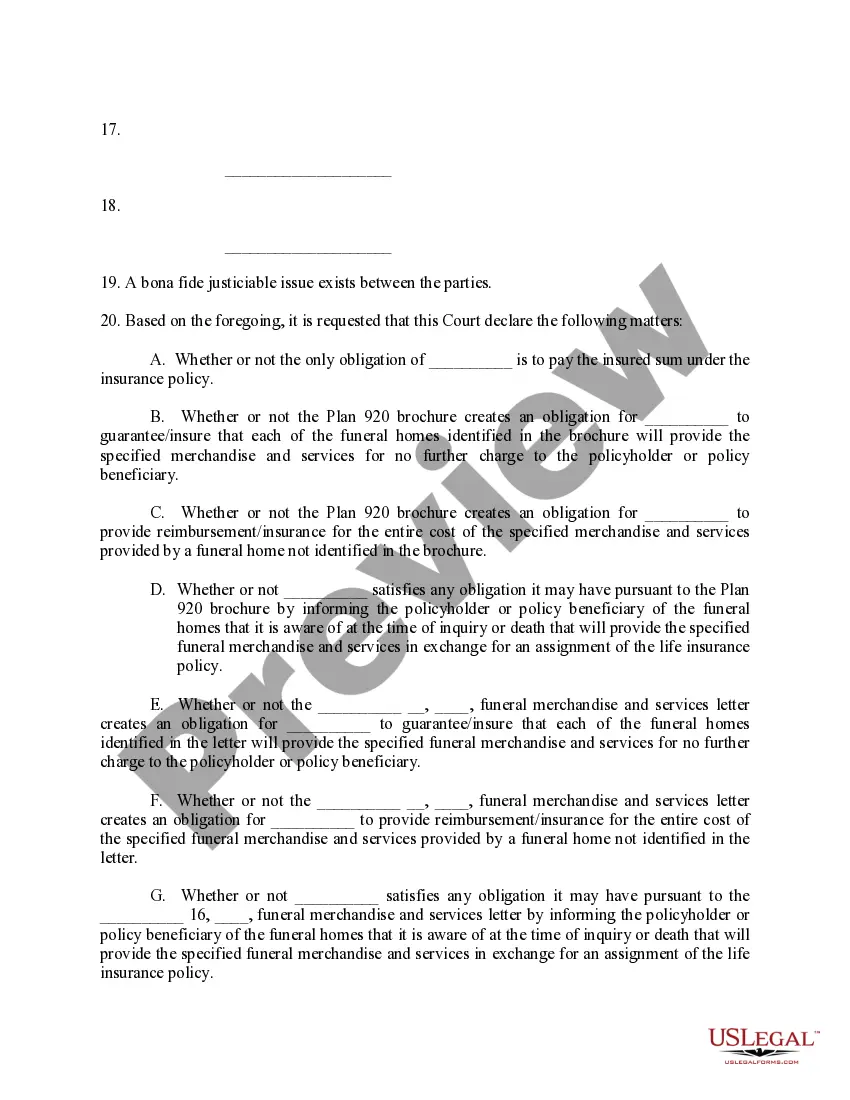
Massachusetts Complaint for Declaratory Judgment and Interpleader Action or Burial Policy
Description
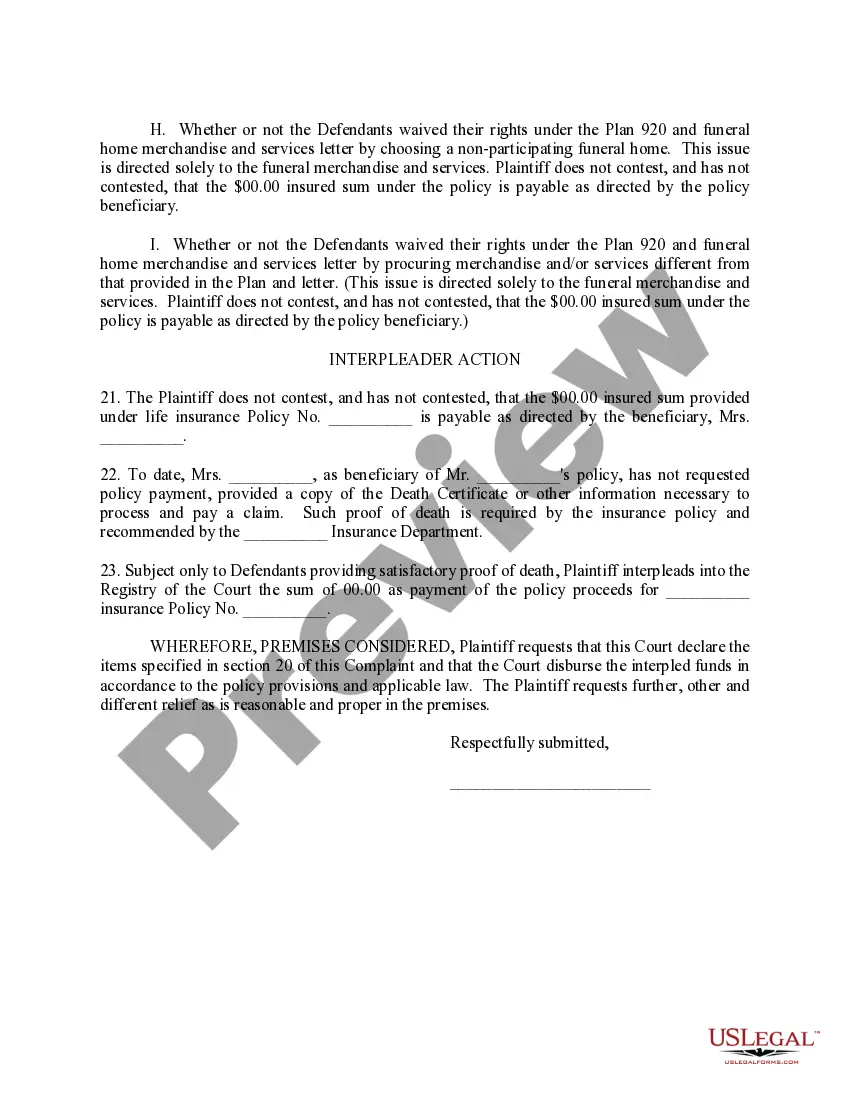
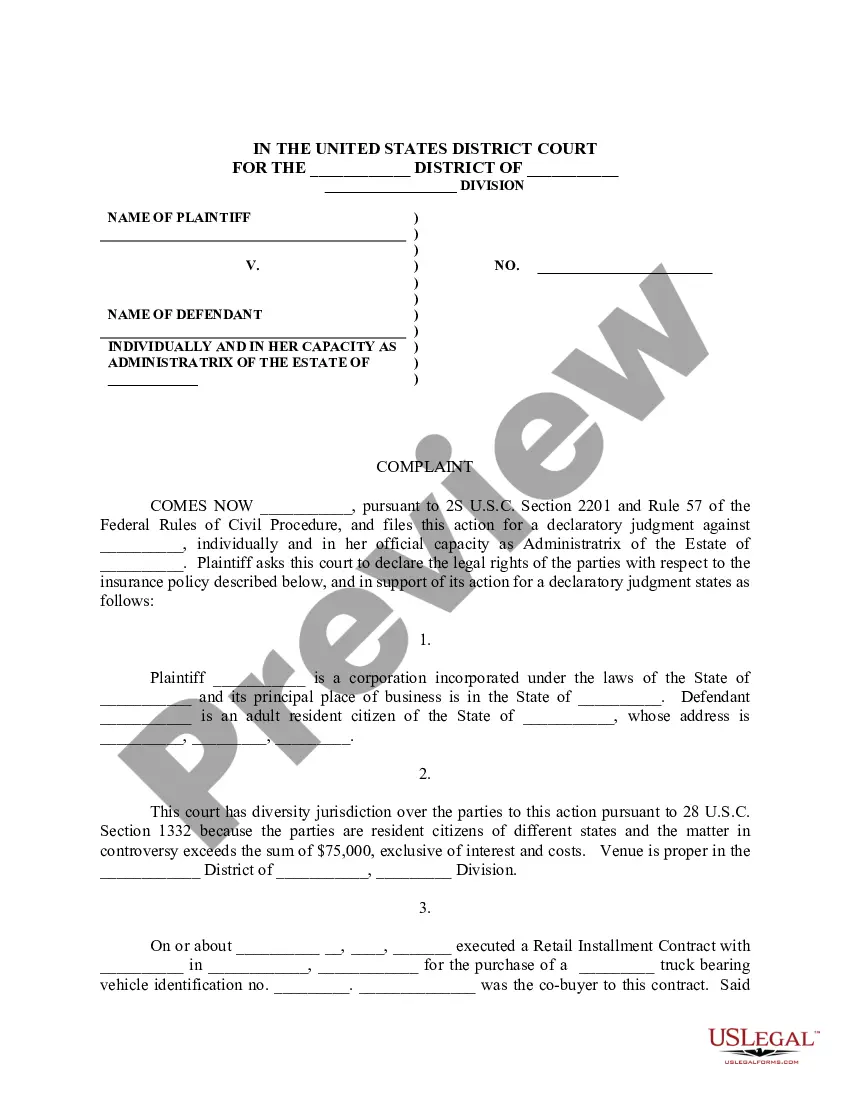


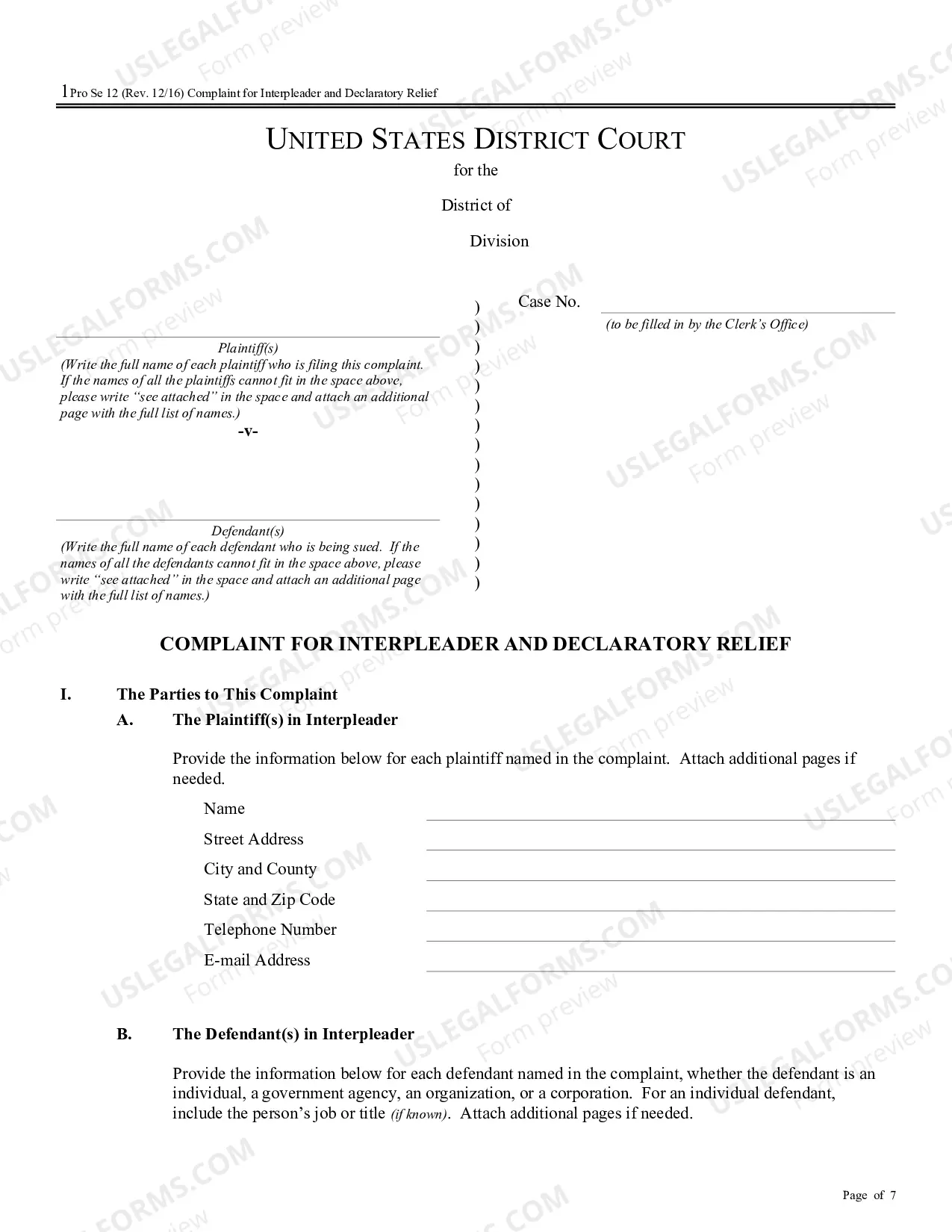
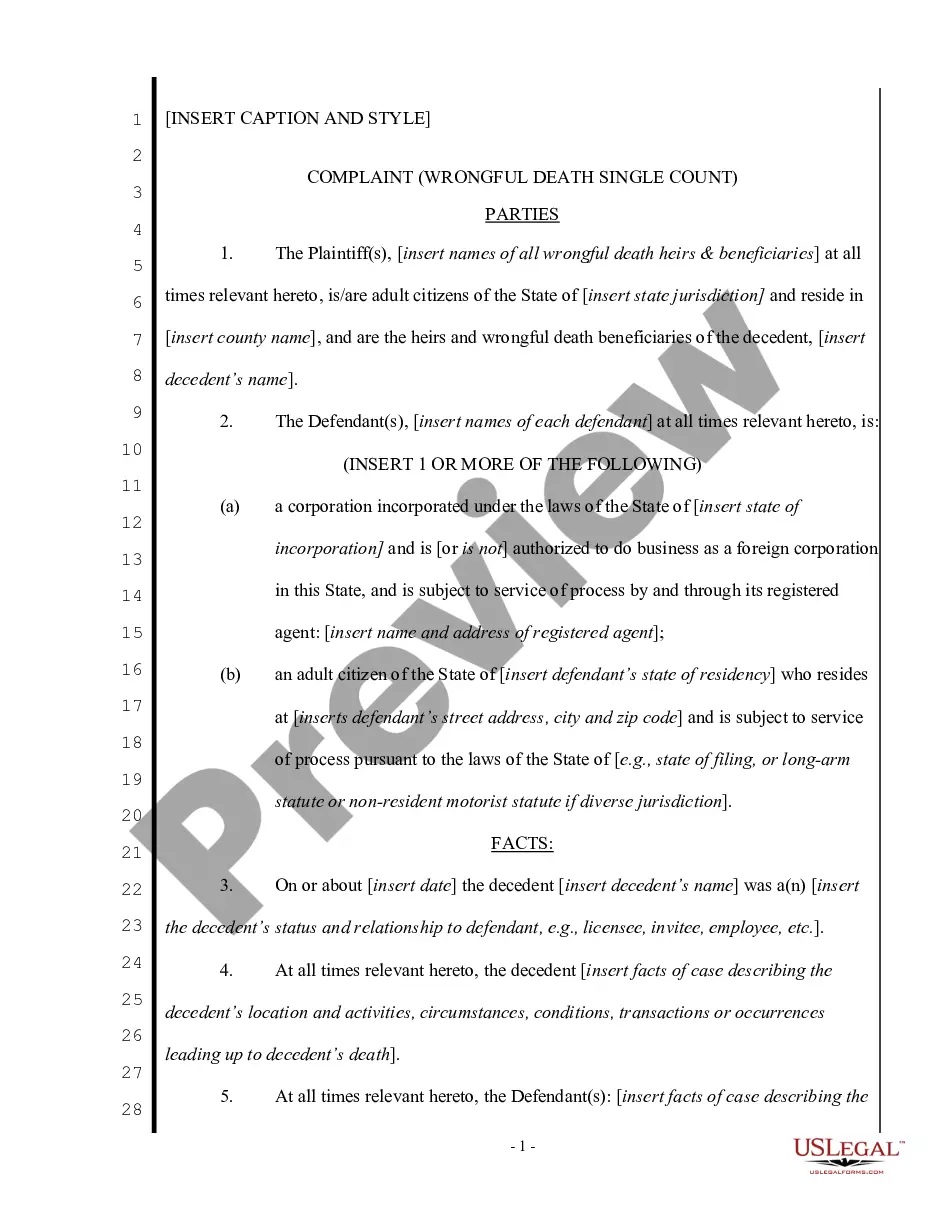
Get your form ready online
Our built-in tools help you complete, sign, share, and store your documents in one place.
Make edits, fill in missing information, and update formatting in US Legal Forms—just like you would in MS Word.
Download a copy, print it, send it by email, or mail it via USPS—whatever works best for your next step.
Sign and collect signatures with our SignNow integration. Send to multiple recipients, set reminders, and more. Go Premium to unlock E-Sign.
If this form requires notarization, complete it online through a secure video call—no need to meet a notary in person or wait for an appointment.
We protect your documents and personal data by following strict security and privacy standards.

Make edits, fill in missing information, and update formatting in US Legal Forms—just like you would in MS Word.

Download a copy, print it, send it by email, or mail it via USPS—whatever works best for your next step.

Sign and collect signatures with our SignNow integration. Send to multiple recipients, set reminders, and more. Go Premium to unlock E-Sign.

If this form requires notarization, complete it online through a secure video call—no need to meet a notary in person or wait for an appointment.

We protect your documents and personal data by following strict security and privacy standards.
Looking for another form?
How to fill out Complaint For Declaratory Judgment And Interpleader Action Or Burial Policy?
If you desire to be thorough, acquire, or print official document templates, utilize US Legal Forms, the largest compilation of legal forms available online.
Employ the site's simple and user-friendly search to find the documents you require.
Various templates for business and personal purposes are categorized by groups and states, or keywords.
Step 4. After you have found the form you need, select the Buy now button. Choose the pricing plan you prefer and provide your information to register for an account.
Step 5. Process the transaction. You can use your Visa or MasterCard or PayPal account to complete the purchase. Step 6. Choose the format of the legal form and download it to your device. Step 7. Complete, modify, print, or sign the Massachusetts Complaint for Declaratory Judgment and Interpleader Action or Burial Policy. Every legal document template you acquire is yours indefinitely. You have access to every form you downloaded within your account. Click the My documents section and select a form to print or download again. Stay competitive and obtain, and print the Massachusetts Complaint for Declaratory Judgment and Interpleader Action or Burial Policy with US Legal Forms. There are millions of professional and state-specific forms you can utilize for your business or personal needs.
- Utilize US Legal Forms to acquire the Massachusetts Complaint for Declaratory Judgment and Interpleader Action or Burial Policy with just a few clicks.
- If you are already a US Legal Forms user, Log In to your account and click the Download button to obtain the Massachusetts Complaint for Declaratory Judgment and Interpleader Action or Burial Policy.
- You can also access forms you previously downloaded in the My documents section of your account.
- If you are using US Legal Forms for the first time, follow the instructions below.
- Step 1. Ensure you have chosen the form for the correct area/state.
- Step 2. Use the Preview option to review the form's content. Don’t forget to read the summary.
- Step 3. If you are not satisfied with the form, use the Search field at the top of the screen to find other versions of the legal form template.
Form popularity
FAQ
Rule 12(f) indicates explicitly that although the court may, sua sponte, clean up the pleadings (literally and figuratively) at any time, it may strike an insufficient defense only if the plaintiff takes the initiative.
A declaratory judgment is a binding judgment from a court defining the legal relationship between parties and their rights in a matter before the court. When there is uncertainty as to the legal obligations or rights between two parties, a declaratory judgment offers an immediate means to resolve this uncertainty.
So what is a "declaratory judgment" lawsuit? This answer is this: It's a lawsuit that a plaintiff files in which the plaintiff asks the court to "declare" through issuance of a "declaratory judgment" what the respective rights of the parties are.
Declaratory Judgment. Within their respective jurisdictions, the Massachusetts Supreme Judicial Court (the ?SJC?), Superior Court and Probate Court (?Courts?) may make binding declarations of right, duty, status and other legal relations (?declaratory relief?) between the parties to an actual controversy.
The plaintiff may assert any claim against the third-party defendant arising out of the transaction or occurrence that is the subject matter of the plaintiff's claim against the third-party plaintiff, and the third-party defendant thereupon shall assert his defenses as provided in Rule 12 and his counterclaims and ...
The benefit of a declaratory judgment is that it prevents lawsuits that are likely to be unsuccessful, which saves the courts, and ultimately taxpayers, resources and time. A policyholder that receives an unfavorable declaratory judgment is unlikely to file a lawsuit, as the suit is much more likely to be dismissed.
To establish federal jurisdiction in a declaratory judgment action, two conditions must be satisfied. First, is the constitutional inquiry - the case must be a 'case or controversy' pursuant to Article III of the US Constitution. Second is the prudential inquiry ? declaratory relief must be appropriate.
A declaratory judgment is a binding judgment from a court defining the legal relationship between parties and their rights in a matter before the court. When there is uncertainty as to the legal obligations or rights between two parties, a declaratory judgment offers an immediate means to resolve this uncertainty.