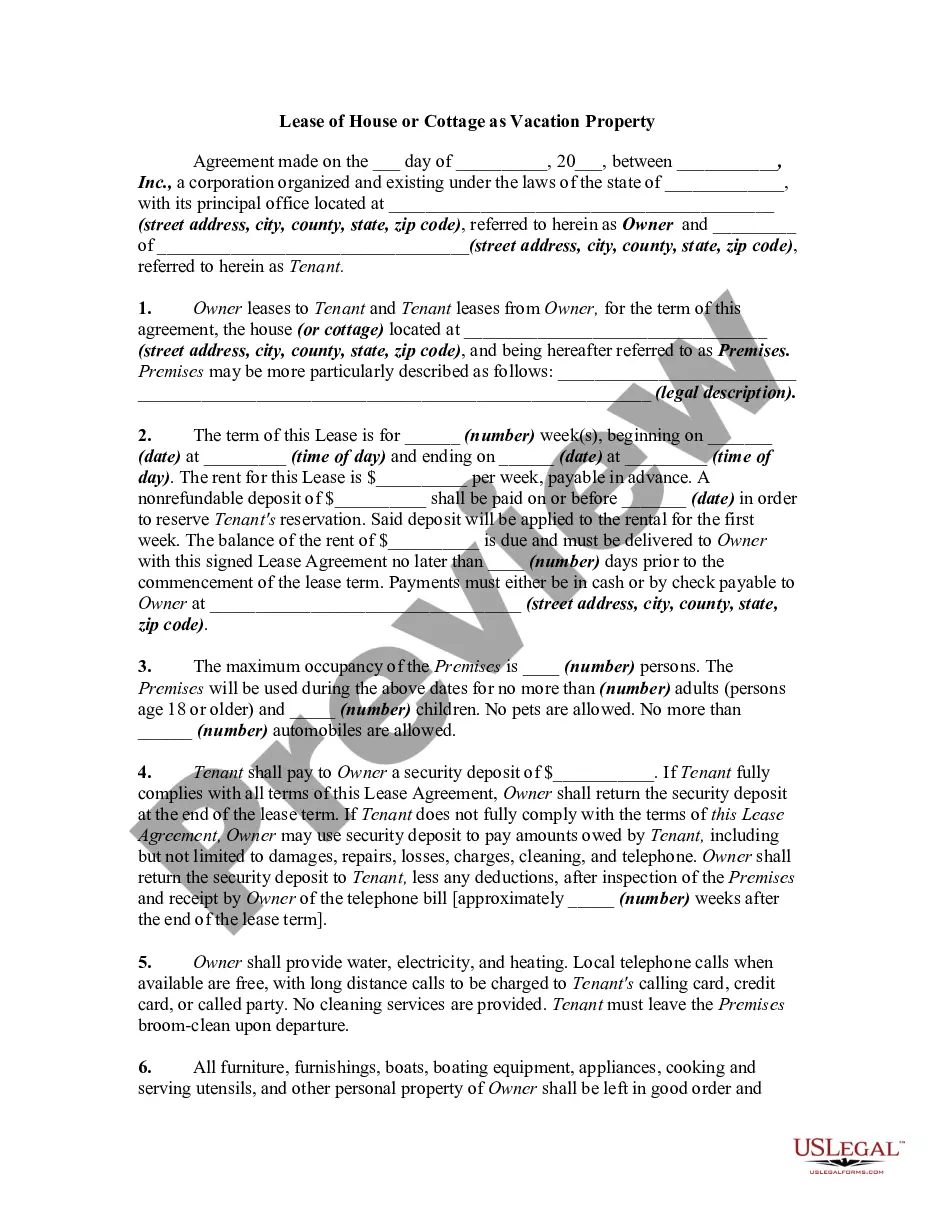
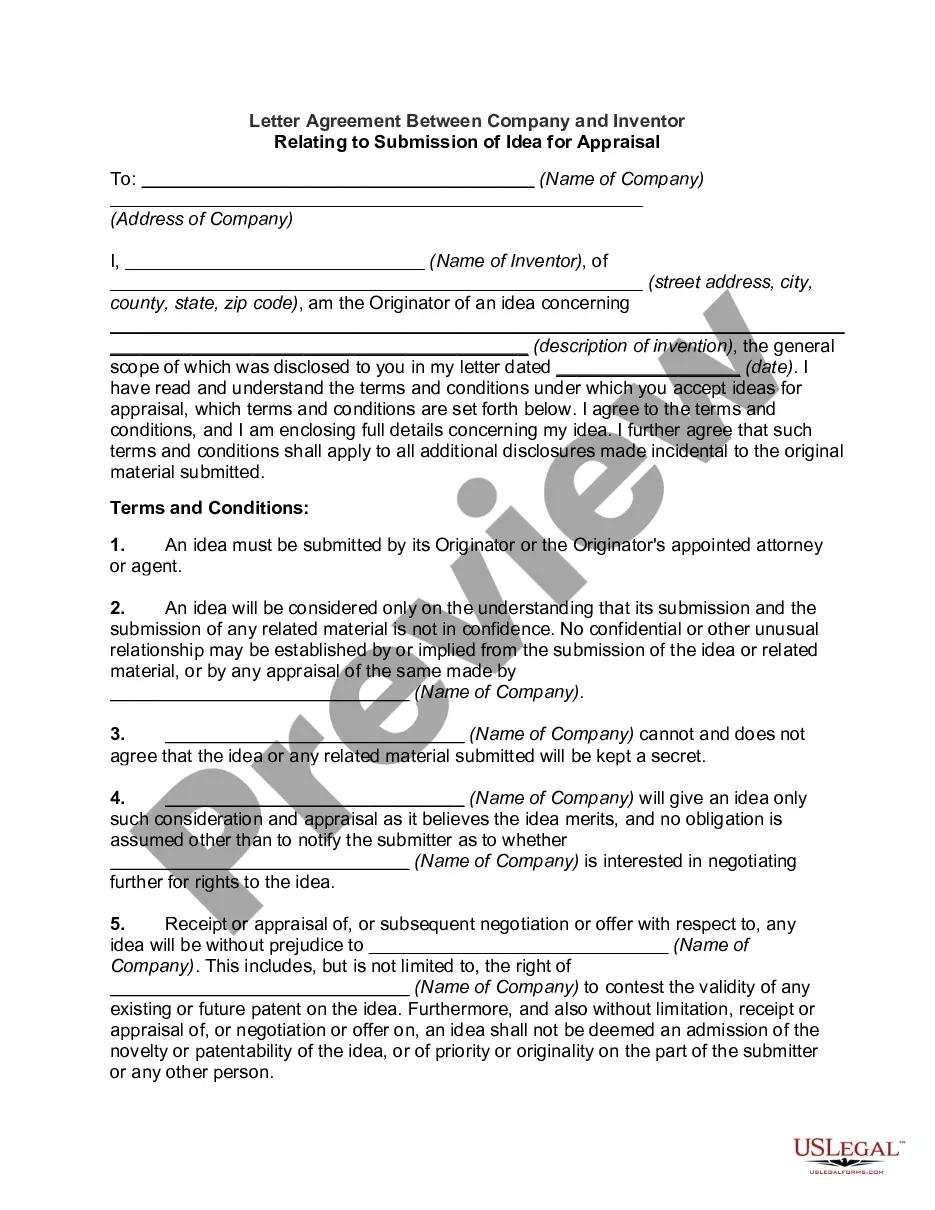
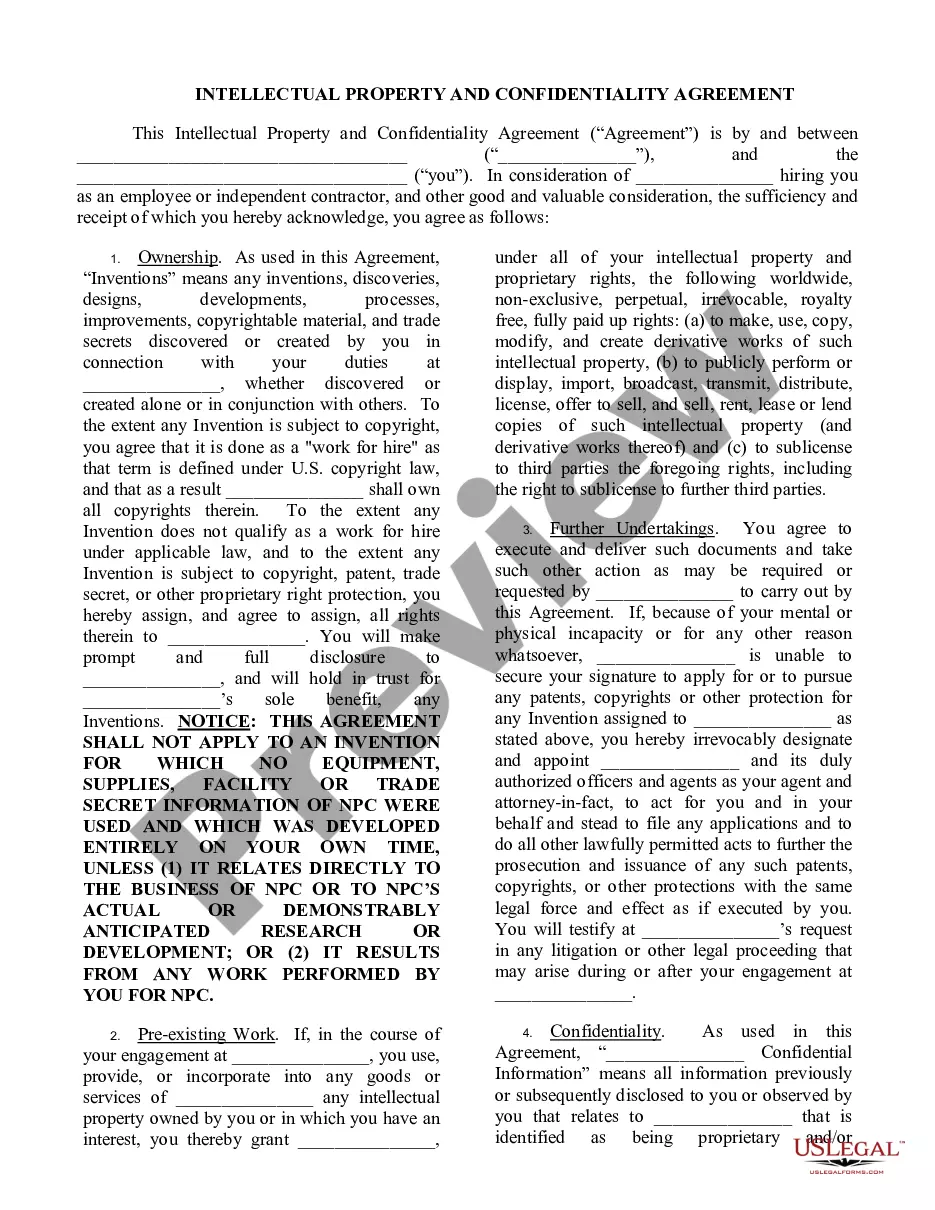
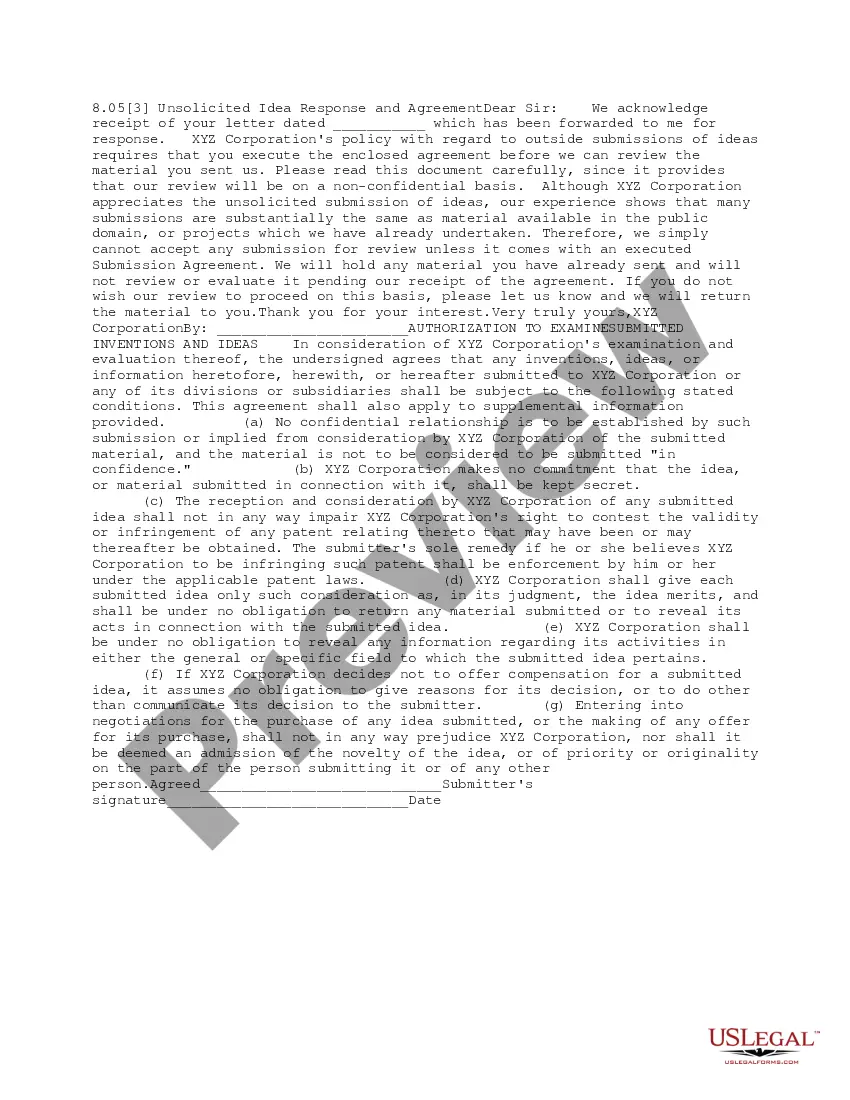
Massachusetts Idea Submission Policy and Agreement
Description
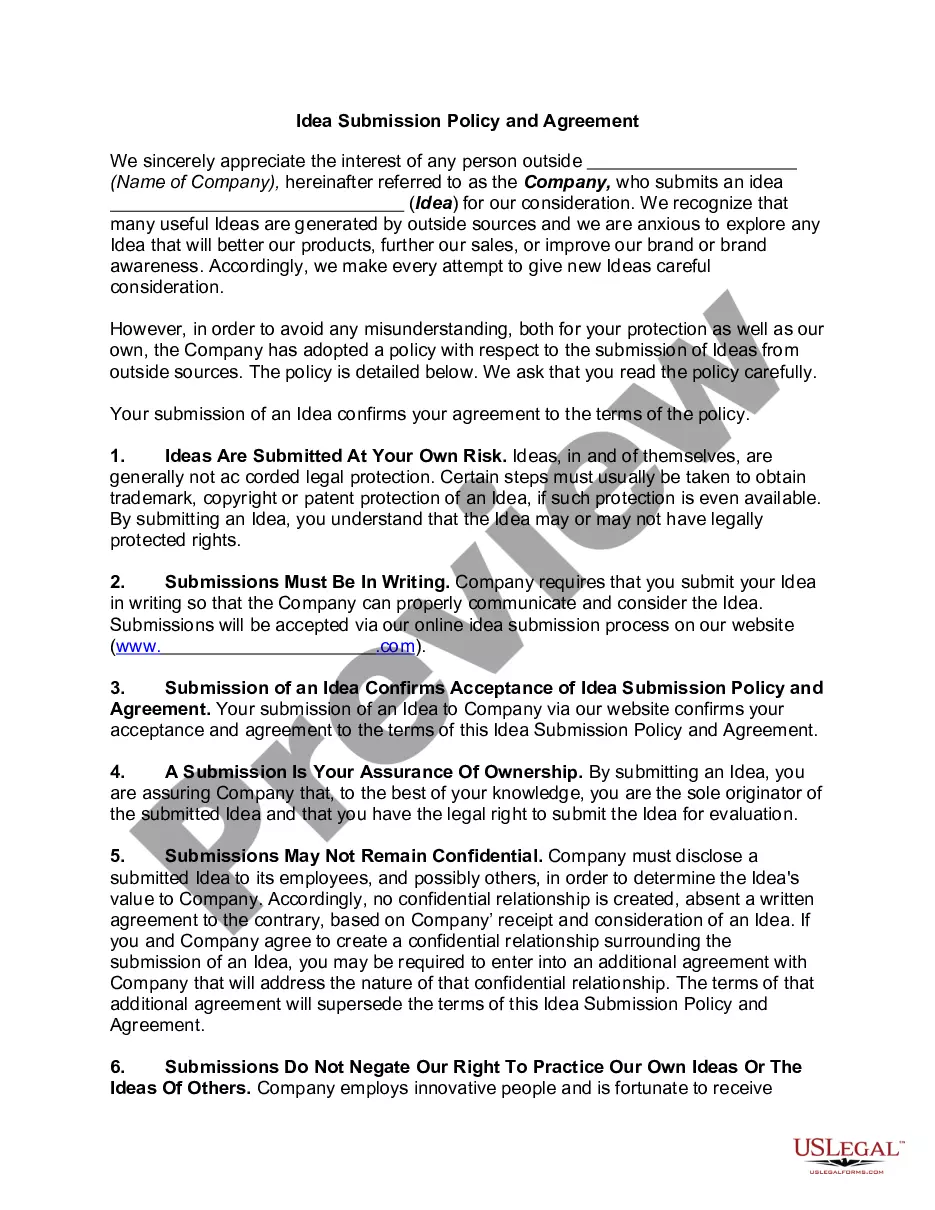
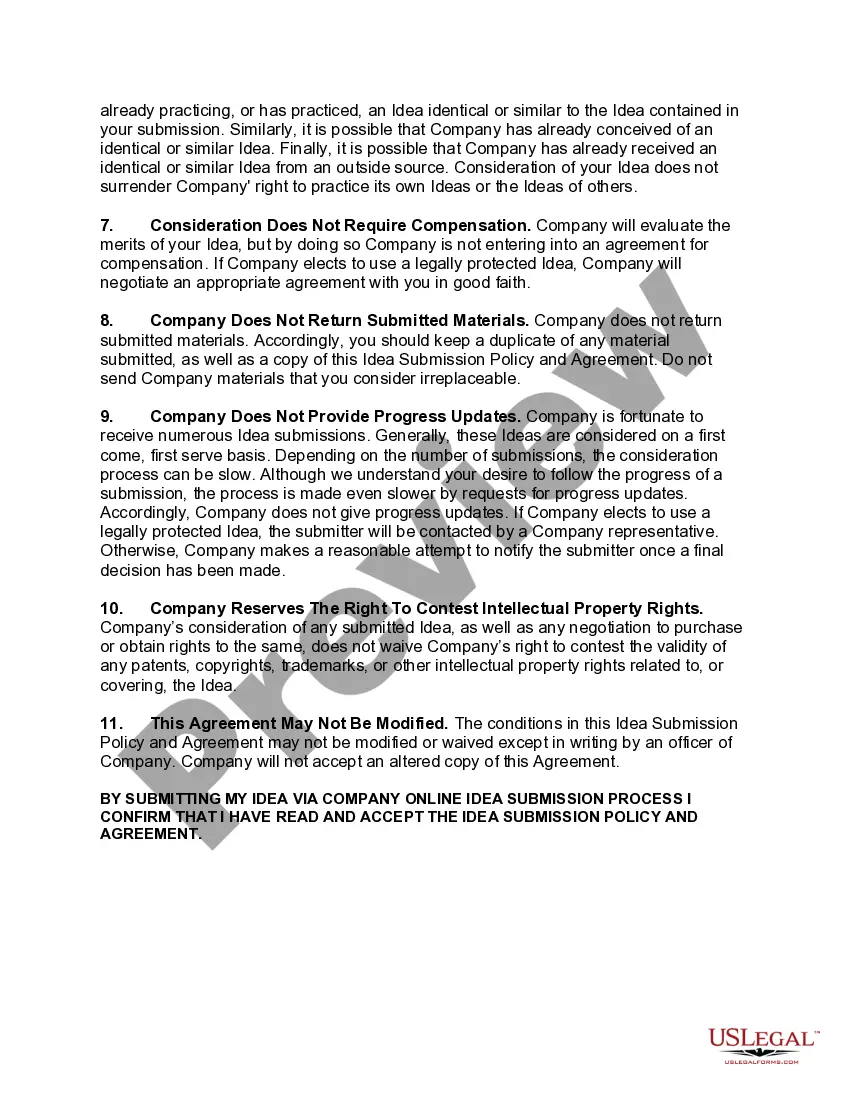

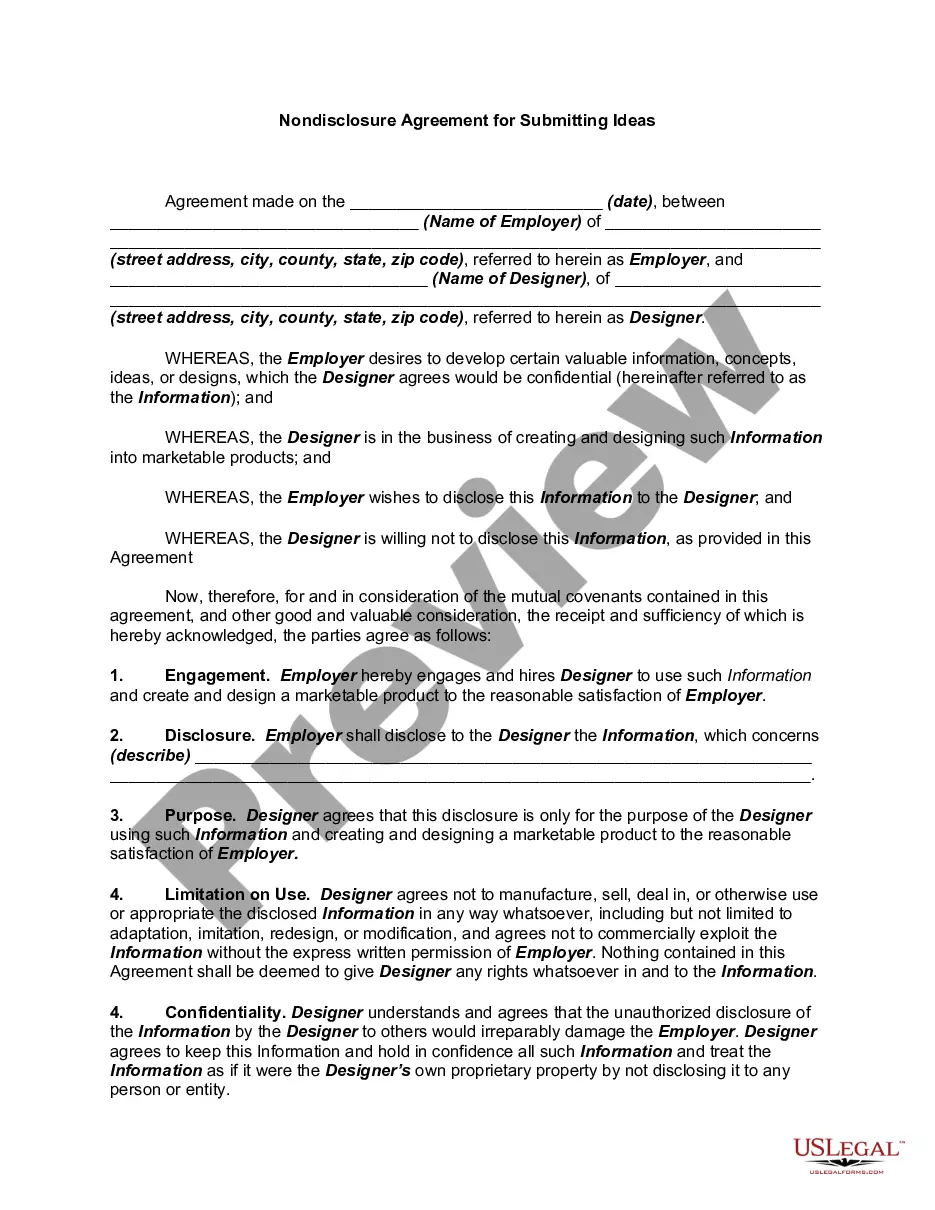
Get your form ready online
Our built-in tools help you complete, sign, share, and store your documents in one place.
Make edits, fill in missing information, and update formatting in US Legal Forms—just like you would in MS Word.
Download a copy, print it, send it by email, or mail it via USPS—whatever works best for your next step.
Sign and collect signatures with our SignNow integration. Send to multiple recipients, set reminders, and more. Go Premium to unlock E-Sign.
If this form requires notarization, complete it online through a secure video call—no need to meet a notary in person or wait for an appointment.
We protect your documents and personal data by following strict security and privacy standards.

Make edits, fill in missing information, and update formatting in US Legal Forms—just like you would in MS Word.

Download a copy, print it, send it by email, or mail it via USPS—whatever works best for your next step.

Sign and collect signatures with our SignNow integration. Send to multiple recipients, set reminders, and more. Go Premium to unlock E-Sign.

If this form requires notarization, complete it online through a secure video call—no need to meet a notary in person or wait for an appointment.

We protect your documents and personal data by following strict security and privacy standards.
Looking for another form?
How to fill out Idea Submission Policy And Agreement?
It is feasible to spend hours online searching for the official document template that aligns with the federal and state criteria you require.
US Legal Forms offers thousands of legal documents that can be reviewed by professionals.
It's easy to download or generate the Massachusetts Idea Submission Policy and Agreement from my service.
If you wish to find another edition of the form, use the Search field to locate the template that meets your requirements.
- If you possess a US Legal Forms account, you can Log In and then click the Obtain button.
- Subsequently, you can fill out, modify, generate, or sign the Massachusetts Idea Submission Policy and Agreement.
- Every legal document template you purchase is yours permanently.
- To retrieve another copy of the acquired form, visit the My documents tab and click the appropriate button.
- When using the US Legal Forms website for the first time, follow the simple instructions below.
- First, ensure that you have selected the correct document template for the state or city of your choice.
- Review the form description to verify that you have chosen the correct document.
Form popularity
FAQ
Ideation is the creative process of generating, developing, and communicating new ideas, where an idea is understood as a basic element of thought that can be either visual, concrete, or abstract.
Part C of IDEA provides for early intervention (EI) services for at-risk children from birth to their third birthdays. EI services assist young children with atypical physical, cognitive, communication, adaptive and social or emotional development.
Following are the six major principles of the IDEA, focusing on students' rights and the responsibilities of public schools to children with disabilities.Free Appropriate Public Education.Appropriate Evaluation.Individualized Education Plan.Least Restrictive Environment.Parent Participation.Procedural Safeguards.
The Six Pillars of IDEAIndividualized Education Program (IEP). The roadmap of the student's educational program.Free Appropriate Public Education (FAPE).Least Restrictive Environment (LRE).Appropriate Evaluation.Parent and Teacher Participation.Procedural Safeguards.
These six elements are: Individualized Education Program (IEP), Free and Appropriate Public Education (FAPE), Least Restrictive Environment (LRE), Appropriate Evaluation, Parent and Teacher Participation, and Procedural Safeguards.
These six elements are: Individualized Education Program (IEP); Free and Appropriate Public Education (FAPE); Least Restrictive Environment (LRE); Appropriate Evaluation; Parent and Teacher Participation; and Procedural Safeguards.
IDEA Essential ComponentsFree Appropriate Public Education (FAPE)Appropriate Evaluation (ETR)Individualized Education Program (IEP)Least Restrictive Environment (LRE)Parent Participation.Procedural Safeguards.
The term includes impairments caused by a congenital anomaly, impairments caused by disease (e.g., poliomyelitis, bone tuberculosis), and impairments from other causes (e.g., cerebral palsy, amputations, and fractures or burns that cause contractures).
The IDEA requires: All children with disabilities are to be given a free appropriate public education (FAPE). Education and Related Services must be provided to children up to the age of 21 (California extends this to age 22). Education includes academic as well as self-help and vocational skills.
What are the 4 Parts of IDEA?Part A (General Provisions)Part B (Special Education Services)Part C (Early Intervention Services)Part D (National Activities to Improve Education of Children with Disabilities)Principle 1 Free Appropriate Public Education (FAPE)Principle 2 Appropriate Evaluation.More items...