Massachusetts Nondisclosure Agreement Concerning Discussions Regarding Possible Business Contractual Agreement Dealing with Software Development
Description
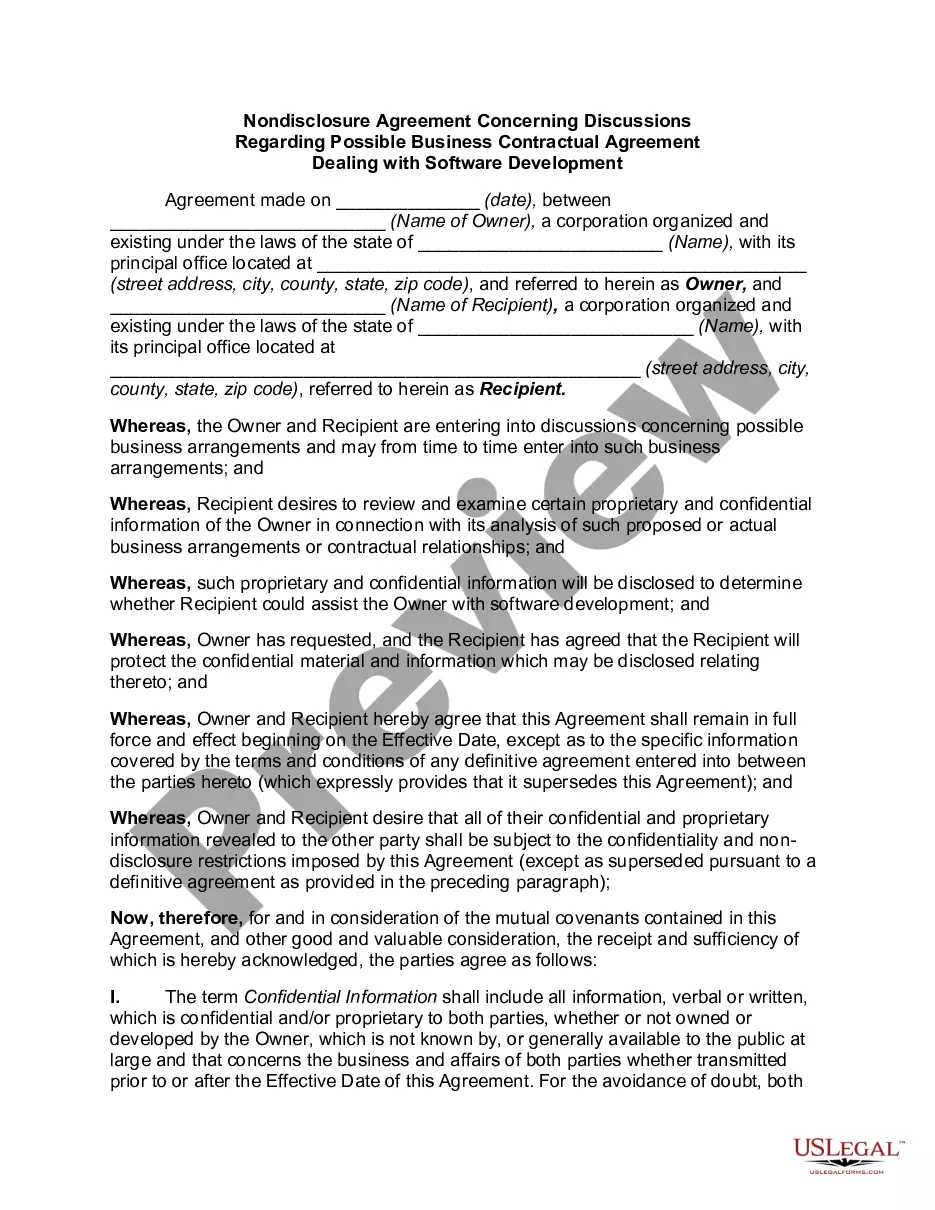
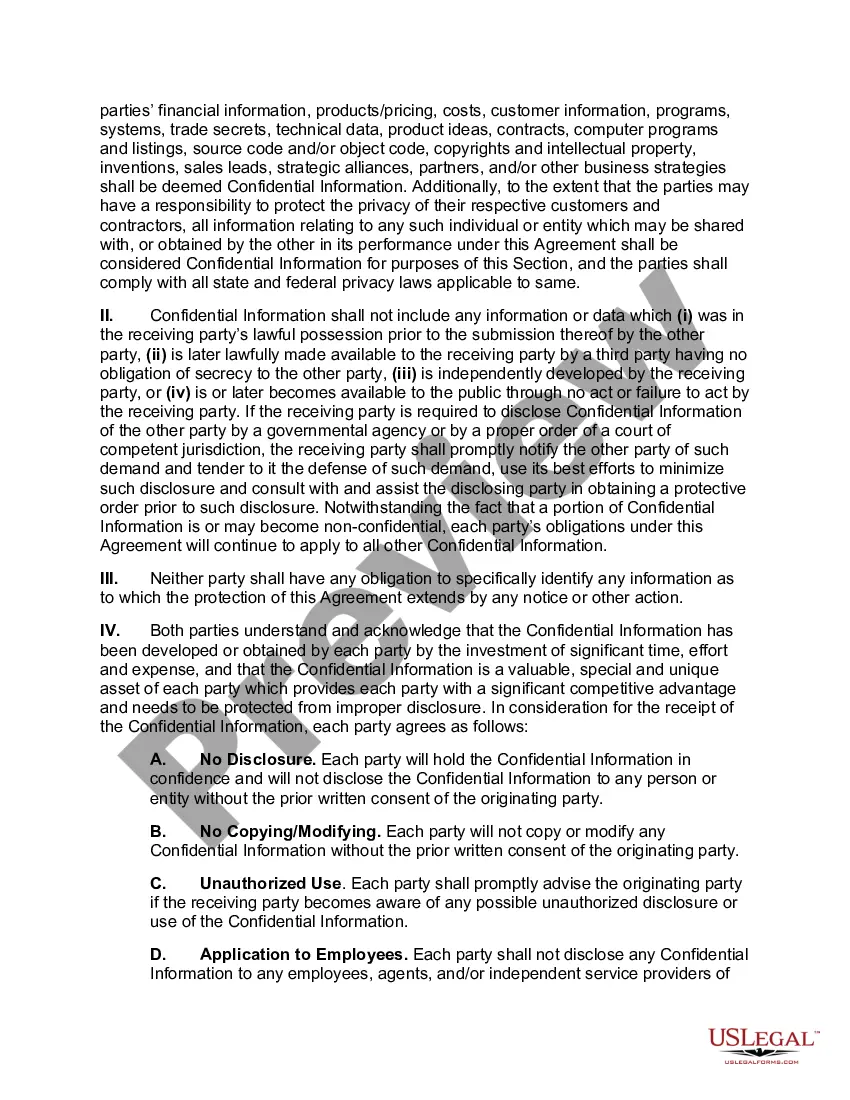
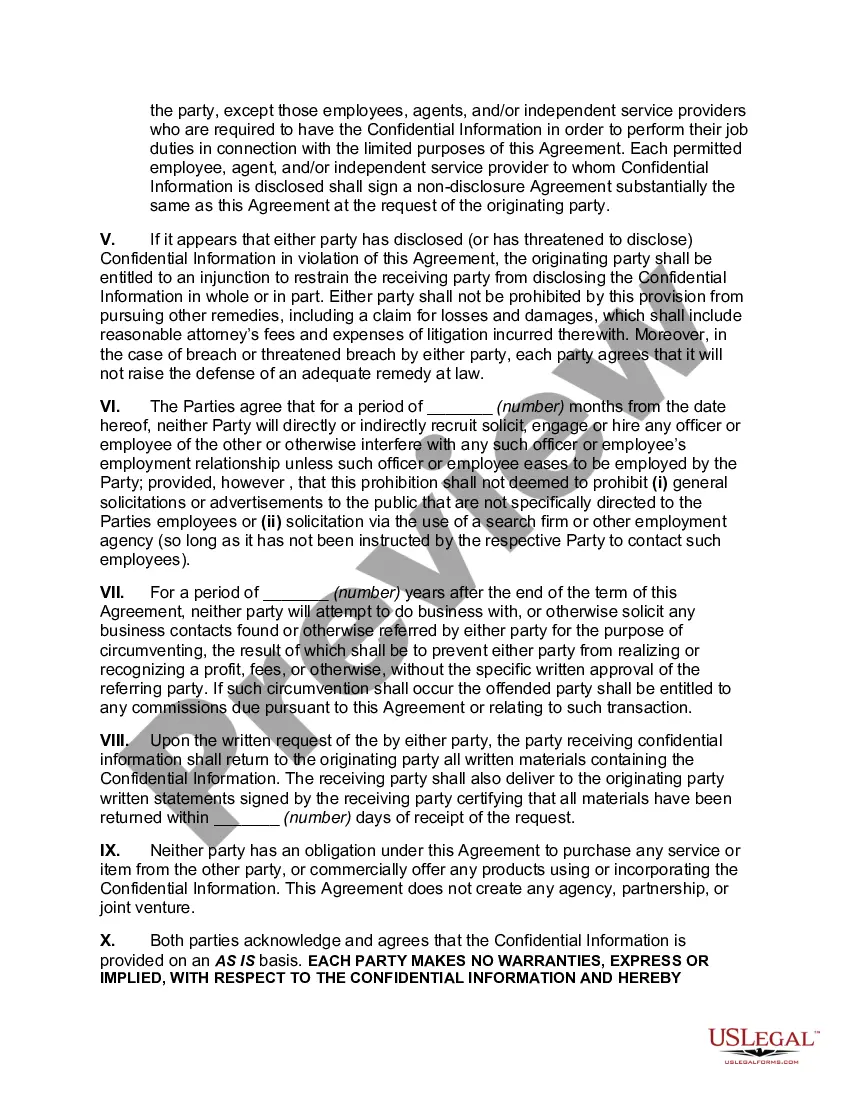

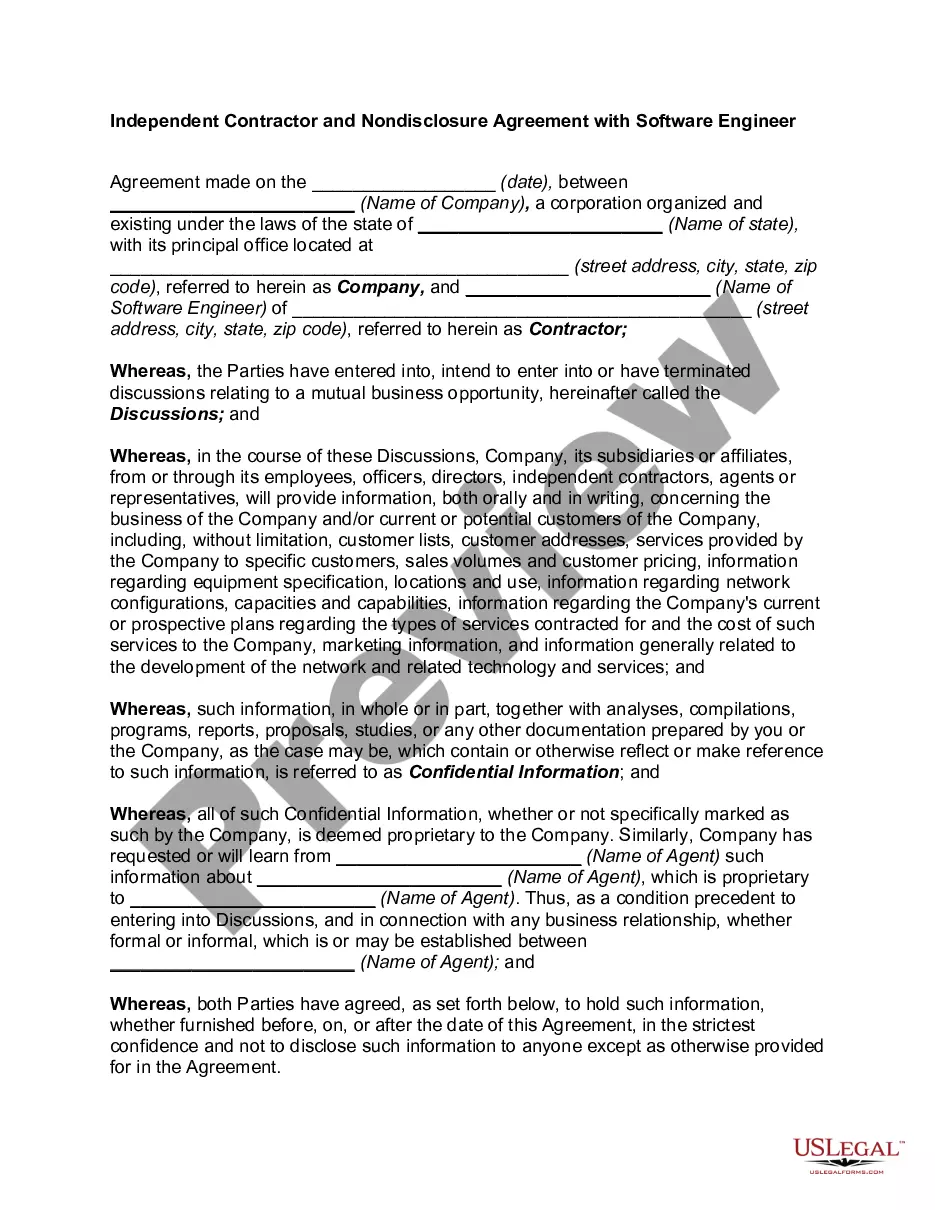
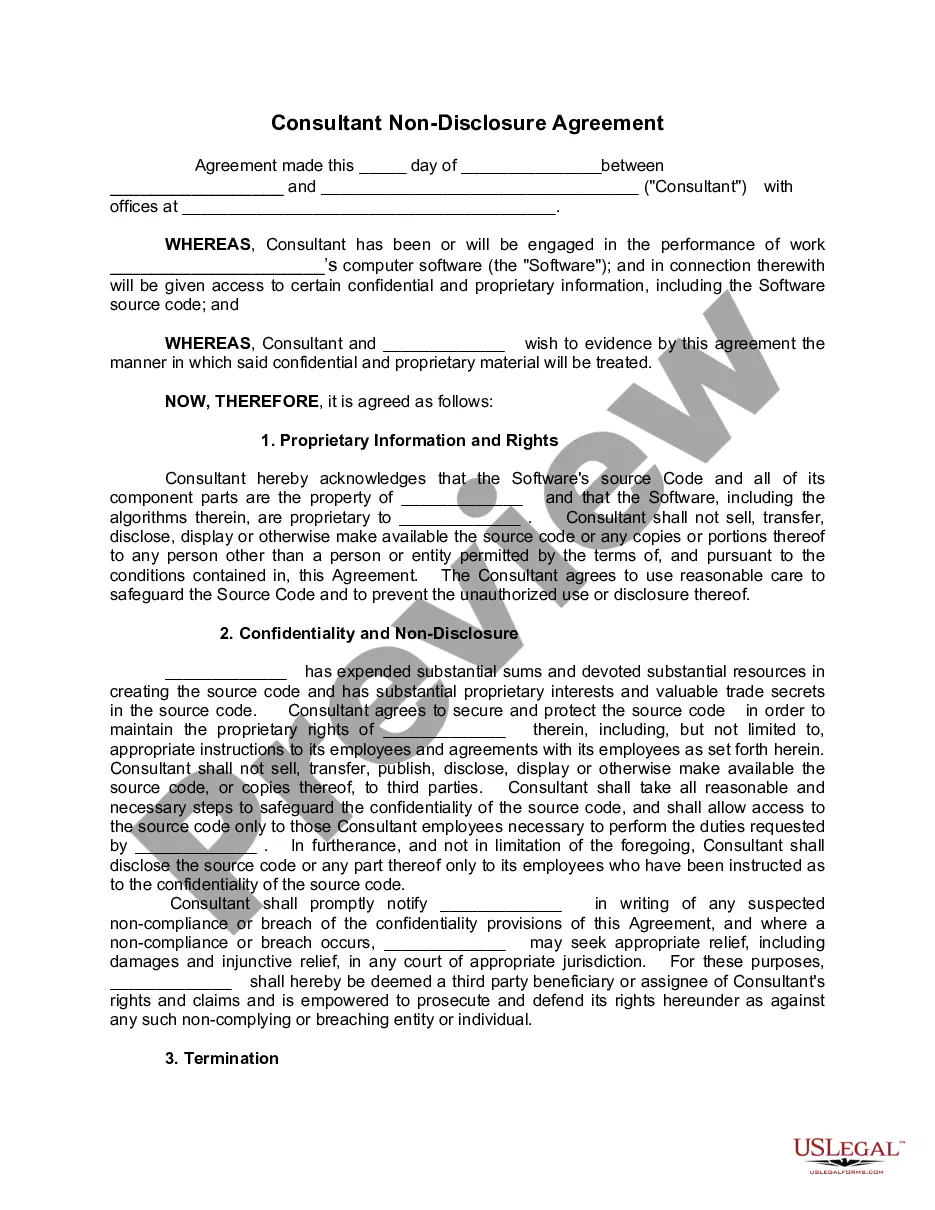
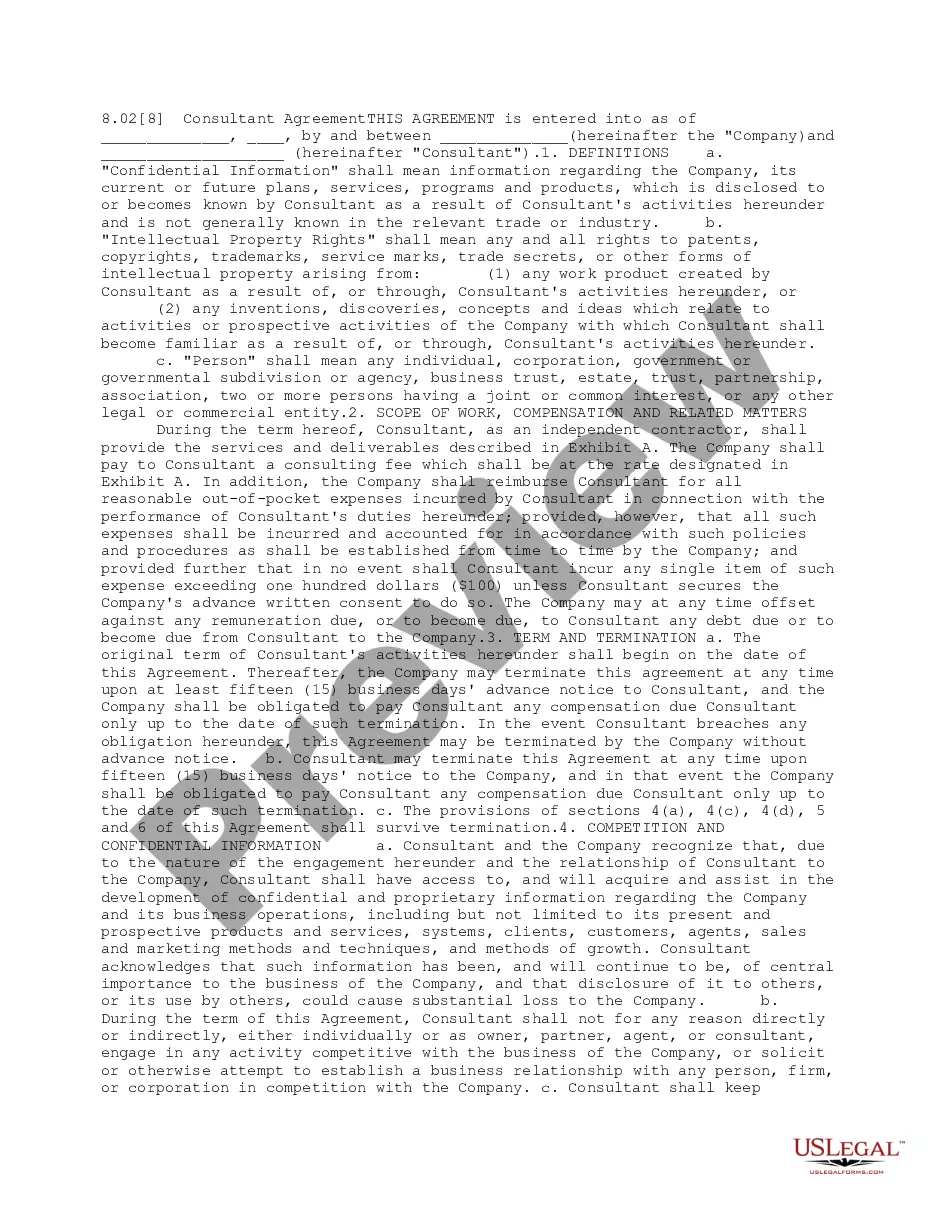
How to fill out Nondisclosure Agreement Concerning Discussions Regarding Possible Business Contractual Agreement Dealing With Software Development?
Finding the appropriate legal document template can be challenging.
Certainly, there are numerous designs available online, but how can you find the legal template you require.
Utilize the US Legal Forms website. This service offers thousands of templates, including the Massachusetts Nondisclosure Agreement Concerning Discussions Regarding Potential Business Contractual Agreement Related to Software Development, which you can use for both business and personal needs.
If you are a new user of US Legal Forms, here are simple instructions you can follow: First, ensure you have selected the correct form for your city/region. You can review the form using the Preview button and read the form description to make sure it suits your needs. If the form does not meet your requirements, use the Search area to find the appropriate type. Once you are confident that the form is correct, click the Purchase now button to acquire the form. Choose the pricing plan you want and enter the required information. Create your account and complete the purchase using your PayPal account or credit card. Select the file format and download the legal document template to your device. Fill out, edit, print, and sign the acquired Massachusetts Nondisclosure Agreement Concerning Discussions Regarding Possible Business Contractual Agreement Dealing with Software Development. US Legal Forms is the largest collection of legal templates where you can find various document designs. Use the service to obtain properly formatted paperwork that meets state requirements.
- All templates are reviewed by professionals.
- They comply with federal and state regulations.
- If you are already registered, Log In to your account and click the Obtain button to access the Massachusetts Nondisclosure Agreement Concerning Discussions Regarding Possible Business Contractual Agreement Dealing with Software Development.
- Use your account to search for the legal documents you have previously ordered.
- Visit the My documents tab in your account to obtain another copy of the documents you need.
Form popularity
FAQ
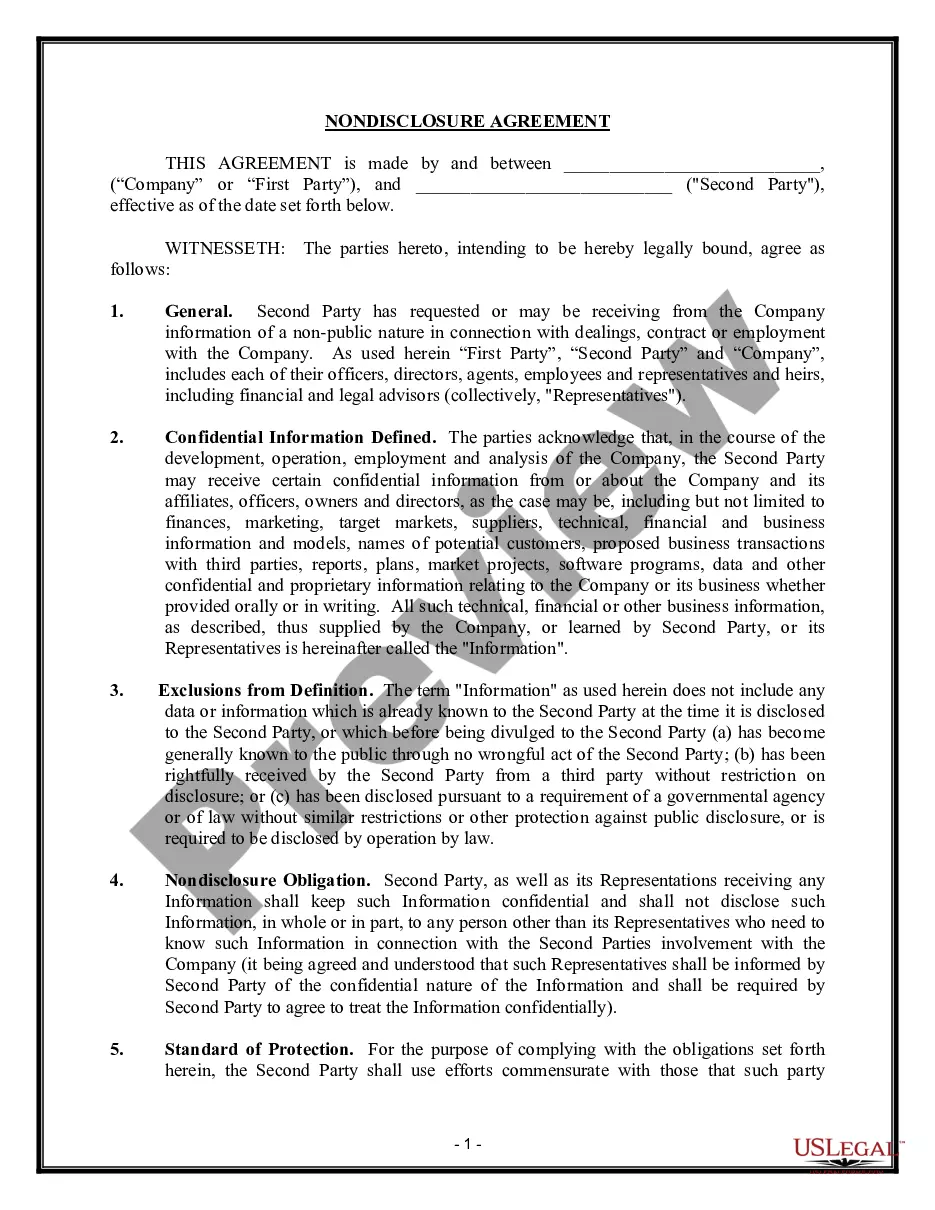
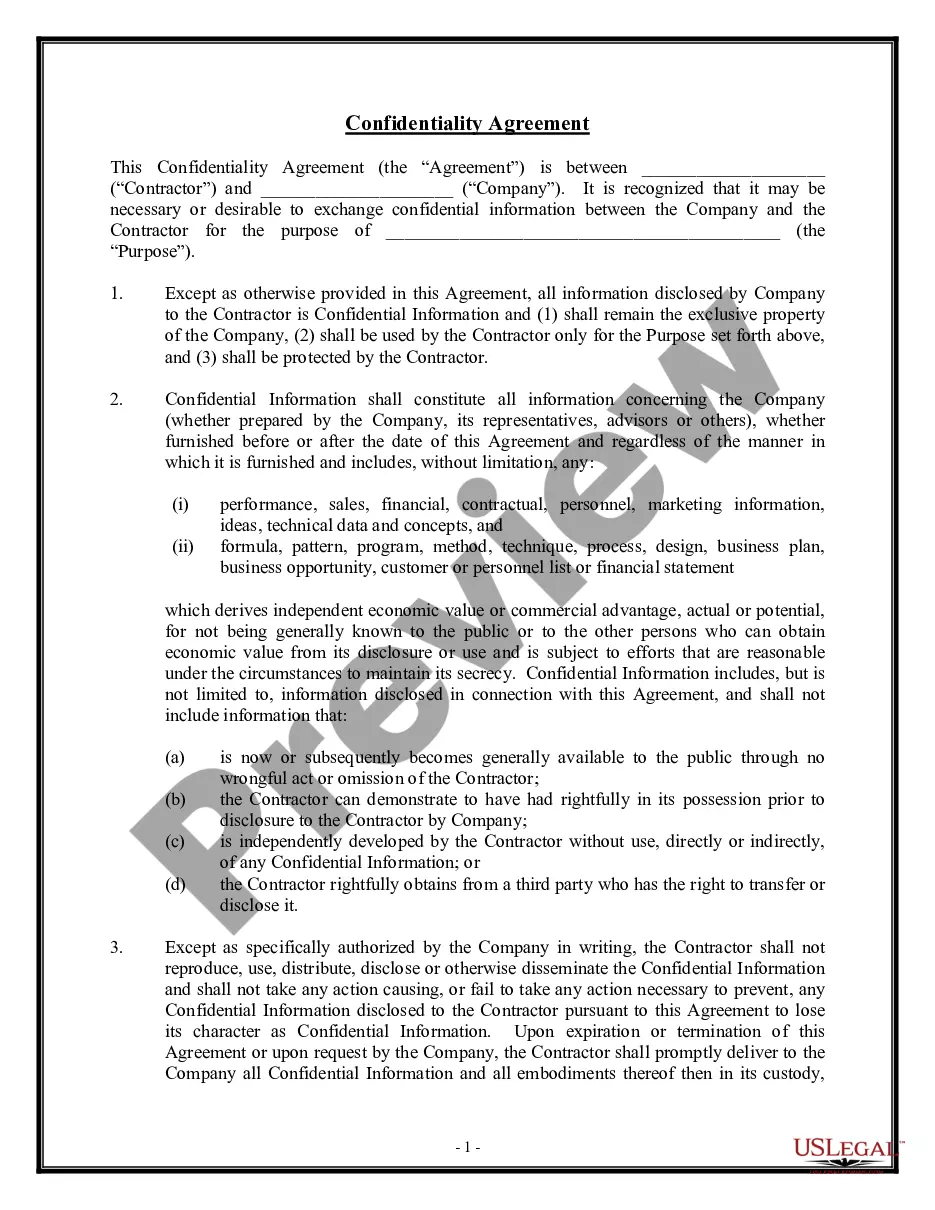
The Key Elements of Non-Disclosure AgreementsIdentification of the parties.Definition of what is deemed to be confidential.The scope of the confidentiality obligation by the receiving party.The exclusions from confidential treatment.The term of the agreement.
Your actions do not amount to breach of contract, so your employer has no legal standing; or, The non-disclosure agreement is not enforceable because it does not comply with Massachusetts law.
Any agreement between a Massachusetts employer and employee that requires the worker to not disclose certain information learned within the workplace environment is a non-disclosure agreement.
Language that is too broad, unreasonable or onerous can void an agreement. Courts will also challenge or invalidate agreements that are overly expansive, oppressive or try to cover non-confidential information. Subsequently, if the information becomes public knowledge, an NDA can no longer be enforced.
NDAs, or non-disclosure agreements, are legally enforceable contracts that create a confidential relationship between a person who has sensitive information and a person who will gain access to that information. A confidential relationship means one or both parties has a duty not to share that information.
Key elements of Non-disclosure AgreementIdentification of the parties that are signing the agreement. A precise definition of what is considered confidential under the agreement. The clear reason as to why the information is shared and for what purpose.
Violating an NDA can have serious consequences NDAs are legally binding contracts. If an employee has violated an NDA, then the company may take legal action. The most common claims in NDA lawsuits include: Breach of the contract (such as the breach of NDA)
Requirements for an NDAThe names of the parties to the agreement.A definition of what constitutes confidential information in this case.Any exclusions from confidentiality.A statement of the appropriate uses of the information to be revealed.The time periods involved.Miscellaneous provisions.
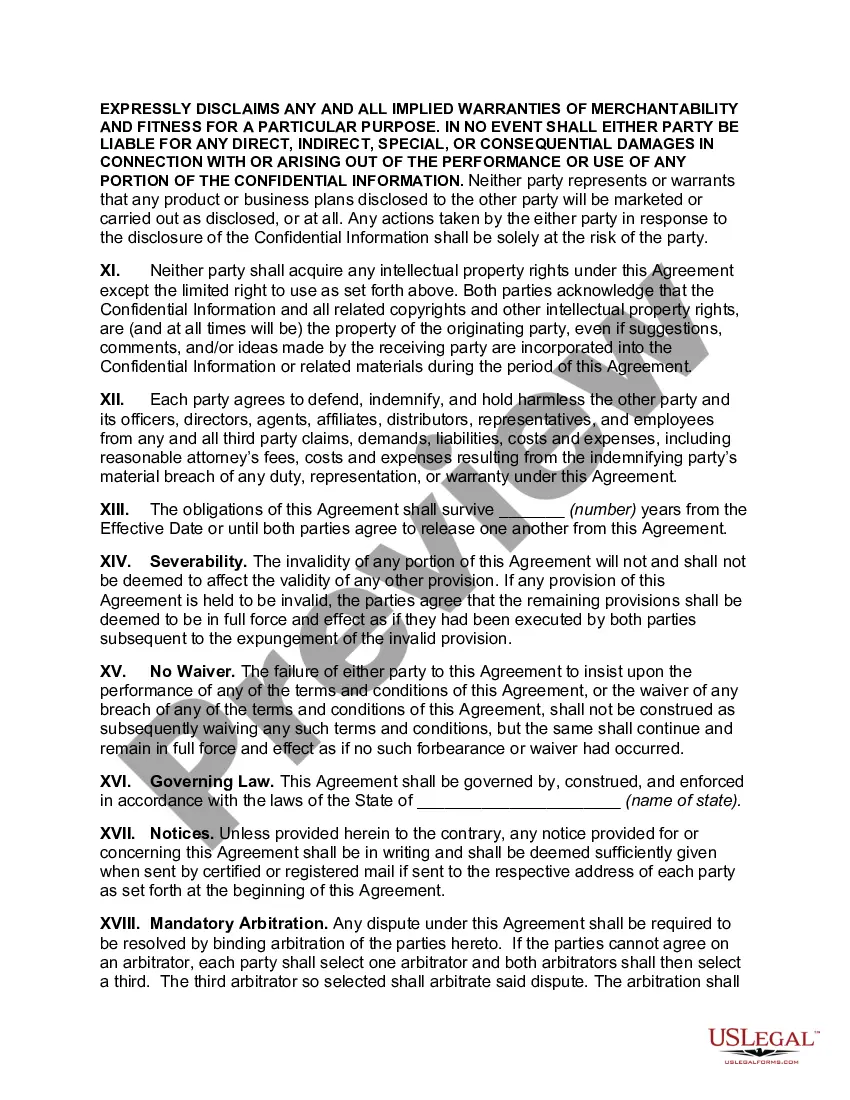
To create a legally-binding non-disclosure contract, you must use specific language when defining confidential information, parties, and scope. Broad language that can be interpreted many ways may not hold up in a legal dispute.
Typical exceptions to the definition of confidential information include (i) information publicly known or in the public domain prior to the time of disclosure, (ii) information publicly known and made generally available after disclosure through no action or inaction of the recipient, (ii) information already in the