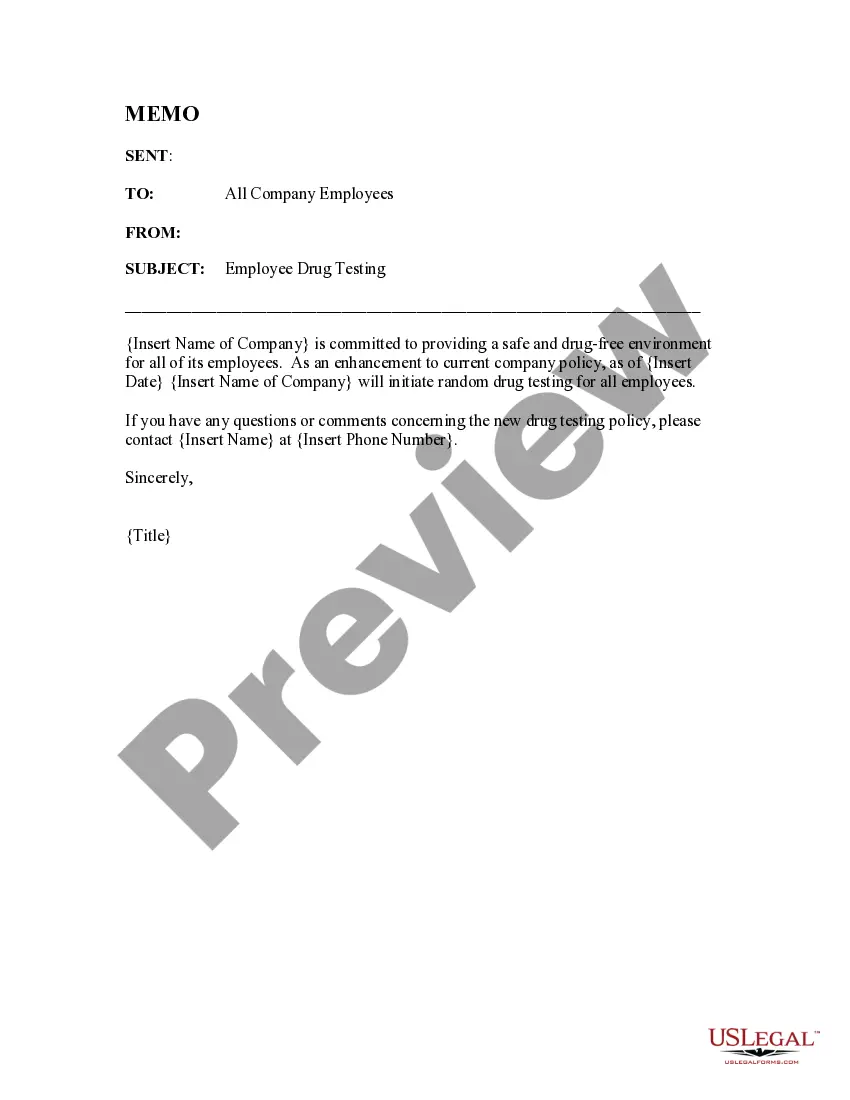
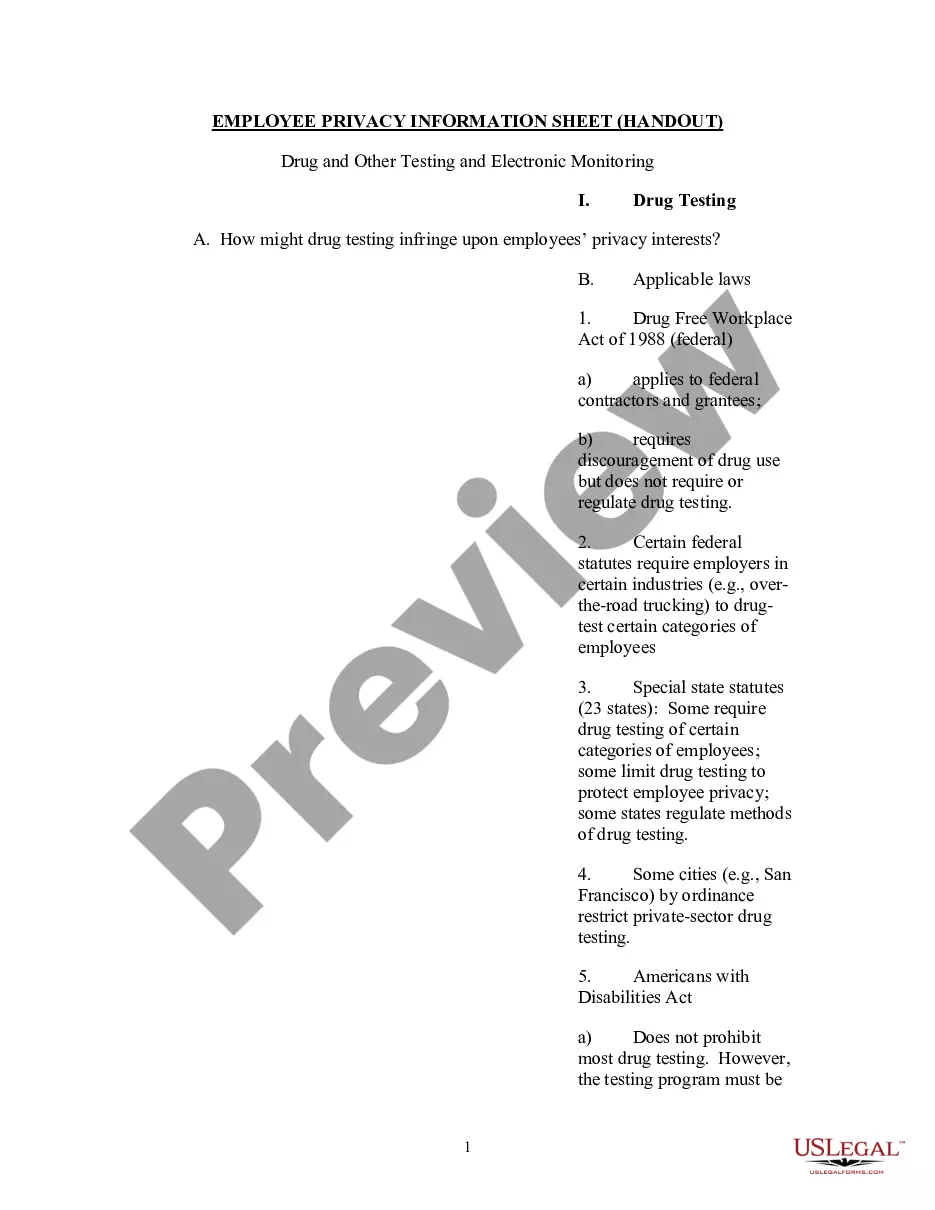
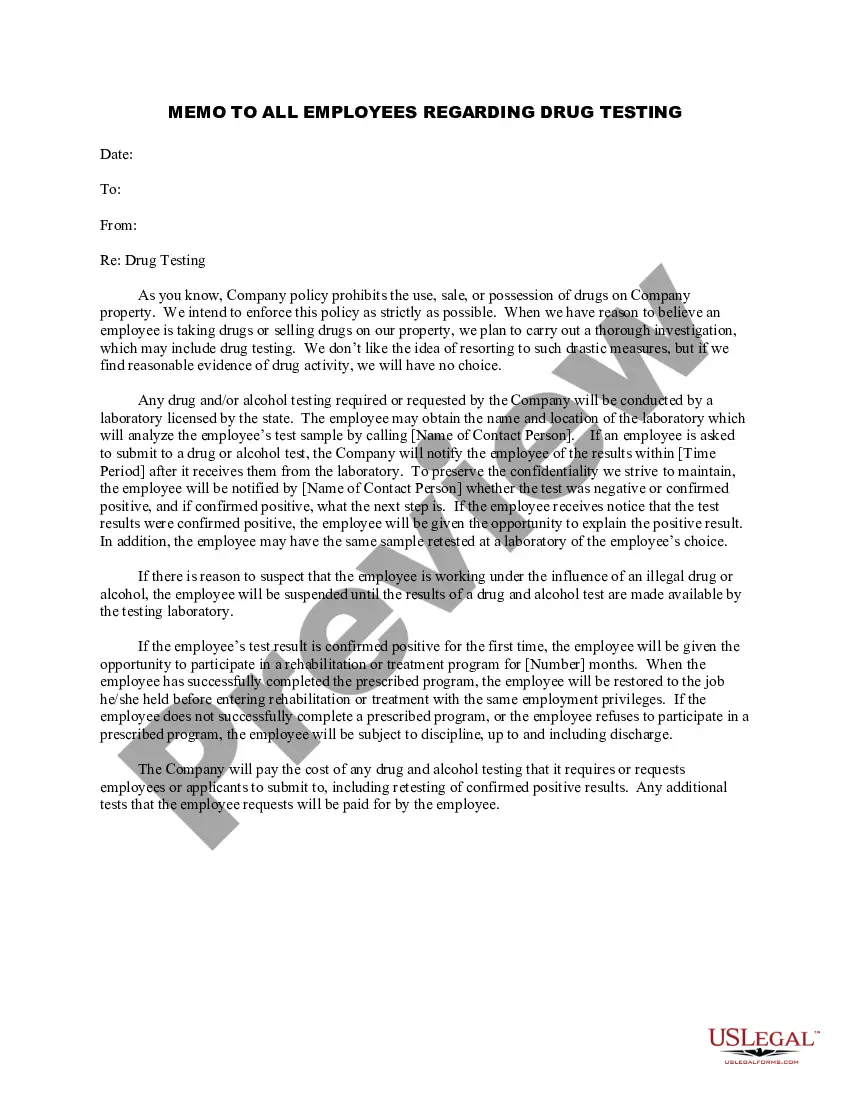
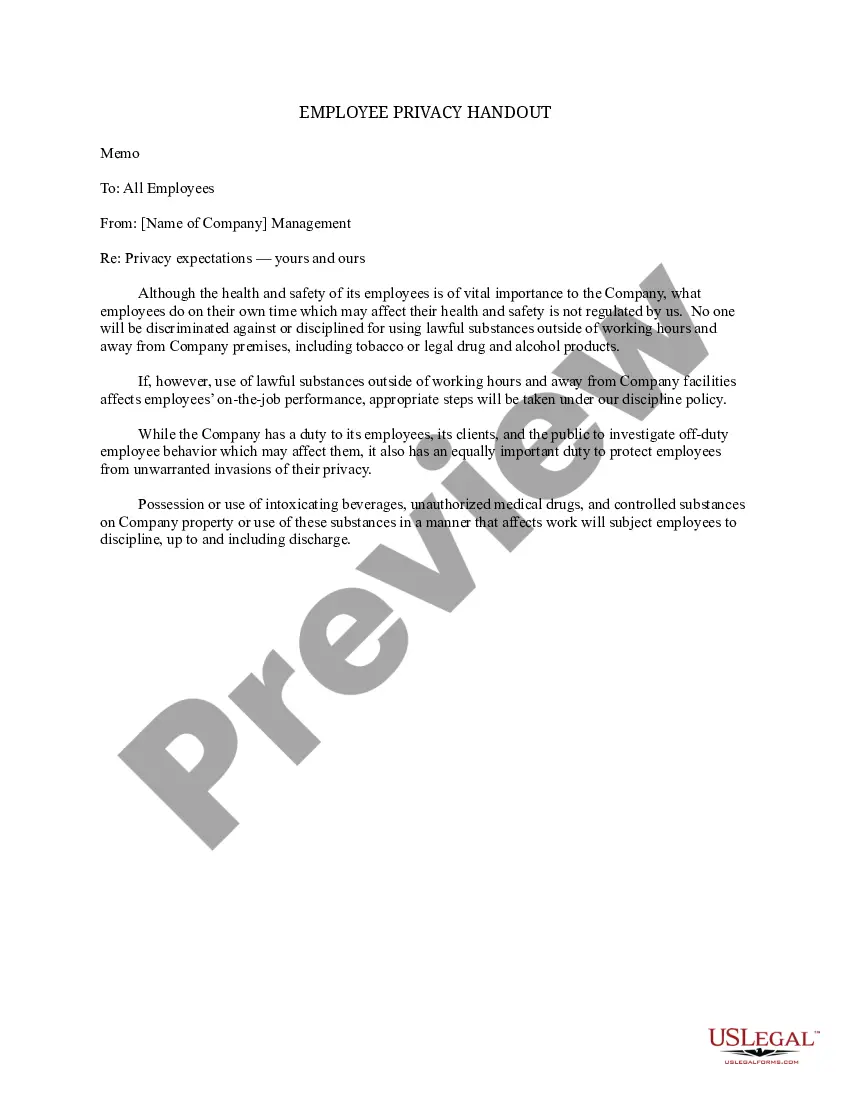
Massachusetts Employee Drug Testing Memo
Description
Get your form ready online
Our built-in tools help you complete, sign, share, and store your documents in one place.
Make edits, fill in missing information, and update formatting in US Legal Forms—just like you would in MS Word.
Download a copy, print it, send it by email, or mail it via USPS—whatever works best for your next step.
Sign and collect signatures with our SignNow integration. Send to multiple recipients, set reminders, and more. Go Premium to unlock E-Sign.
If this form requires notarization, complete it online through a secure video call—no need to meet a notary in person or wait for an appointment.
We protect your documents and personal data by following strict security and privacy standards.

Make edits, fill in missing information, and update formatting in US Legal Forms—just like you would in MS Word.

Download a copy, print it, send it by email, or mail it via USPS—whatever works best for your next step.

Sign and collect signatures with our SignNow integration. Send to multiple recipients, set reminders, and more. Go Premium to unlock E-Sign.

If this form requires notarization, complete it online through a secure video call—no need to meet a notary in person or wait for an appointment.

We protect your documents and personal data by following strict security and privacy standards.
Looking for another form?



How to fill out Employee Drug Testing Memo?
You can spend time online searching for the legal document template that fulfills the state and federal requirements you need.
US Legal Forms provides a vast selection of legal forms that are vetted by experts.
It is easy to download or print the Massachusetts Employee Drug Testing Memo from our service.
If you want to find an alternate version of your form, use the Search field to locate the template that meets your needs and requirements.
- If you already possess a US Legal Forms account, you can Log In and click on the Download button.
- Afterward, you can complete, edit, print, or sign the Massachusetts Employee Drug Testing Memo.
- Every legal document template you obtain is yours forever.
- To obtain another copy of any purchased form, go to the My documents tab and click on the appropriate button.
- If you are visiting the US Legal Forms website for the first time, follow the simple instructions below.
- First, make sure you have chosen the appropriate document template for the area/town that you select.
- Review the form description to ensure you have picked the correct form.
Form popularity
FAQ
In Massachusetts, employers are not required to provide notice before conducting a urine analysis (UA) for drug testing. However, it’s a good practice to inform employees about the testing policy, as transparency fosters trust. The Massachusetts Employee Drug Testing Memo advises employers to communicate their drug testing procedures clearly to avoid misunderstandings. Doing so protects both the employer and employee by ensuring everyone knows what to expect.
The policy should be set out in your contract of employment or in the company handbook. Your employer should limit testing to the employees that need to be tested to deal with the risk. If your employer wants to carry out random tests of these employees, bear in mind that the tests should be genuinely random.
There is no Massachusetts law that limits the types of drug testing that an employer can use (urine, blood, hair, breath, etc.) Massachusetts drug tests may screen for any illegal use of drugs as well as for alcohol.
There is no Massachusetts law that limits the types of drug testing that an employer can use (urine, blood, hair, breath, etc.) Massachusetts drug tests may screen for any illegal use of drugs as well as for alcohol.
Massachusetts does not have any laws regulating or restricting an employer from drug testing in the workplace. Massachusetts does not put any limits on workplace drug testing.
Although many states have passed laws regulating or restricting an employer's right to require drug testing, Massachusetts has not. Massachusetts legislation does not address drug testing in private employment. However, the Massachusetts Supreme Court has issued a ruling on random drug testing in private employment.
Drug-testing in the workplace can only usually be justified for health and safety reasons. This means that an employer should not drug test unless there is good reason to do so, and it provides significantly better evidence of impairment than other less intrusive means.
No person can be forced to provide a sample of urine, hair, saliva or blood for any purpose. However, if a person has a contractual obligation to provide a sample, and refuses to do it, courts have ruled that, in certain circumstances, that can be grounds for dismissal.
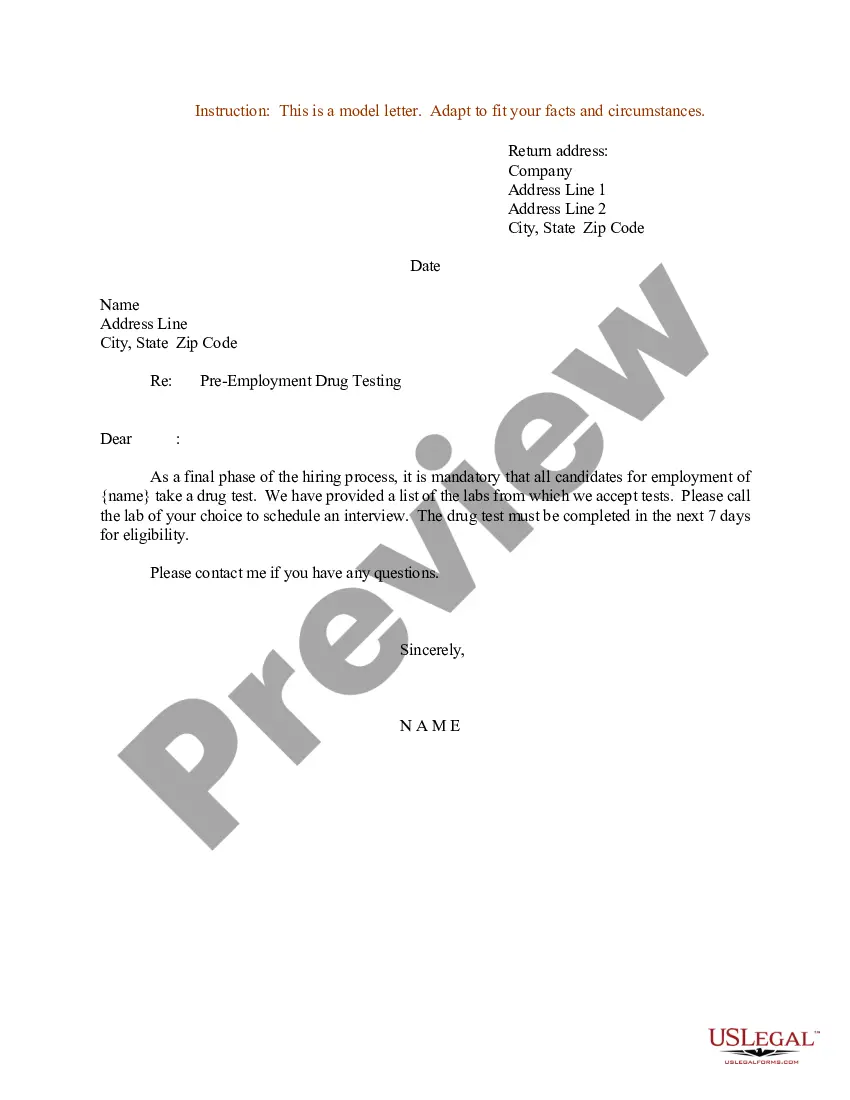
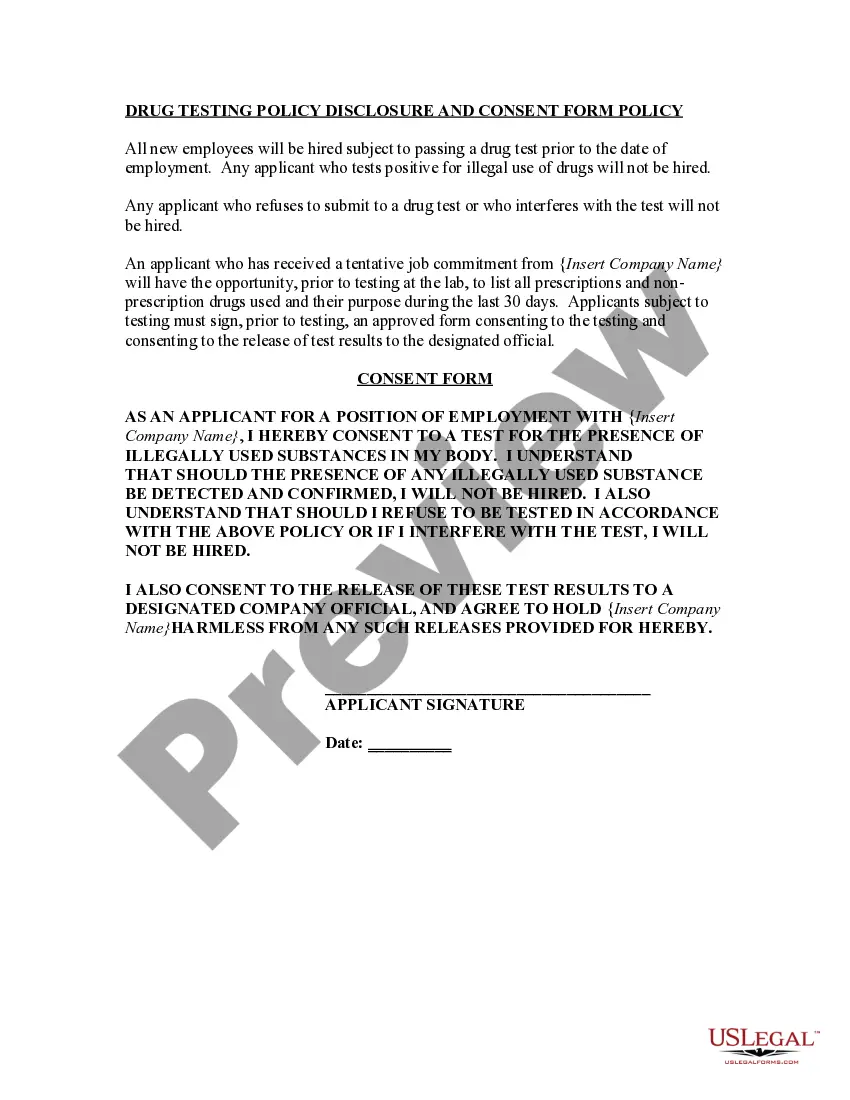
Though Massachusetts law currently permits pre-employment drug screening for any reason (as long as it is non-discriminatory), employers may choose to eliminate standardized testing policies and instead opt to test only upon reasonable suspicion that the employee is under the influence at work.
In Massachusetts, for instance, medical and recreational marijuana use is legal, but employers can still fire workers who test positive for the substancein some situations. Employers and workers alike should keep in mind that no law requires an employer to tolerate on-the-job marijuana use or impairment.