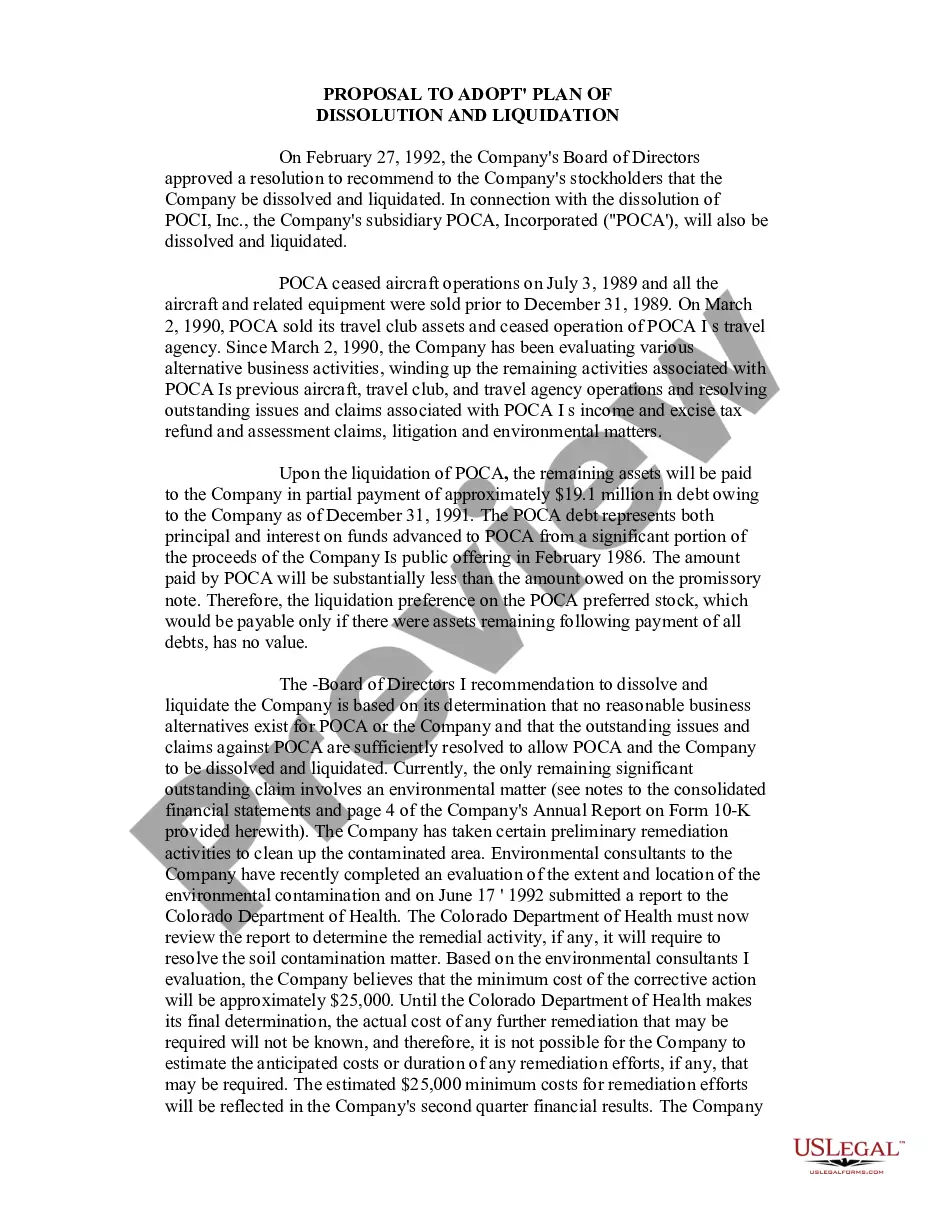
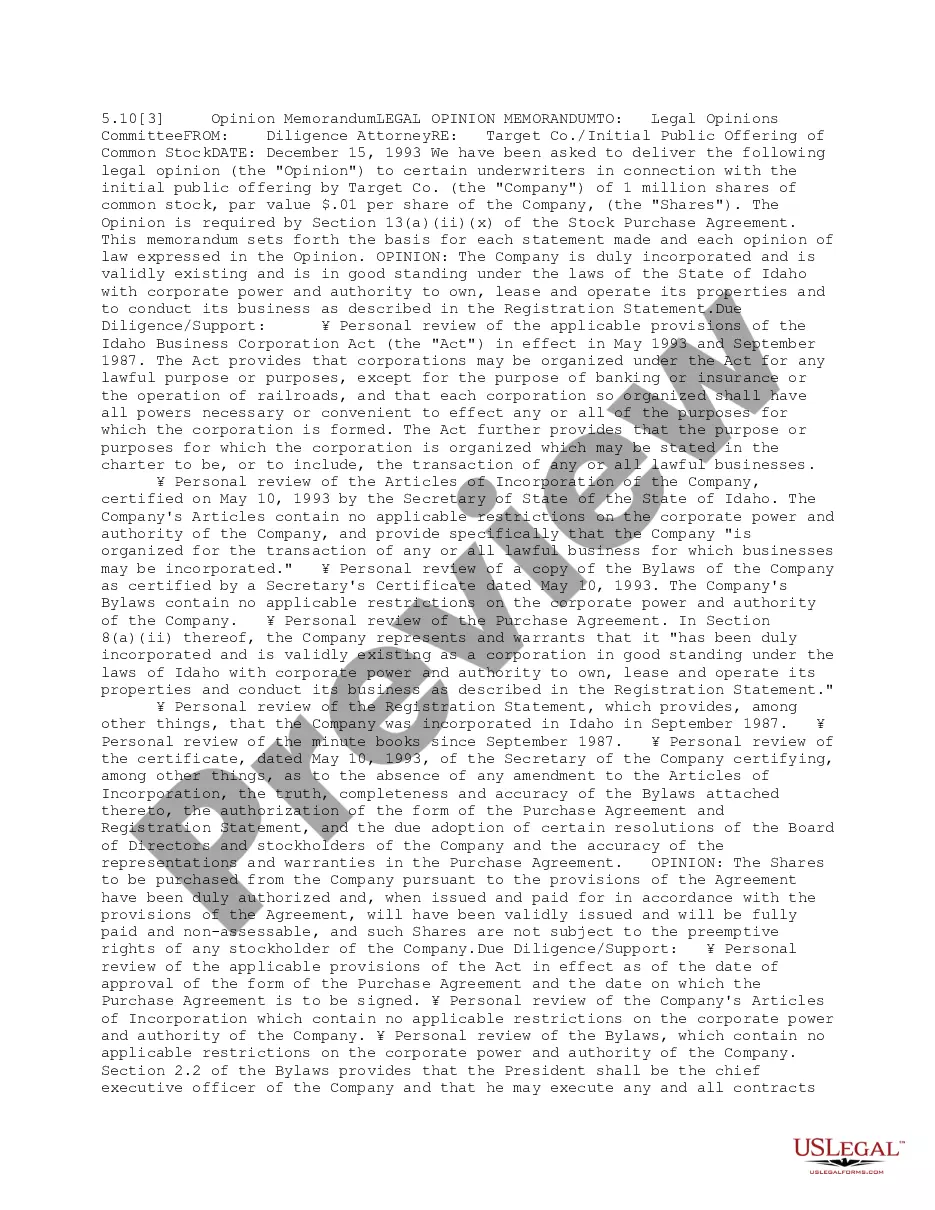
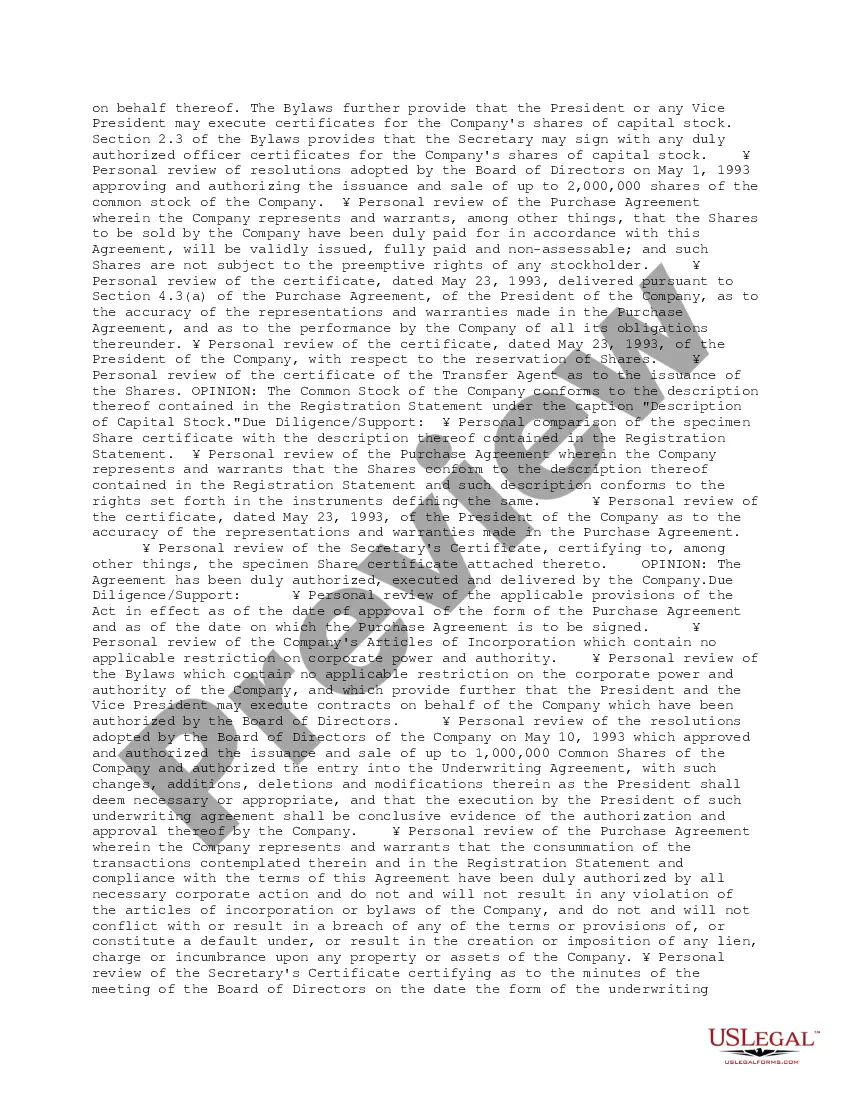
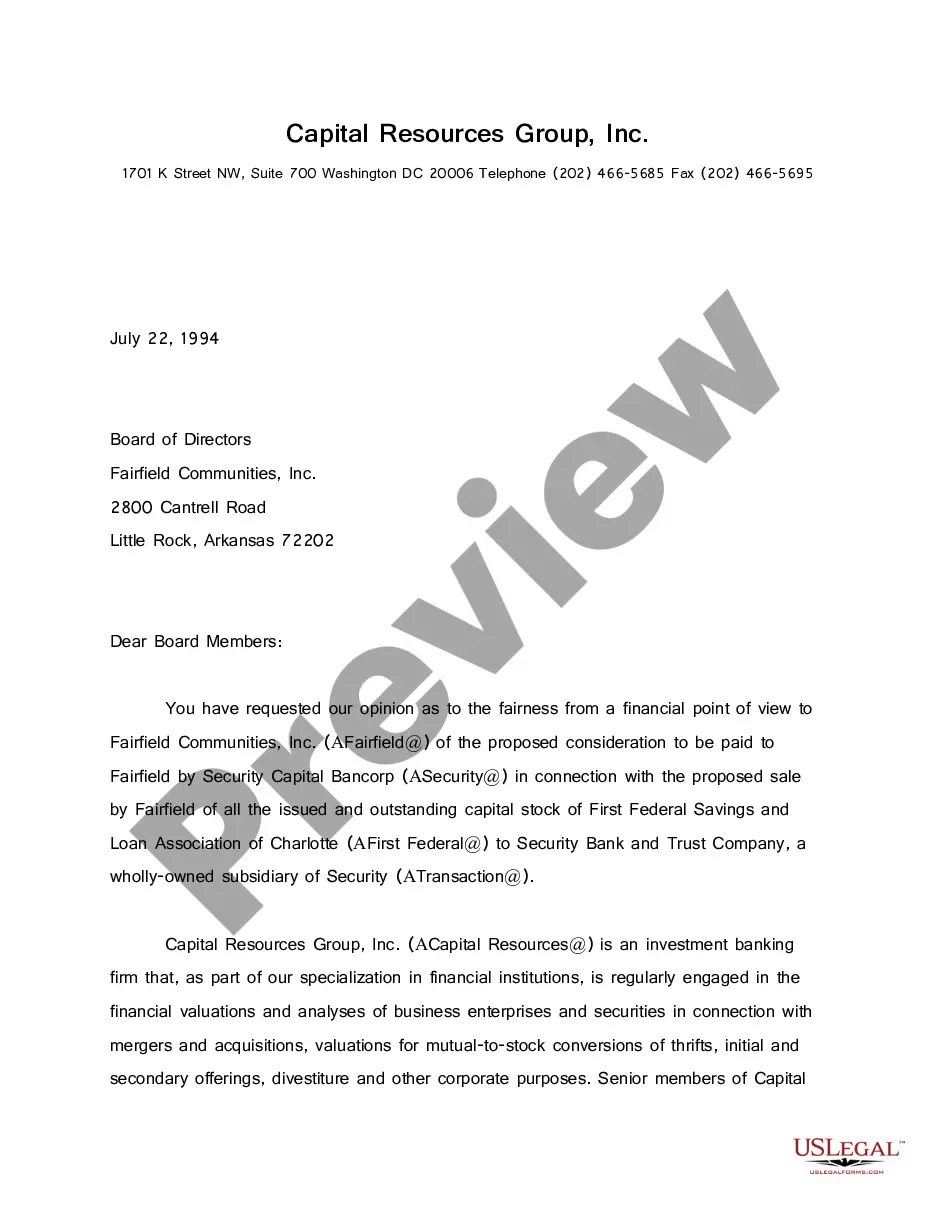
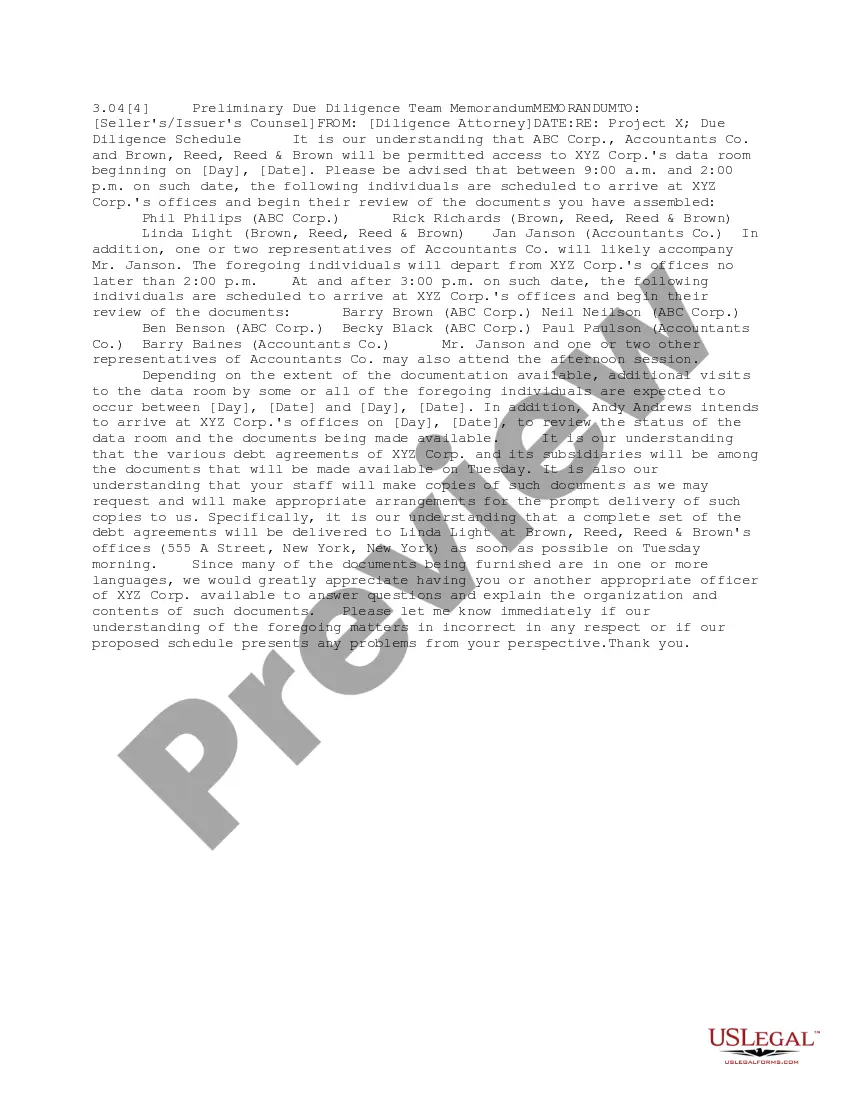
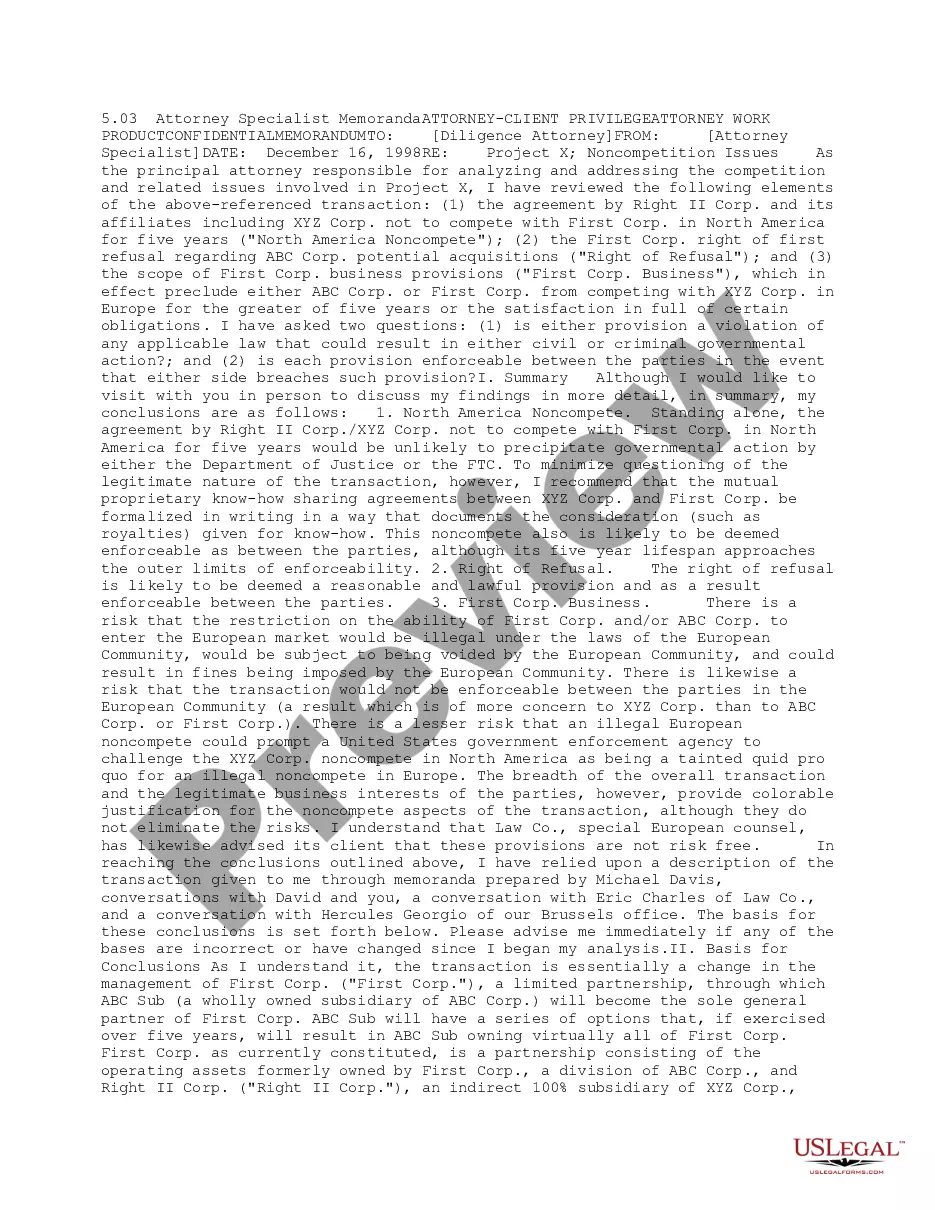
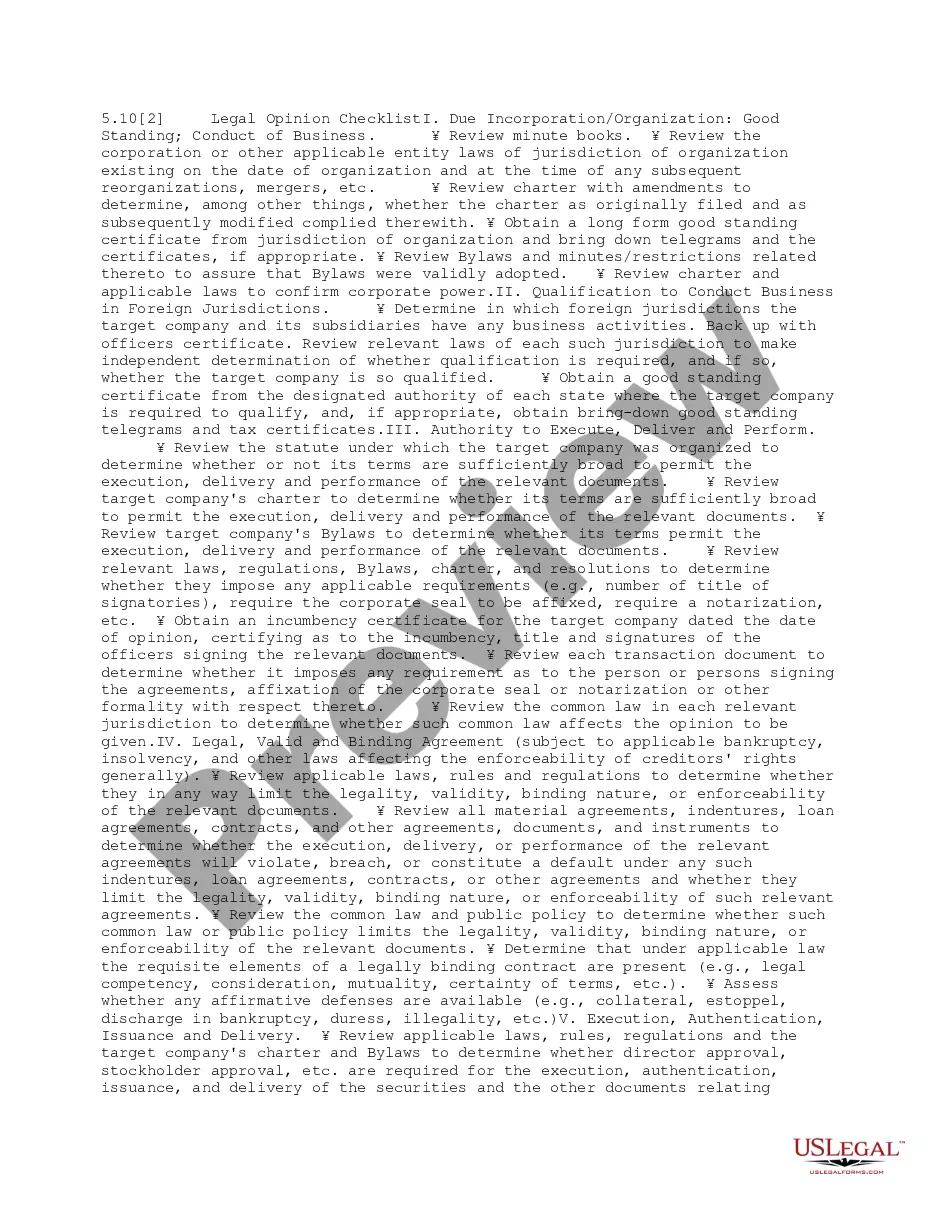
This form sets forth the basis for each statement made in the Initial Public Offering of Common Stock and each opinion of law expressed in the Legal Opinion.
Massachusetts Legal Opinion Memorandum
Category:
State:
Multi-State
Control #:
US-DD05103
Format:
Word;
PDF;
Rich Text
Instant download
Description
Free preview
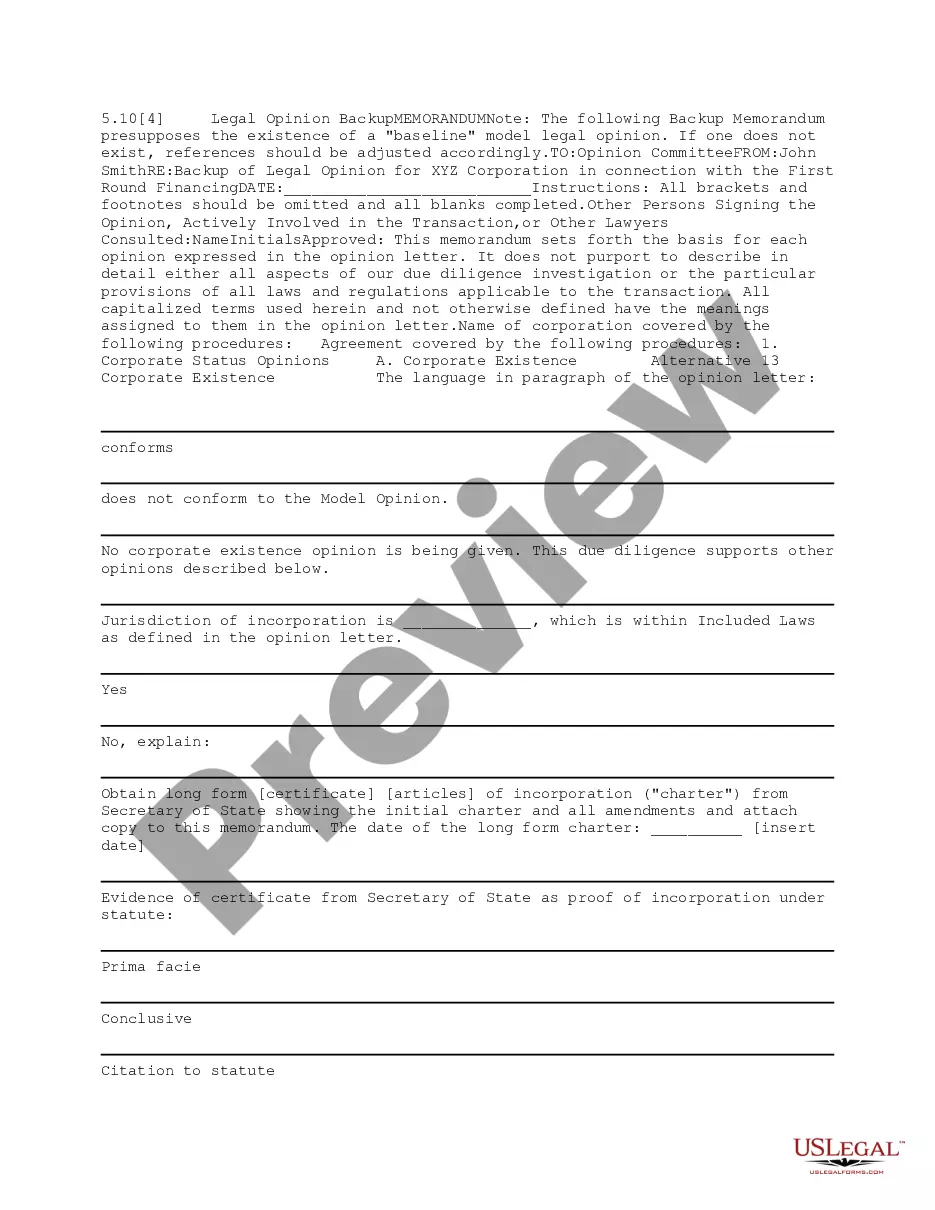
How to fill out Legal Opinion Memorandum?
You might spend hours online attempting to locate the valid document template that meets the state and federal requirements you require.
US Legal Forms offers a vast collection of valid forms that are reviewed by professionals.
You can easily download or print the Massachusetts Legal Opinion Memorandum from our service.
To find another version of the form, use the Search field to find the template that fits your needs and requirements.
- If you already possess a US Legal Forms account, you can Log In and then click the Download button.
- After that, you can complete, modify, print, or sign the Massachusetts Legal Opinion Memorandum.
- Every legal document template you obtain is yours permanently.
- To get another copy of any downloaded form, navigate to the My documents tab and click the appropriate button.
- If you are using the US Legal Forms website for the first time, follow the simple instructions below.
- First, ensure you have selected the correct document format for your area/city of choice.
- Check the form description to verify you have selected the right one.
Form popularity
FAQ
A legal brief and a legal memorandum serve different purposes and audiences. A Massachusetts Legal Opinion Memorandum focuses on internal guidance, analyzing legal issues without the intent of litigation. In contrast, a legal brief is prepared for court submissions and must persuade a judge or jury. Understanding these distinctions helps legal professionals communicate effectively and apply appropriate formats in their work.
Legal memos are typically written by attorneys, paralegals, or legal scholars who possess a strong understanding of the law. In the case of a Massachusetts Legal Opinion Memorandum, practitioners draft these documents to clarify complex legal issues for their clients or colleagues. They rely on their legal research skills to compile facts and applicable laws. Ultimately, this process reflects professionalism and expertise in addressing legal matters.
The purpose of a legal memorandum is to analyze a specific legal issue and provide guidance on how to approach it. A Massachusetts Legal Opinion Memorandum offers a clear and organized presentation of the relevant laws, facts, and interpretations. This document is invaluable for lawyers and clients alike, as it facilitates informed decision-making. Overall, a well-crafted memorandum serves as a crucial tool in legal research and strategy.
A legal brief and a memorandum both serve distinct purposes in the legal field. A legal brief is typically submitted to a court to present arguments in support of a position, while a Massachusetts Legal Opinion Memorandum offers an analysis of legal questions without being directed at a court. Understanding these differences helps you choose the right document for your legal needs.
In simple terms, a memorandum is a written document that provides information or analysis about a specific topic, often used in a professional setting. A Massachusetts Legal Opinion Memorandum presents legal analysis on particular issues, helping attorneys and clients understand the implications of legal matters clearly. It's essentially a tool for communicating complex legal ideas in an organized manner.
While the terms 'memorandum' and 'legal opinion' may seem interchangeable, they serve different functions within the legal field. A Massachusetts Legal Opinion Memorandum focuses on analyzing specific legal queries, providing a detailed examination and conclusions. On the other hand, a legal opinion typically communicates advice or a legal stance regarding broader legal principles or policies.
A legal opinion typically provides a lawyer's view on the legality of a situation or decision, often based on case law and statutes. In contrast, a memorandum, specifically a Massachusetts Legal Opinion Memorandum, outlines specific legal issues and presents an analysis of those issues. Hence, while both documents offer legal insights, their purposes and contexts can vary significantly.
To format a legal opinion letter, start with your contact information, date, and recipient's details at the top. Clearly state the subject matter followed by an introduction that outlines the context of your opinion. Utilize a logical structure similar to a Massachusetts Legal Opinion Memorandum by including your analysis and conclusion within distinct sections. This format ensures clarity and professionalism in your legal communication.
The format for a legal memorandum, especially a Massachusetts Legal Opinion Memorandum, includes defined sections starting with a heading, followed by the issue statement, brief answer, facts, analysis, and conclusion. Each section serves a specific purpose and should be clearly labeled. Following this structured approach not only improves readability, but it also enhances the logical flow of your legal arguments.
An example of a memorandum could be a Massachusetts Legal Opinion Memorandum that assesses the legality of a new state policy. This document would present legal analysis regarding the policy, addressing relevant statutes and case laws. By reviewing such an example, you can grasp the structure and content required for an effective legal memorandum. It serves as a useful reference point for understanding legal reasoning.