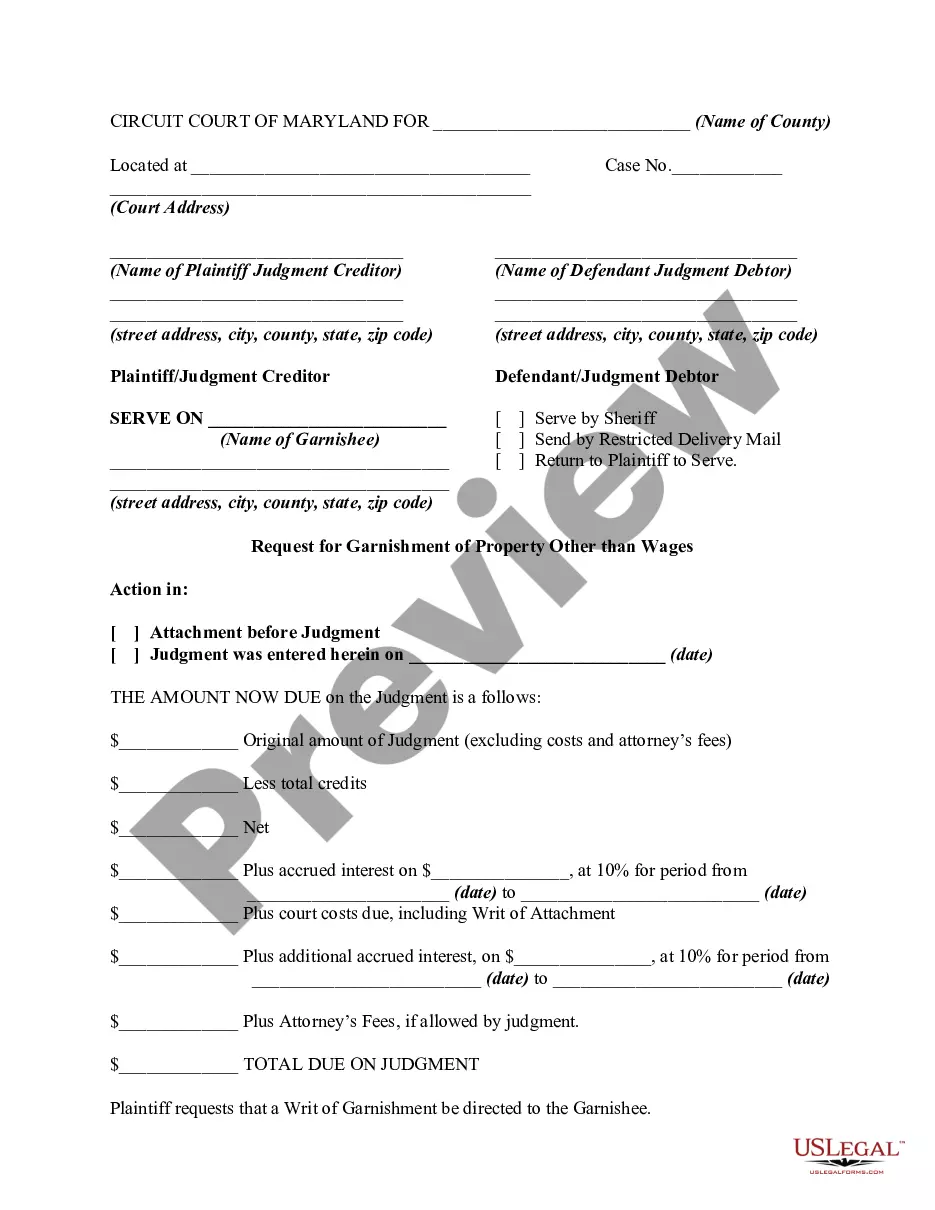
Maryland Request for Garnishment of Property Other than Wages
Understanding this form
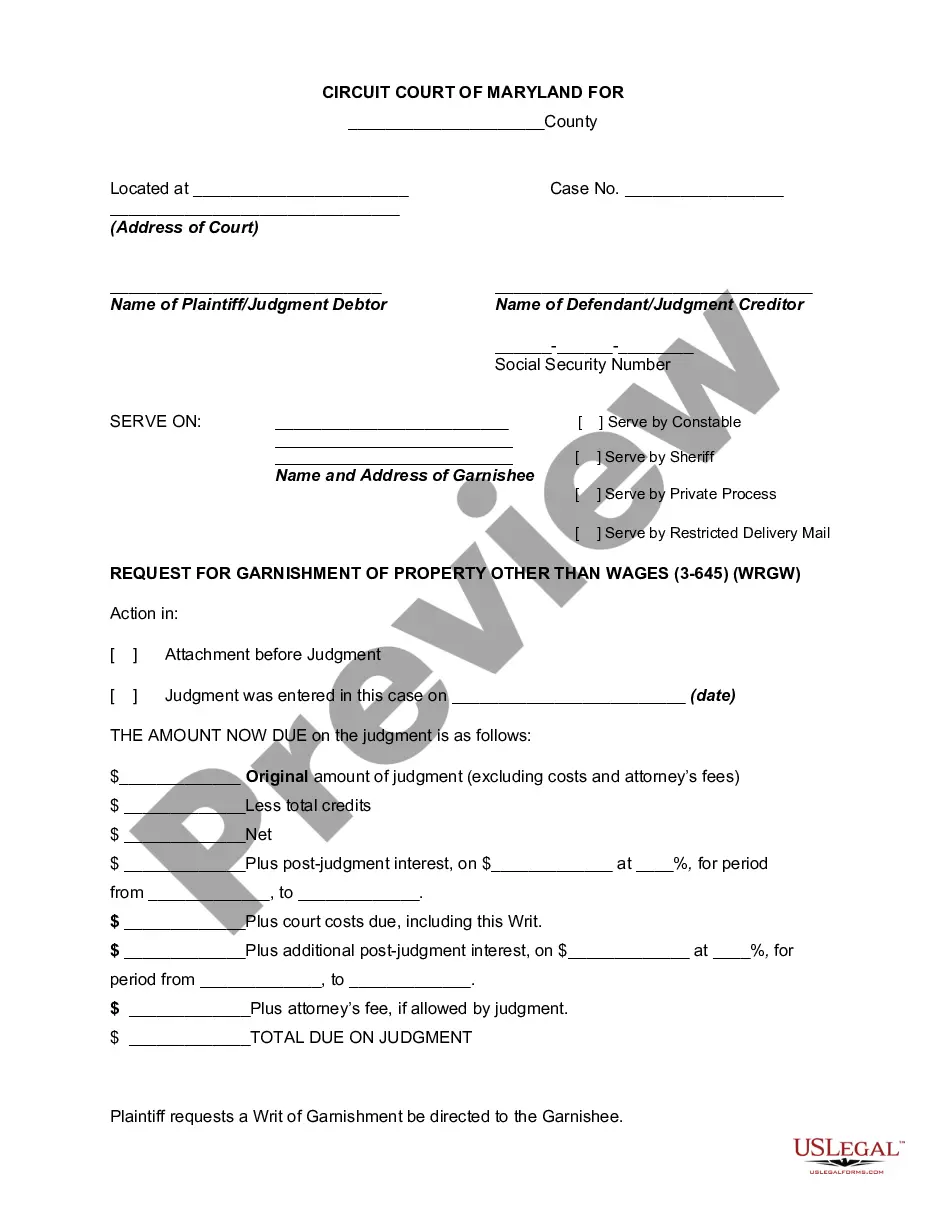
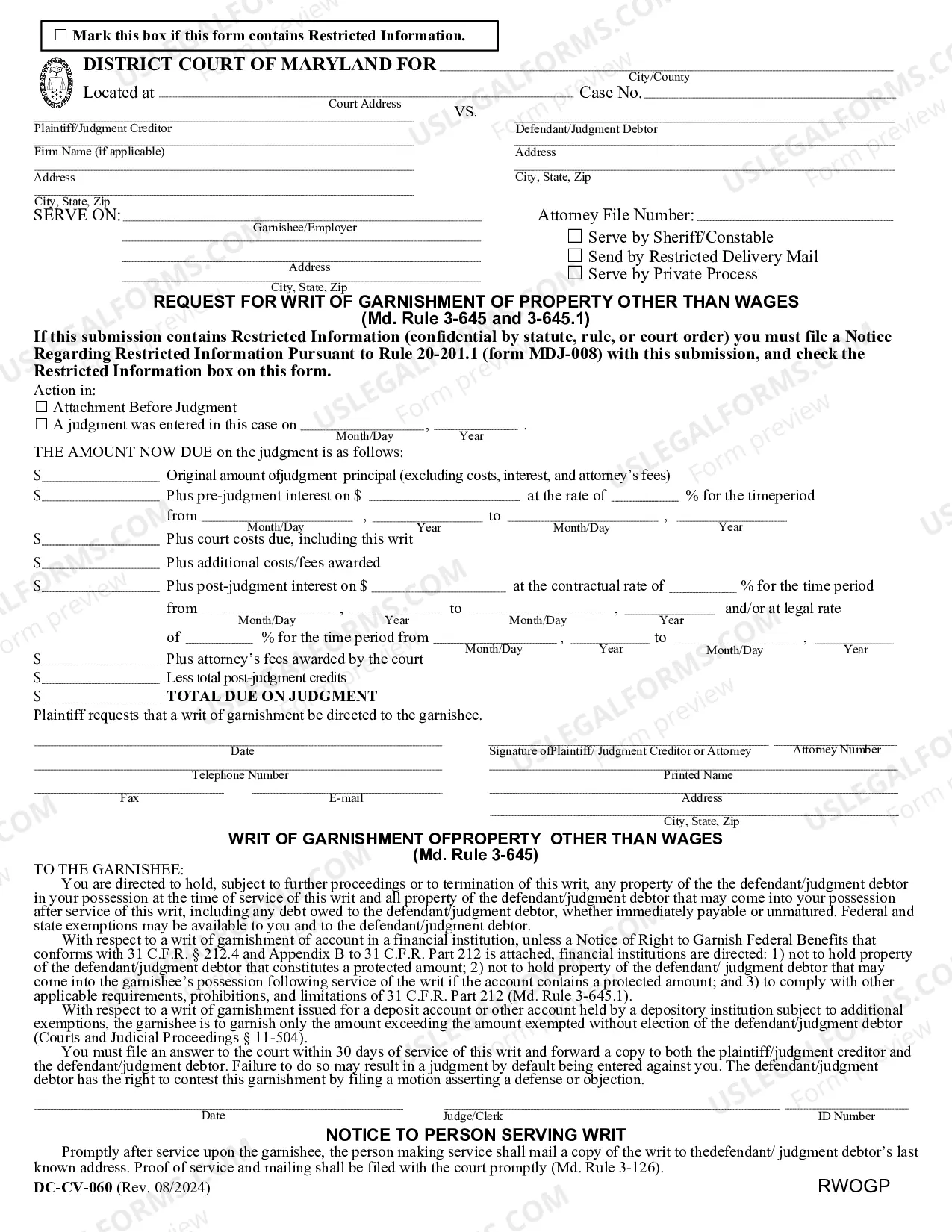
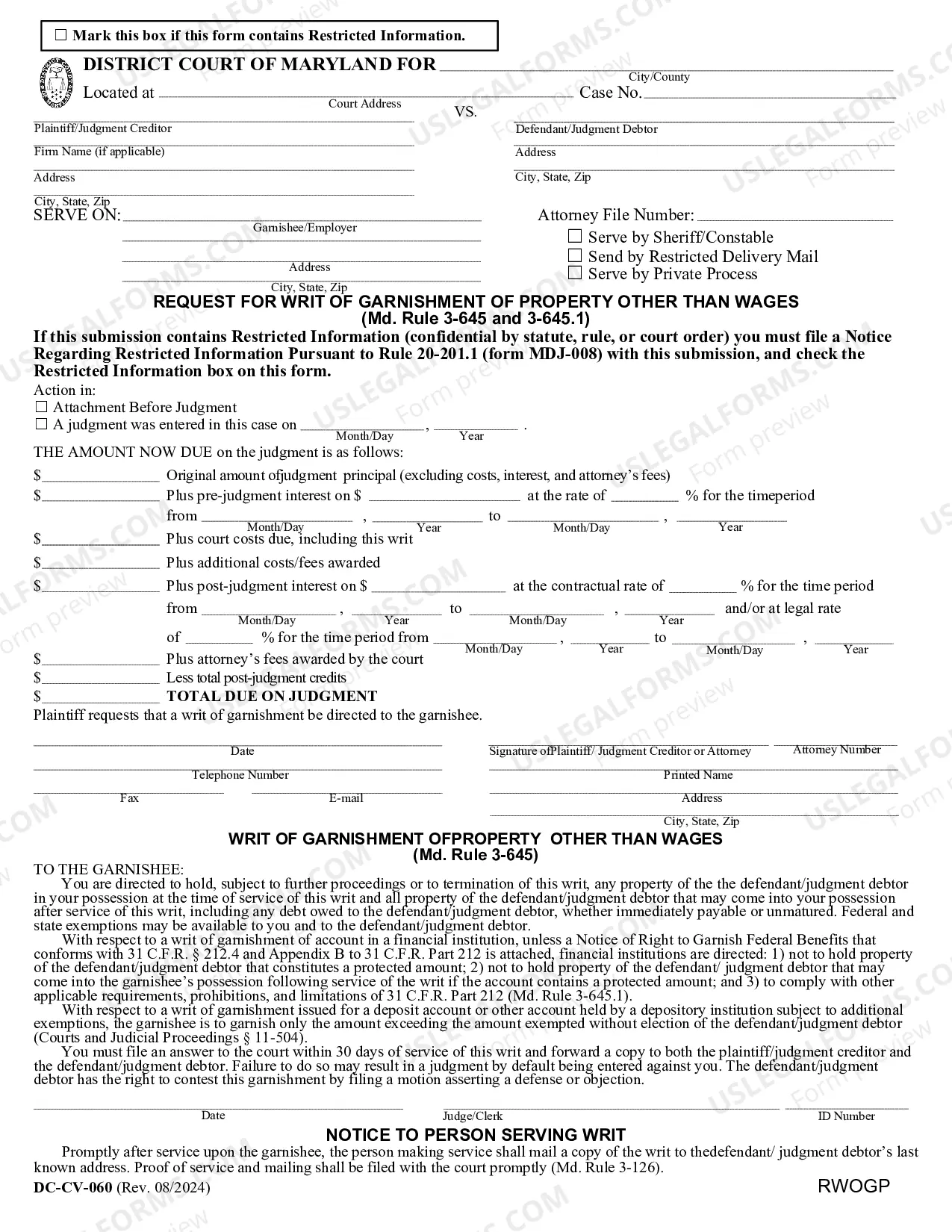
The Request for Garnishment of Property Other than Wages is a legal document that allows a judgment creditor to request the court to collect an outstanding debt from a debtor's non-wage property. Unlike wage garnishment, this form targets assets such as bank accounts or personal property. By using this form, creditors can secure funds owed to them without needing to wait for the debtor to voluntarily pay the judgment amount.
What’s included in this form
- Case Information: Captures the court address and case number.
- Judgment Creditor and Debtor Details: Includes names and last known addresses of both parties.
- Garnishee Information: Identifies the party holding the debtor's property.
- Amount Due Calculation: Breakdown of the total amount owed, including interest and fees.
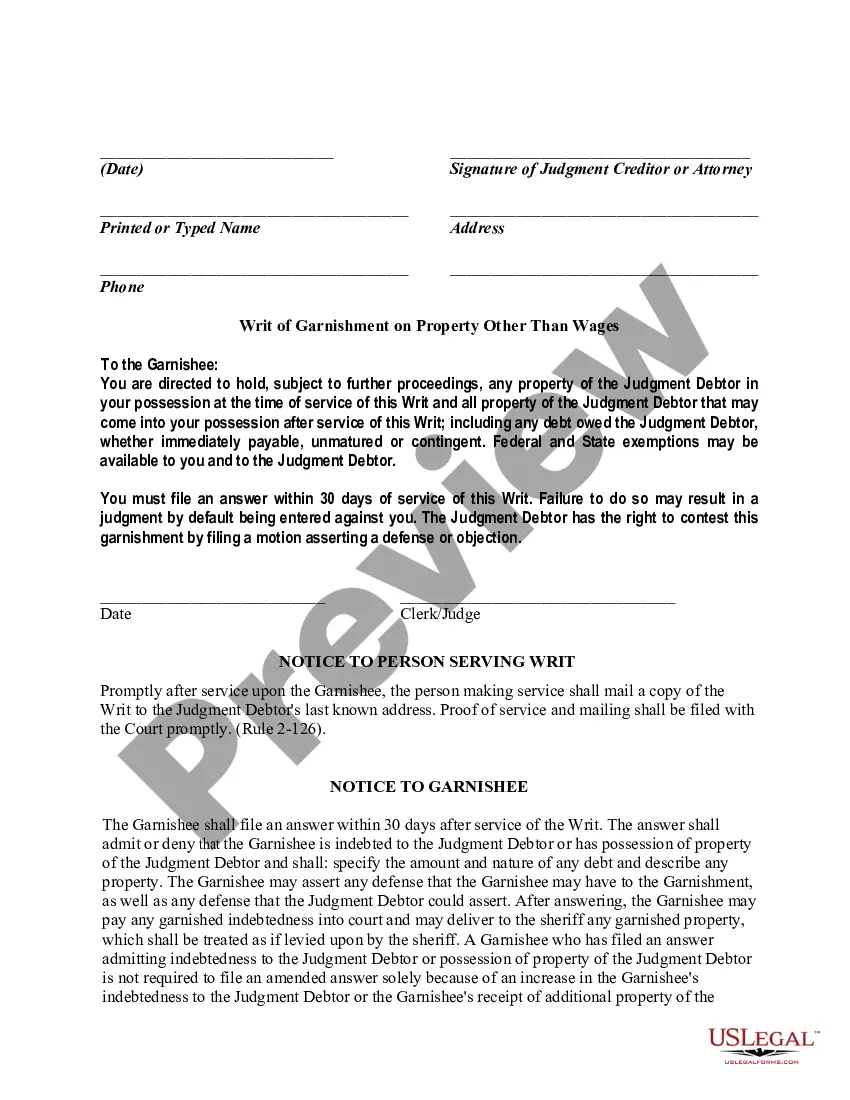
- Garnishment Request: Formal request for issuance of the writ of garnishment.
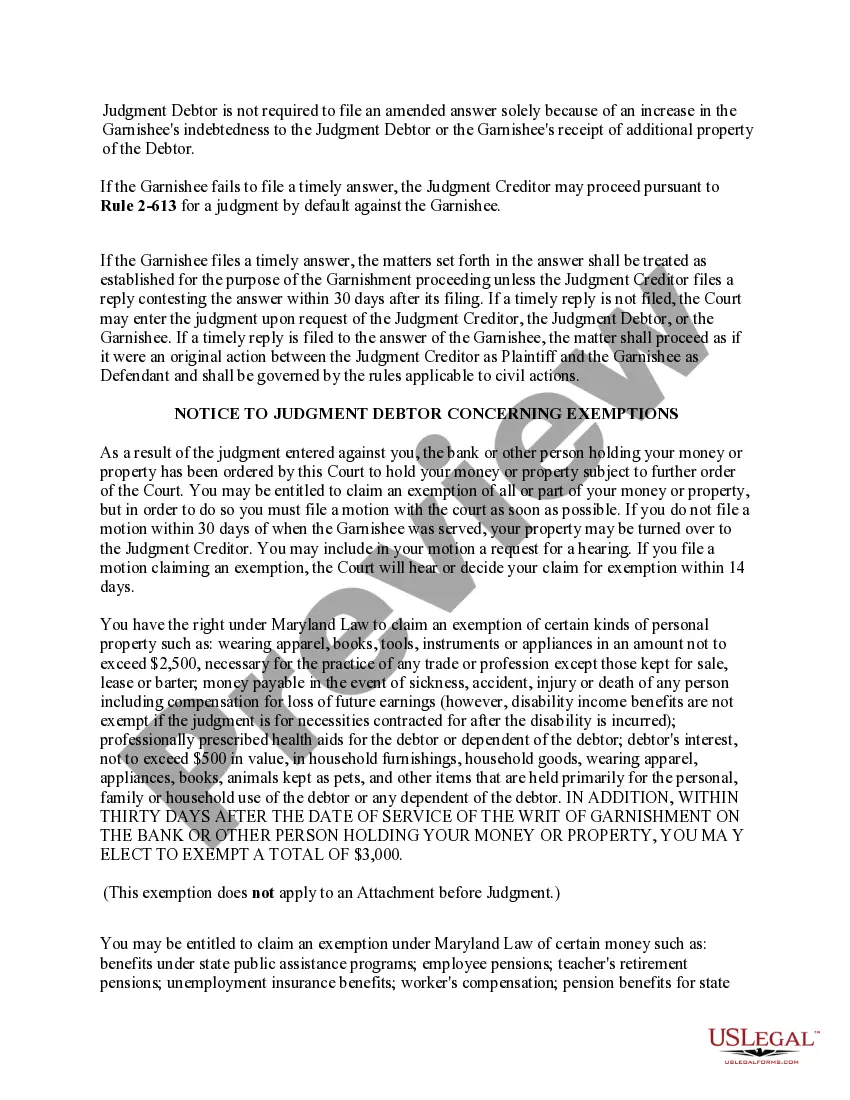
- Clerk's Instructions: Information on the garnishee's obligation to respond.

When to use this document
This form should be used when a judgment has been obtained against a debtor and the creditor has identified property, other than wages, that can be garnished to satisfy the debt. It's applicable in situations where the creditor believes the debtor has assets that can be seized, such as savings accounts, vehicles, or personal belongings.
Who can use this document
This form is intended for:
- Judgment creditors seeking to enforce a court judgment.
- Creditors who have evidence of debtor assets other than wages.
- Attorneys representing clients in debt recovery cases.
Instructions for completing this form
- Identify the parties: Enter the names and addresses of the judgment creditor and judgment debtor.
- Specify the garnishee: Provide the name and address of the entity or person holding the debtor's property.
- Calculate the total amount due: Complete the section detailing the calculation, including the original judgment amount, credits, interest, and any applicable fees.
- Date and sign: Indicate the date of the request and provide the signature of the judgment creditor or their attorney.
- Follow filing instructions: Submit the completed form to the court along with any required fees.
Notarization requirements for this form
This form does not typically require notarization unless specified by local law. Always check for specific state requirements to ensure compliance.
Get your form ready online
Our built-in tools help you complete, sign, share, and store your documents in one place.
Make edits, fill in missing information, and update formatting in US Legal Forms—just like you would in MS Word.
Download a copy, print it, send it by email, or mail it via USPS—whatever works best for your next step.
Sign and collect signatures with our SignNow integration. Send to multiple recipients, set reminders, and more. Go Premium to unlock E-Sign.
If this form requires notarization, complete it online through a secure video call—no need to meet a notary in person or wait for an appointment.
We protect your documents and personal data by following strict security and privacy standards.

Make edits, fill in missing information, and update formatting in US Legal Forms—just like you would in MS Word.

Download a copy, print it, send it by email, or mail it via USPS—whatever works best for your next step.

Sign and collect signatures with our SignNow integration. Send to multiple recipients, set reminders, and more. Go Premium to unlock E-Sign.

If this form requires notarization, complete it online through a secure video call—no need to meet a notary in person or wait for an appointment.

We protect your documents and personal data by following strict security and privacy standards.
Typical mistakes to avoid
- Failing to provide complete addresses for all parties involved.
- Missing the calculation of total amounts owed or failing to include any additional fees.
- Not adhering to specific state requirements that may alter how information needs to be presented.
Why complete this form online
- Immediate access to downloadable templates that are user-friendly.
- The ability to edit and customize the form as needed.
- Reduced processing time by submitting forms directly to the court.
Summary of main points
- The Request for Garnishment of Property Other than Wages is used to collect debts via garnishment of non-wage assets.
- It is crucial to fill out the form completely and accurately to avoid delays in the garnishment process.
- Understanding state-specific rules can enhance compliance and effectiveness in using this form.
Looking for another form?

Form popularity
FAQ
In most states, employers answer a writ of garnishment by filling out the paperwork attached to the judgment and returning it to the creditor or the creditor's attorney.
Garnishment is a drastic measure for collecting a debt. A court order of garnishment allows a creditor to take the property of a debtor when the debtor does not possess the property. A garnishment action is taken against the debtor as defendant and the property holder as garnishee.
The creditor must serve the Writ of Garnishment on the garnishee via certified mail, restricted delivery, private process, or sheriff/constable. For more information on service of process see Frequently Asked Questions about Service.
If you are served with a garnishment summons, do not ignore these documents because they do not directly involve a debt that you owe. Instead, you should immediately freeze any payments to the debtor, retain the necessary property, and provide the required written disclosure.
1. If an alleged employer reports that the debtor is not employed, creditor must file a request for a hearing within 15 days, or the court may dismiss the garnishment. File your request in writing or on a Request/Order form (DC-001).
1. If an alleged employer reports that the debtor is not employed, creditor must file a request for a hearing within 15 days, or the court may dismiss the garnishment. File your request in writing or on a Request/Order form (DC-001).
Respond to the Creditor's Demand Letter. Seek State-Specific Remedies. Get Debt Counseling. Object to the Garnishment. Attend the Objection Hearing (and Negotiate if Necessary) Challenge the Underlying Judgment. Continue Negotiating.
A Writ of Garnishment is a court order to the garnishee. It orders the garnishee to hold any property of the judgment debtor that the garnishee possesses at the time the Writ is filed. The Writ of Garnishment must be served on the garnishee via certified mail, restricted delivery, private process or sheriff/constable.