Maryland Warranty Deed - Individual to Two Individuals
About this form
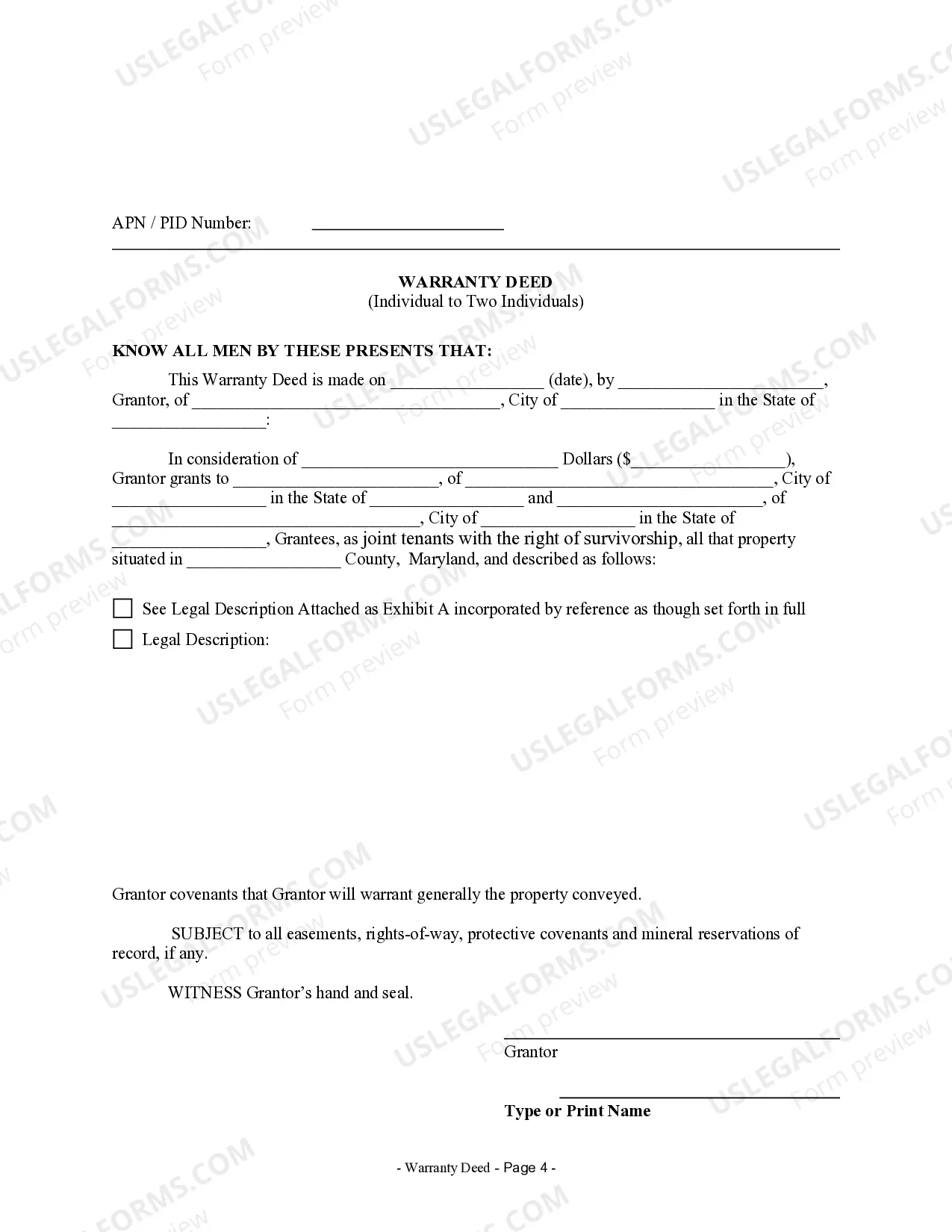
The Warranty Deed - Individual to Two Individuals is a legal document that facilitates the transfer of property ownership from one individual (the Grantor) to two individuals (the Grantees). This form ensures that the Grantor conveys and warrants the described property while allowing the Grantees to take ownership either as joint tenants with the right of survivorship or as tenants in common. Unlike other forms of deeds, this warranty deed provides enhanced legal protection for the Grantees as it guarantees that the property is free of claims and encumbrances, except as noted.
What’s included in this form
- Property description section, where the detailed legal description of the property is provided.
- Grantor's information, including name and address, to establish the seller's identity.
- Grantees' information for both individuals receiving the property.
- Specification of the type of tenancy (joint tenants or tenants in common).
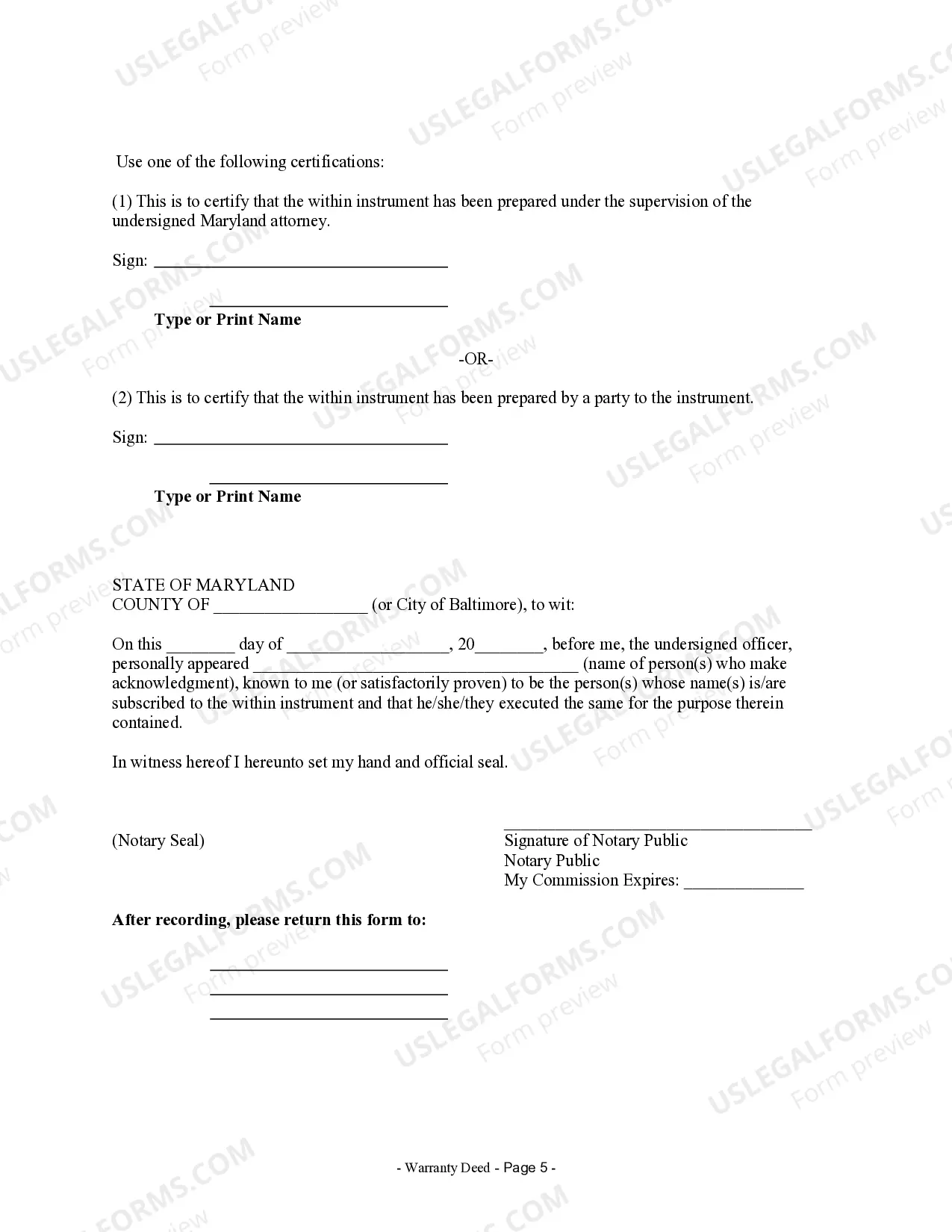
- Notary acknowledgment section to validate the execution of the deed.





When to use this document
This form should be used when an individual is transferring ownership of a property to two people. Common scenarios include a property being gifted to family members, transferring a family home to a spouse and a child, or when two people are purchasing a property together and want to outline their ownership rights clearly.
Who needs this form
- Individuals seeking to legally transfer property to two other individuals.
- Real estate agents or brokers facilitating property transfers.
- Estate planners looking to designate joint ownership between beneficiaries.
How to prepare this document
- Identify the parties involved: Fill in the Grantor's details and both Grantees' information.
- Specify the property: Enter the legal description of the property being transferred.
- Choose the type of tenancy: Indicate whether the Grantees will own the property as joint tenants or tenants in common.
- Include the purchase price: State the consideration amount agreed upon for the property transfer.
- Sign in front of a notary: Ensure the form is notarized to meet legal requirements.
Does this document require notarization?
This form must be notarized to be legally valid. US Legal Forms provides secure online notarization powered by Notarize, allowing you to complete the process through a verified video call.
Get your form ready online
Our built-in tools help you complete, sign, share, and store your documents in one place.
Make edits, fill in missing information, and update formatting in US Legal Forms—just like you would in MS Word.
Download a copy, print it, send it by email, or mail it via USPS—whatever works best for your next step.
Sign and collect signatures with our SignNow integration. Send to multiple recipients, set reminders, and more. Go Premium to unlock E-Sign.
If this form requires notarization, complete it online through a secure video call—no need to meet a notary in person or wait for an appointment.
We protect your documents and personal data by following strict security and privacy standards.

Make edits, fill in missing information, and update formatting in US Legal Forms—just like you would in MS Word.

Download a copy, print it, send it by email, or mail it via USPS—whatever works best for your next step.

Sign and collect signatures with our SignNow integration. Send to multiple recipients, set reminders, and more. Go Premium to unlock E-Sign.

If this form requires notarization, complete it online through a secure video call—no need to meet a notary in person or wait for an appointment.

We protect your documents and personal data by following strict security and privacy standards.
Typical mistakes to avoid
- Failing to provide a complete legal description of the property.
- Not specifying the type of tenancy chosen by the Grantees.
- Forgetting to have the form notarized, which can invalidate the deed.
- Not including the correct names and addresses for all parties involved.
Advantages of online completion
- Convenience: Instantly download and complete the form from home.
- Editability: Easily fill out and modify entries as needed before submission.
- Reliable: Forms are drafted by licensed attorneys, ensuring they are legally sound.
Legal use & context
- This Warranty Deed provides the Grantees with a legal guarantee against claims on the property.
- It is advisable to consult local legal guidelines to ensure compliance with state laws.
- Use of this form structures the ownership details clearly, reducing potential disputes in the future.
Looking for another form?
Form popularity
FAQ
Let's start with the definition of a deed: DEED: A written instrument by which one party, the Grantor, conveys the title of ownership in property to another party, the Grantee. A Warranty Deed contains promises, called covenants, that the Grantor makes to the Grantee.
In most states you can file a disclaimer or deed of disclaimer that says specifically you were placed in title without your knowledge or consent and disclaim the deed.
A personal representative deed and warranty deed are the same only in that they both convey ownership of land. The types of title assurance that the different deeds provide to the new owner are very different.
Yes you can. This is called a transfer of equity but you will need the permission of your lender. If you are not married or in a civil partnership you may wish to consider creating a deed of trust and a living together agreement which we can explain to you.
Special warranty deed -- warrants that the seller did nothing personally during his ownership of the property that would create a defect in the title to the property. This is the type of deed most often used in Maryland.
Used to transfer property rights from a deceased person's estate. Involves Probate Court. Like a Quit Claim deed, there are no warranties. Generally, the Personal Representative is unwilling to warrant or promise anything relating to property that he/she has never personally owned.
A deed, of course, is a legal document representing property ownership. But you might be wondering if an owner can transfer a deed to another person without a real estate lawyer. The answer is yes. Parties to a transaction are always free to prepare their own deeds.
To change the names on a real estate deed, you will need to file a new deed with the Division of Land Records in the Circuit Court for the county where the property is located. The clerk will record the new deed.
In order to provide finality to the termination of a trust or the closing of an estate, the form of deed given by a personal representative or a trustee simply calls for the seller to convey as opposed to convey and warrant the property.Again, all the buyer gets is whatever the trust or estate owned.