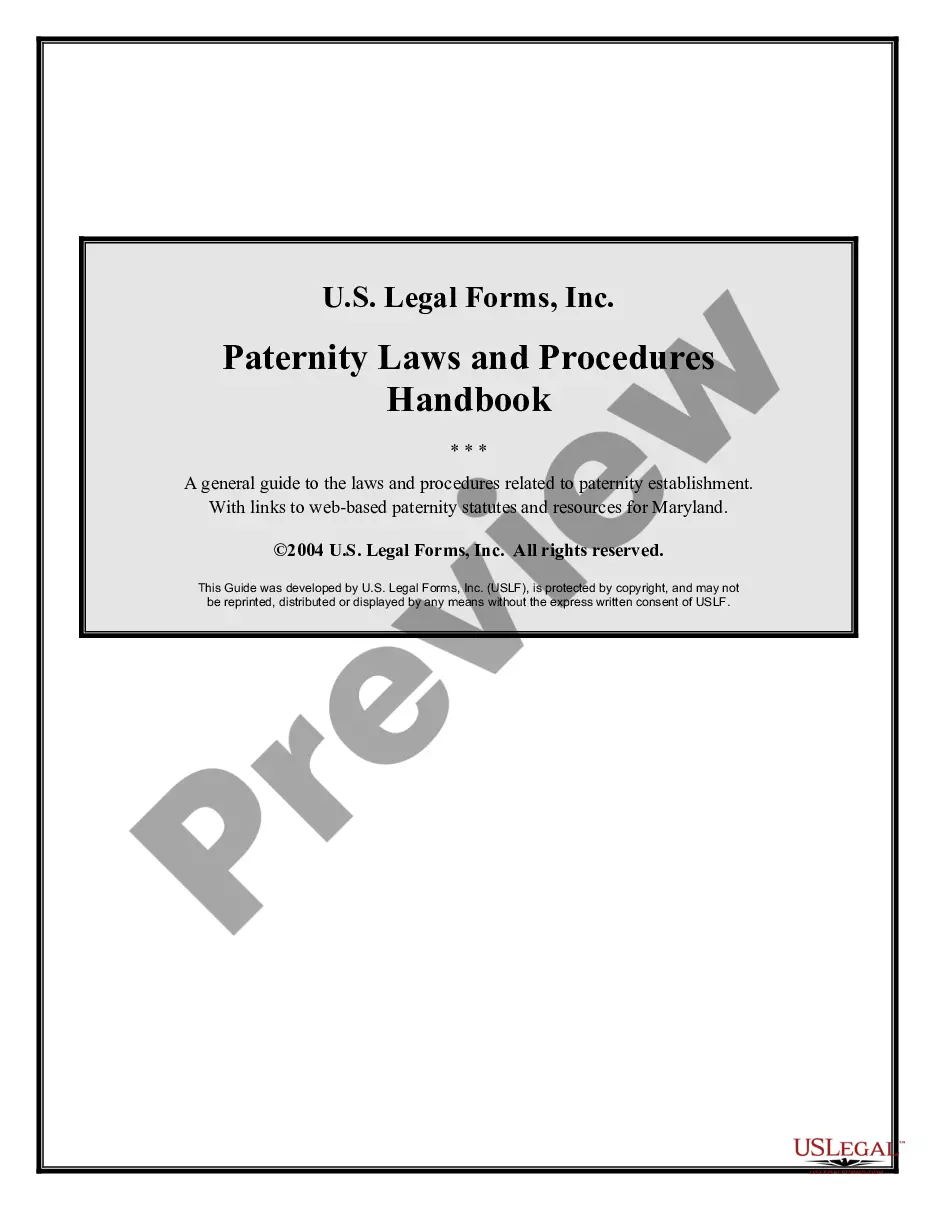
Maryland Paternity Law and Procedure Handbook
Overview of this form
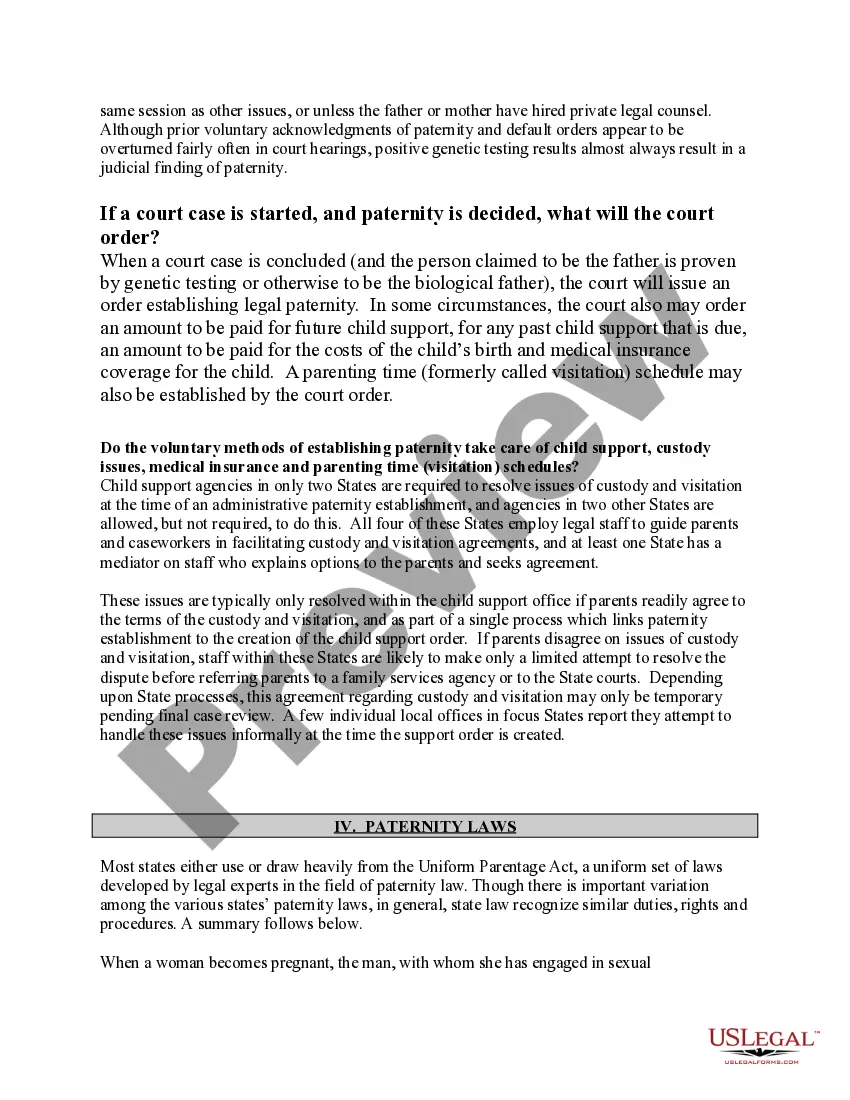
The Paternity Law and Procedure Handbook is an essential guide for understanding the legal framework surrounding the establishment of paternity in the United States. This handbook provides invaluable information about state-specific laws and procedures, which can differ significantly from one jurisdiction to another. It explains both voluntary and judicial methods for establishing paternity, as well as the importance of genetic testing in cases of doubt. This resource ultimately empowers parents to navigate the paternity establishment process with clarity and confidence.
Main sections of this form
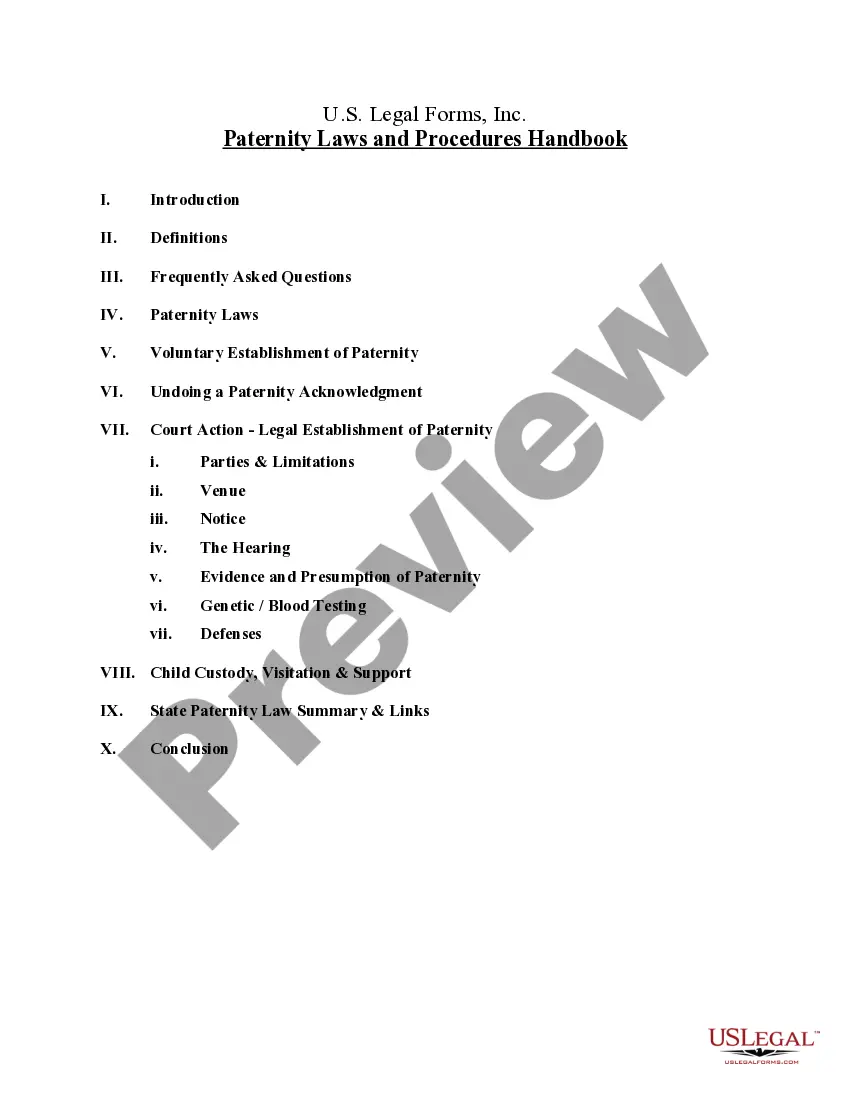
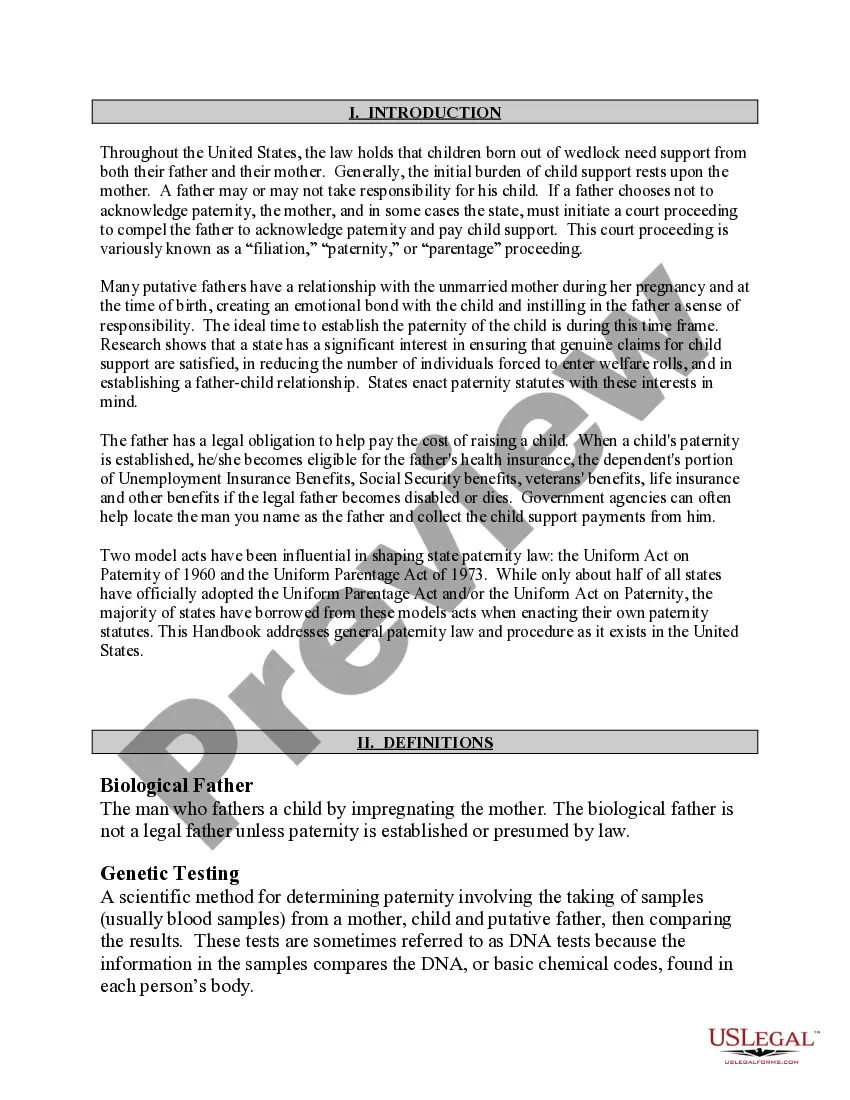
Introduction: Overview of paternity responsibilities and laws.
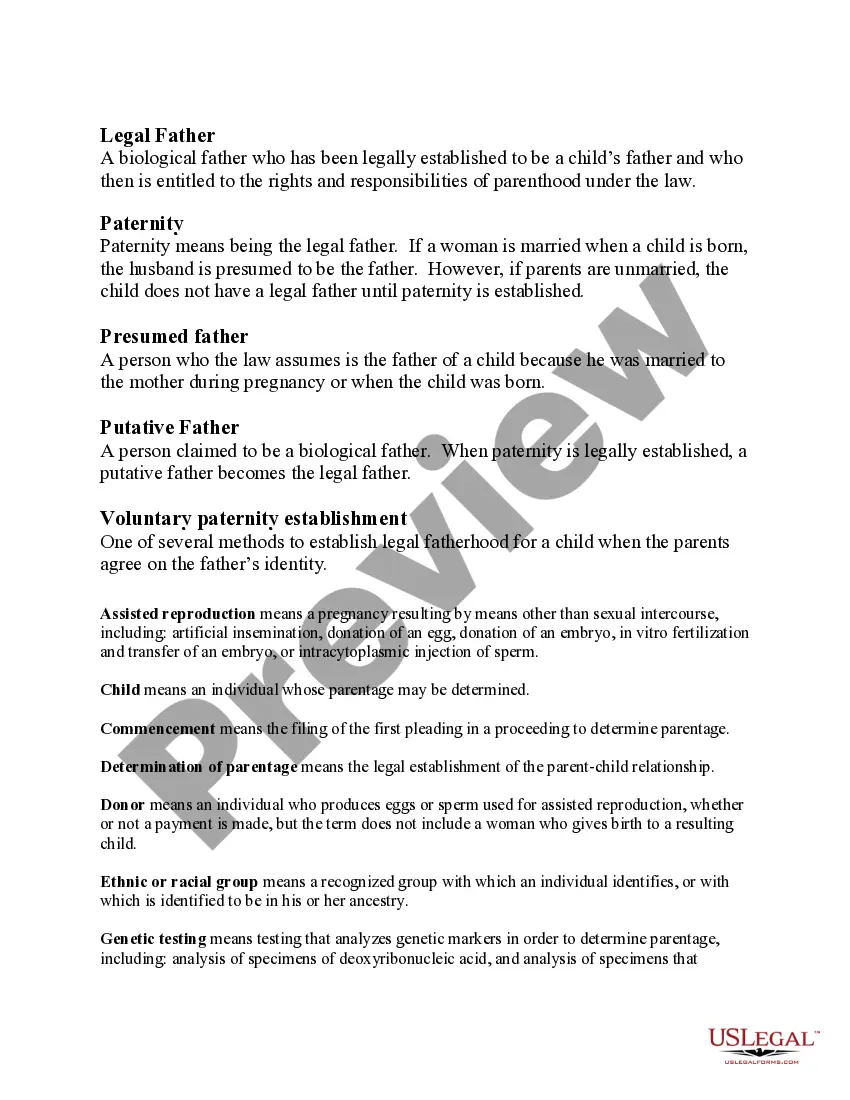
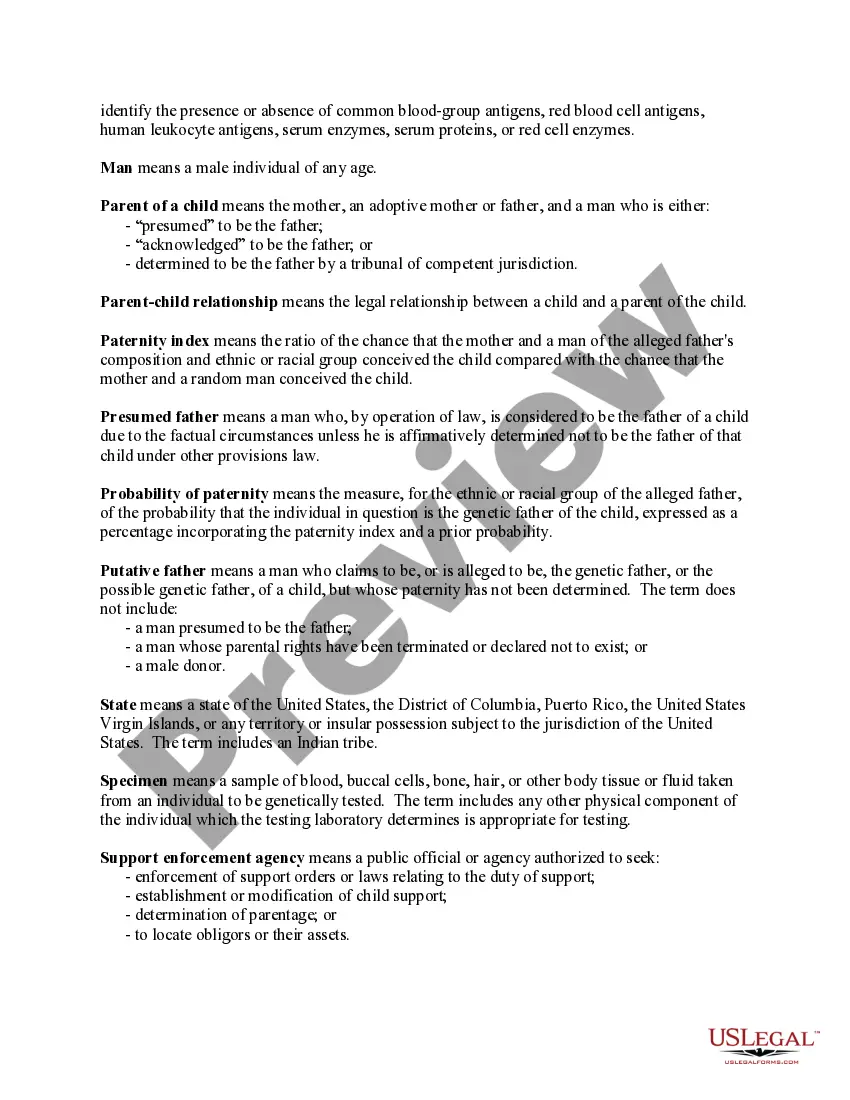
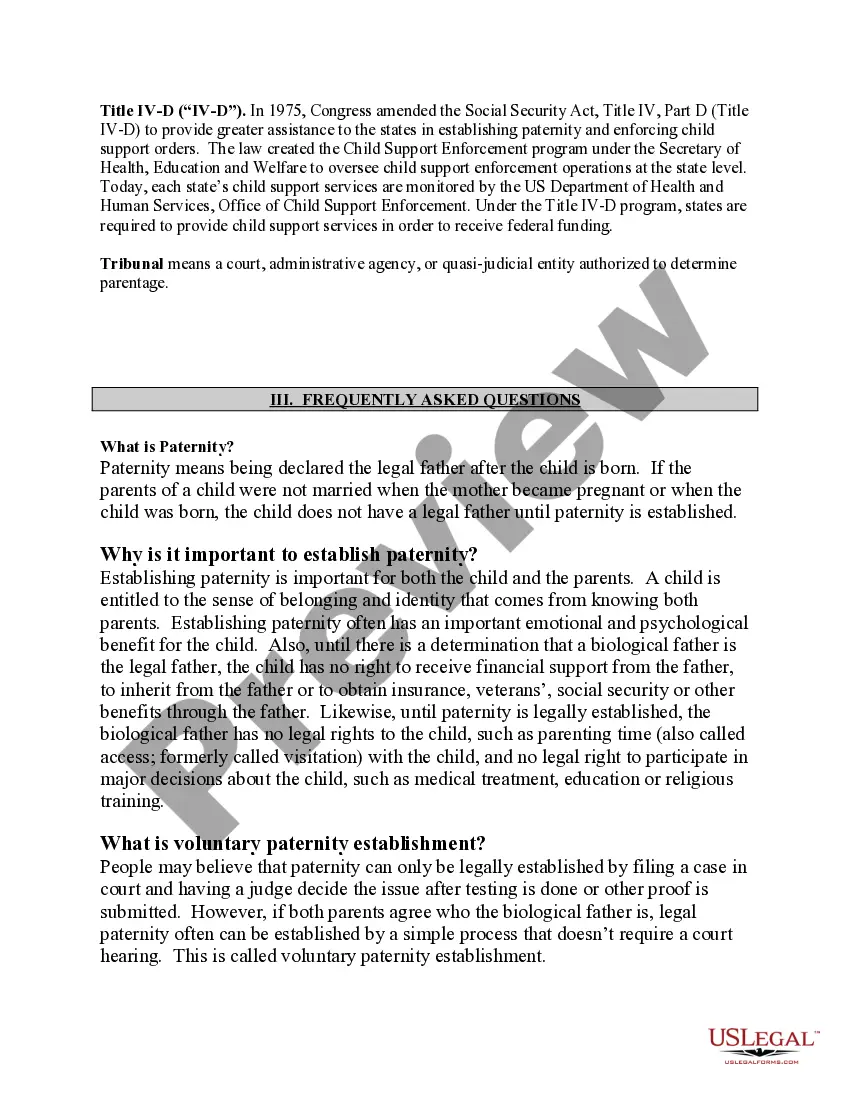
Definitions: Key terms related to paternity law such as biological father, legal father, and voluntary paternity establishment.
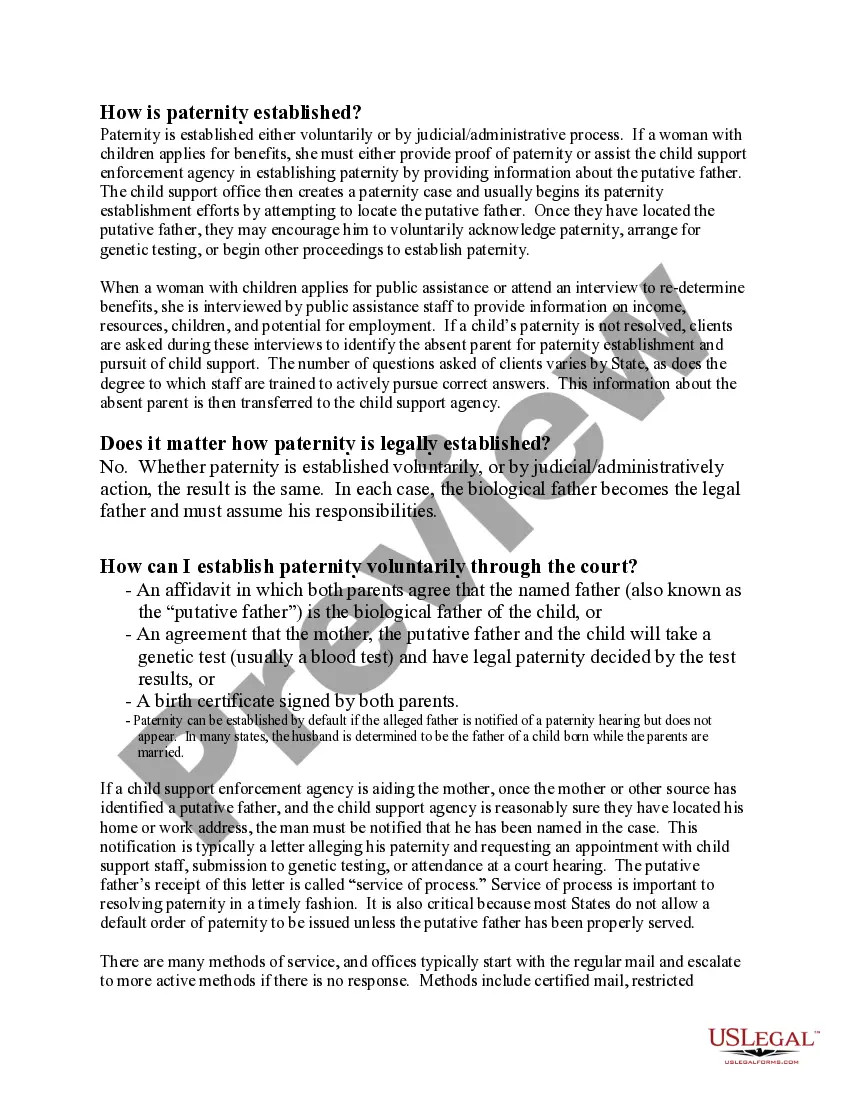
Frequently Asked Questions: Answers to common queries about paternity establishment and its significance.
Paternity Laws: Detailed discussion of national and state-specific paternity statutes.
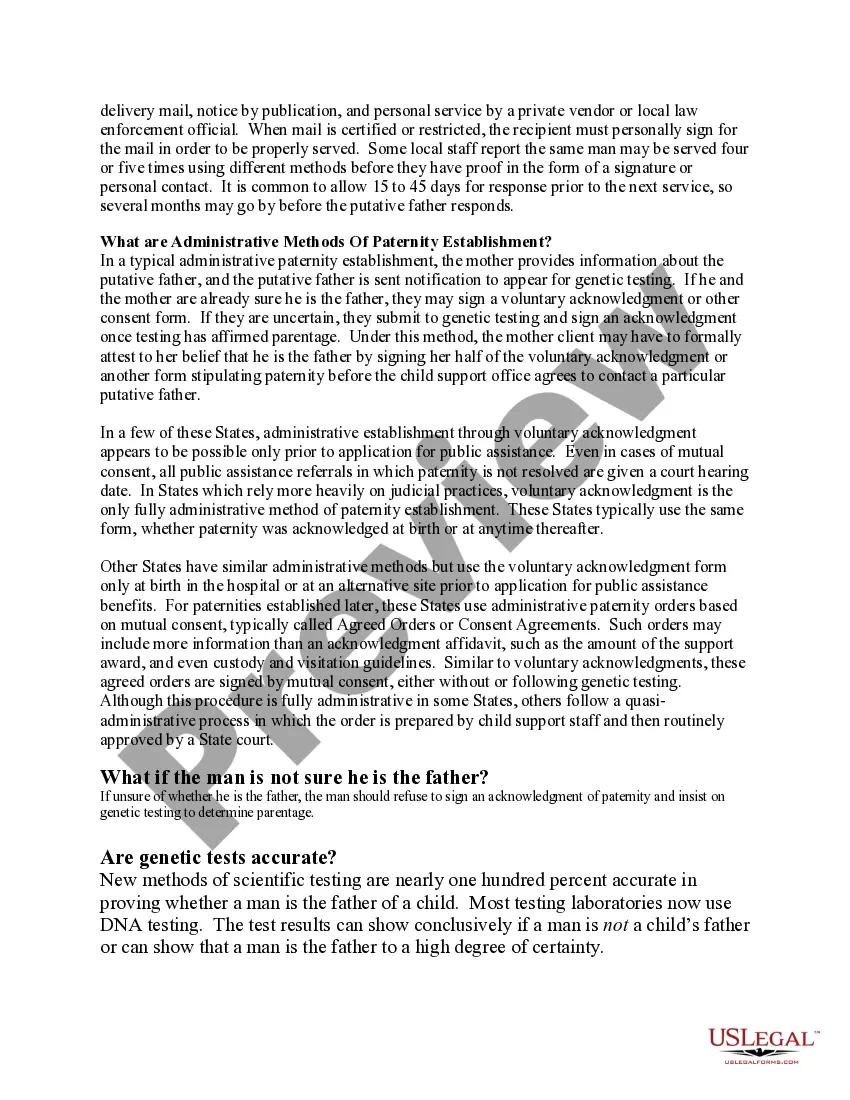
Voluntary Establishment of Paternity: Process for parents to establish paternity by mutual consent.
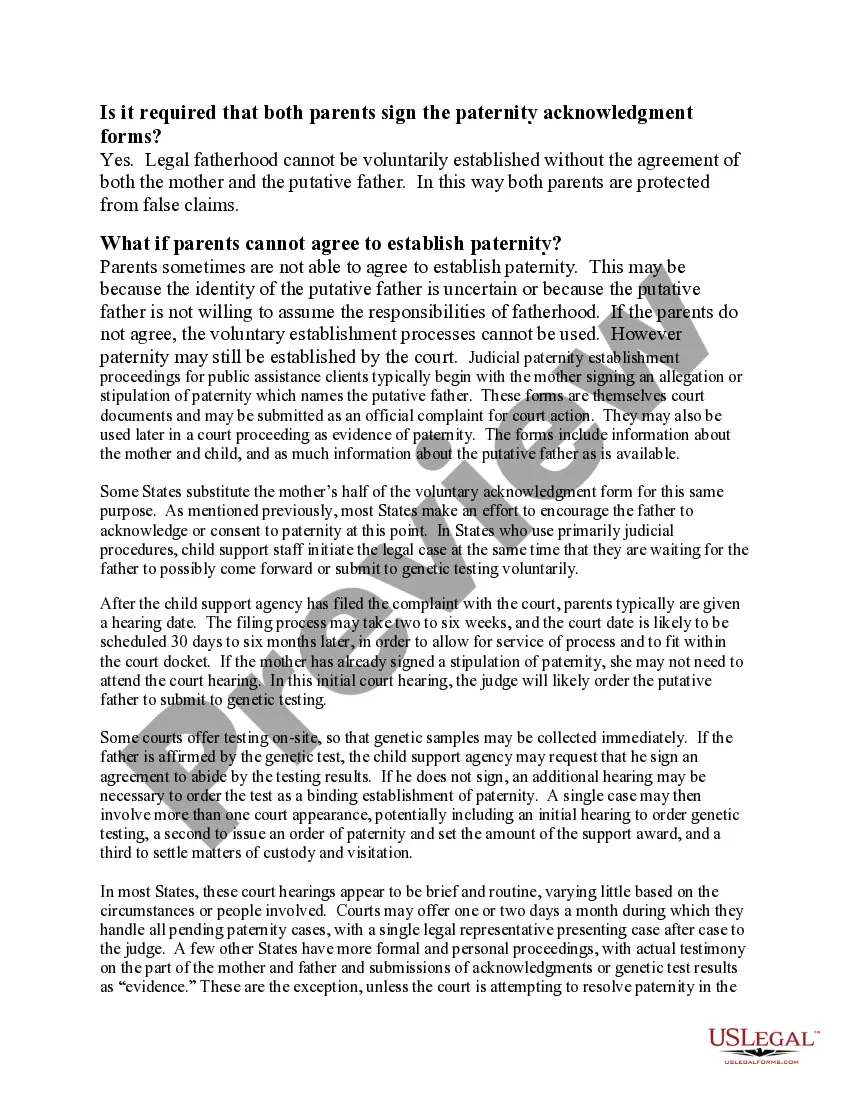
Court Action - Legal Establishment of Paternity: Steps required to establish paternity through the court system.
Child Custody, Visitation, Support: Overview of related issues addressed during paternity establishment.
State Paternity Law Summary: Links and resources specific to Maryland and other states.


Common use cases
This Paternity Law and Procedure Handbook should be used in various scenarios, including when an unmarried mother seeks to establish paternity for her child, when a putative father wants to acknowledge his parental responsibilities, or during court proceedings to compel a putative father to take responsibility. It is particularly crucial in cases involving child support claims and legal rights and responsibilities associated with fatherhood.
Who this form is for
This handbook is beneficial for:
- Unmarried parents wishing to understand and establish paternity.
- Putative fathers seeking to clarify their legal responsibilities.
- Mothers needing to initiate paternity proceedings for child support.
- Legal professionals looking for a comprehensive understanding of paternity laws.
- Anyone involved in child custody and visitation issues related to paternity.
Steps to complete this form
To utilize this handbook effectively, follow these steps:
- Read the introduction to familiarize yourself with the importance of establishing paternity.
- Consult the definitions section to understand terminology used throughout the handbook.
- Review the frequently asked questions for practical insights into common scenarios.
- Follow the outlined processes for either voluntary establishment or judicial action as applicable to your situation.
- Utilize the state-specific resources to understand your local requirements and procedures.
- Consider seeking legal advice if you have complex issues or disputes regarding paternity.
Notarization guidance
This form does not typically require notarization unless specified by local law. Users are encouraged to check their jurisdiction's requirements to ensure compliance.
Get your form ready online
Our built-in tools help you complete, sign, share, and store your documents in one place.
Make edits, fill in missing information, and update formatting in US Legal Forms—just like you would in MS Word.
Download a copy, print it, send it by email, or mail it via USPS—whatever works best for your next step.
Sign and collect signatures with our SignNow integration. Send to multiple recipients, set reminders, and more. Go Premium to unlock E-Sign.
If this form requires notarization, complete it online through a secure video call—no need to meet a notary in person or wait for an appointment.
We protect your documents and personal data by following strict security and privacy standards.

Make edits, fill in missing information, and update formatting in US Legal Forms—just like you would in MS Word.

Download a copy, print it, send it by email, or mail it via USPS—whatever works best for your next step.

Sign and collect signatures with our SignNow integration. Send to multiple recipients, set reminders, and more. Go Premium to unlock E-Sign.

If this form requires notarization, complete it online through a secure video call—no need to meet a notary in person or wait for an appointment.

We protect your documents and personal data by following strict security and privacy standards.
Mistakes to watch out for
- Failing to acknowledge paternity promptly after the child's birth.
- Not seeking genetic testing when there are doubts about paternity.
- Overlooking the importance of both parents signing paternity acknowledgment forms.
- Not being aware of different state laws and their specific requirements.
Advantages of online completion
- Convenience of accessing legal information and procedures online.
- Ability to edit and tailor forms based on specific needs.
- Guaranteed reliability from resources developed by licensed attorneys.
- Easy navigation through different state laws regarding paternity.
Legal use & context
- This handbook serves as a guide for understanding and navigating the paternity establishment process.
- It offers legal clarity on rights and responsibilities surrounding child support and custody.
- Users are encouraged to consult local attorneys or child support enforcement agencies for jurisdiction-specific advice.
Summary of main points
- The Paternity Law and Procedure Handbook provides essential knowledge for establishing paternity.
- Paternity can be established voluntarily or through court action, with specific procedures varying by state.
- Understanding paternity laws is crucial for the rights of both parents and the child's welfare.
- It is advisable to consult legal professionals for guidance tailored to individual situations.
Key terms explained
- Biological Father: The man who has fathered a child through conception.
- Legal Father: A man who has been legally recognized as the father through paternity establishment.
- Paternity: The legal recognition of a man as the father of a child.
- Putative Father: A man claimed to be the biological father whose paternity has not been legally established.
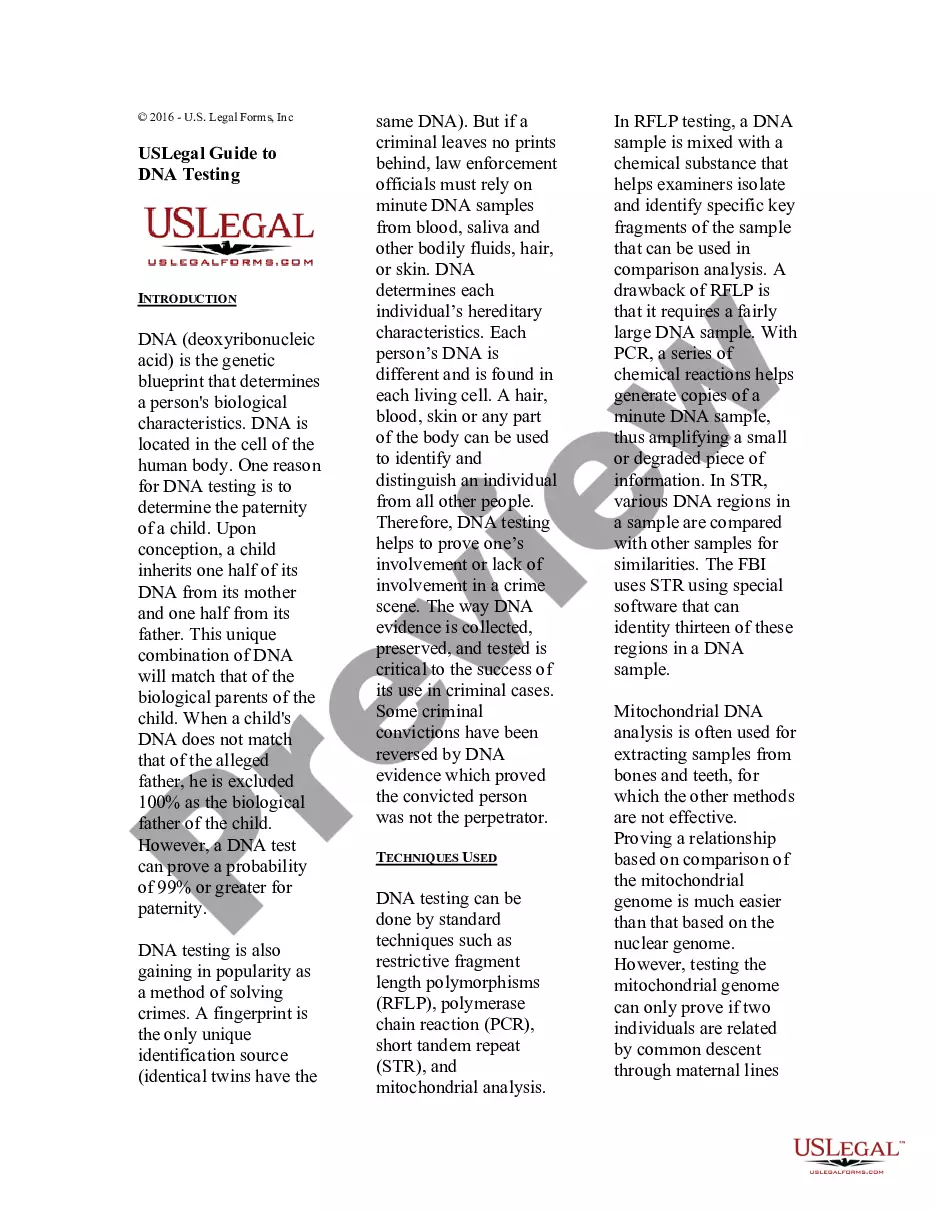
- Genetic Testing: Biological testing used to determine parentage.
Looking for another form?
Form popularity
FAQ
The deadbeat dad law in Maryland aims to address non-payment of child support, promoting accountability among parents. This law defines certain actions and consequences for parents who fail to meet their financial obligations to their children. The Maryland Paternity Law and Procedure Handbook provides vital information on how these laws work, guiding you through your rights and responsibilities as a parent. By understanding these laws, you can better navigate your obligations and ensure your child's needs are met.
Issue #2: Property Division More commonly, people use the term 50/50 to refer to how money and property is divided in the divorce settlement. Maryland is an equitable distribution state, as opposed to a community property state.
When children are born to an unmarried couple, either the mother or the father can pursue custody, so long as paternity has been established. In a Maryland child custody case, the court will award both legal and physical custody.
If a mother refuses to determine paternity for legal reasons, a court can order a paternity test be carried out. A mother has to give her consent for children to have a DNA test but the court can override any refusal if it considers it's in the child's best interest for the sample to be taken.
Establishing paternity ensures a father's legal rights and various rights and privileges for their children, such as rights to inheritance, father's medical and life insurance benefits, and Social Security and veterans' benefits, plus access to paternal family health history.
There are no set rules on who will automatically get custody of the children. In Maryland, like many other states, the one ultimate standard in determining custody is what is in the best interest of the child. There are statutory factors that the court must consider to determine the best interest of the child.
Birth certificate. If a birth certificate declares the father and he signs it, this is a legally binding qualification of paternity. DNA test. Court order.
Maryland law allows you to establish paternity through a court order or through an Affidavit of Parentage form. If the issue of paternity is contested and cannot be resolved through genetic testing alone, a judicial proceeding may be scheduled to decide the issue of paternity.
Generally. Maryland law presumes that both natural parents are the natural custodians of their children. The law does not favor either the mother or father.Either of the separated parents may petition a circuit court in Maryland for custody of a child.
Chadwick Hodge, that a man may sue a woman for paternity fraud. A man who has been told by the mother that he is the father of her child can sue her if she is lying.He may also bring a civil action for paternity fraud against the mother to recover damages and any emotional distress.