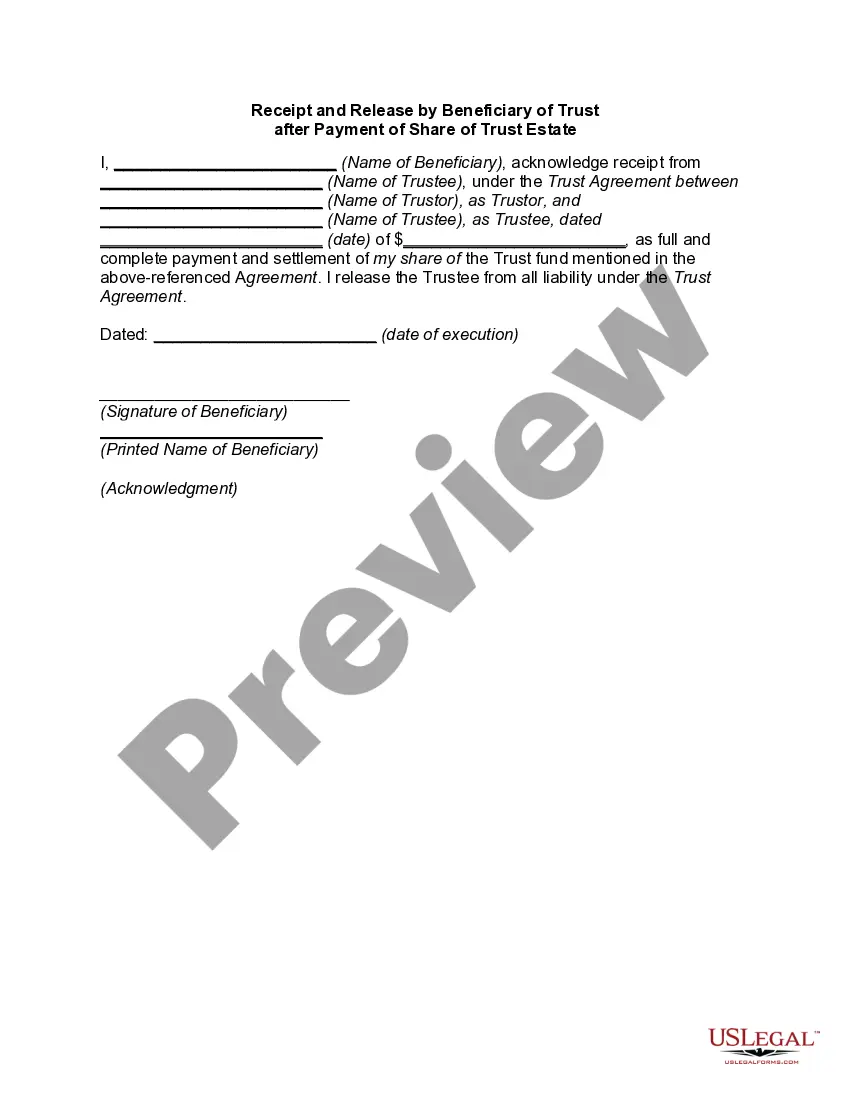
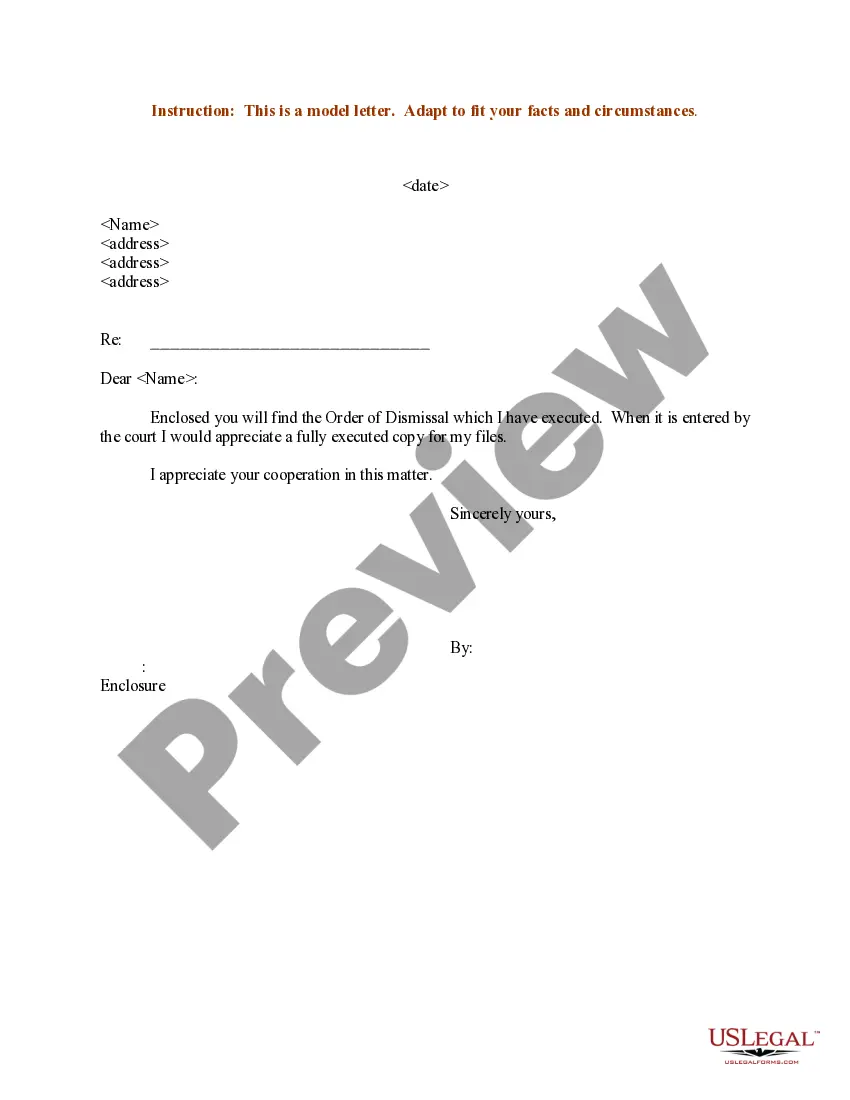
This form is a sample letter in Word format covering the subject matter of the title of the form.
Maryland Sample Letter for General and Absolute Release and Final Judgment of Dismissal with Prejudice
Category:
State:
Multi-State
Control #:
US-0013LTR
Format:
Word;
Rich Text
Instant download
Description

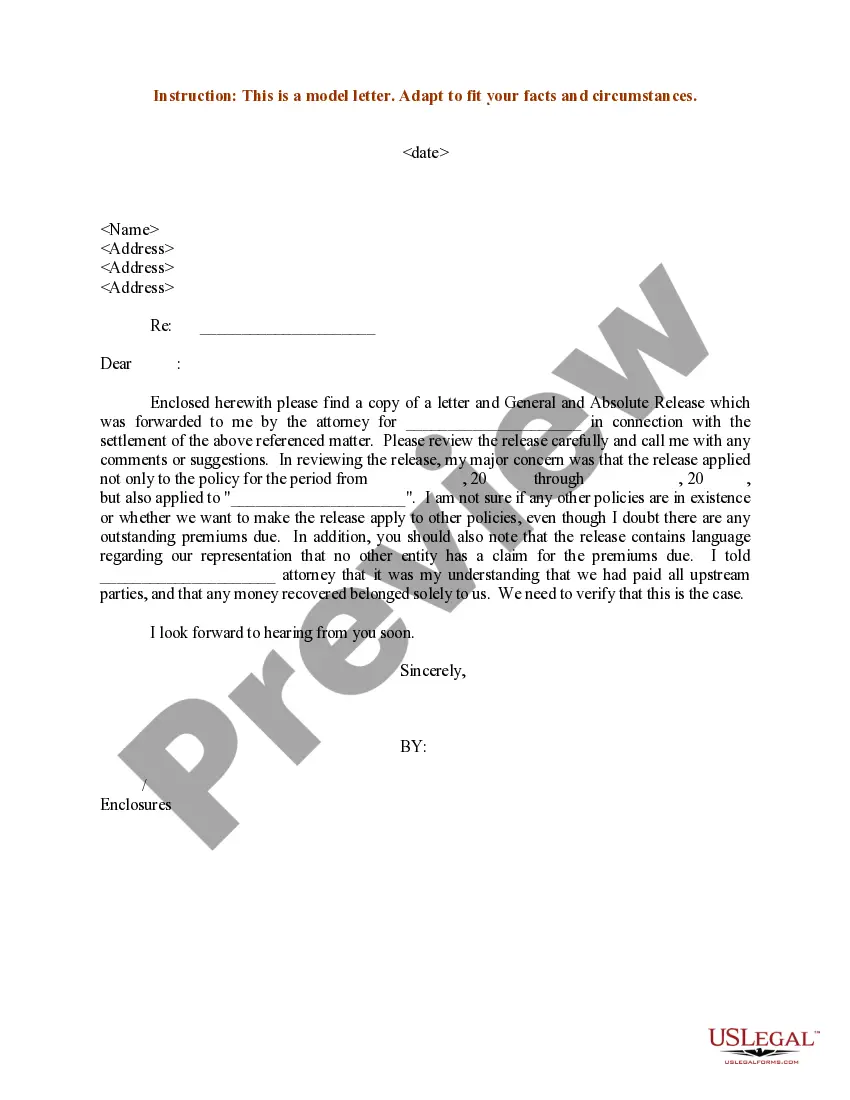
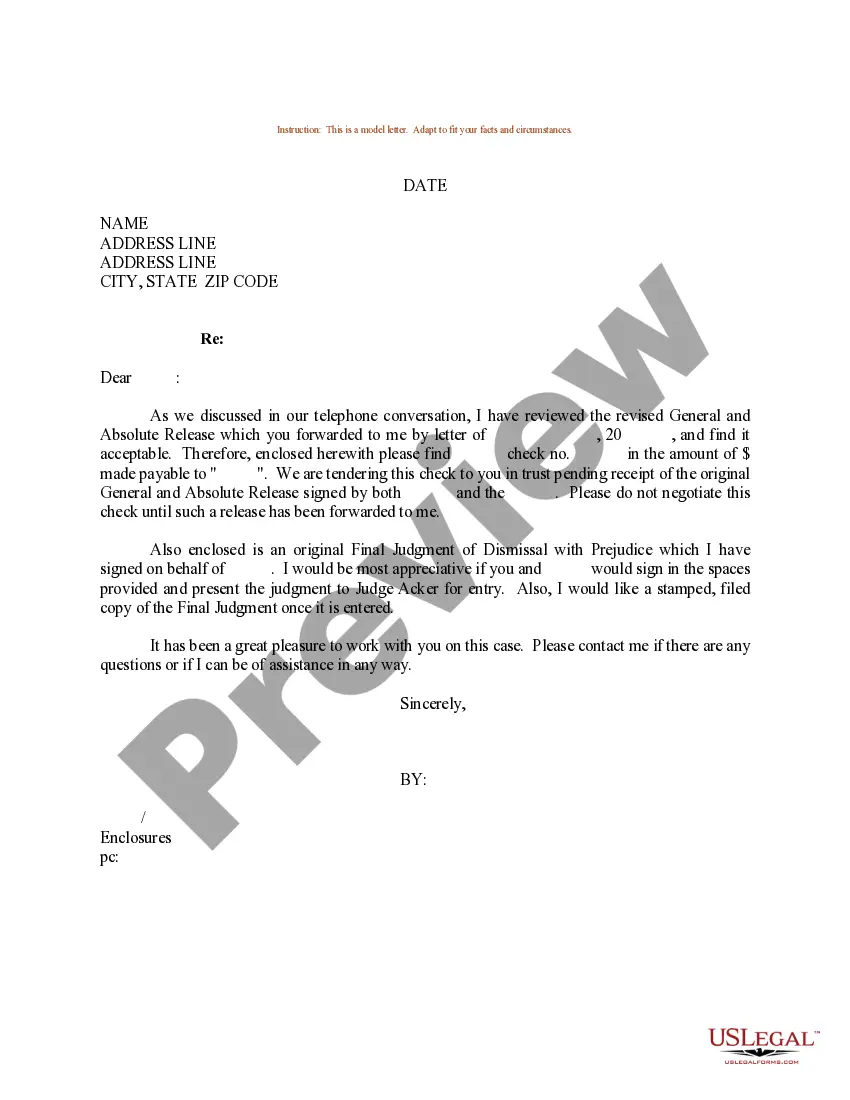
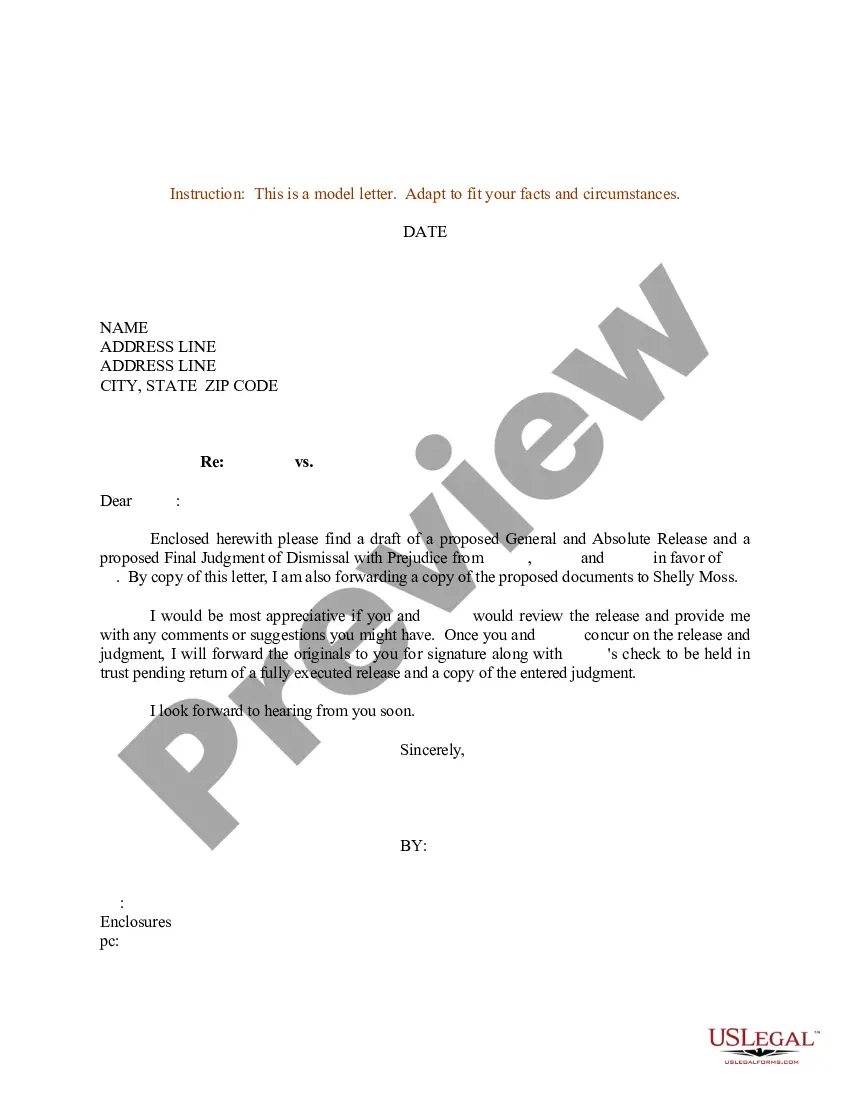
How to fill out Sample Letter For General And Absolute Release And Final Judgment Of Dismissal With Prejudice?
You might spend time online attempting to locate the legal document template that satisfies the federal and state requirements you require. US Legal Forms offers a vast array of legal forms that are evaluated by experts.
You can conveniently obtain or create the Maryland Sample Letter for General and Absolute Release and Final Judgment of Dismissal with Prejudice from their service.
If you hold a US Legal Forms account, you may Log In and then click the Acquire button. Subsequently, you can complete, modify, create, or sign the Maryland Sample Letter for General and Absolute Release and Final Judgment of Dismissal with Prejudice. Each legal document template you purchase is yours indefinitely. To obtain another copy of the acquired form, navigate to the My documents section and click the corresponding button.
Complete the transaction. You can use your Visa or Mastercard or PayPal account to pay for the legal form. Choose the format of the document and download it to your device. Make modifications to your document if necessary. You can complete, alter, and sign and print the Maryland Sample Letter for General and Absolute Release and Final Judgment of Dismissal with Prejudice. Download and print a vast number of document templates using the US Legal Forms website, which offers the largest selection of legal forms. Utilize professional and state-specific templates to address your business or personal needs.
- If you are visiting the US Legal Forms website for the first time, follow the simple steps outlined below.
- First, ensure you have selected the correct document template for the region/area of your preference.
- Review the form description to confirm you have chosen the right form.
- If available, use the Review button to browse through the document template as well.
- If you wish to find another version of the form, utilize the Lookup field to locate the template that fulfills your needs and requirements.
- Once you have identified the template you want, click on Purchase now to proceed.
- Select the pricing plan you desire, enter your details, and register for an account on US Legal Forms.
Form popularity
FAQ
Yes, a dismissal without prejudice is available in Maryland. This type of dismissal allows a plaintiff the option to refile the case in the future. It provides flexibility in legal proceedings, which can be advantageous if circumstances change. If you need guidance on drafting the necessary documents, a Maryland Sample Letter for General and Absolute Release and Final Judgment of Dismissal with Prejudice can be a useful resource.
Filling out a motion to dismiss form requires attention to detail. You must provide the case information, state the grounds for dismissal, and include any supporting documentation. It's essential to follow the specific requirements for Maryland courts. For assistance in drafting your motion, consider using a Maryland Sample Letter for General and Absolute Release and Final Judgment of Dismissal with Prejudice available through uslegalforms.
The choice between dismissal with or without prejudice depends on your situation. A dismissal with prejudice prevents you from bringing the case back to court, while a dismissal without prejudice allows you to refile in the future. If you believe you may want to pursue the case again, a dismissal without prejudice might be more beneficial. Using a Maryland Sample Letter for General and Absolute Release and Final Judgment of Dismissal with Prejudice can help you navigate these options effectively.
Yes, a dismissal with prejudice can affect your record. When a case is dismissed with prejudice, it means that the case is closed permanently and cannot be refiled. This type of dismissal usually appears on your record, which may have implications for future legal actions. For those seeking to understand their rights, a Maryland Sample Letter for General and Absolute Release and Final Judgment of Dismissal with Prejudice can provide clarity.
?With prejudice? means the decision is final. ?Without prejudice? means it's not final and subject to future inquiry. If the judge announces a case is dismissed with prejudice, that means it's permanently dismissed and can't be retried.
In a California civil or criminal case, either party can file a motion for dismissal that will terminate the case. Dismiss with prejudice is when the charges are dropped, and you are free.
?With prejudice? means that you cannot re-file your case ever. ?Without prejudice? means that you can re-file your case at a later date (as long as you are still within the statute of limitations).
A court may allow a plaintiff to voluntarily withdraw from the suit through a Rule 41(a) dismissal without prejudice if the plaintiff would suffer hardship from continuing the suit. Also, under Rule 37(b)(2), a court may dismiss without prejudice to sanction a party acting in bad faith.
A case dismissed with prejudice is considered a final ruling on the merits of that case. A case dismissed without prejudice is not considered a ruling on the merits and the plaintiff is free to file a new lawsuit on the same grounds if they wish to do so.
When a court dismisses an action, they can either do so ?with prejudice? or ?without prejudice.? Dismissal with prejudice means that the plaintiff cannot refile the same claim again in that court.