Maryland Tax Free Exchange Agreement Section 1031
Description


How to fill out Tax Free Exchange Agreement Section 1031?
Locating the correct legal document template can be quite a challenge.
Clearly, there are numerous templates accessible online, but how can you discover the legal form you need.
Utilize the US Legal Forms website. The platform offers thousands of templates, including the Maryland Tax-Free Exchange Agreement Section 1031, which can be employed for business and personal purposes.
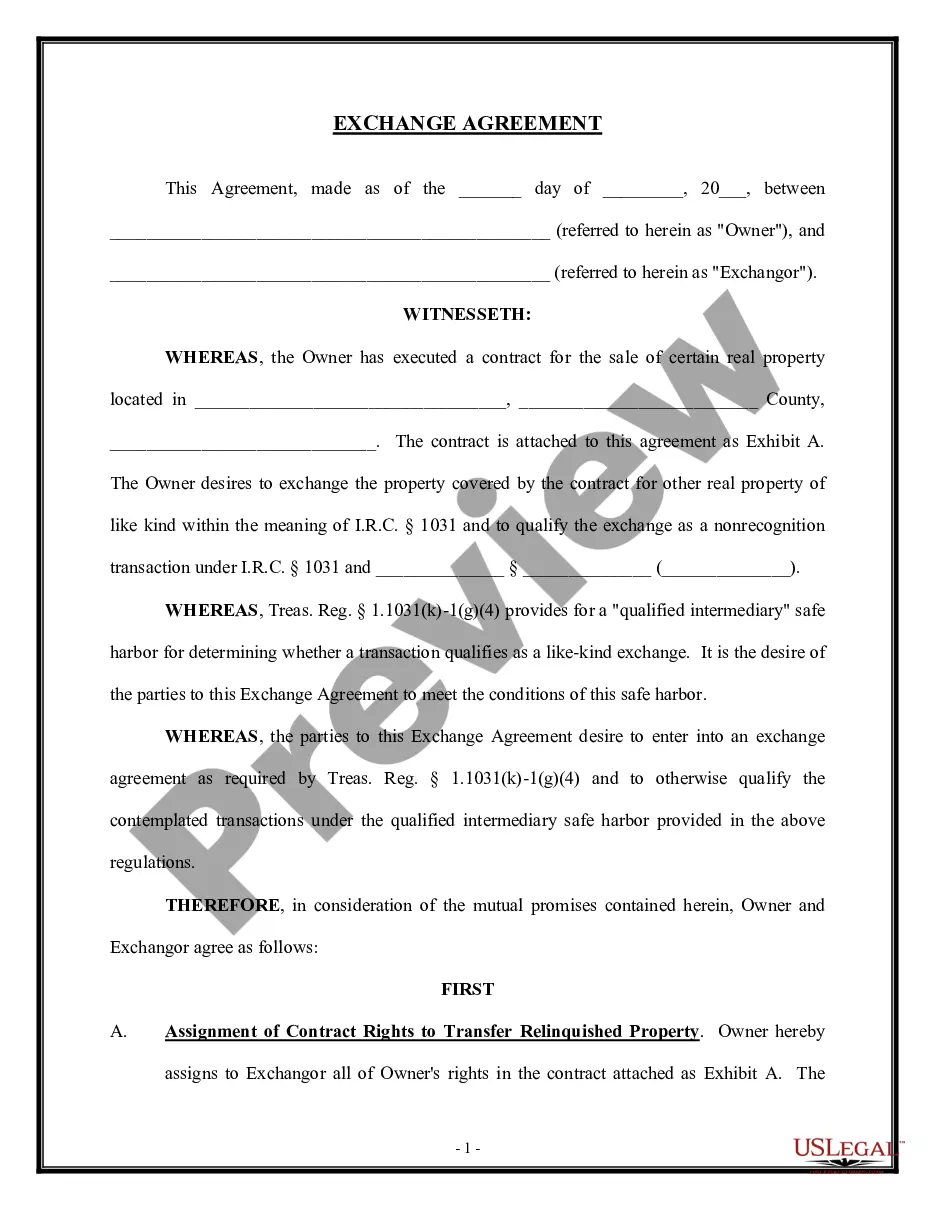
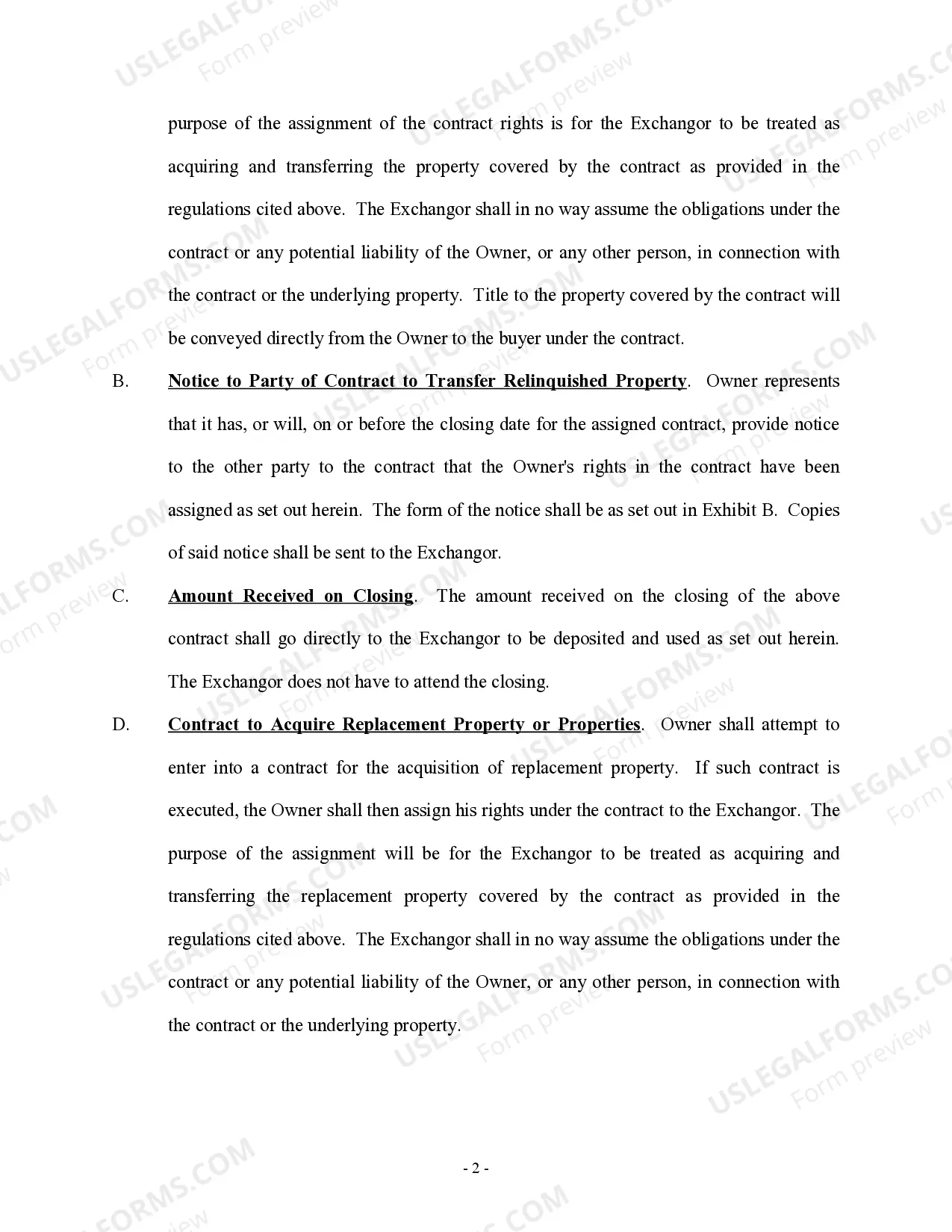
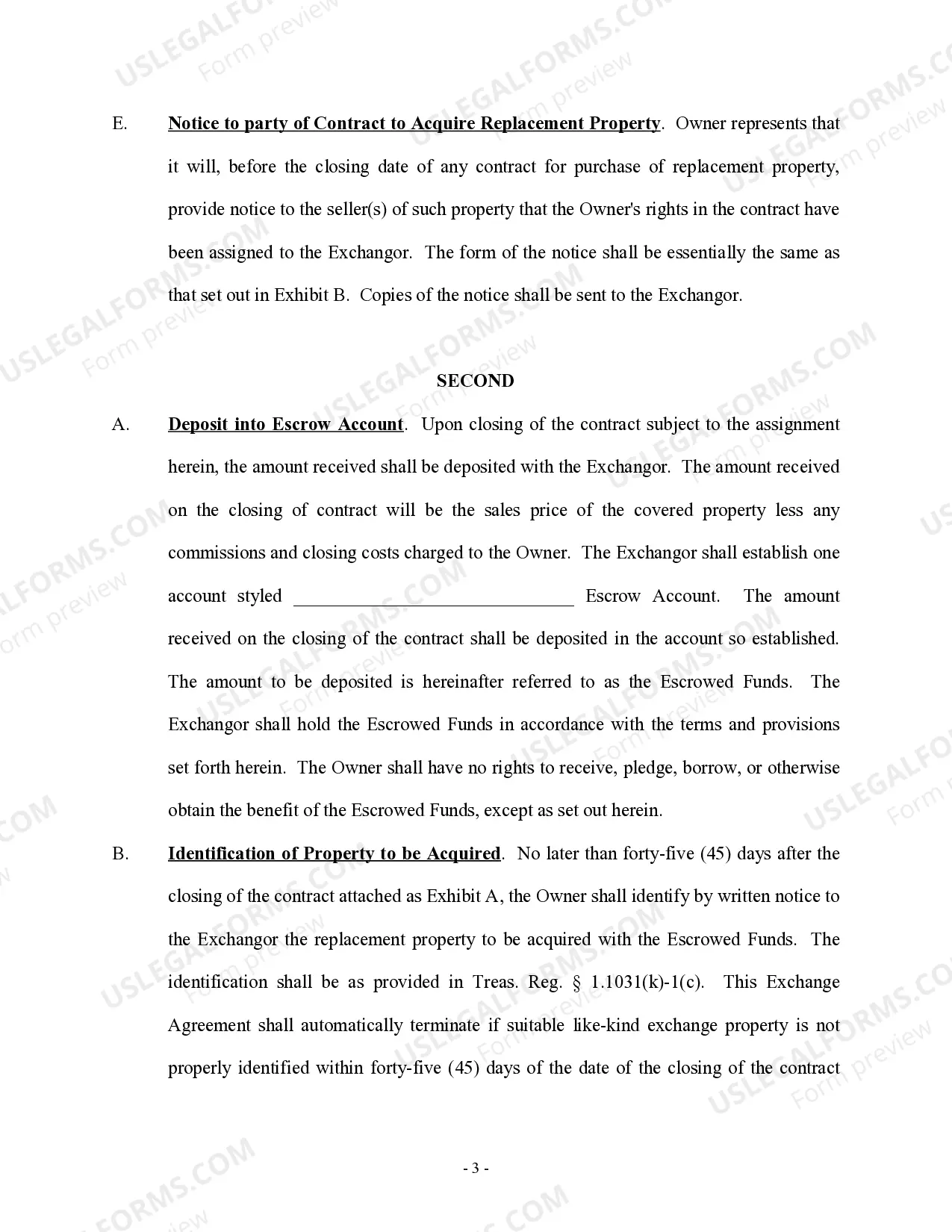
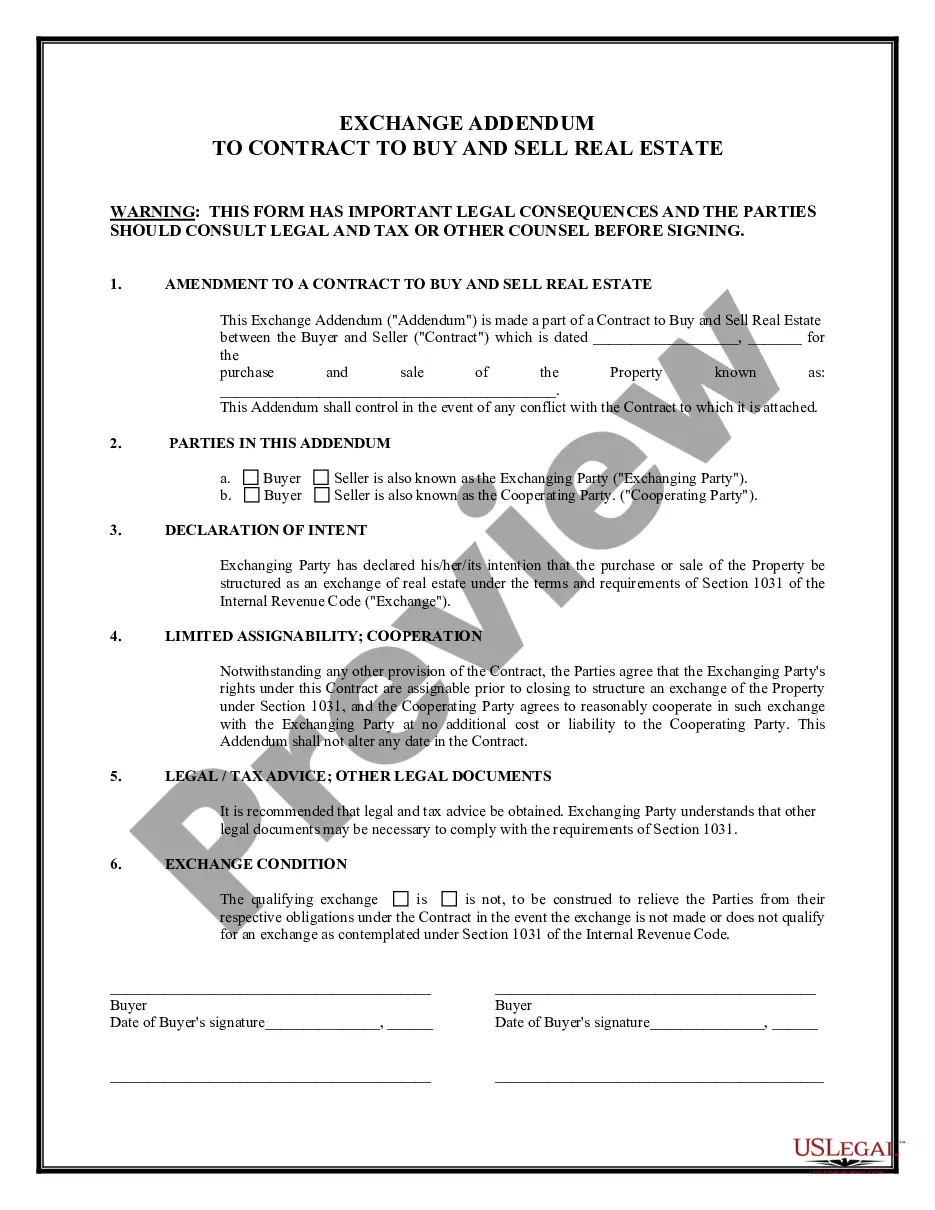
You can review the form using the Preview button and read the form details to confirm it's suitable for you.
- All templates are vetted by experts and comply with federal and state regulations.
- If you are already registered, Log In to your account and click the Download button to obtain the Maryland Tax-Free Exchange Agreement Section 1031.
- Use your account to browse the legal forms you have acquired in the past.
- Navigate to the My documents section of your account to retrieve another copy of the document you need.
- If you are a new user of US Legal Forms, here are straightforward steps for you to follow.
- First, ensure you have selected the correct form for your city/region.
Form popularity
FAQ
State Capital Gains TaxesMD has its own 5.8% capital gains tax. Benzinga reports that this pushes the true capital gains tax for property sellers in this state to over 30%. This makes this state one of the top 10 most expensive for capital gains.
Gain deferred in a like-kind exchange under IRC Section 1031 is tax-deferred, but it is not tax-free. The exchange can include like-kind property exclusively or it can include like-kind property along with cash, liabilities and property that are not like-kind.
A 1031 exchange occurs when you have a sale of business or investment property (in most cases, real estate), in which you would normally have a taxable gain, but because you are reinvesting the proceeds of the sale in a like-kind (i.e., similar) property as part of a 1031 exchange, the gain on the sale is deferred.
There are also states that have withholding requirements if the seller of a piece of property in these states is a non-resident of any of the following states: California, Colorado, Hawaii, Georgia, Maryland, New Jersey, Mississippi, New York, North Carolina, Oregon, West Virginia, Maine, South Carolina, Rhode Island,
While you can't do a 1031 exchange directly into a personal residence -- exchanges are limited to real property that is held strictly for investment or business purposes -- you can convert an investment property into personal property so long as you follow the IRS' rules to the letter.
A 1031 exchange allows you to sell one investment or business property and buy another without incurring capital gains taxes as long as the exchange is completed according to IRS rules and the new property is of the same nature or character (like kind).
Section 1031 is a federal tax code, so it is recognized in all states, so you can exchange from state to state.
The State of Maryland does recognize 1031 exchanges as tax-deferred. As a result, they offer an exemption to collecting this tax payment at closing. Taxpayers exchanging out of property in Maryland can file for the exemption on Form MW506AE.