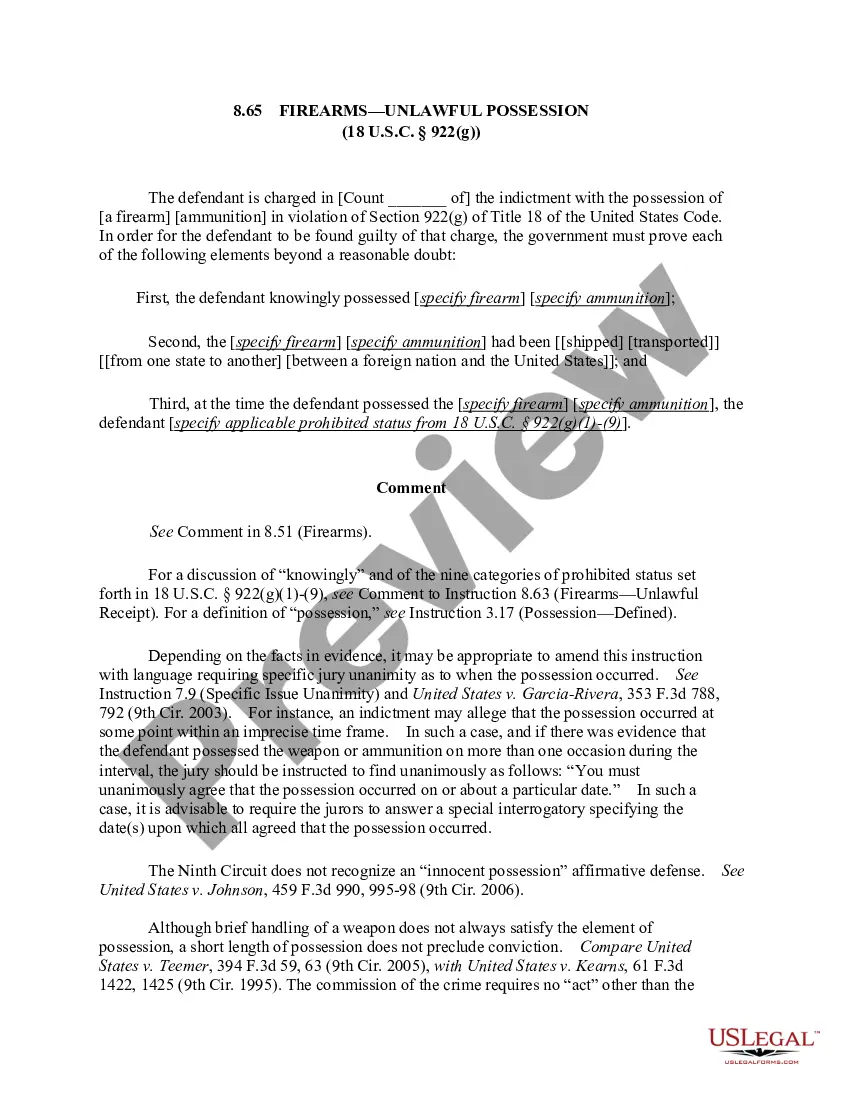
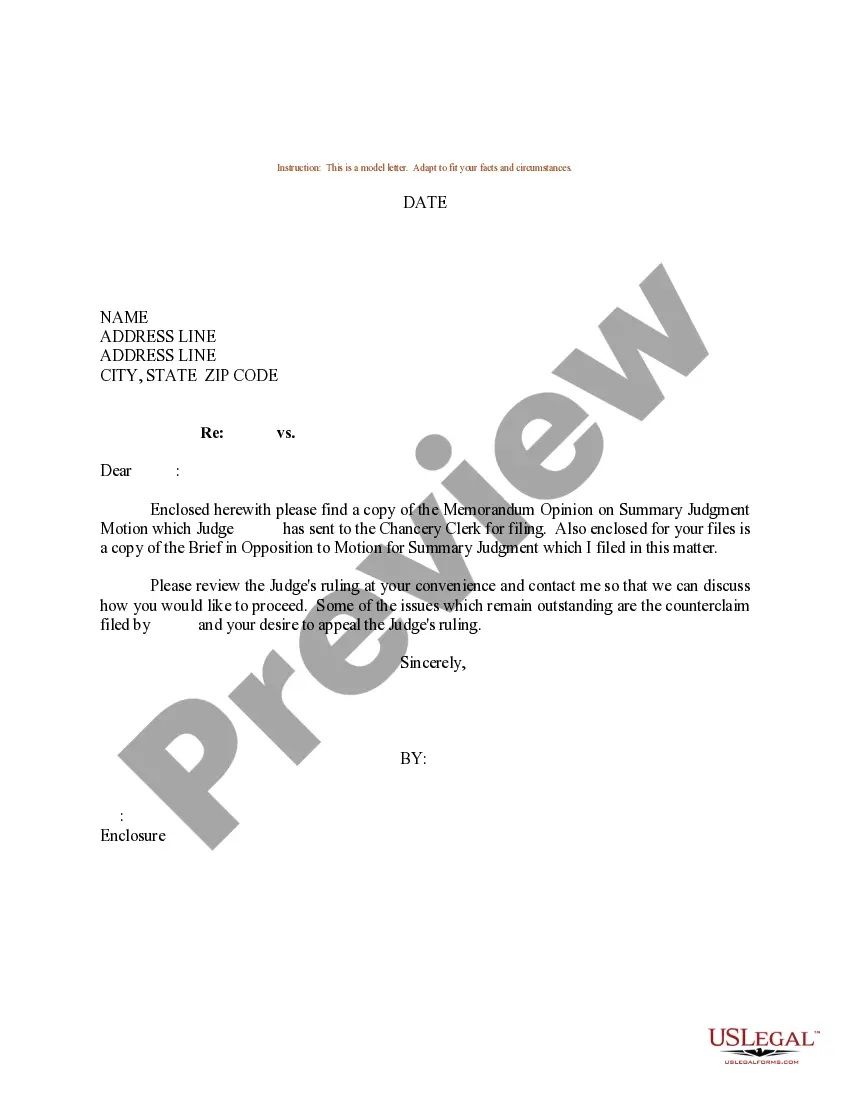
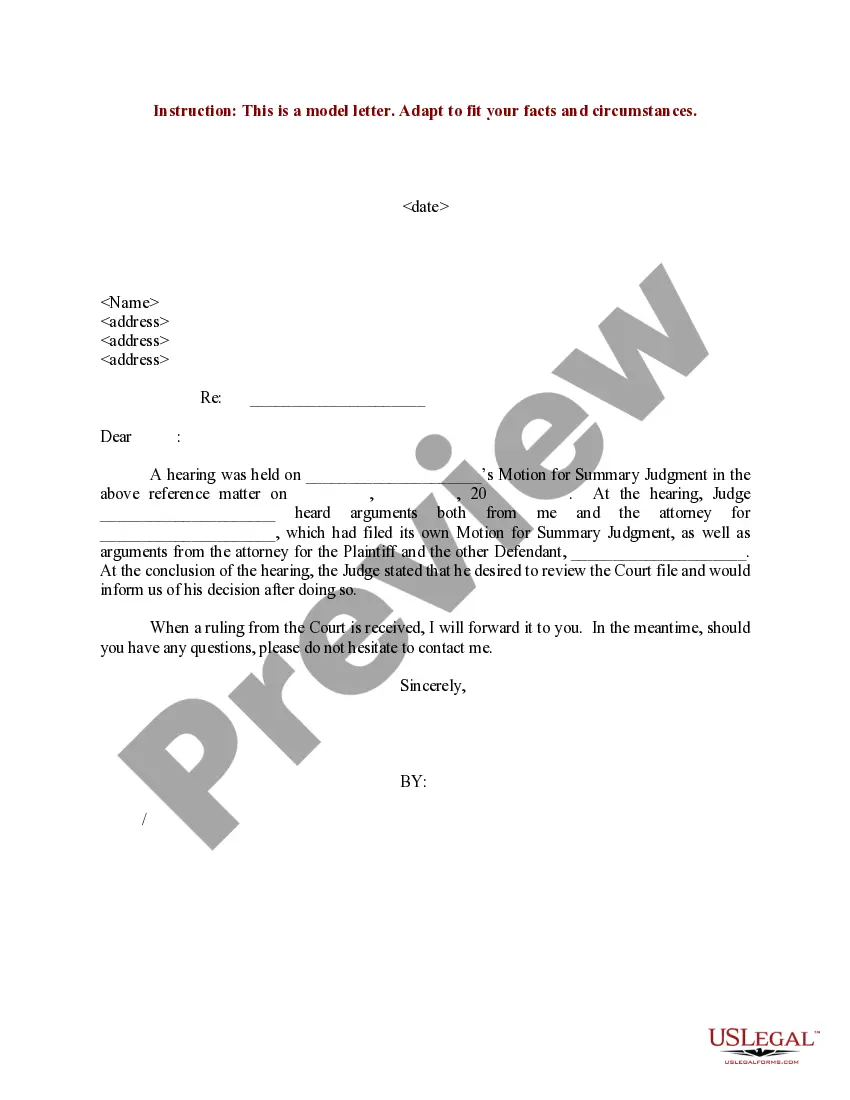
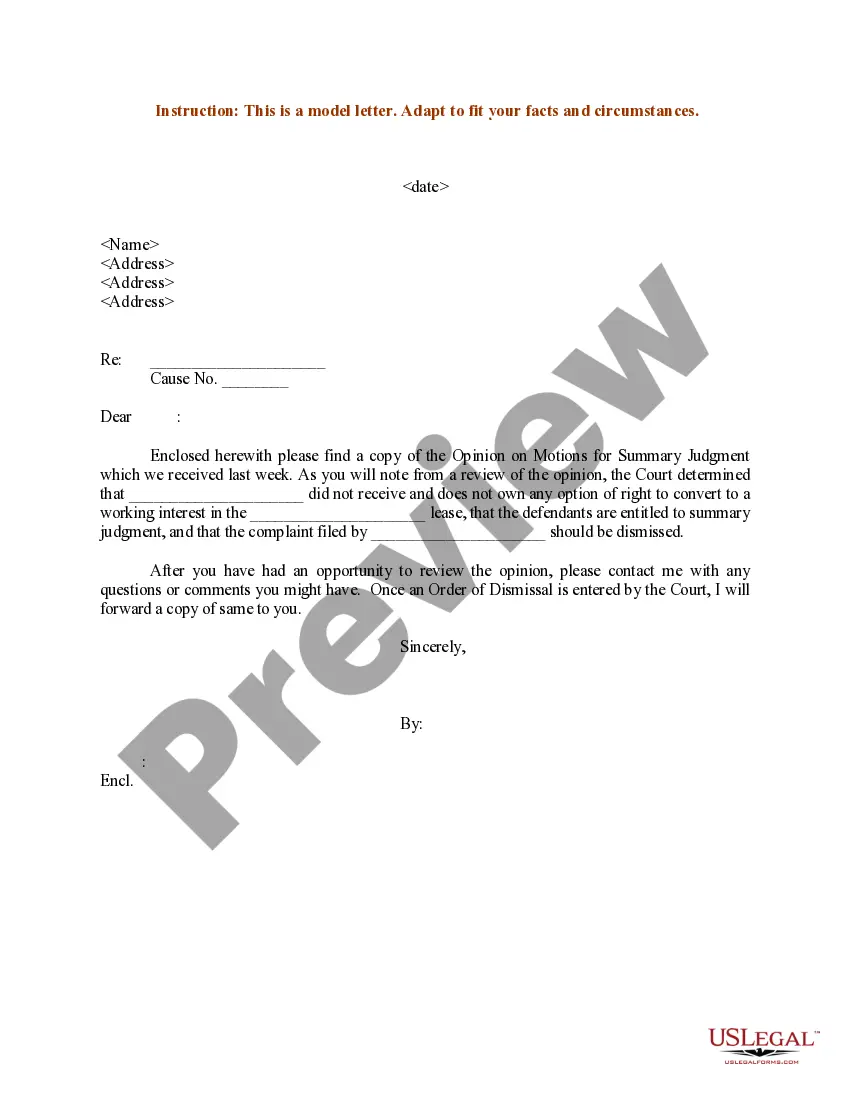
Maryland Sample Letter regarding Memorandum Opinion on Summary Judgment Motion
Description
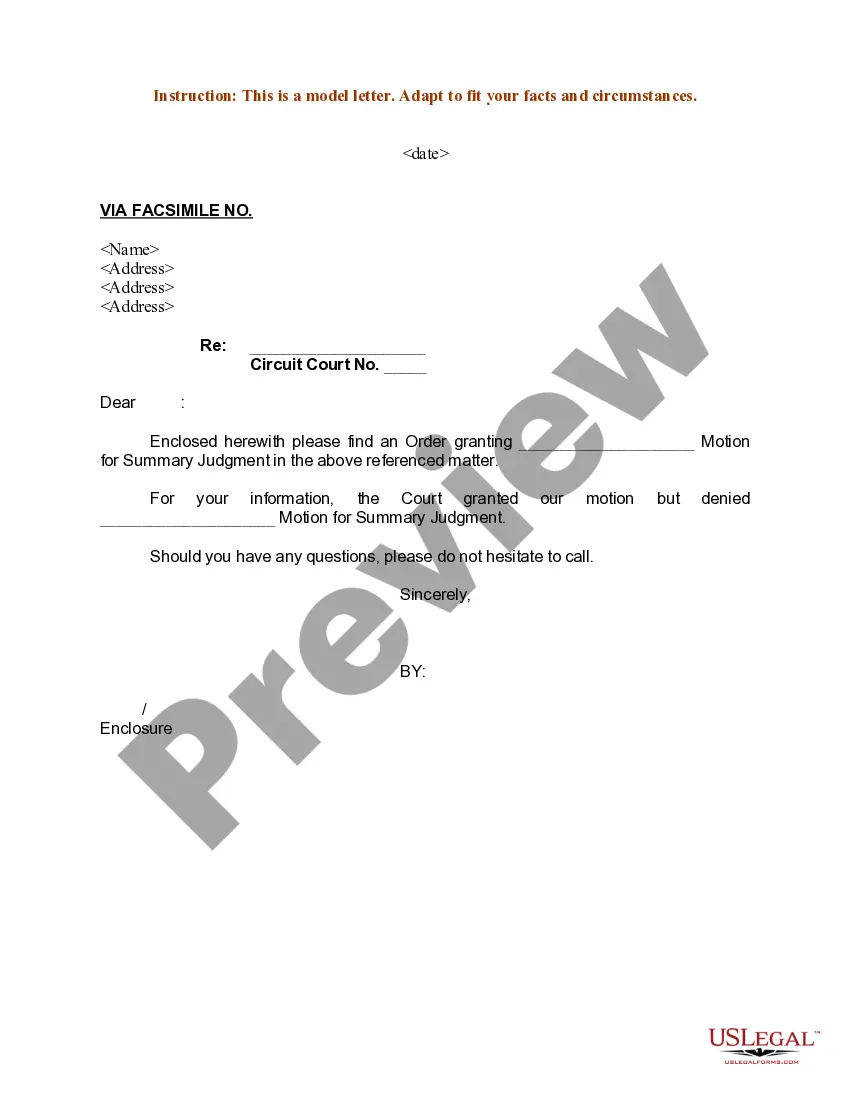
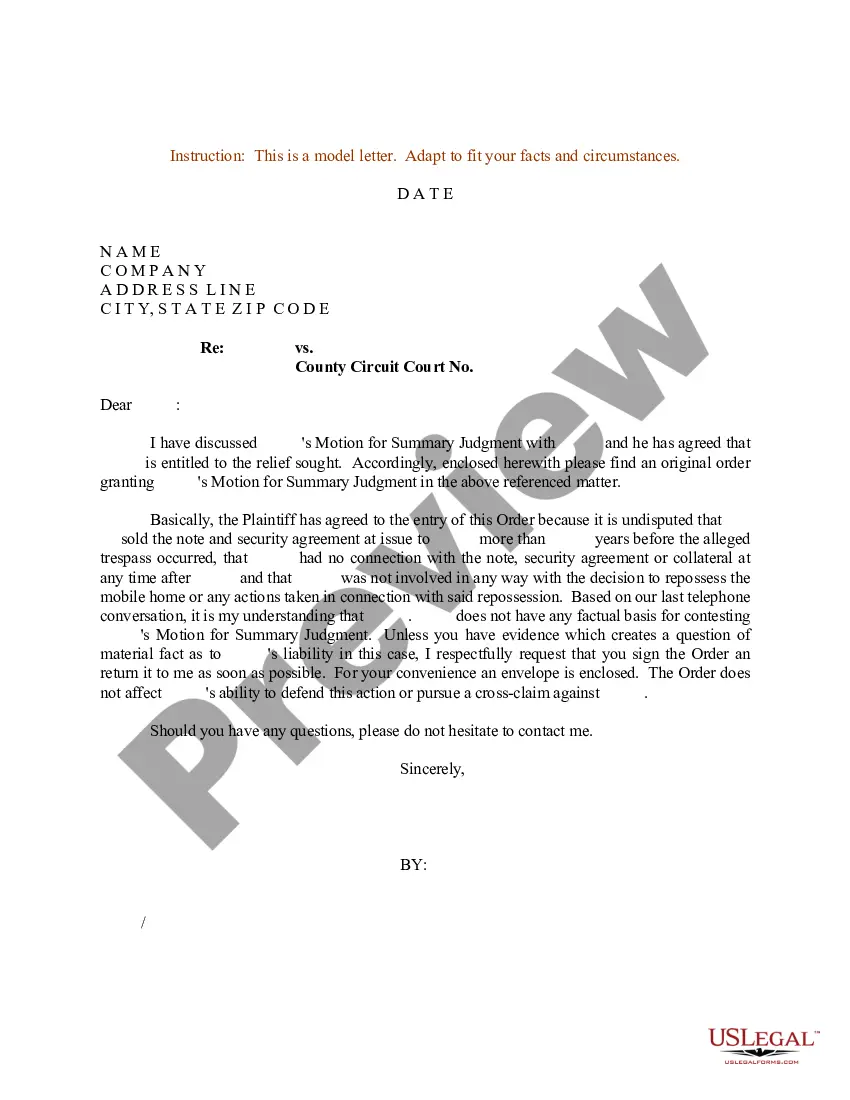
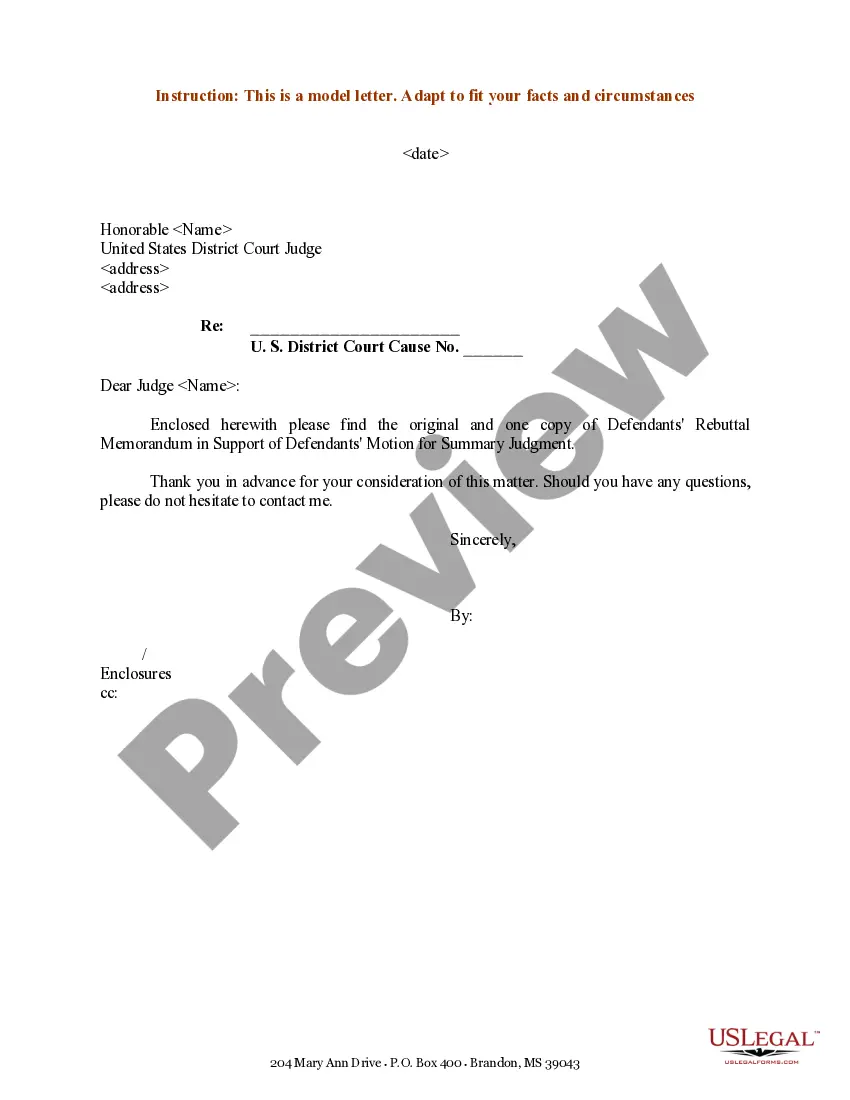
How to fill out Sample Letter Regarding Memorandum Opinion On Summary Judgment Motion?
Selecting the finest legal document template can be a challenge. Naturally, there are numerous formats available online, but how do you find the legal form you need? Utilize the US Legal Forms website. The service offers a vast array of templates, including the Maryland Sample Letter concerning Memorandum Opinion on Summary Judgment Motion, which you can use for business and personal needs. All of the forms are reviewed by professionals and comply with federal and state requirements.
If you are already registered, Log In to your account and click the Obtain button to access the Maryland Sample Letter concerning Memorandum Opinion on Summary Judgment Motion. Use your account to search for the legal forms you have purchased previously. Visit the My documents tab of your account and download another copy of the document you need.
If you are a new user of US Legal Forms, here are simple instructions that you should follow: First, ensure you have selected the correct form for your city/region. You can review the form using the Review button and read the form description to confirm this is the suitable one for you. If the form does not meet your requirements, use the Search field to find the appropriate form. Once you are confident that the form is correct, click the Purchase now button to obtain the form. Choose the payment plan you prefer and enter the necessary information. Create your account and pay for the transaction using your PayPal account or credit card. Select the file format and download the legal document template to your device. Complete, modify, and print and sign the acquired Maryland Sample Letter concerning Memorandum Opinion on Summary Judgment Motion.
Make use of this platform to simplify your legal documentation process and ensure you have the correct and compliant forms for your needs.
- US Legal Forms is the largest collection of legal forms.
- Access a wide range of document templates.
- Utilize the service to obtain professionally crafted documents.
- Ensure compliance with state regulations.
- Find the necessary forms for various purposes.
- Enjoy the convenience of downloading legal documents online.
Form popularity
FAQ
The chance of success in these cases is less than 10% [1]. Another study found that summary judgment is mostly granted in Title VII cases, for example, cases involving equal pay or employment discrimination [2]. When it comes to federal cases, summary judgments are filed in 17% of total cases.
Replies should be succinctly stated. If the response to a fact is ?undisputed,? the reply should also state ?undisputed.? If you contend that despite a response of ?disputed,? the non-moving party has failed to raise a genuine dispute of material fact, you should succinctly state why.
Show that the law does not support judgment on the undisputed facts. Your legal research may reveal case law that shows judgment isn't warranted in your case, even when no facts are in dispute. Show that discovery is incomplete and could raise a disputed material fact when completed.
What Must an Opposition to a Motion for Summary Judgment Include? The Memorandum of Points and Authorities includes any legal authorities and arguments that support your Opposition. An effective Memorandum of Points and Authorities will directly address the arguments made in the Motion for Summary Judgment.
In Maryland, summary judgment may only be granted if two conditions are met. First, the moving party must establish there is no genuine dispute as to any material fact. Second, the moving party must establish that it is entitled to judgment as a matter of law. Maryland Rule 2-501(f).
A response to a motion for summary judgment shall be in writing and shall (1) identify with particularity each material fact as to which it is contended that there is a genuine dispute and (2) as to each such fact, identify and attach the relevant portion of the specific document, discovery response, transcript of ...
Rule 4-263 - Discovery in Circuit Court (a)Applicability. This Rule governs discovery and inspection in a circuit court. Committee note: This Rule also governs discovery in actions transferred from District Court to circuit court upon a jury trial demand made in ance with Rule 4-301(b)(1)(A).
Except as otherwise provided in this section, a party against whom a motion is directed shall file any response within 15 days after being served with the motion, or within the time allowed for a party's original pleading pursuant to Rule 2-321(a), whichever is later.