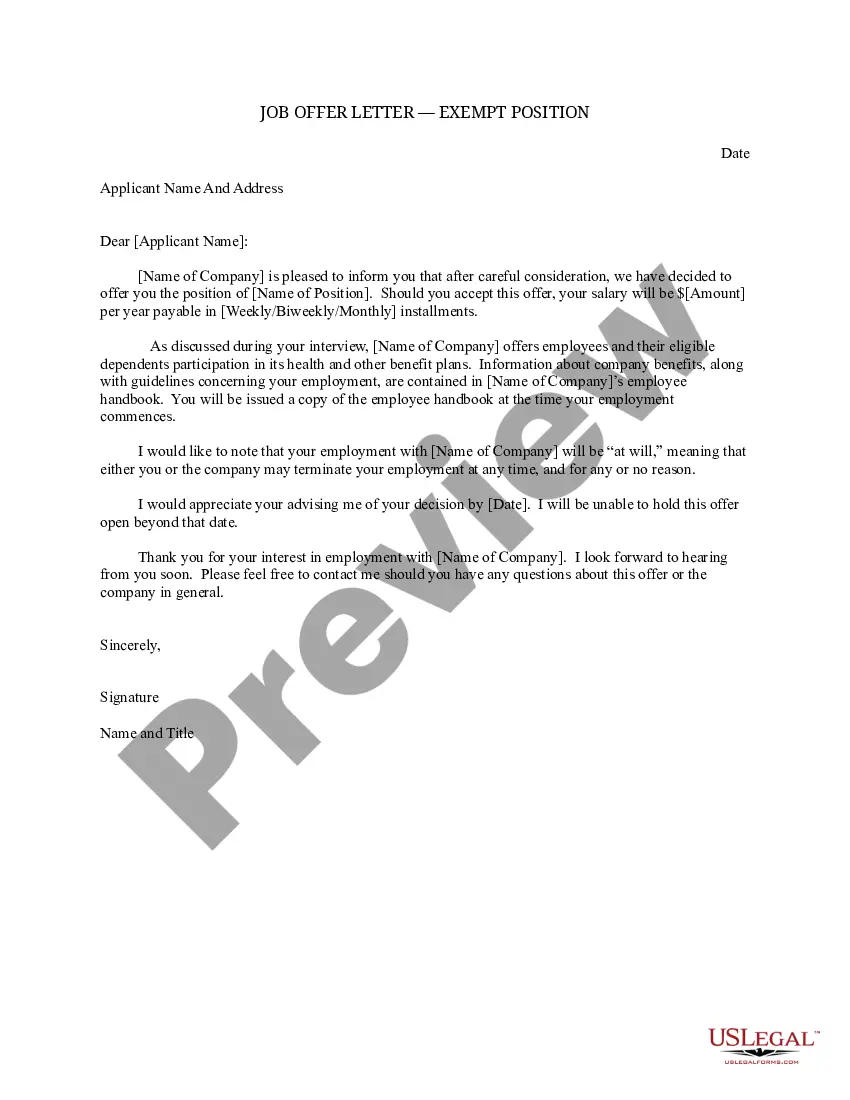
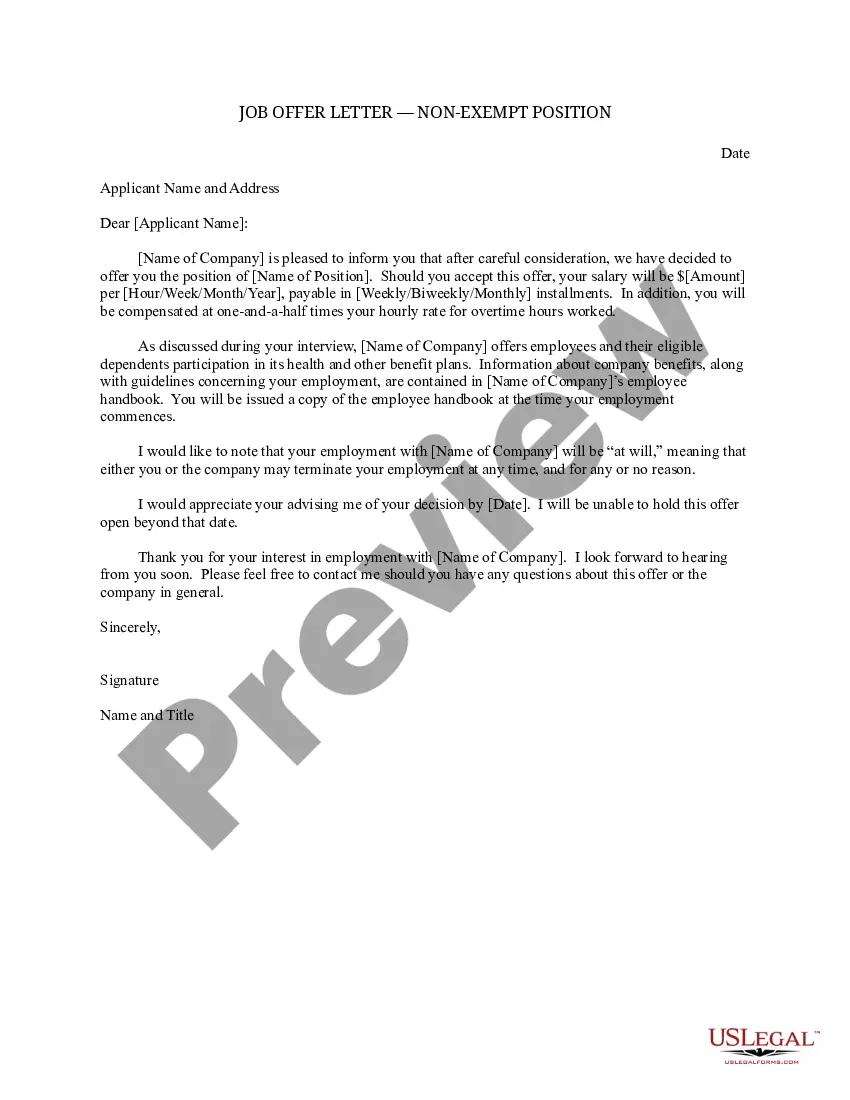
Maryland Employment Offer Letter Exempt or Non-Exempt
Description
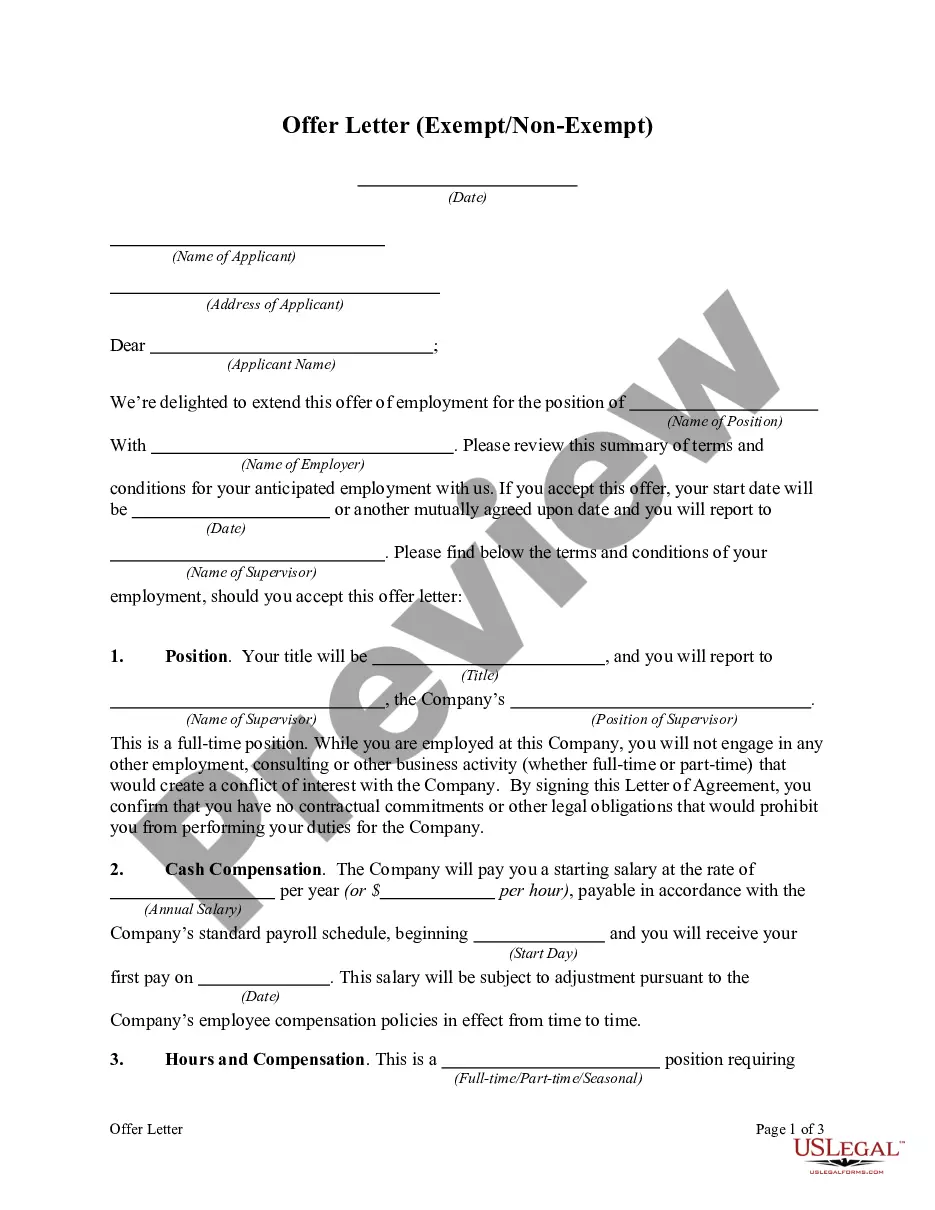


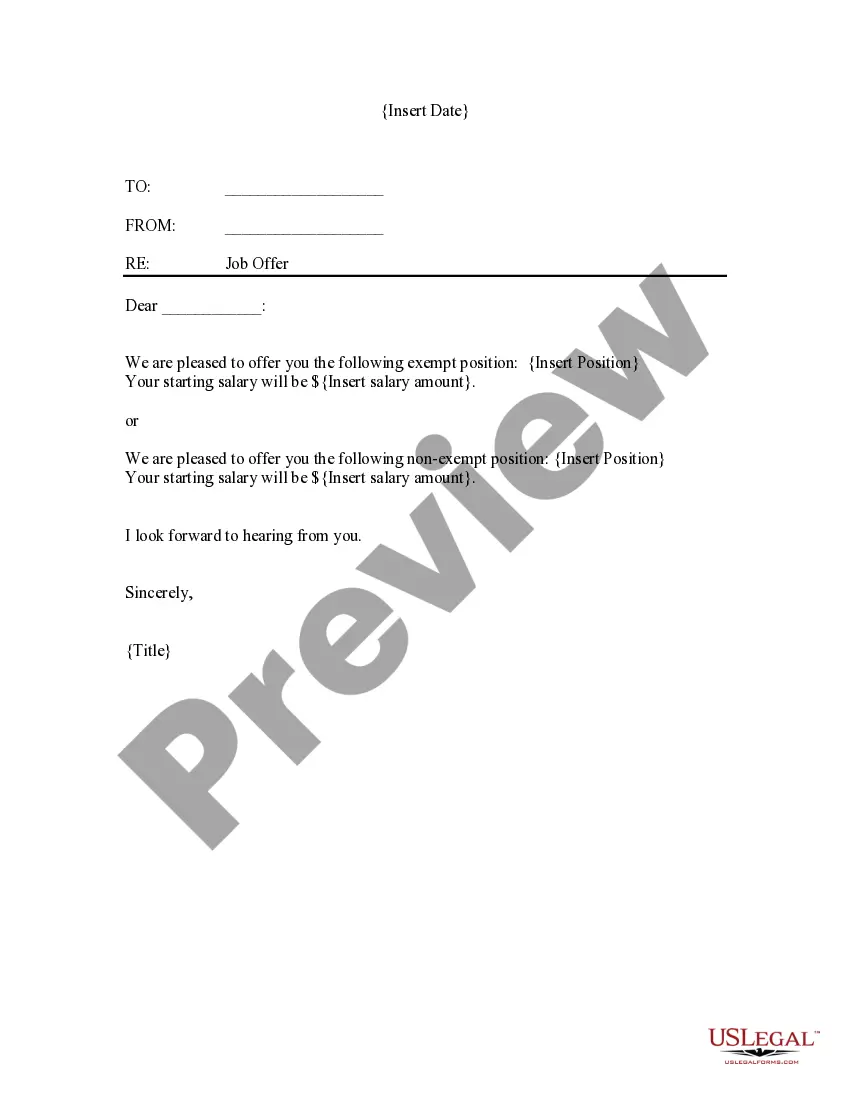
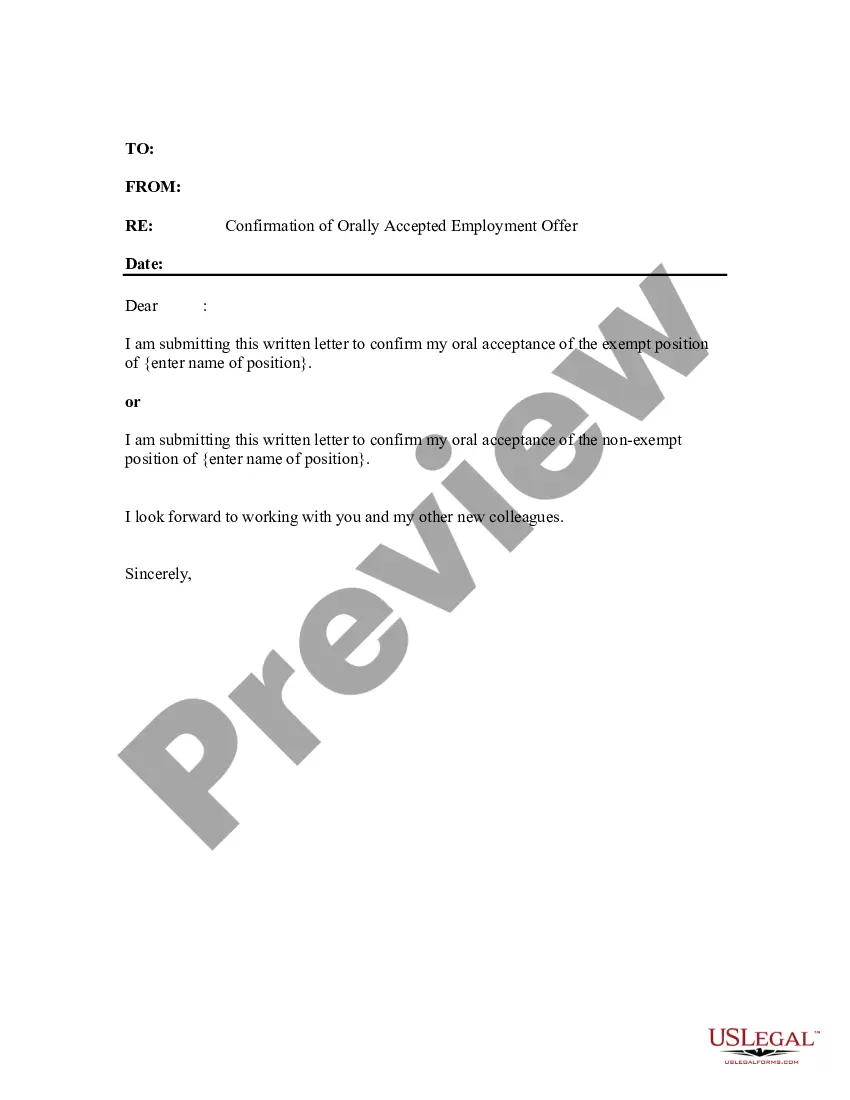
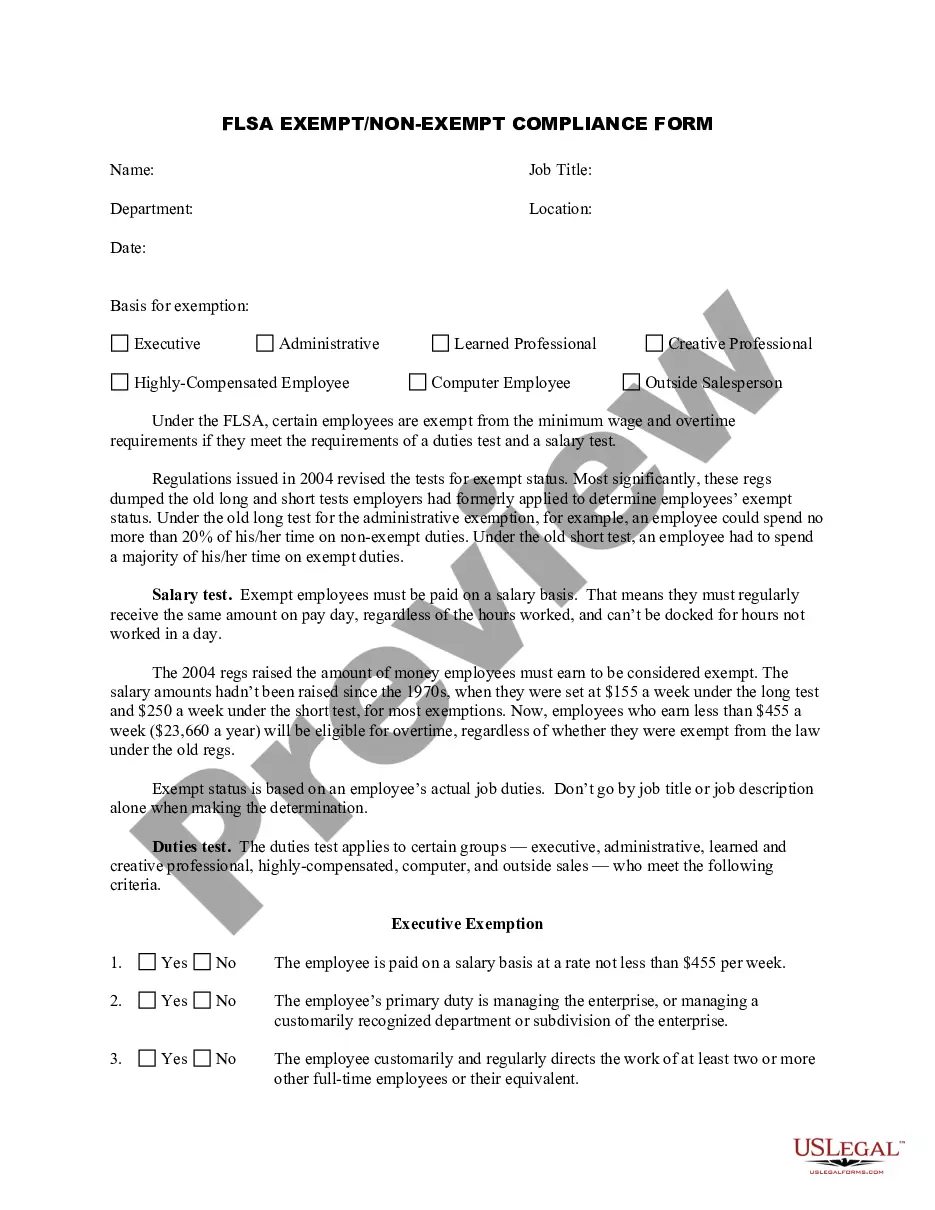
Get your form ready online
Our built-in tools help you complete, sign, share, and store your documents in one place.
Make edits, fill in missing information, and update formatting in US Legal Forms—just like you would in MS Word.
Download a copy, print it, send it by email, or mail it via USPS—whatever works best for your next step.
Sign and collect signatures with our SignNow integration. Send to multiple recipients, set reminders, and more. Go Premium to unlock E-Sign.
If this form requires notarization, complete it online through a secure video call—no need to meet a notary in person or wait for an appointment.
We protect your documents and personal data by following strict security and privacy standards.

Make edits, fill in missing information, and update formatting in US Legal Forms—just like you would in MS Word.

Download a copy, print it, send it by email, or mail it via USPS—whatever works best for your next step.

Sign and collect signatures with our SignNow integration. Send to multiple recipients, set reminders, and more. Go Premium to unlock E-Sign.

If this form requires notarization, complete it online through a secure video call—no need to meet a notary in person or wait for an appointment.

We protect your documents and personal data by following strict security and privacy standards.
Looking for another form?

How to fill out Employment Offer Letter Exempt Or Non-Exempt?
US Legal Forms - one of the most extensive collections of legal templates in the United States - offers a broad range of legal document formats that you can purchase or create.
While navigating the website, you can access thousands of forms for professional and personal purposes, sorted by categories, states, or keywords.
You can quickly find the most recent iterations of forms like the Maryland Employment Offer Letter Exempt or Non-Exempt in seconds.
Check the form summary to ensure you have selected the correct one.
If the form doesn’t meet your needs, utilize the Search box at the top of the screen to find one that suits you.
- If you have a subscription, Log In and download the Maryland Employment Offer Letter Exempt or Non-Exempt from the US Legal Forms library.
- The Download button will be available on every form you view.
- You can access all previously downloaded forms in the My documents section of your profile.
- If you are using US Legal Forms for the first time, here are simple steps to begin.
- Ensure you have selected the appropriate form for your region.
- Click the Preview option to review the content of the form.
Form popularity
FAQ
Exempt positions are excluded from minimum wage, overtime regulations, and other rights and protections afforded nonexempt workers. Employers must pay a salary rather than an hourly wage for a position for it to be exempt.
Exempt/Nonexempt Classification. Offer letters to nonexempt employees should state that they must record their hours worked and they will be paid overtime (as pre-approved by their supervisor), and describe available meal and rest periods.
Although several criteria separate salaried exempt workers from salaried nonexempt workers, the one key difference between salaried exempt status and salaried nonexempt status is overtime pay. Exempt employees don't receive overtime pay; nonexempt employees do.
Salaried employees, who fit the description of "Executive," "Administrative" or "Professional," are generally exempt under the law from receiving overtime, regardless of the number of hours they are required to work in a week.
Employees who do not meet the requirements to be classified as exempt from the Minimum Wage Act are considered nonexempt. Nonexempt employees may be paid on a salary, hourly or other basis. Employees who do not qualify for an exemption but are paid on a salary basis are considered salaried nonexempt.
Exempt employee definition: Exempt employees refer to workers in the United States who are not entitled to overtime pay. This simply implies that employers of exempt employees are not bound by law to pay them for any extra hours of work. The federal standard for work hours in the United States is 40 hours per workweek.
Executive employees are generally exempt from overtime pay. An executive employee receives a salary of no less than $455 per week.
If you are a non-exempt employee, your employer must pay you at least the federal minimum wage (currently $7.25 per hour in Texas and under federal law) and must pay you overtime pay at a rate of at least one and a half times your hourly pay rate for all hours worked over 40 in each workweek.
The FLSA includes these job categories as exempt: professional, administrative, executive, outside sales, and computer-related. The details vary by state, but if an employee falls in the above categories, is salaried, and earns a minimum of $684 per week or $35,568 annually, then they are considered exempt.