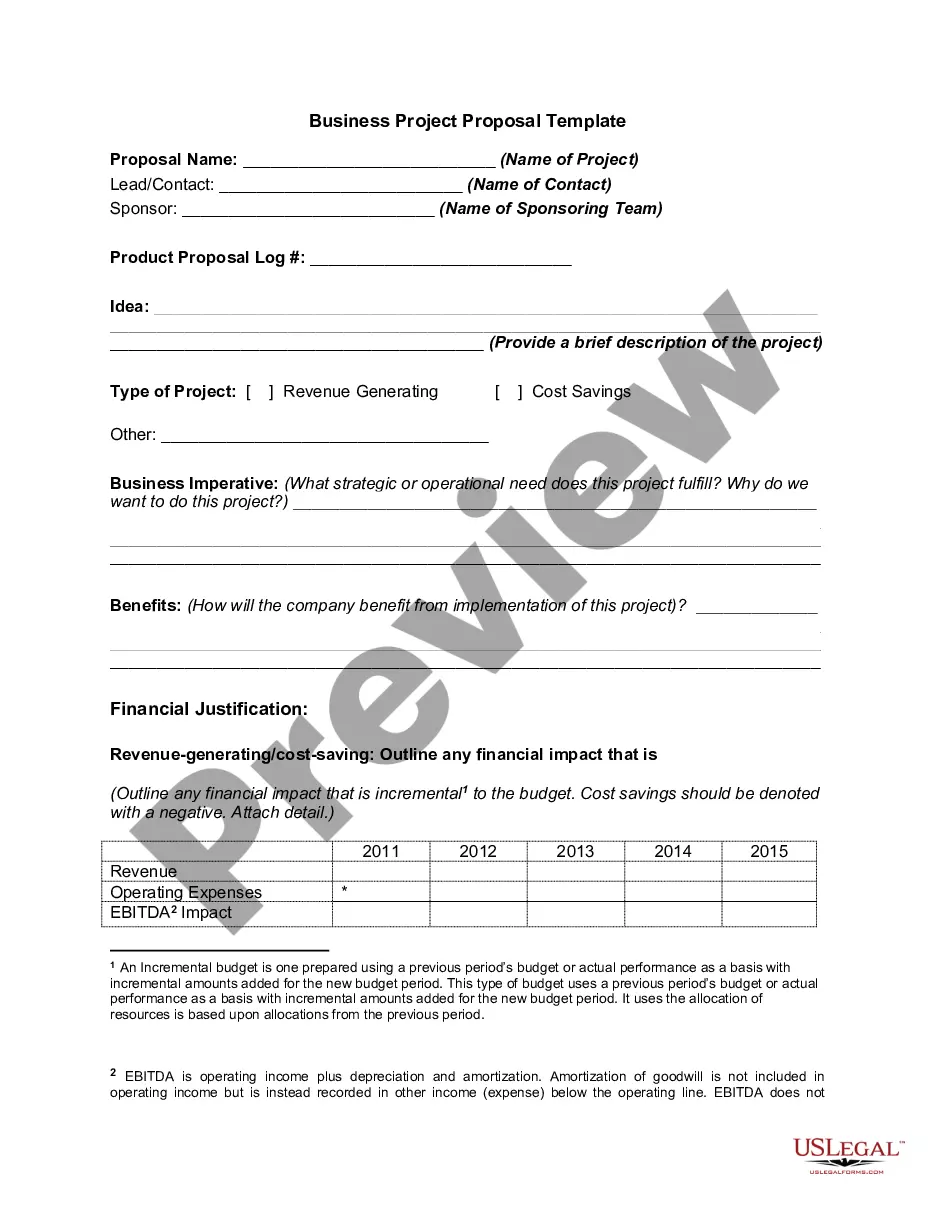
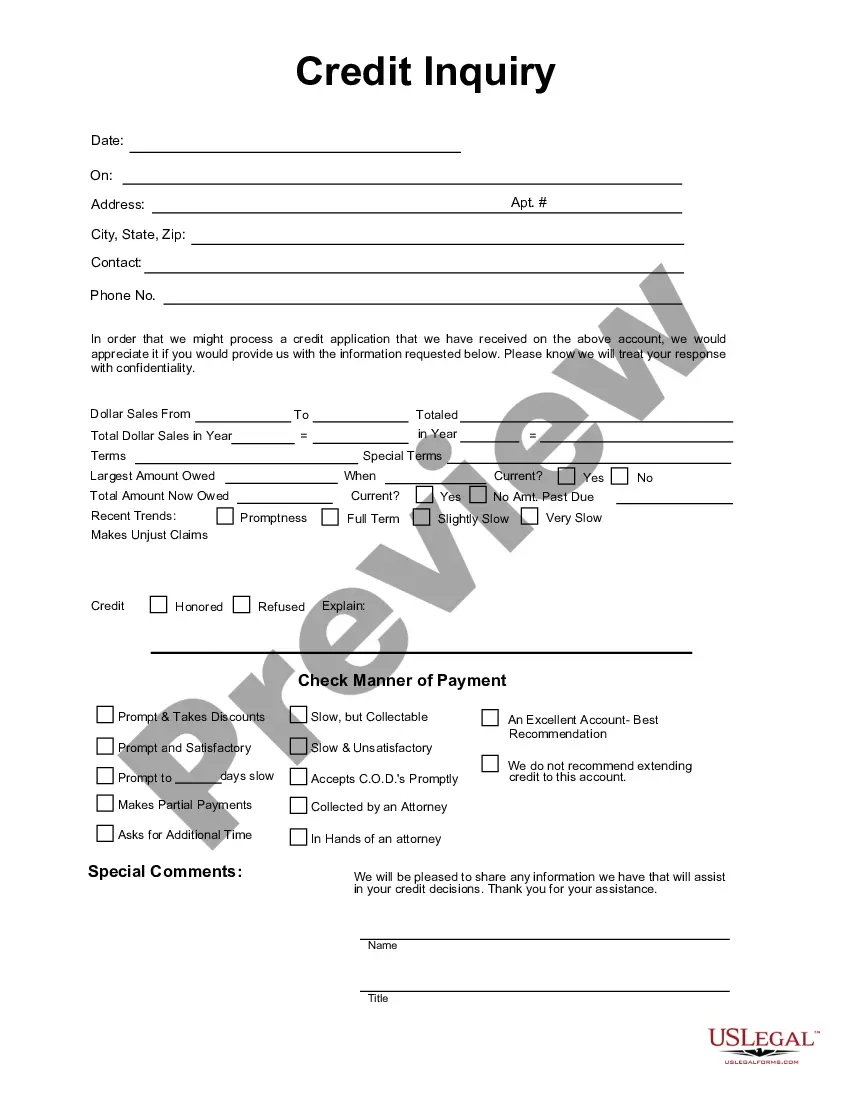
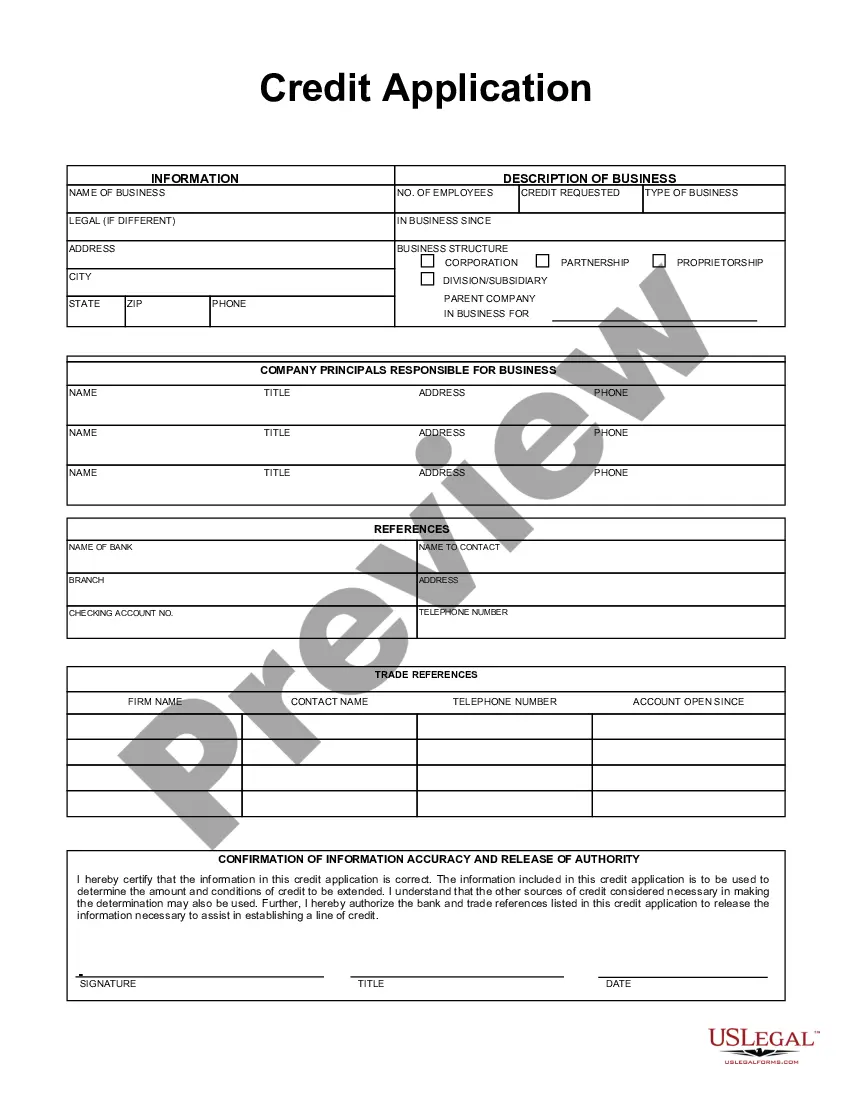
This form is a business type form that is formatted to allow you to complete the form using Adobe Acrobat or Word. The word files have been formatted to allow completion by entry into fields. Some of the forms under this category are rather simple while others are more complex. The formatting is worth the small cost.
Maryland Credit Inquiry
Category:
State:
Multi-State
Control #:
US-135-AZ
Format:
Word;
PDF;
Rich Text
Instant download
Description
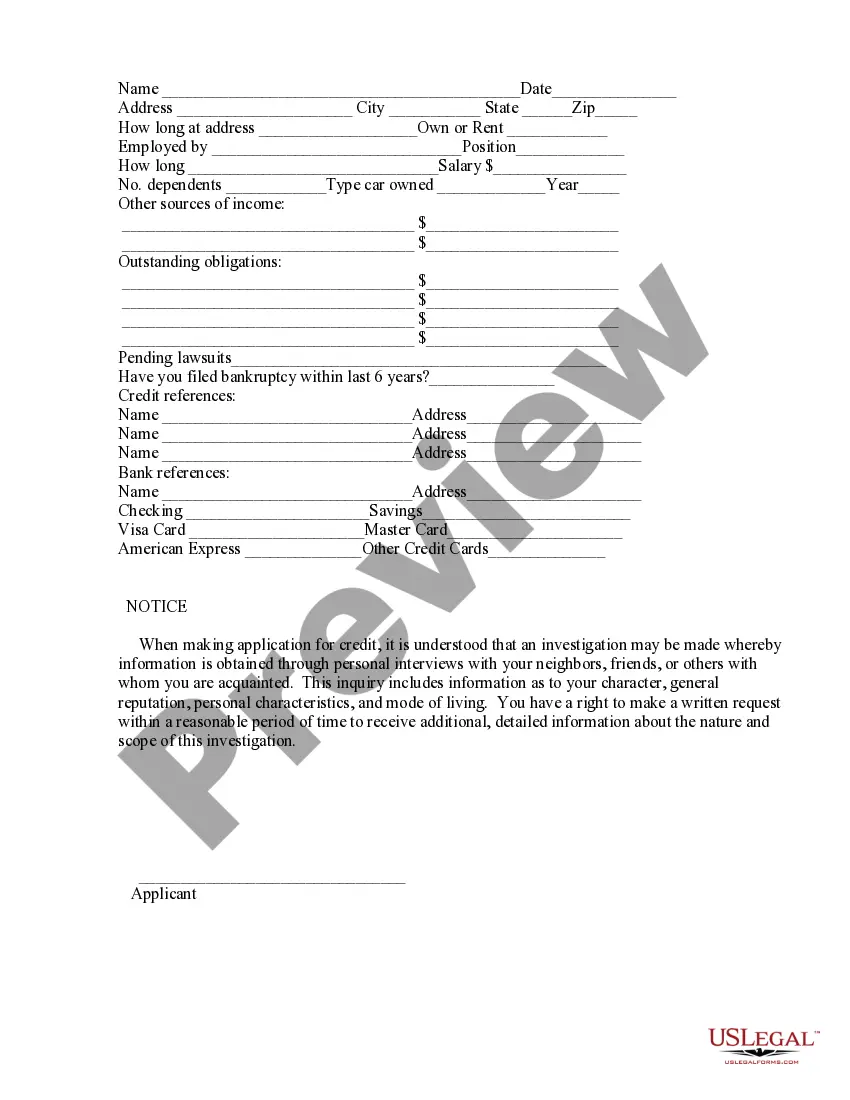


How to fill out Credit Inquiry?
If you wish to finalize, acquire, or generate authentic document templates, utilize US Legal Forms, the most extensive compilation of legal forms available online.
Leverage the site’s straightforward and convenient search feature to locate the documents you require.
Various templates for business and personal purposes are categorized by types and states, or keywords.
Every legal document template you obtain is yours permanently. You have access to every form you downloaded in your account.
Click on the My documents section and select a form to print or download again. Finalize and download, and print the Maryland Credit Inquiry with US Legal Forms. There are numerous professional and state-specific templates you can utilize for your business or personal needs.
- Utilize US Legal Forms to locate the Maryland Credit Inquiry with just a few clicks.
- If you are already a US Legal Forms user, Log Into your account and click the Acquire button to find the Maryland Credit Inquiry.
- Additionally, you can access forms you previously downloaded in the My documents section of your account.
- If you are using US Legal Forms for the first time, follow these instructions.
- Step 1. Ensure you have selected the form for your relevant region/state.
- Step 2. Utilize the Review option to examine the form’s details. Remember to read the description.
- Step 3. If you are not satisfied with the form, make use of the Search field at the top of the screen to find other variations of the legal form template.
- Step 4. After identifying the form you need, select the Purchase now button. Choose your preferred pricing plan and provide your credentials to register for an account.
- Step 5. Process the transaction. You can utilize your credit card or PayPal account to complete the purchase.
- Step 6. Choose the format of your legal form and download it to your device.
- Step 7. Complete, edit, and print or sign the Maryland Credit Inquiry.
Form popularity
FAQ
A hard inquiry, also called a hard pull or hard credit check, requires your consent. It is triggered when you apply for credit, such as a mortgage, credit card, auto loan, student loan or personal loan. It doesn't happen if you are only looking for pre-qualification to decide whether to apply.
If you spot a hard credit inquiry on your credit report and it's legitimate (i.e., you knew you were applying for credit), there's nothing you can do to remove it besides wait. It won't impact your score after 12 months and will fall off your credit report after two years.
Is AnnualCreditReport.com Safe? ACR is authorized by federal law and administered by the three national credit reporting agencies. The website is safe and secure and takes special precautions to make sure that only you can access your credit reports.
The period of time may vary depending on the credit scoring model used, but it's typically from 14 to 45 days.
According to FICO, a hard inquiry from a lender will decrease your credit score five points or less. If you have a strong credit history and no other credit issues, you may find that your scores drop even less than that. The drop is temporary.
A hard inquiry, or a "hard pull," occurs when you apply for a new line of credit, such as a credit card or loan. It means that a creditor has requested to look at your credit file to determine how much risk you pose as a borrower. Hard inquiries show up on your credit report and can affect your credit score.
No, requesting your credit report will not hurt your credit score. Checking your own credit report is not an inquiry about new credit, so it has no effect on your score.
This information is reported to Equifax by your lenders and creditors and includes the types of accounts (for example, a credit card, mortgage, student loan, or vehicle loan), the date those accounts were opened, your credit limit or loan amount, account balances, and your payment history.
If you find an unauthorized or inaccurate hard inquiry, you can file a dispute letter and request that the bureau remove it from your report. The consumer credit bureaus must investigate dispute requests unless they determine your dispute is frivolous. Still, not all disputes are accepted after investigation.
The idea of removing hard inquiries from your credit report to improve your credit score may sound appealing. But disputing a genuine hard inquiry on your credit report will likely not result in any change to your scores. You can, however, dispute ones that are a result of fraud.