Maine Judicial Notice
What this document covers
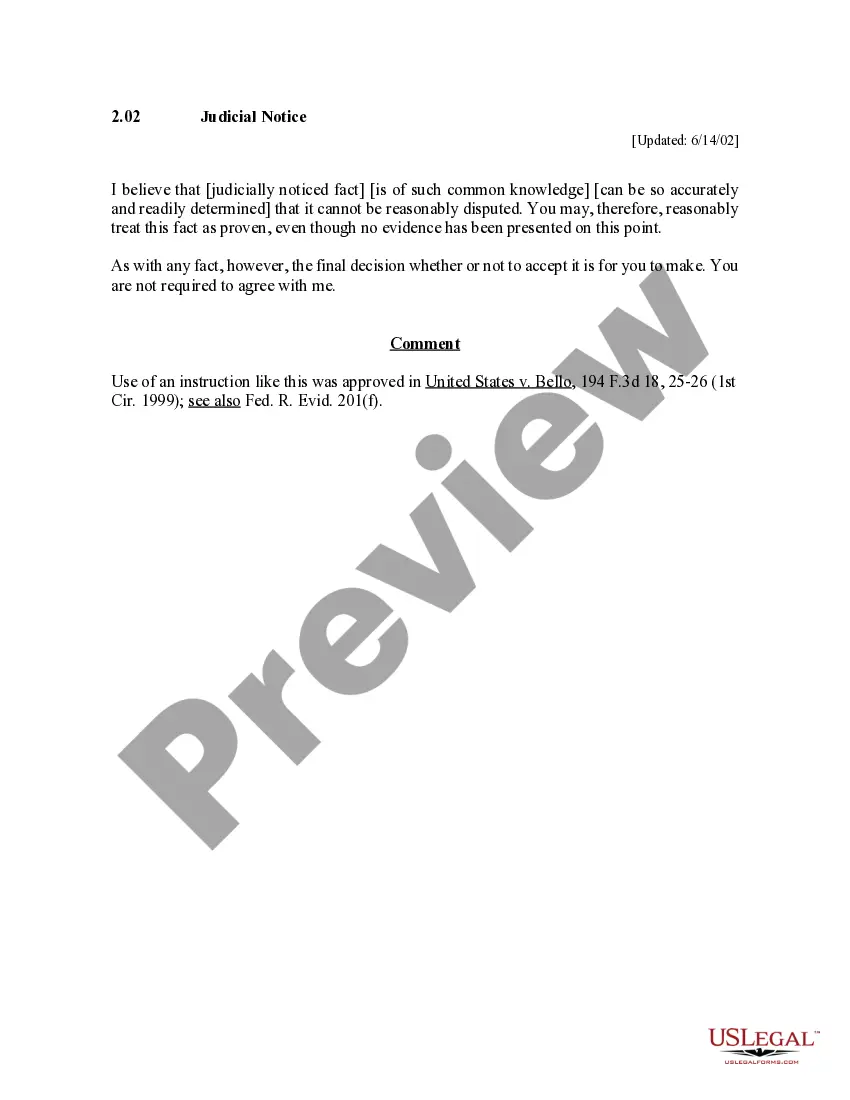
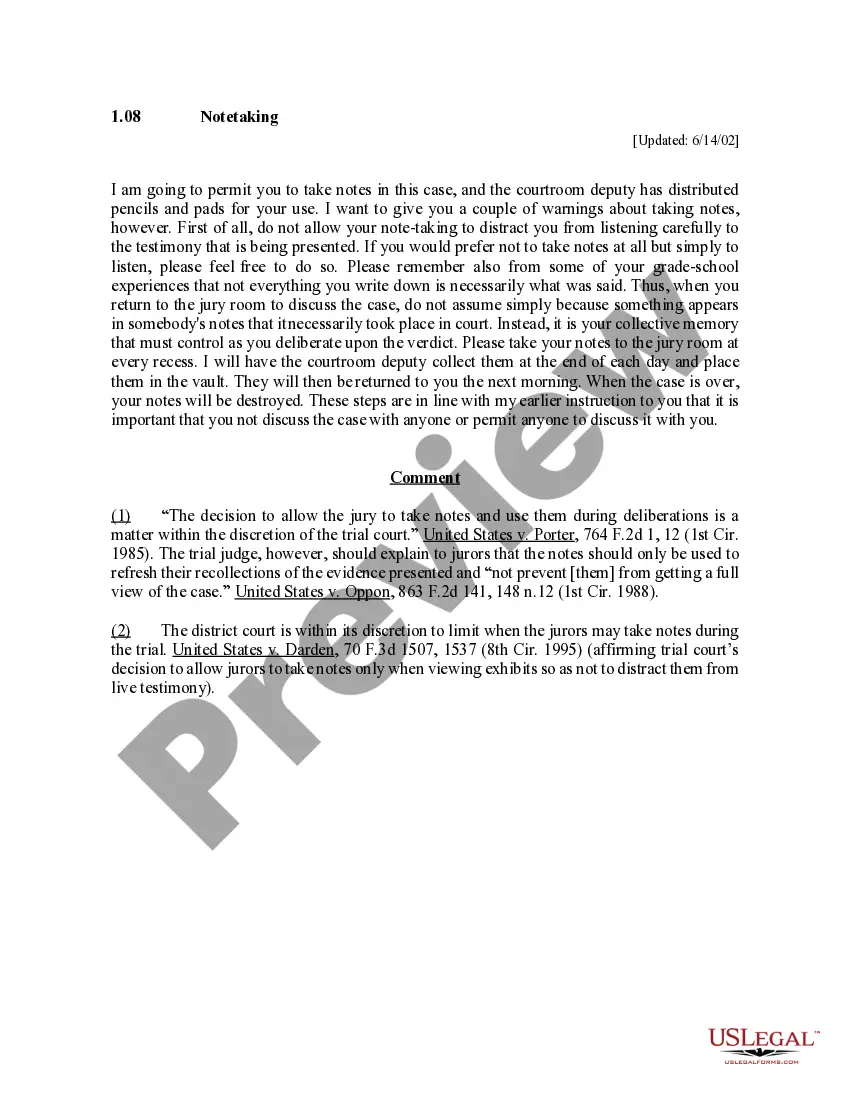
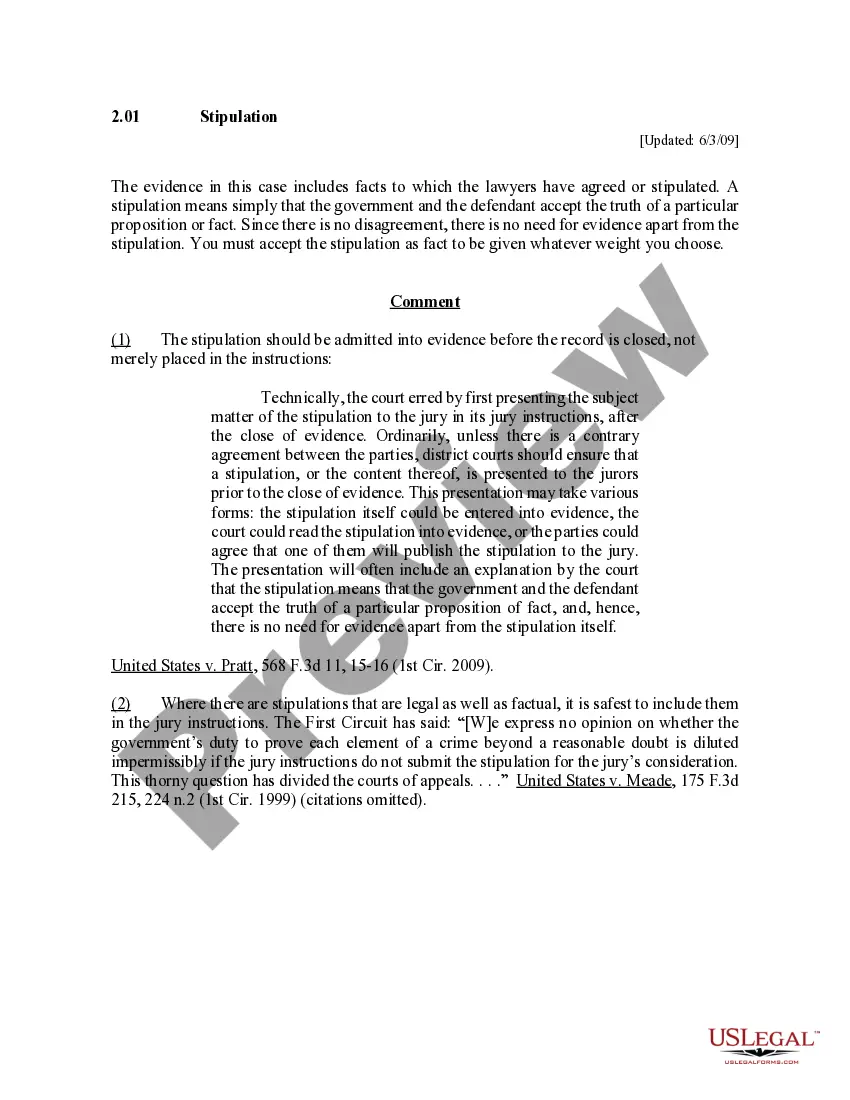
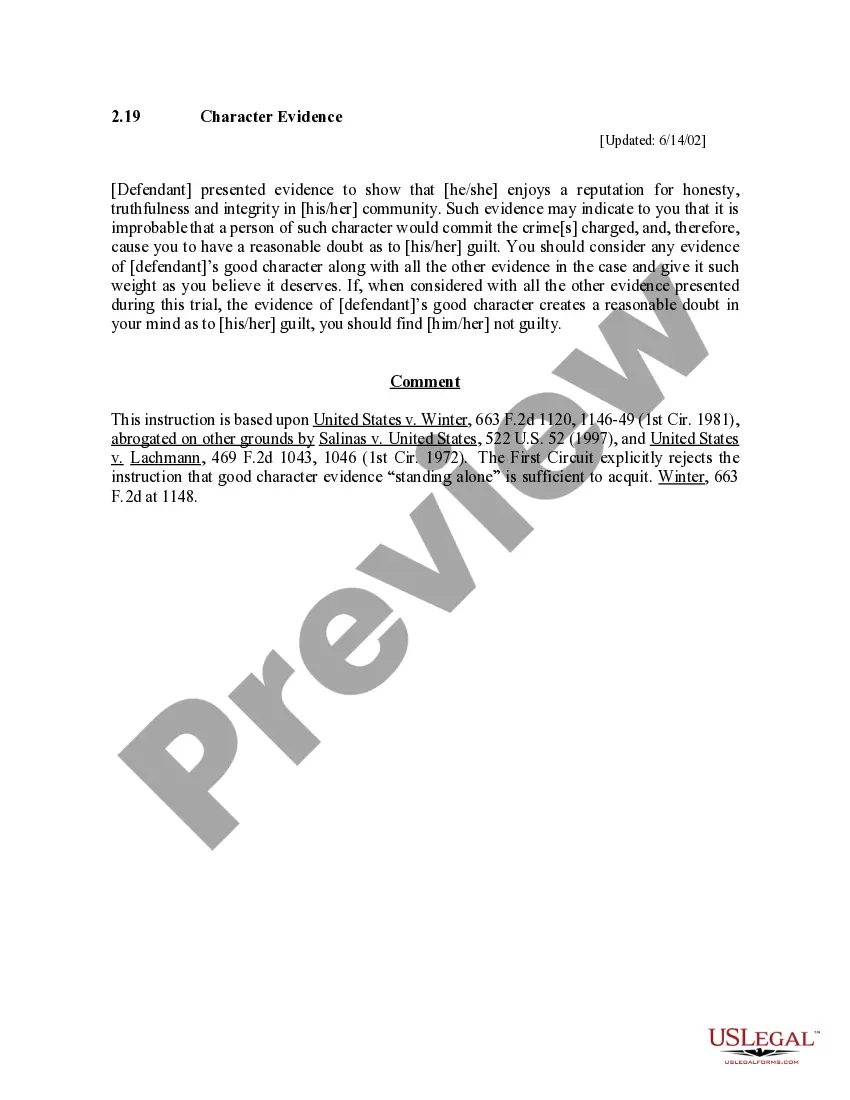
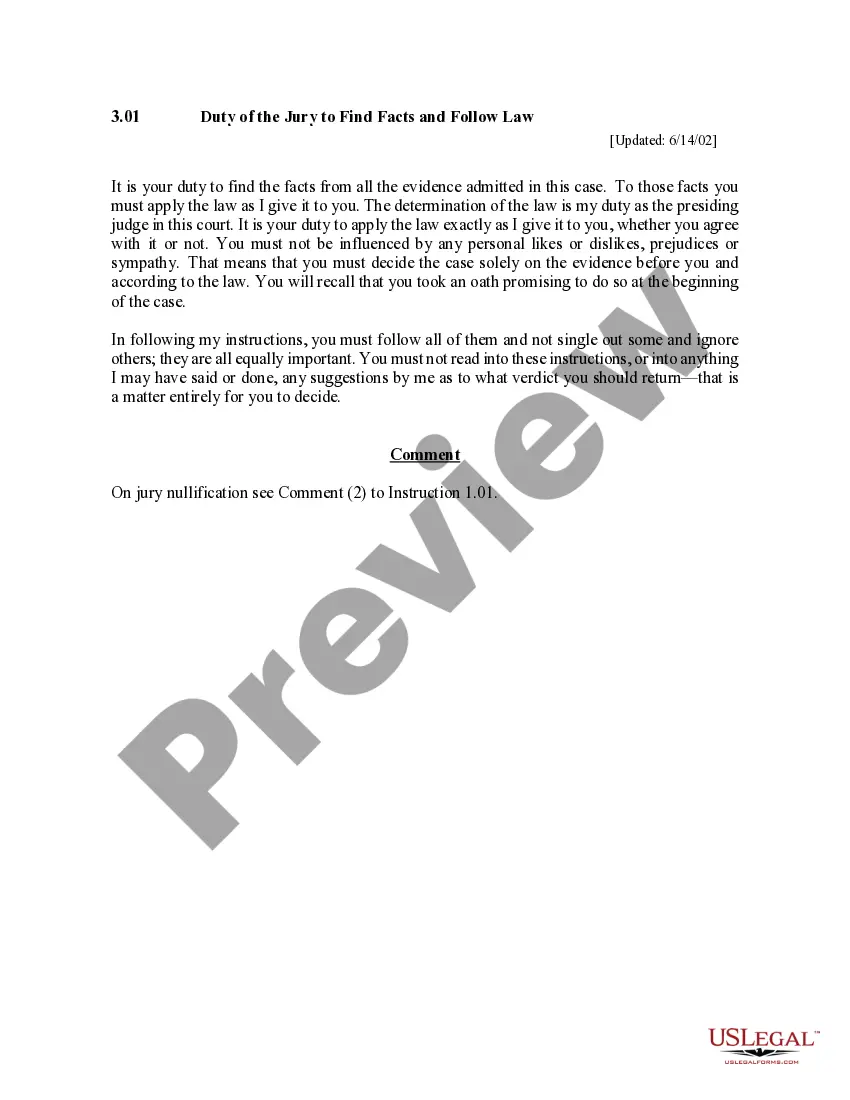
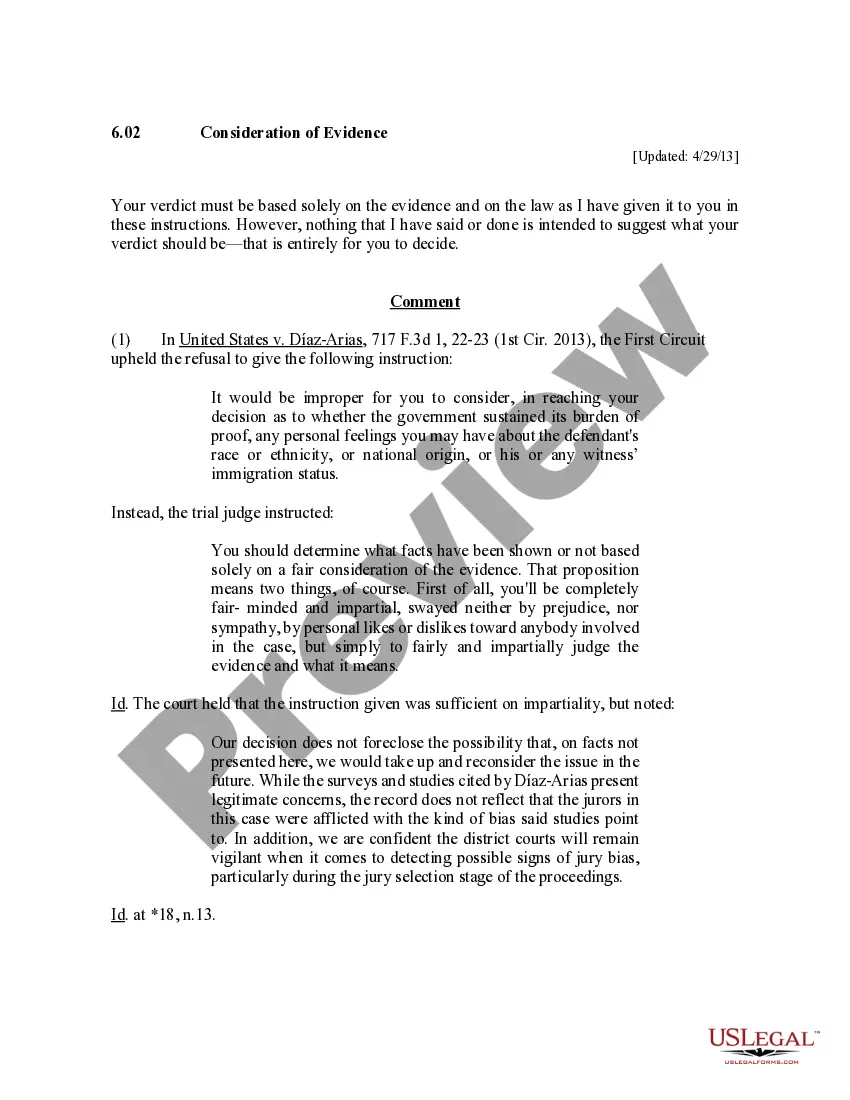
The Judicial Notice form is designed to provide instructions for addressing facts that are widely known or can be easily verified within the context of a criminal case. This form allows a judge to inform jurors that certain facts can be accepted as proven without the need for further evidence, streamlining the process of evidence presentation in courts. It differs from other forms of evidence admission as it relies on the established common knowledge or readily available information rather than the presentation of new evidence.
Key components of this form
- Judicially noticed fact: Identifies the fact acknowledged by the judge as common knowledge.
- Acceptance by jurors: Explains that jurors are under no obligation to agree with the judicial notice.
- Citation of relevant legal precedent: References important cases and rules that support the use of judicial notice.
Situations where this form applies
This form is needed in criminal cases when the court finds certain facts that are so widely accepted or easily verified that they require no further evidence. For instance, it may be used when establishing truths such as geographical locations, historical dates, or universally recognized facts that do not dispute the fundamental case being judged.
Who needs this form
Eligibility for this form includes:
- Judges presiding over federal criminal cases.
- Prosecutors preparing jury instructions.
- Defense attorneys aiming to understand judicial rulings related to facts in their cases.
Instructions for completing this form
To complete this form:
- Identify the judicially noticed fact relevant to your case.
- Determine if the fact is widely accepted or easily verified.
- Draft the instruction outlining the fact for the jurors.
- Include citations of legal precedents that support the use of this instruction.
- Review the completed instruction for clarity and alignment with legal standards.
Notarization requirements for this form
Notarization is not commonly needed for this form. However, certain documents or local rules may make it necessary. Our notarization service, powered by Notarize, allows you to finalize it securely online anytime, day or night.
Get your form ready online
Our built-in tools help you complete, sign, share, and store your documents in one place.
Make edits, fill in missing information, and update formatting in US Legal Forms—just like you would in MS Word.
Download a copy, print it, send it by email, or mail it via USPS—whatever works best for your next step.
Sign and collect signatures with our SignNow integration. Send to multiple recipients, set reminders, and more. Go Premium to unlock E-Sign.
If this form requires notarization, complete it online through a secure video call—no need to meet a notary in person or wait for an appointment.
We protect your documents and personal data by following strict security and privacy standards.

Make edits, fill in missing information, and update formatting in US Legal Forms—just like you would in MS Word.

Download a copy, print it, send it by email, or mail it via USPS—whatever works best for your next step.

Sign and collect signatures with our SignNow integration. Send to multiple recipients, set reminders, and more. Go Premium to unlock E-Sign.

If this form requires notarization, complete it online through a secure video call—no need to meet a notary in person or wait for an appointment.

We protect your documents and personal data by following strict security and privacy standards.
Common mistakes
- Assuming all facts can be judicially noticed; not all facts meet the criteria.
- Failing to provide legal citations that strengthen the instruction.
- Overlooking the jurors' discretion in accepting judicial notice.
Why complete this form online
- Convenience of downloading and editing the form when needed.
- Reliability, as the form is crafted by licensed legal professionals.
- Streamlining the judicial process by reducing unnecessary evidence presentation.
The use of the Judicial Notice form is recognized in legal proceedings where certain facts are accepted without additional evidence. It is important to follow the jurisdiction-specific rules to ensure that the instructions provided do not misleadingly influence juror decisions.
Summary of main points
- The Judicial Notice form simplifies the admission of widely accepted facts in criminal cases.
- Jurors have discretion over whether to accept the judicially noticed facts as true.
- Understanding and correctly applying this instruction can significantly impact legal proceedings.
Looking for another form?
Form popularity
FAQ
Maine Rule 609 requires all convictions to pass a "reverse Rule 403 " test, i.e. they can be admitted only if their probative value as to credibility outweighs any danger of unfair prejudice to a criminal defendant or any civil party.
The following evidence is not admissible in a civil or criminal proceeding involving alleged sexual misconduct: (1) Evidence offered to prove that an alleged victim engaged in other sexual behavior; or (2) Evidence offered to prove an alleged victim's sexual predisposition.
Rule 301 - Presumptions in Civil Cases Generally (a) Effect. In a civil case, unless a statute or these rules provide otherwise, the party against whom a presumption is directed has the burden of proving that the nonexistence of the presumed fact is more probable than its existence.
Judicial notice is used by a court when it declares a fact presented as evidence as true without a formal presentation of evidence. A court can take judicial notice of indisputable facts. If a court takes judicial notice of an indisputable fact in a civil case, the fact is considered conclusive.
Rule 35(a) is amended to permit an order against a party for the examination of a person in his custody or under his legal control. Thus, a parent or guardian suing to recover for injuries to a minor may be ordered to produce the minor for examination.
The court may judicially notice a fact that is not subject to reasonable dispute because it: (1) Is generally known within the trial court's territorial jurisdiction; or (2) Can be accurately and readily determined from sources whose accuracy cannot reasonably be questioned.
Judicial notice is used by a court when it declares a fact presented as evidence as true without a formal presentation of evidence. A court can take judicial notice of indisputable facts. If a court takes judicial notice of an indisputable fact in a civil case, the fact is considered conclusive.