Maine Escape From Custody, 18 U.S.C. Sec. 751
Overview of this form
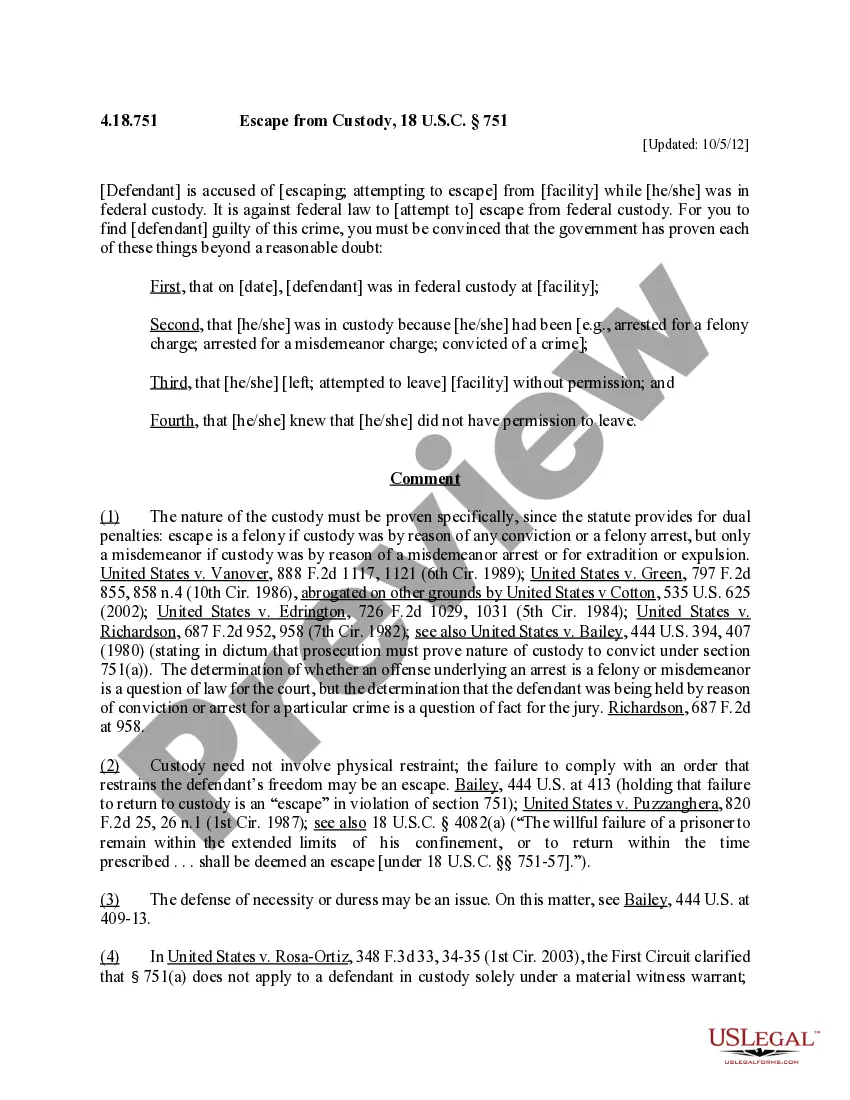
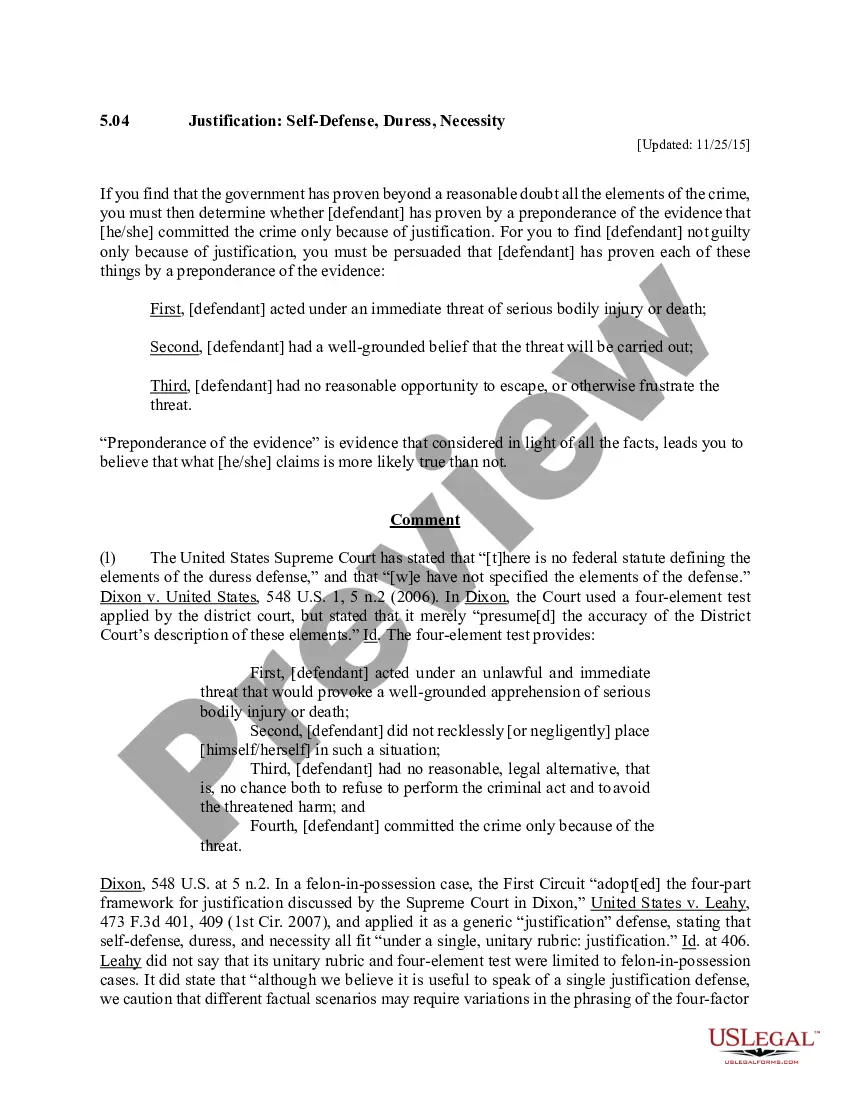
The Escape From Custody form under 18 U.S.C. Sec. 751 is a legal document used in federal criminal cases to outline the charges against a defendant accused of escaping or attempting to escape from federal custody. This form is specifically relevant for cases within federal jurisdiction and differentiates itself from other forms by focusing on the specific elements that must be proven for conviction under this statute.
Key parts of this document
- Accusation details: states whether the defendant is accused of escaping or attempting to escape.
- Custody information: specifies the date and facility where the defendant was held.
- Reason for custody: outlines the circumstances of the defendant's detention, including felony or misdemeanor charges.
- Permission clause: confirms whether the defendant left or attempted to leave the facility without permission.
- Knowledge requirement: establishes that the defendant was aware they did not have permission to leave.

When this form is needed
This form is essential when prosecuting individuals who are accused of escaping from federal custody. Legal practitioners may use it during trials to present the necessary elements that must be proven for a conviction under the federal escape statute. This form is critical in cases where the nature of the custody involves felony or misdemeanor details that could affect the outcome of the charges against the defendant.
Who can use this document
- Federal prosecutors handling cases of escape from custody.
- Defense attorneys representing individuals charged with escape.
- Legal professionals involved in federal criminal litigation.
- Judicial officers overseeing related federal cases.
Steps to complete this form
- Identify the relevant parties involved in the case, including the defendant and the prosecution.
- Fill in the details regarding the facility where the defendant was held and the date of the incident.
- Specify the reason for the defendant's custody, detailing any charges related to their current status.
- Indicate whether the defendant escaped or attempted to escape and check relevant permissions.
- Provide evidence or circumstances supporting the defendant's knowledge of their lack of permission to leave the custody.
Notarization guidance
Notarization is generally not required for this form. However, certain states or situations might demand it. You can complete notarization online through US Legal Forms, powered by Notarize, using a verified video call available anytime.
Get your form ready online
Our built-in tools help you complete, sign, share, and store your documents in one place.
Make edits, fill in missing information, and update formatting in US Legal Forms—just like you would in MS Word.
Download a copy, print it, send it by email, or mail it via USPS—whatever works best for your next step.
Sign and collect signatures with our SignNow integration. Send to multiple recipients, set reminders, and more. Go Premium to unlock E-Sign.
If this form requires notarization, complete it online through a secure video call—no need to meet a notary in person or wait for an appointment.
We protect your documents and personal data by following strict security and privacy standards.

Make edits, fill in missing information, and update formatting in US Legal Forms—just like you would in MS Word.

Download a copy, print it, send it by email, or mail it via USPS—whatever works best for your next step.

Sign and collect signatures with our SignNow integration. Send to multiple recipients, set reminders, and more. Go Premium to unlock E-Sign.

If this form requires notarization, complete it online through a secure video call—no need to meet a notary in person or wait for an appointment.

We protect your documents and personal data by following strict security and privacy standards.
Common mistakes to avoid
- Failing to clearly specify the type of custody (felony vs. misdemeanor).
- Omitting details about the facility or the date of the incident.
- Not establishing the defendant's awareness regarding their escape.
- Neglecting to properly document the charges leading to custody.
Why complete this form online
- Convenience of downloading the form anytime.
- Editability allows for customized entries based on specific case details.
- Access to forms drafted by licensed attorneys ensures compliance with legal standards.
Legal use & context
- The form serves as a framework for proving the elements of escape under federal law.
- It outlines the necessary components that must be established during prosecution.
- The statute provides for dual penalties based on the severity of the initial charges.
Main things to remember
- The Escape From Custody form is vital for federal cases involving escape charges.
- Understanding the nature of custody plays a crucial role in the legal proceedings.
- Proper completion and attention to detail are essential to avoid common mistakes.
Looking for another form?
Form popularity
FAQ
Section 836.6 - Escape (a) It is unlawful for any person who is remanded by a magistrate or judge of any court in this state to the custody of a sheriff, marshal, or other police agency, to thereafter escape or attempt to escape from that custody.
Escape from Lawful Custody occurs when a person escapes from the custody of a peace officer after they have been arrested or detained. This offense is typically charged during an arrest or for a person in a halfway house failing to return from their work release program.
18 U.S. Code § 751 - Prisoners in custody of institution or officer U.S. Code US Law LII / Legal Information Institute.
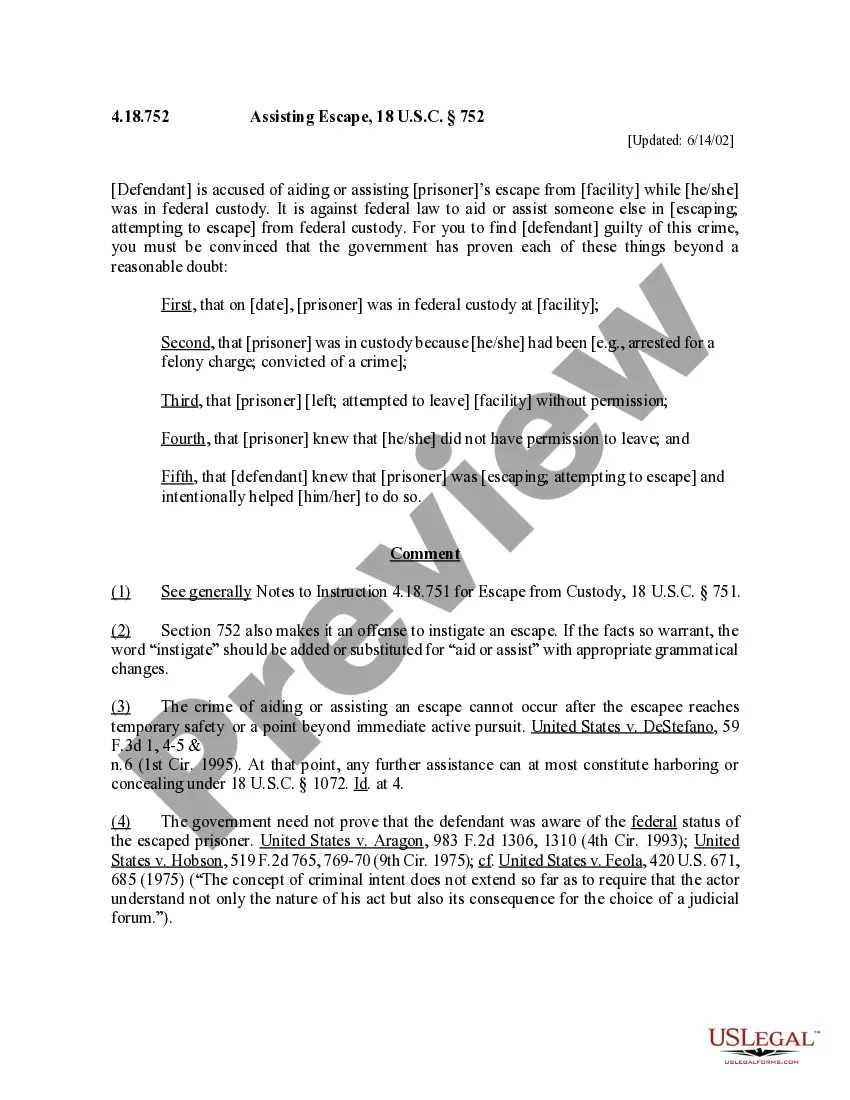
18 U.S. Code § 752 - Instigating or assisting escape.
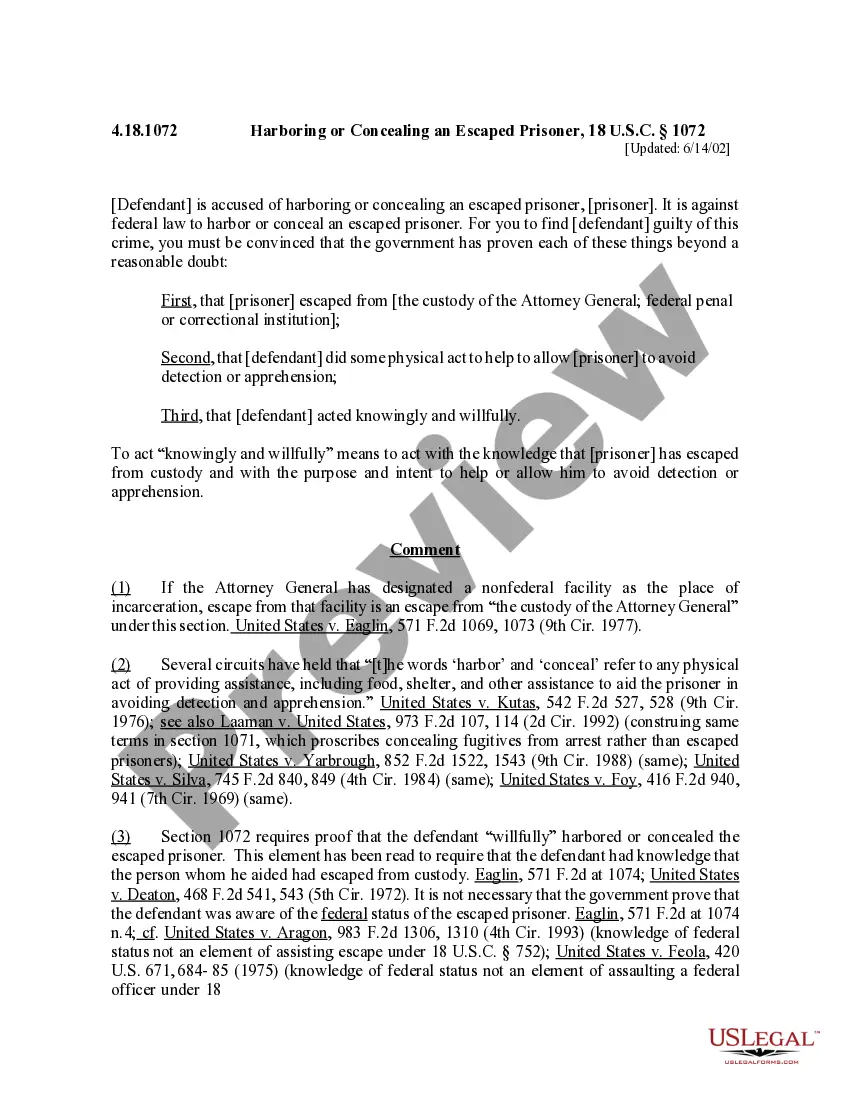
Whoever willfully harbors or conceals any prisoner after his escape from the custody of the Attorney General or from a Federal penal or correctional institution, shall be imprisoned not more than three years.
For example, 18 U.S. code section 751 stipulates that it is unlawful to escape, or to attempt to escape, from the custody of the Attorney General; an authorized representative of the Attorney General; or from any institution that the defendant was ordered by the Attorney General to be confined in.
Section 836.6 - Escape (a) It is unlawful for any person who is remanded by a magistrate or judge of any court in this state to the custody of a sheriff, marshal, or other police agency, to thereafter escape or attempt to escape from that custody.
Introduction -- Escape From Custody Resulting From Conviction (18 U.S.C. §751 And 752) This chapter deals with the criminal sanctions for escape or attempted escape from lawful custody or confinement following conviction, or from custody or confinement prior to conviction.