Maine Mental State That Is Inconsistent with the Requisite Culpable State of Mind
What this document covers
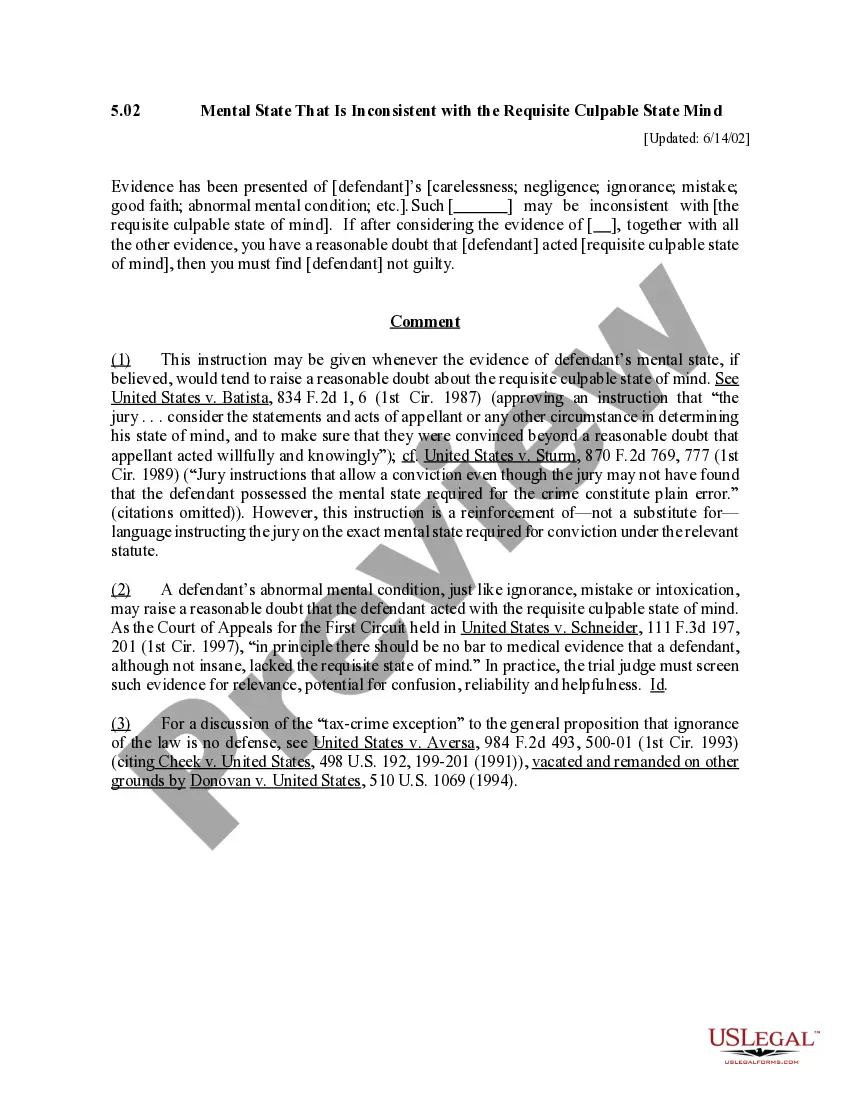
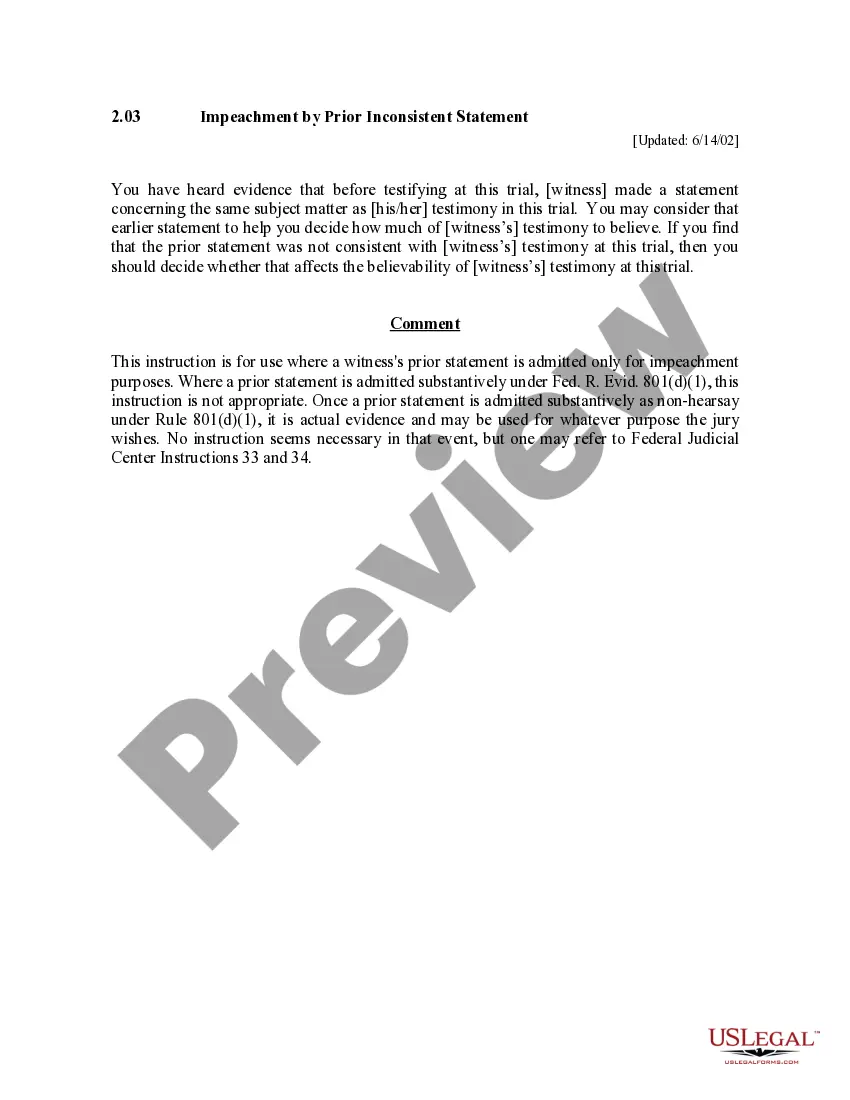
The Mental State That Is Inconsistent with the Requisite Culpable State of Mind form is a crucial document used in criminal trials. It provides official jury instructions for federal cases in Maine, focusing on how a defendant's mental state can create reasonable doubt regarding their intent or culpability in committing an alleged crime. This form ensures that juries consider various mental states that may affect a defendant's guilt or innocence, distinguishing it from standard jury instructions that do not specifically address mental conditions or anomalies.
Key components of this form
- Evidence consideration: Addresses different mental states like carelessness, negligence, and good faith.
- Reasonable doubt: Clarifies that if jurors have a reasonable doubt about the defendant's culpability, they must find them not guilty.
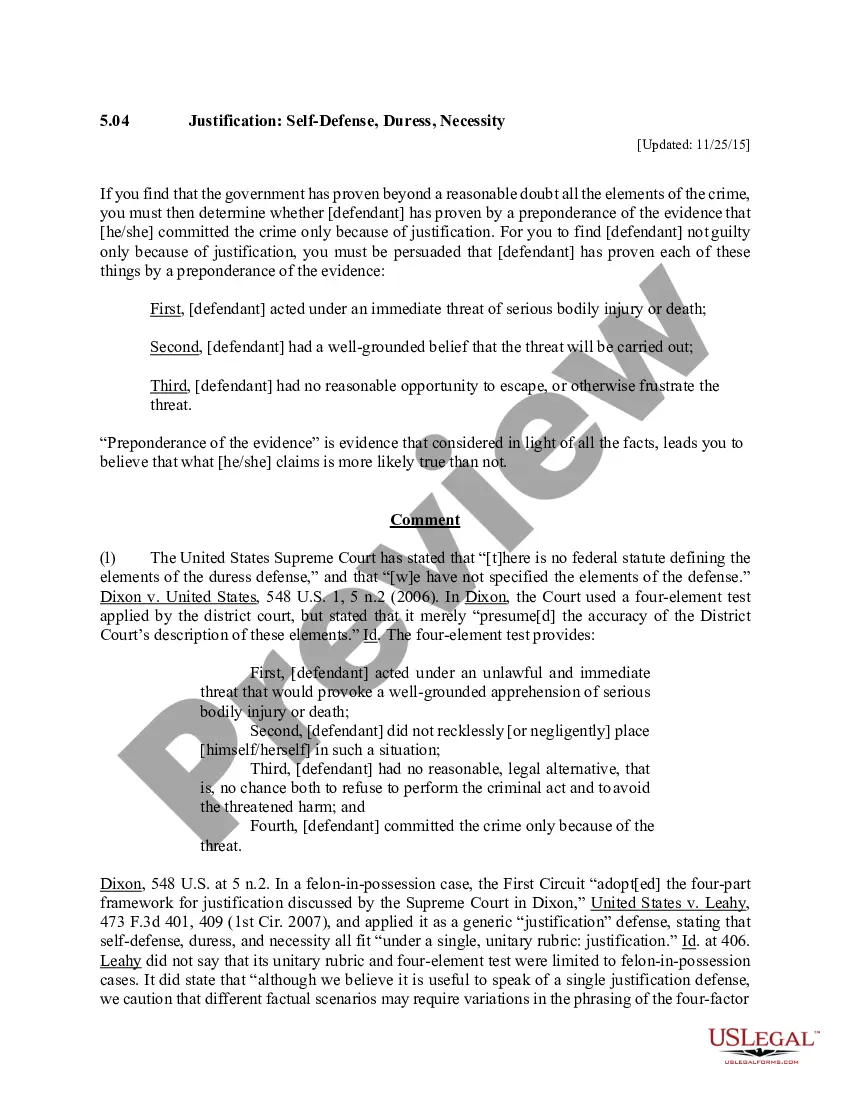
- Legal precedent: References relevant court cases that support the instructions provided regarding mental state.
- Culpable state of mind: Outlines the mental state required for conviction under relevant statutes.
- Reinforcement of instructions: Emphasizes this instruction is a complement to other jury instructions on mental state.
Situations where this form applies
This form is used in criminal cases where the defendant's mental state may be in question. For instance, if a defendant claims they were unaware of their actions due to an abnormal mental condition, carelessness, or a genuine mistake, this form should be applied to guide the jury's deliberations. It is particularly relevant in situations where the prosecution must establish the defendant's intent beyond a reasonable doubt.
Intended users of this form
- Legal practitioners involved in federal criminal trials in Maine.
- Attorneys representing defendants whose mental state may affect their culpability.
- Judges needing to instruct juries on considerations of mental states in criminal cases.
- Anyone seeking to understand jury instruction principles related to mental health and criminal liability.
Completing this form step by step
- Review the provided evidence regarding the defendant's mental state.
- Determine if any claims of carelessness, mistake, or abnormal mental conditions are present.
- Consider how such claims may create a reasonable doubt about the defendant's culpable state of mind.
- Provide jury instructions that clarifies the needed evidence for conviction under the relevant statute.
- Ensure the jury understands this instruction as a reinforcement, not a replacement, for other critical instructions.
Does this document require notarization?
Notarization is generally not required for this form. However, certain states or situations might demand it. You can complete notarization online through US Legal Forms, powered by Notarize, using a verified video call available anytime.
Get your form ready online
Our built-in tools help you complete, sign, share, and store your documents in one place.
Make edits, fill in missing information, and update formatting in US Legal Forms—just like you would in MS Word.
Download a copy, print it, send it by email, or mail it via USPS—whatever works best for your next step.
Sign and collect signatures with our SignNow integration. Send to multiple recipients, set reminders, and more. Go Premium to unlock E-Sign.
If this form requires notarization, complete it online through a secure video call—no need to meet a notary in person or wait for an appointment.
We protect your documents and personal data by following strict security and privacy standards.

Make edits, fill in missing information, and update formatting in US Legal Forms—just like you would in MS Word.

Download a copy, print it, send it by email, or mail it via USPS—whatever works best for your next step.

Sign and collect signatures with our SignNow integration. Send to multiple recipients, set reminders, and more. Go Premium to unlock E-Sign.

If this form requires notarization, complete it online through a secure video call—no need to meet a notary in person or wait for an appointment.

We protect your documents and personal data by following strict security and privacy standards.
Typical mistakes to avoid
- Failing to adequately explain the relevance of the defendant's mental state to the jury.
- Overlooking the need to supplement this instruction with other jury instructions.
- Assuming juries will automatically understand complex psychological concepts without clear guidance.
Benefits of using this form online
- Accessibility: Easily downloadable and printable at any time.
- Editability: Allows legal professionals to customize instructions based on specific case needs.
- Reliability: Created by licensed attorneys, ensuring legal accuracy and compliance.
Legal use & context
- This form is enforceable in federal criminal trials in Maine.
- The instruction must accurately reflect the defendant's mental state to avoid potential appeals based on erroneous jury guidance.
- It is crucial to understand that while this instruction aims to introduce doubt, it does not serve as a standalone defense for ignorance or lack of knowledge under the law.
Looking for another form?
Form popularity
FAQ
'Culpable state of mind' refers to the mental condition of a person when committing a crime. It indicates their level of awareness and intention behind their actions. This concept is vital in Maine when assessing whether a Maine Mental State That Is Inconsistent with the Requisite Culpable State of Mind is present.
(1) intentional; (2) knowing; (3) reckless; (4) criminal negligence.
Article 15 of the New York Penal Law concerns mental culpability, which is defined by four levels similar to those provided in the Model Penal Code: intentionally, knowingly, recklessly, and criminal negligence.
"Culpable." A person acts culpably when the person acts with the intention, knowledge, recklessness or criminal negligence as is required.
They are: (A) "knowingly"; (B) "knowing"; and (C) "with the intent." The first two are, for all practicable purposes, the same.
The Model Penal Code divides criminal intent into four states of mind listed in order of culpability: purposely, knowingly, recklessly, and negligently.
(d) Culpable mental states are classified ing to relative degrees, from highest to lowest, as follows: (1) intentional; (2) knowing; (3) reckless; (4) criminal negligence.
Types of Mens Rea (Levels of Culpability) Intent. When a person acts with the determination to commit a dangerous or illegal act, they have criminal intent.Knowledge. When a person is consciously aware that their actions would result in a particular type of harm, they have criminal knowledge.Recklessness.Negligence.
In other words, a person acts knowingly if he is aware that it is practically certain that his conduct will cause a specific result. For example: I fire my pistol into a crowd of people, knowing that the result will almost certainly be that a person is shot.