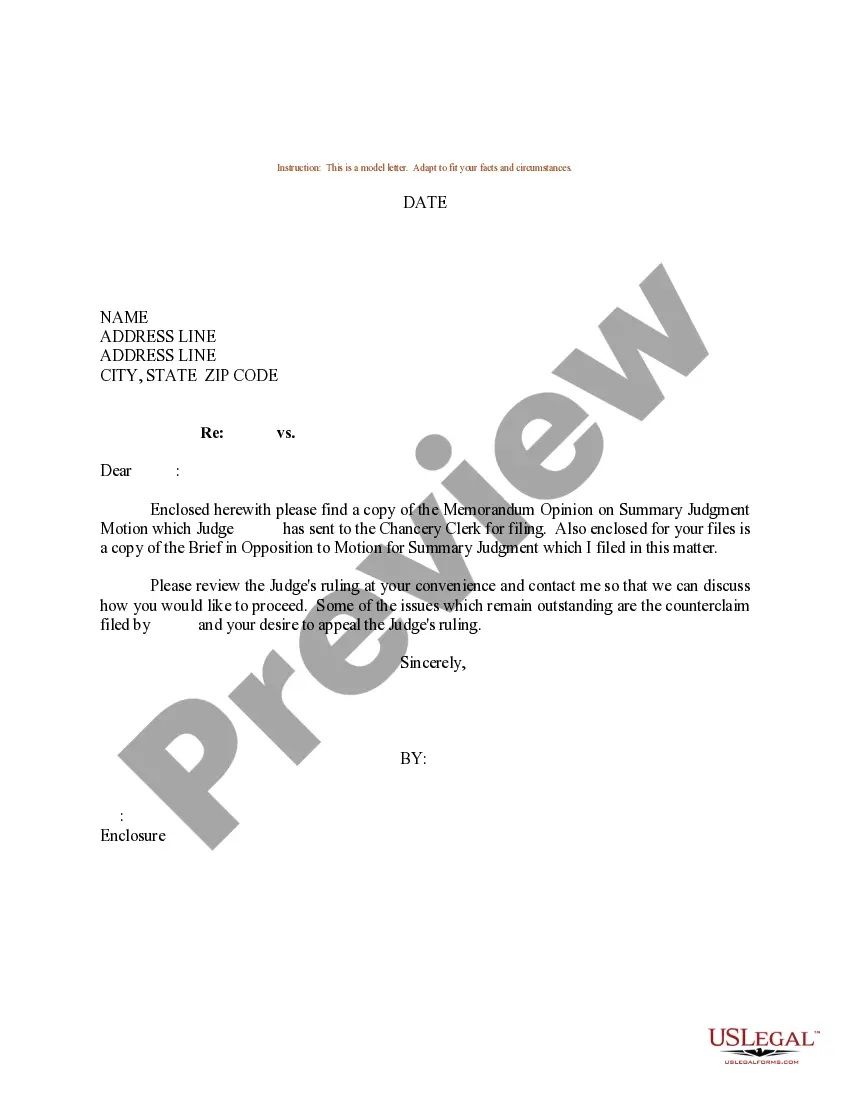
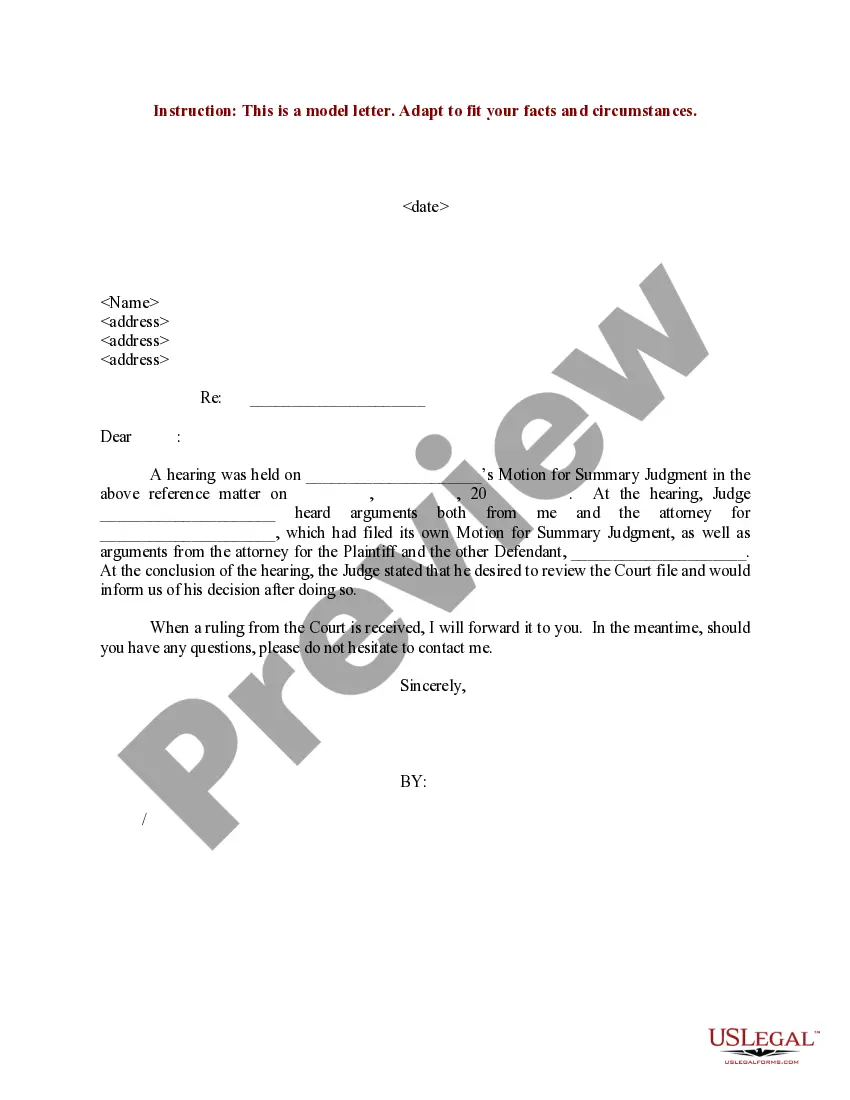
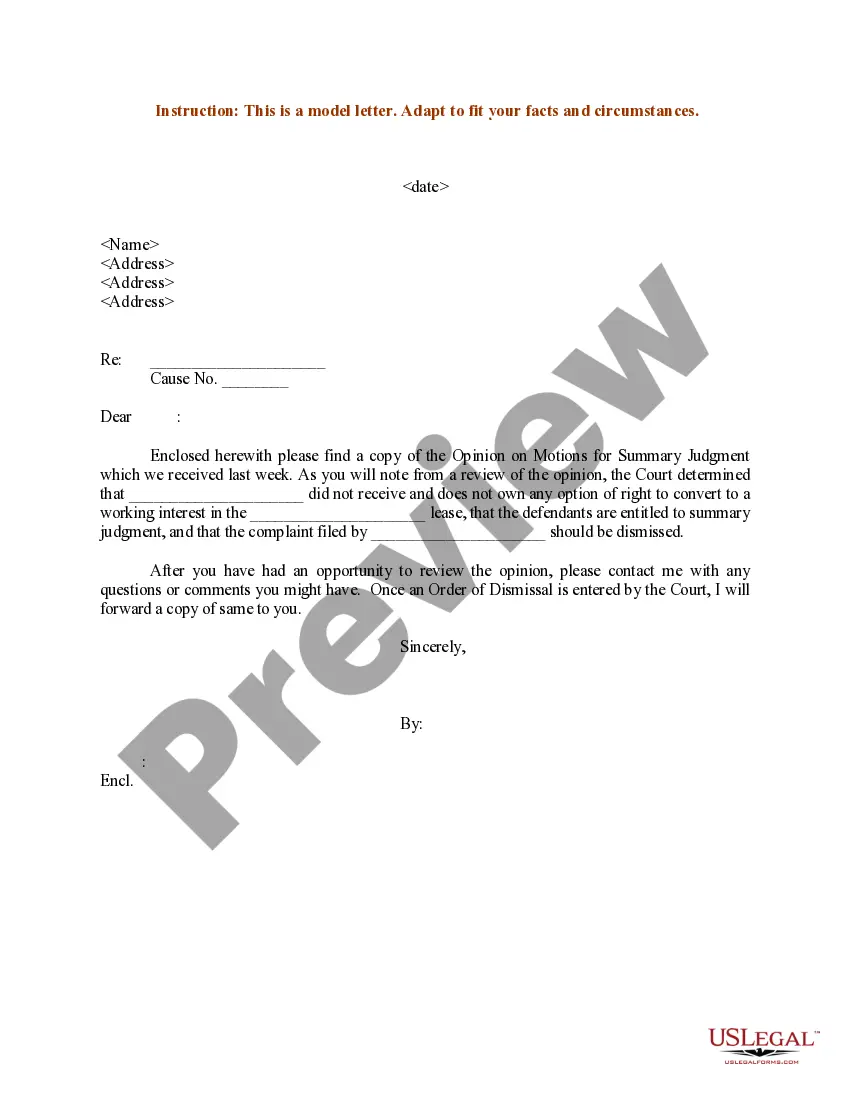
Maine Sample Letter regarding Memorandum Opinion on Summary Judgment Motion
Description
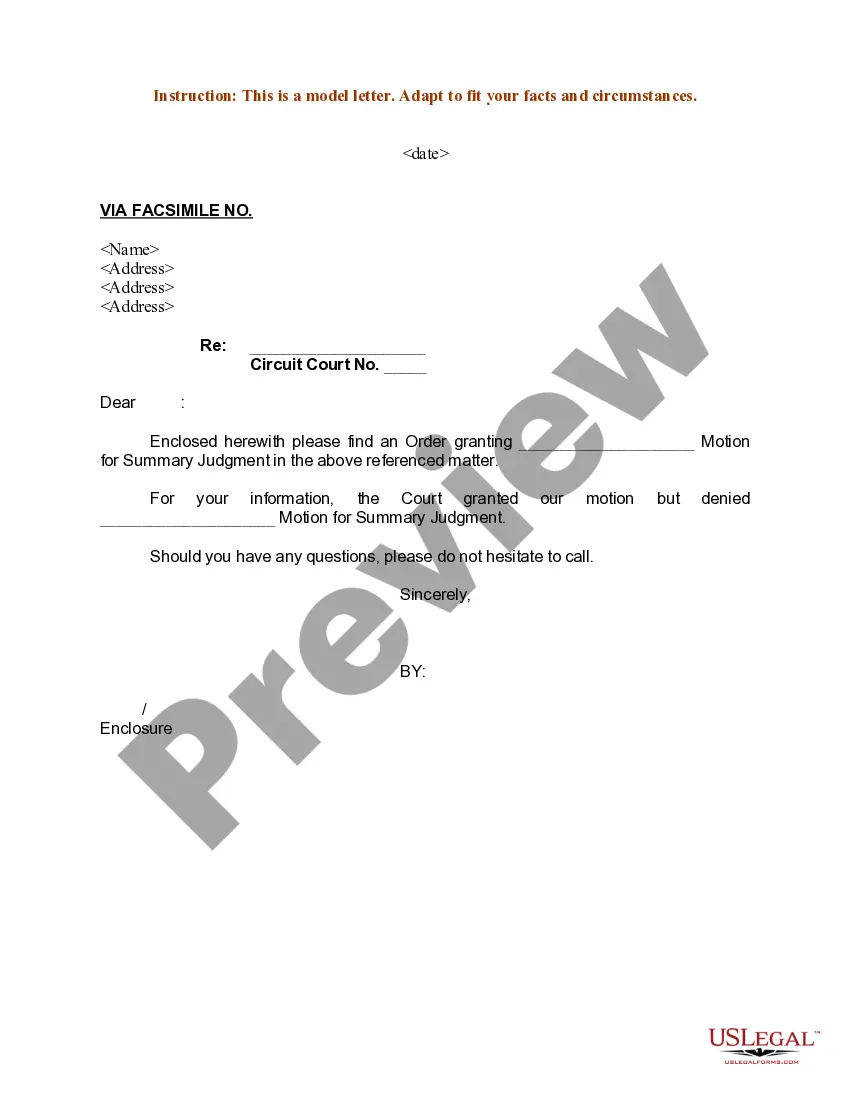
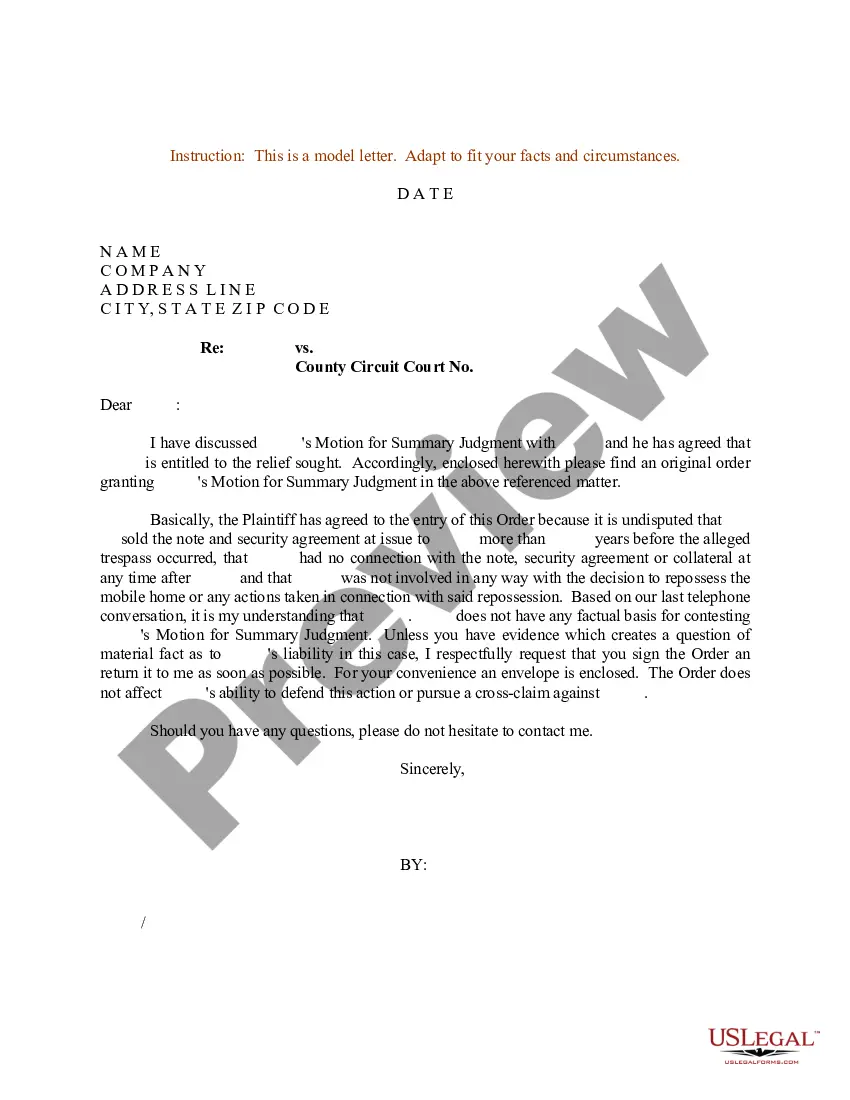
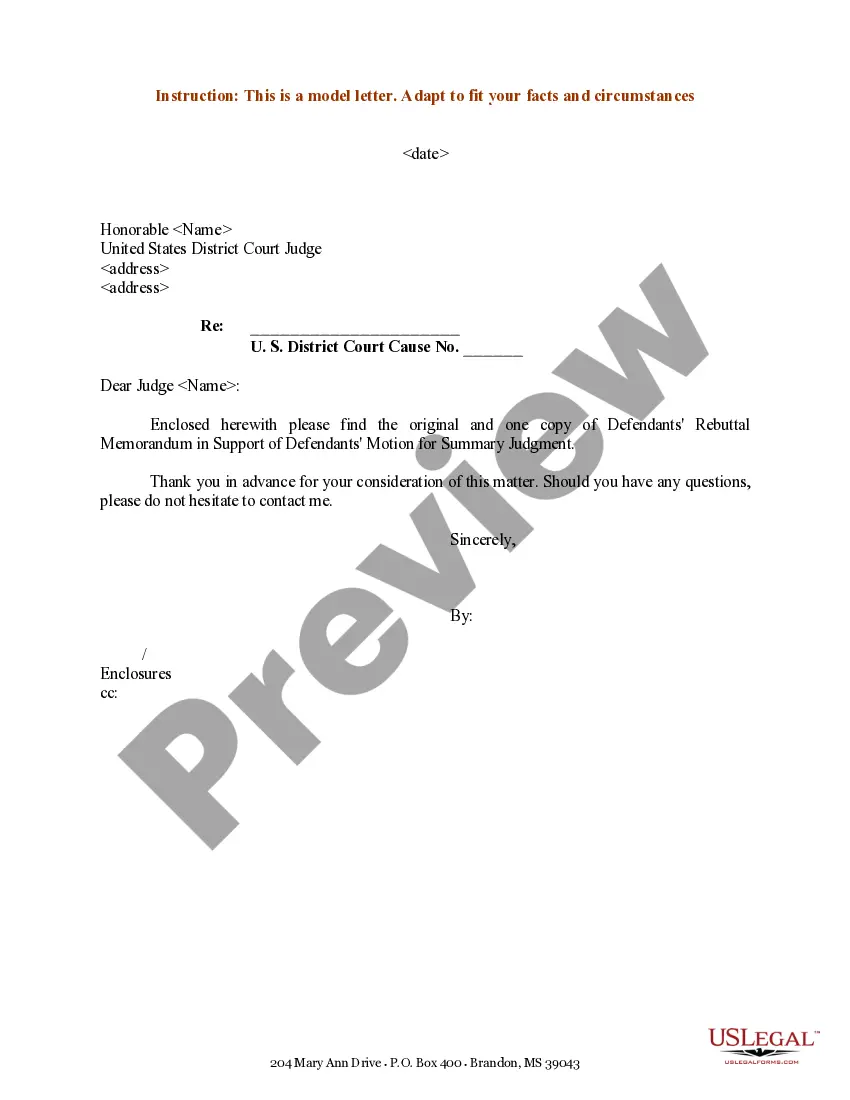
How to fill out Sample Letter Regarding Memorandum Opinion On Summary Judgment Motion?
US Legal Forms - one of the largest collections of authentic documents in the United States - provides a vast array of official form templates that you can download or print. By using the website, you can access thousands of forms for business and personal purposes, organized by categories, states, or keywords. You can find the latest versions of forms such as the Maine Sample Letter regarding Memorandum Opinion on Summary Judgment Motion in just a few minutes.
If you already have a subscription, Log In and download the Maine Sample Letter regarding Memorandum Opinion on Summary Judgment Motion from the US Legal Forms library. The Download button will appear on every form you view. You have access to all previously obtained forms within the My documents section of your account.
If you want to use US Legal Forms for the first time, here are simple steps to get started: Ensure you have selected the correct form for your state/region. Click the Review button to examine the form’s details. Read the form description to ensure that you have chosen the right form. If the form does not meet your needs, utilize the Search field at the top of the screen to locate the one that does. If you are satisfied with the form, confirm your choice by clicking the Get now button. Then, select the pricing plan you prefer and provide your credentials to register for an account. Process the transaction. Use your credit card or PayPal account to complete the transaction. Choose the format and download the form to your device. Make modifications. Fill out, edit, and print and sign the downloaded Maine Sample Letter regarding Memorandum Opinion on Summary Judgment Motion.
- Every template you added to your account has no expiration date and is yours indefinitely.
- So, if you wish to download or print another copy, simply go to the My documents section and click on the form you need.
- Access the Maine Sample Letter regarding Memorandum Opinion on Summary Judgment Motion with US Legal Forms, one of the most extensive libraries of authentic document templates.
- Utilize thousands of professional and state-specific templates that meet your business or personal needs and requirements.
Form popularity
FAQ
Begin by saying, "Now comes the defendant John Smith and respectfully moves for summary judgment. As grounds, John Smith states that ?." Then list the arguments laid out in your motion. End by stating, "In further support of this motion, Mr. Smith relies on the attached memorandum of law."
Rule 56 of the Federal Rules of Civil Procedure governs summary judgment for federal courts. Under Rule 56, in order to succeed in a motion for summary judgment, a movant must show 1) that there is no genuine dispute as to any material fact, and 2) that the movant is entitled to judgment as a matter of law.
Opposition to Motion for Summary Judgment ? the civil law time limits for the filing and service of an opposition to a motion for summary judgment is fourteen (14) days before the reserved hearing date with the court [CALIFORNIA CODE OF CIVIL PROCEDURE 437c(b)(2)].
Overview. If one party to a case has filed a motion with the court, the other side can file an ?opposition.? An ?opposition? is a written statement explaining to the judge why the other side is not entitled to whatever he is asking for in his motion. It is your opportunity to oppose the other side's request.
Show that the law does not support judgment on the undisputed facts. Your legal research may reveal case law that shows judgment isn't warranted in your case, even when no facts are in dispute. Show that discovery is incomplete and could raise a disputed material fact when completed.
Summary judgment motions enable either a plaintiff or a defendant to have a judge rule on all or part of a claim or defence. If a party can show there is no genuine issue requiring a trial, then a judge will likely dismiss the other party's claim or defence.
S.C.J.) -- A motion for summary judgment may be brought before either a master or a judge ?at the option of the moving party? (para 2). In the circumstances specified under r. 20.04(4), a motion brought before a master may be adjourned to be heard by a judge who can exercise those powers.
What Must an Opposition to a Motion for Summary Judgment Include? The Memorandum of Points and Authorities includes any legal authorities and arguments that support your Opposition. An effective Memorandum of Points and Authorities will directly address the arguments made in the Motion for Summary Judgment.