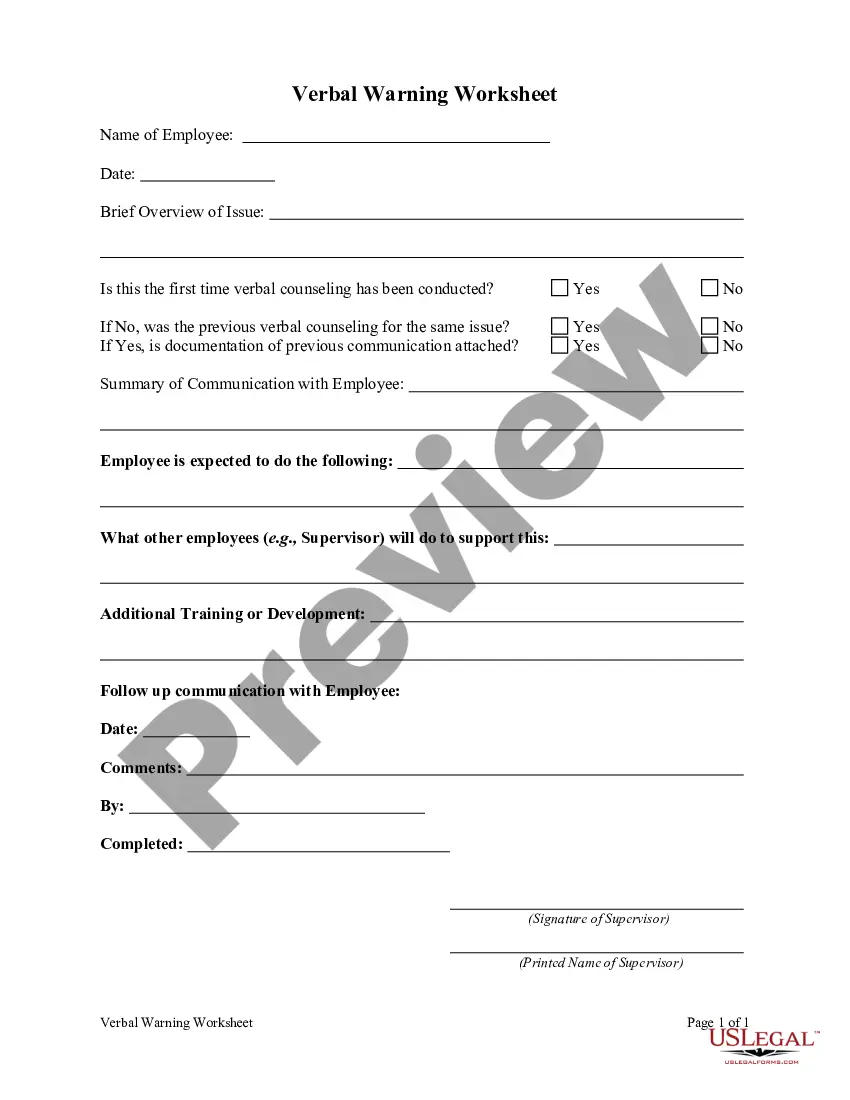
Maine Agreement between Homeowners' Association and Individual Lot Owners for Association to Replace and Maintain Boundary Fence
Description
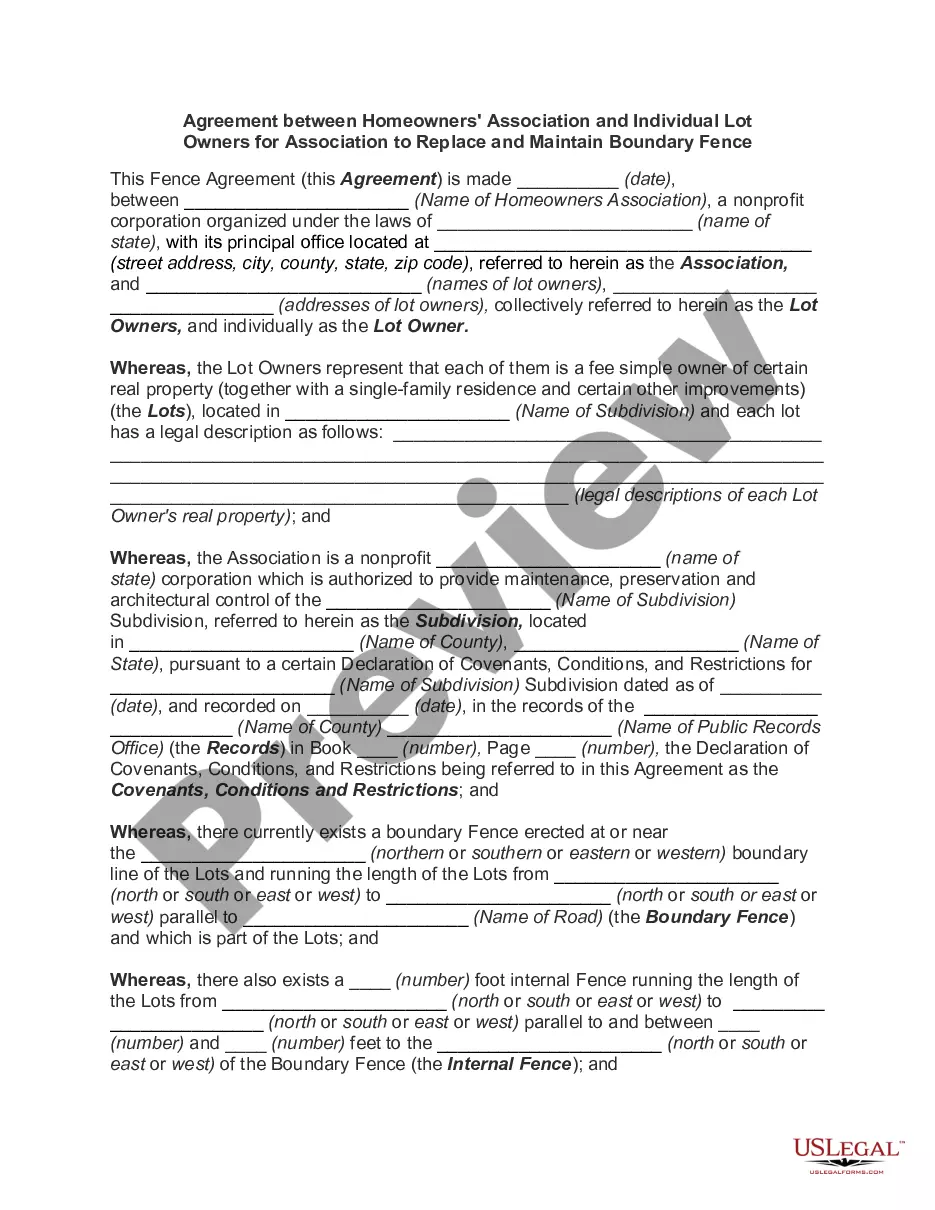
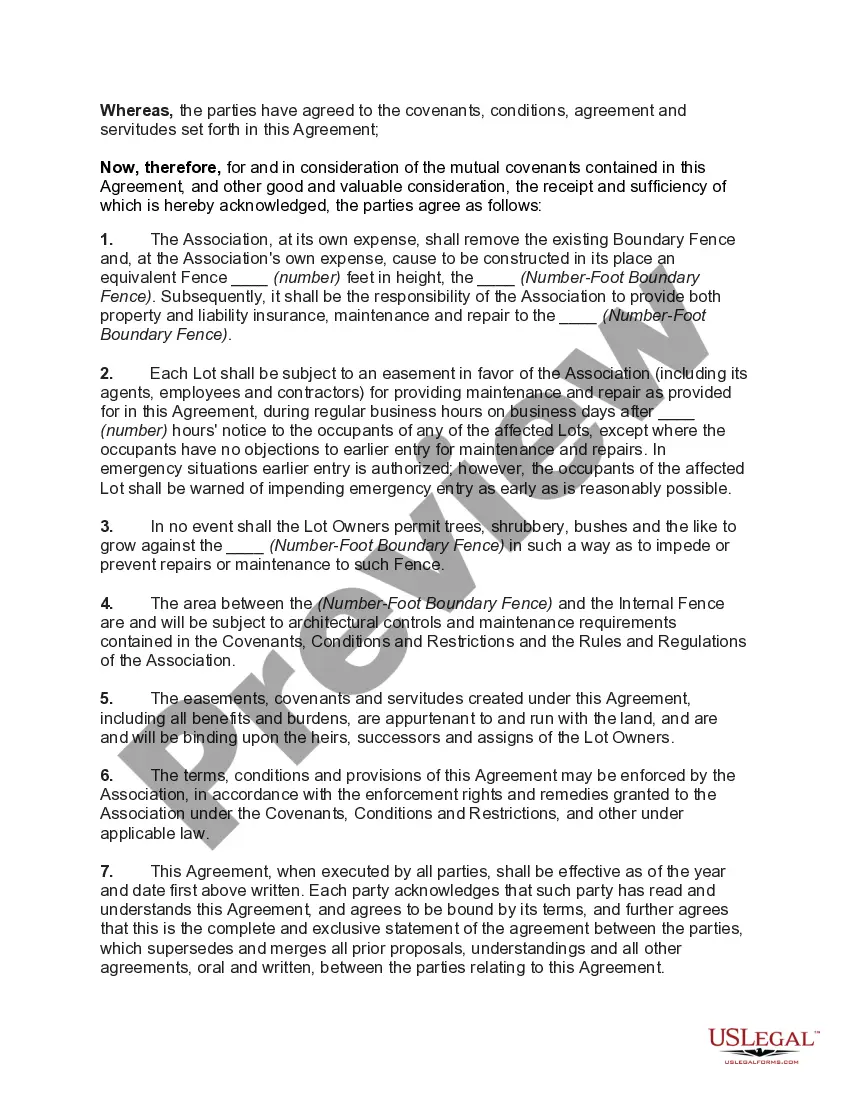
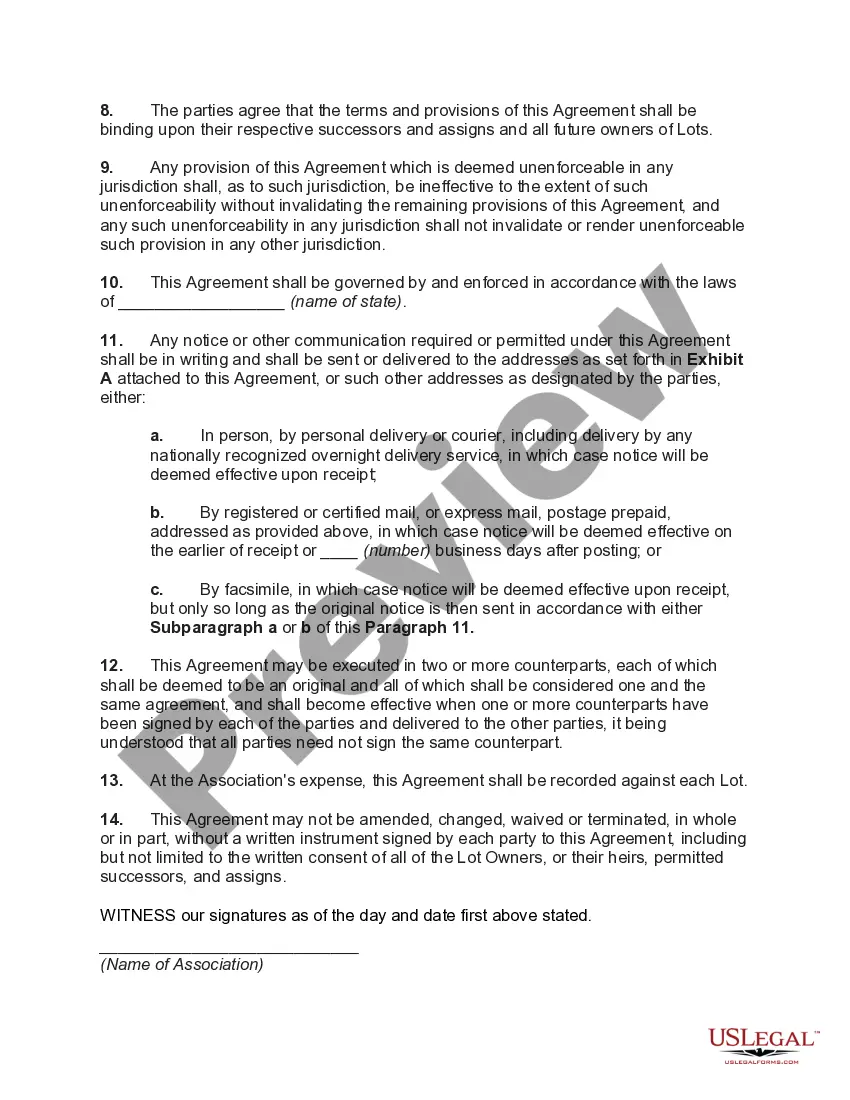
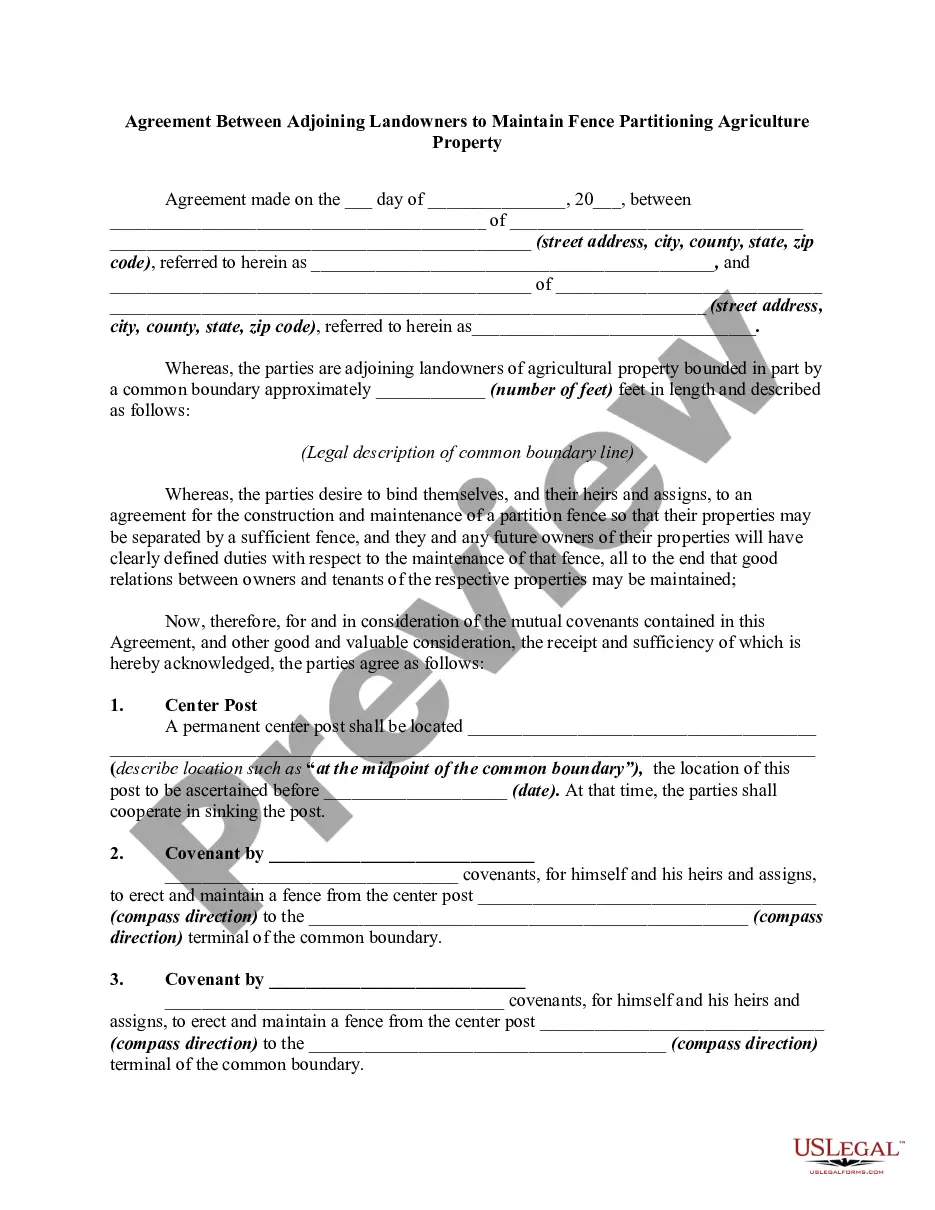
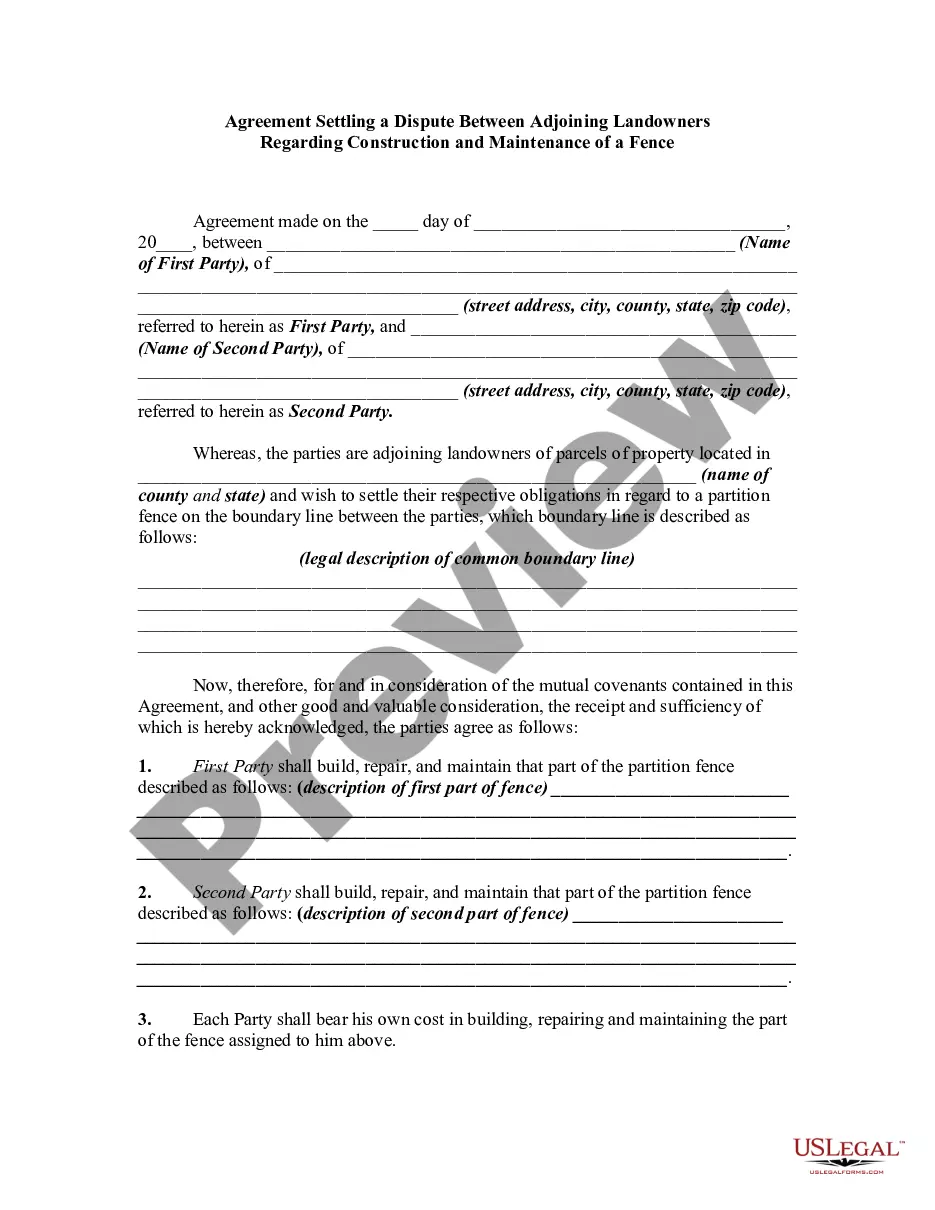
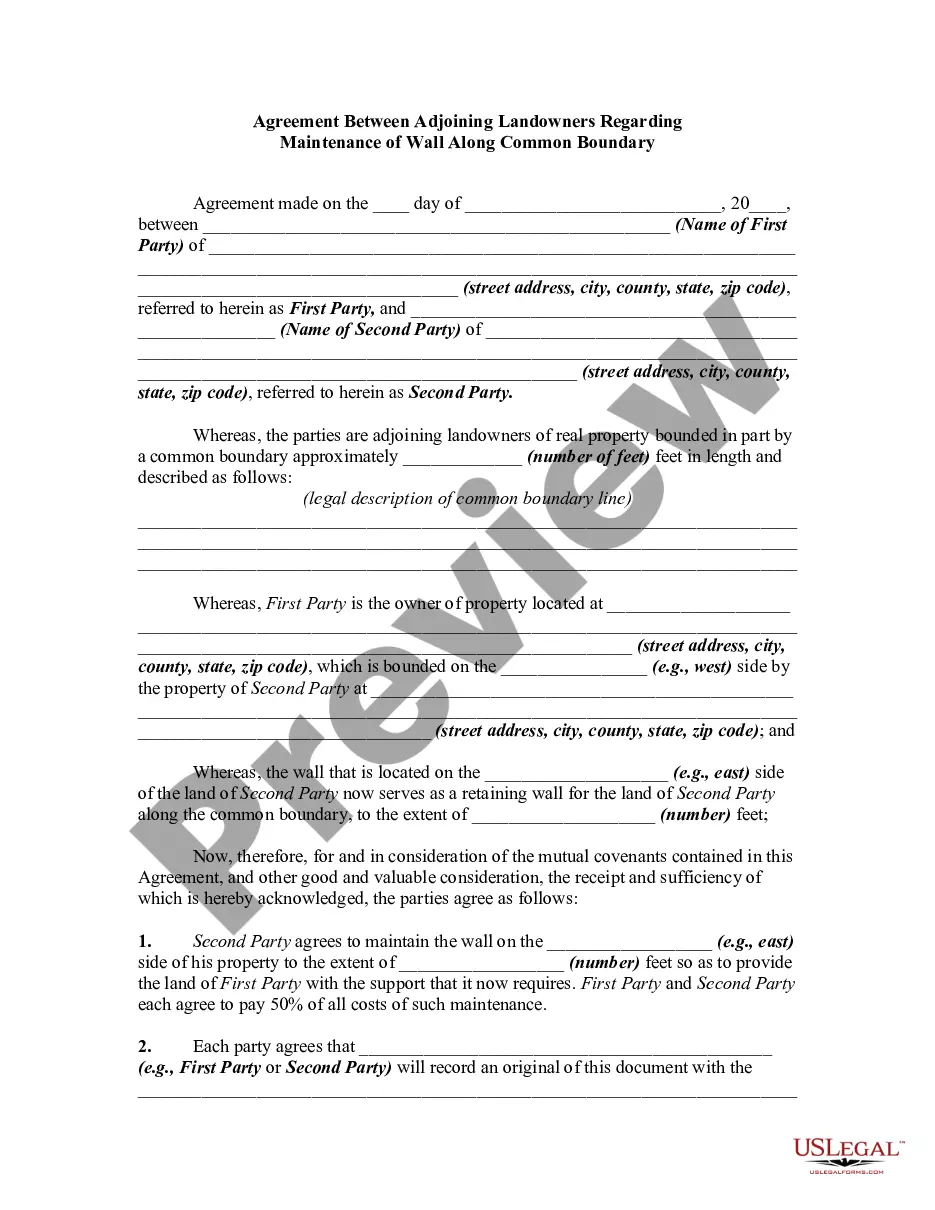
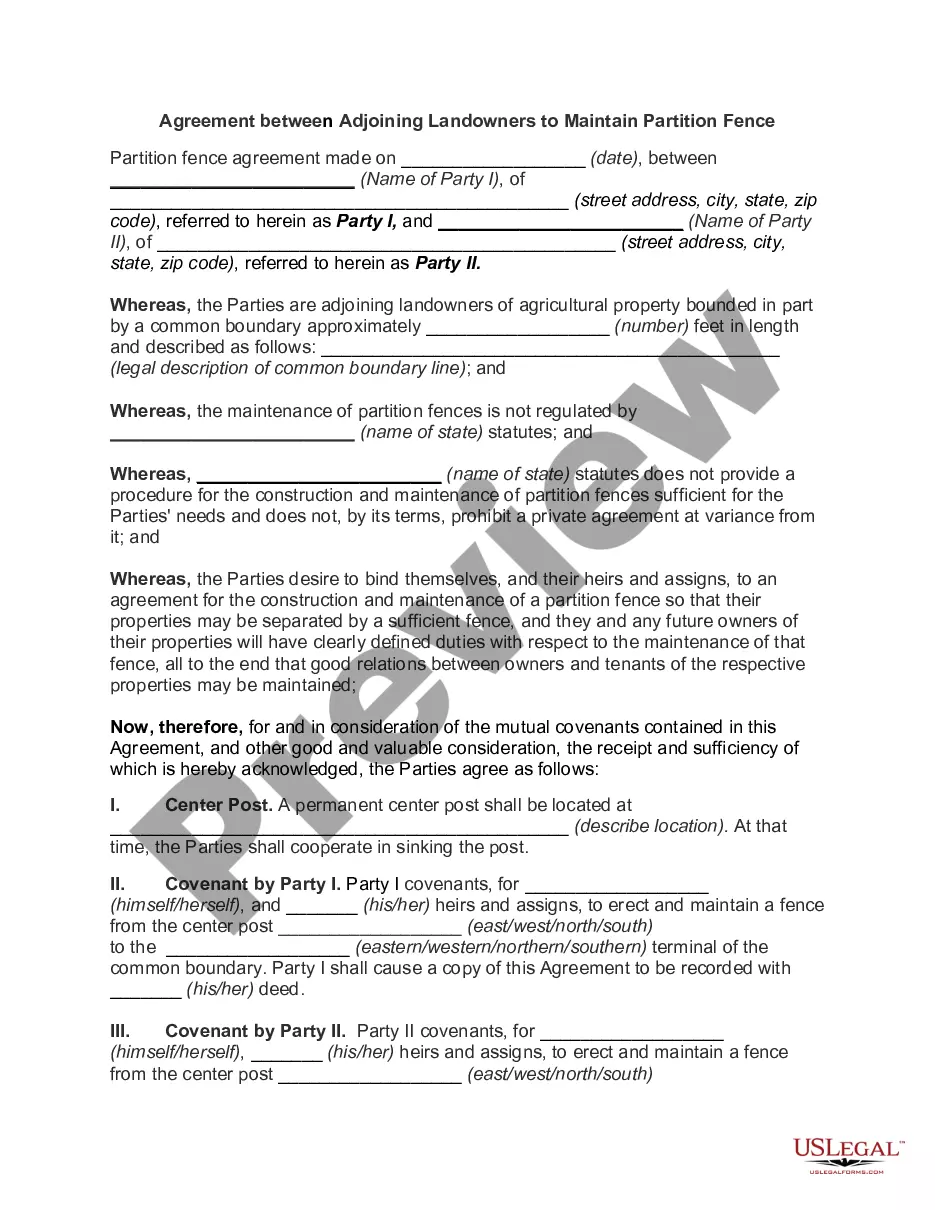



How to fill out Agreement Between Homeowners' Association And Individual Lot Owners For Association To Replace And Maintain Boundary Fence?
Locating the appropriate valid document format can be quite challenging.
Clearly, there are numerous templates accessible online, but how can you acquire the valid version you require.
Utilize the US Legal Forms website.
For new users of US Legal Forms, here are straightforward instructions to follow: First, ensure you have selected the right form for your locality. You can review the document using the Review button and read the form details to confirm it is the correct one for you. If the form does not meet your requirements, utilize the Search field to find the appropriate form. Once you are confident that the document is suitable, click on the Buy now button to obtain the form. Choose the pricing plan you prefer, provide the necessary details, create your account, and pay for the order using your PayPal account or credit card. Select the file format and download the valid document format to your device. Complete, edit, print, and sign the obtained Maine Agreement between Homeowners' Association and Individual Lot Owners for Association to Replace and Maintain Boundary Fence. US Legal Forms is the largest collection of valid forms from which you can discover various document templates. Utilize the service to download professionally crafted paperwork that complies with state requirements.
- The service provides a vast array of templates, such as the Maine Agreement between Homeowners' Association and Individual Lot Owners for Association to Replace and Maintain Boundary Fence, suitable for business and personal needs.
- All the forms are verified by professionals and meet state and federal standards.
- If you are already registered, Log In to your account and click on the Acquire button to obtain the Maine Agreement between Homeowners' Association and Individual Lot Owners for Association to Replace and Maintain Boundary Fence.
- Use your account to view the valid forms you have previously ordered.
- Navigate to the My documents section of your account and download another copy of the documents you need.
Form popularity
FAQ
Customers having new fencing installed often ask us exactly where they should position their new fence. Getting it right avoids (potentially costly) disputes over encroachment in the future. As a rule of thumb, the outer face of the fence should be placed along the boundary. The posts should stand on your land.
Without a neighbour's agreement, there is no right to build a wall over the boundary line.
Article Summary. In England and Wales, there is no legal presumption that a person owns or must maintain a fence or other boundary barrier on the left or on the right. Ownership of the boundary is normally determined by the builder who erects the buildings.
First let's clear up the age old myth of; Each home owner is responsible for maintaining the fence on the left-hand side, as you look at the property from the road. This is FICTION. There is no general rule about whether you own the fence on the left or the fence on the right of your property.
The best way to determine whether a fence is yours or not is by examining where it falls on the property line. If the fence is placed on your side of the property line between your house and your neighbor's, the fence is yours.
In most cases, if you add an outdoor structure such as a fence, you need a permit. However, it specifically depends on the codes, zoning and regulations of where you live. In some cases, you may not need a permit but you must adhere to the local regulations regarding height limits and specific fence materials.
Unless the deeds specify for the boundary to be maintained, there is no legal requirement for the owner to maintain the wall or fence or to keep hedges tidy. The owner could be liable if the fence or wall causes damage or injury because it has been neglected.
As one would expect, in most cases, the owner is responsible for any maintenance the fence may require. Again, as expected, party walls and fences would be the joint responsibility of both neighbours.
The furthest edge of the fence makes up the boundary to the property. To figure out which fence is yours, look at where the frames of the fence are. Those who installed the fence should have erected it facing away from the property who owns it, so that their neighbour gets the good side of the fence.
Check Rules and Regulations Typically, fences are installed anywhere from 2 to 8 inches from a property line in most areas. Some areas might allow to go right up to a property line, especially if you live in an urban row house where every inch makes a difference!