Michigan Quitclaim Deed from three Individuals to an Individual
Overview of this form
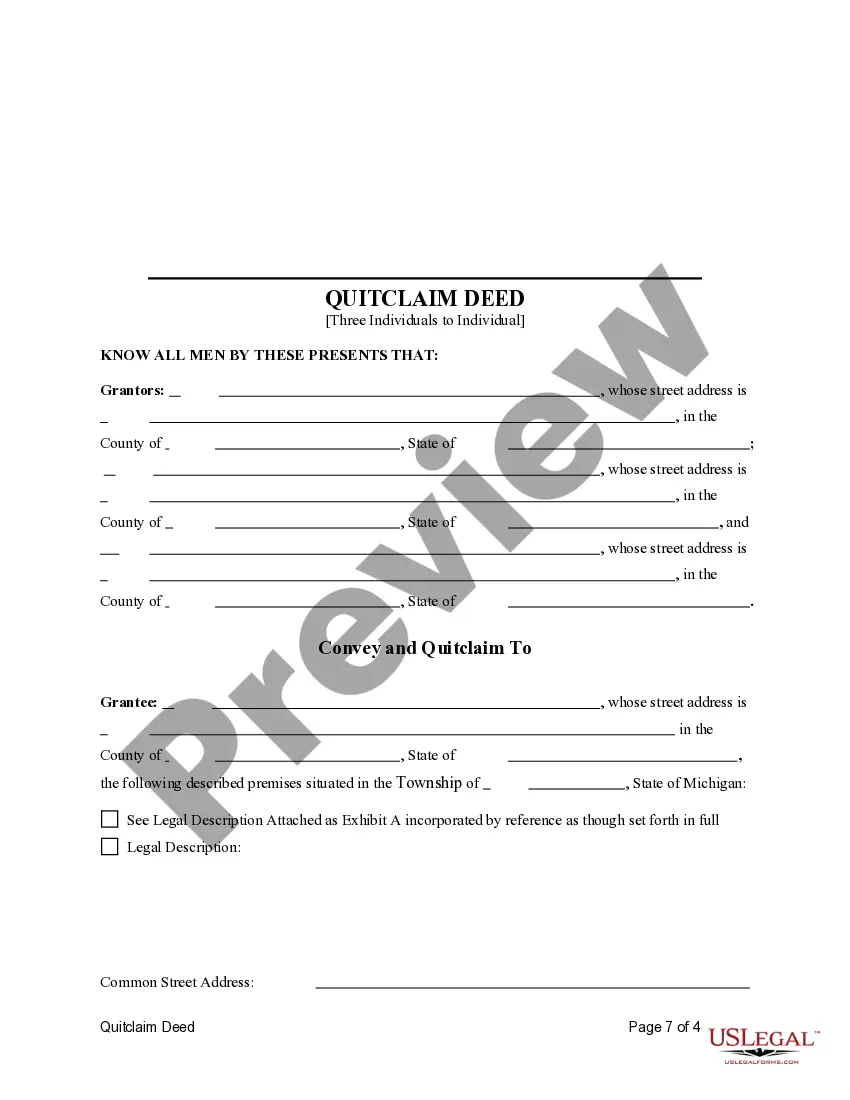
This Quitclaim Deed is a legal document that allows three individuals (the Grantors) to transfer ownership of a property to one individual (the Grantee). Unlike other types of deeds, a quitclaim deed carries no warranties regarding the title or property. This means that the Grantors are merely relinquishing any claim they may have on the property, and the Grantee accepts the property âas is.â This document is particularly useful in transferring property between family members or in situations where the ownership details are clear.
Key components of this form
- The names and addresses of the Grantors and Grantee
- A legal description of the property being transferred
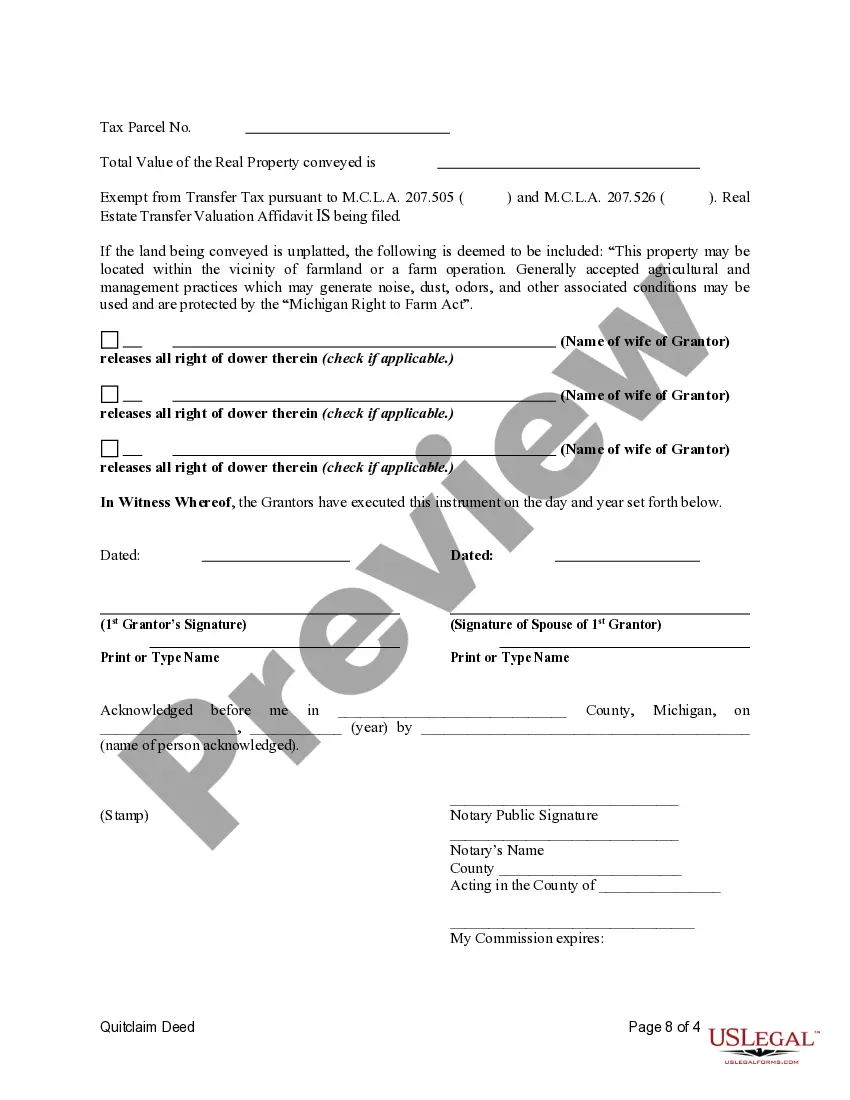
- The statement of consideration, which may include the amount paid for the property
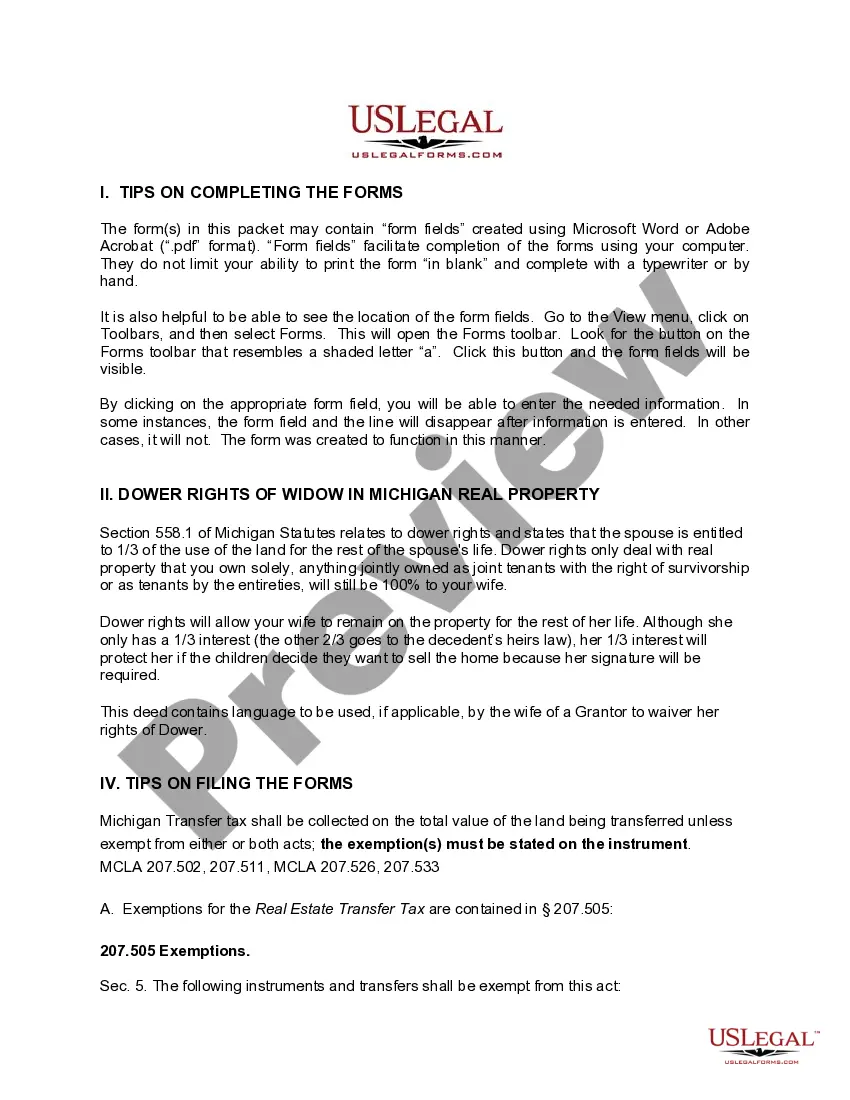
- Any applicable waivers of dower rights, if relevant
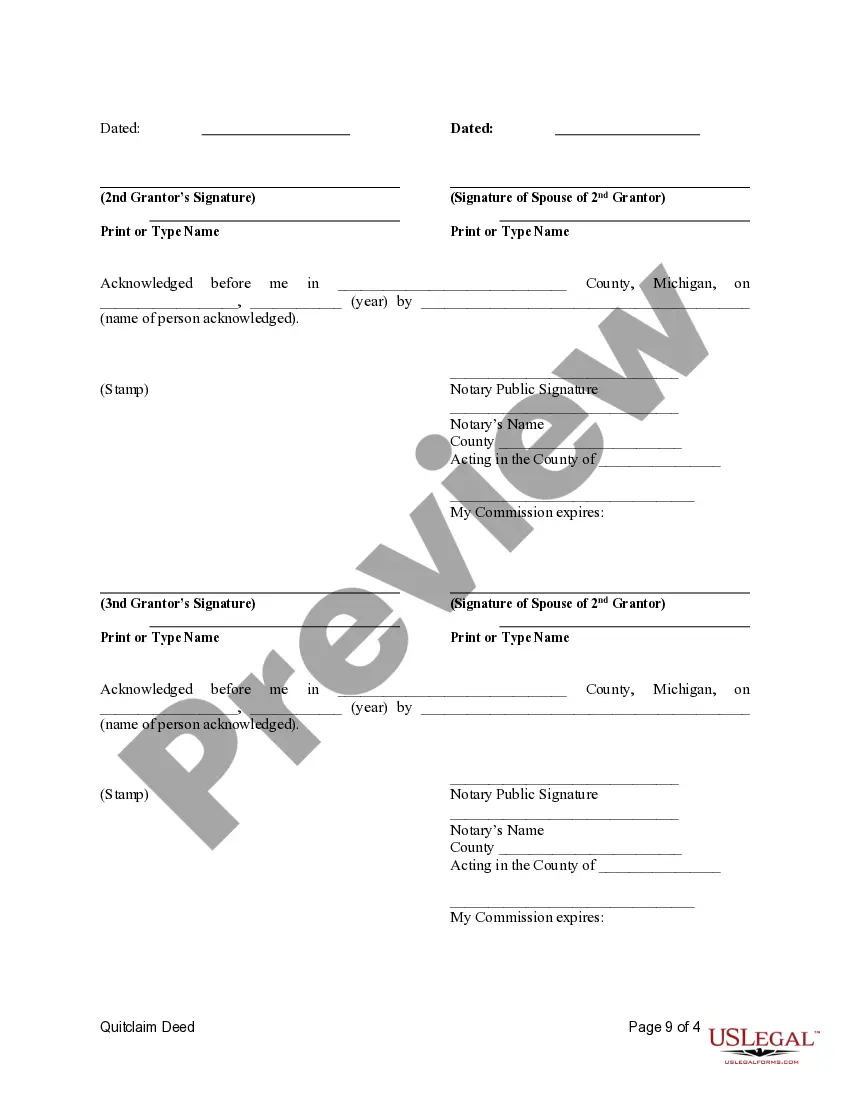
- Signature lines for the Grantors and the Grantee
- Notary acknowledgment section, if required






When to use this form
This form should be used when three individuals wish to transfer property ownership to another individual, often in situations such as inheritance, divorce settlements, or informal property transfers among family members. It can simplify the process, especially when the Grantors have a close relationship with the Grantee and there is no dispute regarding the property's title.
Who can use this document
- Individuals transferring property to family members or friends
- Executors or administrators handling estate matters
- Partners in a business who want to transfer property ownership
- Anyone involved in a divorce who needs to transfer real estate
How to complete this form
- Identify and enter the full names and addresses of the three Grantors and the Grantee.
- Clearly specify the legal description of the property being conveyed.
- Document any consideration paid for the property, if applicable.
- If applicable, include language waiving dower rights from the Grantorsâ spouses.
- Ensure all Grantors sign the deed in front of a notary public, if required.
- File the completed deed with the appropriate local government office for property records.
Notarization guidance
This form must be notarized to be legally valid. US Legal Forms provides secure online notarization powered by Notarize, allowing you to complete the process through a verified video call.
Get your form ready online
Our built-in tools help you complete, sign, share, and store your documents in one place.
Make edits, fill in missing information, and update formatting in US Legal Forms—just like you would in MS Word.
Download a copy, print it, send it by email, or mail it via USPS—whatever works best for your next step.
Sign and collect signatures with our SignNow integration. Send to multiple recipients, set reminders, and more. Go Premium to unlock E-Sign.
If this form requires notarization, complete it online through a secure video call—no need to meet a notary in person or wait for an appointment.
We protect your documents and personal data by following strict security and privacy standards.
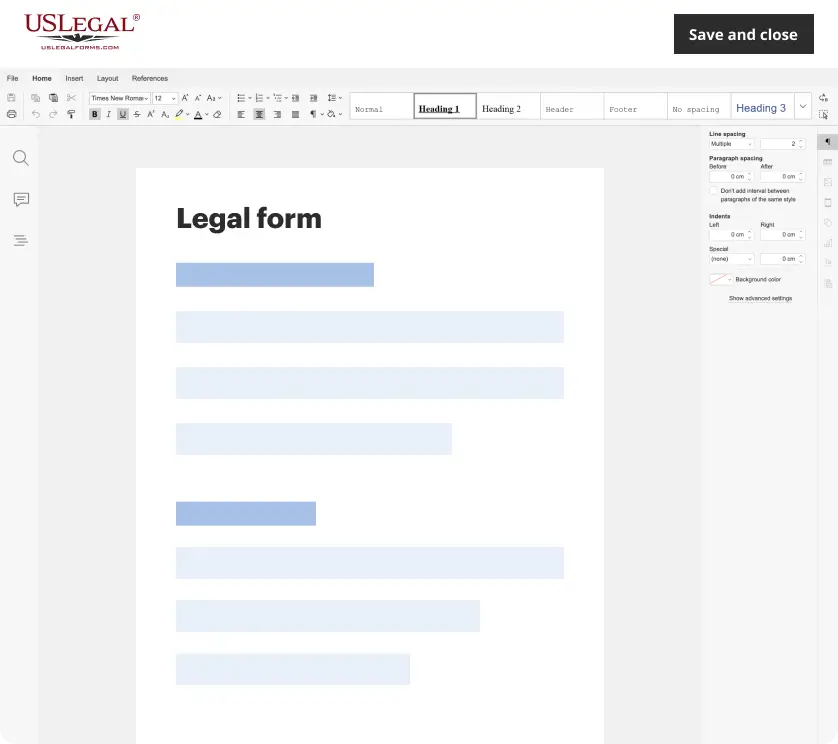
Make edits, fill in missing information, and update formatting in US Legal Forms—just like you would in MS Word.
Download a copy, print it, send it by email, or mail it via USPS—whatever works best for your next step.
Sign and collect signatures with our SignNow integration. Send to multiple recipients, set reminders, and more. Go Premium to unlock E-Sign.
If this form requires notarization, complete it online through a secure video call—no need to meet a notary in person or wait for an appointment.
We protect your documents and personal data by following strict security and privacy standards.
Avoid these common issues
- Failing to include a complete legal description of the property.
- Not having all Grantors sign the deed.
- Ignoring local notarization requirements.
- Not filing the deed with the county recorder's office.
Benefits of completing this form online
- Convenience of completing the form digitally, saving time and effort.
- Ability to edit and customize form fields easily.
- Access to forms reviewed by licensed attorneys for compliance.
- Downloadable format allows for both electronic and physical filing options.
Looking for another form?





Form popularity
FAQ
The drawback, quite simply, is that quitclaim deeds offer the grantee/recipient no protection or guarantees whatsoever about the property or their ownership of it. Maybe the grantor did not own the property at all, or maybe they only had partial ownership.
Quitclaim deeds are most often used to transfer property between family members.Examples include when an owner gets married and wants to add a spouse's name to the title or deed, or when the owners divorce and one spouse's name is removed from the title or deed.
Quitclaim deeds are most often used to transfer property between family members. Examples include when an owner gets married and wants to add a spouse's name to the title or deed, or when the owners get divorced and one spouse's name is removed from the title or deed.
A person who signs a quitclaim deed to transfer property they do not own results in no title at all being transferred since there is no actual ownership interest. The quitclaim deed only transfers the type of title you own.
In Michigan, a quit claim deed must be signed by a witness, in addition to the notary, to make it legal.After all required signatures are collected and notarized, file the document with your local register of deeds to complete the transaction.
A Michigan quitclaim deed form provides no warranty of title. That means that the new owner has no legal right to sue the prior owner if there is a problem with the title to the property. The new owner simply takes whatever title that the prior owner has.
Once you sign a quitclaim deed and it has been filed and recorded with the County Clerks Office, the title has been officially transferred and cannot be easily reversed. In order to reverse this type of transfer, it would require your spouse to cooperate and assist in adding your name back to the title.
Signing: § 565.201 requires that the grantor sign the document in front of a notary public. Recording: All quitclaim deeds in Michigan must be filed with the Michigan Register of Deeds in the county where the property is located.
Yes, you can use a Quitclaim Deed to transfer a gift of property to someone. You must still include consideration when filing your Quitclaim Deed with the County Recorder's Office to show that title has been transferred, so you would use $10.00 as the consideration for the property.