Michigan 30 Day Notice to Terminate Tenancy at Will - Nonresidential from Tenant to Landlord
What this document covers
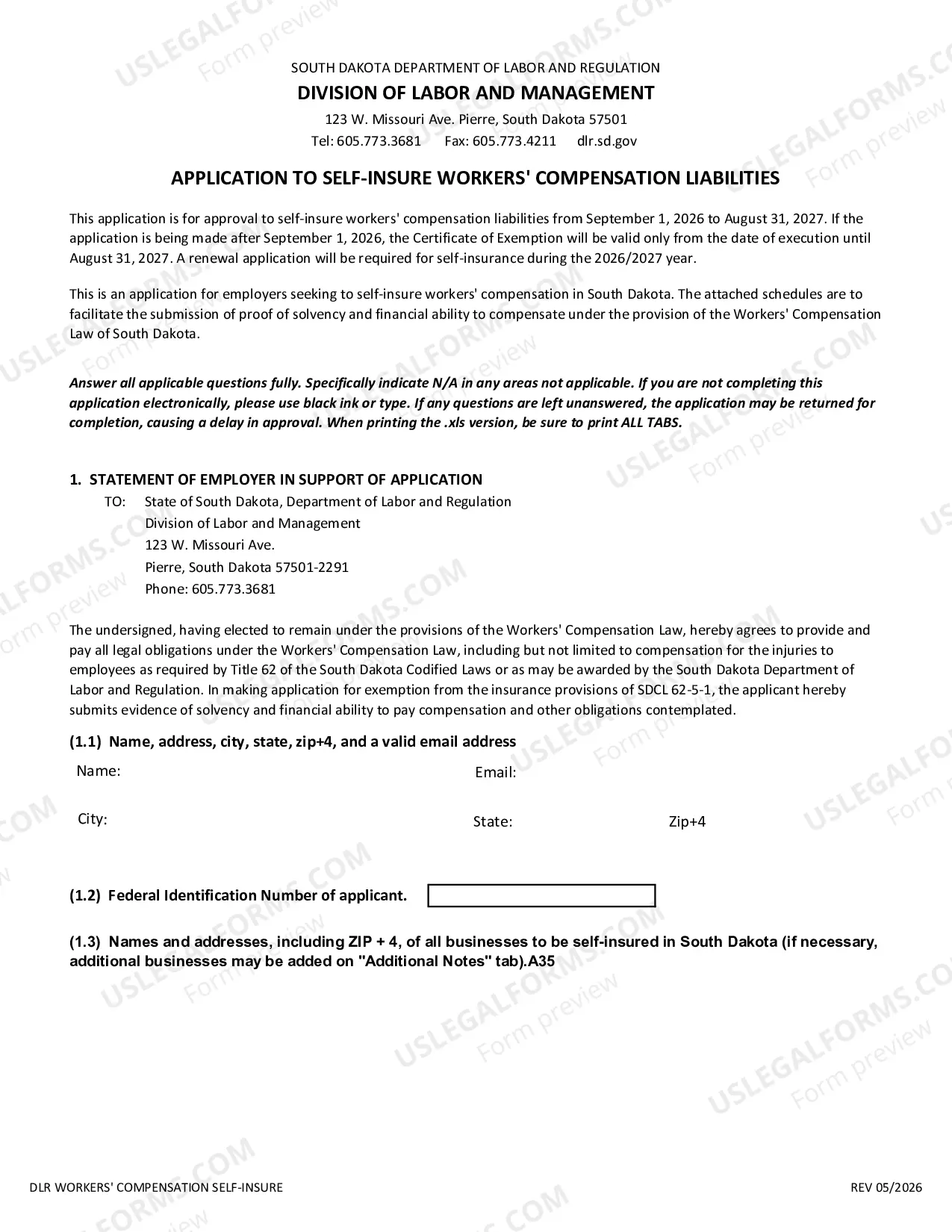
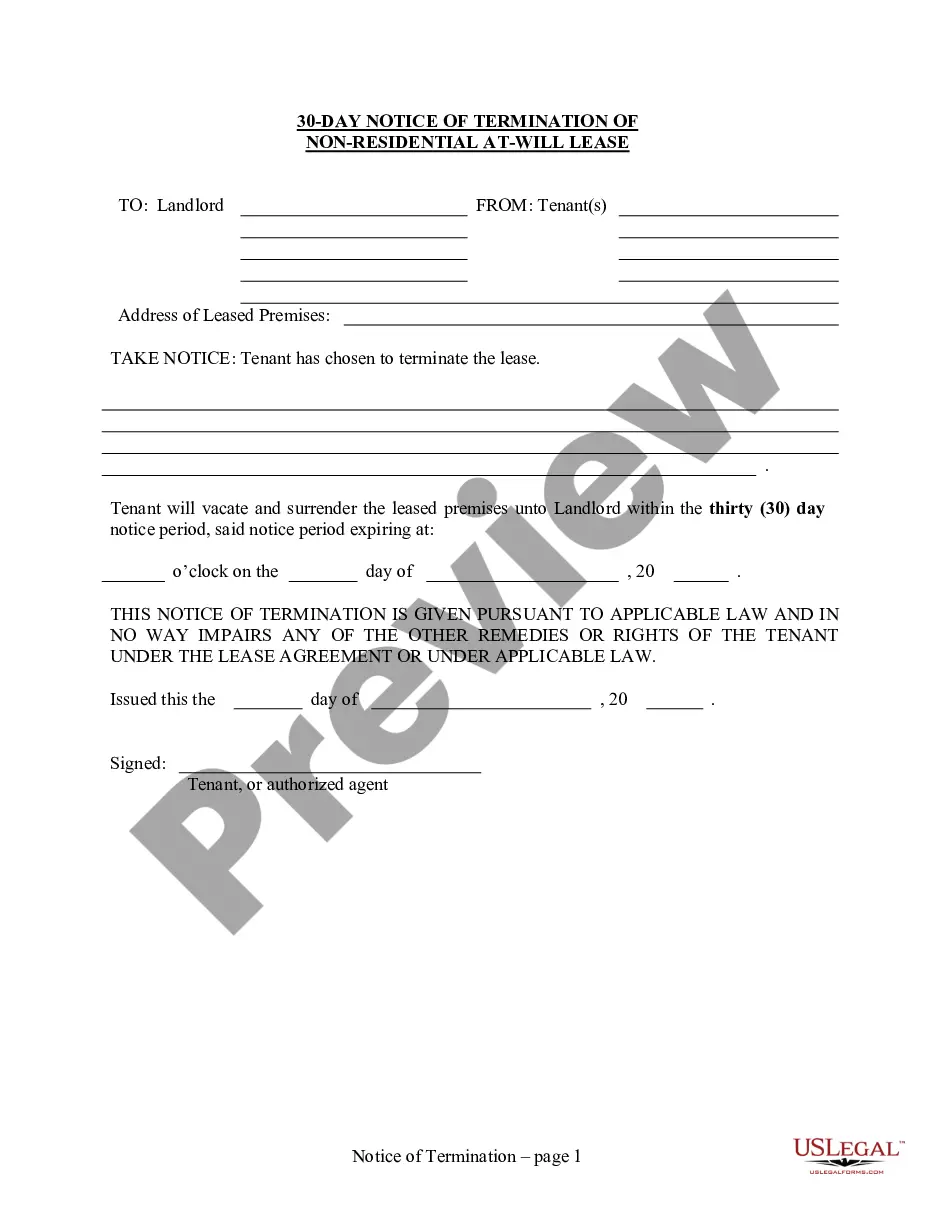
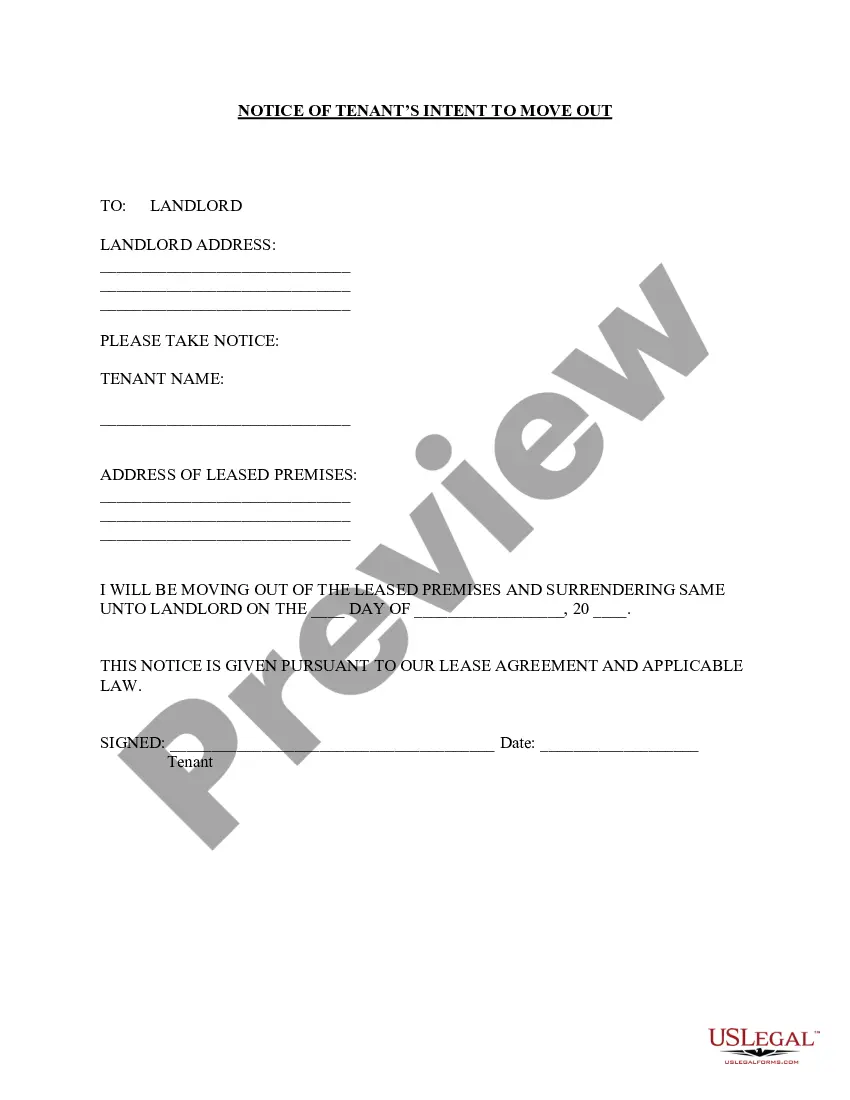
The 30 Day Notice to Terminate Tenancy at Will - Nonresidential from Tenant to Landlord is a legal document used by tenants to formally inform their landlord of their intention to terminate an at-will non-residential lease. Unlike residential leases, non-residential leases can encompass commercial or industrial properties. This form provides a structured method for tenants to give the legally required 30 days' notice, ensuring compliance with rental laws and protecting their rights under the lease agreement.
Key parts of this document
- Notification declaration from the Tenant to the Landlord.
- Identification of the leased premises address.
- Notification of the intent to vacate within the 30-day notice period.
- Space for indicating the expiration date and time of the notice period.
- Signature of the Tenant or authorized agent.
- Proof of delivery methods to the Landlord.


Common use cases
This form should be used when a tenant wants to end a non-residential lease that is classified as at-will. It is applicable in scenarios where the tenant has decided to vacate the property for reasons such as relocating their business, ceasing operations, or simply needing a different space. Utilizing this form ensures the tenant provides proper notice in accordance with legal requirements.
Intended users of this form
- Tenants currently engaging in at-will non-residential leases.
- Business owners who need to terminate their lease for commercial spaces.
- Individuals or entities who wish to formally notify their landlords of their intent to vacate.
How to complete this form
- Identify the parties involved: include the Tenant's name and the Landlord's information.
- Specify the address of the leased premises to ensure clarity on which property is being referenced.
- Indicate the effective date of the notice and the last date of occupancy.
- Sign the document, ensuring that it is completed by the Tenant or an authorized agent.
- Deliver the notice to the Landlord according to one of the permitted delivery methods (hand, registered mail, or posting).
Does this form need to be notarized?
This form does not typically require notarization to be legally valid. However, some jurisdictions or document types may still require it. US Legal Forms provides secure online notarization powered by Notarize, available 24/7 for added convenience.
Get your form ready online
Our built-in tools help you complete, sign, share, and store your documents in one place.
Make edits, fill in missing information, and update formatting in US Legal Forms—just like you would in MS Word.
Download a copy, print it, send it by email, or mail it via USPS—whatever works best for your next step.
Sign and collect signatures with our SignNow integration. Send to multiple recipients, set reminders, and more. Go Premium to unlock E-Sign.
If this form requires notarization, complete it online through a secure video call—no need to meet a notary in person or wait for an appointment.
We protect your documents and personal data by following strict security and privacy standards.

Make edits, fill in missing information, and update formatting in US Legal Forms—just like you would in MS Word.

Download a copy, print it, send it by email, or mail it via USPS—whatever works best for your next step.

Sign and collect signatures with our SignNow integration. Send to multiple recipients, set reminders, and more. Go Premium to unlock E-Sign.

If this form requires notarization, complete it online through a secure video call—no need to meet a notary in person or wait for an appointment.

We protect your documents and personal data by following strict security and privacy standards.
Mistakes to watch out for
- Failing to provide the full 30 days' notice as required.
- Not including the proper address of the leased premises.
- Neglecting to sign the form or provide a signature from an authorized agent.
- Using incorrect delivery methods that do not satisfy legal requirements.
Why use this form online
- Quick and easy access to legally-sound documents tailored for state-specific regulations.
- Editable templates allow for customization according to individual needs.
- Instant download ensures that you have the form ready for immediate use.
- Guidance provided simplifies the completion process, reducing the chances of errors.
Legal use & context
- This notice acts as a formal declaration of intent to terminate the lease, providing legal protection to the Tenant.
- Failure to provide this notice may result in penalties or the inability to terminate the lease as intended.
- Landlords are obligated to respect the notice period and may not retaliate against the tenant for using this form.
What to keep in mind
- This form is essential for tenants seeking to terminate at-will non-residential leases.
- Proper completion and delivery of the notice ensure compliance with legal requirements.
- Tenants should be aware of any local laws that may affect the notice period or requirements.
Looking for another form?

Form popularity
FAQ
Putting all this together, you can see that even if the tenant does not show up to contest the eviction hearing, it will take an absolute minimum of four weeks to get an eviction in Michigan. In reality, an official eviction is likely to take longer, in the region of six to eight weeks.
You can still break the lease by paying all the rent due for the remaining lease term. Under Michigan law, you only need to pay the amount the landlord loses, in the event of breaking the lease. No matter what your reason for leaving is, landlords must make reasonable efforts to re-rent the unit.
In Colorado, evictions are sometimes referred to as forcible entry & detainer (FED). Before you can file for eviction, you must generally provide 10 days' notice (increased from 3 days prior) for tenants to correct a deficiency or leave the property, except in certain circumstances.
Termination Fees Most agreements require you to pay 2-3 months' rent and forfeit your security deposit.
In Michigan, the landlord must give the tenant at least 7 days' notice before filing to evict for non-payment of rent, for causing damage to the home, or for creating a health hazard.
California law generally allows the owner to terminate a month-to month tenancy on 30 or 60 days notice, depending on how long the residents have lived there. By contrast, a fixed-term lease can only be terminated by the owner on three days' notice for cause.
Eviction begins when the parents fill out two copies of Michigan Form DC 100c, Notice to Quit to Recover Possession of Property. The parents fill out one and give it to the child and keep one for their own records. This notice must be delivered to the adult child or to another adult resident who can pass it on.
Tenant Rights to Withhold Rent in MichiganTenants may withhold rent or exercise the right to repair and deduct if a landlord fails to take care of important repairs, such as a broken heater. For specifics, see Michigan Tenant Rights to Withhold Rent or Repair and Deduct.
Notice of Entry Laws in Michigan There is no notice of entry law in Michigan. According to our survey of Michigan landlords, must provide their tenants 24-hour notice before entering the unit.