Michigan Quit Claim Deed
About this form
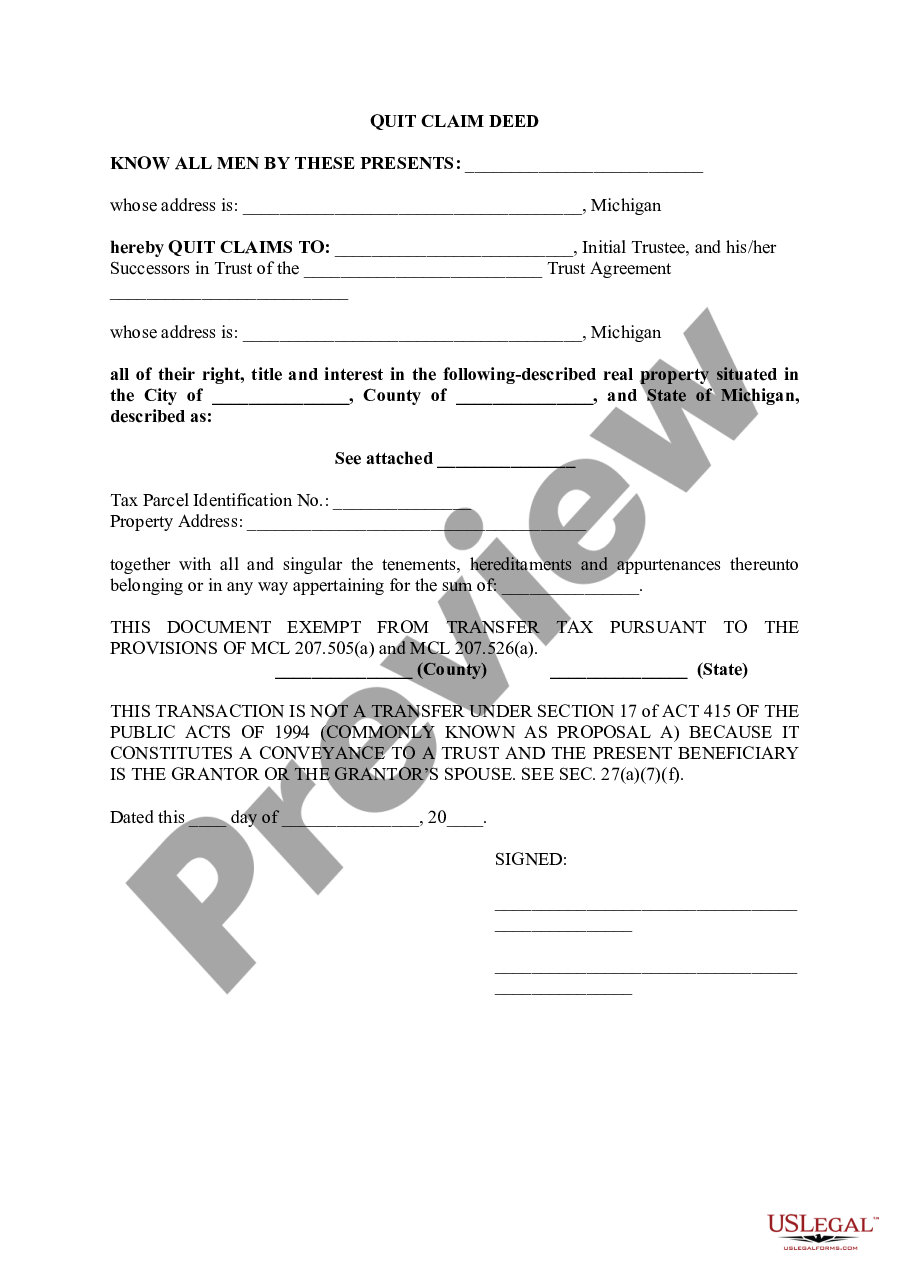
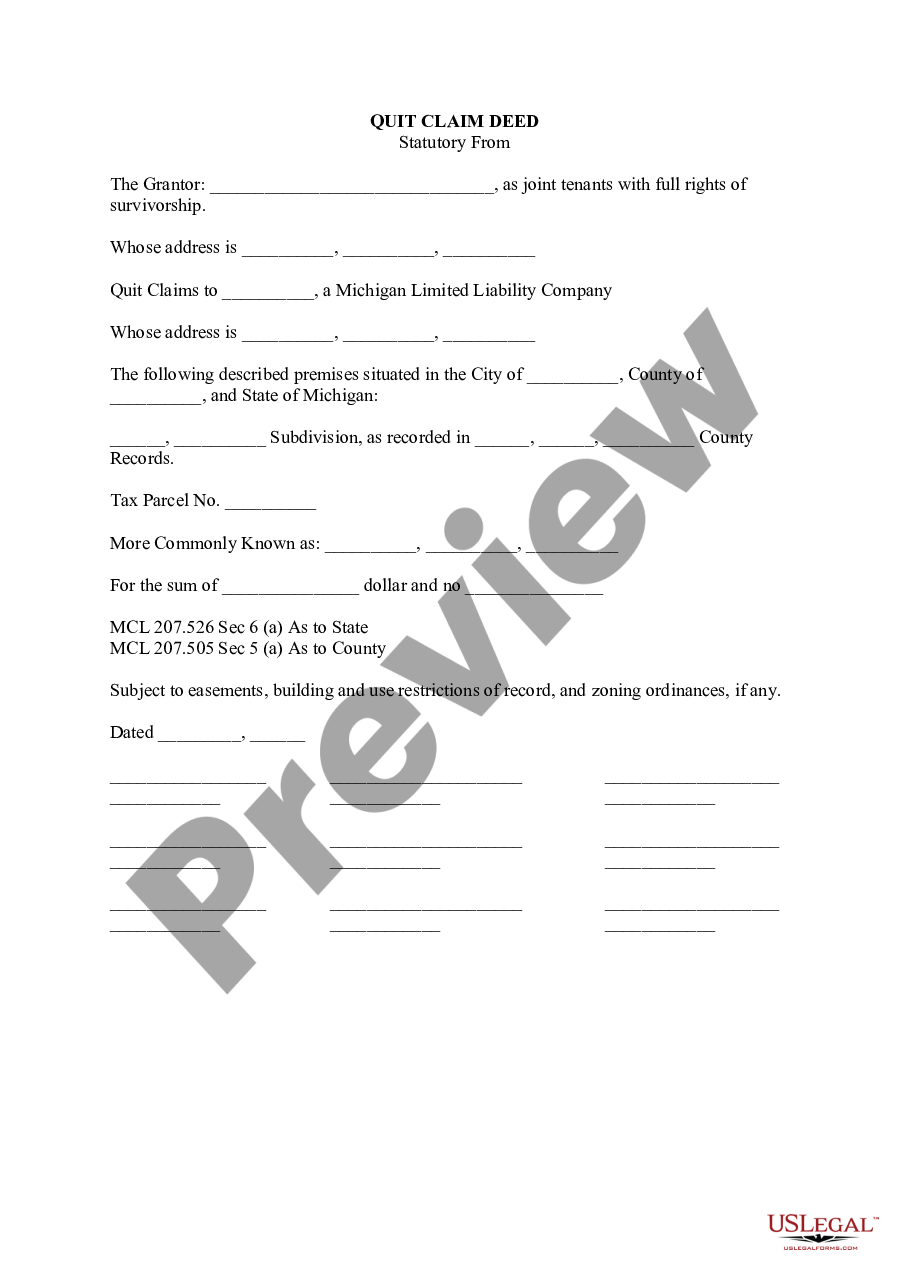
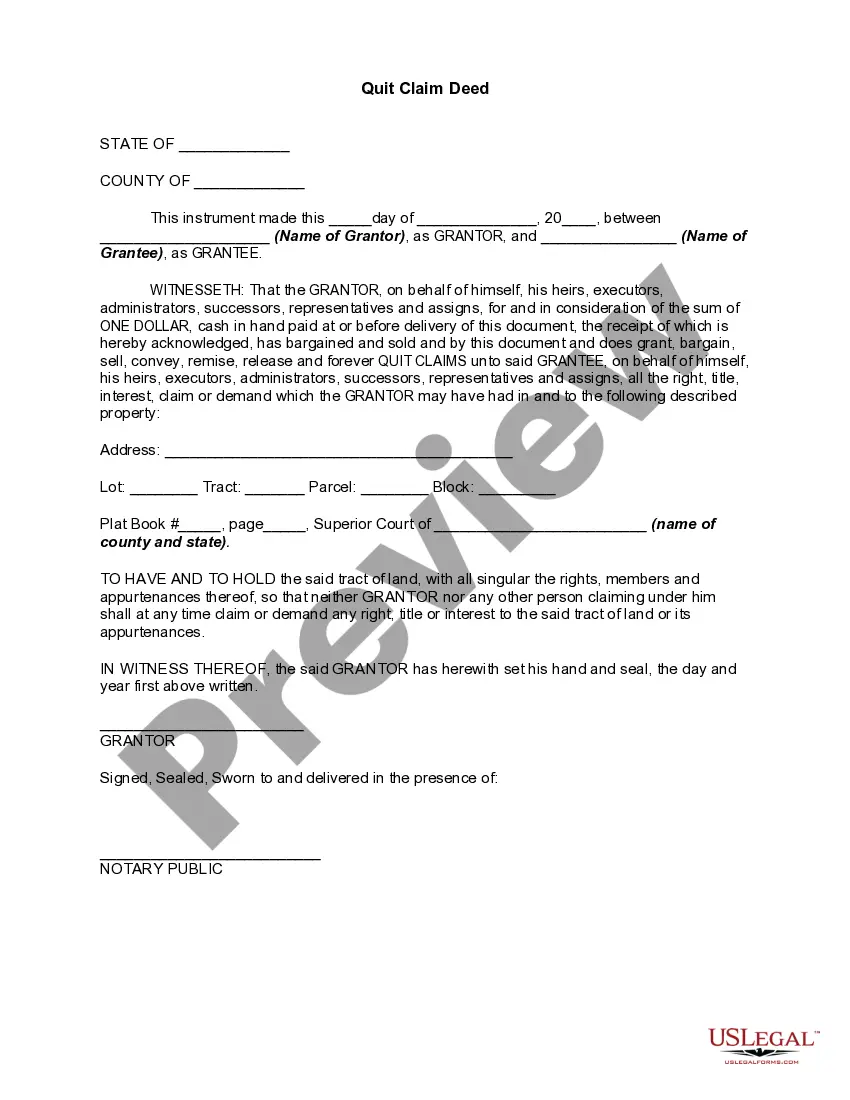
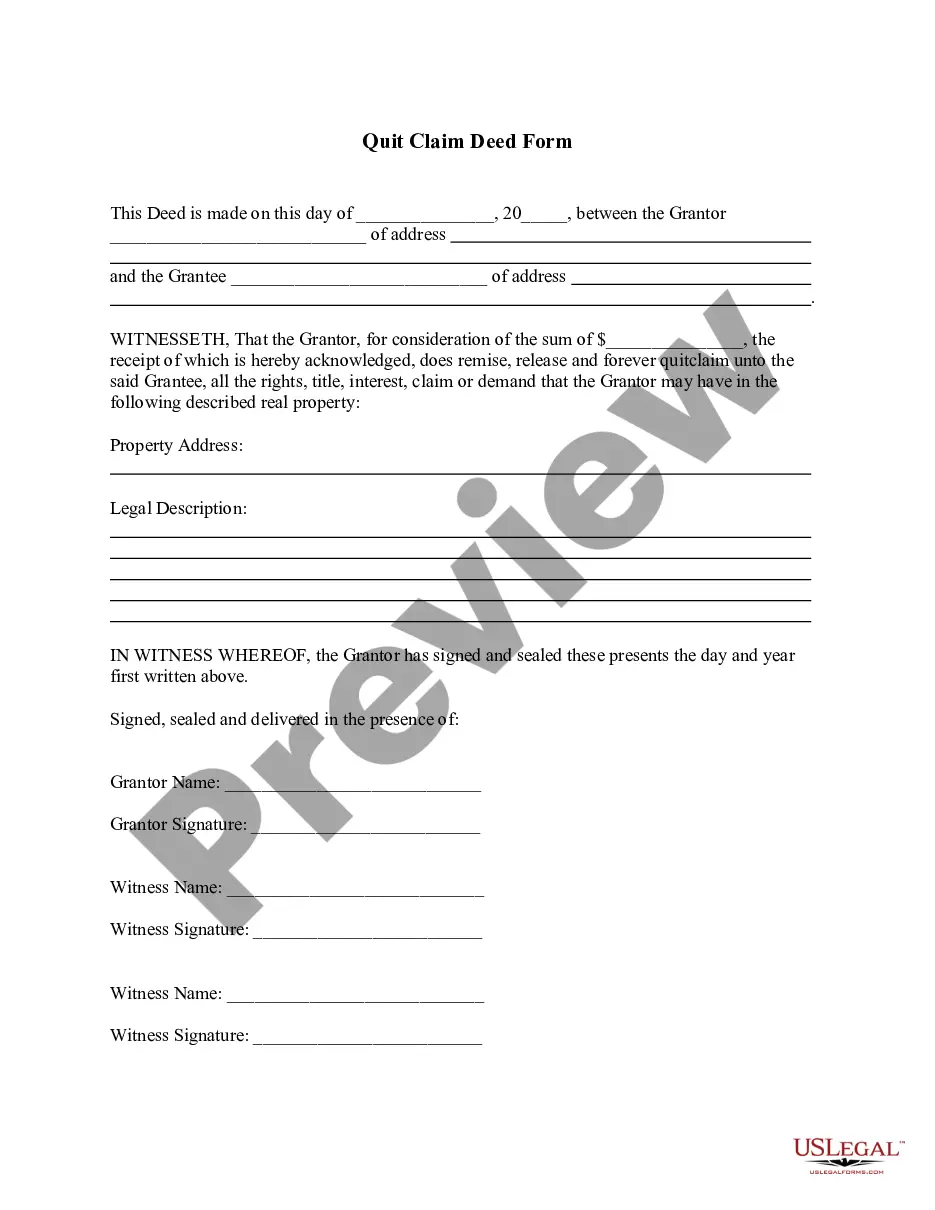
A Quit Claim Deed is a legal document used to transfer ownership of real estate from one party (the grantor) to another (the grantee) without any warranties regarding the title. In this particular form, the grantor is an individual, and the grantee is a trust. This form is different from a warranty deed, which provides guarantees on the title. The Quit Claim Deed simply conveys whatever interest the grantor has in the property.
Key parts of this document
- Identification of the grantor and grantee, including addresses.
- A description of the real property being transferred, including tax parcel identification.
- Consideration amount (the price or value exchanged for the property).
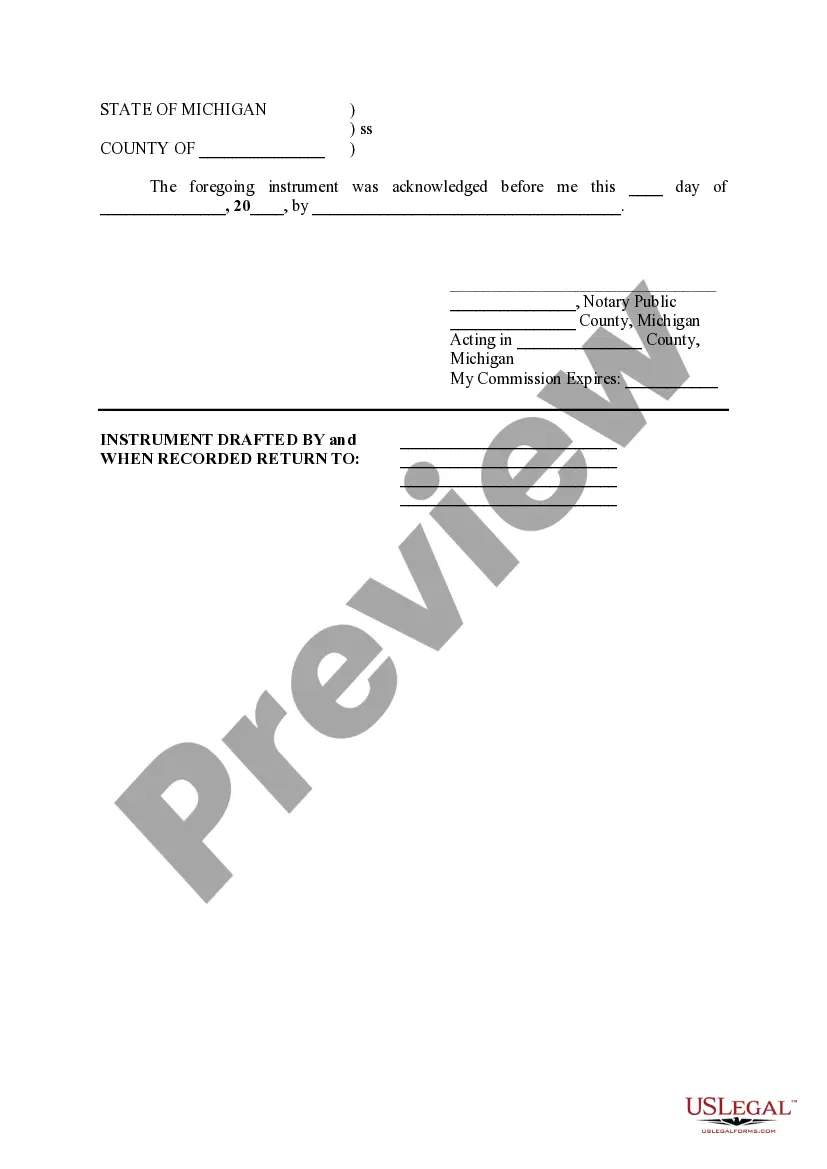
- Notarization section for legal validation.
- Exemption from transfer tax based on Michigan law provisions.


Common use cases
This Quit Claim Deed is ideal for situations where a property owner wants to transfer property to a trust, often for estate planning purposes. It can be used to remove a personâs name from the title of a property or to add a trust as a new owner. It's commonly used among family members or in transactions that do not involve financial considerations.
Who this form is for
- Individuals transferring property to a trust.
- Property owners looking to simplify estate management.
- Families reorganizing their real estate holdings.
- Anyone engaging in property transactions without the need for legal warranties.
Completing this form step by step
- Identify the parties involved by providing names and addresses of the grantor and trustee.
- Describe the property being conveyed, including the tax parcel identification number and property address.
- Specify the consideration amount to provide legal context for the transfer.
- Include the date of execution and signatures of all parties involved.
- Ensure that a notary public completes the acknowledgement section for validation.
Does this document require notarization?
Yes, this form must be notarized to be legally valid. The signed document requires the acknowledgement of a notary public who will verify the identities of the parties involved in the transaction. US Legal Forms offers integrated online notarization services, allowing you to complete this step conveniently via secure video call, ensuring compliance without the need for travel.
Get your form ready online
Our built-in tools help you complete, sign, share, and store your documents in one place.
Make edits, fill in missing information, and update formatting in US Legal Forms—just like you would in MS Word.
Download a copy, print it, send it by email, or mail it via USPS—whatever works best for your next step.
Sign and collect signatures with our SignNow integration. Send to multiple recipients, set reminders, and more. Go Premium to unlock E-Sign.
If this form requires notarization, complete it online through a secure video call—no need to meet a notary in person or wait for an appointment.
We protect your documents and personal data by following strict security and privacy standards.

Make edits, fill in missing information, and update formatting in US Legal Forms—just like you would in MS Word.

Download a copy, print it, send it by email, or mail it via USPS—whatever works best for your next step.

Sign and collect signatures with our SignNow integration. Send to multiple recipients, set reminders, and more. Go Premium to unlock E-Sign.

If this form requires notarization, complete it online through a secure video call—no need to meet a notary in person or wait for an appointment.

We protect your documents and personal data by following strict security and privacy standards.
Avoid these common issues
- Failing to accurately identify the property description.
- Not including all necessary signatures.
- Neglecting to notarize the document, which is necessary for legal validity.
- Forgetting to mention the consideration amount, which could complicate future transactions.
Benefits of using this form online
- Convenient access to a downloadable form that can be completed at your own pace.
- Editable templates that allow for customization according to individual needs.
- Secure process enables safe handling of sensitive legal documents.
- Forms drafted by licensed attorneys provide assurance of legal soundness.
Looking for another form?
Form popularity
FAQ
Filling out a Michigan Quit Claim Deed form involves several key steps. First, accurately input the property description, along with the names and addresses of both the grantor and grantee. Make sure to sign the document in the presence of a notary public and file it with your county's register of deeds. Using a resource like US Legal Forms can provide an easy-to-understand template to assist you in completing the form correctly.
You can complete a do-it-yourself Michigan Quit Claim Deed, but careful attention to detail is essential. You will need to ensure that the deed includes all required information, such as the property description and the names of the grantor and grantee. Using platforms like US Legal Forms can help simplify this process, offering templates and guidance to ensure that your quit claim deed meets the state's legal requirements.
While a Michigan Quit Claim Deed can simplify the transfer of property, it does come with disadvantages. This type of deed does not provide warranties, meaning that the buyer has no guarantee regarding the property's title. If there are existing liens or claims against the property, the new owner accepts those risks. Therefore, it’s important to understand these potential issues before proceeding with a quit claim deed.
To obtain a Michigan Quit Claim Deed, you will first need to gather relevant property information, including the property's address and the names of the current owners. Next, you can either draft the deed yourself or use an online service, such as US Legal Forms, which simplifies the process with easy templates. Once the deed is completed, sign it in the presence of a notary public. Finally, file the deed with the county register of deeds office to ensure it is recorded properly.
One major downside of a Michigan Quit Claim Deed is the lack of warranty, meaning the buyer assumes the risk of any title issues. Additionally, it does not protect the buyer from claims against the property. Therefore, if you choose this method, consider performing a title search or consulting with legal professionals to minimize potential risks.
A Michigan Quit Claim Deed is a legal document that transfers ownership of real estate from one person to another without guaranteeing a clear title. This means that the seller conveys whatever interest they have in the property, whether it is partial or complete. It is often used among family members or in situations where the parties know each other well.
Yes, you can create and file your own Michigan Quit Claim Deed. The process is straightforward, especially if you use user-friendly platforms like US Legal Forms, which provide templates and instructions. However, double-checking your work or consulting a legal professional can prevent any potential issues.
While it is not mandatory to hire an attorney for a Michigan Quit Claim Deed, consulting one can provide valuable guidance. An attorney can help you ensure that the deed is structured correctly and complies with local laws. This will, in turn, protect your interests during the property transfer process.