Michigan Complaint and Jury Demand
About this form
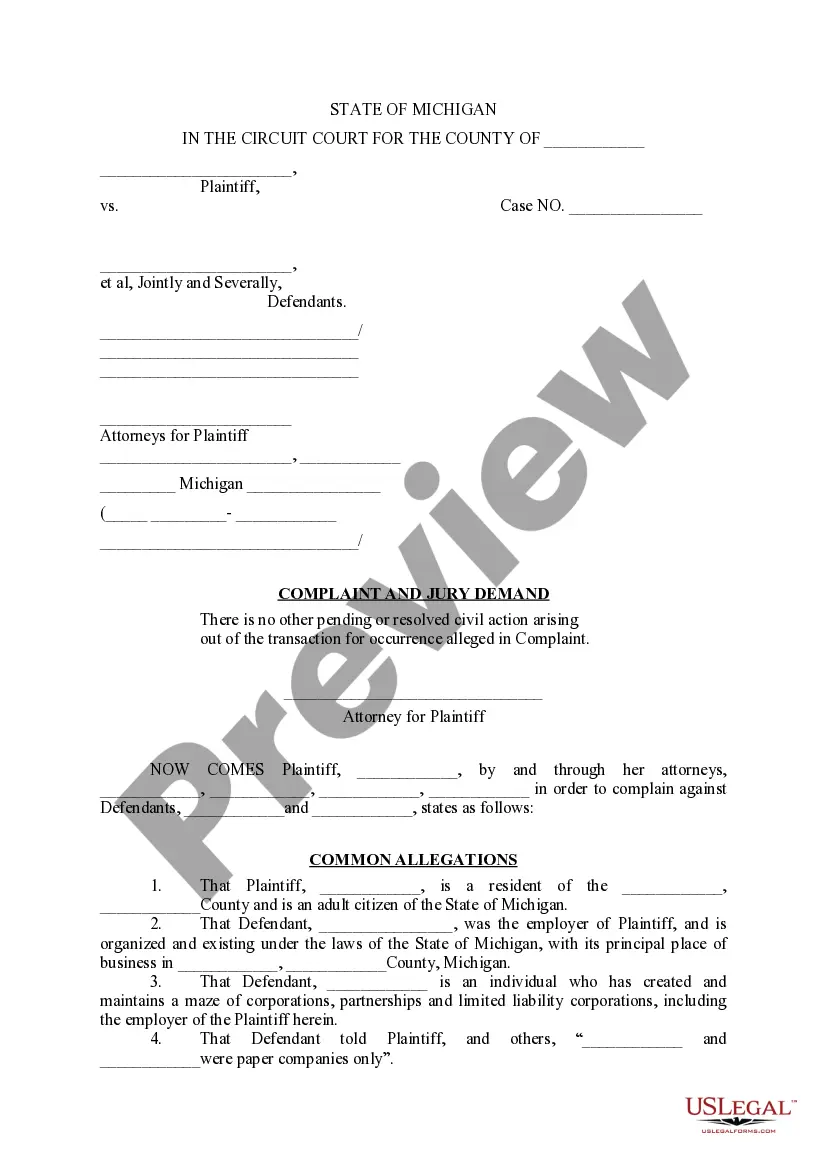
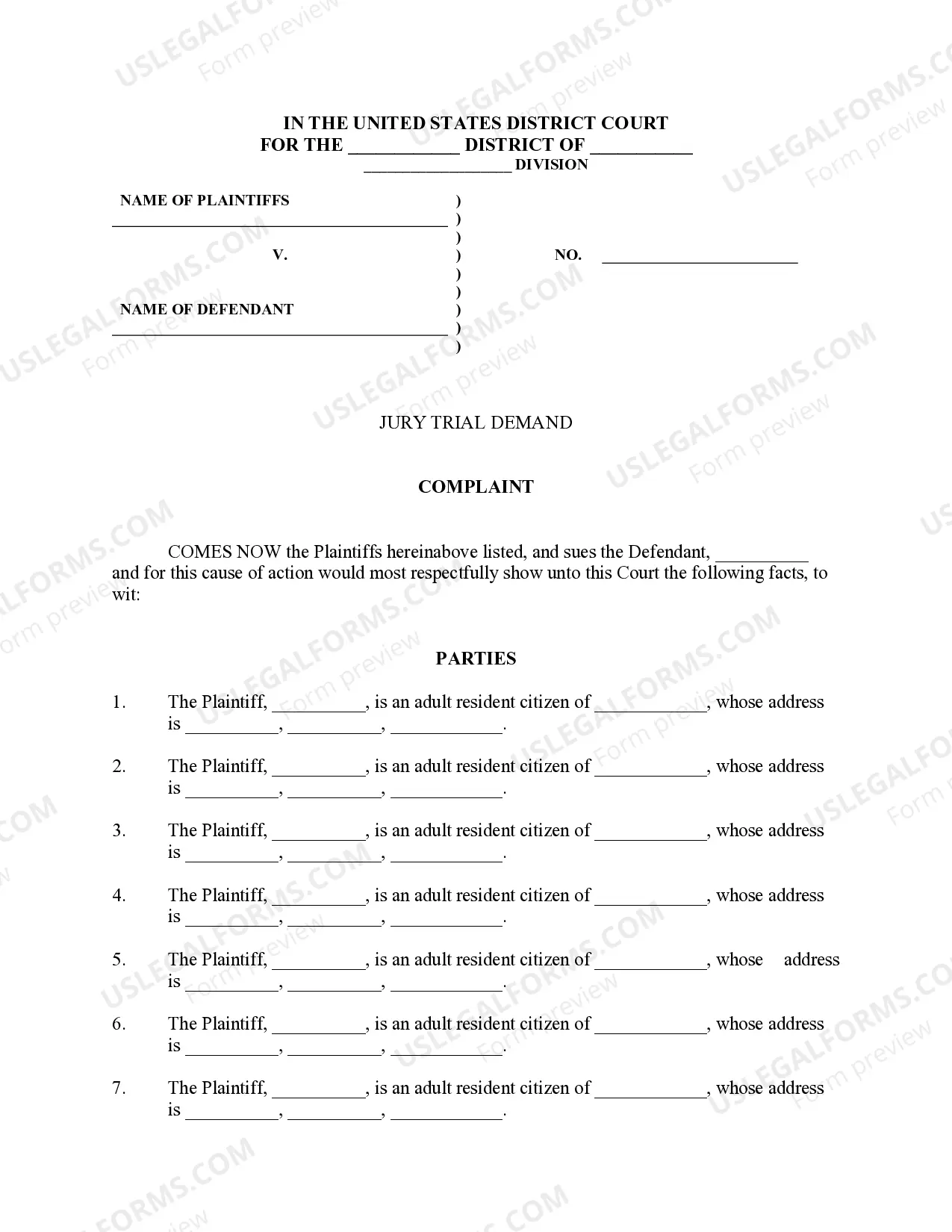
The Complaint and Jury Demand is a legal document that initiates a lawsuit by outlining the allegations that the Plaintiff brings against the Defendant. In this specific case, the Complaint addresses wrongful termination, detailing the circumstances and claims of the Plaintiff regarding their employment. This form is essential for individuals seeking legal redress after being wrongfully dismissed from their job and it serves a unique purpose by allowing the Plaintiff to formally present their case and demand a jury trial for a fair evaluation of their claims.
Key components of this form
- Caption: Identifies the court, parties involved, and case number.
- Introduction and background: Describes the relationship between Plaintiff and Defendant, along with the basis for the lawsuit.
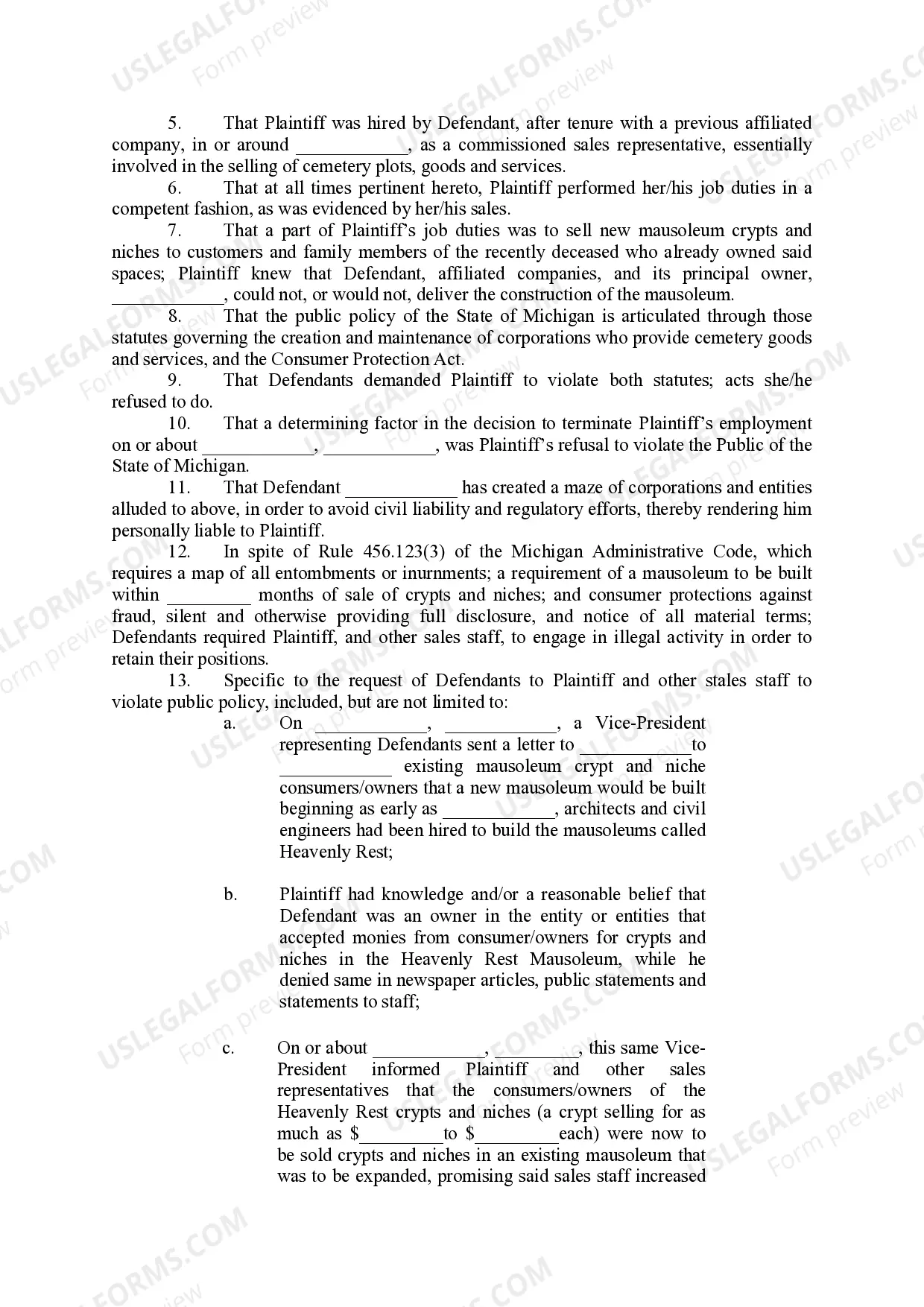
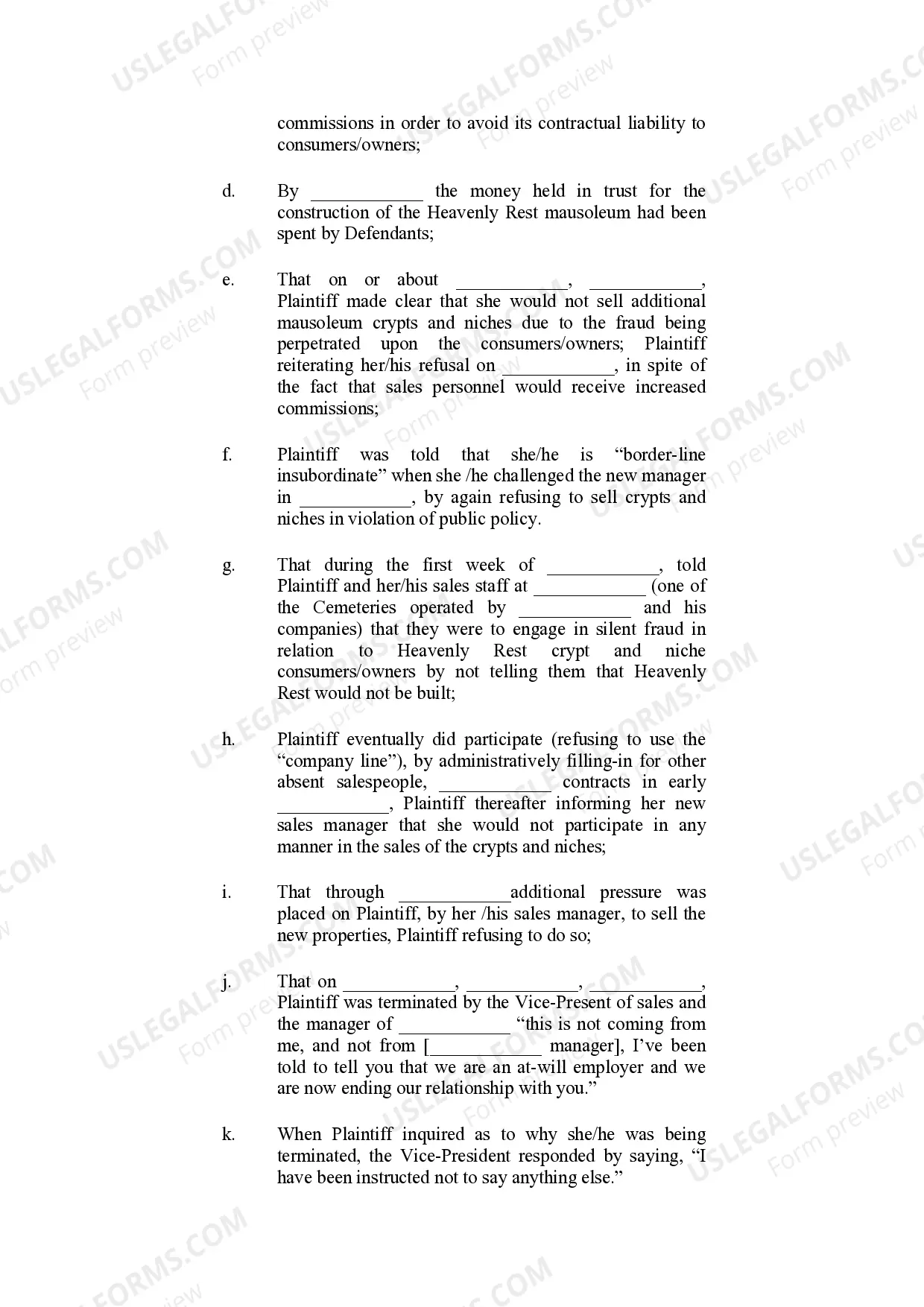
- Common allegations: Details the actions taken by the Defendant that led to the wrongful termination.
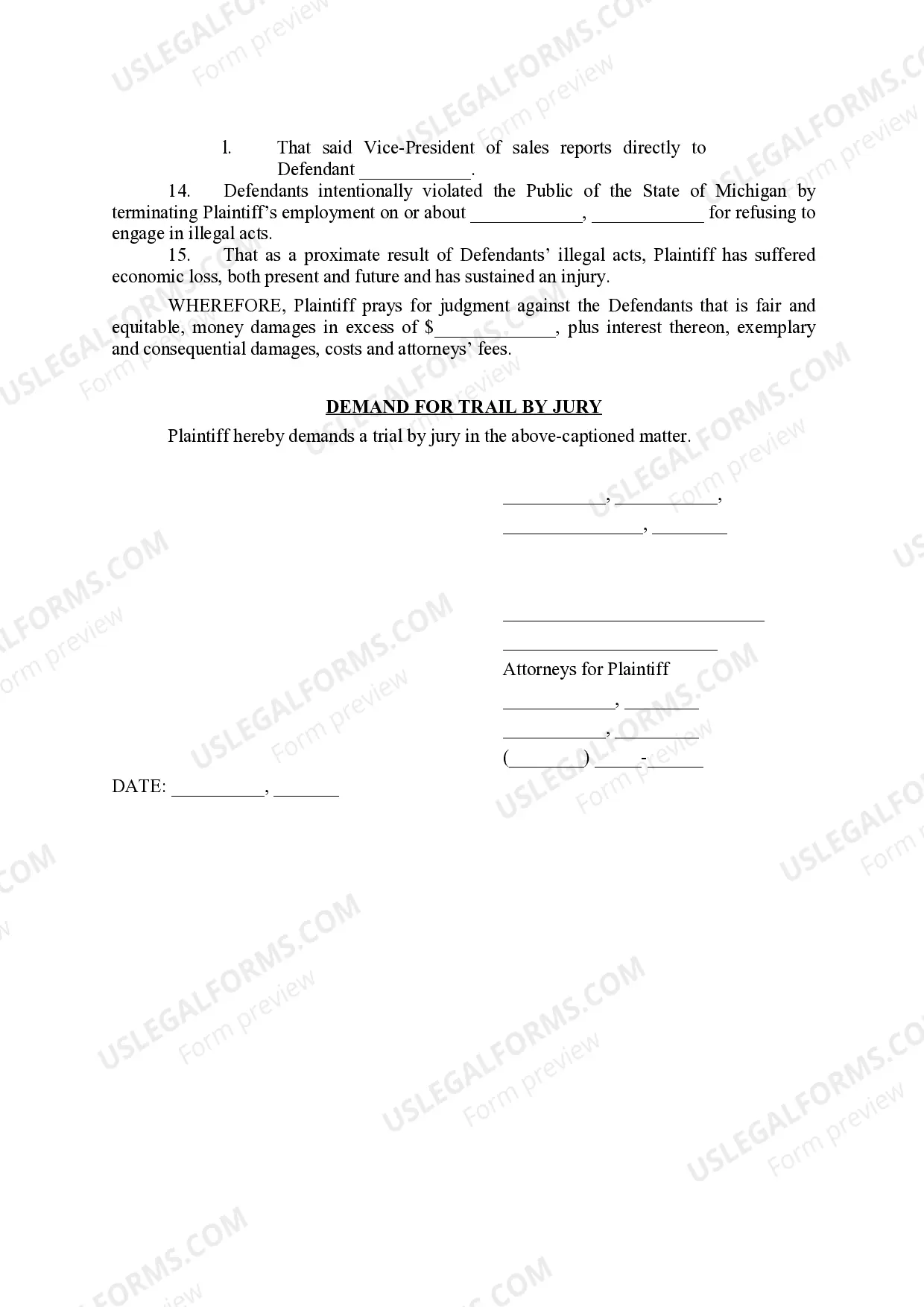
- Prayer for relief: Specifies the damages being sought by the Plaintiff.
- Demand for jury trial: Clearly states the Plaintiff's request for a jury to be involved in their case.




When this form is needed
This form should be used when an individual believes they have been wrongfully terminated from their employment. Situations may include instances where an employee refuses to engage in illegal activities as directed by their employer or when an employee is treated unfairly in violation of public policy. By filing this Complaint and Jury Demand, the Plaintiff begins the legal process to seek justice and compensation for their claims against the Defendants.
Who this form is for
- Individuals who are seeking legal remedy for wrongful termination.
- Employees who have been instructed to engage in illegal activities by their employer.
- People who believe their termination violates state or federal regulations.
- Anyone who wishes to formalize their claims with the intention of pursuing a jury trial.
How to complete this form
- Identify the proper court and fill in the caption with the county and case number.
- Clearly state the names of the Plaintiff and Defendants, along with their respective roles.
- Detail the common allegations providing specific instances that led to wrongful termination.
- Specify the relief or damages you are seeking.
- Sign and date the form before filing it with the court.
Does this document require notarization?
This form does not typically require notarization unless specified by local law. However, it is always advisable to check the specific requirements of your jurisdiction to ensure compliance.
Get your form ready online
Our built-in tools help you complete, sign, share, and store your documents in one place.
Make edits, fill in missing information, and update formatting in US Legal Forms—just like you would in MS Word.
Download a copy, print it, send it by email, or mail it via USPS—whatever works best for your next step.
Sign and collect signatures with our SignNow integration. Send to multiple recipients, set reminders, and more. Go Premium to unlock E-Sign.
If this form requires notarization, complete it online through a secure video call—no need to meet a notary in person or wait for an appointment.
We protect your documents and personal data by following strict security and privacy standards.

Make edits, fill in missing information, and update formatting in US Legal Forms—just like you would in MS Word.

Download a copy, print it, send it by email, or mail it via USPS—whatever works best for your next step.

Sign and collect signatures with our SignNow integration. Send to multiple recipients, set reminders, and more. Go Premium to unlock E-Sign.

If this form requires notarization, complete it online through a secure video call—no need to meet a notary in person or wait for an appointment.

We protect your documents and personal data by following strict security and privacy standards.
Common mistakes to avoid
- Failure to provide a detailed account of the allegations against the Defendant.
- Not stating the legal basis for the wrongful termination clearly.
- Omitting the demand for a jury trial, which may affect one's ability to have the case heard by a jury.
- Incorrectly filling in the court caption and case number.
- Not signing the Complaint before submission.
Benefits of completing this form online
- Convenience: Access and complete the form from anywhere at any time.
- Editability: Easily modify details as needed before final submission.
- Guidance: Receive step-by-step instructions to ensure correctness in filling out the form.
- Security: Downloadable forms ensure that your information stays private and secure.
Looking for another form?

Form popularity
FAQ
To file a grievance against a judge in Michigan, you need to submit your complaint to the Judicial Tenure Commission. This involves outlining the specific issues surrounding the judge's conduct and your experience with them. Utilizing a platform like USLegalForms can streamline the process of creating a Michigan Complaint and Jury Demand, making it easier for you to express your concerns properly. Remember, a well-documented grievance can significantly influence how your submission is handled.
When you file a complaint against a judge in Michigan, it initiates an investigation by the Judicial Tenure Commission. They review the details of your complaint to determine if there is sufficient evidence to take further action. If the complaint involves a Michigan Complaint and Jury Demand, it becomes part of the process addressing potential judicial misconduct. This ensures that grievances are recognized and appropriately handled.
In Michigan, the accountability of judges is overseen by several entities. The Judicial Tenure Commission investigates complaints against judges and can recommend disciplinary action. Additionally, citizens can file a Michigan Complaint and Jury Demand if they believe a judge has acted improperly. It's essential to understand your rights and options when feeling that judicial accountability is necessary.
Filing a complaint in Michigan is a structured process that starts with the preparation of a Michigan Complaint and Jury Demand. You must complete the necessary forms, provide the required details, and file the documents with the appropriate court. Additionally, serving the complaint to the defendant is essential to notify them of the legal action. For assistance with the process, consider using USLegalForms, which offers a range of resources to simplify filing and ensure compliance.
The 7 day rule in Michigan court refers to the timeframe within which a defendant must respond to a Michigan Complaint and Jury Demand. After a complaint is served, the defendant has seven days to file an answer unless extended by court order. This rule helps ensure that cases proceed in a timely manner, allowing for efficient resolution. Understanding this timeframe is crucial for both plaintiffs and defendants navigating the legal process.
The rule 38 right to a jury trial demand allows a party in a legal case to request a trial by jury, rather than by a judge. This demand is crucial in Michigan Complaint and Jury Demand scenarios, as it can influence the trial's outcome. By invoking this right, you ensure that your case is evaluated by a group of peers, providing a balanced perspective. Understanding this rule can help you navigate the legal process more effectively.