Michigan Qualified Domestic Relations Order
About this form
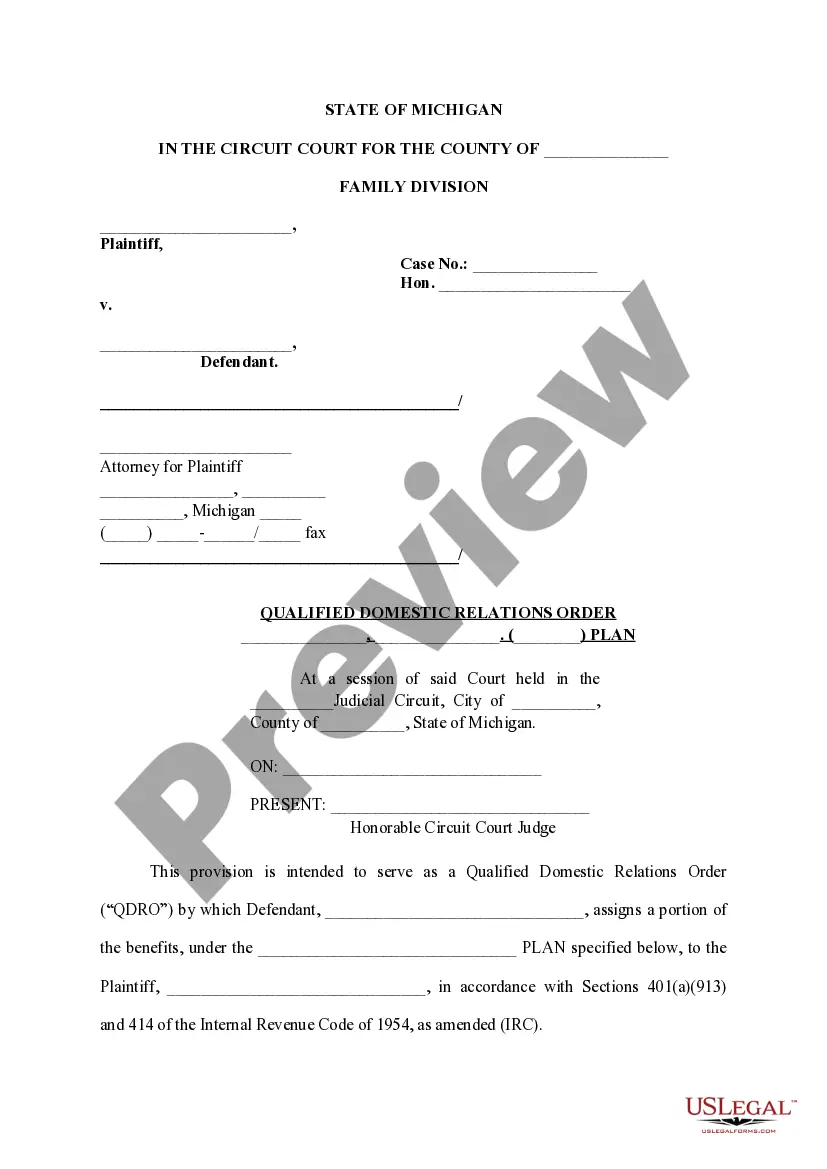
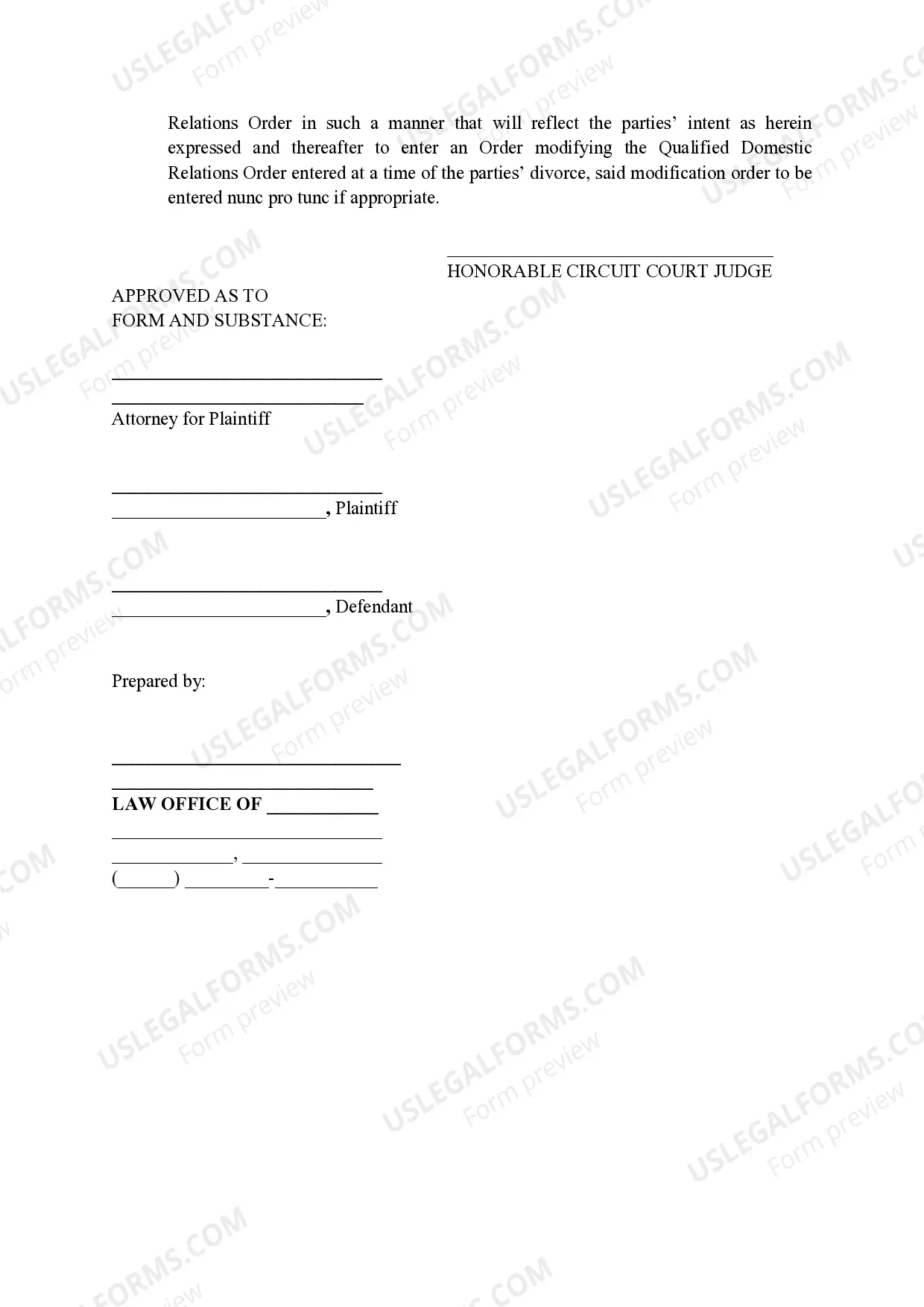
A Qualified Domestic Relations Order (QDRO) is a legal document issued by a court that divides pension or retirement benefits in a divorce. This form ensures that a portion of these benefits is assigned to a spouse or dependent for purposes such as alimony or child support, distinguishing it from other divorce forms focused on asset distribution.
Form components explained
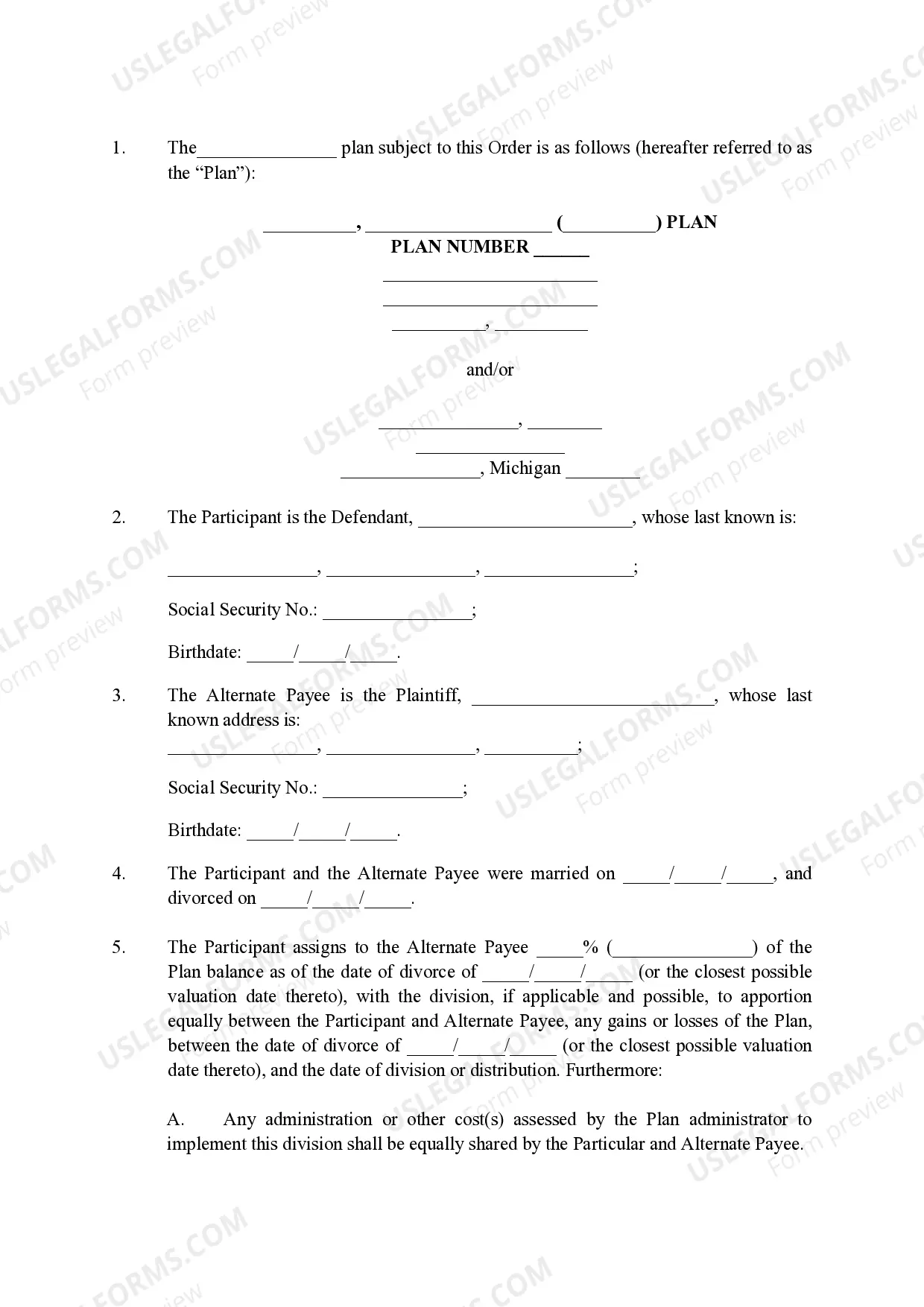
- Identification of the parties involved: Defining the participant and alternate payee by name and details.
- Details of the retirement plan: Including the plan name and number that will be impacted by the order.
- Division of benefits: Clarifying the specific percentage of benefits assigned to the alternate payee.
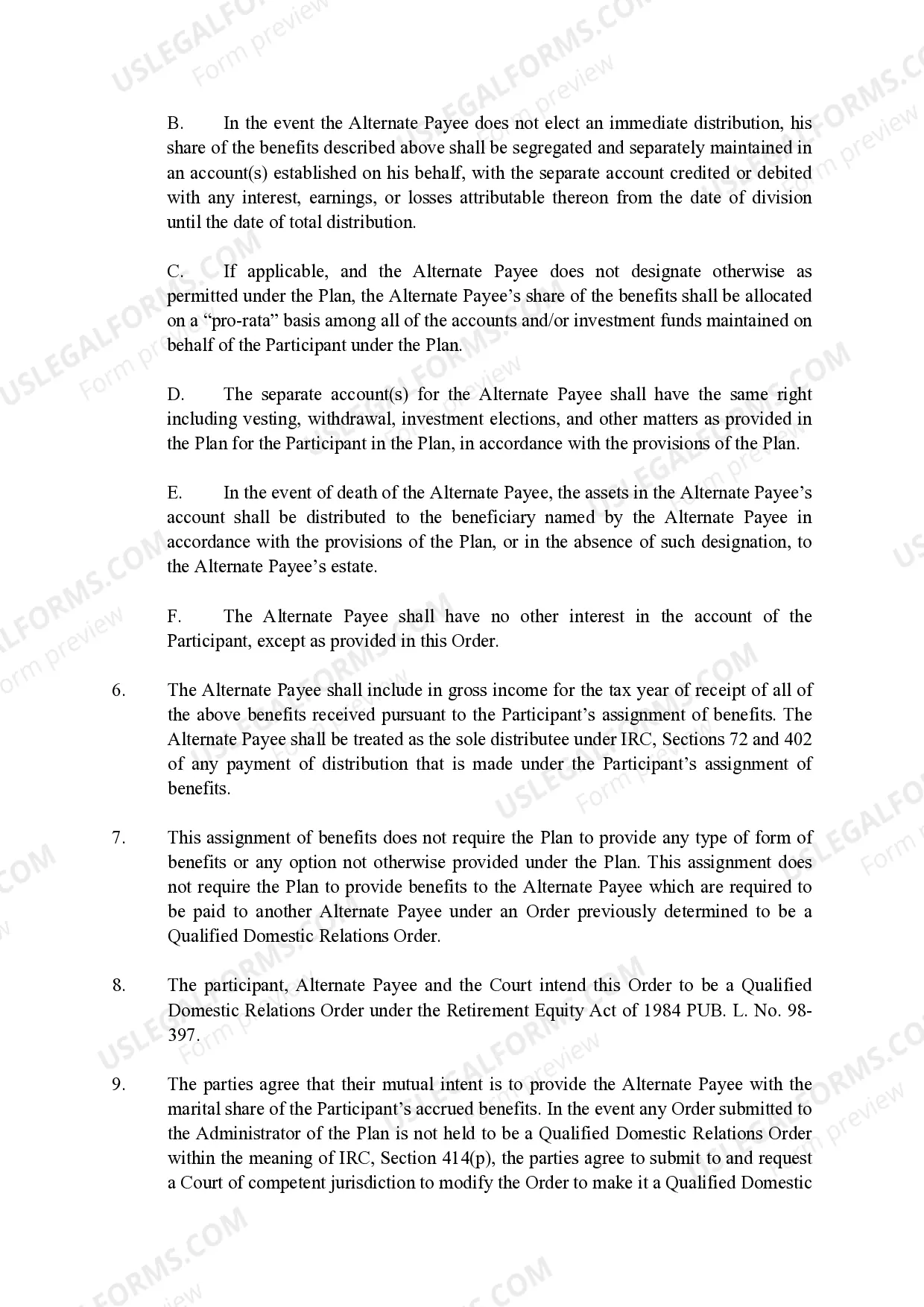
- Tax implications: Outlining how benefits will affect the alternate payeeâs taxes upon receipt.
- Terms of the division: Addressing administration fees and treatment of gains or losses post-division.

When to use this document
This form is necessary when a couple is going through a divorce involving a retirement plan or pension. Use a QDRO when you need to clarify the division of retirement benefits either for alimony, child support, or other marital property allocations. It is also relevant if parties want to ensure that the division complies with federal tax regulations.
Who this form is for
- Couples who are getting a divorce and have retirement benefits that need to be divided.
- Individuals who are supporting a spouse or dependent through alimony or child support with assets from retirement accounts.
- Lawyers and legal professionals looking to assist clients navigate retirement benefit divisions effectively.
Instructions for completing this form
- Identify the parties: Fill in the names and details of the participant and alternate payee.
- Specify the retirement plan: Provide the name and plan number of the plan being divided.
- Enter marriage and divorce dates: Include dates of marriage and divorce to establish timelines.
- Clarify benefit division: Indicate the percentage of benefits that will be assigned to the alternate payee.
- Sign and date: Ensure all parties sign and date the document before submission to the court.
Does this document require notarization?
This form does not typically require notarization unless specified by local law. However, having it notarized may provide additional legal assurance and clarity for all parties involved.
Get your form ready online
Our built-in tools help you complete, sign, share, and store your documents in one place.
Make edits, fill in missing information, and update formatting in US Legal Forms—just like you would in MS Word.
Download a copy, print it, send it by email, or mail it via USPS—whatever works best for your next step.
Sign and collect signatures with our SignNow integration. Send to multiple recipients, set reminders, and more. Go Premium to unlock E-Sign.
If this form requires notarization, complete it online through a secure video call—no need to meet a notary in person or wait for an appointment.
We protect your documents and personal data by following strict security and privacy standards.

Make edits, fill in missing information, and update formatting in US Legal Forms—just like you would in MS Word.

Download a copy, print it, send it by email, or mail it via USPS—whatever works best for your next step.

Sign and collect signatures with our SignNow integration. Send to multiple recipients, set reminders, and more. Go Premium to unlock E-Sign.

If this form requires notarization, complete it online through a secure video call—no need to meet a notary in person or wait for an appointment.

We protect your documents and personal data by following strict security and privacy standards.
Avoid these common issues
- Failing to specify the exact percentage of benefits to be assigned, leading to potential disputes.
- Not including correct names or details of the retirement plan, which can invalidate the order.
- Omitting key dates, such as marriage and divorce dates, which are crucial for legal validation.
Benefits of using this form online
- Convenience: Easily download and fill out the form at your own pace without needing to visit a lawyer's office.
- Editability: Modify the form as needed to fit your specific circumstances.
- Affordability: Save on legal fees by using a ready-made form designed by licensed attorneys.
Legal use & context
- A QDRO must comply with the provisions of the Employee Retirement Income Security Act (ERISA).
- This order is essential for ensuring compliance with federal tax laws regarding retirement distributions.
- The division of benefits outlined in a QDRO is enforceable and must be honored by the retirement plan administrator.
Quick recap
- A QDRO is vital for dividing retirement benefits legally during a divorce.
- Correct and detailed completion of the form can prevent disputes and legal issues later.
- Using this form online simplifies the process and can help save costs.
Looking for another form?
Form popularity
FAQ
In Michigan, several factors can disqualify an individual from receiving alimony, or spousal support. The court considers issues like the length of the marriage, each spouse's financial status, and the reasons for the divorce. Additionally, any misconduct or infidelity can significantly impact alimony decisions. Knowing the specifications of the Michigan Qualified Domestic Relations Order can help navigate the complexities related to financial support during divorce.
A qualified domestic relation is a legal order that recognizes an individual's right to receive a portion of a retirement plan or benefits from a spouse after a divorce. In Michigan, a Qualified Domestic Relations Order (QDRO) is essential for dividing retirement assets without incurring penalties. This order ensures that retirees fulfill their obligations while protecting the interests of both spouses. Understanding the Michigan Qualified Domestic Relations Order can simplify the division of marital assets during a divorce.
A status quo order in Michigan helps maintain the current situation regarding assets and responsibilities during a divorce proceeding. This type of order aims to prevent any party from making drastic changes while the case is underway. It ensures that both parties are treated fairly, especially concerning financial matters like a Michigan Qualified Domestic Relations Order. Engaging with professionals or platforms like USLegalForms can help you navigate this aspect smoothly.
In Michigan, the statute of limitations for a Qualified Domestic Relations Order is generally one year from the date of the divorce judgment. This time limit is crucial for ensuring you secure your rights to any retirement assets. Delaying beyond this period may lead to losing your entitlement to these benefits. Therefore, it is advisable to act promptly, and USLegalForms can assist you in addressing this crucial matter effectively.
To obtain a Michigan Qualified Domestic Relations Order, you typically start by filing a request with the court. This request must outline the necessary details regarding the division of assets, including retirement benefits. After filing, the court will review your request, and if approved, will issue the order. Using a service like USLegalForms can simplify this process by providing you with the required documents and guidance.
While it is possible to draft a QDRO yourself, it is often advisable to seek professional assistance to avoid common pitfalls. A Michigan Qualified Domestic Relations Order must comply with specific legal standards, and mistakes can lead to delays or rejection. Engaging with platforms like USLegalForms allows you to access templates and expert guidance, making the process smoother. This support ensures you establish a QDRO that meets all necessary requirements and safeguards your rights.
An eligible domestic relations order in Michigan is a court order that recognizes the rights of a spouse or dependent to receive a portion of an individual's retirement benefits. This type of order is crucial in divorce proceedings and ensures equitable distribution of assets. To qualify, the order must meet specific legal requirements defined by Michigan law, allowing the retirement plan to recognize the entitlement. Understanding these requirements helps you create a solid foundation for your financial future.