Michigan Dedicated Highway & Utility Easement
Understanding this form
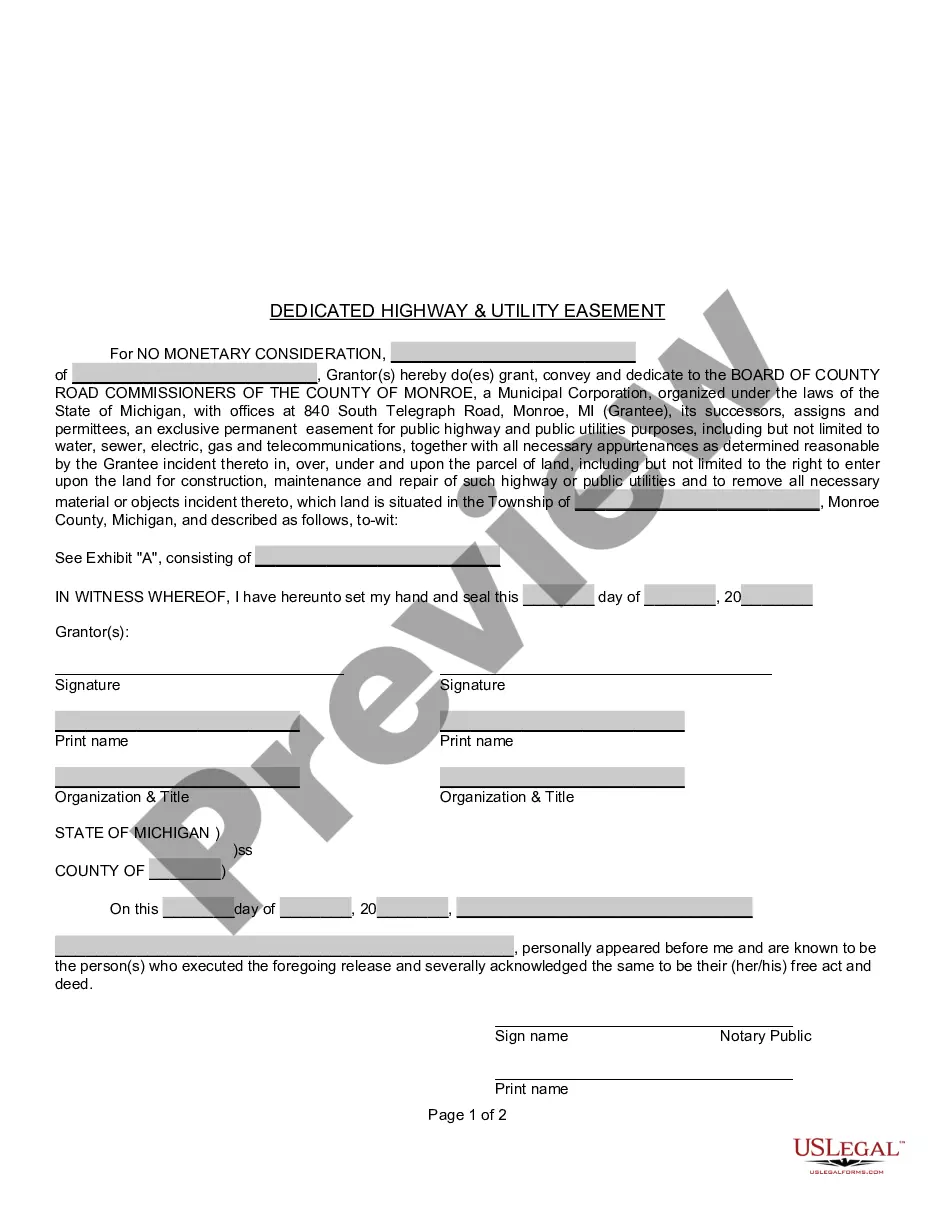
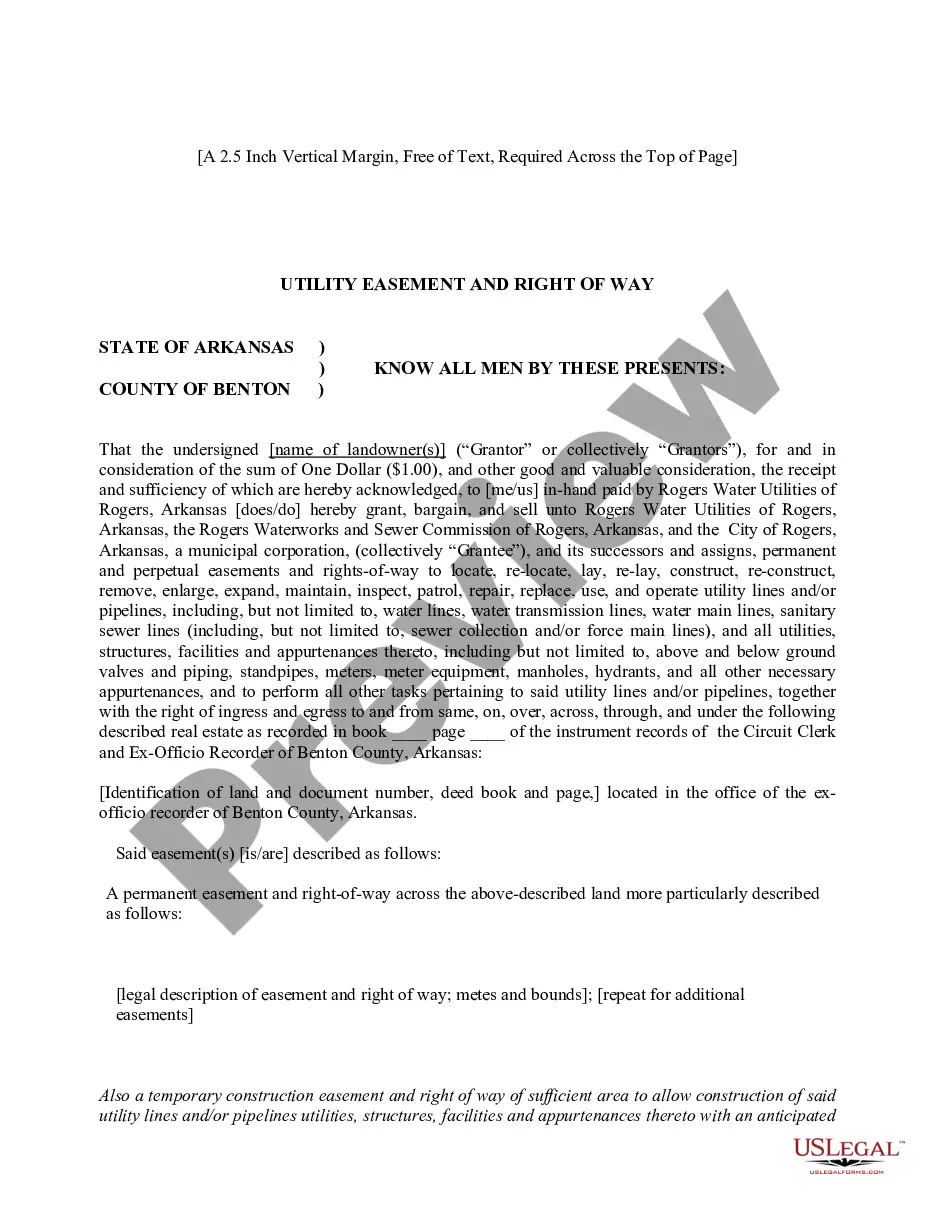
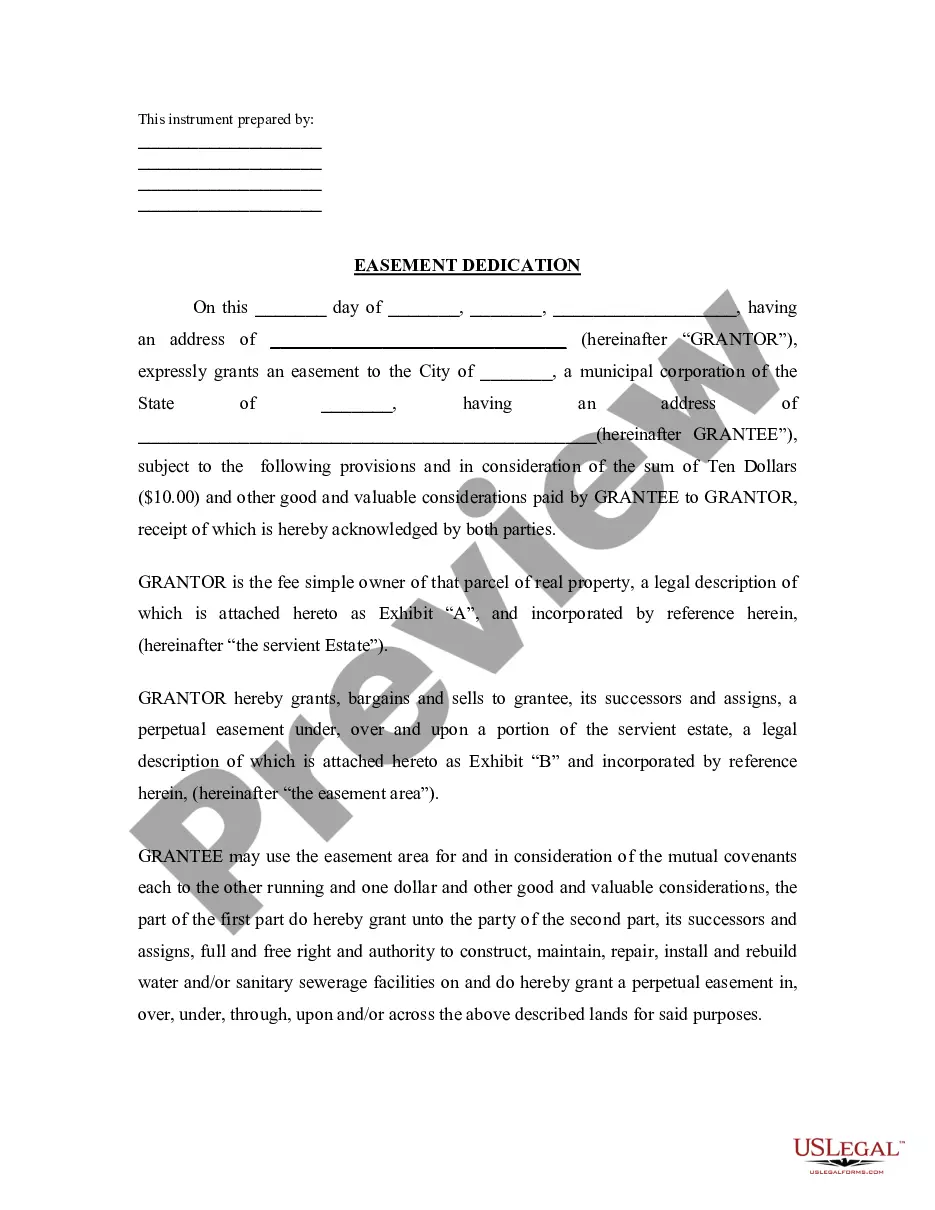
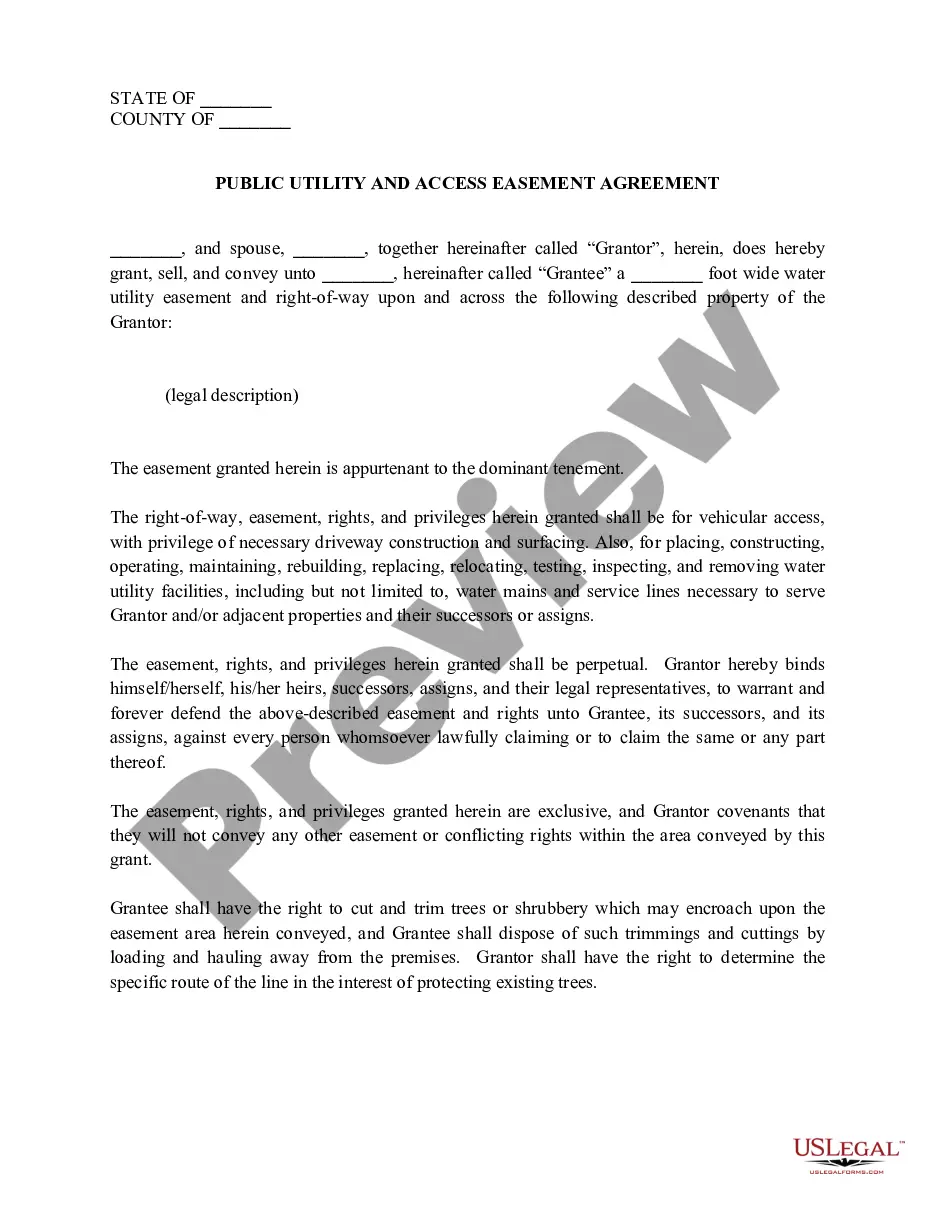
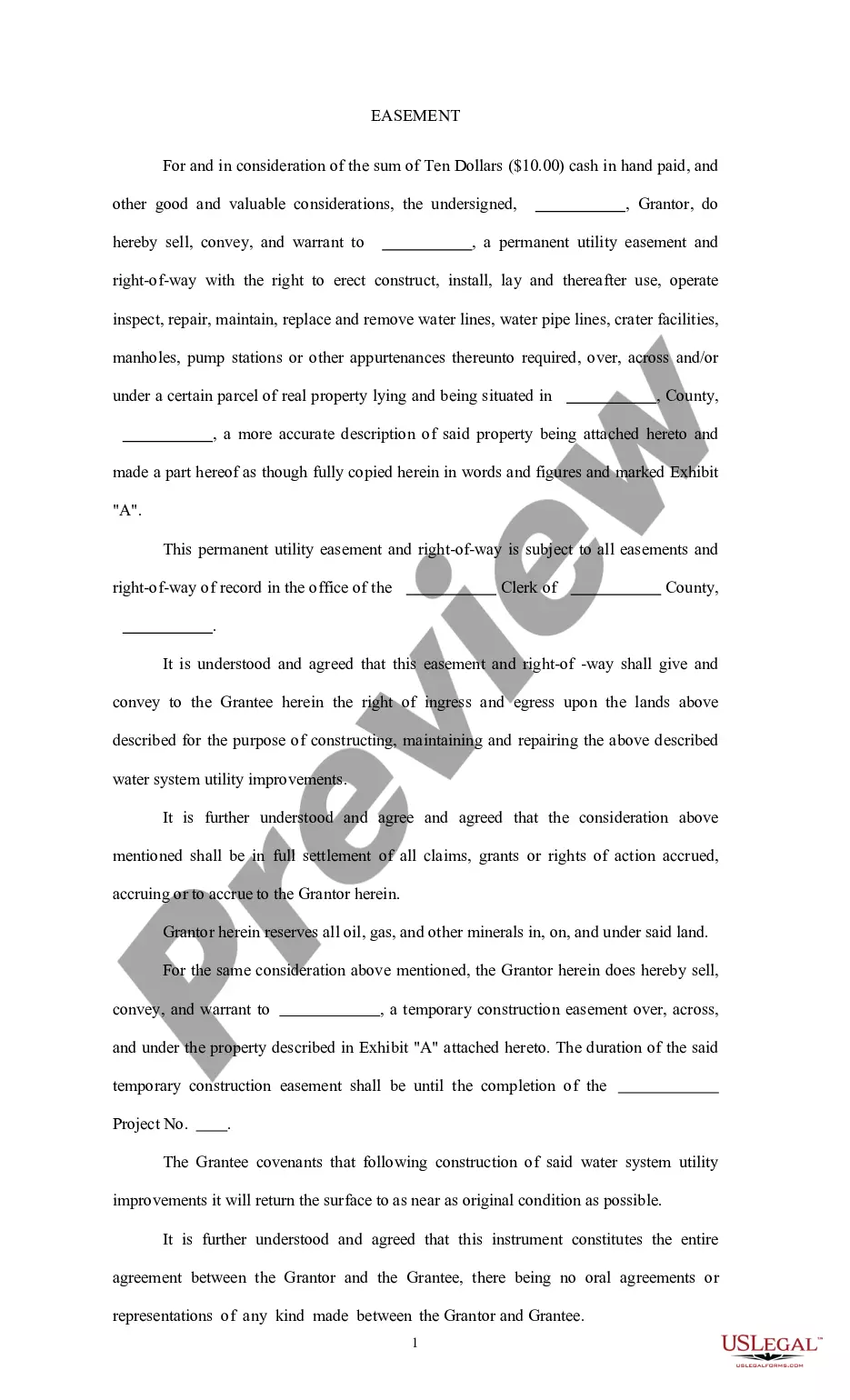
The Dedicated Highway & Utility Easement is a legal agreement that allows one party to convey the use or benefit of a specific tract of land to another party, primarily for the purposes of public highways and utilities. This form differs from other easements, as it grants permission for limited use without transferring ownership or possession rights over the land. It provides the necessary legal framework to ensure that public infrastructure can be installed and maintained effectively.
Key components of this form
- Grantor and Grantee Details: Information about the party granting the easement and the party receiving it.
- Description of the Easement: Outlines the rights being conveyed, including specifics about public utilities.
- Property Identification: A description and designation of the land involved in the easement.
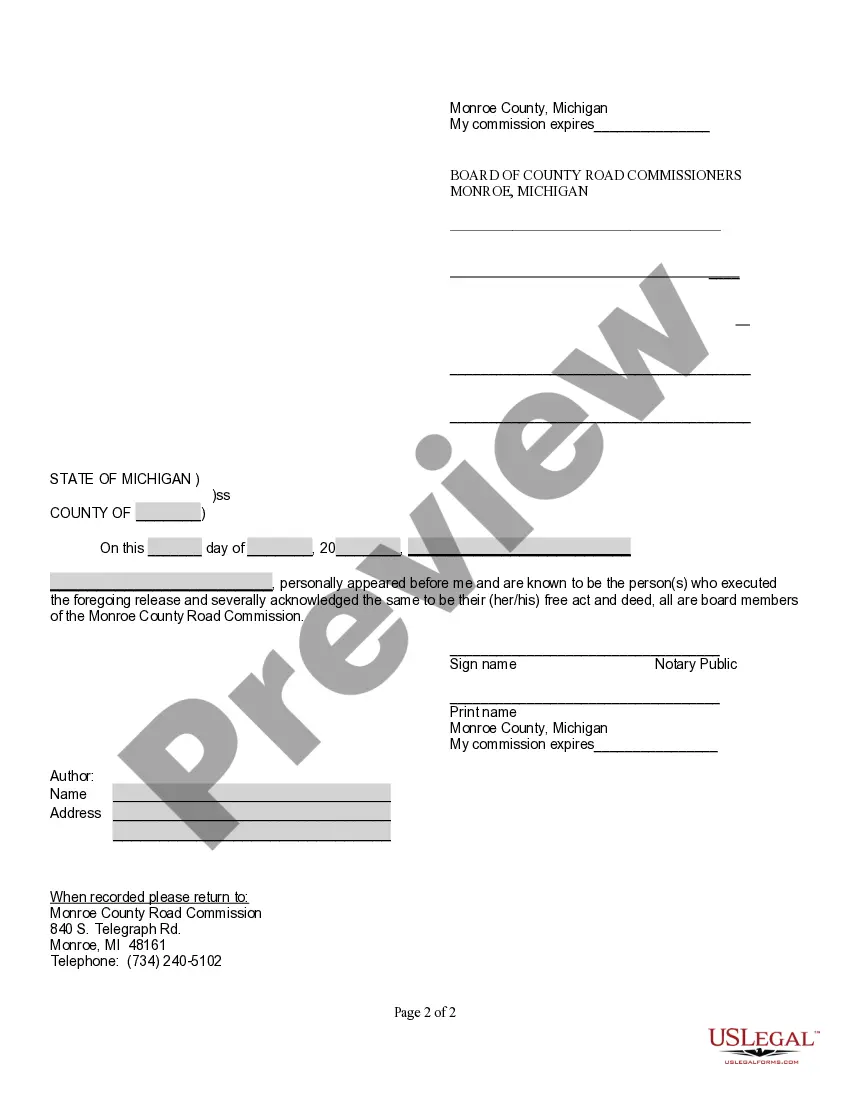
- Signatures: Required signatures from the grantor(s) and notary acknowledgment for validation.
- Date of Agreement: The date when the agreement is executed.
When to use this form
This form is used when a property owner wants to grant an easement for public highway and utility use. It may be necessary for local government or utility companies to install and maintain services, such as water, sewer, electricity, gas, and telecommunications infrastructure. This document is essential when formalizing the relationship between the landowner and public entities.
Who should use this form
- Property owners looking to grant a dedicated easement to a municipal corporation.
- Local government representatives needing legal documentation for land use.
- Utility providers that require legal access to land for installation and maintenance of services.
How to prepare this document
- Identify the parties: Fill in the name and details of the grantor(s) and grantee.
- Specify the property: Provide a description of the easement area and refer to any attached exhibits.
- State the purpose: Clearly define the purposes for the easement, such as public highway and utilities.
- Obtain signatures: Ensure all necessary parties sign and date the document.
- Arrange notarization: Have the document notarized to confirm its authenticity.
Does this document require notarization?
Yes, this form must be notarized to be legally valid. Notarization ensures that the signatures are authentic and that the parties understand the document. You can use US Legal Formsâ integrated online notarization service for a convenient and secure way to complete this requirement.
Get your form ready online
Our built-in tools help you complete, sign, share, and store your documents in one place.
Make edits, fill in missing information, and update formatting in US Legal Forms—just like you would in MS Word.
Download a copy, print it, send it by email, or mail it via USPS—whatever works best for your next step.
Sign and collect signatures with our SignNow integration. Send to multiple recipients, set reminders, and more. Go Premium to unlock E-Sign.
If this form requires notarization, complete it online through a secure video call—no need to meet a notary in person or wait for an appointment.
We protect your documents and personal data by following strict security and privacy standards.

Make edits, fill in missing information, and update formatting in US Legal Forms—just like you would in MS Word.

Download a copy, print it, send it by email, or mail it via USPS—whatever works best for your next step.

Sign and collect signatures with our SignNow integration. Send to multiple recipients, set reminders, and more. Go Premium to unlock E-Sign.

If this form requires notarization, complete it online through a secure video call—no need to meet a notary in person or wait for an appointment.

We protect your documents and personal data by following strict security and privacy standards.
Common mistakes to avoid
- Failing to accurately describe the property involved.
- Not including the full names and titles of signers.
- Omitting necessary signatures or notarization, leading to possible invalidation.
Why use this form online
- Convenience: Easily download and print the form from anywhere.
- Editability: Fill out the form online, ensuring all required information is included.
- Reliability: Forms are drafted by licensed attorneys, ensuring legal accuracy and compliance.
Looking for another form?
Form popularity
FAQ
In Michigan, the state usually owns land extending 33 feet from the center of the roadway, which can include both the road itself and adjacent easements. This area accommodates highways and utility infrastructure needed for public use. Knowing these dimensions helps clarify the boundaries of the Michigan Dedicated Highway & Utility Easement and ensures that property owners are informed about what lies adjacent to their land.
Utility companies in Michigan generally cannot dig in your yard without providing notice and, in some cases, obtaining your permission. Although they have rights through their easements, they still must follow regulations and respect property owner’s concerns. Understanding your rights regarding the Michigan Dedicated Highway & Utility Easement is essential for protecting your property.
Michigan utility easement law governs how and where utility companies can operate on private land. These laws specify the extent of the rights granted to utility providers, outlining how they can utilize and access easements. Being informed about these laws helps property owners navigate issues surrounding their Michigan Dedicated Highway & Utility Easement effectively.
In the case of a utility easement in Michigan, the property owner retains ownership of the land where the easement exists. However, the utility company has the right to use that land for its specific purpose, such as installing or maintaining infrastructure. This shared arrangement can sometimes lead to confusion, so understanding the details of your Michigan Dedicated Highway & Utility Easement is crucial.
In Michigan, utility easement rights allow companies to install and maintain necessary infrastructure like power lines, gas pipes, and water lines on private property. These rights grant utilities access to specific areas for repairs and improvements, ensuring reliable service for all residents. Property owners should be aware of these rights to understand how they affect the use of their land, especially when it comes to the Michigan Dedicated Highway & Utility Easement.
Blocking an easement in Michigan can be complex and typically depends on the terms of the easement agreement. If your easement is classified as a Michigan Dedicated Highway & Utility Easement, there are specific regulations that might limit your ability to obstruct it. Legally, the easement must serve its intended purpose, and any obstruction could lead to legal complications. For personalized guidance on your rights and options, you may want to consult the USLegalForms platform.
Typically, the utility company that holds the easement rights owns the utility easement on your property. In the case of the Michigan Dedicated Highway & Utility Easement, this allows the utility company access to maintain their infrastructure. However, as the property owner, you maintain ownership of the land itself. You should check your property's title and easement agreements for specific details regarding ownership rights.
Easement laws in Michigan establish how property owners can grant others the right to use a portion of their land. The laws surrounding the Michigan Dedicated Highway & Utility Easement specifically address the roles and responsibilities of both property owners and utility companies. Familiarizing yourself with these laws helps you understand your rights and limitations regarding land use. For individualized assistance, consider exploring the resources on the USLegalForms platform.
A typical easement’s width can vary depending on its purpose. For utility easements, widths commonly range from 10 to 20 feet, depending on the type of utilities being accessed. It's important to specify exact measurements in your easement documents to avoid conflicts later. Consult uslegalforms for examples of standard dimensions for a Michigan Dedicated Highway & Utility Easement, tailored to your needs.
The rules surrounding easements can vary by jurisdiction, but generally include principles such as necessity, intent, and usage. Easements cannot be overly broad and must be tied directly to a specific use. In Michigan, adhering to state regulations ensures that your easement—especially a Michigan Dedicated Highway & Utility Easement—is legally sound and enforceable.