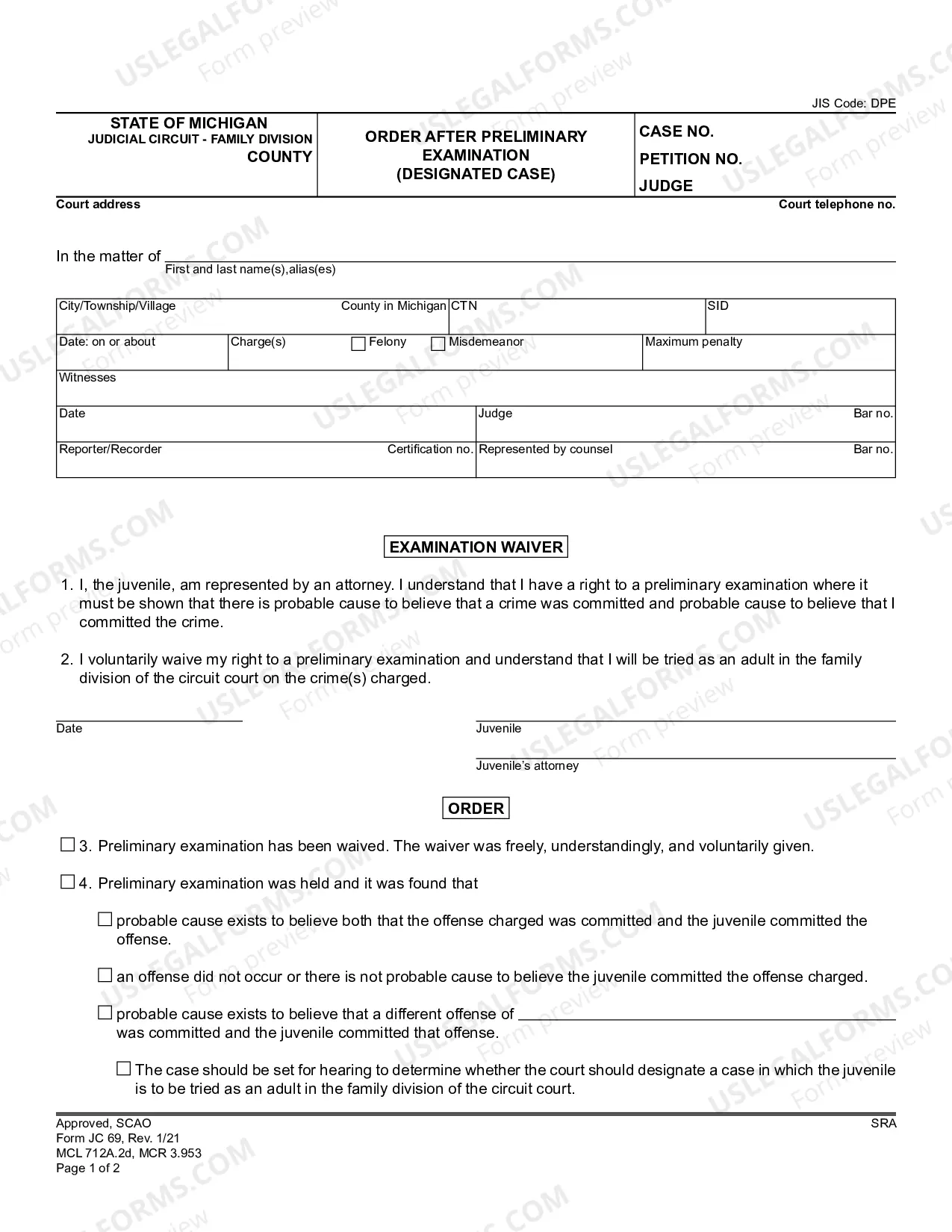
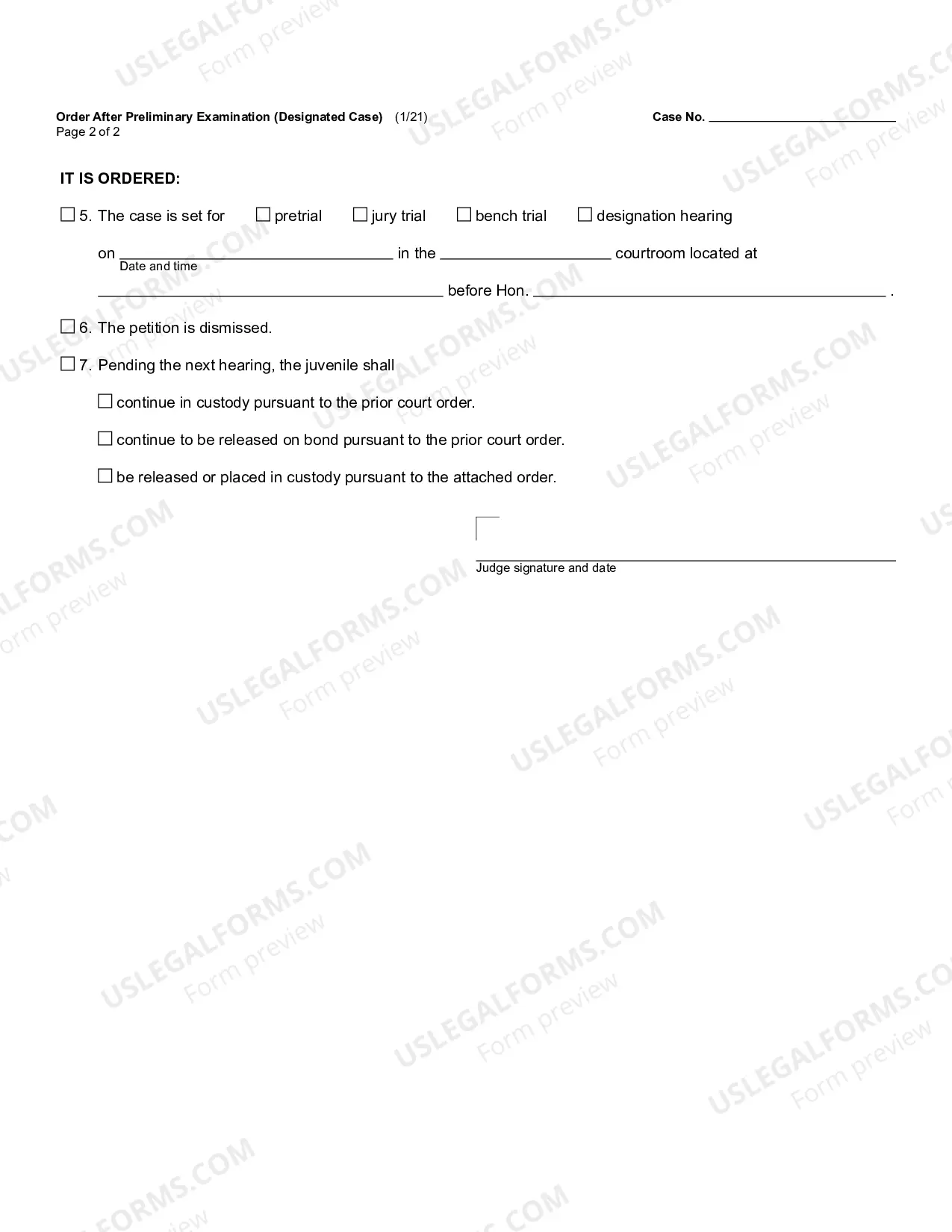
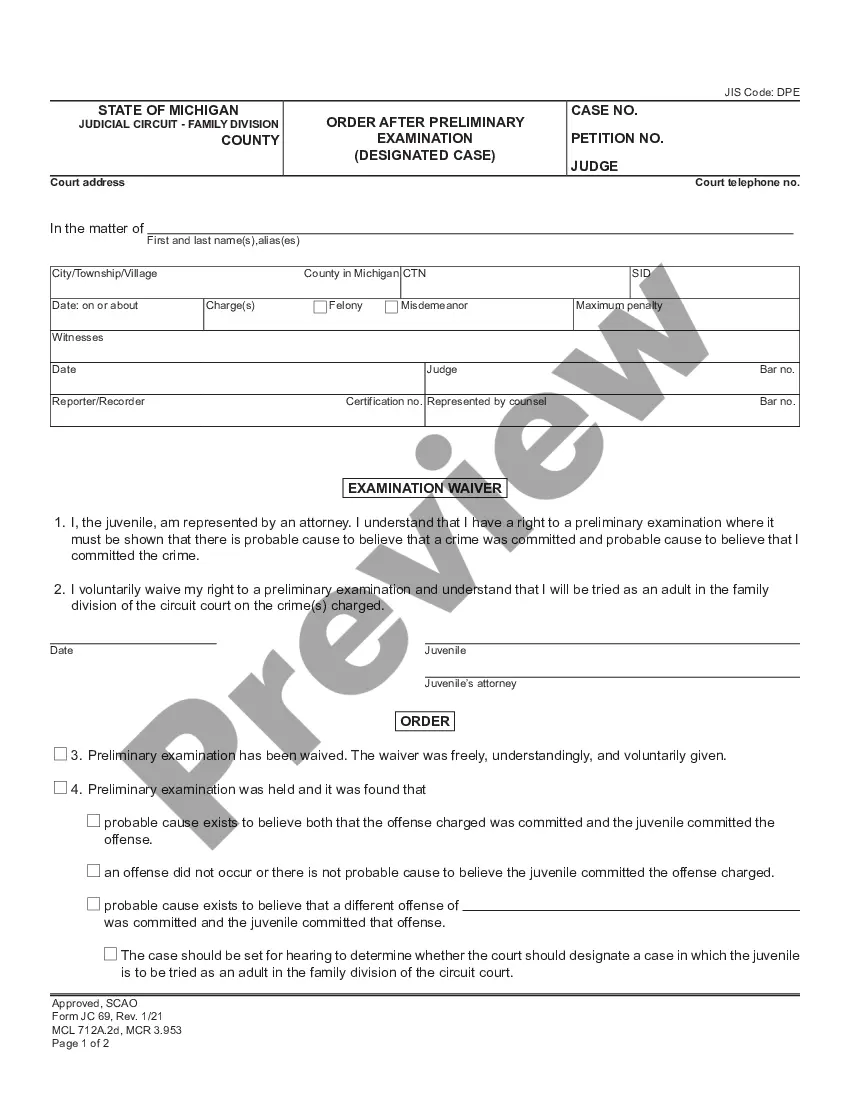
Michigan Order After Preliminary Examination (Designated Case) is an order issued by the court in a Michigan civil case that requires a defendant to file an answer or motion within a certain period of time. The order is typically issued after the court has reviewed the pleadings and documents in a case and determined that the case should proceed to trial. There are several types of Michigan Order After Preliminary Examination (Designated Case): 1. Default Judgment Order: This order is issued when the defendant fails to respond to the court’s order. It requires the defendant to pay the amount stated in the complaint or answer the complaint within a certain period of time. 2. Summary Judgment Order: This order is issued when the court finds that the facts of the case are not in dispute and that no material issue of fact exists. It requires the defendant to file an answer or motion within a certain period of time. 3. Trial by Jury Order: This order is issued when the court finds that the facts of the case are in dispute and that a trial is necessary in order to determine the outcome. It requires the defendant to file an answer or motion within a certain period of time. 4. Motion to Dismiss Order: This order is issued when the court finds that the complaint fails to state a claim for which relief can be granted. It requires the defendant to file an answer or motion within a certain period of time.
Michigan Order After Preliminary Examination (Designated Case)
Description

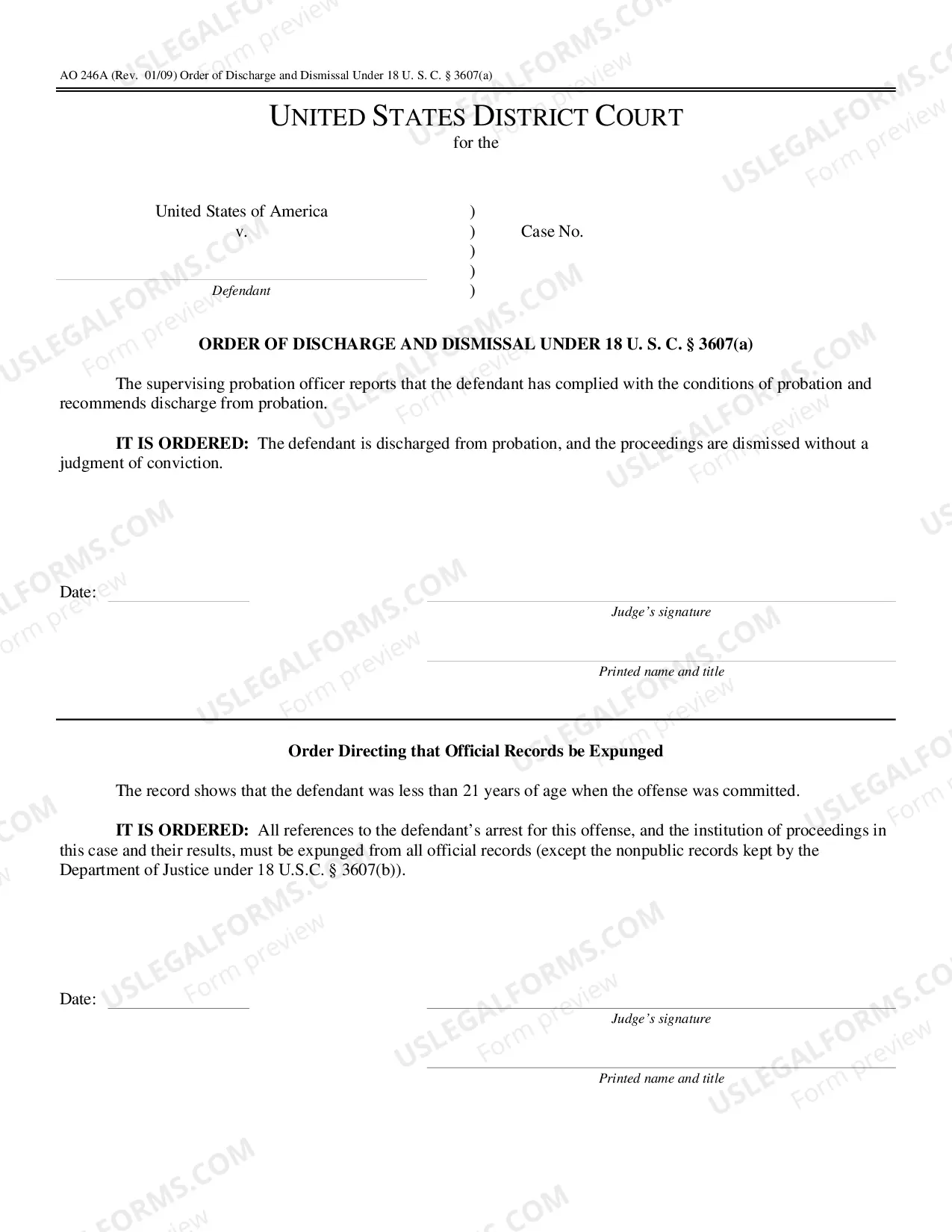
Get your form ready online
Our built-in tools help you complete, sign, share, and store your documents in one place.
Make edits, fill in missing information, and update formatting in US Legal Forms—just like you would in MS Word.
Download a copy, print it, send it by email, or mail it via USPS—whatever works best for your next step.
Sign and collect signatures with our SignNow integration. Send to multiple recipients, set reminders, and more. Go Premium to unlock E-Sign.
If this form requires notarization, complete it online through a secure video call—no need to meet a notary in person or wait for an appointment.
We protect your documents and personal data by following strict security and privacy standards.

Make edits, fill in missing information, and update formatting in US Legal Forms—just like you would in MS Word.

Download a copy, print it, send it by email, or mail it via USPS—whatever works best for your next step.

Sign and collect signatures with our SignNow integration. Send to multiple recipients, set reminders, and more. Go Premium to unlock E-Sign.

If this form requires notarization, complete it online through a secure video call—no need to meet a notary in person or wait for an appointment.

We protect your documents and personal data by following strict security and privacy standards.
Looking for another form?
How to fill out Michigan Order After Preliminary Examination (Designated Case)?
US Legal Forms is the easiest and most economical means to find appropriate official templates.
It’s the largest online collection of business and personal legal documents created and vetted by attorneys.
Here, you can discover printable and fillable forms that adhere to national and local laws - just like your Michigan Order After Preliminary Examination (Designated Case).
Examine the form description or preview the document to ensure you’ve located the one that fulfills your needs, or search for another using the search tab above.
Click Buy now when you’re confident of its compliance with all the requirements, and choose the subscription plan you prefer.
- Obtaining your template involves just a few straightforward steps.
- Users with an existing account and valid subscription merely need to Log In to the platform and download the form to their device.
- Afterward, they can locate it in their profile under the My documents section.
- And here’s how you can acquire a well-prepared Michigan Order After Preliminary Examination (Designated Case) if you are utilizing US Legal Forms for the first time.
Form popularity
FAQ
To get a no-contact order dropped in Michigan, you should file a motion with the appropriate court. In your motion, provide evidence supporting your request, such as changes in circumstances or agreements with the other party. It is crucial to prepare your case thoroughly to present to the judge effectively. US Legal Forms can assist you in preparing the necessary legal documents and understanding the requirements of the Michigan Order After Preliminary Examination (Designated Case).
The timeline for lifting a no-contact order in Michigan varies based on the case specifics and court discretion. Generally, a party can request a hearing to lift the order once they believe the reasons for it no longer apply. If the judge finds sufficient grounds, they may lift the order during the hearing. To streamline this process, consider using US Legal Forms to ensure all paperwork is correctly filed and presented.
When speaking to a judge about dropping a no-contact order, focus on expressing your reasons clearly and respectfully. Highlight any changes in circumstances, such as improved relationships or safety assurances. It is also beneficial to demonstrate your understanding of the order's purpose and your commitment to adhering to court guidelines. Preparing a well-structured motion through US Legal Forms can help articulate your request effectively.
The 77 day rule in Michigan refers to the timeframe in which a defendant must be brought to trial after a preliminary examination. Under Michigan law, if a defendant is not tried within 77 days following the preliminary examination, they may have grounds for dismissal of the charges. This rule aims to ensure a speedy trial, which is a fundamental right. Understanding this rule is essential for defendants navigating the Michigan Order After Preliminary Examination (Designated Case).
To remove a no-contact order in Michigan, you must file a motion with the court that issued the order. In your motion, clearly explain why the order should be lifted. Courts often consider factors such as changes in circumstances and the safety of all parties involved. Utilizing a platform like US Legal Forms can help you prepare the necessary documents and navigate the process effectively.
To bind over in a court case refers to the legal process where a judge decides that there is enough evidence to require the defendant to stand trial. In the context of a Michigan Order After Preliminary Examination (Designated Case), this decision is based on the findings from the preliminary hearing. This binding over is essential, as it formally transitions the case from a preliminary stage to trial preparation. Knowing this term helps you navigate the legal framework surrounding your case.
An order on preliminary examination bind over means that the court has found enough evidence to proceed with a case after a preliminary hearing. In a Michigan Order After Preliminary Examination (Designated Case), the judge determines whether the evidence presented is sufficient to take the case to trial. This order is significant because it indicates that the prosecution can move forward with the charges against the defendant. If you are involved in such a case, understanding this process is crucial for your legal strategy.
Rule 2.313 in Michigan pertains to the process of discovery in civil cases. This rule allows parties to obtain evidence and information that is relevant to their case, helping them prepare for trial. Specifically, when a Michigan Order After Preliminary Examination (Designated Case) is involved, understanding this rule can be crucial. By utilizing resources like USLegalForms, you can easily navigate this legal framework and ensure you have the necessary documentation and forms.
During a preliminary hearing in Michigan, the court evaluates whether there is enough evidence to proceed to trial. This hearing is essential for defendants as it provides an opportunity to challenge the evidence presented against them. The outcome of the preliminary hearing directly influences the Michigan Order After Preliminary Examination (Designated Case), determining how the case will progress. Understanding what occurs during this hearing can empower you to make informed decisions in your legal journey.
The 7 day order rule in Michigan mandates that after a preliminary examination, the court must issue an order within seven days. This order is crucial as it outlines the next steps in the legal proceedings, including any decisions related to the Michigan Order After Preliminary Examination (Designated Case). Adhering to this rule is vital for maintaining the momentum of your case. Therefore, being proactive and aware of this timeline is beneficial for anyone facing legal challenges.