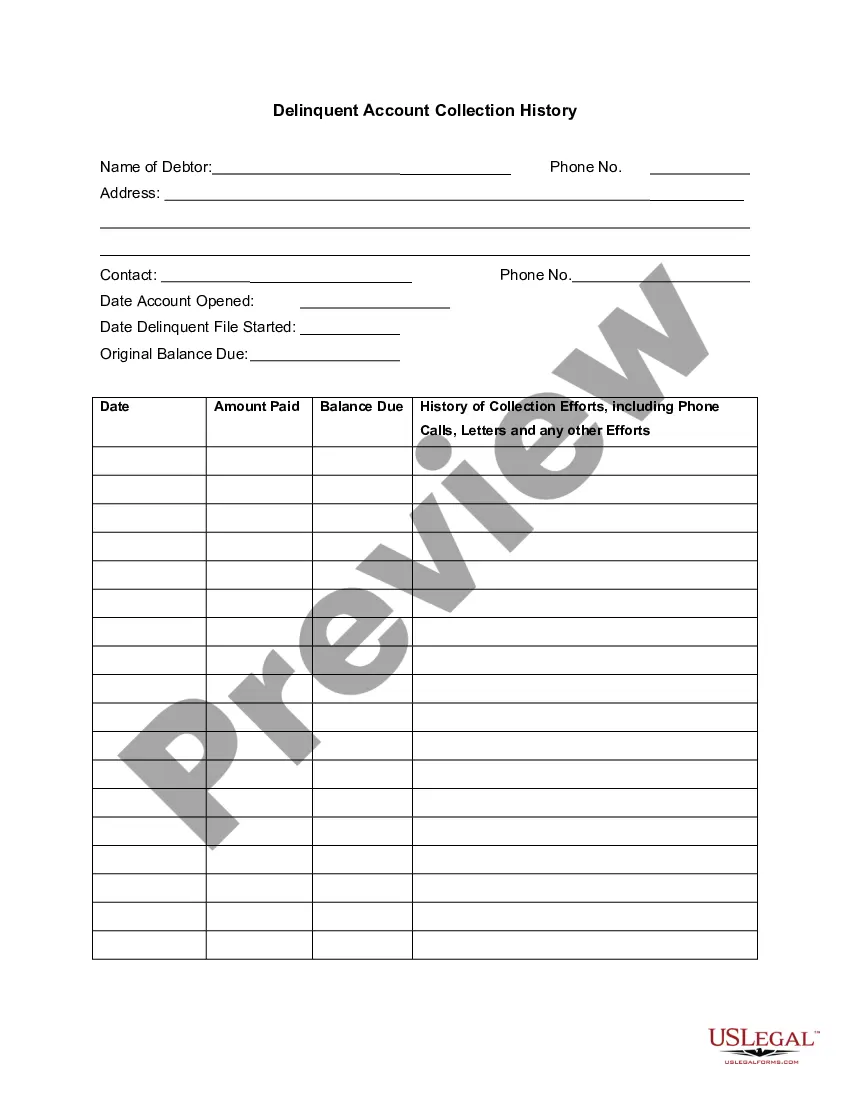
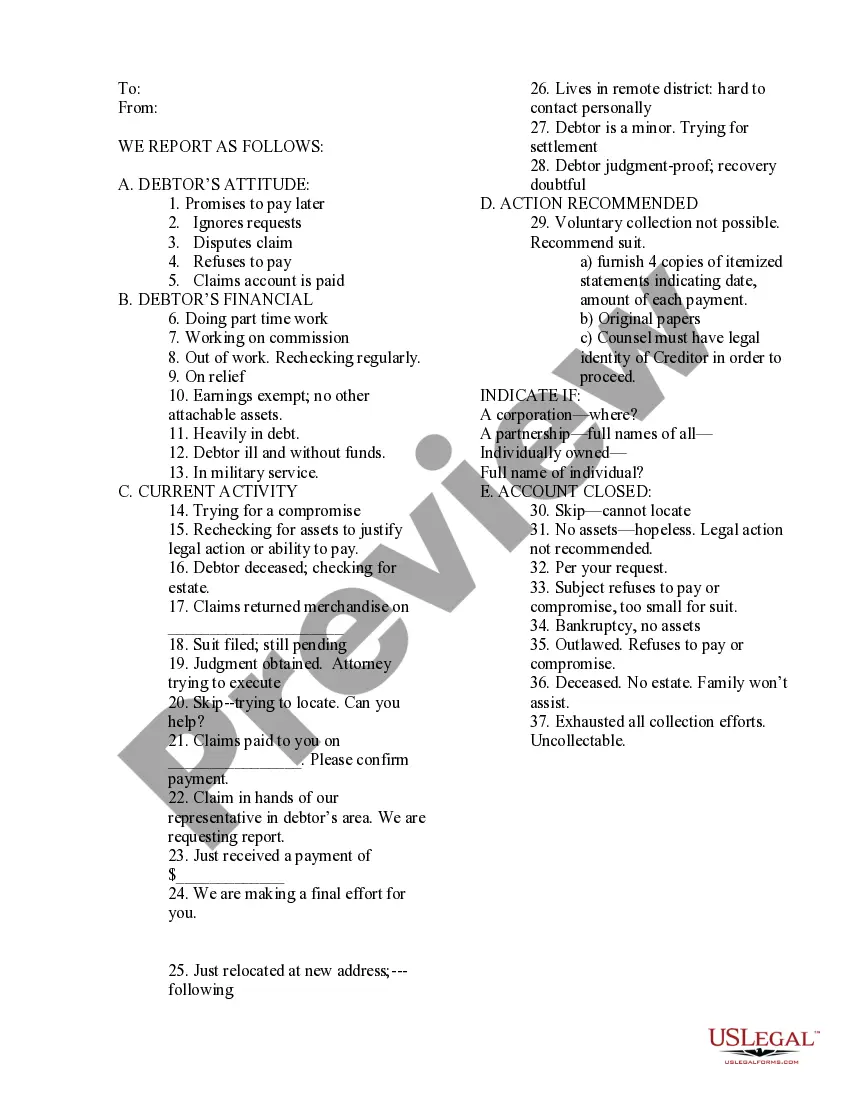
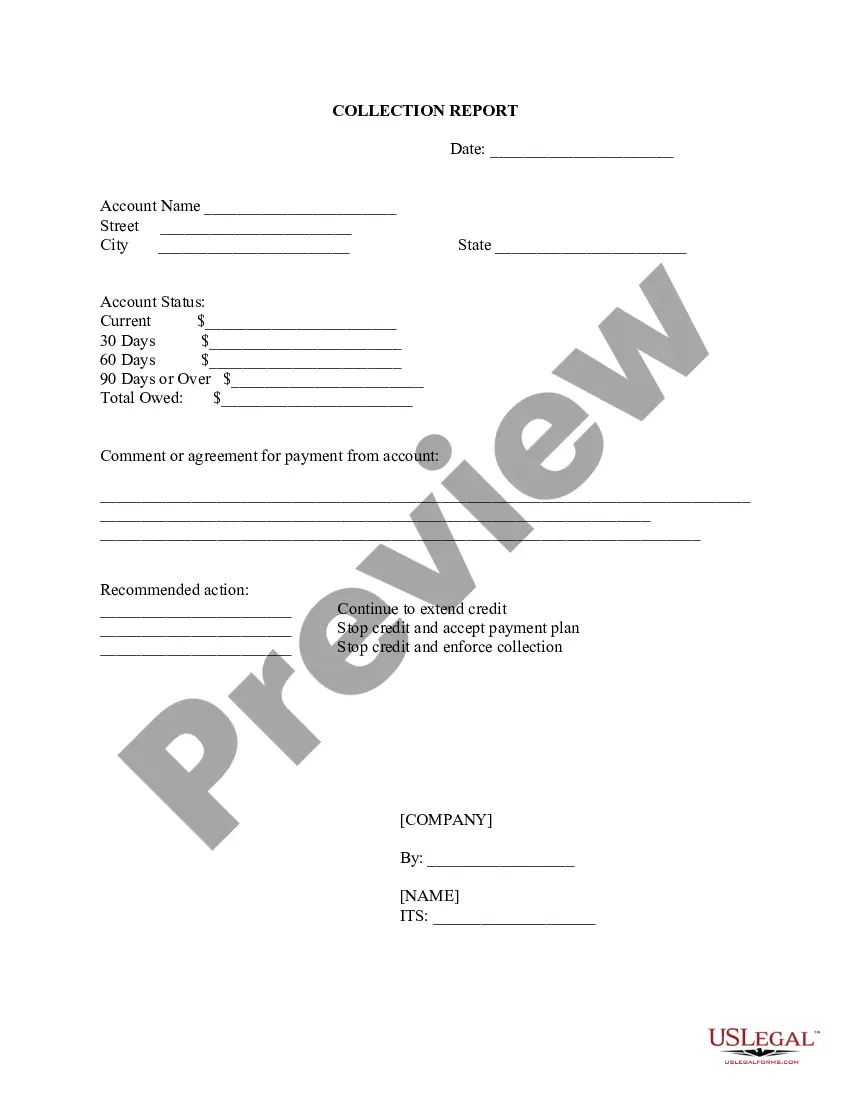
This is a form to track progress on a delinquent customer account and to record collection efforts.
Michigan Delinquent Account Collection History
Category:
State:
Multi-State
Control #:
US-03624BG
Format:
Word;
Rich Text
Instant download
Description


How to fill out Delinquent Account Collection History?
If you aim to accumulate, download, or print legitimate document templates, utilize US Legal Forms, the largest collection of legal forms available online.
Employ the site's simple and user-friendly search feature to locate the documents you require.
A variety of templates for business and personal use are organized by category and state, or by keywords.
Step 3. If you aren't satisfied with the form, utilize the Search field at the top of the screen to find other types in the legal form format.
Step 4. Once you have located the form you need, select the Purchase now button. Choose the payment plan you prefer and input your details to register for an account.
- Utilize US Legal Forms to locate the Michigan Delinquent Account Collection History with just a few clicks.
- If you are already a US Legal Forms customer, Log In to your account and click the Download button to access the Michigan Delinquent Account Collection History.
- You can also access forms you previously downloaded in the My documents section of your account.
- If you are using US Legal Forms for the first time, refer to the steps below.
- Step 1. Ensure you have selected the form for the correct city/state.
- Step 2. Use the Preview option to view the form's content. Don’t forget to review the description.
Form popularity
FAQ
To speak with someone at the Michigan Treasury Department, you can call their main customer service line found on their website. When you contact them, have your information ready to ensure a smooth conversation. They can assist you with your inquiries related to Michigan delinquent account collection history, giving you access to vital resources.
The number for the State of Michigan offset can be found on the Michigan Department of Treasury's website. They handle the collection of debts through various offsets, including tax refunds. Understanding this process can illuminate your Michigan delinquent account collection history and help you avoid any unexpected deductions from your refunds.
In Michigan, the statute of limitations for debt collection depends on the type of debt. Generally, it is six years for most contracts and accounts. This timeframe is crucial when considering your Michigan delinquent account collection history, as debts that exceed this limit may not be enforceable in court. Knowing these limits can help you strategize the best approach to managing your debts.
Debt collectors in Michigan can attempt to collect a debt for up to six years, which aligns with the state’s statute of limitations. During this time, they are legally allowed to contact you to recover the owed amount. However, it's essential to know your rights under the Fair Debt Collection Practices Act, which protects you from harassment. Using platforms like US Legal Forms can provide you with valuable information about Michigan delinquent account collection history and your rights.
In Michigan, a debt typically becomes uncollectible after six years from the date of the last payment or the date the debt was incurred. This timeframe aligns with Michigan's statute of limitations for most types of consumer debts. Once this period passes, creditors lose the legal right to sue you for collection. Understanding Michigan delinquent account collection history can help you navigate these timeframes effectively.
To contact Michigan collections, start by locating the creditor's information on your billing statement. You may find phone numbers or mailing addresses that direct you to their collections department. Additionally, you can visit the state’s Department of Consumer Affairs for guidance on contacting licensed collection agencies. Utilizing resources like US Legal Forms can help streamline this process and provide you with further insights into Michigan delinquent account collection history.
In Michigan, a debt is considered uncollectible after six years, in line with the state's statute of limitations. This timeframe starts from the last activity on the account, such as a payment or communication. Once this period ends, collectors can no longer sue you for the debt. Staying informed about your Michigan delinquent account collection history can aid in understanding your rights.
A debt generally becomes uncollectible after the statute of limitations expires, which varies by state. In Michigan, this period is typically six years for most debts. After this time, creditors cannot pursue legal action, but they may continue to attempt collection. Knowing the timeline can help you manage your Michigan delinquent account collection history.
You can look up tax liens in Michigan by visiting the Michigan Department of Treasury website. They provide searchable databases for public records, including tax liens. Additionally, local county clerk offices often have records of liens. Understanding tax liens can help you navigate your Michigan delinquent account collection history more effectively.
In Michigan, a debt collector can sue you for unpaid debts within a specific timeframe known as the statute of limitations. Generally, this period lasts six years for most debts, including Michigan delinquent account collection history. After this time, collectors lose the legal right to file a lawsuit. However, it's essential to address debt issues early to avoid potential legal action.