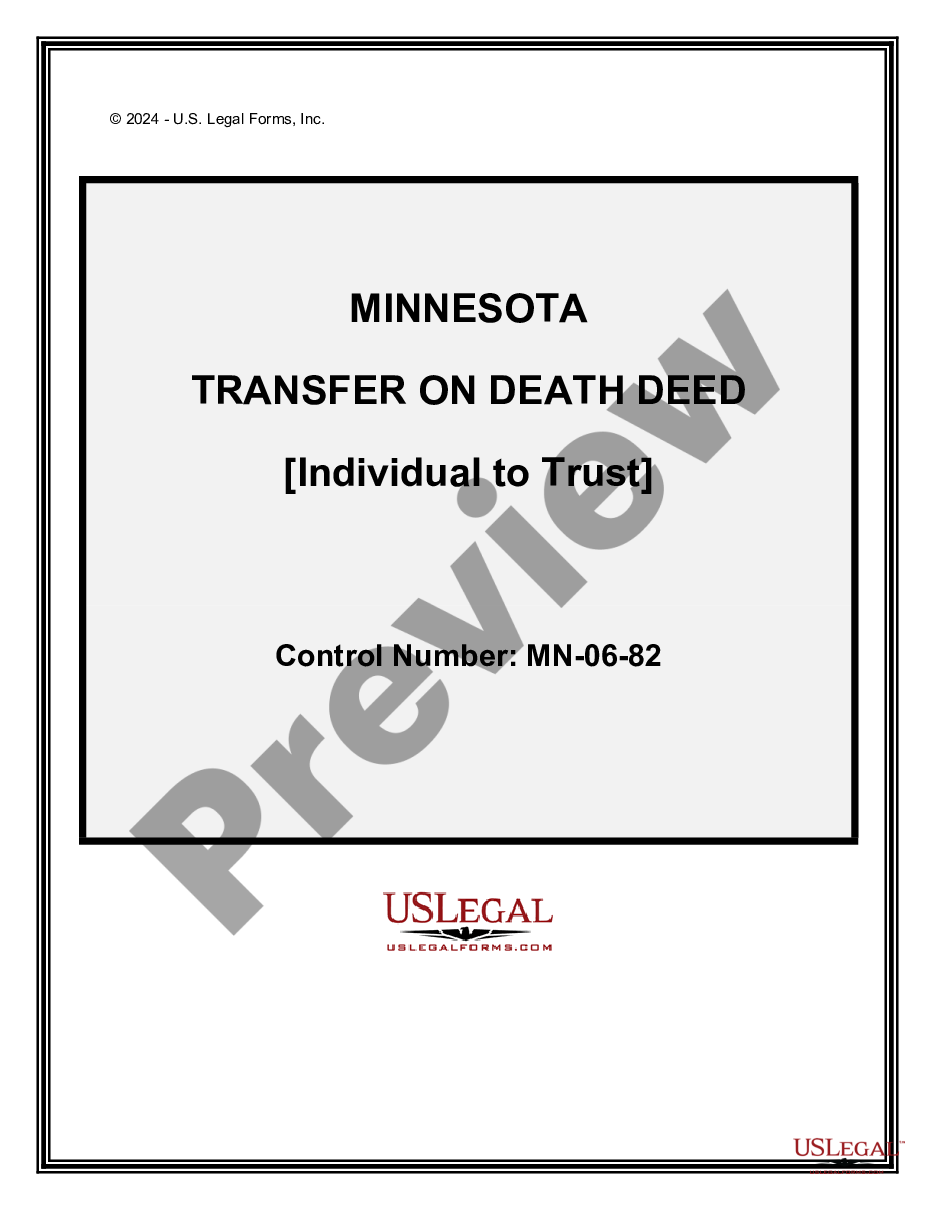
Minnesota Transfer on Death Deed - Individual to a Trust
What is this form?
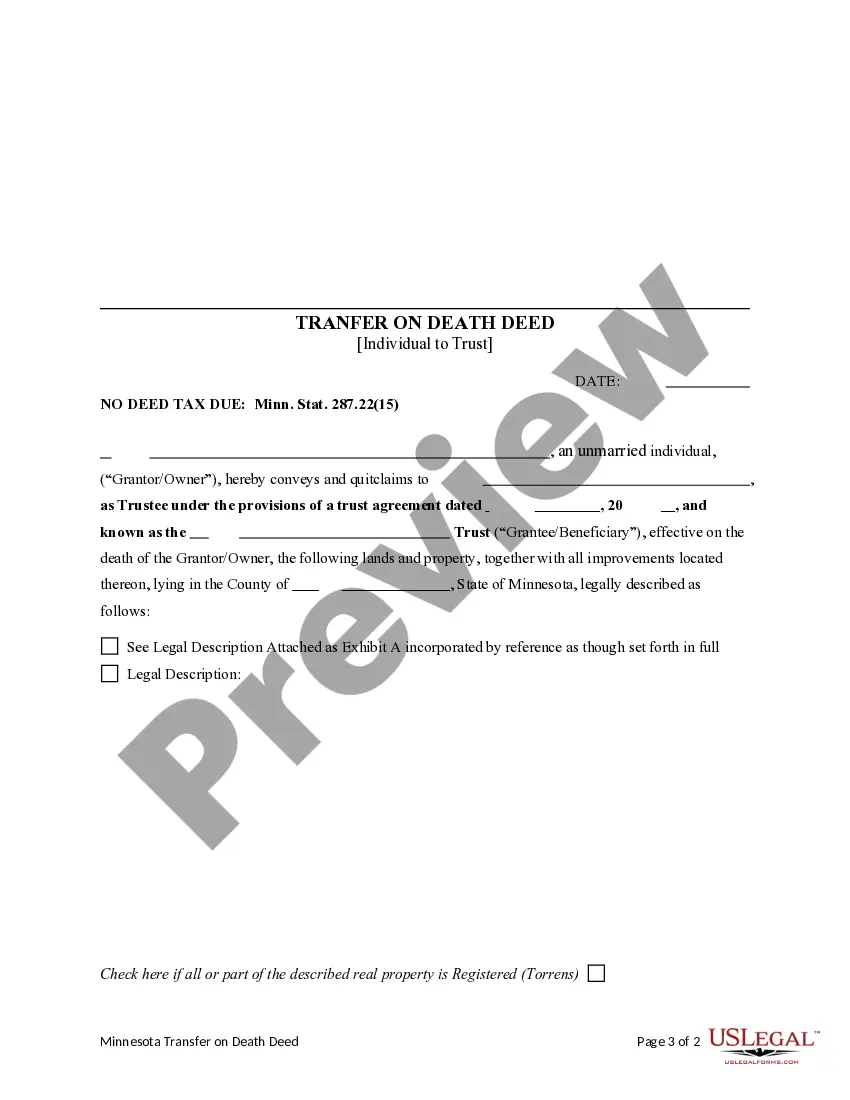
The Transfer on Death Deed - Individual to a Trust is a legal document specific to Minnesota that allows an individual owner or grantor to transfer property to a trust as a grantee or beneficiary upon their death. Unlike traditional property transfers, this deed allows the grantor to retain ownership rights during their lifetime, meaning they can sell or modify the property without needing approval from the trust. This form is essential for those who wish to designate a trust as the beneficiary of their property while maintaining control until death.
Form components explained
- Identification of the Grantor/Owner and Trust as Grantee/Beneficiary
- Retention of rights for the Grantor/Owner to alter property use
- Conditions for property transfer upon the Grantorâs death
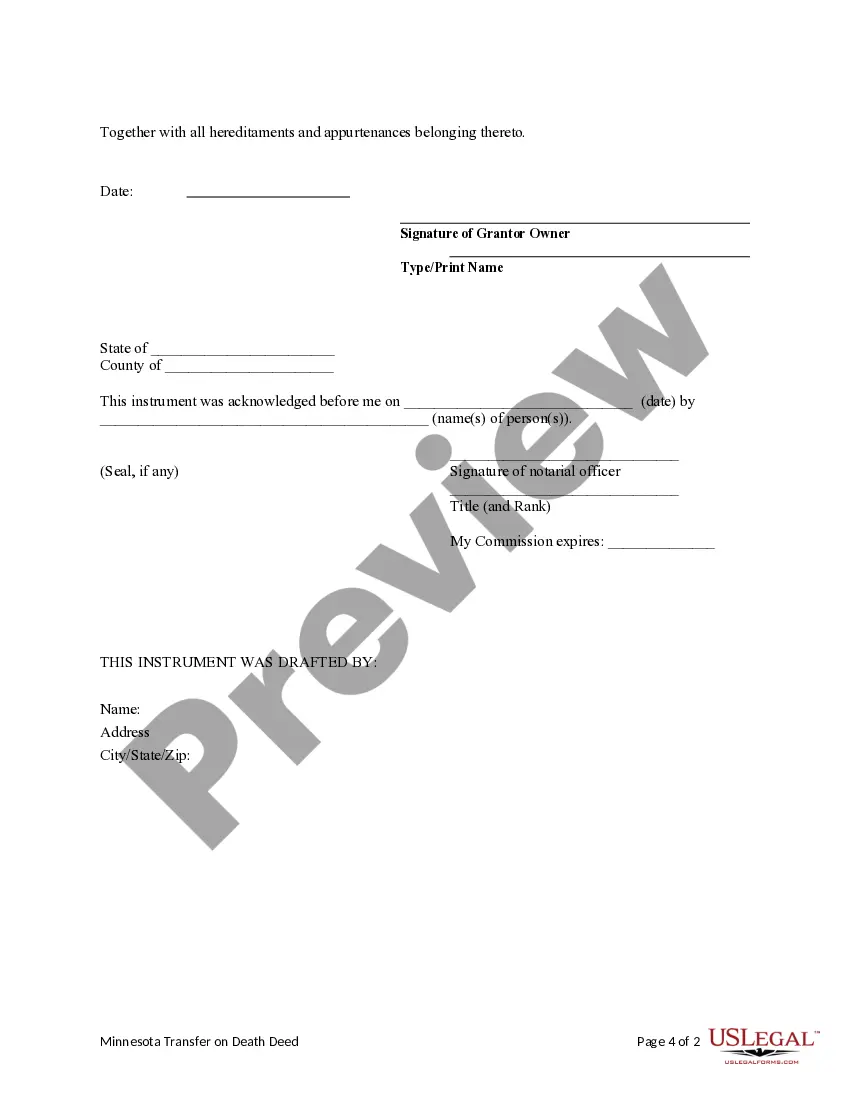
- Requirements for proper recording of the deed
- Legal disclaimers regarding the use of the form



Common use cases
This form should be used when an individual wishes to assign their property to a trust, allowing for a straightforward transfer upon their death. It is particularly useful for estate planning, where the grantor wants to simplify the process of property distribution, avoid probate, and ensure that assets are managed by a trustee according to their wishes.
Who should use this form
This form is suitable for:
- Individuals in Minnesota who own real estate and wish to transfer it to a trust
- Those looking to streamline their estate planning and ensure future management of their assets
- Anyone seeking to protect their property from probate during the transfer process
Steps to complete this form
- Identify the Grantor/Owner and the Trust, providing all required names and addresses.
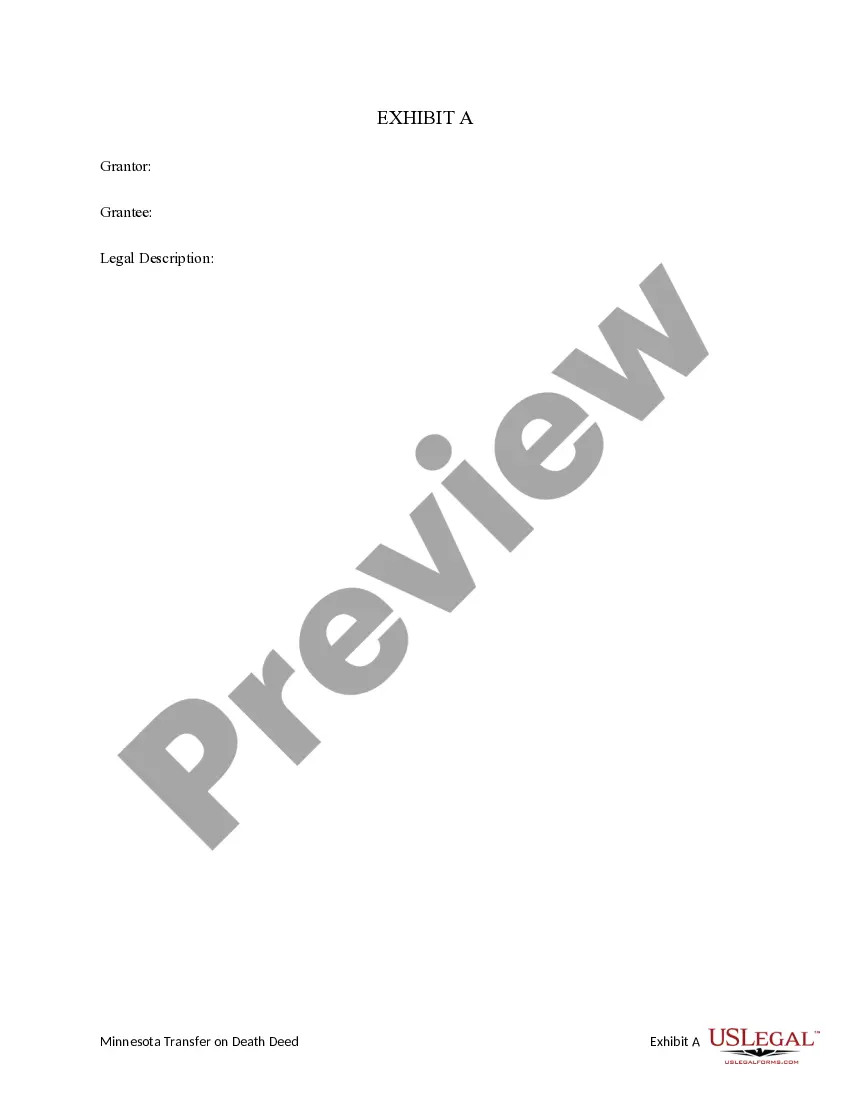
- Specify the property being transferred, including a complete description.
- Enter the date of execution and any relevant information about the trust.
- Sign the deed according to state requirements, ensuring witnesses if required.
- File the completed deed with the appropriate county office to make it effective.
Does this form need to be notarized?
This form does not typically require notarization unless specified by local law. However, it is important to check local regulations to ensure compliance. Notarization may add an extra layer of legality and assurance for the recorded deed.
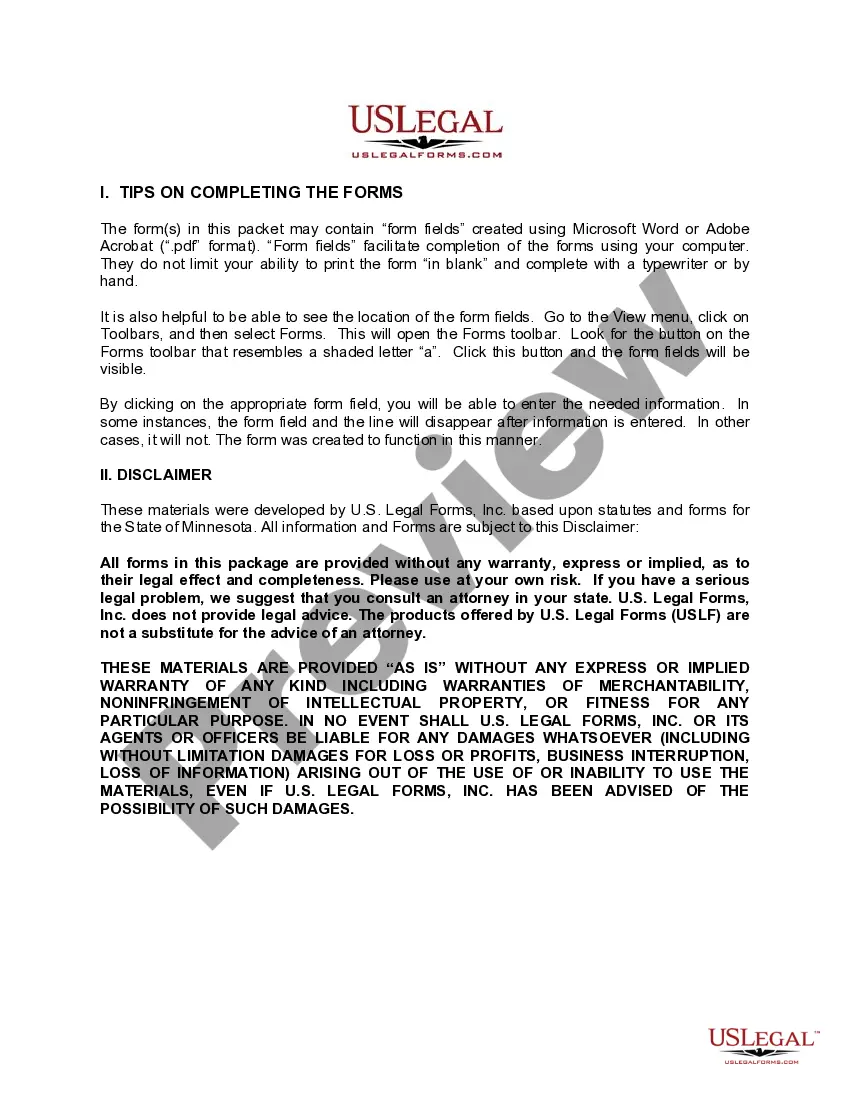
Get your form ready online
Our built-in tools help you complete, sign, share, and store your documents in one place.
Make edits, fill in missing information, and update formatting in US Legal Forms—just like you would in MS Word.
Download a copy, print it, send it by email, or mail it via USPS—whatever works best for your next step.
Sign and collect signatures with our SignNow integration. Send to multiple recipients, set reminders, and more. Go Premium to unlock E-Sign.
If this form requires notarization, complete it online through a secure video call—no need to meet a notary in person or wait for an appointment.
We protect your documents and personal data by following strict security and privacy standards.
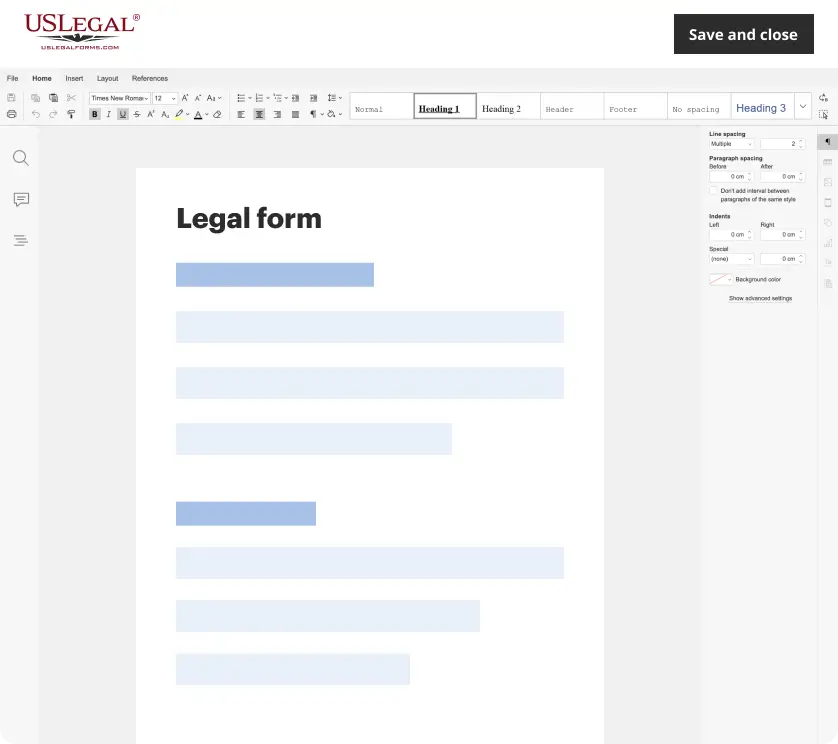
Make edits, fill in missing information, and update formatting in US Legal Forms—just like you would in MS Word.
Download a copy, print it, send it by email, or mail it via USPS—whatever works best for your next step.
Sign and collect signatures with our SignNow integration. Send to multiple recipients, set reminders, and more. Go Premium to unlock E-Sign.

If this form requires notarization, complete it online through a secure video call—no need to meet a notary in person or wait for an appointment.

We protect your documents and personal data by following strict security and privacy standards.
Common mistakes
- Failing to properly record the deed before the grantor's death.
- Not including a complete and accurate description of the property.
- Leaving out necessary signatures or witness requirements.
- Confusing the roles of the grantor and grantee, especially with trust designations.
Why complete this form online
- Convenient access to legally vetted forms that can be completed at home.
- Editability allows users to ensure accuracy before printing or signing.
- Secure storage and easy retrieval of documents for future reference.
- Time-saving compared to traditional form gathering and completion methods.
Legal use & context
- This form is legally binding in Minnesota if properly completed and recorded.
- It allows for the seamless transfer of property at death without probate.
- Ensure the deed is recorded prior to the Grantorâs death to maintain its validity.
Main things to remember
- The Transfer on Death Deed simplifies estate management and asset transfer.
- It's crucial to record the deed as per Minnesota state law.
- This form allows the Grantor to retain full control over their property until death.
Looking for another form?

Form popularity
FAQ
Yes, Minnesota does allow the use of a transfer on death deed, specifically the Minnesota Transfer on Death Deed - Individual to a Trust. This legal tool enables property owners to transfer real estate to a designated beneficiary without going through probate. It offers a straightforward way to manage your property wishes after death. To ensure proper execution and compliance, consider utilizing resources from uslegalforms for guidance.
Deciding whether a trust or a Minnesota Transfer on Death Deed - Individual to a Trust is better depends on your circumstances. If you want to manage assets during your lifetime and ensure a smooth transition after death, a trust may be advantageous. Conversely, if you seek a simple way to transfer property directly to a beneficiary at death, a transfer on death deed is a practical choice. Each option has unique benefits, so evaluating your estate planning goals is essential.
The best way to transfer real estate upon death often involves using a Minnesota Transfer on Death Deed - Individual to a Trust. This deed allows you to designate a beneficiary who will receive the property directly, avoiding the complexities of probate. It is important to ensure that the deed is properly executed and recorded to be effective. You can also consider consulting with legal experts at uslegalforms to ensure that your estate plan meets your goals.
Choosing between a revocable trust and a Minnesota Transfer on Death Deed - Individual to a Trust depends on your specific needs. A revocable trust offers flexibility, allowing you to modify or revoke it during your lifetime, while a transfer on death deed simplifies the transfer process upon death without going through probate. If you prefer a straightforward approach to transferring real estate, the transfer on death deed may be more suitable. However, for comprehensive estate planning, a revocable trust might be the better option.
To fill out a Minnesota Transfer on Death Deed - Individual to a Trust, begin by identifying yourself as the grantor and the beneficiaries. Clearly describe the property you intend to transfer, including details like the address and legal description. After completing the necessary sections, sign the document in front of a notary. Utilizing resources from uslegalforms can simplify this process, providing you with the guidance needed to ensure accurate completion.
Filling out a Minnesota Transfer on Death Deed - Individual to a Trust form involves several straightforward steps. First, you must include accurate information about yourself as the property owner and the beneficiaries you wish to designate. Next, you will need to describe the property being transferred clearly. Finally, ensure that you sign and date the form in accordance with state requirements, which can be streamlined using templates available on uslegalforms.
While it is not legally required to have a lawyer to file a Minnesota Transfer on Death Deed - Individual to a Trust, consulting one can be beneficial. A lawyer can help ensure that the deed is completed correctly and that it aligns with your overall estate plan. This professional guidance can prevent potential errors that might affect the transfer of your property. If you prefer a do-it-yourself approach, platforms like uslegalforms offer resources to assist you.
You do not need an attorney to complete a Minnesota Transfer on Death Deed - Individual to a Trust, but legal advice can be advantageous. An attorney can help ensure the deed is properly executed and recorded. Additionally, platforms like US Legal Forms provide templates and guidance to assist you throughout the process.
To record a Minnesota Transfer on Death Deed - Individual to a Trust, you should take the completed deed to your local county recorder's office. The office will verify the document and record it in their official records. This step is crucial to make the transfer legally binding and effective upon your passing.
To transfer a deed into a trust in Minnesota, you must prepare a new deed that names the trust as the grantee. This deed must be signed, notarized, and recorded at your county's office. Using a Minnesota Transfer on Death Deed - Individual to a Trust can streamline this process and ensure proper execution.