Minnesota Warranty Deed from Individuals to Individuals - UCBC Form 10.1.1

State:
Minnesota
Control #:
MN-1055M
Format:
PDF
Instant download
This website is not affiliated with any governmental entity
Public form

Description

This form is one of the Uniform Conveyancing Blanks developed by Minnesota Uniform Conveyancing Blanks Commission pursuant to Minnesota Code Section 507.09.

These forms, which pertain to the transfer of legal title of property from one person to another, or the granting of an encumbrance such as a mortgage or a lien, have been approved by the Commissioner of Commerce. The forms are available here in PDF format.
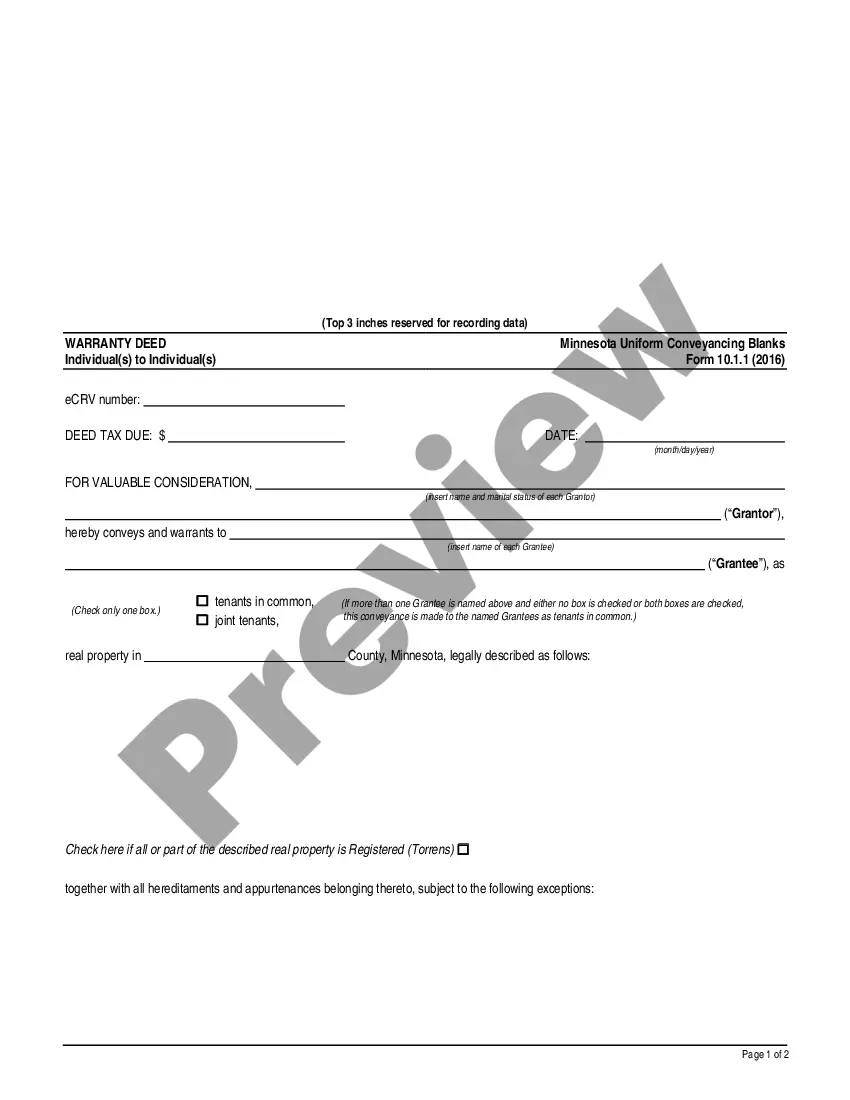
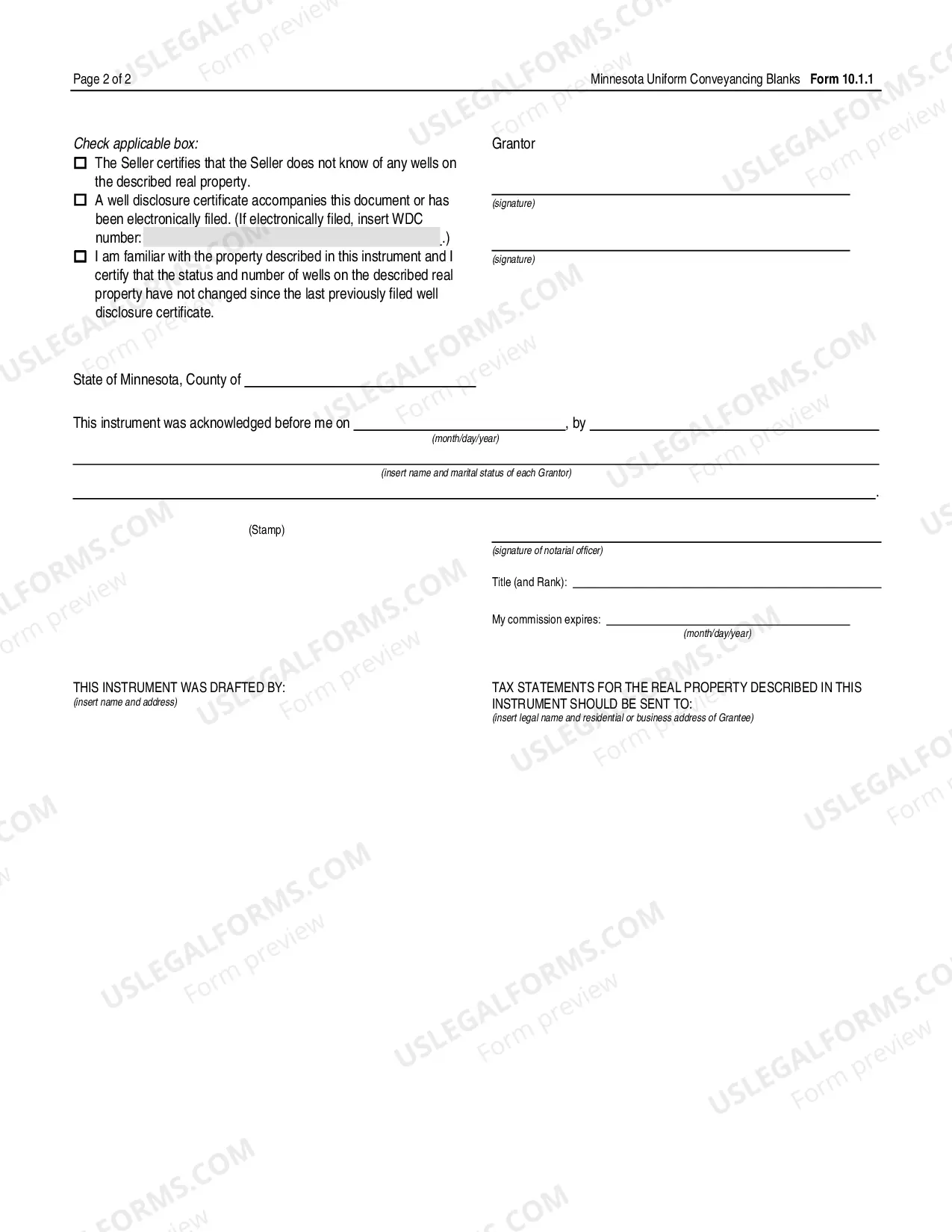
Free preview
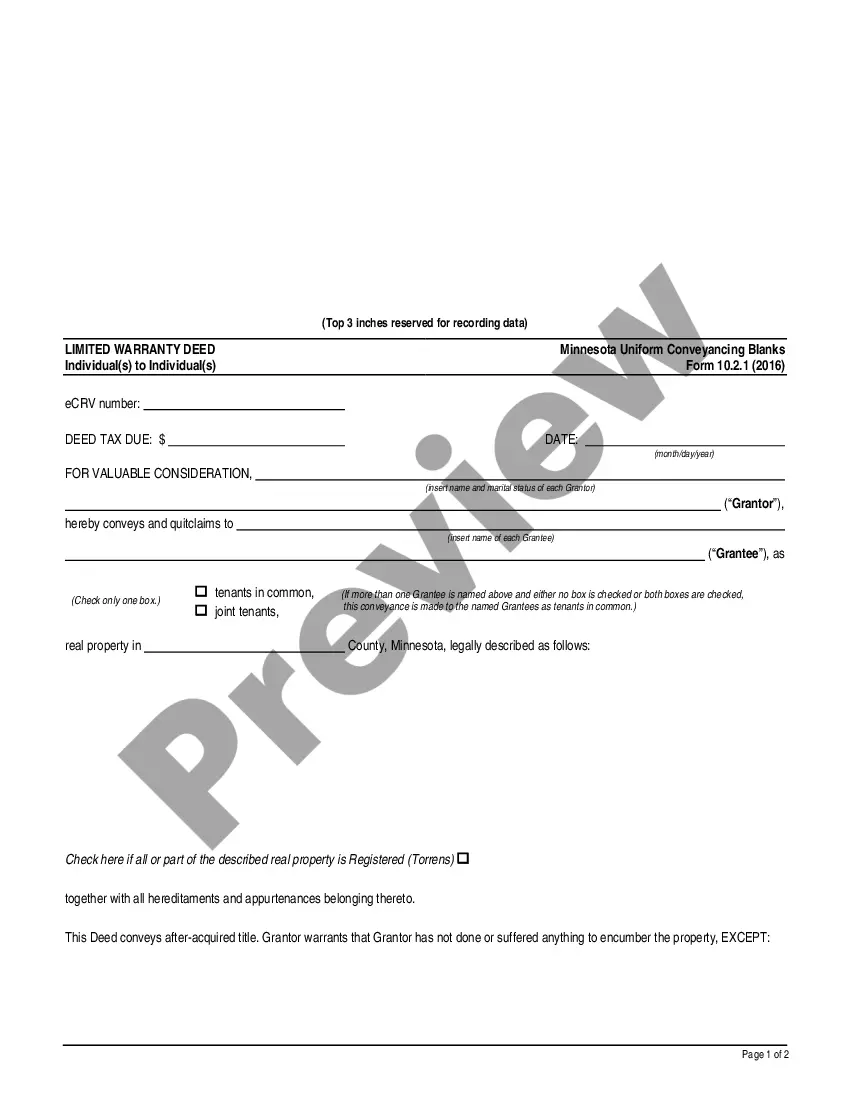
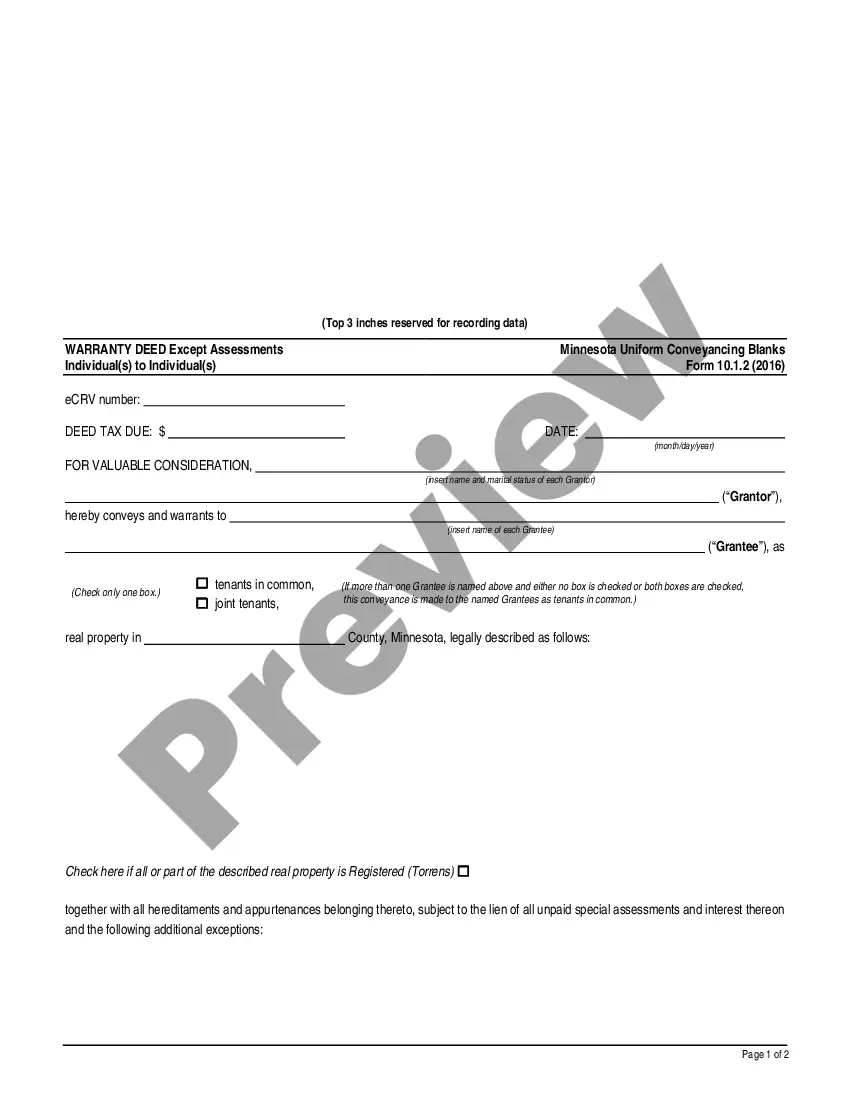
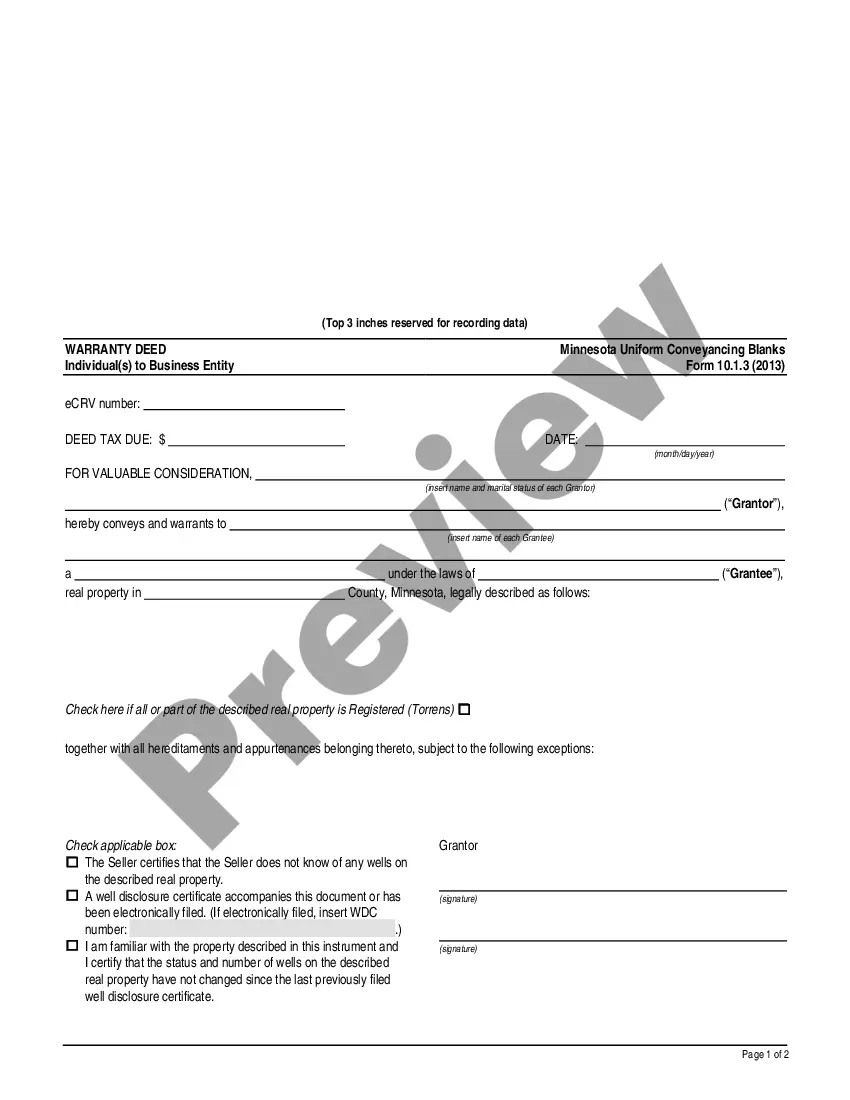
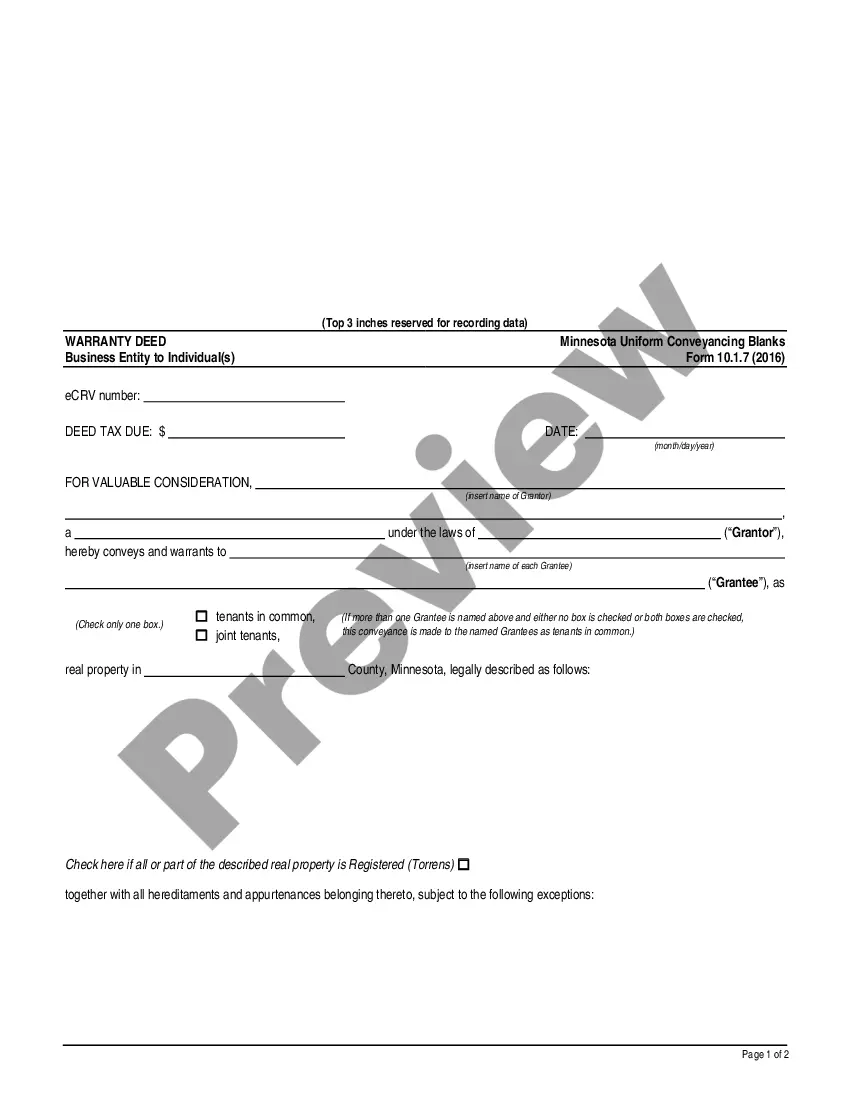
  • Preview Warranty Deed from Individuals to Individuals - UCBC Form 10.1.1
  • Preview Warranty Deed from Individuals to Individuals - UCBC Form 10.1.1

Get your form ready online

Our built-in tools help you complete, sign, share, and store your documents in one place.

Built-in online Word editor

Make edits, fill in missing information, and update formatting in US Legal Forms—just like you would in MS Word.

Export easily

Download a copy, print it, send it by email, or mail it via USPS—whatever works best for your next step.

E-sign your document

Sign and collect signatures with our SignNow integration. Send to multiple recipients, set reminders, and more. Go Premium to unlock E-Sign.

Notarize online 24/7

If this form requires notarization, complete it online through a secure video call—no need to meet a notary in person or wait for an appointment.

Store your document securely

We protect your documents and personal data by following strict security and privacy standards.

Form selector

Make edits, fill in missing information, and update formatting in US Legal Forms—just like you would in MS Word.

Form selector

Download a copy, print it, send it by email, or mail it via USPS—whatever works best for your next step.

Form selector

Sign and collect signatures with our SignNow integration. Send to multiple recipients, set reminders, and more. Go Premium to unlock E-Sign.

Form selector

If this form requires notarization, complete it online through a secure video call—no need to meet a notary in person or wait for an appointment.

Form selector

We protect your documents and personal data by following strict security and privacy standards.

Looking for another form?

This field is required
Ohio
Select state

Key Concepts & Definitions

A warranty deed from individuals to individuals is a legal document commonly used in real estate transactions in the United States. This deed guarantees that the grantor (the seller) holds clear title to a piece of property and has the right to transfer it to the grantee (the buyer). The warranty deed protects the buyer by ensuring that the property is free from any encumbrances, such as liens or mortgages that were not disclosed at the time of sale.

Step-by-Step Guide

  1. Verify the Title: Conduct a thorough title search to confirm that the property title is clear of liens, disputes, and encumbrances.
  2. Prepare the Deed: Draft the warranty deed, ensuring it includes the legal description of the property, names of the parties involved, and the signature of the grantor.
  3. Signature Requirements: The deed must be signed by the grantors in the presence of a notary public to ensure its validity.
  4. Witnesses: Some states require the presence of witnesses during the signing. Check local laws to comply.
  5. File the Deed: Submit the signed deed to the county recorder's office for public record, ensuring legal recognition of the transfer.

Risk Analysis

  • Undiscovered Liens: Even with a thorough title search, some liens, like mechanic's liens, might appear after the property transfer.
  • Fraudulent Sellers: There is always a risk of dealing with fraudulent sellers who don't have the right to sell the property.
  • Incorrect Property Descriptions: Mistakes in the legal description of the property can lead to legal disputes.

Key Takeaways

  • Warranty deeds provide the buyer the highest level of protection among property deeds.
  • Proper due diligence, such as a comprehensive title search, is crucial before executing a warranty deed.
  • Always ensure compliance with state-specific legal requirements for notarization and witnesses.

How to fill out Minnesota Warranty Deed From Individuals To Individuals - UCBC Form 10.1.1?

Obtain any template from 85,000 legal documents such as Minnesota Warranty Deed from Individuals to Individuals - UCBC Form 10.1.1 online with US Legal Forms. Each template is crafted and refreshed by state-certified attorneys.

If you have a subscription, Log In. Once you are on the form’s page, click on the Download button and navigate to My documents to retrieve it.

If you have not subscribed yet, follow the guidelines listed below.

With US Legal Forms, you will always have immediate access to the correct downloadable sample. The platform provides you with access to forms and categorizes them to simplify your search. Utilize US Legal Forms to acquire your Minnesota Warranty Deed from Individuals to Individuals - UCBC Form 10.1.1 quickly and effortlessly.

  1. Review the state-specific prerequisites for the Minnesota Warranty Deed from Individuals to Individuals - UCBC Form 10.1.1 you need to utilize.
  2. Examine the description and preview the template.
  3. Once you are confident the sample meets your needs, simply click Buy Now.
  4. Select a subscription plan that fits your budget.
  5. Establish a personal account.
  6. Make a payment using one of two suitable methods: by credit card or through PayPal.
  7. Choose a format to download the document in; two choices are available (PDF or Word).
  8. Download the file to the My documents section.
  9. After your reusable form is downloaded, print it out or save it to your device.

Form popularity

FAQ

Transferring a warranty deed involves several steps. First, you need to fill out a Minnesota Warranty Deed from Individuals to Individuals - UCBC Form 10.1.1 accurately. Once completed, have the deed signed in front of a notary, and then submit it to your local county recorder's office for recording. This process ensures that the transfer is legally binding and that the new ownership is recognized.

To transfer ownership of a property in Minnesota, you will need to prepare and execute a Minnesota Warranty Deed from Individuals to Individuals - UCBC Form 10.1.1. This deed must be signed by the current owner and notarized. Afterward, you should file the deed with the county recorder's office to ensure the transfer is officially recorded and accessible to the public.

In Minnesota, it is not necessary for both parties to be present during the title transfer. However, having both parties present can help facilitate the process and ensure that any questions are promptly addressed. To execute a Minnesota Warranty Deed from Individuals to Individuals - UCBC Form 10.1.1, at least one party must sign the deed in front of a notary. This ensures that the transfer is legally valid and recognized.

Yes, you can prepare your own warranty deed if you are familiar with the requirements. When drafting the Minnesota Warranty Deed from Individuals to Individuals - UCBC Form 10.1.1, be meticulous about the details to avoid future disputes. If you need assistance, using platforms like USLegalForms can provide you with the necessary templates and guidance.

Filling out a Minnesota quit claim deed involves providing specific information, such as the names of the individuals involved and the property description. You will also need to reference the Minnesota Warranty Deed from Individuals to Individuals - UCBC Form 10.1.1 for proper formatting. For a step-by-step guide, consider consulting resources like USLegalForms, which can help ensure you complete the deed correctly.

Yes, a non-lawyer can draft a deed, including the Minnesota Warranty Deed from Individuals to Individuals - UCBC Form 10.1.1. However, accuracy is paramount to ensure the deed meets legal standards. Utilizing templates from services like USLegalForms can help non-lawyers create valid deeds with confidence.

While it is not mandatory to hire an attorney to file a warranty deed, having legal assistance can be beneficial. An attorney can provide insights into the Minnesota Warranty Deed from Individuals to Individuals - UCBC Form 10.1.1 and help you navigate any complexities. If you choose to proceed without one, be sure to thoroughly research the process.

Yes, you can file a general warranty deed yourself. However, it is crucial to understand the requirements for the Minnesota Warranty Deed from Individuals to Individuals - UCBC Form 10.1.1. Ensuring that all necessary information is accurately filled out can prevent potential legal issues. If you prefer guidance, consider using resources like USLegalForms to simplify the process.

A warranty deed provides a guarantee that the seller holds clear title to the property and has the right to transfer it. In contrast, a general warranty deed not only assures that the seller owns the property but also protects the buyer against any claims that may arise from past ownership. When you use the Minnesota Warranty Deed from Individuals to Individuals - UCBC Form 10.1.1, you benefit from comprehensive protection throughout the property's history. Understanding these differences can help you make informed decisions when transferring property.

To obtain your Minnesota Warranty Deed from Individuals to Individuals - UCBC Form 10.1.1, you can access it through platforms like US Legal Forms. Simply search for the form, fill it out with the required information, and follow the instructions for submission. This process helps streamline your experience and ensures you have the correct documentation for your property transfer.

Trusted and secure by over 3 million people of the world’s leading companies

Minnesota Warranty Deed from Individuals to Individuals - UCBC Form 10.1.1