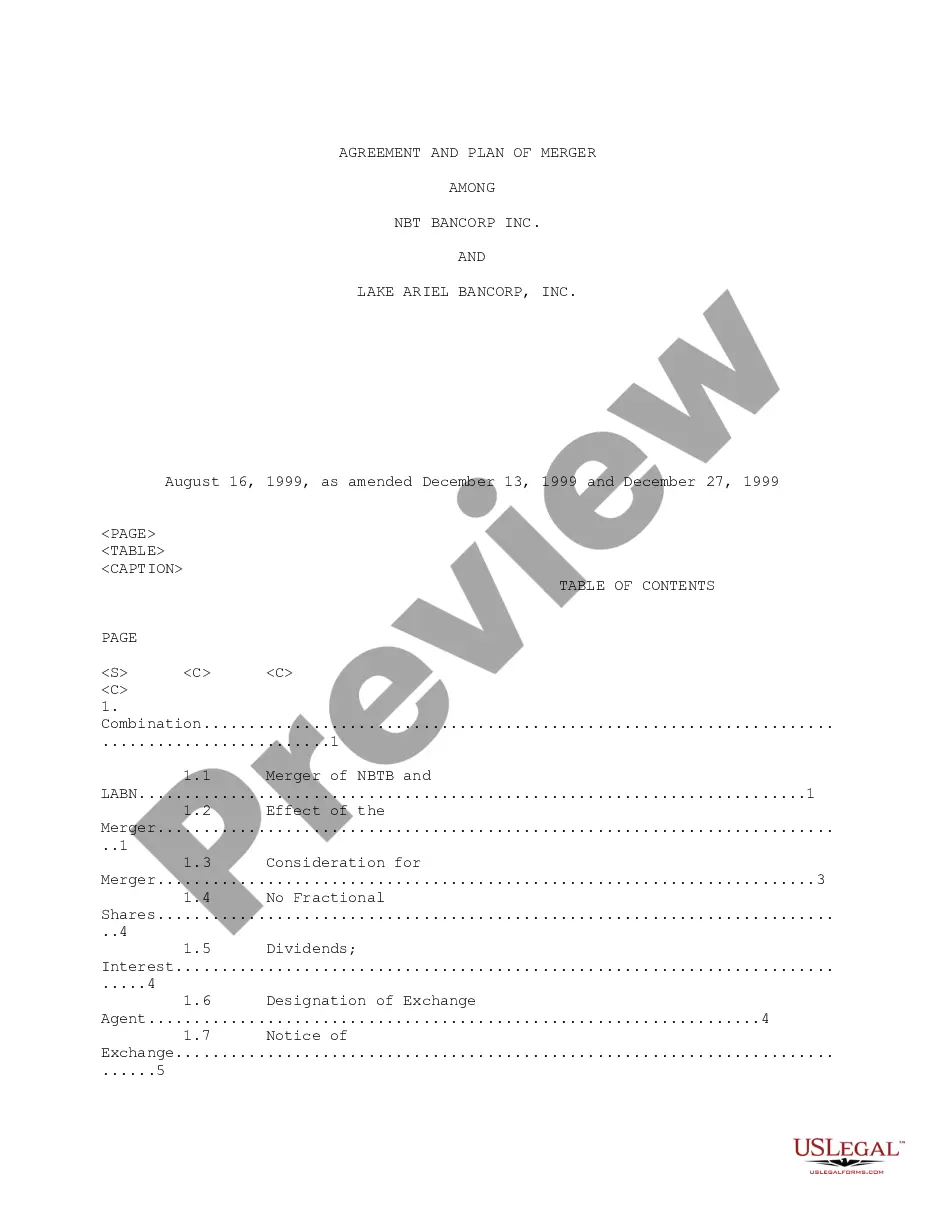
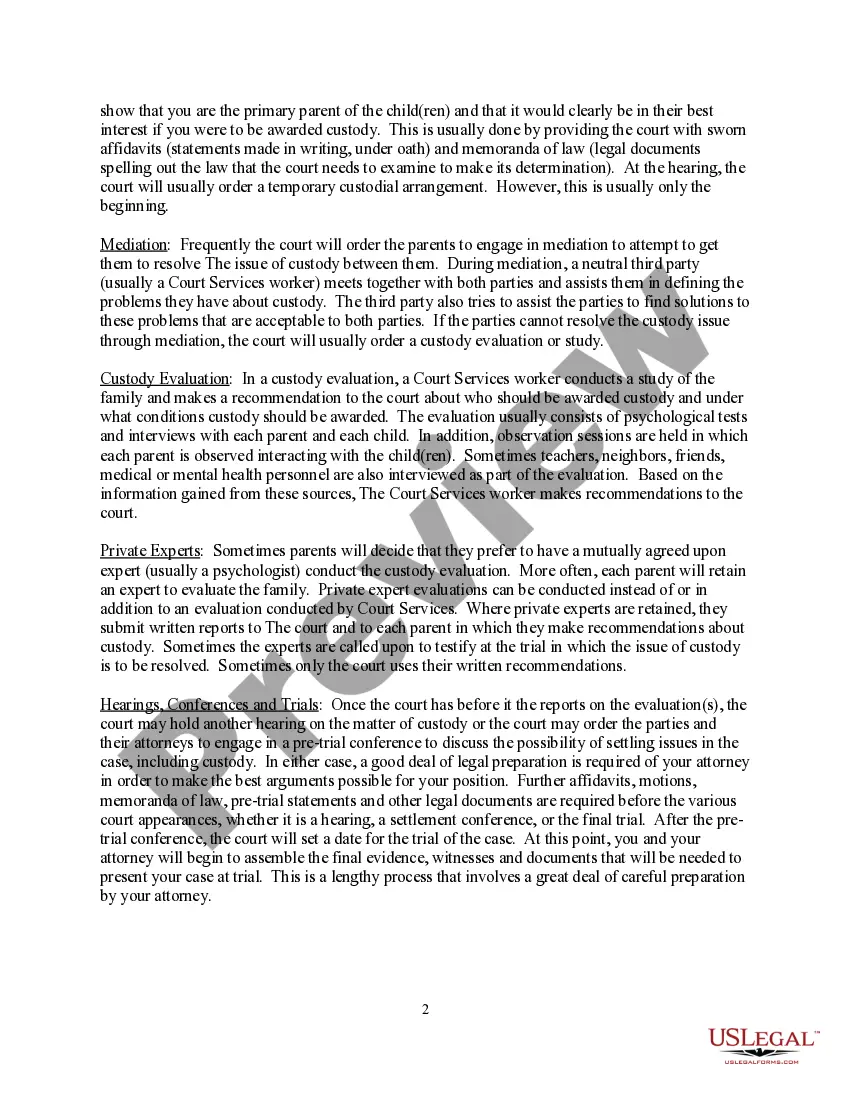
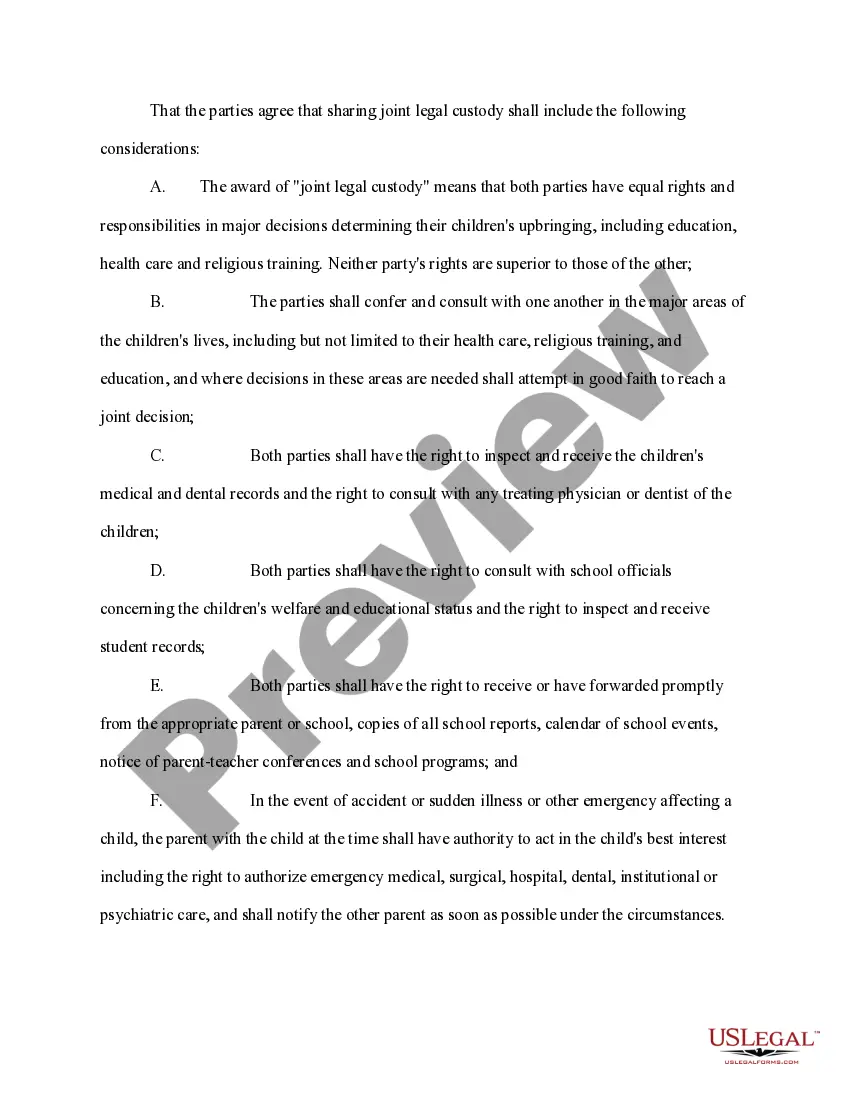
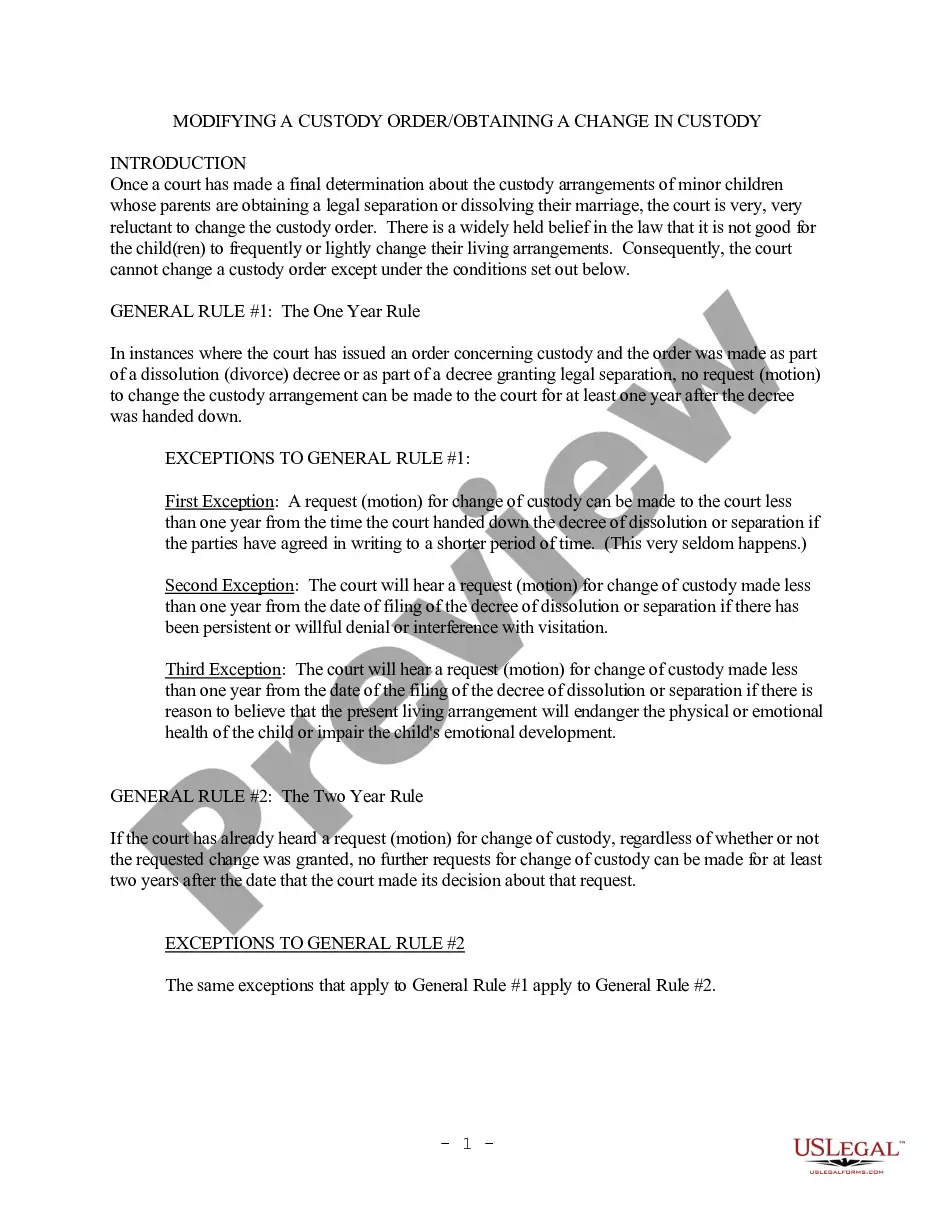
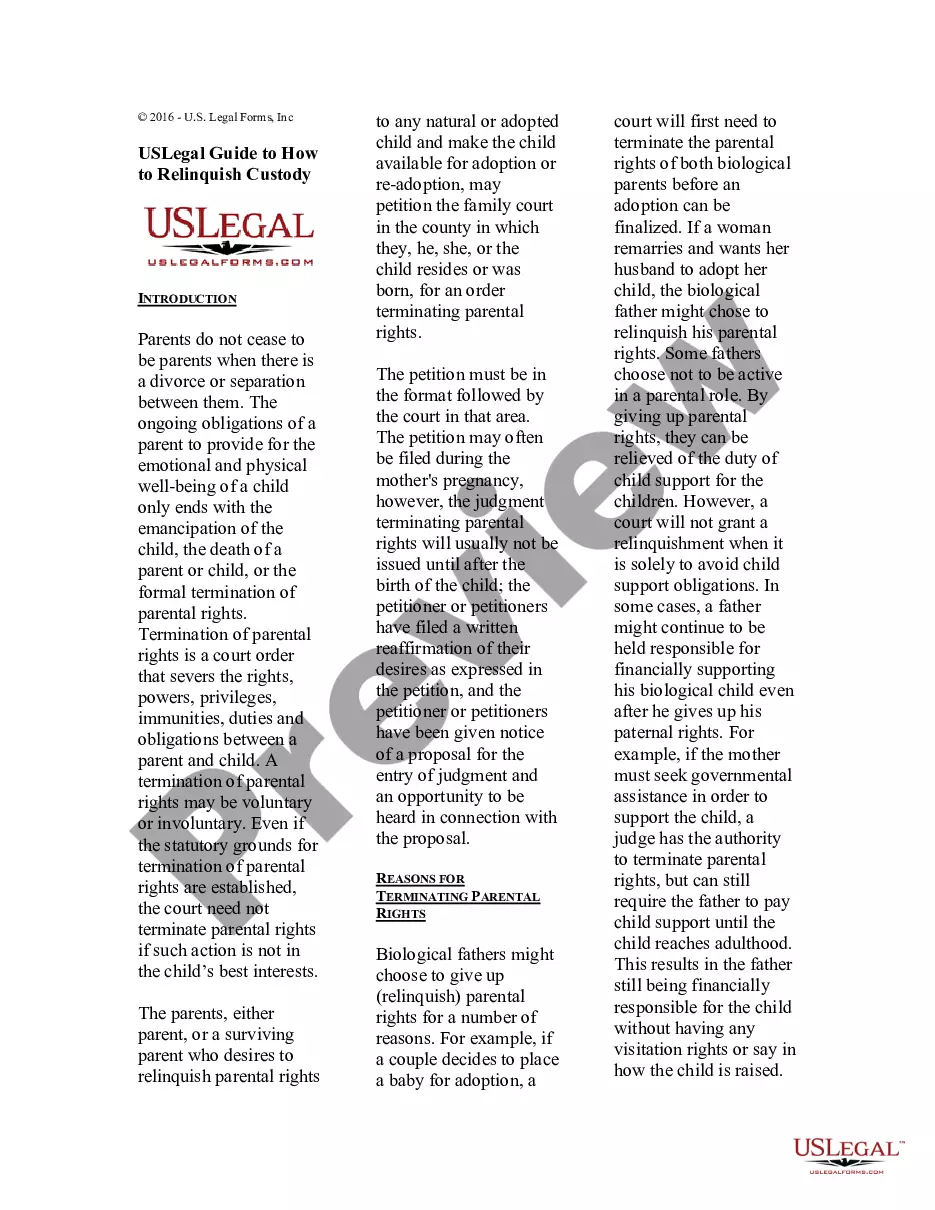
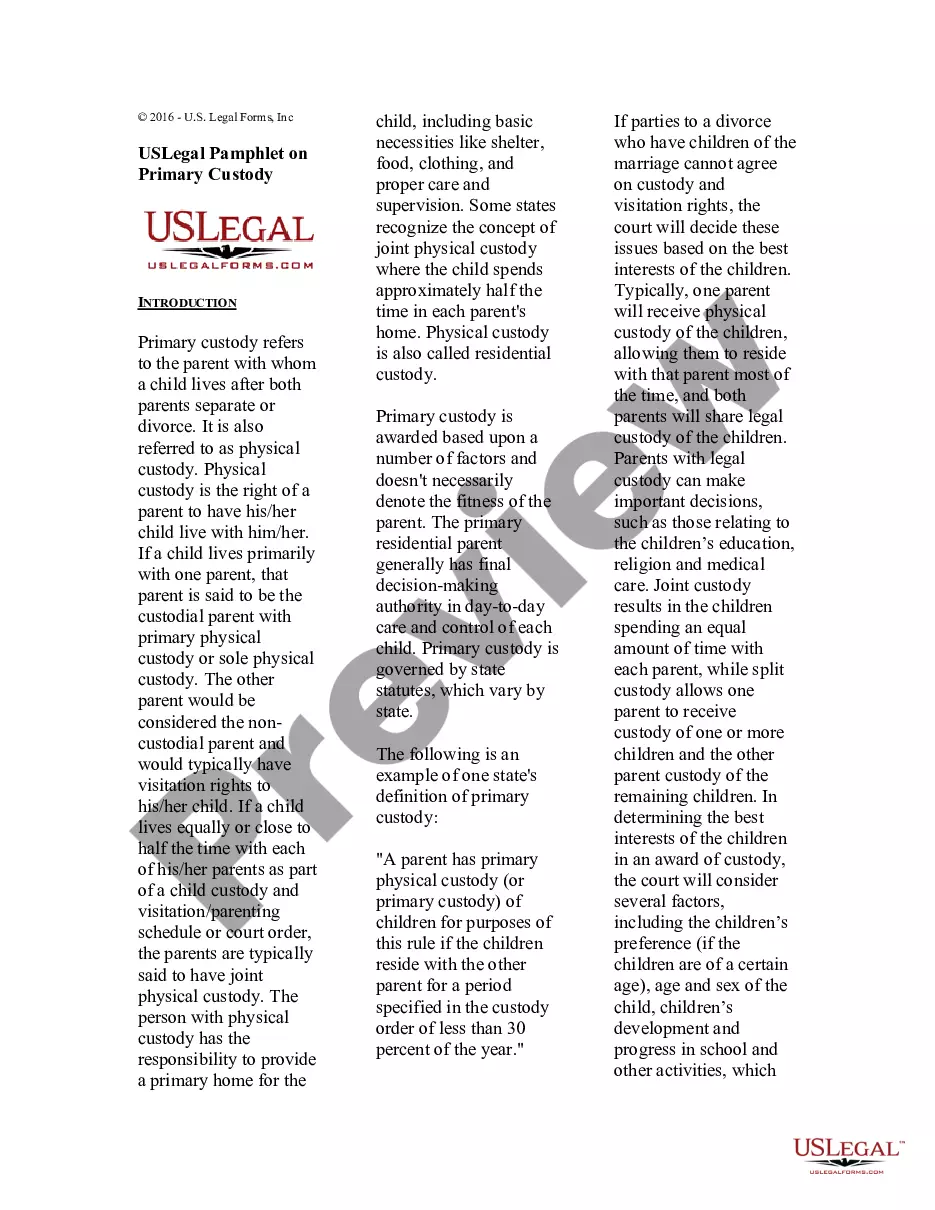
This form provides information concerning the procedures involved in a disputed custody case. Some of the topics covered in this form are: determination of who will have custody and how the court makes this decision.
Minnesota Client Information Material - The Procedures Involved in a Disputed Custody Case
State:
Minnesota
Control #:
MN-8215D
Format:
Word;
Rich Text
Instant download
Description
Free preview


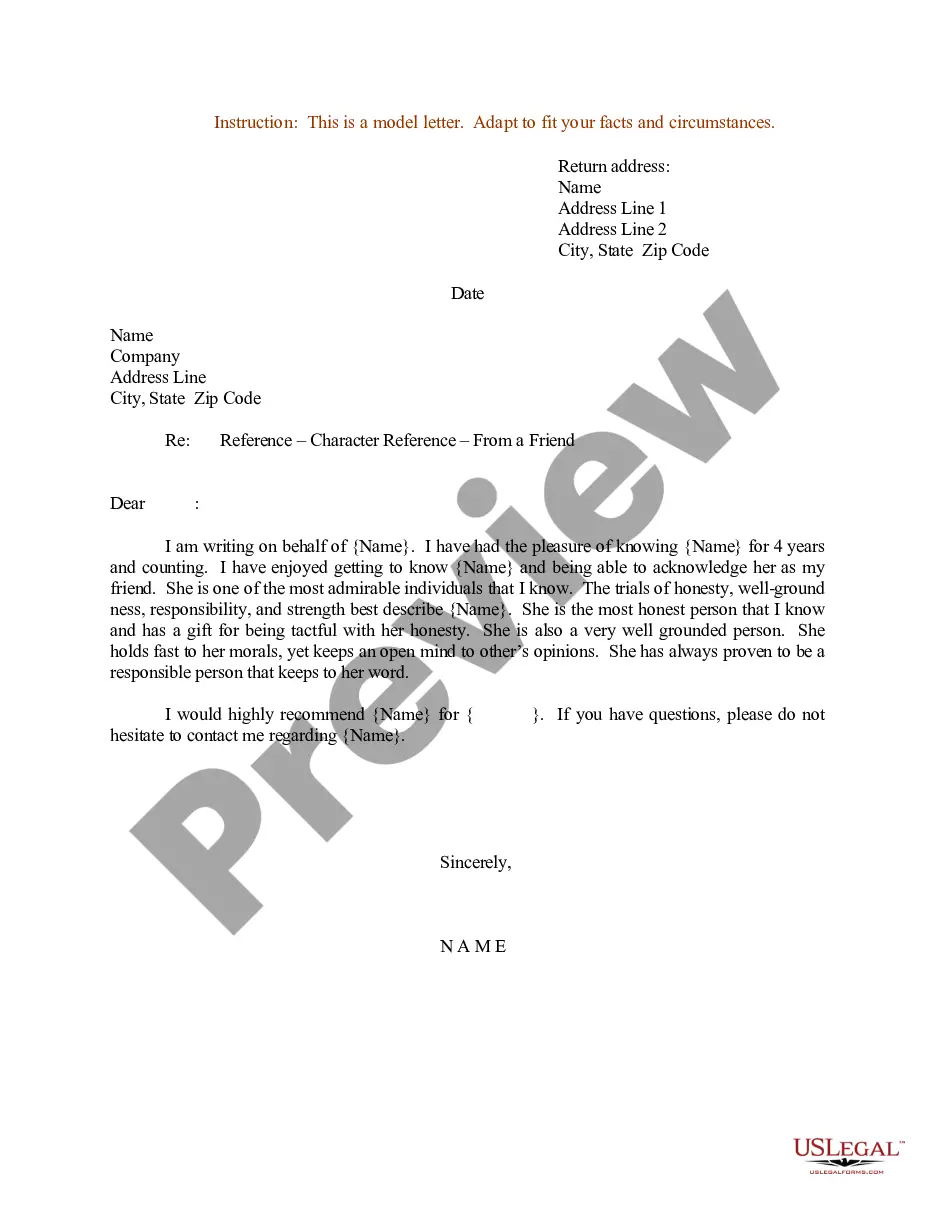
How to fill out Minnesota Client Information Material - The Procedures Involved In A Disputed Custody Case?
Obtain any version from 85,000 legal documents such as Minnesota Client Information Material - The Procedures Involved in a Disputed Custody Case online with US Legal Forms. Each template is crafted and refreshed by state-certified lawyers.
If you possess a subscription, Log In. Once you’re on the form’s page, click the Download button and navigate to My documents to gain access to it.
If you have not yet subscribed, follow the steps outlined below: Check the state-specific criteria for the Minnesota Client Information Material - The Procedures Involved in a Disputed Custody Case you wish to utilize. Review the description and preview the sample. When you’re confident the template is what you require, click on Buy Now. Choose a subscription plan that genuinely suits your budget. Create a personal account. Make payment in one of two convenient ways: by credit card or via PayPal. Select a format to download the document in; two choices are available (PDF or Word). Download the document to the My documents section. Once your reusable template is downloaded, print it out or save it to your device.
- With US Legal Forms, you’ll consistently have instant access to the correct downloadable sample.
- The service grants you access to documents and categorizes them to streamline your search.
- Utilize US Legal Forms to acquire your Minnesota Client Information Material - The Procedures Involved in a Disputed Custody Case quickly and effortlessly.
Form popularity
FAQ
A child in Minnesota can express their preference regarding which parent to live with, typically starting around the age of 12. While the court does not automatically grant the child's wishes, it will take their opinion into account when making custody decisions. The most crucial factor remains the child's best interests, so providing a supportive environment is key. For detailed guidance, consult Minnesota Client Information Material - The Procedures Involved in a Disputed Custody Case.
In Minnesota, there is no specific age at which a child can unilaterally decide which parent to live with. However, children aged 16 and older can express their preferences to the court, which will consider these wishes during custody determinations. It is essential to understand that the court will prioritize the child's best interests. To learn more about this process, refer to Minnesota Client Information Material - The Procedures Involved in a Disputed Custody Case.
To file forms with the court clerk, first gather all necessary documents related to your case, such as petitions or motions. Next, visit the courthouse where your case will be heard. You will need to present your forms to the clerk, who will review and stamp them for filing. For assistance, consider using Minnesota Client Information Material - The Procedures Involved in a Disputed Custody Case, which can guide you through the filing process.
An unstable parent is often characterized by inconsistent behavior, emotional volatility, or an inability to provide a safe and nurturing environment. This may manifest as erratic parenting practices, substance abuse, or frequent changes in living situations. Courts assess stability closely when determining custody arrangements, making it essential to demonstrate reliability. Understanding the Minnesota Client Information Material - The Procedures Involved in a Disputed Custody Case can help clarify what stability entails.
Rule 33 of the Minnesota Rules of Civil Procedure governs interrogatories, allowing parties to obtain information before trial. This rule facilitates the discovery process, ensuring that both sides can prepare adequately. Familiarizing yourself with this rule is important, as it can impact your strategy in a custody case. The Minnesota Client Information Material - The Procedures Involved in a Disputed Custody Case offers comprehensive information on navigating these legal processes.
The best witnesses for a child custody trial typically include individuals who can speak to your parenting abilities and the child's environment. This may include teachers, childcare providers, or family friends who have observed interactions. Their testimony can provide valuable insights into the child's needs and your capability as a parent. Utilizing the Minnesota Client Information Material - The Procedures Involved in a Disputed Custody Case can help you identify the right witnesses.
One of the biggest mistakes in a custody battle is allowing emotions to dictate your actions. This can lead to poor decision-making and negative behavior that courts may view unfavorably. Instead, maintaining composure and focusing on the facts is vital for presenting a strong case. The Minnesota Client Information Material - The Procedures Involved in a Disputed Custody Case can guide you in staying on track.
During a custody battle, certain behaviors can be detrimental to your case. For instance, failure to comply with court orders, disparaging the other parent in front of the child, or engaging in questionable legal tactics may harm your credibility. It is essential to approach the situation with a focus on the child's best interests, as highlighted in the Minnesota Client Information Material - The Procedures Involved in a Disputed Custody Case.
Rule 114 in Minnesota pertains to alternative dispute resolution, promoting methods like mediation to resolve custody disputes amicably. This rule encourages parties to explore resolution outside the courtroom, potentially saving time and reducing emotional strain. By using resources like the Minnesota Client Information Material - The Procedures Involved in a Disputed Custody Case, you can learn how to navigate these options effectively.
In a custody case, actions or behaviors that suggest instability or irresponsibility can negatively impact your standing. For example, excessive arguing, substance abuse, or lack of involvement in the child's life may raise red flags. It is crucial to present a stable environment that prioritizes the child's well-being. Understanding the Minnesota Client Information Material - The Procedures Involved in a Disputed Custody Case can provide valuable insights.