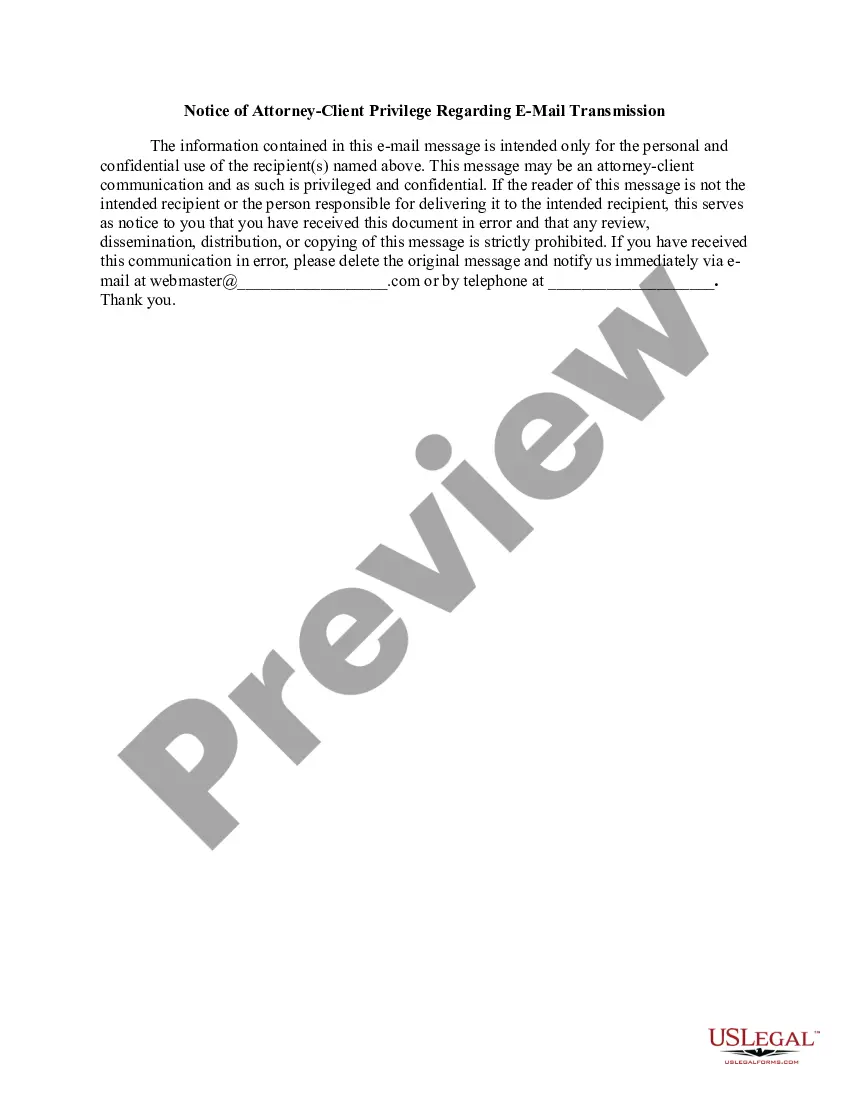
Minnesota Notice of Attorney-Client Privilege Regarding E-Mail Transmission
Description
How to fill out Notice Of Attorney-Client Privilege Regarding E-Mail Transmission?
Selecting the optimal legal document template can pose a challenge. Naturally, there is an assortment of templates accessible online, but how can you find the legal form you need? Utilize the US Legal Forms website. The platform offers a vast collection of templates, including the Minnesota Notice of Attorney-Client Privilege Regarding E-Mail Transmission, which can be utilized for business and personal purposes. All documents are vetted by experts and comply with state and federal regulations.
If you are already registered, Log In to your account and click the Download button to obtain the Minnesota Notice of Attorney-Client Privilege Regarding E-Mail Transmission. Use your account to browse through the legal forms you have previously purchased. Navigate to the My documents section of your account and download another copy of the document you desire.
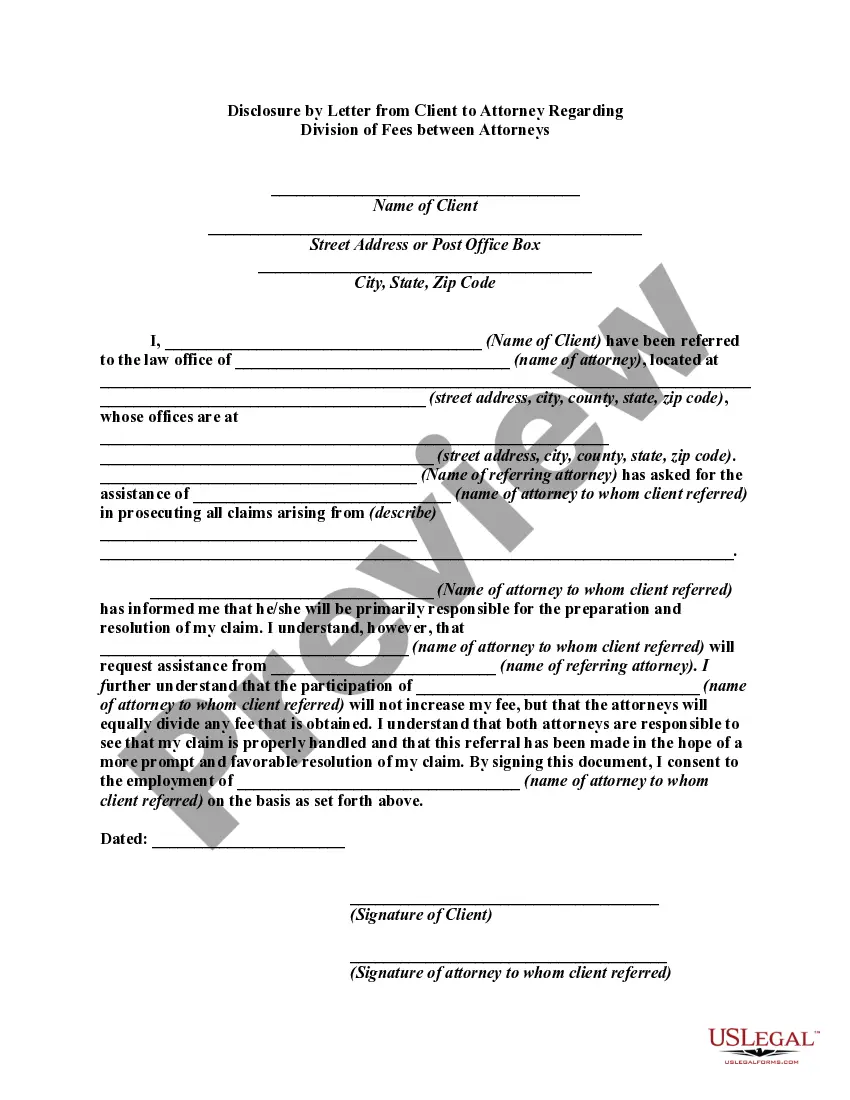
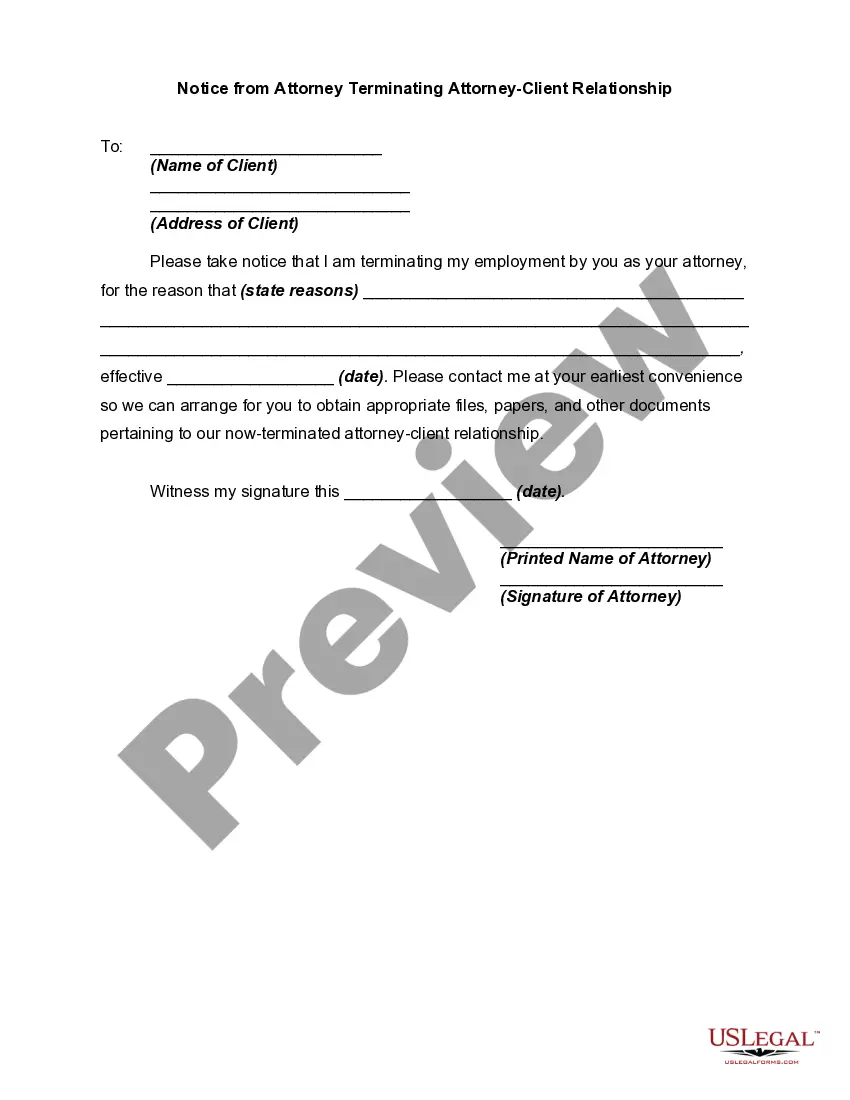
If you are a new user of US Legal Forms, here are straightforward steps you should follow: First, ensure you have selected the correct form for your area/state. You can review the document using the Preview button and read the document description to confirm this is indeed the right one for you. If the form does not meet your needs, use the Search field to find the appropriate form. Once you are confident that the form is suitable, click the Purchase now button to acquire the form. Choose the pricing plan you prefer and enter the required information. Create your account and pay for the order using your PayPal account or credit card. Select the file format and download the legal document template to your device. Finally, complete, modify, print, and sign the acquired Minnesota Notice of Attorney-Client Privilege Regarding E-Mail Transmission.
- US Legal Forms is the largest repository of legal forms where you can find numerous document templates.
- Utilize the service to obtain professionally crafted documents that adhere to state requirements.
Form popularity
FAQ
Attorney-client privilege covers communications (oral, written, emails, Zoom conferences, WhatsApp, etc.) back and forth between a client and the lawyer. It may also cover lateral or downstream communications among clients and other service providers in furtherance of a lawyer's handling of the case.
There are also a few precautions to take in order to lessen the chance of inadvertently waiving privilege: As noted above, take care not to forward e-mails from your attorney. If your attorney e-mails you with advice about how to handle a situation, start a new e-mail to give instructions to the proper people.
In fact, simply adding an attorney to an email does not invoke the attorney-client privilege at all. Rather, the privilege extends only to communications with counsel for the purpose of obtaining legal advice.
You also must maintain the confidentiality of a communication. If you share the communication with a third party ? for example, by forwarding an email to someone outside of your business ? you can lose the protection of attorney-client privilege.
The attorney-client privilege does not apply to every communication with an attorney. For the privilege to exist, the communication must be to, from, or with an attorney, and intended to be confidential. In addition, the communication must be for the purpose of requesting or receiving legal advice.
To be safe put "Attorney-Client Communication", "Privileged and Confidential" or "Attorney Work Product" in the subject of the e-mail, or on privileged documents.
The attorney-client privilege is a type of privileged communication that is recognized by law and protects certain confidential communications between a lawyer and a client from being included in a discovery process.
When sending an email that contains legal advice or a request for legal advice, apply a label that make this clear, such as ?Privileged & Confidential? and/or ?Attorney-Client Communication.? Such a label will not be dispositive, but it indicates the intention of the sender to seek legal advice.